Archive for the ‘Supplements’ Category

Cochrane Review – Probiotics Reduce C-diff By 70% in High Risk Patients Taking Antibiotics

https://www.cochranelibrary.com/cdsr/doi/10.1002/14651858.CD006095.pub4/abstract

Probiotics for the prevention of Clostridium difficile‐associated diarrhea in adults and children

Abstract

Background

Antibiotics can disturb gastrointestinal microbiota which may lead to reduced resistance to pathogens such as Clostridium difficile (C. difficile). Probiotics are live microbial preparations that, when administered in adequate amounts, may confer a health benefit to the host, and are a potential C. difficile prevention strategy. Recent clinical practice guidelines do not recommend probiotic prophylaxis, even though probiotics have the highest quality evidence among cited prophylactic therapies.

Objectives

To assess the efficacy and safety of probiotics for preventing C.difficile‐associated diarrhea (CDAD) in adults and children.

Search methods

We searched PubMed, EMBASE, CENTRAL, and the Cochrane IBD Group Specialized Register from inception to 21 March 2017. Additionally, we conducted an extensive grey literature search.

Selection criteria

Randomized controlled (placebo, alternative prophylaxis, or no treatment control) trials investigating probiotics (any strain, any dose) for prevention of CDAD, or C. difficile infection were considered for inclusion.

Data collection and analysis

Two authors (independently and in duplicate) extracted data and assessed risk of bias. The primary outcome was the incidence of CDAD. Secondary outcomes included detection of C. difficile infection in stool, adverse events, antibiotic‐associated diarrhea (AAD) and length of hospital stay. Dichotomous outcomes (e.g. incidence of CDAD) were pooled using a random‐effects model to calculate the risk ratio (RR) and corresponding 95% confidence interval (95% CI). We calculated the number needed to treat for an additional beneficial outcome (NNTB) where appropriate. Continuous outcomes (e.g. length of hospital stay) were pooled using a random‐effects model to calculate the mean difference and corresponding 95% CI. Sensitivity analyses were conducted to explore the impact of missing data on efficacy and safety outcomes. For the sensitivity analyses, we assumed that the event rate for those participants in the control group who had missing data was the same as the event rate for those participants in the control group who were successfully followed. For the probiotic group, we calculated effects using the following assumed ratios of event rates in those with missing data in comparison to those successfully followed: 1.5:1, 2:1, 3:1, and 5:1. To explore possible explanations for heterogeneity, a priori subgroup analyses were conducted on probiotic species, dose, adult versus pediatric population, and risk of bias as well as a post hoc subgroup analysis on baseline risk of CDAD (low 0% to 2%; moderate 3% to 5%; high > 5%). The overall quality of the evidence supporting each outcome was independently assessed using the GRADE criteria.

Main results

Thirty‐nine studies (9955 participants) met the eligibility requirements for our review. Overall, 27 studies were rated as either high or unclear risk of bias. A complete case analysis (i.e. participants who completed the study) among trials investigating CDAD (31 trials, 8672 participants) suggests that probiotics reduce the risk of CDAD by 60%. The incidence of CDAD was 1.5% (70/4525) in the probiotic group compared to 4.0% (164/4147) in the placebo or no treatment control group (RR 0.40, 95% CI 0.30 to 0.52; GRADE = moderate). Twenty‐two of 31 trials had missing CDAD data ranging from 2% to 45%. Our complete case CDAD results proved robust to sensitivity analyses of plausible and worst‐plausible assumptions regarding missing outcome data and results were similar whether considering subgroups of trials in adults versus children, inpatients versus outpatients, different probiotic species, lower versus higher doses of probiotics, or studies at high versus low risk of bias. However, in a post hoc analysis, we did observe a subgroup effect with respect to baseline risk of developing CDAD. Trials with a baseline CDAD risk of 0% to 2% and 3% to 5% did not show any difference in risk but trials enrolling participants with a baseline risk of > 5% for developing CDAD demonstrated a large 70% risk reduction (interaction P value = 0.01). Among studies with a baseline risk > 5%, the incidence of CDAD in the probiotic group was 3.1% (43/1370) compared to 11.6% (126/1084) in the control group (13 trials, 2454 participants; RR 0.30, 95% CI 0.21 to 0.42; GRADE = moderate). With respect to detection of C. difficile in the stool pooled complete case results from 15 trials (1214 participants) did not show a reduction in infection rates. C. difficile infection was 15.5% (98/633) in the probiotics group compared to 17.0% (99/581) in the placebo or no treatment control group (RR 0.86, 95% CI 0.67 to 1.10; GRADE = moderate). Adverse events were assessed in 32 studies (8305 participants) and our pooled complete case analysis indicates probiotics reduce the risk of adverse events by 17% (RR 0.83, 95% CI 0.71 to 0.97; GRADE = very low). In both treatment and control groups the most common adverse events included abdominal cramping, nausea, fever, soft stools, flatulence, and taste disturbance.

Authors’ conclusions

Based on this systematic review and meta‐analysis of 31 randomized controlled trials including 8672 patients, moderate certainty evidence suggests that probiotics are effective for preventing CDAD (NNTB = 42 patients, 95% CI 32 to 58). Our post hoc subgroup analyses to explore heterogeneity indicated that probiotics are effective among trials with a CDAD baseline risk >5% (NNTB = 12; moderate certainty evidence), but not among trials with a baseline risk ≤5% (low to moderate certainty evidence). Although adverse effects were reported among 32 included trials, there were more adverse events among patients in the control groups. The short‐term use of probiotics appears to be safe and effective when used along with antibiotics in patients who are not immunocompromised or severely debilitated. Despite the need for further research, hospitalized patients, particularly those at high risk of CDAD, should be informed of the potential benefits and harms of probiotics.

 

What is Clostridium difficile‐associated diarrhea?

Antibiotics are among the most prescribed medications worldwide. Antibiotic treatment may disturb the balance of organisms that normally populate the gut. This can result in a range of symptoms, most notably, diarrhea. Clostridium difficile (C. difficile) is a particularly dangerous organism that may colonize the gut if the normal healthy balance has been disturbed. Clostridium difficile‐related disease varies from asymptomatic infection, diarrhea, colitis, and pseudo‐membranous colitis to toxic megacolon and death. The cost of treatment is expensive and the financial burden on the medical system is substantial.

What are probiotics?

Probiotics are live organisms (bacteria or yeast) thought to improve the balance of organisms that populate the gut, counteracting potential disturbances to the gut microbial balance that are associated with antibiotic use, and reducing the risk of colonization by pathogenic bacteria. Probiotics can be found in dietary supplements or yogurts and are becoming increasingly available as capsules sold in health food stores and supermarkets. As ‘functional food’ or ‘good bacteria’, probiotics have been suggested as a means of both preventing and treating C. difficile‐associated diarrhea (CDAD).

What did the researchers investigate?

The researchers investigated whether probiotics prevent CDAD in adults and children receiving antibiotic therapy and whether probiotics causes any harms (side effects). The researchers searched the medical literature extensively up to 21 March 2017.

What did the researchers find?

This review includes 39 randomized trials with a total of 9955 participants. Thirty‐one studies (8672 participants) assessed the effectiveness of probiotics for preventing CDAD among participants taking antibiotics. Our results suggest that when probiotics are given with antibiotics the risk of developing CDAD is reduced by 60% on average. Among trials enrolling participants at high risk of developing CDAD (> 5%), the potential benefit of probiotics is more pronounced with a 70% risk reduction on average. Side effects were assessed in 32 studies (8305 participants) and our results suggest that taking probiotics does not increase the risk of developing side effects. The most common side effects reported in these studies include abdominal cramping, nausea, fever, soft stools, flatulence, and taste disturbance. The short‐term use of probiotics appears to be safe and effective when used along with antibiotics in patients who are not immunocompromised or severely debilitated. Despite the need for further research, hospitalized patients, particularly those at high risk of CDAD, should be informed of the potential benefits and harms of probiotics.
Bioidentical Hormone Talk – Brookfield, WI April 17, 2019

Dr. Deb’s First Talk of 2019!
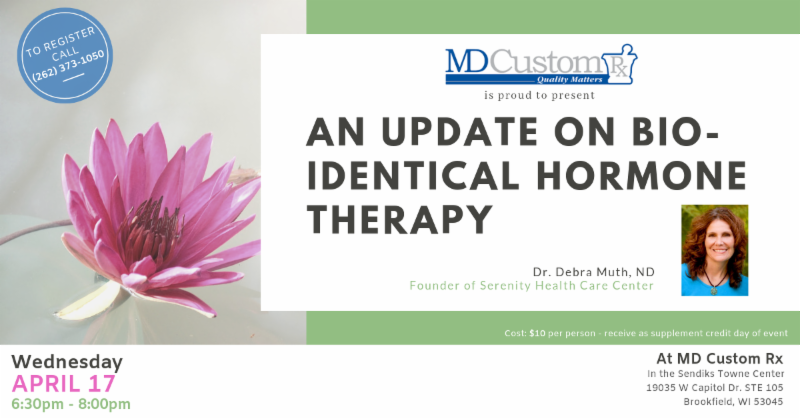
Wednesday, April 17th at MD Custom Rx in Brookfield, WI
If you want to learn more about Hormones & Bio-Identical Hormone Therapy, you’re in luck – Dr. Deb will be speaking at MD Custom Rx, in Brookfield, WI on April 17th! Come join us from 6:30pm to 8:00pm to listen and learn about BHRT! The cost is $10 per person, received as a customer credit the day of the event.
Call (262) 373-1050 to register!
An Update On Bio-Identical Hormone Therapy
Wednesday, April 17 | 6:30pm – 8:00pm
Are you coming to Dr. Deb’s talk!?
LOCATION
MD Custom Rx – 19035 W Capitol Dr. STE 105 Brookfield, WI (In the Sendiks Towne Center)

DATE AND TIME
04/17/19 6:30pm – 04/17/19 8:00pm

Call (262) 373-1050 to register! Spaces are limited! Cost is $10.00 per person – will receive a supplement credit the day of event!
I’ll be there!
Maybe
I can’t make it


FREE Self-help Gut Health Bundle

https://promo.healthmeans.com/guthealth/?  Register Here

2019-03-08T18-05-38.002Z_d9cf3bb3-63ee-4954-844b-df8809dc8984_group_cover_photo

20 free expert talks and eBooks to help you heal SIBO, acid reflux, GERD, microbiome imbalances and more.

We’ve collected our top expert talks and eBooks to create this incredible, self-learning gut health bundle… for FREE!


Education about gut and microbiome health has never been as prevalent as it is now — in fact, it can be pretty overwhelming. Our gut health bundle will help you more easily explore dietary protocols, top supplements and probiotics, and the latest research on how genetics impact your biome.

We know it can be a struggle to find the time to learn from so many great health resources out there. Fortunately, these expert talks and eBooks are yours INDEFINITELY. Meaning, you’ll have access to learn from them at your own pace!

Learn incredible wisdom and insights from such well-known gut health experts as:

  • Dr. Partha Nandi
  • Shivan Sarna
  • Misty Williams
  • Donna Gates
  • Sayer Ji
  • Dr. Sarah Ballantyne
  • And more!

You’ll gain immediate access to the expert talks and eBooks, and retain access to them indefinitely — you can learn and make changes to your life at your own pace.

There’s no catch. No purchase required. No commitment necessary.

BONUS EBOOKS & GIFTS

Gut Recovery Recipes from Donna Gates
Low Sugar Desserts Cookbook from Partha Nandi
Healing Rosie’s Optimal Lab Tracker from Misty Williams
SIBO SOS® Cookbook from Shivan Sarna
Gut Health and Cannabidiol eBook from Rooted Apothecary
GreenMedInfo’s Science of Longevity eReport from Sayer Ji
The Leaky Gut Diet Plan from Kettle & Fire
123s of AIP eGuide from Sarah Ballantyne


How Do Hormones Affect the Heart?

https://www.womensinternational.com/how-do-hormones-affect-the-heart/

How Do Hormones Affect the Heart?

Written by Michelle Violi, PharmD – Women’s International Pharmacy

“How does hormone supplementation affect the heart?” This is a question that our pharmacists hear regularly. Much like the poor, maligned egg in the cardio-healthy diet, hormones have fallen in and out of favor with regard to their effect on the cardiovascular system over the years.

Although a number of studies examine hormonal effects on the cardiovascular system, these studies rarely distinguish between bioidentical and synthetic hormones. However, one study by Dr. Ferdinand Roefsena, Rebecca J. Yang, and Dr. Johannes Veldhuis looked specifically at the bioidentical hormones, estradiol, and progesterone, publishing their results in the Journal of the Endocrine Society. Let’s see what they found!

How Was the Study Designed?

Forty healthy postmenopausal women, ages 50-80, participated in the study. The women were divided into four treatment groups:

  1. Bioidentical estradiol (injection) and bioidentical progesterone (by mouth)
  2. Bioidentical estradiol (injection) and no bioidentical progesterone
  3. Bioidentical progesterone (by mouth) and no bioidentical estradiol
  4. No bioidentical estradiol and no bioidentical progesterone

After 23 days of using these therapies, the women’s blood was drawn and the researchers measured various markers.

What Did the Study Look At?

Because the study was only 23 days long, Dr. Roefsena et al. were unable to evaluate primary endpoints,such as heart attacks or strokes. Instead, they looked at various markers in the blood that have been associated with physical outcomes such as heart disease, stroke, and diabetes. The researchers looked at many significant markers, including:

  1. Total cholesterol
  2. Low-density lipoprotein cholesterol (LDL-C) (referred to as “bad” cholesterol by the American Heart Association)
  3. High-density lipoprotein cholesterol (HDL-C) (referred to as “good” cholesterol by the American Heart Association)
  4. Apolipoprotein B (Apo B)
  5. High sensitivity C-reactive protein (hsCRP)
  6. Adiponectin

With the exception of HDL-C and adiponectin, for which higher levels appear beneficial, decreased levels of the other markers listed above are generally considered favorable, according to the American Heart Association.

What Did the Study Find?

When compared to women who weren’t using any hormone therapies:

  1. Women who used bioidentical estradiol alone had lower levels of total cholesterol, LDL-C, and Apo B. They also had higher levels of HDL-C, which are considered beneficial differences. The researchers had expected this result, based on previous studies as described in the article The Bioidentical Hormone Debate: Are Bioidentical Hormones (Estradiol, Estriol, and Progesterone) Safer or More Efficacious than Commonly Used Synthetic Versions in Hormone Replacement Therapy? by Dr. Kent Holtorf.
  2. Women who used bioidentical progesterone alone had decreased adiponectin, but they were still well within the average reference range (below which would indicate risk).
  3. Women who used bioidentical estradiol and bioidentical progesterone together had lower levels of total cholesterol, LDL-C, Apo B, and HDL-C. While the reduced HDL-C levels are not considered beneficial, other studies, as discussed in Dr. Holtorf’s article, indicate that when synthetic progestins are used instead of bioidentical progesterone, the cholesterol and LDL-C-lowering effect of bioidentical estradiol is also blocked. Bioidentical progesterone did not block this effect!
  4. hsCRP levels were higher in women using bioidentical estradiol and bioidentical progesterone, but still well below the value above which indicates increased risk.

In Summary:

As the researchers expected, the women using bioidentical estradiol exhibited improved cholesterol levels (including decreased LDL-C and increased HDL-C). Even though the bioidentical progesterone was associated with reduced HDL-C levels, it allowed the positive effects of bioidentical estradiol on the other cholesterol levels to remain. Synthetic progestins have been seen to reduce the positive effects of bioidentical estradiol on cholesterol levels, as evidenced by the studies discussed in Holtorf’s article. These findings suggest that bioidentical hormones may be preferable to synthetic.

This study is not without its flaws, such as its short length and small group size. Its short length made it necessary to evaluate markers rather than primary endpoints, and the data was further limited by comparing the groups to each rather than evaluating the differences between the beginning and ending measurements. The patients in the bioidentical estradiol groups were treated with injectable bioidentical estradiol—a form which is rarely used in clinical practice—and used two doses ten days apart as opposed to the usual two- to four-week intervals.

Despite this study’s shortcomings, when we combine its results with information obtained in other studies, we see that bioidentical progesterone doesn’t appear to interfere with the positive effects estrogen has on cholesterol levels. By contrast, other studies have suggested that synthetic progestins do negate these effects. And this makes perfect sense! Why would we assume that a molecule that is similar, but not identical to what the body makes, should have the same effect in the body as a molecule that is identical to what the body makes?

Due to our differences as individuals, no study is perfect. Therefore, the question of whether hormones are good for your heart may never be answered definitively because the answer may differ from person to person. Through studies like that by Dr. Roefsena et al. and others, however, one thing is becoming clear: the difference between bioidentical and synthetic hormones may prove a significant factor in whether hormones are beneficial to the heart.

Additional Resources:

Women’s International Pharmacy has several other articles focused on how hormones affect heart health. Check them out at our Heart Health Resources page!

© 2019 Women’s International Pharmacy

Reviewed by Carol Petersen, RPh, CNP; Women’s International Pharmacy

Melatonin: Benefits & Uses

https://articles.mercola.com/vitamins-supplements/melatonin.aspx?

iu-71

STORY AT-A-GLANCE

  • Melatonin is a hormone produced by the pineal gland, which helps regulate your circadian rhythm
  • Taking a melatonin supplement may be helpful for people who are experiencing sleep disorders due to various environmental or social factors
  • Aside from promoting sleep, melatonin supplements may help boost cardiovascular health, manage fibromyalgia, lower the risk of gallstones and decrease the symptoms of tinnitus

Sleeping is an essential human function, and at the heart of it is your circadian rhythm, also known as your body clock. It’s a natural, biological timer that helps your body recognize sleepiness and wakefulness over a period of 24 hours.

By sticking to a regular bedtime schedule, such as sleeping and waking up at the same time each day, you can maintain a steady circadian rhythm that will allow you to maximize your productivity while you’re awake, and get the right amount of sleep when nighttime arrives.1

Your circadian rhythm is largely dictated by your pineal gland. This gland is located near the center of your brain, with a shape that looks similar to a pine cone, hence the name. It’s estimated to be one-third of an inch long, and is made up of unique pineal cells and neuroglial cells that help support the gland.

Despite its small size, it plays a crucial role in your health because it produces a single hormone called melatonin, which is vital for controlling your body clock and, ultimately, your sleeping patterns.2

What Is Melatonin?

Melatonin, or N-acetyl-5-methoxytryptamine, is a hormone produced by the pineal gland.3 Your brain usually starts secreting melatonin around 9 p.m., which is the time most people go to bed. By increasing the amount, your body begins to recognize that bedtime is fast approaching, allowing you to sleep at an ideal time.4

To do this properly, you need to be aware of your exposure to light throughout the day and especially at night, because melatonin production depends on how much light your body absorbs.

If you stay awake past dark, light emitted by electrical devices hampers your body’s ability to produce melatonin. Ideally, you want to stop using gadgets an hour before sleeping to help increase melatonin production and maintain a steady circadian rhythm. Nightshift workers usually have it worse and constantly suffer from disrupted body clocks, because of their poor melatonin production.

3 Main Uses of Melatonin in Your Body

What is the role of melatonin anyway? Based on published research, it has been discovered to perform three main functions:

Controls your circadian rhythm — Melatonin works as a sleeping aid by normalizing your circadian rhythm by convincing your body to prepare itself for bedtime.5 It’s a hormone that only “signals” your body to prepare for sleep, not one that actually makes you fall asleep.

Functions as an antioxidant — Recent studies have found that melatonin not only affects your body clock, but also functions as an antioxidant that can help support your health. Specifically, it may help different aspects of your brain, cardiovascular and gastrointestinal health.6 It may even lower your risk of cancer, in some cases.7

Boosts your immune system — Melatonin may benefit your immune system in various ways. In one study, researchers suggest that melatonin may help improve the treatment of bacterial diseases such as tuberculosis.8 In another study, melatonin has been suggested as a potential tool against inflammation, autoimmune diseases and Type 1 diabetes.9


6 Ways to Optimize Your Melatonin Levels Naturally to Improve Sleep Quality

According to the Centers for Disease Control and Prevention (CDC), an estimated 50 to 70 million Americans are suffering from a sleeping or wakefulness disorder.10 As a result, many of them turn to various remedies, such as behavioral and environmental changes, to get a good night’s rest.11

One of the first things you can do is to make sure that your body is producing enough melatonin. Optimizing your melatonin levels naturally is important because it helps keep your body functioning normally without relying on outside factors. So, instead of immediately relying on melatonin supplementation, here are a few lifestyle changes I suggest you try first to boost your melatonin production:

Avoid using electronic devices an hour before sleeping — Gadgets such as cellphones, TVs and computers emit blue light, and exposure to it tricks your body into thinking it’s still daytime. By avoiding gadgets an hour before bed, your body can produce the melatonin needed to help you sleep at your intended time.

Make sure to get regular sunlight exposure — Getting regular sun exposure in the morning or at noontime helps your body reduce its melatonin production, so that when nighttime arrives, your pineal gland produces the correct amount to induce sleepiness.

Try to sleep in complete darkness — If possible, try to remove immediate light sources from your room to help improve your sleep quality. The slightest exposure to light can interfere with your body’s melatonin production and keep you up later than you need. Keep gadgets 3 feet away from your bed or use blackout window shades.

Remove sources of electromagnetic fields (EMFs) in your bedroom — EMFs emitted by certain devices such as Internet routers can disrupt your pineal gland’s melatonin production. Ideally, you should turn off your wireless router, as well as other wireless devices connected to the Internet before sleeping.

If you need a nightlight, use a low-wattage yellow, orange or red bulb — Low-wattage bulbs with a yellow, orange or red color do not interfere with melatonin production the same way that white and blue bulbs do.

Wear blue light-blocking glasses — This special device can help keep your eyes from absorbing blue light that can affect your melatonin levels. It can be a useful tool to have around the house, especially if you’re constantly surrounded by gadgets and artificial light sources.

In addition, the following foods are known to contain small amounts of melatonin. Making them a part of your regular diet while practicing the aforementioned sleeping tips may help improve sleep quality:12

  • Grass fed meat (lamb, beef and pork)
  • Wild-caught salmon
  • Pasture-raised chicken and eggs
  • Raw, grass fed milk
  • Pineapple
  • Banana
  • Apple
  • Pomegranate
  • Mulberry
  • Tart cherries
  • Grapes
  • Onion
  • Garlic
  • Cauliflower
  • Turnip
  • Cucumber
  • Carrot
  • Radish
  • Beetroot
  • Tomatoes
  • Seeds (Flax, sunflower, fennel, mustard, alfalfa, celery and fenugreek)
  • Nuts (pistachio, almonds and walnuts)

If you’ve already tried everything, including incorporating melatonin foods in your diet, and you’re still having difficulty getting quality sleep, you may consider taking a melatonin supplement. In 2016 alone, 3.1 million adults in the United States turned to melatonin supplementation to help them sleep peacefully.13

Studies Regarding the Use of Melatonin Supplements

Since the discovery of melatonin, various studies have been conducted to discover how using it as a supplement can benefit your health. According to the Journal of Pineal Research, the melatonin secreted by your pineal gland enters every cell in your body and can even cross morphophysiologic barriers.

As a result, not only may it help you improve sleep quality,14 it also has certain anti-inflammatory compounds that may help reduce your risk of cardiovascular diseases, such as atherosclerosis and hypertension.15

In addition, a study published in Endocrine Journal reports that increasing melatonin intake may help improve your overall health, as this hormone can be an effective antioxidant that can help fight free radicals in your body.16

Another study suggests that melatonin may help obese people manage their weight. The researchers indicate that certain lifestyle factors suppress melatonin production, which results in sleep disruption that can lead to weight gain. By increasing melatonin production, adequate sleep can be reintroduced as part of a healthy lifestyle, along with other positive lifestyle changes, to help curb obesity.17

8 Potential Benefits of Melatonin Supplement

Melatonin may help boost your health in various situations, as shown in the table below. While each benefit is backed up with scientific research, always consult with a doctor before giving melatonin supplements a try:

Insomnia — Melatonin is primarily used to help treat people who have sleeping disorders by inducing sleepiness quicker.18

Jet lag — Melatonin may be used to help treat jet lag by adjusting your body to a new time zone. However, it’s generally recommended only for travelers who cross four to five time zones.19

Heart disease — People who are struggling with heart disease may benefit from melatonin. A study has found that it may help lower your bad cholesterol levels by as much as 38 percent.20

Menopause — Increasing melatonin consumption in menopausal women 42 to 62 years old may help improve mood and stave off depression.21

Autism — Children diagnosed with autism who are also plagued with sleeping problems may benefit from melatonin supplementation. Research indicates that taking the hormone can lead to deeper sleep and better daytime behavior.22 However, I advise consulting your health care provider before giving any melatonin supplement to children.

Fibromyalgia People affected with fibromyalgia are believed to have lower levels of melatonin. A group of researchers found that increasing the melatonin levels of fibromyalgia sufferers through supplementation helped alleviate their symptoms and improved sleep quality.23

Gallstones Melatonin can help lower your risk of gallstones by inhibiting cholesterol absorption across the intestinal epithelium, as well as increasing the conversion of cholesterol into bile.24

Tinnitus — If you have tinnitus, slightly increasing your melatonin may help improve your symptoms. In one study, participants who took 3 milligrams of melatonin supplements every night experienced a decrease in tinnitus intensity after the testing duration.25

Do Not Take Melatonin if You Have These Conditions

Here’s a crucial question you should ask yourself: Are you fit to take melatonin? While there are valid reasons for taking this supplement, remember that it can exacerbate certain health conditions as well. If you’re taking any of the following medications, you should not take melatonin as the mixture can have adverse effects to your health:26

Anticoagulants and anti-platelet drugs

Anticonvulsants

Contraceptive drugs

Diabetes medications

Immunosuppressants

Taking melatonin while pregnant should be avoided as well, since there’s little knowledge in this field.27 If you’ve recently developed pregnancy-related sleeping problems, I advise you to consider behavioral and dietary changes before considering melatonin or other similar types of supplement.

Refrain from giving melatonin to children, including babies and toddlers, unless approved by your physician. While a 2016 study found that children with sleep difficulties who took melatonin did not develop any concerns or adverse side effects,28 it’s better to be safe.

10 Side Effects of Melatonin You Should Know About

Some of melatonin’s potential side effects include:29,30

  • Daytime sleepiness
  • Short-term depression
  • Irritability
  • Vivid dreams, or possibly nightmares
  • Mild anxiety
  • Headaches
  • Abdominal discomfort
  • Confusion
  • Body clock disruption
  • Dizziness

If you are already taking a melatonin supplement and begin to experience any of the mentioned side effects, stop taking it immediately and consult with a doctor for safer alternatives. In addition, melatonin and alcohol should not be taken together, as it can increase your chances of accidents because the sedative effects are amplified.31

Remember: Consider Optimizing Your Melatonin Levels Naturally Before Taking a Supplement

Melatonin is a crucial hormone that performs few but important functions. Low levels of it can lead to sleep disruption, increase your risk of certain diseases and lower your antioxidant capabilities. However, remember to always try and improve your sleeping habits and environment before attempting melatonin supplementation.

While there’s an abundance of scientific evidence that suggest melatonin supplementation can be beneficial to your health, too much of it can actually make you more wakeful. By primarily focusing on natural strategies, you forego this risk, as well as the chances of developing unpleasant side effects that can further disrupt your quality of sleep. If you do decide to take a melatonin supplement, seek guidance from a doctor first.

Frequently Asked Questions About Melatonin

Q: Is melatonin addictive?

A: Currently, there’s very little information regarding melatonin supplement addiction. However, beware that it can still be abused, although the chances of becoming dependent are lower compared to other types of medications or supplements.32


Q: How long does it take for melatonin to work?

A: The average time for melatonin supplements to work is generally 20 minutes. If you’re about to take melatonin for the first time, it’s recommended that you take it one to two hours before your bedtime.33


Q: Can you take melatonin supplements while pregnant?

A: As of the moment, there is a lack of scientific evidence regarding the use of melatonin supplements on pregnant women, but it’s theorized that it may hamper sex drive, reduce ovarian function and increase the risk of developmental disorders. If you’re pregnant, it is best that you avoid using this supplement and resort to natural remedies to correct sleeping problems.34


Q: Is melatonin safe to use for kids?

A: Melatonin supplements are generally safe for children. According to a study published in Canadian Family Physician, children with sleep difficulties who took melatonin had no concerns or adverse side effects, according to their parents.35 However, consult with your child’s pediatrician before giving them any type of melatonin supplement.


Q: When is the ideal time to take melatonin?

A: Taking a melatonin supplement two hours before bedtime can help you maximize its effectiveness.36


Q: How long does the effects of melatonin last?

A: The half-life of melatonin is very short, around 59 to 65 minutes only.37


Q: Can you overdose on melatonin?

A: Yes. While there are no reported deaths related to overdosing from melatonin, consuming more than the recommended amount can cause side effects, such as autoimmune hepatitis, a psychotic episode, seizures, headaches or skin eruption.38

__________________

**Comment**

Besides helping sleep, melatonin is known for protecting the brain. Research has shown starting to supplement in middle age protects against Alzheimer’s, reduces the risk of Parkinson’s, shrinks the size of the infarct area in a stroke, minimizes brain swelling & dysfunction after head injury, and increases the “longevity protein” SIRT1.  https://www.lifeextension.com/magazine/2013/9/Melatonin-The-Brain-Hormone/Page-01

  • Melatonin has been proposed as a treatment for numerous brain and neurological diseases as it helps reduce oxidative stress and inflammation inside the brain and strengthens the blood-brain barrier.  A leaky blood-brain barrier can contribute to issues like brain fog, anxiety, depression, and even Alzheimer’s.
  • It also increases brain-derived neurotrophic factor (BDNF) – which is a protein that promotes survival of nerve cells & helps regular synaptic plasticity.  Mouse studies have shown melatonin relieves symptoms of ALS by preventing cell death and slowing disease progression.  
  • Melatonin is needed for normal eye development, decreases pressure in the eye and lack of it may be a cause of glaucoma.
  • A rat study showed melatonin prevents against cell death in optic neuritis, a manifestation of MS, Lyme, and Bartonella.
  • Regarding tinnitus, (noise in the ears), melatonin was 150 times more effective than other tinnitus drugs in reducing symptoms.
  • Melatonin may help prevent and treat cancer by improving immune function, increasing tumor suppressor proteins, acting against cancer stem cells, and by suppressing cells that block the activity of immune cells. Supplementation also reduced incidence and size of breast cancer tumors.
  • Melatonin concentration is 400 times higher in the gut than the brain and controls behavior of gut bacteria.  It’s been shown to be protective against lesions caused by H.pylori infection and speeds ulcer healing.  It protects and strengthens the intestinal barrier and can help prohibit inflammation in the stomach which can in turn protect against colitis, irritable bowel, and various cancers.  https://selfhacked.com/blog/melatonin/