Archive for the ‘research’ Category

Study: Bait Boxes and Met52 Not Effective in Controlling Tick Populations

https://danielcameronmd.com/tick-control-methods-not-effective-residential-neighborhoods/

TICK CONTROL METHODS NOT EFFECTIVE IN RESIDENTIAL NEIGHBORHOODS
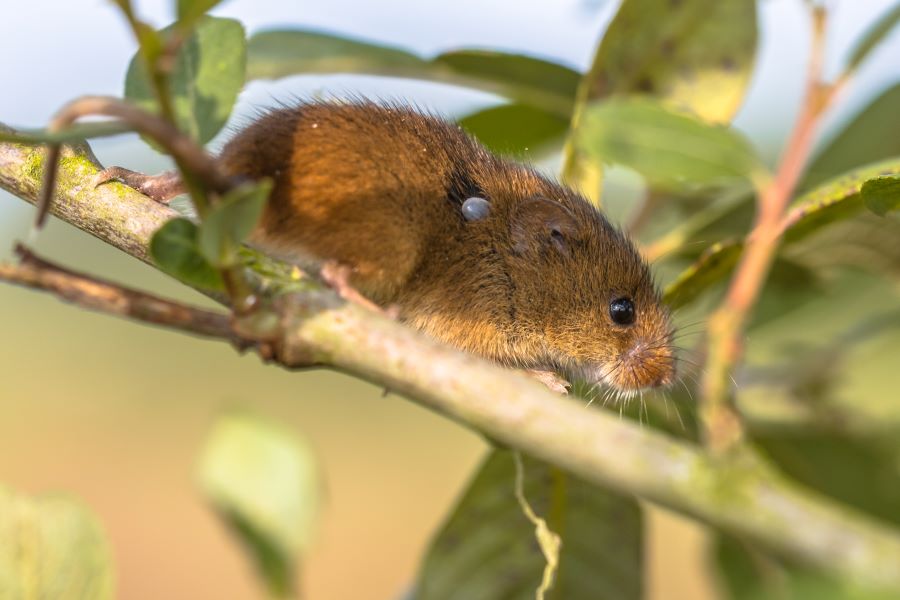
Mouse with tick embedded on shrub branch.

Controlling tick populations can help reduce the likelihood of individuals being bitten by an infected tick and developing a tick-borne illness, such as Lyme disease. Multiple types of tick control methods have been employed but with varying degrees of success. This study explores the effectiveness of bait boxes and the biopesticide spray Met52 in reducing tick abundance and tick encounters with humans.

In their study, “Impacts Over Time of Neighborhood-Scale Interventions to Control Ticks and Tick-Borne Disease Incidence,” Ostfeld and colleagues examined the effectiveness of tick control methods in 24 residential neighborhoods endemic for Lyme disease in New York.¹

The study, conducted over several years, assessed the impact of tick control system (TCS) bait boxes and Met52 spray on reducing tick abundance and tick encounters with people and outdoor pets. And whether these interventions led to a decrease in reported cases of tick-borne diseases.

“Rapid increases in incidence rates and geographic ranges of tick-borne diseases have stimulated efforts to reduce human exposure.”

The authors examined two interventions:

TCS Bait Boxes

TCS bait boxes attract small animals to a food source inside an enclosed device and apply the tick-killing chemical, fipronil. (Fipronil is lethal to ticks but harmless to mammals.)

Met52 Spray

Met52 spray is a biopesticide, which consists of spores of the F52 strain of the fungus Metarhizium brunneum. The solution, mixed with water, is sprayed on the ground and low-lying vegetation.

Impact varies with type of tick control intervention

“By killing ticks attached to small mammals, TCS bait boxes are expected to affect the abundance of host-seeking (questing) ticks the following year,” the authors explain.

Whereas, “Met52 targets host-seeking ticks, with impacts expected within days to weeks after deployment.”

Unfortunately, interventions were unable to control tick populations in 24 residential neighborhoods in New York over a 4-to-5-year period.

“… the lack of association between reduced abundance of host-seeking nymphal blacklegged ticks in residential areas receiving acaricidal treatments and the incidence of tick-borne diseases in those areas … suggests that tick control for disease reduction needs new approaches.”

STUDY FINDINGS:

  • The study found that in neighborhoods with active bait boxes, questing blacklegged ticks and ticks attached to small mammals were reduced by approximately 50%.
  • These interventions “significantly reduced owner-reported cases of tick-borne diseases in outdoor pets,” the authors point out.
  • However, “neither intervention (nor both combined) was associated with reductions in either human encounters with ticks or self-reported cases of tick-borne disease.”
  • “In neighborhoods with active TCS bait boxes, populations of blacklegged ticks (Ixodes scapularis) were not reduced over time in any of the three habitat types tested (forest, lawn, shrub/garden).”
  • “There was no significant effect of Met52 on tick abundance overall…”

Case Report: Lyme Disease Causes Inflammation of the Spinal Cord

https://danielcameronmd.com/lyme-disease-inflammation-spinal-cord/

CASE REPORT: LYME DISEASE CAUSES INFLAMMATION OF THE SPINAL CORD

lyme-disease-spinal-cord
There have only been 8 documented pediatric cases of Lyme disease causing transverse myelitis. In this report, the authors describe the ninth case involving a 10-year-old boy.

In their article Case report: Subacute transverse myelitis with gait preservation secondary to Lyme disease and a review of the literature,” Colot and colleagues describe a 10-year-old boy who suffered from neck pain with irradiation in the upper limbs for 13 days.

Transverse myelitis (TM) is an inflammation of both sides of one section of the spinal cord. Diagnosis requires clinical symptoms and evidence of inflammation within the spinal cord via cerebrospinal fluid analysis and/or magnetic resonance imaging.

Treatment of transverse myelitis typically includes oral steroids, intravenous immunoglobulins, plasma exchange, and immunomodulatory therapies.

“Clinical features consist of sensory disturbances in most patients, followed by weakness and sphincter dysfunction. Children suffer from more severe clinical impairment than adults,” the authors wrote.

In fact, one study found 89% of the pediatric patients were bed- or wheelchair-bound or required assisted ventilation.

In this case report, Colot et al. provides evidence that the clinical presentation of neuroborrelial transverse myelitis differs from classical TM.

TM secondary to Lyme disease is more often subacute with gait preservation and is limited to the cervical spine,” the authors wrote.

Lyme disease triggers inflammation in spinal cord

A 10-year-old boy presented to his pediatrician with “persistent nocturnal and rotational neck pain with irradiation in the upper limbs for 13 days with a feeling of heaviness and paresthesia in the fingers.”

The boy also had a fever for 11 days, along with fatigue and headaches.

MRI findings of the spine suggested longitudinal extensive transverse myelitis (LETM).

“A spinal MRI showed an extensive T2 hypersignal between C1 and C7, with a normal T1 signal confirming the diagnosis of LETM.”

An extensive workup was performed using blood serologies and autoimmune factors. A CSF analysis found an increased white blood cell count in cerebrospinal fluid.

“The patient was treated with high-dose methylprednisolone IV for 5 days and Ceftriaxone IV,” the authors wrote. After 48 hours, the boy’s symptoms decreased, his CSF bacterial culture was negative and Ceftriaxone was stopped.

He remained on steroids but 2 days later, his neck pain and laterocollis (head tilted to one side) reappeared.

“Our case illustrates that neuroborrelial TM should be treated with long-term [antibiotic] therapy and that steroids do not seem to improve the prognosis.”

Since the patient lived in a tick-endemic area, he was tested for Lyme disease.

“The test results of Borrelia IgG in the blood and intrathecal IgG synthesis were positive, confirming the diagnosis of TM secondary to Lyme disease,” the authors explained.

“The patient reported that he had an erythematous spot in the neck a few months back, which was suggestive of an erythema migrans, but he did not remember that he had suffered from a tick bite,” the authors explained.

After 23 days of treatment with Ceftriaxone and Doxycycline, the patient made a complete recovery.

Authors Conclude:

“After an extensive review of the pediatric literature, we wish to emphasize five aspects of TM secondary to Lyme disease:”

  1. presentation is more often subacute
  2. lesions are mainly located in the cervical spine
  3. gait is usually preserved
  4. sphincter dysfunction is unusual
  5. recovery is usually complete after prolonged antibiotic therapy

The authors suggest: “[Transverse myelitis] in a subacute presentation, gait preservation, a discrepancy between the severe mainly cervical imaging manifestations and the minimal clinical signs and symptoms, and the absence of sphincter dysfunction should raise suspicion of TM secondary to Lyme disease.”

References:
  1. Colot C, Adler C, Mignon C, De Leucio A, Jissendi P, Fonteyne J, Aeby A. Case report: Subacute transverse myelitis with gait preservation secondary to Lyme disease and a review of the literature. Front Pediatr. 2023 Mar 16;11:1064234. doi: 10.3389/fped.2023.1064234. PMID: 37009275; PMCID: PMC10061057.

_______________

**Comment**

This patient, like all others presented in the literature, needs extensive follow-up, which never happens in mainstream medicine and/or research.  My hunch is this poor kid will have symptoms later on that will never be connected to this event.  I pray I’m wrong.

Further, nothing is mentioned about coinfections, which are the norm not the exception.

May 3, 2023 Tick Boot Camp Podcast: Eva Sapi, PhD

https://tickbootcamp.com/eva-sapi-geneticist-and-molecular-biologist-at-university-of-new-haven/

Eva Sapi, Geneticist And Molecular Biologist At University Of New Haven

Eva Sapi

Tick Boot Camp Podcast
Dr. Michael Snyder was featured on the Tick Boot Camp Podcast:

Launching May 3…

Background
Professor Eva Sapi is a Hungarian-American microbiologist and researcher who has dedicated her career to advancing our understanding of Lyme disease.

Early Life and Career
Born in Hungary, Sapi comes from a family of engineers and scientists. She studied biology at a university in Hungary from 1987 to 1995 and earned her Ph.D. in biology from the same university. She went on to complete postdoctoral work in Germany and Switzerland, where she focused on studying gene regulation in bacteria, and understanding how genes are turned on and off in response to environmental cues.

Early Research
Professor Sapi started her research career studying breast cancer until she was hit with chronic Lyme disease and it paused her life. After finally getting a proper Lyme diagnosis and spending years trying many different pharmaceutical and herbal treatments, Sapi began to feel better and started collecting and studying ticks. She discovered that ticks carry Bartonella and that ticks could carry many different species of bugs that can infect humans, which was not received well by the medical community at the time.

Official Lyme Career Pivot
Next, Professor Eva Sapi joined the University of New Haven in Connecticut as an Associate Professor in the Department of Biology and Environmental Science. She was also appointed as the Director of the Lyme Disease Research Group at the university, where she continued her research on Lyme disease and other tick-borne illnesses.

Popular Work
Sapi is known for her groundbreaking research on the persistence and treatment of Lyme disease. She was the first to discover that Borrelia burgdorferi can form biofilms that protect it from antibiotics and the immune system. Her current research, with James Goldman, a Columbia University professor of pathology and cell biology, centers on a case in which a woman received 16 years of antibiotic therapy and still died from Lyme disease. Their findings – published in Healthcare 2018 – supported her earlier discoveries that Borrelia can form biofilm, a protective layer around itself, making it extremely resistant to antibiotics.

Notable Achievements
Professor Sapi has authored 70 peer-reviewed scientific papers on Lyme disease and trained more than 100 graduate students in Lyme disease research. She is a sought-after speaker and presenter and has appeared on radio and television programs. Her groundbreaking research has earned her several recognitions, including the research trailblazer award from LymeDisease.org in 2018, and the Courage Award from Lyme Connection of Ridgefield. Her ultimate goal is to identify novel antibacterial agents that are effective in killing all forms of Borrelia.

Recent Breakthroughs
Sapi’s research has also shown that some herbal remedies, such as Stevia, can be effective in treating Lyme disease. Her recent breakthrough, with her students, is in the potential of liquid, whole-leaf Stevia extract in reducing biofilm mass. In a recent study, they found that liquid, whole-leaf Stevia extract is an effective treatment for Lyme biofilm. This finding is significant because Borrelia biofilm is a protective layer around itself, making it extremely resistant to antibiotics.

Lyme and Cancer
Sapi’s research has also found evidence that Borrelia may be present in breast cancer tissues, as well as ovarian and endometrial cancer. She and her students are focusing on Borrelia, examining more than 400 invasive breast cancer tissues. A significant number of samples were positive for Borrelia, suggesting that the bacteria may play a role in breast cancer development and metastasis.

Looking Ahead
Professor Eva Sapi’s work on breast cancer and its link to Lyme disease has opened new avenues for research and has the potential to lead to novel discoveries in the field. The scientific community and the Lyme disease community are fortunate to have such a dedicated and passionate researcher leading the charge in advancing Lyme disease research, including its role in cancer.

Listen on Apple Podcasts, Spotify, or Google Podcasts

Listen on Apple Podcasts
Listen on Spotify
Listen on Google Podcasts

May is Lyme Awareness: How to Prevent Tick Bites

https://www.treatlyme.net/guide/how-to-prevent-tick-bites-and-lyme-disease  Video Here

Strategies to Prevent Lyme & Tick Borne Infections

Lyme disease and tick borne infections are spread through tick bites. The best way to prevent Lyme disease and related infections is to stop ticks from attaching to you. Another strategy is to quickly remove attached ticks before they spread infection. Here are some specific actions you can take to prevent Lyme and related infections.

Marty Ross MD Discusses Lyme Disease Prevention
Video Thumbnail

Actions While Outdoors Where Ticks LiveONE – Use A Good Tick Repellent On Your Skin

Before going into tick habitats, spray your skin with a tick repellent. Ticks are repelled by certain chemicals which limit their chances of getting on your skin or biting you. Common repellants include

  • picaridin,
  • DEET, and
  • essential oils.

Of these, picaridin and DEET work best because they last longer.

Research shows essential oils only work up to 20 minutes after application. Picaridin 20% can last 12 to 14 hours depending on whether a spray or lotion is used. The length of effect of DEET depends on the concentration. DEET 30% can last for 8 hours – while DEET 98% in Backwoods OFF can last for 10 hours.  (See link for article and video)

__________________

**Comment**

The best way to protect yourself from Lyme/MSIDS is to prevent being bitten by a tick in the first place.  Lyme/MSIDS can also be passed congenitally and very probably sexually.

SUMMARY:

  • Ross recommends Picaridin over Deet due to Deet leaving an oil on the skin that is potentially neurotoxic.
  • You can use the EPA search tool to find approved tick repellents.
  • After spraying exposed skin, you next spray your clothing, including socks and shoes and hats/gloves with Permethrin (which is not to be put on the skin).  It remains active for 6 weeks or 6 washes.
  • Wear light colored clothing so you can see ticks.  Also tuck shirt into pants and pants into socks to create a barrier.
  • Do regular tick checks and get a person to help you look in places you can’t see.
  • If a tick is attached, remove it quickly and properly.
  • Remove clothing and put them in a hot drier for 15-20 min.
  • Take a shower to remove all sprays and to see any ticks.
  • Decrease ticks on your property and on your pets.

For more specifics on how to do the above things:  https://madisonarealymesupportgroup.com/2019/04/12/tick-prevention-2019/

For more on repellents:  

‘Mind-Control’ Parasite Toxoplasma Hides From the Immune System With 2 Key Genes

https://www.livescience.com/health/viruses-infections-disease/mind-control-parasite-toxoplasma-hides-from-the-immune-system-with-two-key-genes

‘Mind-control’ parasite Toxoplasma hides from the immune system with 2 key genes

A new study could help scientists find a cure to lifelong infections caused by the parasite Toxoplasma gondii.  

The parasite Toxoplasma gondii hides in up to half of humans, although it rarely causes symptoms. But when it infects mice, the single-cell organism can exert a kind of “mind control” to change the rodents’ behavior and help itself spread.

Now, researchers report being one step closer to curing T. gondii infections in humans, which can be lifelong due to the parasite’s ability to morph into a dormant, defensive state. Two transcription factors — proteins that switch genes “on” and “off” — lie at the root of this metamorphosis, and the discovery opens avenues to block the process.

Often dubbed the “mind-control parasite,” T. gondii takes over the minds of infected mice and steers them towards cats to become their next meal. This enables the parasites to jump into our feline friends, the only known hosts in which they can reproduce sexually.

Scientists remain unsure whether the parasite can similarly control the human brain; some studies suggest it could contribute to aggression, impulsive behavior and schizophrenia, while other studies dispute these effects. Most people carrying T. gondii don’t develop any symptoms, but more rarely, the infection can trigger mild, flu-like symptoms or even severe illness. Developing fetuses, newborns, and people with weak immune systems are most vulnerable to severe toxoplasmosis, which can damage the eyes and brain and sometimes be fatal.  (See link for article)

________________

SUMMARY:

  • Similarly to Lyme, T. gondii burrows into tissues and morphs into a different form when it’s threatened making it hard to find.  Also, similar to Lyme, current therapies do not cure the infection because the chronic stages are resistant.
  • Researchers have previously discovered a protein that is essential for morphing.
  • Now, a new study in Nature Microbiology, found another transcription factor that regulates morphing.
  • By deleting this gene, mice that had 100 copies of T. gondii injected into them did not appear to develop cysts in their brains 45 days later.

The team determined that T. gondii cells maintain a supply of this mRNA, but they can only make the BFD1 protein when BFD2 binds to the mRNA and thus triggers protein synthesis. This binding only happens when the cell is under stress.

By perpetuating each other’s activity, the two transcription factors can commit tachyzoites to morphing into bradyzoites by “locking the cell into this developmental trajectory,” said M. Haley Licon, parasitologist and lead author of the study. Future research could unravel what factors switch “off” this self-perpetuating loop, she added, enabling bradyzoites to revert to tachyzoites when stressful conditions elapse.

Hakimi argued that scientists are a long way from developing such drugs. “It’s very hard to target transcription factors,” and aside from select drugs used in cancer treatment, “very few drugs” do, he said.

For more: