https://worldcouncilforhealth.substack.com/p/chlorine-dioxide
Chlorine Dioxide & Electro-Molecular Medicine: A New & Hopeful Paradigm
Dr Tess Lawrie caught up with Dr Andreas Kalcker, a biophysicist who has spent the past 17 years researching chlorine dioxide, to set the record straight.
“Our cells are based on electricity, or electrons moving within the cell that are able to create 100,000 chemical reactions per second in each cell!”
Conventional medicine is fixated on treating symptoms with pharmaceuticals (i.e. chemicals). As a Biophysicist, Dr. Kalcker recognises the limitations of this biochemical view of physiology and medicine, which ignores the electrical nature of energy production in our cells. More fundamental than molecules are sub-atomic particles – protons and electrons – and it is this perspective that makes what Dr Kalcker calls ‘electro-molecular medicine’, not just an ‘alternative’ to allopathic medicine but a truly novel and innovative approach.
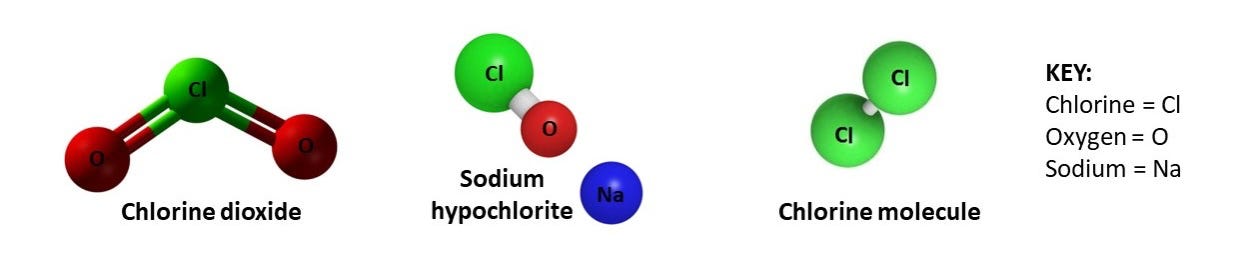
Chlorine dioxide has been used to purify water for over 100 years, but it is now also used internally. Many people are wary of chlorine dioxide, confusing it with bleach or chorine. Dissolved in water, it forms Chlorine Dioxide Solution (CDS), a yellow gas in liquid that breaks down to oxygen and harmless chloride ions (as in table salt).
On the other hand, bleach is a transparent solution of sodium hypochlorite, which should definitely not be taken internally. Chlorine dioxide is also not molecular chlorine, which consists of two chlorine atoms and exists as a corrosive gas.
.Chlorine dioxide is a completely different molecule from either bleach or chlorine.
Chlorine dioxide is known as an oxidant, and oxidants have a bad reputation, as they can damage cells through the production of free radicals and reactive oxygen species (ROS). But Dr Kalcker points out that viewing oxidation as something negative is irrational; it is a natural and necessary process of life that needs to be better understood and optimised.
Oxidants can be toxic or helpful in the body – it depends on voltage differences. Fluorine, for example, is a toxic oxidant due to its very high voltage (2,870 mV) and hydroxyl groups (OH-) that harm the cells. Our cells work best at voltages between 1,000 and 1,500 mV, and oxygen – an oxidant essential to life – falls within this range. At the lower end of the range, chlorine dioxide, with a voltage of 940 mV, does not produce hydroxyl groups and is safe for human cells; however, it destroys bacteria, fungi, and heavy metals, which have lower voltages and are therefore oxidised.
What’s interesting is that chlorine dioxide can work both as both an oxidant (neutralising pathogens) and an antioxidant (reducing damaging hydroxyl groups). It therefore plays the role of a modulator, restoring electrical charges within a voltage range that is perfect for the human cell.
Dr Kalcker has come to view illness as a lack of energy related to poor mitochondrial function and metabolic acidosis. He sees chlorine dioxide as helping to address this by providing the cells with oxygen. While oxygen is normally transported to the tissues in red blood cells, chlorine dioxide is so tiny (three atoms only) that it can diffuse anywhere in the body. In effect, the chloride ion is the carrier that takes oxygen to tissues with an acidic pH and releases millions of oxygen molecules, supporting the cells to produce energy, and therefore to heal.
Despite mainstream media denials, large clinical trials during the Covid-19 period showed that CDS was highly efficacious in treating and preventing Covid-19 disease. A study of over 1,000 patients showed 99.3% efficacy, with recovery within only four days compared with nearly a month with standard treatments. While six percent of patients experienced minor side effects (dry mouth, headaches), there were no adverse effects. Another clinical trial of 1,000 people living with patients infected with coronavirus was over 98% effective prophylactically. One of the most exciting findings was that a number of people treated with CDS found that other serious conditions resolved, including high blood pressure, diabetes, and even end-stage cancers. Dr Kalcker feels that CDS and its mechanisms of action represent the biggest discovery in medicine over the past hundred years.
How do you make CDS?
CDS is a concentrated 0.3% aqueous solution of chlorine dioxide with a neutral pH, lacking sodium chlorite (NaClO2). For step-by-step instructions on how to produce it yourself, see the video of Dr Kalcker’s protocol.
When we’re stuck in a well-established paradigm, it’s really hard to embrace radical change. Being sceptical of unfamiliar ideas is normal! But just as a shipbuilder working on one of Columbus’s caravels would never have imagined flying from the Old World to the New World in a winged metal tube, so we need to be willing to unlearn much of what we know in order to create a Better Way for medicine. Electro-molecular medicine offers many insights to help us forge a path beyond Big Pharma-captured medicine, which has clearly lost its way.
While there are still many aspects that need to be explored further when it comes to Chlorine Dioxide, the results seen thus far have indeed been promising.
Watch the full interview in the following link:
https://worldcouncilforhealth.org/multimedia/chlorine-dioxide-solution/ Video Here (Approx. 53 Min)
Scroll to about the 14:00 mark to hear the interview.
Transforming Health and Sanitation: The Breakthrough of Chlorine Dioxide Solution
You can also find this video on: Bitchute | Rumble | Facebook | Gettr | Twitter
Join us as Dr Tess Lawrie sits down with Dr Andreas Kalcker, a pioneer in alternative health solutions. Together, they explore the potential and controversies surrounding Chlorine Dioxide. Dr Kalcker shares his insights on Chlorine Dioxide, a compound that’s been the center of heated debates in the realms of health and sanitation.
With Dr Lawrie’s critical eye and Dr Kalcker’s extensive research, this interview promises to shed light on the science, the myths, and the real-world applications of this controversial solution.
About Dr Andreas Kalcker
- Andreas Kalcker is a biophysicist of German origin who has lived a large part of his life in Spain and has been residing in Switzerland for several years.
- He has researched and registered several international patents related to the therapeutic use of chlorine dioxide for hypoxia, inflammation, infection, sepsis, and SARS-CoV-2.
- Dr Kalcker’s thesis and experience were extensively discussed in his first book, CDS – Health is Possible. Years later, the publication of his second book, Forbidden Health, demonstrates how the recovery of diseases from A to Z, once considered incurable, achieves remarkable success but sparks a wide controversy in the world of conventional science and the “establishment”.
- Currently, Dr Kalcker, through the International ALK Foundation, continues the comprehensive research of the ClO2 molecule in the form of CDS. He is also developing multidisciplinary projects in vital areas for human well-being, such as water treatment, agriculture, veterinary medicine, sanitary hygiene, and potential therapeutics from an electromolecular approach.
- Learn more at andreaskalcker.com.
(See link for article and video)
_______________
For more:

 JAMA Network (Martinson, M.L. and Lapham, J.) 02.15.2024, published “Prevalence of Immunosuppression Among US Adults.” In this study, researchers found that