Dr. Phillips Completely Trounces CDC
Oh, this is good – and it’s going to make your day.
https://www.facebook.com/FOX5NY/posts/10154433090686320:0

Oh, this is good – and it’s going to make your day.
https://www.facebook.com/FOX5NY/posts/10154433090686320:0
For those of you who really need TRUTH, please watch this. Although it’s a bit long, Phillips hits things head on.
My only beef is his statement about tick activity occurring at 35 degrees and warmer.
Again – tick activity – ANYTIME!
https://madisonarealymesupportgroup.com/2016/01/20/polar-vorticks/ Deer ticks alive and well after 24 hours in minus 3 degree temps.
He talks about sexual and congenital transmission, and via breast milk at the end.
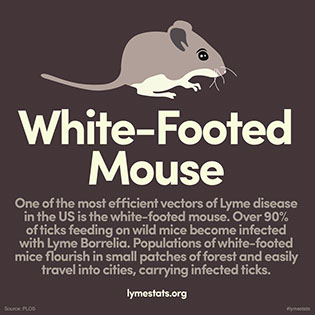
MIT evolutionary biologist Kevin Esvelt wants to let thousands of genetically engineered white-footed mice loose on Nantucket Island in hopes of breaking the cycle of Lyme (borrelia) infection.
Esvelt explains:
“[The GE technique involves] taking immune cells from an exposed mouse that has protective antibodies and moving the genes encoding those antibodies into the second mouse.
“If we insert the antibody-encoding genes into the genomes of mouse reproductive cells, they will pass immunity on to their offspring. Our plan is to vaccinate many mice against Lyme or tick saliva, identify the most protective antibodies, then encode them all into the reproductive cells of other mice. In this way, we can take the total immune capacity of many different vaccinated mice and give it all to future mouse generations.”
Esvelt explains exactly how this is done:
“We will insert several copies of each protective antibody at neutral sites in the mouse genome using CRISPR, a genome editing tool that lets us precisely edit just about any DNA sequence in any organism. The resulting mice will be engineered to be immune (to either Lyme or tick bites or both), but will be 100 percent mouse with respect to their DNA. Any of their offspring that inherits a copy will be similarly protected, so adding multiple copies means that each mouse counts for several when it comes to protecting future generations.”
The project would take tens or hundreds of thousands of GE mice to be released over a period of years in a small area. The only way it would work in large areas is if they used foreign non-mouse DNA.
Anyone feel like they are in a bad Syfy flick yet? And I have a feeling that “foreign non-mouse DNA” sounds much nicer than it is.
Even the European union has ruled that CRISPR plants are GMO’s and should be regulated as strictly: https://www.technologyreview.com/the-download/611716/in-blow-to-new-tech-europe-court-decides-crispr-plants-are-gmos/
“It means for all the new inventions … you would need to go through the lengthy approval process of the European Union,” Kai Purnhagen, an expert at Wageningen University in the Netherlands, told Nature.
Questioning the practice, University of British Columbia infectious disease expert Jan Hajek, states:
“I wonder how much the scientific interest of the researcher to be innovative and advance our knowledge and ability to manipulate mouse genetics on both an individual and population level is driving this research and how much is the desire to reduce the impact of Lyme disease. It is an important question to ask — especially if public funds and hundreds of thousands of mice are to be used.I am not against bioengineering. I acknowledge the value of innovation and advancing basic science knowledge. However, I also recognize that both Lyme disease and animal welfare are pressing and important concerns.”
Hajek doesn’t support the project at this point and states:
“We have ways to tackle Lyme disease we are not using. We make excuses for needing more animal experimentation and research for the sake of human health — when we do not even use the means already available to us.”
Hajek says distributing vaccine-laden bait to mice has already been shown to reduce the rates of B. burgdorferi infection in ticks.
Why do I get the distinct feeling that what is driving all of this is money with enormous projects involving tons of manufacturing, animals, insects, https://madisonarealymesupportgroup.com/2015/12/28/frankinbugs/, vaccines, https://madisonarealymesupportgroup.com/2016/03/08/fixation-on-zikapolio/ and patents?
I guess going through hell on steroids for over ten years and coughing up about $150K for MSIDS treatment (multi systemic infectious disease syndrome or Lyme with friends), for my husband and I has turned me into a skeptic.
I continue to be baffled by the lack of research on things that will help patients today such as better testing and diagnostics, better treatments, insurance coverage, and practical help on deterring ticks from our yards and bodies.
https://www.lymedisease.org/new-studies-morgellons/ Two new studies presented at the recent CEHMDF annual meeting in Texas show a bacterial, infective process.
“Morgellons disease is a multi-system illness characterized by the formation of unusual, sometimes brightly colored fibers within skin. It is a debilitating, painful and life impacting condition. In addition to slowly healing skin lesions, an array of multi-system symptoms can occur, including fatigue, joint and muscle pain, intestinal problems and neurological symptoms including behavioral changes. Patients with Morgellons disease may shed unusual particles from the skin described as fibers, “sand” or seed-like black specks, or crystallized particles.”
Many medical professionals believe Morgellons sufferers suffer from delusions.
In both 2013 and 2015, international scientists contradicted this theory by showing borrelia spirochetes in skin samples. But, similarly to MSIDS (multi systemic infectious disease syndrome or Lyme with friends) denial, most mainstream doctors deny the science.
Two additional laboratories (Oklahoma State and IGenex) have now replicated finding multiple bacterial species as well as three different species of borrelia DNA in Morgellons skin samples.
Defending Morgellon’s patients, Oklahoma State’s Dr. Wymore states,
“Collectively, the research into Morgellons disease clearly shows a bacterial, infective process in these patients. In contrast, and despite the bombastic claims of some, there is zero convincing, scientific evidence that Morgellons is a psychogenic illness.”
The CEHMDF is the recognized authority and primary funding source for Morgellons disease medical-scientific research. There are neither grants, nor any other public or private funding to support research for Morgellons. Donations are tax deductible in the US. To learn more about Morgellons disease go to www.MorgellonsDisease.org.
http://news.yale.edu/2016/06/06/combination-therapy-cures-tick-borne-illness-mice
Yale researchers have found that combining atovaquone and ELQ-334, at low doses, cleared Babesia in mice and prevented recurrence up to 122 days.
ELQ stands for Endochin like quinolone and is a preclinical candidate that targets the liver and blood stages of malarial organisms.
http://malariajournal.biomedcentral.com/articles/10.1186/1475-2875-13-339 It’s been known since 1948 that Endochin has anti-malarial properties; however, it has proven to be ineffective in vivo against human malaria. Recent advances have suggested revisiting previously abandoned lead molecules to be possible viable anti-malarial drug candidates.
http://www.ncbi.nlm.nih.gov/pubmed/23019377 ELQ-271 and ELQ-316 are effective against acute and latent toxoplasmosis.
When I asked my pharmacist about the ELQ’s, he said he couldn’t find anything about the manufacturing process, and that as far as side effects, there won’t be a much information available until ELQ-334 proceeds further in the approval process. Sometimes side effects don’t show up until well after drugs have been on the market. He also stated that there were only 800 cases of neuropathy from 1998-2013 reported to the FDA for quinolines.
While I could be wrong, Endochin like quinolone could possibly mean it is made with fluoride.
http://articles.mercola.com/sites/articles/archive/2009/07/18/antibiotics-to-avoid–the-plague-due-to-fdas-oversight-failure.aspx Quinolones are made with fluoride, which enables them to penetrate into tissue, including your brain. This ability is what makes them valuable against tick borne infections.
Omniflox, Raxar, Trovan, Zagam, and Tequin have all been banned due to their side effects; however, Cipro, Levaquin, Avelox, and Floxin continue to be prescribed.
In Dr. Cohen’s 2001 study, the following side effects were documented:
*Nervous system symptoms occurred in 91 percent of patients (pain, tingling and numbness, dizziness, malaise, weakness, headaches, anxiety and panic, loss of memory, psychosis)
*Musculoskeletal symptoms in 73 percent of patients (tendon ruptures, tendonitis, weakness, joint swelling)
*Sensory symptoms in 42 percent of patients (tinnitus, altered visual, olfactory, and auditory function)
*Cardiovascular symptoms in 36 percent of patients (tachycardia, shortness of breath, chest pain, palpitations)
*Skin reactions in 29 percent of patients (rashes, hair loss, sweating, intolerance to heat or cold)
*Gastrointestinal symptoms in 18 percent of patients (nausea, vomiting, diarrhea, abdominal pain)
A comprehensive list of reactions can be found at Dr. Cohen’s site Medication Sense.
According to Dr. Mercola, quinolones are too often prescribed for minor problems such as sinus, bladder, and prostate infections. He feels these super-antibiotics should be used as a last line of defense.
Be armed with facts to make an informed decision about these antibiotics with your LLMD (Lyme literate doctor). One of the most experienced LLMD’s in Wisconsin states that he has used quinolones for over 20 years without tendon rupture. It’s important to notify your doctor immediately if you notice symptoms such as tendon pain or anything else that doesn’t seem right.

