Archive for the ‘research’ Category

Babesiosis Could Be More Common in Sweden Than Previously Thought

https://www.ncbi.nlm.nih.gov/pubmed/31265116/

2019 Jun 28;116. pii: FL4D.

Babesiosis could be more common in Sweden than previously thought

[Article in Swedish]

Abstract

Babesia is a malaria-like, intraerythrocytic parasite with more than 100 different species. It is a zoonosis and some of the species are transmitted to humans by ticks and also as a possible transfusion-transmitted infection. In Sweden the disease has been well known in veterinary medicine for a long time, but only a few but severe cases have been published in humans during the last decades. Common symptoms from human Babesia infections (babesiosis) are fever, chills and myalgia and they vary from subclinical to potentially fatal among those with risk factors such as immunosuppression and splenectomy. In the U.S. more than 2,000 cases of babesiosis are found yearly and it is one of the most frequent fatal infections following blood transfusion. A study from southern Sweden has recently revealed a seroprevalence of 16% of Babesia antibodies among Borrelia-infected persons. These results indicate that there is a need to broaden awareness of Babesia in Sweden.

_________________

**Comment**

This abstract underplays the prevalence of Babesia. Not sure why they state it is a possible transfusion-transmitted infection when the Red Cross recently came out with a test to screen Babesia for blood.  It’s an obvious problem:

https://madisonarealymesupportgroup.com/2019/07/11/characteristics-of-transfusion-transmitted-babesia-microti-american-red-cross-2010-2017/

Here’s an even earlier article going transfusion-transmission:  https://madisonarealymesupportgroup.com/2016/12/15/blood-screening-for-babesia/  of those confirmed to be positive, 20% were PCR-positive, with 13% antibody-negative.

Here we have babies contracting it from blood:  https://madisonarealymesupportgroup.com/2017/09/27/premature-infants-develop-babesia-via-blood-transfusion

Here we have people contracting Babesia from transfusions, even in non-endemic areas.  https://madisonarealymesupportgroup.com/2017/08/08/transfusion-transmitted-babesiosis-in-nonendemic-areas/   Excerpt:

“Asymptomatic individuals with Babesia infection are able to donate blood in the United States because of the lack of specific blood donation testing. Blood products collected in Babesia-endemic areas are distributed nationally; thus, clinicians in nonendemic states may fail to include babesiosis in the differential diagnosis of a patient who had a recent transfusion history and a fever of unknown origin.”  

In the abstract, those with Lyme also had a seroprevalence of 16% of Babesia antibodies. In this study,  https://madisonarealymesupportgroup.com/2016/11/19/seroprevalence-of-babesia-in-individuals-with-ld/  it was nearly 29%. To me this demonstrates those with Lyme are at risk for Babesia and other pathogens.

To date, little work has been done on concurrent infections, and has been underplayed for decades.

The most important, recent work demonstrating multiple pathogen involvement:  https://madisonarealymesupportgroup.com/2018/10/30/study-shows-lyme-msids-patients-infected-with-many-pathogens-and-explains-why-we-are-so-sick/  This shows Lyme patients are at risk for not only other tick borne illnesses but opportunistic infections as well.  This is what we experience and see in the real world of Lymeland.

I don’t think mainstream medicine has a clue how important concurrent infection is.

http://www.nejm.org/doi/full/10.1056/NEJM199807163390304  When left untreated, silent babesial infection may persist for months or even years. Although treatment with clindamycin and quinine reduces the duration of parasitemia, infection may still persist and recrudesce and side effects are common. Improved treatments are needed.

Dr. Krause published in the New England Journal of Medicine that when a patient has Lyme and Babesia, Lyme is found three-times more frequently in the blood, proving Babesia suppresses the immune system.  http://danielcameronmd.com/babesia-and-lyme-its-worse-than-you-think/

https://madisonarealymesupportgroup.com/2017/06/28/concurrent-babesiosis-and-lyme-in-patient/   Dr. Horowitz warns that due to this immune suppression,patients with Rheumatoid Arthritis or Lupus and are on immunosuppressant drugs, if they have Babesia, could get much worse. The strain, B. divergens, causes a higher mortality rate and more severe symptoms, and if left untreated, this strain can develop into shock-like symptoms with pulmonary edema and renal failure.

More on Babesia:  https://madisonarealymesupportgroup.com/2016/01/16/babesia-treatment/  Dr. Horowitz, a nationally recognized LLMD, states Babesia is one of the most tenacious coinfections he sees in his patients and that treatment often takes 9 months to a year, particularly with those also infected with Lyme disease (borrelia).  Treatment options for you to discuss with your practitioner in this link.  


Characteristics of Transfusion-Transmitted Babesia Microti, American Red Cross 2010-2017

https://www.ncbi.nlm.nih.gov/pubmed/31250463/

2019 Jun 27. doi: 10.1111/trf.15425. [Epub ahead of print]

Characteristics of transfusion-transmitted Babesia microti, American Red Cross 2010-2017.

Abstract

BACKGROUND:

Babesia microti, a red blood cell (RBC) parasite transmitted naturally to vertebrate hosts by ixodid ticks, is endemic to the northeastern and upper midwestern United States, with the geographic range of infected ticks expanding. B. microti is a blood safety issue with >200 transfusion-transmissions reported.

METHODS:

The American Red Cross’s Hemovigilance program investigated hospital-reported transfusion-transmitted babesiosis (TTB) cases. Follow-up samples from involved donors were tested for B. microti antibodies and parasite DNA, the latter by real-time polymerase chain reaction (PCR). Test-positive donors were permanently deferred from future donations.

RESULTS:

B. microti-positive donors were implicated in 77 of 143 suspect TTB cases investigated from 2010 through 2017. In four cases, two positive donors were identified for a total of 81 positive donors. In three cases, a RBC unit was split and components transfused multiple times to the same pediatric recipient. RBCs were the transmitting product in all cases. At follow-up, all involved donors were antibody positive; 25 donors were also PCR positive. Positive donations were collected throughout the year, peaking in the summer. Most donors (78) were resident of, or traveled to (2), an endemic state. One donor resided in a non-endemic state without relevant travel history. One fatality listed babesia as a contributing factor. No implicated donation was screened by an investigational protocol.

CONCLUSIONS:

Babesiosis remains a blood safety issue. Prior to FDA-licensed screening test availability and final FDA Guidance, blood collectors in endemic states investigationally tested none, a portion, or all collections. Future expanded testing will reduce the frequency of TTB cases.

_________________

**Comment**

This clearly shows there were more than 200 Babesia transfusion-transmissions reported. It also shows you don’t have to reside in an endemic area or travel to an endemic area to get it. The article also clearly points out that the geographic range of ticks is expanding, which means the pathogens they carry will as well.

More on Babesia:  https://madisonarealymesupportgroup.com/2016/01/16/babesia-treatment/

Babesia, as well as Lyme is under reported. Research hardly exists on those with both. We desperately need to know what concurrent infection is doing to patients. It only makes logical sense that their cases are more severe and of greater duration, yet mainstream research and medicine doesn’t blink at this issue:

Going back to 1998, it was known that when a patient has Lyme and Babesia, Lyme is found three-times more frequently in the blood, causing greater symptoms, disease severity, and duration of illness:  https://reference.medscape.com/medline/abstract/8637139

What happens when a patient has Lyme, Babesia, and Bartonella and maybe a few viruses thrown in for good measure?  Nobody’s studied this, yet it is common scenario in Lyme-land:  https://madisonarealymesupportgroup.com/2018/10/30/study-shows-lyme-msids-patients-infected-with-many-pathogens-and-explains-why-we-are-so-sick/

Chronic Inflammation Removes Motivation By Reducing Dopamine in the Brain

https://www.news-medical.net/news/20190605/Chronic-inflammation-removes-motivation-by-reducing-dopamine-in-the-brain.aspx

Chronic inflammation removes motivation by reducing dopamine in the brain

June 5, 2109

Written by Dr. Liji Thomas

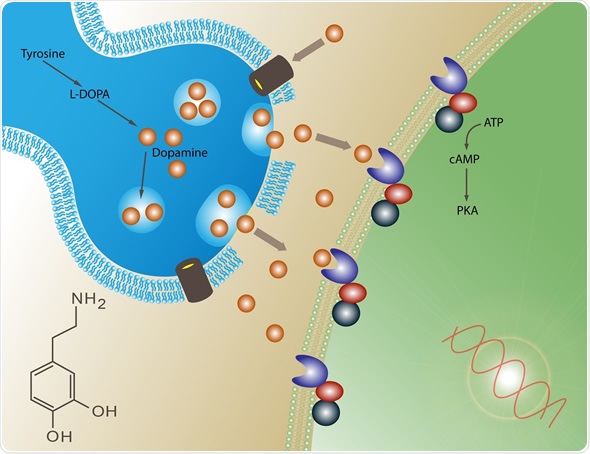
Why do we feel listless when we are recovering from an illness? The answer is, apparently, that low-grade chronic inflammation interferes with the dopaminergic signaling system in the brain that motivates us to do things.

This was reported in a new paper published in the journal Trends in Cognitive Sciences.

The research carried out at Emory University explains the links between the reduced release of dopamine in the brain, the motivation to do things, and the presence of an inflammatory reaction in the body. It also presents the possibility that this is part of the body’s effort to optimize its energy expenditure during such inflammatory episodes, citing evidence gathered during their study.

The authors also published an experimental framework based on computational tools, devised to test the theory.

The underlying hypothesis is that the body needs more energy to heal a wound or overcome an infection, for instance, both of which are associated with low-grade inflammation. To ensure that energy is available, the brain uses an adaptive technique to reduce the natural drive to perform other tasks which could potentially drain away the energy needed for healing. This is essentially a recalibration of the specialized reward neurons in the motivation center of the brain, so that ordinary tasks no longer feel like they’re worth doing.

According to the new study, the mechanism of this recalibration is immune-mediated disruption of the dopamine pathway, reducing dopamine release.

The computational technique published by the scientists is designed to allow experimental measurements of the extent to which low-grade inflammation affects the amount of energy available, and the decision to do something based on the effort needed. This could allow us to better understand why and how chronic inflammatory states cause a lack of motivation in other disease conditions as well, including schizophrenia and depression.

Andrew Miller, co-author of the study, says,

“If our theory is correct, then it could have a tremendous impact on treating cases of depression and other behavioral disorders that may be driven by inflammation. It would open up opportunities for the development of therapies that target energy utilization by immune cells, which would be something completely new in our field.”

It is already known that immune cells release cellular signaling molecules called cytokines, which affect the functioning of the dopamine-releasing neurons in the area of the brain called the mesolimbic system. This area enhances our willingness to work hard for the sake of a reward.

Dopamine

Image Copyright: Meletios, Image ID: 71648629 via shutterstock.com
Recently, it was discovered that immune cells also enjoy a unique capability to shift between various metabolic states, unlike other cells. This could affect cytokine release patterns in such a way as to signal the brain to conserve available energy for the use of the immune system.
These facts were the foundation of the new hypothesis, which explains it in terms of evolutionary adaptation. In the hypothetical early environment, the immune system, faced with abundant microbial and predatory challenges, needed tremendous amounts of energy. It therefore had its own mechanism to signal other body systems, via the mesolimbic dopamine system, to control the use of energy resources during periods when the organism was undergoing severe or sudden stress.
Modern life is relatively soft and less challenging. With less physical activity, low-grade inflammation is chiefly due to factors such as obesity, chronic stress, metabolic syndrome, aging and other lifestyle illnesses. This could mistakenly cause the mesolimbic dopamine neurons to produce less dopamine. Lower dopamine levels in turn decrease the motivation for work, by reducing the perception of reward while increasing the perception of effort involved. This ultimately conserves energy for use by the immune system.
Previous studies by Miller as well as other scientists have shown that a high level of immune functioning in association with low levels of dopamine and reduced motivation characterizes some cases of schizophrenia, depression and certain other mental health conditions.
The scientists do not think these disorders are caused by the low-grade inflammation, but that some people who have these illnesses are hypersensitive to immune cytokines. This could in turn cause them to lose motivation for daily living.
The scientists are currently performing a clinical trial on people with depression, to test the theory using the computational framework.


Source: Treadway M. T. et al., (2019). Can’t or Won’t? Immunometabolic Constraints on Dopaminergic Drive. Trends in Cognitive Sciences. https://doi.org/10.1016/j.tics.2019.03.003

________________

**Comment**
Interestingly,
2017 May;3(3). doi: 10.15761/JSIN.1000163. Epub 2017 May 11.

Lyme and Dopaminergic Function: Hypothesizing Reduced Reward Deficiency Symptomatology by Regulating Dopamine Transmission.

Abstract

The principal vector of Lyme disease in the United States is Ixodes scapularis: black legged or deer ticks. There is increased evidence that those infected may be plagued by anxiety or depression as well. Researchers have identified transcripts coding for two putative cytosolic sulfotransferases in these ticks, which recognized phenolic monoamines as their substrates. It is hypothesized that protracted Lyme disease sequelae may be due to impairment of dopaminergic function of the brain reward circuitry. The subsequent recombinant proteins exhibited sulfotransferase function against two neurotransmitters: dopamine and octopamine. This, in itself, can reduce dopamine function leading to many Reward Deficiency Syndrome behaviors, including depression and possibly, anxiety. In fact, it was shown that activity of Ixosc Sult 1 and Sult 2 in the Ixodid tick salivary glands might contain inactivation of the salivation signal through sulfonation of either dopamine or octopamine. This infraction results in a number of clinically observed mood changes, such as anxiety and depression. In fact, there are common symptoms observed for both Parkinson and Lyme diseases. The importance of understanding the mechanistic and neurobiological effects of Lyme on the central nervous system (CNS) provides the basis for pro-dopamine regulation as a treatment. WC 195.

Great article on dopamine:  https://suzycohen.com/articles/depression_low_dopamine/ Excerpt:

Dopamine deficiency will cause you to wake up sluggish in the morning, usually with brain fog, but you might feel happier and suddenly more enthusiastic with a “hit” of some sort, perhaps a cup of coffee.  Low dopamine (as opposed to low serotonin) causes a different kind of depression, one that is hallmarked by a lack of pleasure.


Seroepidemiological & Molecular Investigation of Spotted Fever Group Rickettsiae & Coxiella Burnetii in Sao Tome Island: A One Health Approach

https://www.ncbi.nlm.nih.gov/pubmed/31231971

Seroepidemiological and molecular investigation of spotted fever group rickettsiae and Coxiella burnetii in Sao Tome Island: A One Health approach.

Abstract

Spotted fever group rickettsiae (SFGR) and Coxiella burnetii are intracellular bacteria that cause potentially life-threatening tick-borne rickettsioses and Q fever respectively. Sao Tome and Principe (STP), small islands located in the Gulf of Guinea, recently experienced a dramatic reduction in the incidence of malaria owing to international collaborative efforts. However, unexplained febrile illnesses persist. A One Health approach was adopted to investigate exposure to SFGR and C. burnetii in humans and examine the diversity of these bacteria in ticks parasitizing domestic ruminants. A cross-sectional human serological study was conducted in Agua Grande district in Sao Tome Island from January to March 2016, and ticks were collected from farmed domestic ruminants in 2012 and 2016. In total, 240 individuals varying in age were randomly screened for exposure to SFGR and C. burnetii by indirect immunofluorescence assay. Twenty of 240 individuals (8.3%) were seropositive for SFGR (4 for Rickettsia africae and 16 for R. conorii) and 16 (6.7%) were seropositive for C. burnetii. Amblyomma astrion were collected exclusively in 2012, as were A. variegatum in 2016 and Rickettsia spp. were detected in 22/42 (52.4%) and 49/60 (81.7%) respectively. Sequence analysis of multiple gene targets from Rickettsia spp. detected in ticks suggests the presence of a single divergent R. africae strain (Sao Tome). While no ticks were found positive for C. burnetii, Coxiella-like endosymbionts were detected in nearly all ticks.

This is the first study in STP to provide serological evidence in humans of SFGR and C. burnetii and additional molecular evidence in ticks for SFGR, which may be responsible for some of the unexplained febrile illnesses that persist despite the control of malaria. Future epidemiological studies are needed to confirm the occurrence and risk factors associated with SFG rickettsioses and Q fever in both humans and animals.

____________________

For more:  https://madisonarealymesupportgroup.com/2019/03/20/rocky-mountain-spotted-fever-is-not-the-only-rickettsiosis/

Great article on SFGR: https://www.galaxydx.com/rickettsia-spp/

C. burnetii:  https://madisonarealymesupportgroup.com/2019/03/28/human-tick-borne-diseases-in-australia/

https://madisonarealymesupportgroup.com/2018/10/18/study-finds-q-fever-rickettsia-typhus-in-australian-ticks-and-people/

https://madisonarealymesupportgroup.com/2018/02/03/understanding-q-fever-risk-to-minnesotans/  Excerpt: 

The CDC reports that 60% of cases are in patients without livestock contact (CDC unpublished data, 2010) and the need for health-care professionals to consider Q fever in the differential diagnosis in patients with a compatible illness, even in the absence of occupational risk or history of direct contact with animal reservoirs.

Supposedly, he United States ended its biological warfare program in 1969. When it did, C. burnetii was one of seven agents it had standardized as biological weapons.  https://en.wikipedia.org/wiki/Coxiella_burnetii

Q Fever can cause acute or chronic illness.

https://www.medscape.com/viewarticle/803800
Excellent video by Alicia Anderson, DVM, MPH on new CDC guidelines for Q Fever

https://madisonarealymesupportgroup.com/2019/06/24/other-arthropod-borne-bacteria-causing-nonmalarial-fever-in-ethiopia/  African patients presenting with fever but testing negative for malaria had DNA for these pathogens: Borrelia spp., Francisella spp. Rickettsia spp. and Bartonella. Thus, in this rural area of Africa, febrile symptoms could be due to bacteria transmitted by arthropods.


Volunteers Needed For Research – ME/CFS, MS, RA, & Post Cancer Fatigue

The Open Medicine Institute that is setting up the Lyme Clinic at Howard Young Medical Center in Woodruff, WI. is looking for children with lyme, ages 10-17 to participate in a study. The institute is paying $75 per-participant. They’re looking for adult lyme patients as well. You can contact Open Medicine as per-below. I believe they’ll mail kits to those out of the area.

Volunteers for Medical Study

Re: Myalgic Encephalomyelitis (ME)/Chronic Fatigue Syndrome (CFS)

Looking for patients diagnosed with Multiple Sclerosis, Post-Cancer Fatigue, or Rheumatoid Arthritis

Dear Volunteer,

The Open Medicine Institute (OMI) and the Centers for Disease Control (CDC) are running a study of “ill” individuals compared to CFS patients and “normal” healthy patients.

  • Eligible individuals may be asked to re-participate;
  • will be paid $75 for completing the study

We are asking for your help to ask anyone that you know between 18 and 70 years of age with one of the aforementioned diagnoses to help millions of ME/CFS individuals and loved ones.  Interested parties can sign up by emailing research123@openmedicineinstitute.org along with your contact information and availability to come into the OMI office at

319 North Bernardo Ave.

Mountain View, CA 94043

Volunteers are asked to do the following (at no cost):
  1. Fill out a set of online questionnaires via a secure patient portal (this can be used as your own electronic medical record and is yours for free to use on-going);
  2. visit the OMI Office for a physical exam;
  3. have a blood draw;
  4. collect saliva swabs done at home the day before the exam (home kit shipped upon appointment scheduled).
  5. Incentive payment will be mailed upon completion.

If you have any additional questions, please contact the research team at
research123@openmedicineinstitute.org or call (650) 433-8930 x 4005