Archive for the ‘Lyme’ Category

Bb in S. Italian Ectoparasites & Reptiles

https://www.ncbi.nlm.nih.gov/pubmed/30646928

2019 Jan 15;12(1):35. doi: 10.1186/s13071-019-3286-1.

Borrelia burgdorferi (sensu lato) in ectoparasites and reptiles in southern Italy.

Abstract

BACKGROUND:

Borrelia burgdorferi (sensu lato) is a complex containing pathogenic bacteria of which some species, such as Borrelia lusitaniae, use birds, small mammals and reptiles as reservoirs. In Italy, the bacteria have been detected in reptilian and avian reservoirs in the northern and central regions.

RESULTS:

Here, 211 reptiles from three orders [Squamata (Sauria with seven species in five families and Ophidia with 11 species in three families), Crocodylia (one family and two species), and Testudines (two families and two species)] were examined for ectoparasites and molecular detection of B. burgdorferi (s.l.) in three different sites of southern Italy, an area for which no information was previously available on the occurrence of borreliosis in animals and humans. Borrelia lusitaniae was molecularly detected in larvae and nymphs (11.6%) of Ixodes ricinus infesting lizards (i.e. Podarcis muralis, Podarcis siculus and Lacerta bilineata) and in 12.3% blood samples of P. siculus. Finally, B. lusitaniae and Borrelia garinii were detected in 5.1% (32/630) of questing I. ricinus.

CONCLUSIONS:

These results show the circulation of B. lusitaniae in southern Italy and suggest that P. siculus could play a role as a reservoir, representing a potential medical threat to humans living in or visiting these localities.

______________________

**Comment**

All we really hear about is the white footed mouse; however, this article clearly shows the importance of reptiles:  https://madisonarealymesupportgroup.com/2018/06/25/the-confounding-geography-of-lyme-disease-in-the-u-s/

Wisconsin has its share of reptiles that can serve as hosts for ticks.  Researchers working at Fort McCoy near Sparta, as part of a multi-university project Michigan State ecologist Jean Tsao leads, have collected deer ticks from five-lined skinks and snakes.

But reptiles are simply not as prominent in the state as Borrelia-spreading rodents. The five-lined skink’s range in Wisconsin includes a roughly Y-shaped swath of the state, which doesn’t include the northwestern counties that tend to see the highest Lyme infection rates. (White-footed mice are found just about all over the state.)

https://madisonarealymesupportgroup.com/2017/12/03/biologists-at-sf-state-dig-into-ticks-and-ld/

Other articles point out the importance of squirrels and other rodents:  http://www.smgebooks.com/lyme-disease/chapters/LD-16-03.pdf

For far too long, authorities have tried to put all of this into a little white box and simplify it when nothing could be further from the truth.  Everything about Lyme/MSIDS is complex.  This isn’t just a Northern problem consisting of deer and white footed mice.  This is a global problem consisting of numerous reservoirs.

This is a pandemic with many reservoirs.  

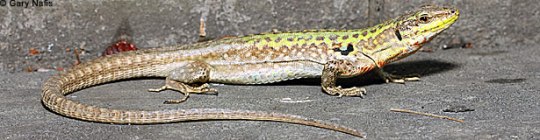
http://www.californiaherps.com/lizards/pages/p.siculus.htmlxpodarcissp410alongSouthern Italian Wall Lizard – Podarcis siculus siculus (Rafinesque-Schmaltz, 1810) 
 

CAPC Study: Lyme Disease Spreading to Regions Once Thought Low-risk

http://veterinarynews.dvm360.com/capc-study-lyme-disease-spreading-regions-once-thought-low-risk

CAPC study: Lyme disease spreading to regions once thought low-risk

Condition in dogs could signal increasing threat to people, researchers say.

Jan 19, 2019

By dvm360.com staff

DVM360 MAGAZINE

(andriano cz/stock.adobe.com)

The Companion Animal Parasite Council (CAPC) recently released a study that shows that Lyme disease is spreading to regions not previously thought to be at risk for tick-borne disease. States such as Illinois, Iowa, North Dakota, Ohio, Michigan, West Virginia and Tennessee have all seen an increase in the prevalence of Lyme disease, according to a media release discussing the study, which CAPC conducted from January 2012 to December 2016. Results from the study were recently published in Environmetrics.

“The results of this milestone study show increasing risk for Lyme disease in endemic areas and pinpoint regions in the U.S. where Lyme is spreading—areas not historically considered endemic,” says Michael Yabsley, PhD, a professor in the Department of Population Health, College of Veterinary Medicine and Warnell School of Forestry and Natural Resources at the University of Georgia. “This expanding risk of Lyme disease demands heightened vigilance in protecting both our pets and our families.”

New research from CAPC found that the prevalence of Lyme disease is trending up in areas previously thought to be at a lower risk for tick-borne diseases. (Image courtesy of CAPC)

The study was motivated by the increase in Lyme disease cases in the U.S. and, in particular, in states not traditionally considered Lyme-endemic, the release states. Results suggest that:

  • Canine prevalence rates for Lyme disease are rising.
  • Lyme prevalence rates are increasing most in areas where the pathogen has encroached recently.
  • Lyme prevalence in dogs is rising in states traditionally not considered to be of high Lyme risk, suggesting that human risk may also be increasing in these areas, including regions in Illinois, Iowa, North Dakota, Ohio, Michigan and Tennessee.
  • Significant increases in canine Lyme prevalence have been seen in some areas that are not yet reporting significant human incidence. Researchers speculate that canine prevalence is more sensitive to changes in Lyme risk and could serve as an early warning system for changes in human risk.

The study was created to investigate regional trends in the prevalence of antibodies to Borrelia burgdorferi, the disease-causing bacterium of Lyme disease, according to the release. To conduct the research, the CAPC team analyzed more than 16 million Lyme tests from domestic dogs in the U.S. over 60 months. The serologic data was provided by IDEXX Laboratories.

“CAPC research shows the risk for Lyme disease is not static. The way it’s changing varies spatially across the country,” says Christopher McMahan, associate professor in the department of mathematical sciences at Clemson University, in the release.

Crucial in the fight against Lyme, Yabsley says, is year-round tick protection. Different species of ticks are active all 12 months of the year, and ticks that transmit Lyme are active at different times in the year in different regions, the release states. For instance, as you move further south, adult ticks are more active in the winter.

“I’ve been practicing for over 34 years in Nashville where many people don’t think Lyme disease is a concern. But I’ve seen canine Lyme increasing in Tennessee for several years and regularly test and vaccinate for the disease,” says Craig Prior, BVSC, CVJ, a veterinarian and former owner of VCA Murphy Road Animal Hospital in Nashville, Tennessee. “Many people tend to believe that if they don’t go on hikes or spend time in wooded areas, they aren’t at risk for Lyme. Ticks are everywhere—including suburban and gated communities where deer, raccoons, opossum, birds and other hosts frequent back yards. That’s why CAPC recommends year-round tick prevention for dogs—and cats—and regular screening to protect dogs from this debilitating disease that can be extremely hard to treat.”

On petdiseasealerts.org, CAPC now provides monthly forecasts for Lyme disease and other tick-borne diseases. It also provides access to monthly canine test results in prevalence maps, a CAPC resource available free online at petsandparasites.org. With more than 21 million canine B. burgdorferi antibody test results collected between 2012 and 2017 in dogs, these maps allow veterinarians, physicians, pet owners and travelers to assess the risk of exposure across the United States and Canada.

__________________

**Comment**

Wisconsin prevalence rate for Lyme, Anaplasmosis, and Ehrlichiosis in pets:  https://capcvet.org/maps/#2012/all/lyme-disease/dog/united-states/wisconsin/  As you can see there are many counties where NO DATA has been collected.  Please remember maps are a very loose guide to what’s happening out there and have been used against patients for decades – denying them accurate diagnosis and treatment.  FYI:  Dane County is at HIGH risk for all 3.

According to independent Canadian tick researcher, John Scott, the reason for this tick proliferation is due to migrating birds and photoperiod, NOT climate change:  https://madisonarealymesupportgroup.com/2018/08/13/study-shows-lyme-not-propelled-by-climate-change/

https://madisonarealymesupportgroup.com/2018/11/07/ticks-on-the-move-due-to-migrating-birds-and-photoperiod-not-climate-change/

Also, infected dogs spread infections as well as ticks when they cross borders:  https://madisonarealymesupportgroup.com/2018/03/09/infected-dogs-with-tbis-spreading-infection-across-borders/  Think of pets as luggage that can and do carry pathogens right into your home.  Please do not allow your dog on your bed or furniture and make sure you use tick prevention on all pets.


FREE Lyme/MSIDS Q&A Thursday With Dr. Ross

https://www.treatlyme.net/lyme-webinar-marty-ross-md

Improve Your Life

“Bring your questions, insights, and a computer with a good internet connection. In this live forum I will respond to any comments or questions you have about Lyme Disease treatment, prevention or diagnosis.”  – Marty Ross MD

Lyme Disease Q&A Webinar

This live webinar is a 90 minute question and answer session on Lyme disease. It does not include a prepared presentation. You and the other participants create each show with your questions while Marty Ross MD provides the answers.

Price: Free

When: Thursdays: 6 to 7:30 PM CST (Austin, TX Time)

Where: Wherever you are with a computer, tablet, or smart phone; a good internet connection; your favorite pet; and a good cup of herbal tea.

To view previous Q & A’s:  https://www.youtube.com/channel/UC2rR9VdwTEuXvrJ5tt7j6yw?feature=embeds_subscribe_title

Image

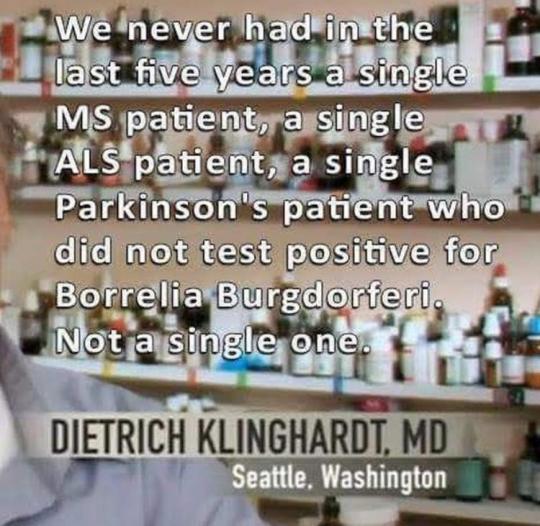
Never Had a Single MS, ALS, or Parkinson’s Patient in Past 5 Years Who Didn’t Test Positive for Lyme – Dr. Klinghardt

0-2

https://madisonarealymesupportgroup.com/2017/10/14/lost-link-als-lyme/

https://madisonarealymesupportgroup.com/2018/09/21/connection-between-als-lyme/

https://madisonarealymesupportgroup.com/2017/11/24/dr-frid-lyme-parkinsons-autoimmunity/

https://madisonarealymesupportgroup.com/2016/06/03/borrelia-hiding-in-worms-causing-chronic-brain-diseases/

https://madisonarealymesupportgroup.com/2016/08/09/dr-paul-duray-research-fellowship-foundation-some-great-research-being-done-on-lyme-disease/

https://www.lymedisease.org/lymepolicywonk-lyme-neurologic-misdiagnosis/

https://owndoc.com/lyme/multiple-sclerosis-is-lyme-disease-anatomy-of-a-cover-up/

Biological Dentistry & Lyme/MSIDS Talk

A Biological Dentistry and Lyme/MSIDS talk will be given at the next Madison Lyme Support Group Meeting.

When:  Saturday, February 16, 2019
Where:  East Madison Police Station Community Room, 809 S. Thompson Dr., Madison, WI.
Time:  2:30-4:30pm
Who: dr-shetty-ids

Dr. Supriya Shetty is a graduate of New York University School of Dentistry. Since joining Integrative Dental Solutions in 2007, she has completely embraced the concept of holistic dentistry.

Intuitively, Dr. Shetty understands that health centered dentistry is in the best interest of the patient and considers it her mission to restore and maintain the natural health, function and beauty of her patients’ mouths.

Dr. Shetty is a member of the Huggins Alliance, the International Academy of Oral Medicine and Toxicology (IAOMT), the International Academy of Biological Dentistry and the International Association for Orthodontics. She is also great with kids and one of her specialties is children’s dentistry. Dr. Shetty is also a graduate of the Dental Sleep Medicine Mini Residency at the University of Pacific and can screen, evaluate and manage patients with obstructive sleep apnea.

Professional Biography

A.B.S.M. Institute 1999 — Bachelor of Dental Science

New York U. School of Dentistry 2005 — Doctor of Dental Surgery

Accredited member of the IAOMT
Graduate of Dental Sleep Medicine Mini Residency – University of the Pacific
Graduate of TMD Mini Residency – AACP

Member

•International Academy of Oral & Medical Toxicology (IAOMT)- Accredited

•International Academy of Biological Dentistry and Medicine

•American Dental Association (ADA)

•Wisconsin Dental Association (WDA)

•Dental Society of Waukesha County (WCDS)

•International Association for Orthodontics (IAO)

•American General Dentist (AGD) – Pre-Fellow

•Fellow of the American Academy of Craniofacial Pain

•American Academy of Sleep Medicine

•The American Academy For Oral Systemic Health

Continuing Education

•Longitudinal Tooth Fractures

•Update in Pediatric Dentistry

•Precision – Base Endodontics

•Impression Materials and Techniques

•Immediate Provisionalization of Single Tooth Implants

•Invisalign Certification

•IOAMT Fundamentals of Biological Dentistry

•Mercury Rention Toxicity Proof of Occurrence & Biochemical Effects on Humans – Boyd Haley, PhD

•Toxic Metal – Focus on Detoxification and the Iniquitous

•Effect of Hypertension & Cardiovascular Disease

•Thimerosal & Search for Environmental Links to Autism – Thomas Burbacher, PhD

•Oxygen/Ozone Therapy for Arrestment of Periodontal Disease – Philip Mollica, DMD

•How to Practice Mercury-Safe Dentistry: Minimizing Occupational Exposure to Mercury – Thomas McGuire

•Exodontia: The Organ System

•Advanced Invisalign Certification, Chicago, IL

•Dr. Huggins Protocol Training

•Introduction to Orthodontics – Dr. Rondeau

•Completed Oral Sedation Training and Certification

•Cerec Advanced Training

•Clinical Hands-on Prep & Bond

•Diode Lasers in Dental Application – Laser Certification

•Dental Sleep Medicine

•Orthodontics for Prevention and Phase 2 by Dr. Ed Lipskis

•Sleep Disorder by Dr Robert Talley

•Tongue and Lip Tie by Stacy Cole

•Radiograph and CT Imaging by Dr. Tally

•JAV & Magnetic Resonance Imaging by Simons

•Craniofacial & Neuropathic Pain Syndromes by Dr. Shankland

•Tigger Points and Tigger Point Therapy by Dr. McCarty

•The NTI Appliance – Theory & Fabrication by Dr. Shankland

•Pathology & Disease Processes of TM Joints By Dr Shankland

•Pharmacological Management of CFP by Dr. Shankland

•Diffential Diagnosis of Osteocaviataion Lesion by Dr. Shankland

•Treatment Planning by Dr. Shankland

•Cerec Mastery – Rapid Integration into Your Practice

•Graduate of Dental Sleep Medicine Mini Residency – University of the Pacific

•Graduate of TMD Mini Residency – AACP

•BaleDoneen technique certified

•Bioclear

•Ortho-Tain certified


What is Biological Dentistry?

Understanding the Mouth-Body Relationship

A biological, natural or holistic dentist is one that understands the mouth-body relationship and only performs dental procedures backed by scientific studies and evidence.

The American Dental Association continues to tout the safety of mercury-silver amalgam fillings. For years, they steadfastly denied that any mercury was released from these fillings and based this on 150 years of “safe” use. Several years ago, they finally changed their position in the face of the facts presented by scientific studies, and admitted amalgam fillings do indeed release mercury. However, their position now is that these amounts are “insignificant.”

Like the wishful thinkers that once thought that the earth was the center of the universe, those supporting the placement of toxic materials in patients’ mouths are now seeing their position crumble in the light of scientific evidence.

While biological dentists are sometimes made out to be quacks (ironically taken from the “quacksalver”, a term derived from the German word for mercury, first used to describe those using mercury-containing medications), it is in fact the Biological dentists that are attempting to initiate a scientific debate on the subject.

If you are like most patients seeking alternative care, you have fought your share of battles with conventional healthcare practitioners. Rest assured, you have come to the right place.

Maybe the biggest difference you will notice at a biological dentistry office is the individualized approach to care. Our philosophy is that every patient is different and needs to be treated according to their specific needs. The days of “one size fits all” dentistry are on the way out.

It All Starts With a Healthy Mouth

Supriya ShSetty, DDS

 Approx. 30 Min.