Archive for the ‘Lyme’ Category

Babesiosis in Pregnancy: An Imitator of HELLP Syndrome

https://www.ncbi.nlm.nih.gov/pmc/articles/PMC6488351/

. 2019 Apr; 9(2): e147–e152.
Published online 2019 Apr 29. doi: 10.1055/s-0039-1687873
PMCID: PMC6488351
PMID: 31041119

Babesiosis in Pregnancy: An Imitator of HELLP Syndrome

Abstract

HELLP syndrome (hemolysis, elevated liver enzymes, and low platelets) is a serious pregnancy complication that can cause significant maternal and neonatal morbidity and mortality. There are several conditions that may occur in pregnancy that may imitate the laboratory findings and clinical presentation of HELLP syndrome. Babesiosis is a parasitic imitator of HELLP syndrome that can be spread by the tick, transfusions, or congenitally. Recognition and treatment of this condition is important to optimize maternal and fetal outcomes.

__________________

**Comment**

Babesia is a common coinfection of Lyme. Babesia and Lyme are both congenitally transmitted from mother to baby. Research has shown those infected with both have symptoms of greater severity and of longer duration.

For more:  https://madisonarealymesupportgroup.com/2016/01/16/babesia-treatment/

https://madisonarealymesupportgroup.com/2017/11/07/congenital-babesiosis-in-two-infants/

https://madisonarealymesupportgroup.com/2017/08/30/babesia-spread-to-newborn/

https://madisonarealymesupportgroup.com/2017/09/27/premature-infants-develop-babesia-via-blood-transfusion/

https://madisonarealymesupportgroup.com/2018/02/28/lyme-hang-out-with-dr-cameron-3-children-contract-babesia-from-blood-transfusion/


New York Doctor Warns of Tick-borne Diseases

https://www.tribtoday.com/life/lifecovers/2019/05/new-york-doctor-warns-of-tick-borne-diseases/

New York doctor warns of tick-borne diseases

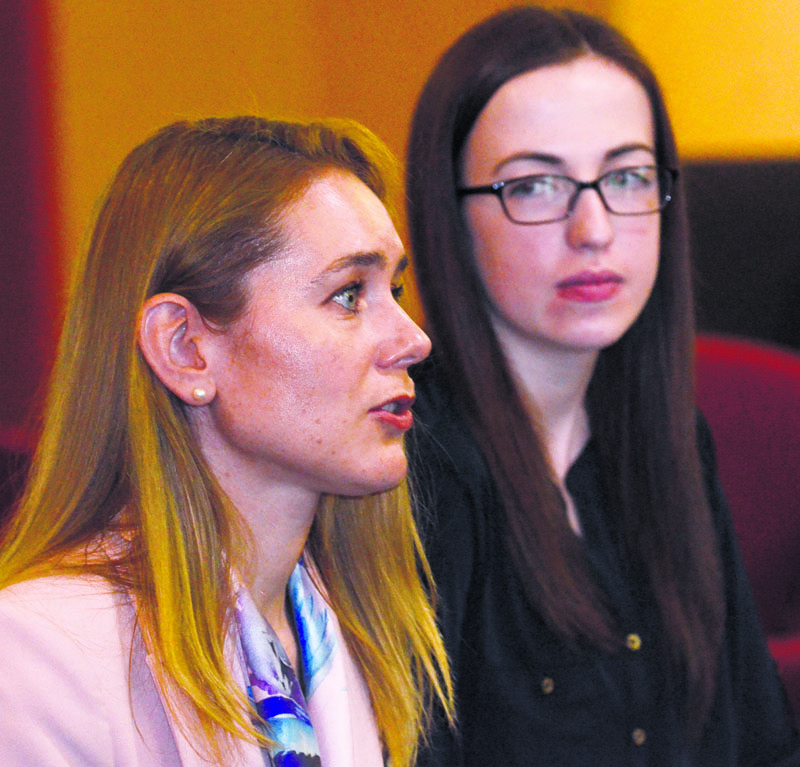
Neurologist Dr. Elena Frid of New York, left, and Lyme patient Megan Tilton of Cherry Valley in Ashtabula Township discuss the prevalence of Lyme disease in Ohio. (Tribune Chronicle / R. Michael Semple)

NILES — The ticks are coming — they’re already here — and residents and doctors alike must do a better job with care and treatment.

That was the warning and advice from Dr. Elena Frid, a neurologist and clinical neurophysiologist from New York, who stayed at the Residence Inn by Marriott earlier this month before speaking at the Northeast Ohio Lyme Disease Symposium in Andover.

“Lyme is easy to catch, difficult to diagnose and difficult to treat,” said Frid, who specializes in infections-induced autoimmune disorders. “An average patient with Lyme disease sees 10 doctors over a course of two years before receiving a diagnosis.”

The infection caused by bacteria transmitted by bites from infected deer ticks can cause chronic pain and neurological disorders. It is the fastest-growing vector-borne illness in the United States and across the world, Frid said.

Megan Tilton, 22, of Cherry Valley sat in a wheelchair beside Frid in the Residence Inn lobby.

“The ticks this year are bountiful,” Tilton said. “Literally anybody who goes outside is at risk. They’re in your backyard.

“People really need to understand how serious this is. People get a tick bite, shake it off and think that’s it. If someone had told us 10 years ago, if the doctor had tested for it, I wouldn’t have this chronic illness,” she said. “In most cases, if you treat it right away, you usually get better.”

Tilton was bitten by a tick in 2005 when she was 9 but not diagnosed with Lyme disease until 2012. In the meantime, she suffered headaches, joint pain, fevers and heart dysrhythmia, among other problems. Eventually, her legs quit working. But tests kept turning up negative and some doctors suggested she was making it all up for attention.

Now a senior at Malone University, Tilton is studying clinical laboratory sciences so that she can go into research of tick-borne diseases. She wants to help make sure what happened to her doesn’t happen to anyone else.

“I’ve gotten a lot better,” Tilton said. “I’m back in school. I’m driving. I’m starting to walk again — not very well, but I am.”

After the diagnosis, Tilton’s mother, Connie Moschell, a labor and delivery nurse at St. Joseph Warren Hospital, helped found the NE Ohio Lyme Foundation, a nonprofit organization that raises money for awareness and puts on the annual symposium.

“Our mission is to get money and get local doctors to go through training,” Moschell said. “If you tried to use that money to help patients, you’d run out real quick.”

Frid said, “If you teach one doctor, you treat the whole community. Then patients are not as disabled or impaired because the disease is caught earlier.

“One of the things when I speak is that really to raise money to have local physicians be educated on Lyme disease by attending international conferences to learn more they can serve the community,” she said. “This disease is very underrepresented in its funding. Because of that, our testing for it is poor.”

Research is limited for lack of government funding, she said. Doctors find themselves using information from the 1970s when the Centers for Disease Control and Prevention identified Lyme disease.

“Many physicians are seeing a difference between what they see in textbooks and what they see in the office,” Frid said.

When first discovered, Lyme had been centered mostly southern and eastern coastal states. Then it started moving north and west. Lyme disease has become more and more prevalent in Pennsylvania and West Virginia, the two states that border eastern Ohio, and more cases continue to migrate into Ohio, according to the Centers for Disease Control and Prevention.

In 2017, the last year for which statistics are available, Pennsylvania reported 77.2 incidences of Lyme disease per 100,000 population, up from its three-year average of 66.7 incidences, and West Virginia reported 27.7 cases per 100,000 population, up from the three-year average of 19 incidences. Ohio in 2017 reported 2 cases per 100,000 population, up from its 1.3 three-year average.

Randee Shoenberger, epidemiologist for the Trumbull County Combined Health District, said six probable or confirmed Lyme cases were recorded in both 2017 and 2018 in Trumbull County. The true numbers are uncertain for a number of factors, she said.

Because Lyme often isn’t diagnosed right away and bites often go unnoticed, it’s frequently uncertain where the patient was when bitten by a tick. The health department investigates cases in hopes of pinpointing where it happened.

Also, doctors may give medications to treat the symptoms, which clear up, and the case is never reported to the health department. Other times, victims of tick bites don’t seek treatment.

It just becomes hard to know for sure.

“We’re predicting that it could be a lot. You never know,” Shoenberger said.

The CDC’s database records 31 confirmed cases of Lyme disease in Trumbull County over the 17 years from 2000 to 2016. The greatest number was six in 2004. The least was zero in 2012 and 2016. East Stroudsburg, Pa.-based laboratory TickCheck, which tests for Lyme and tick-borne diseases, estimates that the actual numbers are 10 times greater than cases confirmed by the CDC.

Between 2000 and 2016, 44 confirmed cases were reported in Mahoning County, 28 in Portage, 14 in Ashtabula and 11 in Geauga, according to the CDC.

Symptoms of Lyme disease include headaches, fever, fatigue and joint aches, and to a lesser degree, a minor rash, Frid said.

“Just because there’s no bull’s-eye rash (from a tick bite) doesn’t mean you don’t have Lyme. Fifty percent of patients don’t realize they have a bite, so often it’s missed.”

In most cases, symptoms tend to resolve on their own. But if the immune system is not strong enough to fight it off, then it can progress to chronic fatigue, neuropathy, chronic pain, even muscular dystrophy-like symptoms.

Frid recommends that people ask their doctors how comfortable they are at treating Lyme and how many patients per year they see with Lyme.

“We know the test is inaccurate,” she said. “(Asking questions about doctor comfort levels) will help them ID a specialist who is seeing and testing Lyme patients.”

___________________

**Comment**

Asking a doctor if they are comfortable treating Lyme and how many patients they treat might be a way to sift out those who aren’t going to treat this properly, but a much better way is to contact your local Lyme support groups. They have in hand a doctor list that contains doctors that are specially trained by ILADS (International Lyme & Associated Diseases Society).

Everyone now admits the 2-tiered blood serology testing is abysmal.
Everyone now admits that catching this early with early treatment is imperative.

What isn’t admitted is that the “wait and see” approach has been killing patients. By the time they “wait and see” if patients develop symptoms, the bacteria has moved past the blood/brain barrier and has burrowed deep within the body, making it much harder and longer to treat.

Einstein stated, “Insanity is doing the same thing over and over and expecting different results.”

Well, docs have been telling patients to “wait and see,” and the results of that experiment have been horrific. Time for a new approach.

Each and every tick bite should be taken as seriously as a heart attack. Do not mess around with this.  In my opinion, each tick bite should be treated prophylactically. A $30 bottle of antibiotics beats $50-200K out of pocket every time in my book, not to mention the avoided pain and suffering.



FREE: Antigerm Action Plans For Lyme Disease – How to Use Herbal & Prescription Germ Killers for Bacteria, Parasites, Viruses & Yeast

https://mailchi.mp/treatlyme/antigerm-action-plans-lyme-disease  (Go to Link to get FREE pdf book)

Free Treat Lyme Book & Health Tips By Dr. Marty Ross

Subscribe to the Treat Lyme newsletter and receive a FREE pdf download book: Antigerm Action Plans for Lyme Disease and Ten Daily Email Health Tips. Plus get updates, special offers and more.

I have decided to offer Treat Lyme newsletter subscribers a free downloadable version of my book: Antigerm Action Plans for Lyme Disease: How to Use Herbal & Prescription Germ Killers for Bacteria, Parasites, Viruses & Yeast.  

In the Appendices you will find two bonus sections you can use to improve your Lyme disease treatment. These include:

  • The Ross Lyme Support Protocol (my full Lyme disease treatment guideline) and
  • Herxheimer Die-off Reaction: Inflammation Run Amok with steps to manage herxheimer reactions.

If you have any questions, participate in my weekly free Lyme Q&A Webinar called Conversations with Marty Ross MD.

To learn more:  https://www.treatlyme.net

dr_sidebar

Marty Ross, MD, is the creative force behind Treat Lyme, Marty Ross MD Supplements, and this book. He believes strongly that given the right information, people with Lyme and tick-borne illnesses can recover. He offers these resources so that all who have Lyme disease may recover with or without a physician.

Dr. Ross is a graduate of Indiana University School of Medicine. He completed his family medicine residency at the Georgetown University/Providence Hospital program where he served as chief resident.

Dr. Ross is a member of The International Lyme and Associated Diseases Society and The Institute for Functional Medicine.

New Coalition to Bolster Fight Against Ticks & Mosquitoes

New Coalition to Bolster Fight Against Ticks and Mosquitoes

Stakeholder group will channel collective action for national vector-borne disease strategy

Annapolis, MD; May 20, 2019—As the incidence of diseases transmitted by ticks and mosquitoes in the U.S. continues to rise, a coordinated and strategic response is needed now more than ever—and a diverse set of organizations are aligning to answer the call.

Under the stewardship of the Entomological Society of America, 18 scientific and medical societies, professional associations, and advocacy groups have formed the Vector-Borne Disease Network, a new coalition that will stand ready to advise and support federal policymakers in confronting the challenge of diseases spread by insects and related arthropods. 

These illnesses—such as Lyme disease, Zika, or West Nile virus—are transmitted by vector organisms, primarily blood-feeding insects or arthropods. Vectors ingest disease-causing germs when biting an infected human or animal and later inject them into a new host during a subsequent bite. 

Between 2004 and 2016, reported human disease cases in the U.S. resulting from bites from arthropods—primarily ticks and mosquitoes—tripled, according to the U.S. Centers for Disease Control and Prevention (CDC). Meanwhile, nine new germs spread by ticks and mosquitoes were discovered or introduced in that same timeframe. (See CDC Vital Signs, May 2018.) Disease vectors pose significant threats to livestock and companion animals, as well. The underlying causes for these trends are varying and complex, and so are the potential solutions. Thus, the Vector-Borne Disease Network will gather the expertise and perspectives of a variety of stakeholders invested in the mission to reduce the public-health and economic risks posed by ticks and mosquitoes. 

The founding members of the Vector-Borne Disease Network are:

  • American Society of Tropical Medicine and Hygiene
  • American Mosquito Control Association
  • Association of Public Health Laboratories
  • Association of State and Territorial Health Officials
  • Council of State and Territorial Epidemiologists
  • Entomological Society of America
  • Georgia Mosquito Control Association
  • Midwest Center of Excellence for Vector-Borne Disease  https://madisonarealymesupportgroup.com/2017/01/27/uwm-center-of-excellence-vector-borne-diseases/
  • National Association of County and City Health Officials
  • National Association of Vector-Borne Control Officials 
  • National Environmental Health Association
  • National Pest Management Association
  • Northeast Regional Center for Excellence in Vector-Borne Diseases
  • Pacific Southwest Center of Excellence in Vector-Borne Diseases
  • Puerto Rico Vector Control Unit
  • Society for Vector Ecology
  • Southeastern Regional Center of Excellence in Vector-Borne Diseases
  • Western Gulf Center of Excellence for Vector-Borne Diseases

“Our country can no longer afford to be complacent toward the dangers posed by mosquito- and tick-borne disease,” says Robert K. D. Peterson, Ph.D., president of the Entomological Society of America (ESA) and professor of entomology at Montana State University. “From researchers and public-health officials to policymakers and vector-management professionals, it’s time to roll up our sleeves and tackle this problem together.”

The Vector-Borne Disease Network’s ultimate goal is to reduce human and animal suffering caused by arthropod disease vectors, and its primary focus will be to collectively advocate for strong, dedicated funding at the federal level for:

  • research on tick and mosquito biology, ecology, and disease-transmission risk
  • enhanced tick and mosquito detection and disease diagnosis
  • innovation in disease-prevention and vector-control methods 
  • building the nation’s workforce and technical capacity in vector-borne disease research, response, and management.

Stakeholder groups in the Vector-Borne Disease Network are conducting preliminary discussions in 2019 with plans for a coordinated launch of the group’s efforts in late 2019 or early 2020. Additional organizations and nonprofits with related missions are invited to participate. To express interest, contact ESA Director of Strategic Initiatives Chris Stelzig at cstelzig@entsoc.org. 

MEDIA CONTACT: Joe Rominiecki, jrominiecki@entsoc.org, 301-731-4535 x3009

ABOUT: ESA is the largest organization in the world serving the professional and scientific needs of entomologists and people in related disciplines. Founded in 1889, ESA today has more than 7,000 members affiliated with educational institutions, health agencies, private industry, and government. Headquartered in Annapolis, Maryland, the Society stands ready as a non-partisan scientific and educational resource for all insect-related topics. For more information, visit www.entsoc.org.

____________________

**Comment**

For those of us here in Wisconsin, we need to make our voices heard that we want a preponderance of this money going toward Lyme disease issues, not Zika, as mosquitoes here can’t even carry it.  And while we have some cases of West Nile virus, it is dwarfed in comparison to Lyme disease and the coinfections that often come with it.  The research dollars should be commiserate with the amount of suffering and Lyme/MSIDS takes the cake!

An unpublished draft report by the U.S. Department of Health and Human Services Tick-Borne Disease Working Group finds that, while the National Institutes of Health and the CDC spend $53,571 and $14,054 respectively for each new case of HIV/AIDS, they spend just $90 and $35 per new case of Lyme disease.

“Federal funding for tick-borne disease today is orders of magnitude lower, compared to other health threats, and it has failed to increase as the problem has grown,” the report states.  https://undark.org/2018/09/06/lyme-research-funding/


Vaginal Lesion Associated With Lyme

2019 Jan-Dec;7:2324709619842901. doi: 10.1177/2324709619842901.

Erosive Vulvovaginitis Associated With Borrelia burgdorferi Infection.

Abstract

We describe a case of acute erosive vulvovaginitis accompanying Borrelia burgdorferi infection. The patient is a 57-year-old woman previously diagnosed with Lyme disease who presented with a painful erosive genital lesion. At the time of the outbreak, she was being treated with oral antibiotics, and she tested serologically positive for B burgdorferiand serologically negative for syphilis. Histological examination of biopsy tissue from the lesion was not characteristic of dermatopathological patterns typical of erosive vulvar conditions. Dieterle-stained biopsy sections revealed visible spirochetes throughout the stratum spinosum and stratum basale, and anti- B burgdorferi immunostaining was positive. Motile spirochetes were observed by darkfield microscopy and cultured in Barbour-Stoner-Kelly-complete medium inoculated with skin scrapings from the lesion. Cultured spirochetes were identified genetically as B burgdorferi sensu stricto by polymerase chain reaction, while polymerase chain reaction amplification of treponemal gene targets was negative. The condition resolved after treatment with additional systemic antibiotic therapy and topical antibiotics. In cases of genital ulceration that have no identifiable etiology, the possibility of B burgdorferi spirochetal infection should be considered.

__________________

For more:  https://madisonarealymesupportgroup.com/2019/05/11/lyme-found-in-genital-lesion-sexual-transmission-studies-screaming-to-be-done/