Archive for the ‘Lyme’ Category

Medicine Struggles to Define Chronic Lyme. Long Covid Has Only Made it Harder

https://www.statnews.com/2024/09/09/lyme-disease-long-covid-symptoms-diagnosis-research/

Medicine struggles to define chronic Lyme. Long Covid has only made it harder

By Isabella Cueto and Alina Sajani

Sept. 9, 2024

Going to the doctor is already tricky enough for people with chronic symptoms of Lyme disease. Their concerns often dismissed by mainstream medicine, those patients now face an additional hurdle: ruling out long Covid.

The two illnesses — one seeping in over the course of decades and another suddenly springing to life on a massive scale — share many qualities, including being widely misunderstood. But as efforts to demystify long Covid intensify, so does interest in studying neglected conditions, including persistent complications from Lyme disease.

Long Covid was a crash course in chronic conditions that start with infection. “As a result, Lyme patients are now met with more compassion and understanding than ever in the past. It is now harder for a physician to dismiss the possibility of a Lyme diagnosis out of hand than it was before the pandemic,” said Bernadette Clavier, facilitator of the Coalition for Infection-Associated Chronic Conditions and Illnesses Research.

New studies aim to tease apart the diseases’ differences and similarities in hopes of finding treatments for patients that have gone without vetted, tailored therapeutics, in some cases for decades. (See link for article)

_______________

**Comment**

The article discusses the case of a Lyme advocate who had a mild case of COVID and only lost her sense of taste and smell, but who crashed two months later.  Joint pain and GI issues popped up seemingly out of nowhere.  She also got severe brain fog.

I’m sure this patient isn’t alone.

COVID did a number on both of us as well and we were very sick, numerous times.  The first time caused us to relapse with Bartonella.

But this patient is blaming COVID for it all.  I question the logic of this as there is no accurate test to prove it. One of the most common features of long-COVID syndrome is post-exertional malaise and research has shown the spike protein exhausts cardiomyocyte mitochondria.  Also, ‘Long COVID’ symptoms mirror those in other viral illnesses and with Lyme/MSIDS it is nearly impossible to discern what is causing what.  I can rattle off 10 things that cause joint pain, GI issues, and brain fog, including a bevy of bacterial and parasitic infections!

Researchers at Johns Hopkins and other institutions have a lost of potential new therapies they’d like to study – everything from inflammatory treatments to antibiotic combination therapies, brain stimulation, and magic mushrooms.

It is widely known that ALL vaccines prime illness by injecting foreign proteins and the COVID shots specifically cause T-cell exhaustion and masks are immunosuppressive These issues are side-stepped regarding ‘long covid.’ A top biologist states they are ‘bioweapons’ that can target entire populations by ‘triggering the immune system to stand down.’  This is the last thing a Lyme/MSIDS patient needs!

Italian scientists have issued a disturbing warning over a new neurological emergency surging in those who received the mRNA shots and others have shown they have caused excess death, organ damage, autoimmunity, and myocarditis and pericarditis, and urinary and bladder issues.  Then there’s the paper showing the spike protein induces a lethal cancer phenotype.
Seems to me ‘Long COVID’ is an easy scapegoat from much larger and damning issues.

Two Plants in Plaintain Family Show Antioxidant and Bb Inhibiting Properties

https://www.mdpi.com/1422-0067/25/13/7112

Plantago major and Plantago lanceolata Exhibit Antioxidant and Borrelia burgdorferi Inhibiting Activities

by Pille-Riin Laanet, Olga Bragina, Piia Jõul and Merike Vahe*
Department of Chemistry and Biotechnology, Tallinn University of Technology, Akadeemia tee 15, 12618 Tallinn, Estonia
*Author to whom correspondence should be addressed.
Int. J. Mol. Sci. 202425(13), 7112; https://doi.org/10.3390/ijms25137112
Submission received: 18 May 2024 / Revised: 15 June 2024 / Accepted: 20 June 2024 / Published: 28 June 2024

Abstract

Lyme disease, caused by Borrelia burgdorferi sensu lato infection, is the most widespread vector-borne illness in the Northern Hemisphere. Unfortunately, using targeted antibiotic therapy is often an ineffective cure. The antibiotic resistance and recurring symptoms of Lyme disease are associated with the formation of biofilm-like aggregates of B. burgdorferi. Plant extracts could provide an effective alternative solution as many of them exhibit antibacterial or biofilm inhibiting activities. This study demonstrates the therapeutic potential of Plantago major and Plantago lanceolata as B. burgdorferi inhibitors. Hydroalcoholic extracts from three different samples of each plant were first characterised based on their total concentrations of polyphenolics, flavonoids, iridoids, and antioxidant capacity. Both plants contained substantial amounts of named phytochemicals and showed considerable antioxidant properties. The major non-volatile constituents were then quantified using HPLC-DAD-MS analyses, and volatile constituents were quantified using HS-SPME-GC-MS. The most prevalent non-volatiles were found to be plantamajoside and acteoside, and the most prevalent volatiles were β-caryophyllene, D-limonene, and α-caryophyllene. The B. burgdorferi inhibiting activity of the extracts was tested on stationary-phase B. burgdorferi culture and its biofilm fraction. All extracts showed antibacterial activity, with the most effective lowering the residual bacterial viability down to 15%. Moreover, the extracts prepared from the leaves of each plant additionally demonstrated biofilm inhibiting properties, reducing its formation by 30%.
_______________
**Comment**
Both plants are in the plantain family, which is a diverse family of flowering plants and herbs and includes snapdragons, foxglove, particularly the broadleaf or greater plaintain (Plantago major) which is considered an herb, and narrowleaf plantain or ribwort (Plantago lanceolata).  You will find the former to be a common weed that is often found along the edge of the road.  This is handy because if you react to bee/wasp stings you can chew these leaves which are highly anti-inflammatory and them put it directly on the sting until you get home.  I’ve had to do this.  The tea is also excellent for bronchitis.  While narrowleaf plantain is has supposedly been introduced in WI, I don’t believe I’ve ever seen it and I consider myself a plant freak.
For more:

Word of warning: many think herbs are always safe.  I know of patients who messed themselves up pretty badly with herbs.  Herbs are strong medicine.  Never forget that.  For some they make all the difference.  For others, not so much.  Make sure you learn all you can about these powerful plants and as always – use with caution – as with any treatment.  I’m certainly not trying to dissuade you, just remind you to take heed, do your homework, and preferably work with experienced herbalists.  Nothing beats experience.

Tick-Borne Illnesses and the Gut: A Fascinating Look At Their Link

https://www.jillcarnahan.com/2023/05/23/tick-borne-illnesses-and-the-gut-a-fascinating-look-at-their-link/

Tick-Borne Illnesses and the Gut: A Fascinating Look at Their Link

The Thorny Question of Persistent Lyme, Or IACI

https://www.lymedisease.org/nasem-takes-on-lyme-iaci/

The thorny question of persistent Lyme, or rather “Lyme IACI”

July 18, 2024

By Dorothy Kupcha Leland

The National Academies of Sciences, Engineering, and Medicine (known collectively as NASEM) are private, nonprofit institutions that examine challenging issues and offer advice to the nation.

Academy members are elected based on their outstanding achievements and contributions to their fields. They are considered the cream of the cream.

NASEM works by convening committees of experts from various fields to study specific topics. Sometimes, these committees organize workshops to bring together experts, policymakers, and the public to share knowledge and explore solutions.

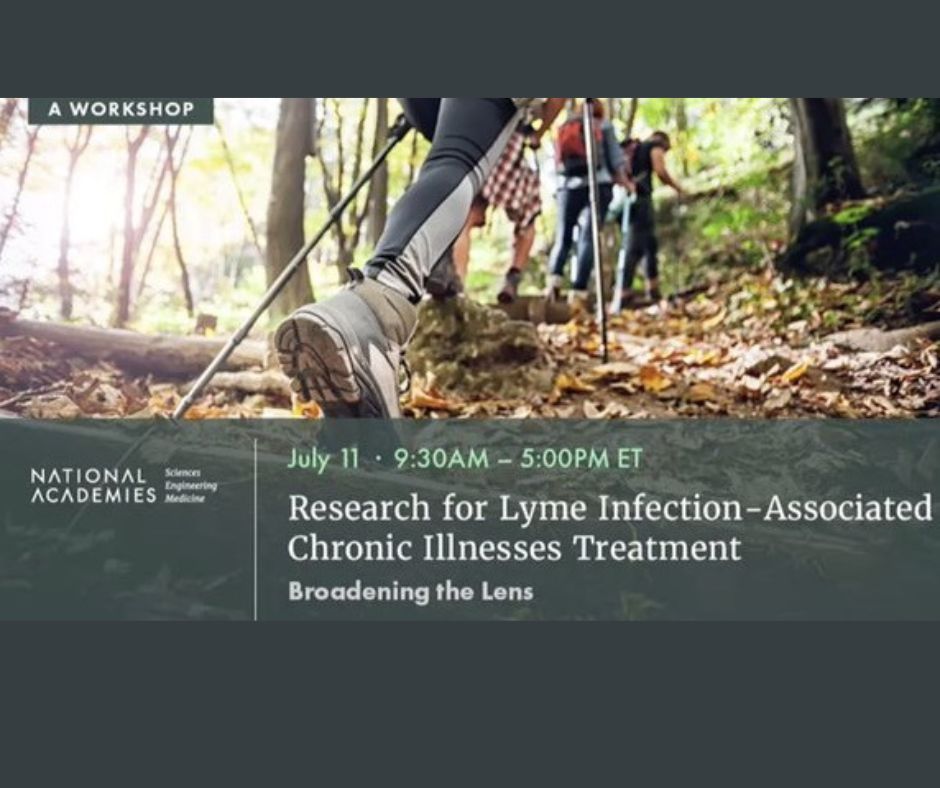
That’s what happened July 11, in Washington DC. A NASEM committee held a workshop examining the question of what they called “Lyme infection-associated chronic illness”—or “Lyme IACI.” (Pronounced “Lyme eye-ACK-ee” by most participants, it doesn’t exactly roll off the tongue, does it?)

Apparently, Lyme IACI is the label the committee landed on to avoid the polarizing effects of such terms as “chronic Lyme” or “post-treatment Lyme disease syndrome.”

Based on input from this public workshop as well as a review of medical literature, the committee will develop a report of its findings. This document will put forth recommendations for how to bring about better treatments for people with Lyme IACI.

You may remember that NASEM held a groundbreaking workshop last year that focused on the commonalities of several “long haul” diseases—long COVID, persistent Lyme disease, multiple sclerosis and ME/CFS (chronic fatigue). Read more about last year’s event here: “Words matter.” A new way of thinking about long-haul diseases.

The 2024 conference continued in that vein, but this time focused only on Lyme IACI. The event was significant on several fronts.

Why this matters

For starters, you had important scientists exploring the question of why some people with Lyme disease continue to have symptoms despite treatment. This major change comes after decades of “Lyme denialism,” when medical professionals, health officials, researchers, the NIH, and the CDC, all told us that what we call “chronic Lyme” didn’t even exist. So, just the fact that you have a NASEM committee considering the issue is a huge step forward.

Furthermore, the Lyme community actively participated in the event.

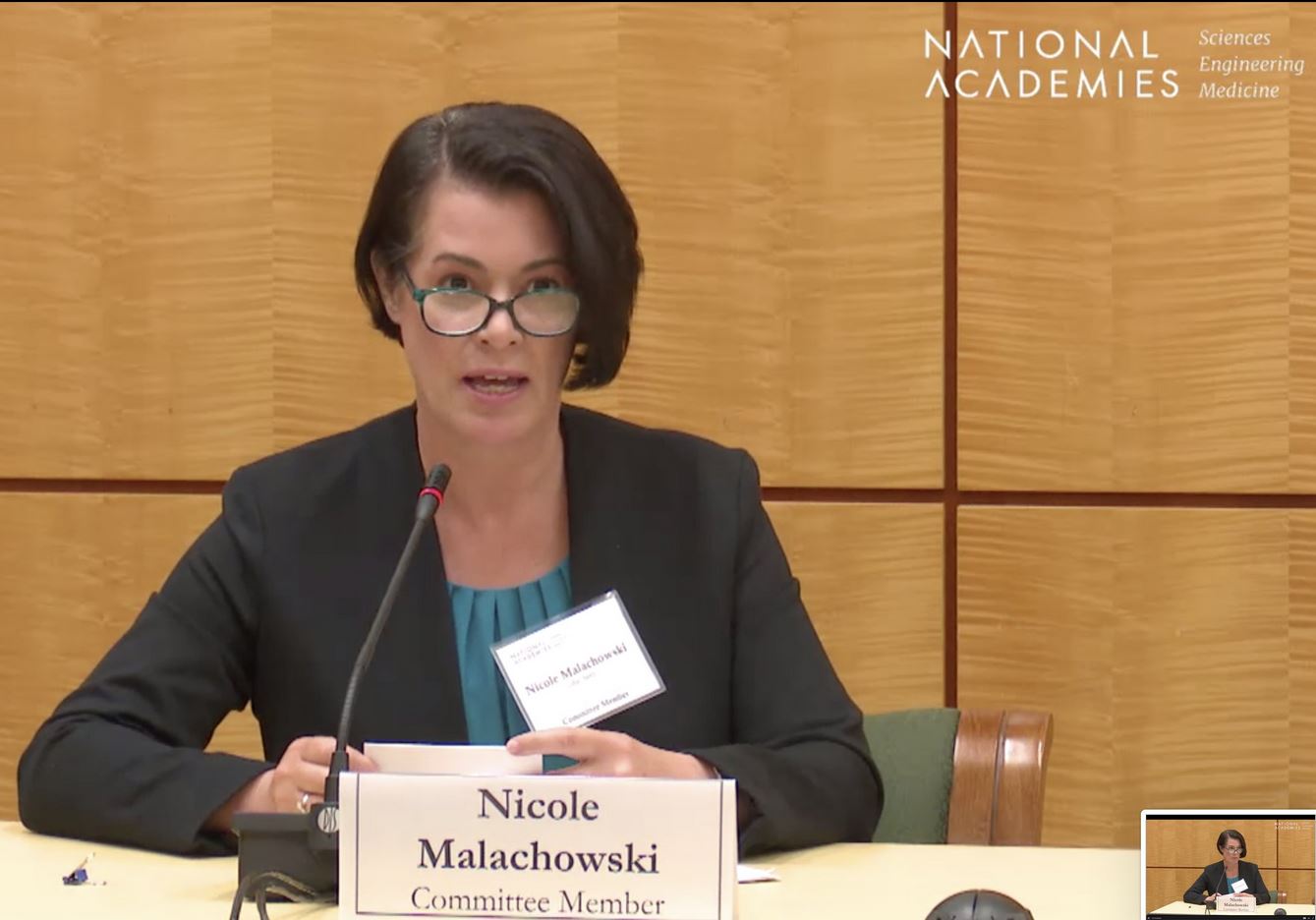
Retired US Air Force Col. Nicole Malachowski—a prominent advocate for those with tick-borne disease—served on the workshop’s planning committee.

Rhisa Parera

Rhisa Parera, the writer/director/producer of the Lyme film “Your Labs are Normal,” delivered a keynote address on the patient perspective.

Read what she told the panel: Patient tells scientists “Lyme is a literal emergency. Help us.”

The committee lined up an impressive array of researchers from prominent academic centers to shed light on the following questions:

  • Describe the current state of Lyme IACI research for treatments and diagnostics to clarify barriers in development of new, effective therapeutic interventions;
  • Explore recent advancements from other biomedical research fields with the potential to address these barriers by catalyzing scientific breakthroughs or translation of discoveries to treatments;
  • Understand patient-defined priorities for research and discuss potential opportunities for engaging this perspective in developing a biomedical research agenda; and
  • Discuss research strategies and infrastructure that could facilitate the application of innovations from other fields into the Lyme IACI research context.

See the list of speakers here.

Patient priorities

LymeDisease.org CEO Lorraine Johnson, principal investigator of the MyLymeData project, spoke on a panel about patient-defined priorities for research.

Lorraine Johnson, Principal Investigator of MyLymeData

She emphasized the importance of outcomes that patients themselves care about—namely, getting their health back and being able to return to work and other activities.

But that’s often not the way clinical trials are structured. For example, many are geared to evaluating something called the SF-36 score.

“However, a change in the SF-36 score is not inherently meaningful or important to patients,” Lorraine noted. “This is obvious on its face. If you ask any patient what they want in healthcare – none of them will say, ‘I want to improve my SF-36 score.’”

Videos from the workshop should be available soon. When they are, I strongly recommend you watch Lorraine’s presentation. I think you’ll find it riveting.

More on this event still to come. Stay tuned.

TOUCHED BY LYME is written by Dorothy Kupcha Leland, President of LymeDisease.org. She is co-author of Finding Resilience: A Teen’s Journey Through Lyme Disease and of When Your Child Has Lyme Disease: A Parent’s Survival Guide. Contact her at dleland@lymedisease.org.

_______________

**Comment**

I have a far dimmer view of this gathering of the ‘cream of the cream.’

Until Lyme literate doctors and independent researchers are equally represented within these groups, I hold little hope for much change.

First off, this group proudly deploys the climatehealth, and equity  propaganda pushed by globalists.

The sponsors of the organization are none other than:

AstraZeneca
Burroughs Wellcome Fund
Grantham Foundation
JPB Foundation​
McCall MacBain Foundation
Rockefeller Foundation

Go here for more.

Are you getting this yet?

Now, this elitist group with Big Pharma ties has developed yet another acronym instead of just stating what it is: a complex, polymorphic, polymicrobial, chronic infection that has destroyed lives for over 40 years and shows no sign of slowing down.

The fact this group will not make recommendations on specific approaches to diagnosis and treatment when it issues a report in early 2025, but will instead present ‘consensus findings’ on treatment for chronic illness associated with Lyme disease, including recommendations for advancing treatment,” does not comfort me much.

I can tell you right now what ‘consensus’ states since Lyme literate doctors have been persecuted for stepping outside this rigidly defined box.  It will simply regurgitate 40 year old dogma created at Dearborn, MI when they took the most sensitive band for borrelia out of testing so it wouldn’t conflict with the highly lucrative, but deadly Lymerix vaccine.

Nothing’s changed – but has only become more entrenched.  

Elucidating Host-Microbe Interactions to Address Vector-Borne Diseases

https://medicine.yale.edu/internal-medicine/infdis/news-article/elucidating-host-microbe-interactions-to-address-vector-borne-diseases/

Elucidating Host-microbe Interactions to Address Vector-borne Diseases

July 08, 2024
by Serena Crawford
Article Excerpts:
One surprising finding was that Borrelia burgdorferi, which causes Lyme disease, appears to interact with epidermal growth factor (EGF), said corresponding author Erol Fikrig, MD, Waldemar Von Zedtwitz Professor of Medicine (Infectious Diseases) and professor of microbial pathogenesis at YSM; and professor of epidemiology (microbial diseases) at the Yale School of Public Health. “Why Borrelia interacts with EGF and what that does for Borrelia pathogenesis is not yet known, and that could have implications for Lyme disease,” he said.
Many of the host-microbe interactions uncovered were unpredictable and unexpected, revealing a suite of novel host-pathogen interactions that can potentially be leveraged to create new classes of anti-infectives that target unique and previously unknown host-microbe interaction nodes, Palm added.  (See link for article)