The Scientific Connection Between STARI and Chronic Lyme
By Allison Caruana
President, The Mayday Project
The organism that causes chronic Lyme disease and STARI/Master’s disease is physiologically similar, but until now has not been defined. Borrelia burgdorferi (Bb) is the carrier of but not the cause of the longstanding symptoms of what is known as chronic Lyme disease. Borrelia burgdorferi B31 is a rickettsial agent. Helical spiroplasma that carries the Pandora Virus (circular plasmid 26), which transfers mutant virophages to the host, is the causative agent of chronic (not early) Lyme disease, as well as STARI/Master’s disease.
In an interview with Gary Engelman, Dr. Willy Burgdorfer made two important claims. The first, borrelia was the agent of Relapsing Fever, but is not the agent of Lyme disease.13 Relapsing Fever is a different species of borrelia2, whereas Borrelia burgdorferi B31 is Spiroplasma apis.21 Dr. Willy Burgdorfer goes on to state that these are spirochete-like organisms and that up until his discovery of Borrelia burgdorferi, spirochetes had never been found to exist in deer ticks.13 The same is not true for spiroplasmas, which are common in arthropods.16 Spiroplasmas are known to cause symptoms identical to Lyme disease, i.e., arthritis, heart murmur, swollen knee, and more.14
The Borrelia associated with Lyme disease are unlike other borrelia, as these organisms are known for an amorphous slime layer. Historically, this feature has been associated with spiroplasmas, not spirochetes.17, 20, 29, 30 Spiroplasmas (family spiroplasmataceae, order mycoplasmatales) are comprised of a group of helical prokaryotes whose external morphology differs from the spirochete. The spirochete is defined by an internal skeletal framework rather than an external peptidoglycan-containing cell wall.15 The organism we call the Bb spirochete has blebs and granules,6 which are attributes of spiroplasma and mycoplasma that occurs as a morphological response to environmental stress- which produce uncultivable mycoplasmas.20, 23, 29, 31, 32
Borrelia burgdorferi B31 is believed to be a pleomorphic spiroplasma within the family of Spiroplasma apis. This would explain Dr. Willy Burgdorfer’s statement regarding the “spirochete-like organisms” that are found in ticks.13 Additionally, Borrelia burgdorferi contain 12 linear and 9 circular plasmids, some of which have been determined to harbor mutant “bacteriophages”.4, 11, 12, 18 In theory, the term bacteriophage could be exchanged for a more proper term: “virophage”. This suggestion comes on the basis that the term “plasmid” and “chromosome” can be interchanged for “Giant viruses”.19 The circular plasmid 26 (cp26) of Borrelia burgdorferi contains 27 phages7, 11, 12 of which 19 are mutant phages (FIG. 6).18 If cp26 was not a Girus (Giant Virus), the plasmid would have burst due to the infection of a natural phage. However, cp26 is the only plasmid to be found in all isolates of Bb that has not experienced gene loss.7, 18
It is important to note that convoluted terminology has been previously experienced in discussions around Bb. The terms “spiroplasma”, “mycoplasma” and “spirochete” are used interchangeably,31 so this is understandable for “Giant virus”, “Plasmid” and “chromosome”. The Giant Virus is also said to be associated with amoebas, however, there are amoeba-associated bacteria which can exploit common mechanisms.26
Dr. Willy Burgdorfer reviewed and tested patient blood samples from Dr. Anderson for C9P09, which is a rickettsial helical Mycoplasma; P09 being a Rickettsia bellii and C9 being a Mycoplasma (FIG. 2).35 This is further supported by the theory that an endosymbiotic infection produces spirochetes that are uncultivable Mycoplasmas, which are also called spirochetes. 1, 22, 31, 32
The “Swiss Agent” is documented by Dr. Willy Burgdorfer (FIG. 3),25 who also wrote a speech on “Pandora’s Box”.5 Although the Swiss Agent paper is associated with the suspected African Swine Flu, Dr. Willy Burgdorfer appears to be famous for leaving clues throughout his work regarding Lyme disease. Upon reviewing the structure of the Lyme disease “Swiss Agent” and the “Pandora Giant Virus”, there is a striking resemblance that deserves further examination. This theory is supported by presentations FIG. 3 & 4, which show similar organisms. Additionally, this is supported by phylogenic information found on www.giantvirus.org regarding the genes found within the giant viruses (FIG. 5).
Giant viruses are also known to harbor a symbiotic colony of Sputnik or mutant virophages in archaeal viruses (plasmids).9, 27 These phages are found in cp26 and the multiple cp32’s, which are worthy of additional research.4, 7, 11, 12, 18 From a virology standpoint, the only way these phages could coexist in a symbiotic relationship within the bacteria would be if the plasmid was in fact a giant virus- able to transduce genetic information to ensure the survival of the host and the organisms.11, 12 The phages carried in cp26 are the only ones to be found in all isolates and never lost.7
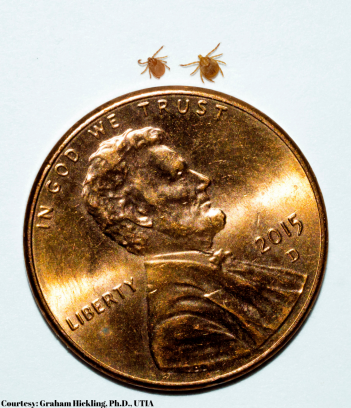
The giant virus also brings into question why STARI and Master’s disease is noted by Dr. Willy Burgdorferi to be a Lyme disease agent that is found in Amblyomma americanum (FIG. 1). This is supported by the fact that flaB (a transcription gene for Bb) was found in all STARI patients he had tested.8, 11 The Lyme- like organism is a mimicking microbe that by scientific definition is a giant virus.9 The scientific differentiation has been made between “Early Lyme disease” and “STARI”/“Master’s disease”, but not “chronic Lyme disease”.24 There are numerous morphological similarities between chronic Lyme disease and STARI/ Master’s disease. In both organisms, uncultivable spirochetes can be found, in addition to the transcription gene, flaB being found in STARI. Being that flaB is a promoter gene of cp26,10 the giant virus of Borrelia burgdorferi would be found in STARI patients.
It is suspected that the rickettsial agents associated with the Lyme disease organism assists in a morphological transformation of the plasmid within the spiroplasma.2 This transition could cause the morphological transformation of the bacterial infection of early Lyme disease into the chronic Lyme/ STARI/ Master’s disease organism of uncultivable spirochetes.3, 31 In addition to the transformational aspect of early Lyme disease to chronic Lyme disease, we have a variety of ticks believed to carry this organism (FIG. 1). It is possible that the giant virus is still transferred to the patient, despite some ticks carrying an anti-borrelial agent in their salvia that eliminates the spiroplasma.1, 8, 24 All evidence supporting the theory that cp26 is in fact responsible for the uncultivable spirochetes found in human subjects,3 potentially the same for all three diseases in question in this research study.
Chronic Lyme (Figures found here)
References
Barbour, A. G., Maupin, G. O., Teltow, G. J., Carter, C. J., & Piesman, J. (1996). Identification of an Uncultivable Borrelia Species in the Hard Tick Amblyomma americanum: Possible Agent of a Lyme Disease-like Illness. Journal of Infectious Diseases, 173(2), 403–409. doi: 10.1093/infdis/173.2.403 155–176. doi: 10.1016/b978-0-12-370390-3.50011-1
Barbour, A. G. (1990). Antigenic Variation in Relapsing Fever Borrelia Species. The Bacteria, 155–176. doi: 10.1016/b978-0-12-370390-3.50011-1
Brandes, N., & Linial, M. (2019). Giant Viruses—Big Surprises. Viruses, 11(5), 404. doi: 10.3390/v11050404
Brisson, D., Drecktrah, D., Eggers, C. H., & Samuels, D. S. (2012). Genetics of Borrelia burgdorferi. National Center of Biotechnology Information, 1–35. doi: 10.1146/annurev-genet-011112-112140
Burgdorfer, W. (n.d.). Speech, Ticks-a Pandora’s Box. Retrieved from https://uvu.contentdm.oclc.org/digital/collection/Burgdorfer/id/900/rec/1326.
Burgdorfer, W. (n.d.). Speech, Complexity of Arthropod-borne spirochetes (Borrelia app.) with reference to the Lyme disease agent, Borrelia burgdorferi. Retrieved from https://uvu.contentdm.oclc.org/digital/collection/Burgdorfer/id/899/rec/2020.
Byram, R., Stewart, P. E., & Rosa, P. (2005). The Essential Nature of the Ubiquitous 26-Kilobase Circular Replicon of Borrelia burgdorferi. Journal of Bacteriology, 187(9), 3288–3288. doi: 10.1128/jb.187.9.3288.2005
Clark, K. L., Leydet, B., & Hartman, S. (2013). Lyme Borreliosis in Human Patients in Florida and Georgia, USA. International Journal of Medical Sciences, 10(7), 915–931. doi: 10.7150/ijms.6273
Diesend, J., Kruse, J., Hagedorn, M., & Hammann, C. (2018). Amoebae, Giant Viruses, and Virophages Make Up a Complex, Multilayered Threesome. Frontiers in Cellular and Infection Microbiology, 7. doi: 10.3389/fcimb.2017.00527
Dunham-Ems, S. M., Caimano, M. J., Pal, U., Wolgemuth, C. W., Eggers, C. H., Balic, A., & Radolf, J. D. (2009). Live imaging reveals a biphasic mode of dissemination of Borrelia burgdorferi within ticks. Journal of Clinical Investigation, 119(12), 3652–3665. doi: 10.1172/jci39401
Eggers, C. H., Kimmel, B. J., Bono, J. L., Elias, A. F., Rosa, P., & Samuels, D. S. (2001). Transduction by BB-1, a Bacteriophage of Borrelia burgdorferi. Journal of Bacteriology, 183(16), 4771–4778. doi: 10.1128/jb.183.16.4771-4778.2001
Eggers, C. H., Gray, C. M., Preisig, A. M., Glenn, D. M., Pereira, J., Ayers, R. W., … Moeller, J. T. (2016). Phage-mediated horizontal gene transfer of both prophage and heterologous DNA by ϕBB-1, a bacteriophage ofBorrelia burgdorferi. Pathogens and Disease, 74(9). doi: 10.1093/femspd/ftw107
Engelman, G. (2011, March 22). My Lyme Disease Interview with Dr. Willy Burgdorfer by Gary Engelman, BSN, RN. Retrieved from https://www.youtube.com/watch?v=3SnIG-cRjHM&list=PL9E67E3675388F7DD.
Etienne, N., Bret, L., Brun, C. L., Lecuyer, H., Moraly, J., Lanternier, F., … Lortholary, O. (2018). Disseminated Spiroplasma apis Infection in Patient with Agammaglobulinemia, France. Emerging Infectious Diseases, 24(12), 2382–2386. doi: 10.3201/eid2412.180567
Fletcher, J., Melcher, U., & Wayadande, A. (2006). The Phytopathogenic Spiroplasmas. The Prokaryotes, 905–947. doi: 10.1007/0-387-30744-3_30
Henning, K., Greiner-Fischer, S., Hotzel, H., Ebsen, M., & Theegarten, D. (2006). Isolation of Spiroplasma sp. from an Ixodes tick. International Journal of Medical Microbiology, 296, 157–161. doi: 10.1016/j.ijmm.2006.01.012
Hénaff, M. L., Crémet, J.-Y., & Fontenelle, C. (2002). Purification and Characterization of the Major Lipoprotein (P28) of Spiroplasma apis. Protein Expression and Purification, 24(3), 489–496. doi: 10.1006/prep.2001.1600
Jewett, M. W., Byram, R., Bestor, A., Tilly, K., Lawrence, K., Burtnick, M. N., … Rosa, P. A. (2007). Genetic basis for retention of a critical virulence plasmid of Borrelia burgdorferi. Molecular Microbiology, 66(4), 975–990. doi: 10.1111/j.1365-2958.2007.05969.x
Koonin, E. V., Krupovic, M., & Yutin, N. (2015). Evolution of double-stranded DNA viruses of eukaryotes: from bacteriophages to transposons to giant viruses. Annals of the New York Academy of Sciences, 1341(1), 10–24. doi: 10.1111/nyas.12728
Kudryashev, M., Cyrklaff, M., Baumeister, W., Simon, M. M., Wallich, R., & Frischknecht, F. (2009). Comparative cryo-electron tomography of pathogenic Lyme disease spirochetes. Molecular Microbiology, 71(6), 1415–1434. doi: 10.1111/j.1365-2958.2009.06613.x
Lo, W.-S., & Kuo, C.-H. (2017). Horizontal Acquisition and Transcriptional Integration of Novel Genes in Mosquito-Associated Spiroplasma. Genome Biology and Evolution, 9(12), 3246–3259. doi: 10.1093/gbe/evx244
Mattila, J. T., Munderloh, U. G., & Kurtti, T. J. (2007). Phagocytosis of the Lyme Disease Spirochete,Borrelia burgdorferi, by Cells from the Ticks,Ixodes scapularisandDermacentor andersoni, Infected with An Endosymbiont,Rickettsia peacockii. Journal of Insect Science, 7(58), 1–12. doi: 10.1673/031.007.5801
Meriläinen, L., Schwarzbach, A., Herranen, A., & Gilbert, L. (2015). Morphological and biochemical features of Borrelia burgdorferi pleomorphic forms. Microbiology, 161(3), 516–527. doi: 10.1099/mic.0.000027
Molins, C. R., Ashton, L. V., Wormser, G. P., Andre, B. G., Hess, A. M., Delorey, M. J., … Belisle, J. T. (2017). Metabolic differentiation of early Lyme disease from southern tick–associated rash illness (STARI). Science Translational Medicine, 9(403). doi: 10.1126/scitranslmed.aal2717
Piller, C. (2016, October 12). The “Swiss Agent”: Long-forgotten research unearths new mystery about Lyme disease. Retrieved October 5, 2019, from https://www.statnews.com/2016/10/12/swiss-agent-lyme-disease-mystery/.
Schmitz-Esser, S., Tischler, P., Arnold, R., Montanaro, J., Wagner, M., Rattei, T., & Horn, M. (2009). The Genome of the Amoeba Symbiont “Candidatus Amoebophilus asiaticus” Reveals Common Mechanisms for Host Cell Interaction among Amoeba-Associated Bacteria. Journal of Bacteriology, 192(No.4), 1045–1057. doi: 10.1128/JB.01379-09
Scola, B. L., Desnues, C., Pagnier, I., Robert, C., Barrassi, L., Fournous, G., … Raoult, D. (2008). The virophage as a unique parasite of the giant mimivirus. Nature, 455(7209), 100–104. doi: 10.1038/nature07218
Seligmann, H. (2019). Giant viruses: spore‐like missing links between Rickettsia and mitochondria? Annals of the New York Academy of Sciences, 1447(1), 69–79. doi: 10.1111/nyas.14022
Stalheim, O. H. V., Ritchie, A. E., & Whitcomb, R. F. (1978). Cultivation, serology, ultrastructure, and virus-like particles of spiroplasma 277F. Current Microbiology, 1(6), 365–370. doi: 10.1007/bf02621371
Tully, J., Rose, D., Yunker, C., Cory, J., Whitcomb, R., & Williamson, D. (1981). Helical mycoplasmas (spiroplasmas) from Ixodes ticks. Science, 212(4498), 1043–1045. doi: 10.1126/science.7233197
Whitcomb, R. F., & Williamson, D. L. (1975). Helical Wall-Free Prokaryotes In Insects: Multiplication And Pathogenicity. Annals of the New York Academy of Sciences, 266(1 Pathobiology), 260–275. doi: 10.1111/j.1749-6632.1975.tb35109.x
Whitcomb, R. F., & Tully, J. G. (1982). Taxonomy and Identification of Spiroplasmas. Clinical Infectious Diseases, 4(Supplement_1). doi: 10.1093/clinids/4.supplement_1.s148
FIG. 1
Willy Burgdorfer’s research notes on established tick-borne disease of humans and/or animals in the United States. The Lyme disease agent, Borrelia burgdorferi is carried by Ixodes dammini, Ixodes pacificus, Ixodes scapularis, Amblyomma americanum.
FIG. 2
Willy Burgdorfer’s research notes on patients with rickettsial agents. The Swiss agent is shown to be a rickettsial helical mycoplasma, known as C9P09.
FIG. 3
A microscopic slide of the labeled Swiss agent
FIG 4
Figure B2 is a Pandoraviridae, showing a striking resemblance to that of the Swiss agent.
FIG 5
The phylogenetic tree of giant viruses that includes the RpoC, DN-directed RNA polymerase, beta subunit/160 kD Transcription of Borrelia burgdorferi
FIG 6
The mutant alleles on cp26 showing 27 total bacteriophages, of which 19 are mutant bacteriophages.
Contact Information
Allison.Caruana@TheMaydayproject.org
Acknowledgements: First and foremost, I acknowledge my Lord and Savior for saving me and giving me ability to do what I do to help others. To my five wonderful children that have supported my efforts and dealt with the hours upon hours of scientific studies. To my late husband Michael, who always believed in me and helped me to remain focused on what mattered the most. To my family of Lyme warriors, it is our suffering and our strength that has put the wind in my sails and given me the drive to see that future generations do not suffer the way we do.