While reading this, please note this patient finally got to a Lyme literate doctor and started anti-microbial treatment – including antibiotics and herbs. Her progress went from wheelchair to walker to cane to walking on her own. That is progress; however, there is more to this than killing pathogens, for sure, but never, ever underestimate the power of killing pathogens! For some that alone is enough but for many, more is required…..
IMO, treating pathogens AND the whole person is a requirement with Lyme/MSIDS and for many, this treatment will take YEARS. Many make the mistake of only taking one track or giving the final thing they used all the credit. This is short-sighted. This will be unlike anything else you’ve ever been treated before, and frustratingly confusing.
by Dr. Melanie Stein
Nov. 12, 2025
The morning my legs wouldn’t move changed everything I thought I knew about health. Full-body tremors tore through me. I couldn’t stand, let alone walk. I was admitted to the hospital, frightened, searching for answers.
A long list of tests returned “normal,” and the doctors’ search for answers stopped there. I was given a label, conversion disorder, and asked why I might be “choosing to live this way.” [Editor’s Note: Conversion disorder refers to physical symptoms that have no obvious medical explanation.]
While I was still inpatient at the hospital, an unmistakable bull’s-eye rash appeared. I knew what it meant and expected treatment. Instead, I was told, “Lyme disease doesn’t exist in Oregon,” and I was discharged without care.
Still not believed
The dismissal kept going. During one exam, a neurologist let me fall and said, “Get up.” I couldn’t. I was then sent to inpatient rehab, not to find out why I was so ill, but to learn how to live in a wheelchair. Soon after, my spinal fluid showed signs of infection. It still wasn’t enough to be believed, but it was enough for me to keep looking until I found someone who would listen.
I eventually found a Lyme-literate physician. What followed were years of steady, dedicated work—oral and IV antibiotics, herbal protocols, and constant reassessment and new treatments. Progress returned in pieces: wheelchair → walker → cane → walking.
Through it all, I finished medical school. I attended lectures in a wheelchair, studied between infusions, and arranged rotations around treatment. I promised myself I would never become a provider who stops at “normal” labs.
When I completed my training, I opened my practice at Restorative Health Clinic, focusing on complex chronic illness, vector-borne disease, and caring for patients who too often hear the same “nothing is wrong” I once did.
What finally moved the needle
Then COVID-19 hit. After I contracted COVID-19, I developed seizures, 20 or more a day. Retesting showed my tick-borne infections had reactivated. We tried multiple antimicrobial regimens, different combinations and intervals, without a meaningful response. I had done what I ask my patients to do: pursue treatment, show up to appointments, and adjust therapies as needed. The results didn’t match the effort.
This is when I changed the question from “Which pathogen remains?” to “Why isn’t my body recovering the way it should?”
Day one of medical training teaches this: healing begins at the cellular level. Every thought, heartbeat, step, and immune decision depends on cells that can take in what they need, send out what they don’t, and interpret messages accurately.
The cell membrane is the gatekeeper; the mitochondria make energy. When those are damaged, signals scramble, energy falters, and even smart treatments become unpredictable or short-lived. The body can get stuck in a protective “danger” mode instead of repair.
So I shifted from targeting infections first to strengthening the body’s foundation with a terrain-first model I call Cell Membrane Therapy. That means helping the outer layer of each cell (the cell membrane) work well again and boosting the cell’s “energy makers” (mitochondria).
When we rebuilt that foundation—and supported the body’s natural cleanup system and immune response—other treatments started to work better. Progress wasn’t overnight, but it lasted: my energy and focus returned, and the daily seizures stopped.
Why I Wrote Breaking Through Chronic Illness
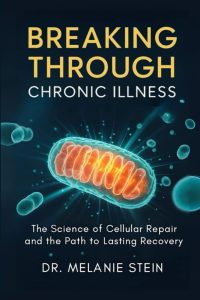
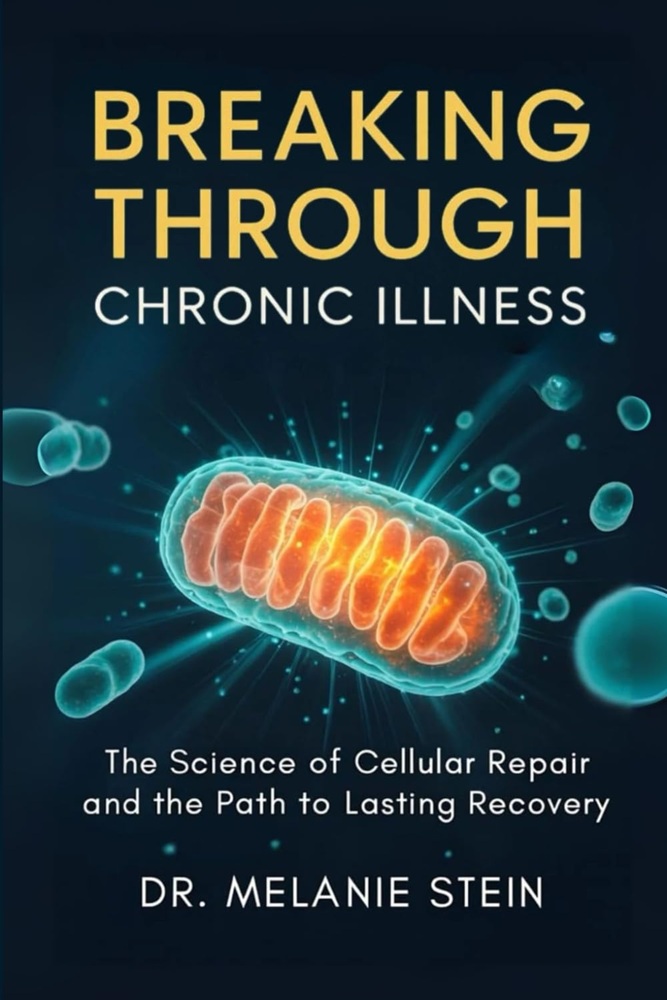
Seeing outcomes shift when we rebuilt the cellular foundation—repairing membranes, restoring mitochondrial function, and strengthening the terrain—convinced me we needed a new playbook. Cell Membrane Therapy became the backbone of my practice, yet it’s still under-taught and often overlooked.
I wrote Breaking Through Chronic Illness to share this framework and to shift the question from “what else should we treat?” to “what’s blocking recovery despite the right therapies?” It’s for those who have done everything right and still don’t feel better—offering clear steps to rebuild the foundation so progress becomes durable.
I did everything I was told, and my body still wasn’t recovering the way it should. Week after week, my patients tell me the same. We’ve been asking the wrong question: it’s not just what’s left to treat, but why recovery isn’t happening despite the right treatments.
The signs were there—I knew what that rash meant—yet I wasn’t taken seriously and was taught how to use a wheelchair before anyone could explain why I needed one. That experience—and a clear purpose to make sure no patient goes unheard—carried me through school, through illness, and into this work.
Beyond the revolving door
This book looks beyond the revolving door of standard antibiotic protocols to an overlooked reason progress slips away and recovery doesn’t last: damage to cell membranes and mitochondria undermines the body’s ability to heal. When we repair the cellular foundation, the body can finally use the treatments we give it to restore health, not just suppress symptoms.
I keep the science readable and the steps practical: why good treatments fail when cellular repair is missing, how a stuck Cell Danger Response keeps the body in a defensive, inflamed mode (and what helps it switch off), and a clear roadmap to rebuild resilience—restoring energy, calming neuroinflammation, and resetting immune balance.
I translate this into everyday choices—nutrition, key supplements, detox support, nervous-system regulation, and environmental strategies—so you know where to start, what to look for, and what matters most.
The book weaves in patient stories of people with “normal” labs and very abnormal days who moved from temporary relief to durable progress. That’s the goal: hope with a plan.
If you’ve been told “everything is normal” while your life is anything but, you’re not alone, and you’re not broken. There is a path forward when we begin — where healing begins — at the cellular level. If you’re tired of improvements that don’t last, Breaking Through Chronic Illness offers a way back. Your symptoms are real, and so is the science that can explain them.
Dr. Melanie Stein is a naturopathic doctor specializing in complex chronic illness and vector-borne disease. After overcoming her own battle with Lyme disease, she founded Restorative Health Clinic in Portland, Oregon. Click here to order Breaking Through Chronic Illness.
For more:
Bob Giguere of IGeneX states a case by Dr. Jones of a little girl who went outside to play about 8:30a.m. and came inside at 10:30 with an attached tick above her right eye. By 2 o’clock, she had developed the facial palsy. At the hospital she was told it couldn’t be Lyme as the tick hadn’t been attached long enough. They offered a neuro-consult…..
By 4pm she couldn’t walk or talk.
Dr. Jones met the family in his office on a Saturday, gave her an intramuscular injection of antibiotics and within 2 hours the palsy was gone. He continued her treatment for approximately 4 weeks.


 Madison Area Lyme Support Group