Archive for the ‘Inflammation’ Category

Cluster of Lyme Cases Manifesting as Bannwarth Syndrome

https://www.acsh.org/news/2018/01/26/cluster-startling-lyme-disease-cases-upper-midwest-12473

A Cluster Of Startling Lyme Disease Cases In The Upper Midwest

There are thought to be approximately 300,000 cases of Lyme disease annually in the United States (although the actual number of cases reported to Centers for Disease Control (CDC) is approximately 30,000 per year.)

Most of them consist of fever, headache and fatigue. They are frequently identified by the characteristic skin rash that looks like a bull’s eye called an erythema migrans – a telltale sign of the presence of the bacteria that cause Lyme disease, Borrelia burgdorferi. 

Rarely, Lyme disease manifests as a neuroinvasive condition called Garin-Bujadoux-Bannwarth syndrome or, more frequently, just Bannwarth syndrome. This complicated version of Lyme Disease is characterized by a few telltale signs. They are, painful meningoradiculoneuritis (inflammation of one or more roots of the spinal nerve) that leads to motor weakness, facial nerve palsy and neuropathy usually in the hands and feet. The other is lymphocytic pleocytosis (an abnormally large number of lymphocytes) in the cerebrospinal fluid (CSF). 

Never heard of Bannwarth syndrome? Neither had we. So, when a cluster of five cases of Bannwarth syndrome were seen during three weeks of July and August last summer, all in the upper midwest, it raised some red flags. The patients were identified at Mayo Clinic campuses in Minnesota and Wisconsin. (1)

Bannwarth syndrome associated with Lyme Disease is not a reportable disease, so data regarding the numbers of cases is scant. This cluster, however, sparked the medical professionals who treated the cases to share the information about the cluster by publishing a case report in Open Forum Infectious Diseases. This way, if there are other clusters elsewhere, people may start drawing some links and uncovering the mystery.

In the paper, they report on the five cases of Bannwarth syndrome. A small snapshot of each person follows (taken from the paper).

Patient 1: 61-year-old male with daily tick exposure presented with progressive back pain, upper torso and extremity paresthesias, right-sided facial droop, and blurry vision in the right eye. Four weeks prior, the patient observed an erythema migrans (EM) rash, treated with 5 days of twice-daily doxycycline.

Patient 2: 62-year-old female presented with subacute onset of lower extremity weakness, progressing to flaccid paralysis over a 3-week period, alongside radiating low back and abdominal pain with associated numbness. 

Patient 3: 65-year-old female presented with subacute progressive ascending weakness and lower extremity paresthesias. 

Patient 4: 29-year-old male developed fever, myalgias, chills, headache, fatigue, and a transient erythematous rash on his trunk in mid-June 2017. Two weeks thereafter, he developed right foot drop, Trendeleberg gait, lower extremity radiculopathy, and painful L5-S1 paresthesias. 

Patient 5: 69-year-old male presented with low-grade fevers, nausea, vomiting, diffuse arthralgias, headache, loss of smell, and blurry vision in the right eye. These symptoms were accompanied by neck and right upper extremity pain in a radicular pattern. 

Because it is not a reportable disease, it is not well understood how much of the disease is popping up across the country. That said, five cases in the same few weeks seemed strange enough for these authors to report it. Is Bannwarth syndrome more prevalent than previously thought? Or, is there something going on in the midwest that could be leading to more Bannwarth syndrome? Now that it is on people’s radar, perhaps we will find out more answers to this strange occurrence.

Notes: (1) There were actually six patients identified with Lyme neuroborreliosis (LNB)

Source: Aditya Shah An Unusual Cluster of Neuroinvasive Lyme Disease Cases Presenting With Bannwarth Syndrome in the Midwest United States. Open Forum Infectious Diseases, Volume 5, Issue 1, 1 January 2018  ofx276,https://doi.org/10.1093/ofid/ofx276

______________

**Comment**

This is a perfect example of the type of journalism that is propagating myths.  Busy doctors will quickly scan this and other articles like it and surmise that Bannwarth Syndrome is rare.  Embedded within the article the journalist even mentions it’s not a reportable illness.  How can they even know numbers?  She even reports it as “complicated form of Lyme Disease.”  

Everyone I deal with has a complicated form of Lyme Disease!  

Dr. Horowitz states Lyme’s been around Europe since the late 1800’s (if not before) and was diagnosed as “acrodermatitis chronic atrophicans” or Bannwarth Syndrome accompanied by painful radiculitis (pain along a nerve), which often had an accompanying skin lesion, Bell’s Palsy, and meningitis.  


So, this is not new.

While the symptoms in Europe varied somewhat from the 1970’s outbreak in Lyme, Connecticut, they are in fact the one and same disease.  Steere’s myopic vision only allowed him to see rheumatologic manifestations and we’ve been stuck in that paradigm since.

To see the wild and varied symptoms:  https://madisonarealymesupportgroup.com/wp-content/uploads/2016/01/symptomlist.pdf  When you throw the numerous coinfections in the mix, it’s a smorgasbord of symptoms.


Study Shows 630% More Aerosolized Flu Virus Particles Emitted by Flu-Vaccinated – A Message to Ethical MD’s

http://www.pnas.org/content/115/5/1081

Infectious virus in exhaled breath of symptomatic seasonal influenza cases from a college community

Jing YanMichael GranthamJovan PantelicP. Jacob Bueno de MesquitaBarbara AlbertFengjie LiuSheryl EhrmanDonald K. Milton and EMIT Consortium
  1. Edited by Peter Palese, Icahn School of Medicine at Mount Sinai, New York, NY, and approved December 15, 2017 (received for review September 19, 2017)

Significance

Lack of human data on influenza virus aerosol shedding fuels debate over the importance of airborne transmission. We provide overwhelming evidence that humans generate infectious aerosols and quantitative data to improve mathematical models of transmission and public health interventions. We show that sneezing is rare and not important for—and that coughing is not required for—influenza virus aerosolization. Our findings, that upper and lower airway infection are independent and that fine-particle exhaled aerosols reflect infection in the lung, opened a pathway for a deeper understanding of the human biology of influenza infection and transmission. Our observation of an association between repeated vaccination and increased viral aerosol generation demonstrated the power of our method, but needs confirmation.

Abstract

Little is known about the amount and infectiousness of influenza virus shed into exhaled breath. This contributes to uncertainty about the importance of airborne influenza transmission. We screened 355 symptomatic volunteers with acute respiratory illness and report 142 cases with confirmed influenza infection who provided 218 paired nasopharyngeal (NP) and 30-minute breath samples (coarse >5-µm and fine ≤5-µm fractions) on days 1–3 after symptom onset. We assessed viral RNA copy number for all samples and cultured NP swabs and fine aerosols. We recovered infectious virus from 52 (39%) of the fine aerosols and 150 (89%) of the NP swabs with valid cultures. The geometric mean RNA copy numbers were 3.8 × 10⁴/30-minutes fine-, 1.2 × 10⁴/30-minutes coarse-aerosol sample, and 8.2 × 10⁸ per NP swab. Fine- and coarse-aerosol viral RNA were positively associated with body mass index and number of coughs and negatively associated with increasing days since symptom onset in adjusted models. Fine-aerosol viral RNA was also positively associated with having influenza vaccination for both the current and prior season. NP swab viral RNA was positively associated with upper respiratory symptoms and negatively associated with age but was not significantly associated with fine- or coarse-aerosol viral RNA or their predictors. Sneezing was rare, and sneezing and coughing were not necessary for infectious aerosol generation. Our observations suggest that influenza infection in the upper and lower airways are compartmentalized and independent.

The association of current and prior year vaccination with increased shedding of influenza A might lead one to speculate that certain types of prior immunity promote lung inflammation, airway closure, and aerosol generation. This first observation of the phenomenon needs confirmation. If confirmed, this observation, together with recent literature suggesting reduced protection with annual vaccination, would have implications for influenza vaccination recommendations and policies.

___________

https://jameslyonsweiler.com/2018/02/02/a-message-to-ethical-mds-the-problem-with-the-2017-8-flu-vaccine-is-the-2016-7-flu-vaccine/  (Please read entire article here by James Lyons Weiler)

Letter to ethical MD’s (snippets below):

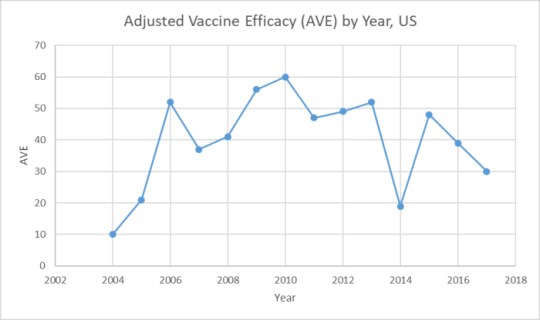
The last time the flu vaccine was 60-70% effective was eight years ago.

fluave

“This is the CDC’s data  https://www.cdc.gov/flu/professionals/vaccination/effectiveness-studies.htm  Clearly, Gupta’s “Years” is, in immunological memory, a singular “Year”. Only once out of the last 14 years was the flu vaccine above 59% – that the value was not 60-70%, it was 60%.

This type of misrepresentation is a consistent penchant within the media and of course from the CDC to exaggerate and highly emphasize only positive views and diminish, dismiss, or ignore any negative views on the safety and efficacy of vaccines.

The Jury is In: The Flu Vaccine Reduces its Own Efficacy

Too many studies now exist that have independently come to the same conclusion: increases in the uptake of flu vaccine reduces that vaccine’s effectiveness in the following year – and some studies show the negative effects of mass influenza vaccination last two years.

The studies reporting those results are reviewed in my article, “Diseases with Unknown Etiology Trace Back to Mass Vaccination Against Influenza in 1976“, and they are extensive and damning. https://jameslyonsweiler.com/2018/01/31/diseases-with-unknown-etiology-trace-back-to-mass-vaccination-against-influenza-in-1976/

Patients have a right to know the specific nature of their infections, and survivors in families of those who die from respiratory infections deserve an accurate cause of death. Coroners should certainly be required to provide an accurate cause of death in so-called “flu” mortalities. Health departments should be required to count only deaths due to confirmed influenza infection as “flu” – otherwise their numbers perpetuate misperception on the risk of influenza infection, and cause fear leading to increased vaccination. How is this seen as a good thing? The population deserves good and honest doctors and stewards of public health.

HHS could demand swab results for all suspected cases of “flu deaths” with a press release and enforce them with random audits. This annual ritual of fear-mongering over “flu-deaths” hides the fact that as long as thimerosal is injected into patients, they are at increased risk of other infections. And due to heterologous immunity, even without thimerosal, flu vaccines can confuse the immune system and muddle up ineffective immune response by trying to re-purpose B-cells trained on the wrong virus, hobbling the immune system making it unresponsive to similar viruses. Such as next year’s flu strain.

We do need objectivity to arise immediately throughout the public health system in the US, starting with HHS, then to CDC and to all Health Departments around the country. Many studies have also found problems with Tamiflu. But no emergency epidemiological study is addressing the question – why are so many young people dying from “flu”? Many of the reports I’ve seen include mention that they person had not only been vaccinated, they also had taken Tamiflu. And many had taken Tylenol. It’s time to ask the tough questions. The science is there on problems with Tylenol for vaccine-induced fever, and it must be taken into consideration. Fever due to respiratory infections after flu vaccination is still vaccine-induced.

A look at the issues with Tamiflu (see primary scientific literature reviewed here) shows that we cannot ignore the possibility that the human immune system is not infinitely resilient, and that medicine’s approaches to tackling “the flu” is imprecise, not evidence-based, and self-defeating. I’m not talking about the number of antigens the human body can take; I’m talking about the amount of tweaking it can tolerate, especially given the aluminum-dense childhood vaccination schedule. The allopathic medical community would do very well to heed the studies that show that Vitamin D helps alleviate both vaccine injury and severity of viral infections. It helps resolve the unfolded protein response without killing the cells. And the science of ER stress (endoplasmic reticulum stress) shows that Thimerosal is, after all, not safe for human use. Same for aluminum.

Real Reform is Coming – It’s a Mathematical Certainty

Vaccines injure people every day, and kill people every week. Each injury and death informs family members, co-workers, and schoolmates. The flaws in vaccines, combined with misinformation campaigns on safety, fuel the fire and build the vaccine risk aware army. It’s a peaceful army, filled with individuals who are hurt so badly, they do not want others to suffer the same fate. They are altruistic. And under informed, ethical and distributed leadership, they are finding their momentum.

Vaccine safety science reform means removing those in the CDC and HHS that perpetuated the debacle as it grew to proportions that even they could no longer easily deny it. And that’s fine. Let them go. There are many excellent professionals capable of replacing them – people who have not been involved in cooking studies to alter the public’s perception of vaccine risk. People who have withstood unwarranted and unfair criticism by those who live in cowardice of reality. People who now no longer afraid to publish their views. An important question is who among my colleagues in Academic Public Health, and which doctors in Pediatric medicine are willing to #bebrave and take on a debacle as huge as a failed national immunization program? Who will stand up to the AAP and tell them they are wrong?

If you are that type of doctor, it will be easier if you trust those who have worked at this for years. Read Dr. Paul Thomas’ book, The Vaccine Friendly Plan. After the resignations, have him come and teach the entire CDC and HHS what he knows. Consider Dr. Alvin Moss’s wisdom – ask him to create a Conflicts of Interest Policy for CDC and HHS, as he has done for the rest of academic medicine. Bring in Dr. Bob Sears from California, who was willing to stare down threats of the loss of his license to practice medicine because he dared to continue to practice medicine in the face of wanton misinformation and pressure from the AAP. Consider Dr. Richard Frye, and Dr. Chris Exley from the UK, who care first and foremost about the truths that impact total health. Dr. Frye would be great as the new NIH Director, in my opinion. Let these people form a new national public health direction that overrides existing contracts. There are others. Like Dr. Judy Mikovits whose character stands much taller than those who tried – and failed – to silence her – on the issue of adventitious agents in viral vaccines (specifically and quite problematic: retroviruses). Ask Dr. Ted Fogarty about Ethical Vaccinomics, and testing for vaccine injuries. Bring in Dr. John Piesse from Australia and end his persecution there, and put his good will toward safety to work here. We would be lucky to have him.

Create a Manhattan Project focused on reducing vaccine injuries, not on making currently licensed vaccines safer. They are old, and stale, and tired, and they, too, need to go. Bring in exciting new developments in artificial immunization like microneedle patches. Bring in Dr. Kanduc to screen epitopes that are unsafe. Drop aluminum, as many have now called for, and bring in calcium carbonate – if needed at all. Let those pharmaceutical companies who created the disaster make good on their promises to stop making their vaccines. Then we will see new approaches to artificial immunization that compete on the platform of safety.

Don’t just end COIs at ACIP: End ACIP. Create a Vaccine Safety Commission that enforces Science Integrity. Open up the markets. Let ideas thrive. Let consumers choose. Let the FDA do its job. Let the people’s experiences be heard. Establish a paradigm in which the end consumer has a say in the quality of the product. Strip the CDC of the ability to hold patents. End the CDC Foundation. End the differences between drugs and biologics and require randomized clinical trials – with proper placebos, not aluminum hydroxide – for vaccines. Repeal the 1986 Act that protects drug companies from liability for faulty vaccines. Perform random spot checks of vaccines in practices for contamination. The total sum of policies in the National Immunization Program, and the burden of morbidity on the population is a serious threat to our National Security.

Let some new faces and voices drive this reform. Bring in Dr. Dan Neides who had to escape the Cleveland Clinic after speaking his conscience. Let him oversee the transition. Bring in Dr. Brian Hooker to personally issue the pink slips to those who must now go from the CDC. Let all of those named here share his or her experience with Congress. Have Dr. Thompson testify. We need truth and reconciliation. And we need it 42 years ago.

There are MDs who sit in the shadows, silent, and afraid of job loss, sanction, ridicule. Step up. Let your views be known to the current Administration. Join Physicians for Informed Consent. You are not alone. You can help be part of the solution. Attend Health Department meetings and speak up for Informed Consent. Speak up for vaccine exclusions for kids in homes with high lead levels. Speak up for spacing out vaccines and skipping them. Speak up for tolerance and understanding of the pain and anguish parents of kids with autism experience when they are told it’s genetic, they know it’s environmental, and they are told they have to vaccinate their other babies. Speak up against calling CPS for parents who want to take the time they have under the law to consider vaccinations. And, of course, do right by your patients. Listen to their concerns. Inform them of both risks and benefits, as required by Federal Regulations. Let them know they are enrolling themselves or their children (and unborn baby) in post-licensure vaccine safety clinical trials (as required by Federal Regulations). Provide medical and philosophical exemptions for school waivers as required by the laws of your state and the rule of your own conscience. The AAP does not represent the rights and will of the people of the United States of America. Our legislation does.

Let’s aim to not make 2020 vaccination look anything like 2019. We have solutions. We’re now aiming for Healthy People 2050, and the current vaccines have very little to do with our vision. By the way, these ideas don’t come (exclusively) from me. They are shared by hundreds of thousands of American citizens, many of whom have been made sick or lost loved ones to vaccines. #werenotgoingaway #releasetheothermemos #hearthiswell #notmine #Vaxxed #cdctruth #saveourbabies #bebrave #ipak #cdcwhistleblower #rfkcommission #educatebeforeyouvaccinate #vaxxed #learntherisk #wedid #cdclied #stopmandatoryvaccination #learntherisk.”

____________

**Comment**

More just keeps popping out of Pandora’s Box regarding vaccines.

This recent talk shows how vaccines are causing Lyme/MSIDS patients to relapse as well as worsen:  https://madisonarealymesupportgroup.com/2018/02/04/dr-muth-immune-issues-and-lyme-msids/

https://madisonarealymesupportgroup.com/2017/12/02/scottish-doctor-gives-insight-on-lyme-msids/  Scottish doctor treating a number of young women who fell ill after their HPV vaccination, which seems to have stimulated a latent Lyme infection to reactivate.

https://madisonarealymesupportgroup.com/2016/04/24/gardasil-and-bartonella/  Asymptomatic girls after receiving Gardasil activated dormant Bartonella which was confirmed by testing.

Great video on the flu vaccine’s ineffectiveness:  https://madisonarealymesupportgroup.com/2015/11/08/flu-vaccine-causes-the-flu/

I could go on and on to infinity.  Something must be done.  Be a part of the solution.


Headaches and Lyme/MSIDS

https://globallymealliance.org/my-1-headache-trigger-lyme-disease/

th

By Jennifer Crystal

Skiing has always been part of my life. I went to a college in Vermont that had its own ski run. After graduation, I moved to Colorado to teach high school, and to become a ski instructor. It was supposed to be the high point of my life, and in many ways it was, but there were also some very low points because I was wrestling with undiagnosed tick-borne illnesses.

One such low found me on the bathroom floor, writhing in pain from an excruciating migraine. The throbbing started over my left eye, working its way up over that side of my head and around the back to my neck. I felt as if my brain was going to explode out of my skull.

“It’s probably from the altitude,” a doctor later told me. In the years since I had started developing strange symptoms—fever, joint aches, exhaustion, hand tremors, hives—I grew accustomed to doctors writing them off with a simple explanation.

But altitude was not causing my migraines. In fact, I was suffering from Lyme disease, Ehrlichia, and Babesia, the last being a tick-borne parasite that consumes oxygen in red blood cells. Due to these infections, a scan would later show that I was not getting enough oxygen to the left side of my brain. Living at a high altitude certainly didn’t help this situation, but the root cause was the fact that my oxygen levels were already compromised by infection.

Babesia is not the only tick-borne disease that can cause headaches; so can Ehrlichia and relapsing fevers. But with or without co-infections, the vast majority of Lyme disease patients complain of headaches as a chief symptom, with pain ranging from moderate to severe. Many patients, myself included, have encountered migraines so debilitating they’re relegated to bed in a dark room due to pain, light sensitivity and nausea. Though tick-borne diseases can cause pain throughout the cranium, migraines are usually focused to one side. As a child, I had four surgeries to correct weak muscles in my eyes, especially on the left, leaving scar tissue over that eye. I later learned that Lyme bacteria, spirochetes, like to hide out in scar tissue, which may explain why my migraines always started over that eye.

So why are headaches so common for Lyme patients? Spirochetes can enter the central nervous system by crossing the blood-brain barrier. This barrier is supposed to protect the brain from infection, but spirochetes are tricky and swift and can coil their way across, causing headaches for their victims.

Lyme is an inflammatory disease, so once spirochetes enter the central nervous system, they cause swelling there. In his book Why Can’t I Get Better? Solving the Mystery of Lyme & Chronic Disease, Dr. Richard Horowitz equates this inflammation to a fire that ignites heat, redness, pain, and loss of function.[1] Feeling like my brain was going to explode out of my skull was not really hyperbole; my head was indeed swollen, but I just couldn’t see it the way I would be able to if  I’d had a swollen ankle or knee.

At my lowest points of illness, I got migraines several times a week. I tried to try to push through the pain. I wanted to be living my life, teaching and skiing. But I always paid a high price for not listening to my body—or in this case, to my brain. Ignoring the headache only increased the pain, sometimes sending me to bed for two or three days at a time. I got prescription medication, which I learned to take as soon as I felt a headache coming on, rather than trying to wait it out. I also found that staying hydrated, eating foods rich in iron, and stretching gently—to help increase blood flow—sometimes helped alleviate my headaches.

The best treatment, however, was rest. If you have a swollen ankle or knee, you stay off that joint, giving it time to heal. The same is true for your brain. Your head needs time to recover from inflammation, and nothing has helped that process more for me than sleep. Though I rarely get migraines these days, I still get pressure on the left side of my head when I get tired or neurologically overwhelmed. I never want to spend a day in bed, but one is better than being there for several days—and it’s certainly better than writhing on the bathroom floor. A day spent recuperating means more days on the slopes, and I’ll take as many of those as I can get.

[1] Horowitz, Richard I. Why Can’t I Get Better? Solving the Mystery of Lyme & Chronic Disease. New York: St. Martin’s Press. 2013. (186)


Opinions expressed by contributors are their own.

Jennifer Crystal is a writer and educator in Boston. She is working on a memoir about her journey with chronic tick-borne illness. Do you have a question for Jennifer? Email her at  jennifercrystalwriter@gmail.com

________________

**Comment**

Infection driven inflammation is the name of the game here and anything you can do to lower both will help the headaches.

Since this was a major thorn for me my quest for relief has led me to numerous modalities.  One is systemic enzymes:  

https://madisonarealymesupportgroup.com/2016/04/02/why-docs-miss-msids-wobenzym/

https://madisonarealymesupportgroup.com/2016/04/22/systemic-enzymes/

My husband nearly destroyed his liver taking Ibuprofen for Lyme/MSIDS pain.  

The other is ruling out Chiari and/or any other physical causes:  https://madisonarealymesupportgroup.com/2016/04/02/chiari/  Normally Chiari is thought of as a congenital abnormality; however, within 1 week I met 3 people with a MSIDS diagnosis who also have Chiari. Coincidence?  Brain infections can cause it.

Next down the rabbit hole is MSM (a derivative of DMSO – without the smell):  https://madisonarealymesupportgroup.com/2018/01/03/the-invisible-universe-of-the-human-microbiome-msm/  MSM stands for Methylsulfonylmethane and is 34% sulfur by weight. Sulfur plays a crucial role in detoxification and is an important antioxidant for producing glutathione.  It has been used for decades for pain and inflammation.  

There are also MSM creams – but beware and do your reading.  Many have toxic additives and perfumes.  

And then of course, DMSO:

I promised I would write an in-depth article on both DMSO and its derivative MSM but there’s a lot to read!  I have personally tried both with excellent results.  MSM is as safe as water but please read about it in the link above as the process in which it’s made is important.  

As to DMSO, it’s safe as well but since it’s a solvent (penetrating agent) it demands scrupulous attention to detail, plus you may not enjoy the garlic/oyster smell it gives.  You also need to find pure DMSO.  

http://www.alternative-medicine-digest.com/dmso.htmlOver 100,000 articles have been written about medical DMSO uses. In 1963, when the FDA approved human testing, all studies showed it to be safe and non-toxic. One study revealed changes in the lens of the eye in specific lab animals; however, when a number of human studies were done around the world in the late sixties, no human eye damage was found.

After two human studies done on human volunteers in prison, Dr. Richard Brobyn stated: “A very extensive study of DMSO use was conducted at three to 30 times the usual treatment dosage in humans for three months. DMSO appears to be a very safe drug for human administration, and, in particular, the lens changes that occur in certain mammalian species do not occur in man under this very high, prolonged treatment regimen. I am very glad to be able to present these data at this time, so that we can permanently dispel the myth that DMSO is in any way a toxic or dangerous drug.”

So far I’m taking 1/2 tsp of MSM crystals in water twice a day.  All pain gone.  POOF!  If there is any pain ever, I use a DMSO gel topically on the specific area of pain – typically the base of my skull.  Within minutes, pain gone.  POOF!

Please read about DMSO before trying as it burns and itches for a spell.  Do not itch it.  You also need to read about concentrations as some are too strong for topical application.  I use the 70% DMSO gel.  Some are more sensitive and need a lower percentage.   It also has a lovely smell to it – but hey, I’ll smell like an oyster any day than deal with the pain!  Also, hands and anything DMSO touches has to be scrupulously clean.  It must dry (takes about 20-30 min) before putting any clothing on it as the dyes, etc will go into your body.  

I’ve called numerous places to find out what the ingredient (such as rose smell) is in certain DMSO creams.  I’m not getting straight answers so I’m not using it.  I’d rather deal with the smell than introduce yet another foreign substance into my body.

Of course the question begs to be asked, “Would taking liquid DMSO internally aid with getting antimicrobials/antivirals deeper into the body?”  My hunch is yes, if you can stand the smell.

Stay tuned.  More to come.


Depression Not Caused by Chemical Imbalance

https://articles.mercola.com/sites/articles/archive/2018/01/18/chemical-imbalance-theory-for-depression.aspx?

Depression Not Caused by Chemical Imbalance  

depression

January 18, 2018

Story at-a-glance

  • Many people believe depression is caused by a chemical imbalance in the brain; this chemical imbalance theory has been widely promoted by drug companies and psychiatrists alike — without evidence to back it up
  • Pharmaceutical companies were instrumental in bringing the chemical imbalance theory to the mainstream, heavily promoting it as a marketing gimmick to sell antidepressant drugs
  • Studies have repeatedly shown antidepressants work no better than placebo for mild to moderate depression, yet carry a significant risk of side effects
  • Depression is likely the result of multiple environmental and biological factors, including faulty mood regulation by the brain, genetic vulnerability, stressful life events, nutrition, medications and medical problems, among others

By Dr. Mercola

Do you know what causes depression? Many people would respond that it’s due to a chemical imbalance in the brain. This chemical imbalance theory has been widely promoted by drug companies and psychiatrists alike, to the extent that it’s accepted as fact. The glaring problem is that the chemical imbalance theory is just that — a theory — and worse still, it’s a theory that has been largely discredited.

The theory was first proposed by scientists in the 1960s after it appeared certain antidepressant drugs worked by altering brain chemicals, but it was stated that “the findings are inconclusive.”1 Yet, the theory was proposed at a time when treating mental illness via psychoanalysis was falling out of favor while viewing it as tied to a physical or biological mechanism was in vogue.

The idea quickly spread, becoming the medical dogma for depression, despite concrete evidence proving its worth. “The fact that practicing physicians and leaders of science bought that idea, to me, is so disturbing,” Steve Hyman, director of the Stanley Center for Psychiatric Research at the Broad Institute of MIT and Harvard, told Quartz.2 The news outlet continued:

“It’s not hard to see why the theory caught on: It suited psychiatrists’ newfound attempt to create a system of mental health that mirrored diagnostic models used in other fields of medicine. The focus on a clear biological cause for depression gave practicing physicians an easily understandable theory to tell patients about how their disease was being treated.”3

Prozac, Zoloft Bring Chemical Imbalance Theory for Depression to the Mainstream

The release of the antidepressant Prozac (fluoxetine) in the late 1980s was a game changer for depression treatment in that the drug’s maker, Eli Lilly, heavily promoted the chemical balance theory as a marketing gimmick to sell the drug. With fewer side effects than some of the earlier antidepressants, Prozac became a blockbuster drug and the poster child for the selective serotonin reuptake inhibitor (SSRI) class of antidepressants, which target the neurotransmitter serotonin.

“There was, of course, no demonstrable evidence showing that depressed patients had any imbalance, but Lilly ran with it,” Psychology Today noted. “Before long, psychiatrists and psychiatric patients alike came to identify with the idea that mental disorders are caused by chemical imbalances in the brain.”4

Zoloft (sertraline), another SSRI, was another major player in spreading and perpetuating the chemical balance theory, with their television ads going so far as to say, “While the causes are unknown, depression may be related to an imbalance of natural chemicals between nerve cells in the brain. Prescription Zoloft works to correct this imbalance.”5

It’s important to note that in the time since Prozac flooded the market, depression still remains poorly treated, despite a plethora of new antidepressant options to choose from. SSRIs work by preventing the reuptake (movement back into the nerve endings) of the neurotransmitter serotonin.

This makes more serotonin available for use in your brain, which is thought to improve your mood since low serotonin levels are said to lead to depression. Yet, as written in the Handbook of Experimental Pharmacology, it’s a largely disproven theory:6

“Antidepressants are supposed to work by fixing a chemical imbalance, specifically, a lack of serotonin in the brain. Indeed their supposed effectiveness is the primary evidence for the chemical imbalance theory. But analyses of the published data and the unpublished data that were hidden by the drug companies reveal that most (if not all) of the benefits are due to the placebo effect.

Some antidepressants increase serotonin levels, some decrease it, and some have no effect at all on serotonin … The serotonin theory is as close to any theory in the history of science having been proved wrong.”

Harvard: Depression ‘More Complex’ Than a Brain Chemical Imbalance

It’s quite possible that people who are depressed may have an imbalance of certain chemicals in their brain. But to speculate that that imbalance is the cause of their symptoms is overly simplistic. For instance, it’s known that psychological stress can cause biological changes in the brain, including a reduction in the size of the hippocampus, which is used for learning and memory.7 In turn, it’s known that some people with depression have a smaller-than-average hippocampus.8

“Evidence of biological changes correlating with environmental stressors is vastly different from evidence that mental illnesses are ‘caused’ by biological deficits,” scientists wrote in a 2008 report on the chemical imbalance theory,9 and this is an important point. Even Harvard Medical School acknowledges that while brain chemicals may play a role in your mood, it is not accurate to suggest that one being too high or too low is at the root of depression. They state:10

“Research suggests that depression doesn’t spring from simply having too much or too little of certain brain chemicals. Rather, there are many possible causes of depression, including faulty mood regulation by the brain, genetic vulnerability, stressful life events, medications, and medical problems.

It’s believed that several of these forces interact to bring on depression … There are millions, even billions, of chemical reactions that make up the dynamic system that is responsible for your mood, perceptions, and how you experience life.”

One theory posits, for instance, that stress could be a major contributor to depression because it suppresses the production of new neurons in the hippocampus. In order to feel better, people with depression may need to increase neurogenesis (the generation of new neurons), which takes weeks.

This would explain why many people who take antidepressants don’t notice any improvement for several weeks.11 If the action was really on neurotransmitters, the patient should feel better right away when levels increase. Instead, triggering the growth of neurons could be the secret, which is a process that can be triggered naturally via exercise.

Believing Depression Is Caused by Chemical Imbalance Worsens Outcomes

Aside from the serious implications of prescribing drugs under a false premise, the chemical balance theory is also dangerous in that it takes away ownership from the patient. If a person feels a chemical imbalance in their brain is to blame for their depression, they may believe taking medications is the only option to feel better. According to Todd Kashdan, professor of psychology at George Mason University in Virginia, upon “buying into a biomedical explanation for their depression:”12

“They become pessimistic that recovery is possible. They become less confident that they can manage and regulate negative moods that arise (and they always do). The notion that depression is their brain’s fault does not lessen the stigma or self-blame one bit.

And they no longer believe that psychotherapy is a credible or useful strategy for treating their depression and instead, are ready to be dispensed a pill cure. Essentially, they become less flexible in their options for treating depression and less confident that they will escape its clutches.”

Indeed, a 2014 study published in Behavior Research and Therapy revealed just that — attributing depressive symptoms to a chemical imbalance made people more pessimistic about their prognosis and led them to believe that drugs would be more effective than psychotherapy.13 At the same time, they still felt the same amount of self-blame. It’s important to note that –

feeling depressed is not anyone’s fault, nor should they feel blamed for or ashamed of their feelings.

However, pinning its cause on a chemical imbalance is likely to worsen outcomes rather than improve them. It’s a vicious cycle as well, because the chemical imbalance theory makes people assume that medications are the best course of treatment. But here again research has shown that people with depression who are treated with medication have poorer long-term outcomes compared to those who are not.14

Antidepressants Work No Better Than Placebo

Nearly 7 percent of U.S adults suffered from a depressive episode in the past year15 while, worldwide, 350 million people suffer from depression, making it a leading cause of disability.16 Despite this, only about one-third of Americans with depression get treated,17 which puts the remaining two-thirds left untreated at increased risk of suicide and with a lower quality of life.

That said, the antidepressant drugs that are supposed to work by fixing a chemical imbalance in the brain are largely ineffective, which means that even when some people attempt to get treatment, they’re left suffering. Studies have repeatedly shown antidepressants work no better than placebo for mild to moderate depression.18

Irving Kirsch, associate director of the Program in Placebo Studies at Harvard Medical School, has conducted meta-analyses of antidepressants in comparison to placebo and has concluded that there’s virtually no difference in their effectiveness, noting, “The difference is so small, it’s not of any clinical importance.”19 What is different, however, is the potential for side effects, which is far greater among antidepressants than placebos.

For instance, antidepressant users have an increased risk of developing Type 2 diabetes,20 even after adjusting for other risk factors, like body mass index (BMI).21 Antidepressant use has also been linked to thicker arteries, which could contribute to the risk of heart disease and stroke.

The results of a study of 513 twin veterans, presented at the American College of Cardiology meeting in New Orleans in 2011, found that antidepressant use resulted in greater carotid intima-media thickness (the lining of the main arteries in your neck that feed blood to your brain).22

This was true both for SSRIs and antidepressants that affect other brain chemicals. Further, the use of antidepressants is also associated with an increased risk of heart attack, specifically for users of tricyclic antidepressants, who have a 36 percent increased risk of heart attack.23

Meanwhile, the drugs are also linked to dementia, with researchers noting “treatment with SSRIs, MAOIs, heterocyclic antidepressants, and other antidepressants was associated with an increased risk of dementia,” and as the dose increased, so too did the risk.24

The drugs are also known to deplete various nutrients from your body, including coenzyme Q10 and vitamin B12 — in the case of tricyclic antidepressants — which are needed for proper mitochondrial function. SSRIs may deplete iodine and folate,25 and you’re even more likely to relapse if you’re treated with antidepressants than if you’re treated via other methods, including placebo or exercise.26,27Given the lack of effectiveness and the risks involved, Kirsch and colleagues concluded:28

“When different treatments are equally effective, choice should be based on risk and harm, and of all of these treatments, antidepressant drugs are the riskiest and most harmful. If they are to be used at all, it should be as a last resort, when depression is extremely severe and all other treatment alternatives have been tried and failed.”

Alternative Treatments for Depression

If the chemical imbalance theory is false, the case for choosing antidepressants as a first-line treatment for depression is incredibly weak. Fortunately, there are many alternatives to drugs for treating depression, including nutritional interventions, light therapy, exercise and more. If you’re struggling with depression, you needn’t suffer in silence. Seek help, from a counselor, a holistic psychiatrist or another natural health practitioner to start the journey toward healing.

That said, if you are feeling desperate or have any thoughts of suicide, please call the National Suicide Prevention Lifeline, a toll-free number: 1-800-273-TALK (8255), call 911, or simply go to your nearest hospital emergency department. You cannot make long-term plans for lifestyle changes when you are in the middle of a crisis. If you’re in a place where you feel you can begin to make positive changes, here are some of the top alternative treatments for depression to consider:

Exercise. Those who didn’t exercise were 44 percent more likely to become depressed compared to those who did so for at least one to two hours a week.29
Light therapy. Light therapy alone and placebo were both more effective than Prozac for the treatment of moderate to severe depression in an eight-week-long study.30
Omega-3 fats, which have been shown to lead to improvements in major depressive disorder.31 Make sure you’re getting enough omega-3s in your diet, either from wild Alaskan salmon, sardines, herring, mackerel and anchovies, or a high-quality animal-based omega-3 supplement.
Optimize your vitamin D levels, another factor linked to depression32
Magnesium. Magnesium supplements led to improvements in mild-to-moderate depression in adults, with beneficial effects occurring within two weeks of treatment.33
B vitamins. Low levels of B vitamins are common in patients with depression, while vitamin B supplements have been shown to improve symptoms.34
Mindfulness meditation35 and the Emotional Freedom Techniques (EFT). In a study of 30 moderately to severely depressed college students, the depressed students were given four 90-minute EFT sessions. Students who received EFT showed significantly less depression than the control group when evaluated three weeks later.36
Cognitive behavioral therapy, which works as well as antidepressants and may reduce your risk of relapse even after it’s stopped.37
Limit sugar. Men consuming more than 67 grams of sugar per day were 23 percent more likely to develop anxiety or depression over the course of five years than those whose sugar consumption was less than 40 grams per day.38
 _____________
**Comment**
A very helpful article for Lyme/MSIDS patients as we nearly always at some point suffer with depression.  
Some of you might be on antidepressants and this article has left you floundering.  Take a deep breath and decide you are going to take this information, study it, and talk to your practitioner before deciding upon any course of action.
Please seek help if you need it.  If possible find at least a “Lyme friendly” practitioner as the last thing you need is to be abused by another health professional when you are at your lowest.  Hopefully the word is getting out on the psychiatric manifestations of Lyme/MSIDS.  Start by going to your local Lyme support group and ask around for a good, reputable, understanding, and hopefully experienced practitioner.
For those of you in the trenches, I want to encourage you that this too shall pass.  I found my depression while in treatment for Lyme/MSIDS was directly aligned to how I felt physically.  The worse I felt physically the worse I felt emotionally.  I’ve said this before, but the best advice I ever received from someone who made it to the other side of health was, “Don’t get depressed about feeling depressed.”  Give yourself permission to feel lousy.  Your body is in a battle of epic proportions – you’re bound to feel like crap.
Treating for Lyme/MSIDS is unlike most other treatments that have linear improvement.  You are going to have starts and stops, good days and bad, and down right horribly miserable days.  You are going to have days where you beg to have it all end.
Persevere.  Don’t quit.  Better days are coming.  Do not give in to the moment.  
When I got really low I read books where others had it worse than me.  I watched cartoons, anything to get my mind off the pain and hopelessness.  For a long time I didn’t read anything about treatment outcomes, because frankly I couldn’t have handled the truth.  That’s OK.  You don’t need to know how the watch works when you are at your lowest.  There will come a day when you can handle all that information, but for today, take a nice bath.  Listen to your favorite music.  Read your favorite books.  Call an understanding friend.  Whatever it takes to get through this day, minute, and second.

There has been researching showing that probiotics help with depression as well:  http://www.spring.org.uk/2017/03/probiotics-depression.phpThe scientists found that when mice in the study were put under stress, they developed a reduction in Lactobacillus through the metabolite kynurenine, which is somehow involved with inflammation and was linked to depressed behavior.  Feeding them Lactobacillus almost completely stopped their depressive behaviors.  

All Lyme/MSIDS patients should be on good pro and prebiotics and doing all they can to lower inflammation.  Read here about the microbiome and MSM’s ability to lower inflammation & help heal the gut:  https://madisonarealymesupportgroup.com/2018/01/03/the-invisible-universe-of-the-human-microbiome-msm/

If the depression hangs on, seek help.  Also, if you need to take medication short-term – so be it.  No judgement here.  We are all different and take different things to make it to the other side of health.  But, I encourage you to get to the bottom of things rather than mask it with a pill.  

My experience has shown me that treatment for pathogens is just one prong of our healing journey, and while important, isn’t the end-all.  We must detox.  We must address diet and sleep.  We must learn everything we can about our personal imbalances and weaknesses and seriously address them.  We must address our mental health and all that entails – from lowering our stress to ditching harmful relationships.
Thank you to all the mental health practitioners and patients out there writing about your experiences with Lyme/MSIDS psychiatric issues.  We need to hear what you have to say!

The Invisible Universe Of The Human Microbiome & MSM

 NPR 2013

The next time you look in a mirror, think about this: In many ways you’re more microbe than human. There are 10 times more cells from microorganisms like bacteria and fungi in and on our bodies than there are human cells. But these tiny compatriots are invisible to the naked eye. Artist Ben Arthur gives us a guided tour of the rich universe of the human microbiome.

https://articles.mercola.com/sites/articles/archive/2018/01/03/gut-microbiome-probiotics.aspx?  Dr. Mercola Jan., 2018

Story at-a-glance

  • Because 70 to 80 percent of your immune system resides within your gastrointestinal tract, optimizing your gut microbiome is a worthwhile pursuit that will have far-reaching effects on your physical health and emotional well-being
  • A vital first step toward balancing your gut flora is to eliminate sugar from your diet, especially sugars found in processed foods
  • Eating fermented foods such as kefir, kimchi and sauerkraut, as well as consuming prebiotic foods like garlic, leeks and onions, can help create an optimal environment for beneficial gut bacteria, while decreasing disease-causing bacteria, fungi and yeast
  • Taking a probiotic or sporebiotic supplement can also be beneficial, especially during and following antibiotic treatment, because it helps restore and promote healthy gut flora
  • Your gut bacteria can influence your behavior and gene expression, and has also been shown to play a role with respect to autism, diabetes and obesity

__________________

All Lyme/MSIDS patients should be on a good pro and prebiotic as well as lowering or avoiding sugars, eating a whole-food based diet, and avoiding processed food.  Some will do well eliminating gluten and/or dairy.  We are all so different – what works for one may not work for another, but all are worth trying.

In my quest, I’ve been studying DMSO and MSM.  For that information:  https://madisonarealymesupportgroup.com/2018/03/02/dmso-msm-for-lyme-msids/

Briefly, MSM stands for Methylsulfonylmethane and is 34% sulfur by weight.  Sulfur plays a crucial role in detoxification and is an important antioxidant for producing glutathione.  If you aren’t getting enough sulfur, glutathione can not work.  Even if you have a diet rich in sulfur (think cabbage, onions, garlic, broccoli, etc – essentially the stinky veggies – and many other food items as well) your body still could use supplementation.

For me it was a game-changer.

https://lyngenet.com/msm-wonder-supplement-sinus-digestive-lung-esophageal-health/ By Lyn-Genet Recitas, NMT, Sports Nutritionist, Holistic Health Pracitioner, RYT

Recitas, author of “The Plan,” calls MSM the wonder supplement for your gut.  It can alleviate allergy symptoms, helps with detoxification, eliminates free radicals, and improves cell permeability.  She states that with given time, MSM will start to actually repair damage caused by leaky gut – a common problem with Lyme/MSIDS patients.  It can also help the body’s ability to absorb nutrients from food.  Many Lyme patients struggle with paralysis of the gut where the muscles of the stomach and intestines stop being efficient.  MSM helps this muscle tone as well.

My personal observation after starting MSM

I started out with 1/4 tsp of distilled crystals in about 2 oz of water, since it has a bitter taste.  After studying it, I learned the distillation process is the best one and if you want to find sources easily go here:  http://www.optimsm.com/brands/ You should see the OptiMSM patent on the product.  I happened to get the 16 oz tub of crystals at the Vitamin Shoppe but as you can see there are many brands available. (As always, I don’t make a dime on any of this and have no connection what so ever to any product line)

Within three days I noticed my nails growing faster.  Within a week, about 50% of my pain was gone.  Now this is a big deal as this pain has been resistant to nearly everything I’ve tried over the years.

After this reduction in pain, I increased the dose to 1/4 tsp twice a day and then ultimately to my final dose of 1/2 tsp twice a day in 2 oz of water.

**update** I had to pull back on amount for a few weeks as my body was detoxing and I broke out like a teenager on my face, back, and chest.  All I can say is it does help detoxify as clearly seen on my skin.  After reducing the dose for a month or so I easily went back to my full dose of 1/2 tsp once a day.  Everyone’s different and requires different doses.  Take the lowest amount to achieve desired results.

I have to report that my pain is completely gone on some days with a fraction returning on other days.

For a great MSM guide:  http://msmguide.com/

http://www.nutraceuticalsworld.com/contents/view_breaking-news/2017-04-25/decades-of-discovery-summarized-in-new-msm-review/  This article gives a current 2017 review of MSM as well as studies and 195 references.

MSM has been studied for decades.

It is recommended to start at a low initial dose and allow the body to acclimate.  You can slowly increase the dose after a week.  It is also stated that those with chronic conditions may take up to 6 or more months to notice a difference.

You can also get MSM in creams, gels, and lotions for topical application – as well as pills.  Make sure you read about the other ingredients and if the MSM is made from distillation.  Like any other supplement, the devil’s in the details.

I’ve had patients report back to me that MSM has been a game-changer for them too.  Considering the fact it’s cheap, helps with pain and inflammation, helps with detoxification and helping the gut, it is one item I can suggest to anyone to try.

MSM is derived from DMSO and has many similar properties plus DMSO has many all of its own worth investigating.  DMSO takes more knowledge to use so please read that article above in detail as it’s a penetrating agent and will drive anything and everything into your body.  If using topically you want it to completely dry before anything touches it and your hands, utensils and everything it’s stored in must be clean and preferably glass.  DMSO should never be stored in plastic.