Archive for the ‘Inflammation’ Category

Metabolites of Prostaglandin Synthases As Potential Biomarkers of Lyme Disease Severity & Symptom Resolution

https://www.ncbi.nlm.nih.gov/pubmed/30121835/

2019 Jan;68(1):7-17. doi: 10.1007/s00011-018-1180-5. Epub 2018 Aug 18.

Metabolites of prostaglandin synthases as potential biomarkers of Lyme disease severity and symptom resolution.

Abstract

BACKGROUND:

Lyme disease or Lyme borreliosis (LB) is the commonest vector-borne disease in the North America. It is an inflammatory disease caused by the bacterium Borrelia burgdorferi. The role of the inflammatory processes mediated by prostaglandins (PGs), thromboxanes and leukotrienes (LTs) in LB severity and symptoms resolution is yet to be elucidated.

OBJECTIVES:

We aim to systematically review and evaluate the role of PGs and related lipid mediators in the induction and resolution of inflammation in LB.

METHODS:

We conducted a comprehensive search in PubMed, Ovid MEDLINE(R), Embase and Embase Classic to identify cell-culture, animal and human studies reporting the changes in PGs and related lipid mediators of inflammation during the course of LB.

RESULTS:

We identified 18 studies to be included into this systematic review. The selected reports consisted of seven cell-culture studies, seven animal studies, and four human studies (from three patient populations). Results from cell-culture and animal studies suggest that PGs and other lipid mediators of inflammation are elevated in LB and may contribute to disease development. The limited number of human studies showed that subjects with Lyme meningitis, Lyme arthritis (LA) and antibiotic-refractory LA had increased levels of an array of PGs and lipid mediators (e.g., LTB4, 8-isoPGF, and phospholipases A2 activity). Levels of these markers were significantly reduced following the treatment with antibiotics or non-steroidal anti-inflammatory drugs.

CONCLUSION:

Dysregulation of prostaglandins and related lipid mediators may play a role in the etiology of LB and persistence of inflammation that may lead to long-term complications. Further investigation into the precise levels of a wide range of PGs and related factors is critical as it may propose novel markers that can be used for early diagnosis.

__________________

**Comment**

Systematic reviews are only as good as the studies they utilize. The area of Lyme research is notoriously controlled by “The Cabal,” a highly vested group of individuals rife with conflicts of interests.

The “limited” number of human studies is two-fold: 1) the entrance parameters into studies requires a positive on the CDC-two tiered testing (which misses half of all cases & leaves out a huge subset of patients) as well as having the EM rash which is highly variable with patients (studies show 25-80% get it, and some not at all), and 2) anyone who doesn’t agree with the long-held CDC/IDSA narrative that Lyme is hard to catch and easy to treat and doesn’t persist, struggles to be heard and published: https://madisonarealymesupportgroup.com/2017/01/13/lyme-science-owned-by-good-ol-boys/  Numerous researchers have told the same sordid tale:

Christian Perronne, physician on the infectious diseases faculty at the University of Versailles-St Quentin, France, states,

“If you try to publish a little bit different from the guidelines, it’s anti-science.”

What researcher in their right mind wants to swim up this stream? Only a few and we are so thankful to have them!

I find it interesting that although patients improve with antibiotics (as clearly stated right here in this article) authorities state antibiotics don’t help. Their studies are rigged for a preconceived outcome. I would not be writing today without numerous long-term antibiotics used judiciously. I can say the same for many other patients. Antimicrobials, of course, are only one prong of treatment and it’s a holistic venture requiring many modalities, experience, and a lot of savvy.
The polarization continues.

Chronic Inflammation Removes Motivation By Reducing Dopamine in the Brain

https://www.news-medical.net/news/20190605/Chronic-inflammation-removes-motivation-by-reducing-dopamine-in-the-brain.aspx

Chronic inflammation removes motivation by reducing dopamine in the brain

June 5, 2109

Written by Dr. Liji Thomas

Why do we feel listless when we are recovering from an illness? The answer is, apparently, that low-grade chronic inflammation interferes with the dopaminergic signaling system in the brain that motivates us to do things.

This was reported in a new paper published in the journal Trends in Cognitive Sciences.

The research carried out at Emory University explains the links between the reduced release of dopamine in the brain, the motivation to do things, and the presence of an inflammatory reaction in the body. It also presents the possibility that this is part of the body’s effort to optimize its energy expenditure during such inflammatory episodes, citing evidence gathered during their study.

The authors also published an experimental framework based on computational tools, devised to test the theory.

The underlying hypothesis is that the body needs more energy to heal a wound or overcome an infection, for instance, both of which are associated with low-grade inflammation. To ensure that energy is available, the brain uses an adaptive technique to reduce the natural drive to perform other tasks which could potentially drain away the energy needed for healing. This is essentially a recalibration of the specialized reward neurons in the motivation center of the brain, so that ordinary tasks no longer feel like they’re worth doing.

According to the new study, the mechanism of this recalibration is immune-mediated disruption of the dopamine pathway, reducing dopamine release.

The computational technique published by the scientists is designed to allow experimental measurements of the extent to which low-grade inflammation affects the amount of energy available, and the decision to do something based on the effort needed. This could allow us to better understand why and how chronic inflammatory states cause a lack of motivation in other disease conditions as well, including schizophrenia and depression.

Andrew Miller, co-author of the study, says,

“If our theory is correct, then it could have a tremendous impact on treating cases of depression and other behavioral disorders that may be driven by inflammation. It would open up opportunities for the development of therapies that target energy utilization by immune cells, which would be something completely new in our field.”

It is already known that immune cells release cellular signaling molecules called cytokines, which affect the functioning of the dopamine-releasing neurons in the area of the brain called the mesolimbic system. This area enhances our willingness to work hard for the sake of a reward.

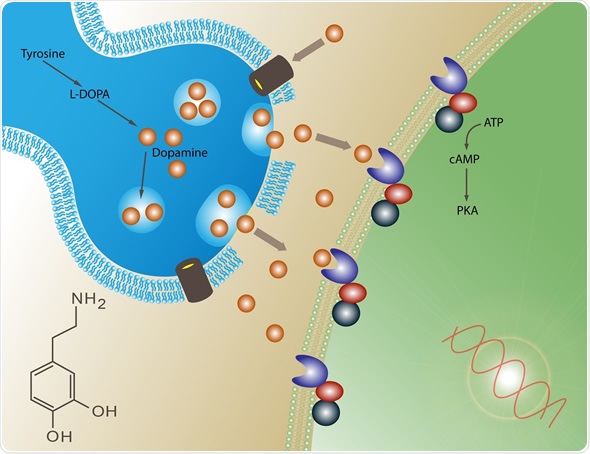
Dopamine

Image Copyright: Meletios, Image ID: 71648629 via shutterstock.com
Recently, it was discovered that immune cells also enjoy a unique capability to shift between various metabolic states, unlike other cells. This could affect cytokine release patterns in such a way as to signal the brain to conserve available energy for the use of the immune system.
These facts were the foundation of the new hypothesis, which explains it in terms of evolutionary adaptation. In the hypothetical early environment, the immune system, faced with abundant microbial and predatory challenges, needed tremendous amounts of energy. It therefore had its own mechanism to signal other body systems, via the mesolimbic dopamine system, to control the use of energy resources during periods when the organism was undergoing severe or sudden stress.
Modern life is relatively soft and less challenging. With less physical activity, low-grade inflammation is chiefly due to factors such as obesity, chronic stress, metabolic syndrome, aging and other lifestyle illnesses. This could mistakenly cause the mesolimbic dopamine neurons to produce less dopamine. Lower dopamine levels in turn decrease the motivation for work, by reducing the perception of reward while increasing the perception of effort involved. This ultimately conserves energy for use by the immune system.
Previous studies by Miller as well as other scientists have shown that a high level of immune functioning in association with low levels of dopamine and reduced motivation characterizes some cases of schizophrenia, depression and certain other mental health conditions.
The scientists do not think these disorders are caused by the low-grade inflammation, but that some people who have these illnesses are hypersensitive to immune cytokines. This could in turn cause them to lose motivation for daily living.
The scientists are currently performing a clinical trial on people with depression, to test the theory using the computational framework.


Source: Treadway M. T. et al., (2019). Can’t or Won’t? Immunometabolic Constraints on Dopaminergic Drive. Trends in Cognitive Sciences. https://doi.org/10.1016/j.tics.2019.03.003

________________

**Comment**
Interestingly,
2017 May;3(3). doi: 10.15761/JSIN.1000163. Epub 2017 May 11.

Lyme and Dopaminergic Function: Hypothesizing Reduced Reward Deficiency Symptomatology by Regulating Dopamine Transmission.

Abstract

The principal vector of Lyme disease in the United States is Ixodes scapularis: black legged or deer ticks. There is increased evidence that those infected may be plagued by anxiety or depression as well. Researchers have identified transcripts coding for two putative cytosolic sulfotransferases in these ticks, which recognized phenolic monoamines as their substrates. It is hypothesized that protracted Lyme disease sequelae may be due to impairment of dopaminergic function of the brain reward circuitry. The subsequent recombinant proteins exhibited sulfotransferase function against two neurotransmitters: dopamine and octopamine. This, in itself, can reduce dopamine function leading to many Reward Deficiency Syndrome behaviors, including depression and possibly, anxiety. In fact, it was shown that activity of Ixosc Sult 1 and Sult 2 in the Ixodid tick salivary glands might contain inactivation of the salivation signal through sulfonation of either dopamine or octopamine. This infraction results in a number of clinically observed mood changes, such as anxiety and depression. In fact, there are common symptoms observed for both Parkinson and Lyme diseases. The importance of understanding the mechanistic and neurobiological effects of Lyme on the central nervous system (CNS) provides the basis for pro-dopamine regulation as a treatment. WC 195.

Great article on dopamine:  https://suzycohen.com/articles/depression_low_dopamine/ Excerpt:

Dopamine deficiency will cause you to wake up sluggish in the morning, usually with brain fog, but you might feel happier and suddenly more enthusiastic with a “hit” of some sort, perhaps a cup of coffee.  Low dopamine (as opposed to low serotonin) causes a different kind of depression, one that is hallmarked by a lack of pleasure.


Atypical Papillitis: An Isolated Manifestation of Lyme Disease (Which isn’t Isolated)

https://www.ncbi.nlm.nih.gov/pubmed/31167569/

2019 Jun 5:1120672119855210. doi: 10.1177/1120672119855210. [Epub ahead of print]

Atypical papillitis: An isolated manifestation of Lyme disease.

Abstract

Lyme disease is a rare condition caused by the bacterium Borrelia burgdorferi. Despite typical symptoms including fever, headache, fatigue, and a characteristic skin rash, sometimes we cannot find those due to the lack of physician consultation in those early stages. If this disease is left untreated, infection could spread to the nervous system causing neuroborreliosis, an atypical and complicated manifestation of this disease. We present the case of an atypical papillitis, probably caused by this bacterium. We suspected this because of the results on the indirect test bloods and the improvement of the symptoms after treatment. This entity should be considered as a possible diagnosis of atypical optical neuropathies, particularly if it occurs in an endemic area.

____________________

**Comment**

Lyme disease is NOT A RARE CONDITION.

Neuroborreliosis is NOT ATYPICAL. It is the inevitable outcome without treatment.

Note that they state the “atypical” papillitis is probably due to Lyme and they make that decision based upon a blood test as well as improvement after treatment.

This is a great example of how doctors should be treating Lyme/MSIDS clinically. They also shouldn’t be fearful of treating this clinically. Due to abysmal serology testing, doctors should understand that testing positive is not a prerequisite, but if symptoms add up, they should treat clinically and look at results.  As they say, “the proof’s in the pudding.”

Lyme/MSIDS should be considered in any neuropathy. It is a well known symptom. 

According to the National Eye institute, papillitis is a twenty dollar word for optic nerve inflammation.  https://www.nei.nih.gov/faqs/optic-nerve-papillitis

Lyme loves the eyes and nerves and causes wide spread inflammation.

https://rarediseases.org/rare-diseases/papillitis/

Symptoms

  • loss of vision
  • pain in the eye
  • interference with accurate color vision (dyschromatopsia)

Causes

  • Diseases that result in damage to the lining of nerves (demyelinating diseases) such as multiple sclerosis and encephalomyelitis; viral or bacterial infections such as polio, measles, pneumonia, or meningitis
  • nutritional or metabolic disorders such as diabetes, pernicious anemia, and hyperthyroidism
  • secondary complications of other diseases
  • reactions to toxic substances such as methanol, quinine, salicylates, and arsenic
  • trauma

Being in an endemic area has NOTHING to do with this.

Ticks are everywhere, and happily transmitting diseases as they travel. These types of limiting statements by ignorant researchers have been used against patients for decades. Doctors desperately need to study this and stop believing and repeating ancient mythology.

For more on Lyme & eye issues:  https://madisonarealymesupportgroup.com/2019/02/01/erratic-eye-jerks-in-child-with-lyme/

https://madisonarealymesupportgroup.com/2017/07/21/growing-list-of-eye-problems-in-lyme-disease/  The authors described patients with tick-transmitted diseases presenting with the following ophthalmologic findings:

  • Follicular conjunctivitis
  • Periorbital edema and mild photophobia
  • Bell’s palsy, cranial nerve palsies and Horner syndrome
  • Argyll Robertson pupil
  • Keratitis
  • Optic neuritis, papilledema, papillitis and neuroretinitis
  • Myositis of extraocular muscles and dacryoadenitis
  • Episcleritis, anterior and posterior scleritis
  • Anterior, intermediate, posterior and panuveitis
  • Retinal vasculitis, cotton wool spots and choroiditis
  • Retinitis, macular edema and endophthalmitis

https://madisonarealymesupportgroup.com/2018/08/17/case-of-optic-neuritis-secondary-to-lyme-disease/

https://madisonarealymesupportgroup.com/2018/09/29/lyme-patients-check-your-vision/

https://madisonarealymesupportgroup.com/2017/07/30/tick-inside-eye/

I sent all of this information to the first author. Hopefully, she will read it.


Cat Scratch Disease: Vet Suffers Extreme Fatigue For a Decade After Catching Rare, Severe Case of Bartonella Infection (That Isn’t Rare)

https://www.newsweek.com/cat-scratch-disease-vet-suffers-extreme-fatigue-decade-after-catching-rare-severe-case-1444715

CAT SCRATCH DISEASE: VET SUFFERS EXTREME FATIGUE FOR A DECADE AFTER CATCHING RARE, SEVERE CASE OF BARTONELLA INFECTION

A vet has been left suffering with extreme fatigue for almost a decade, after she caught an infection from a cat scratch which caused symptoms so severe she thought she was going blind or had a brain tumor.

A flea-infested cat scratched Victoria Altoft, 41, from the county of Somerset in south west England, while she was at work in the fall of 2010, PA Real Life reported.

Weeks later, Altoft’s muscles and joints were in pain and she was hit by night sweats, leading her to assume she had the flu. She was “utterly exhausted” and took the uncharacteristic decision to take two weeks off work.

“I just couldn’t get out of bed,” she told PA Real Life. As time passed, her joints swelled up, which her doctor put down to post-viral inflammation.

But Altoft became worried when her vision started to blur. She went for an emergency eye appointment, and medics thought her symptoms could be caused by a brain tumor or the condition multiple sclerosis, which affects the central nervous system.

Tests revealed she was suffering a rare Bartonella infection, and doctors prescribed her with antibiotics: the treatment given to serious cases of the condition.

black cat kitten pet animal stock getty
Cat scratch disease can be passed on by infected pets. GETTY

The bacteria is carried by infected fleas which live on animals like cats or dogs. Lice and sandflies are also vectors of the Bartonella group of bacteria which can cause cat scratch disease, as well as Carrion’s disease (only found in the Andes Mountains), and trench fever (most often present in people who live in areas of poverty with poor sanitation).

In most people, cat scratch disease doesn’t require treatment and fades by itself in between two to four months. But severe cases require antibiotic treatment.

Symptoms materialize several days or weeks after the bacteria invades the body. After three to 10 days, a painless raised red spot might appear on the skin where the infection passed through the skin. Over time this may become filled with fluid, with a crust forming before it heals. The lymph nodes near the site of infection might become swollen, red and hot to the touch, and puss-filled. Other symptoms include a general feeling of illness, headache, fatigue, and fever and—less often—sore throat and weight loss.

It took a year for her sight to return to normal. Altoft told PA Real Life she still suffers from fatigue despite being scratched in 2010.

“To this day, it’s difficult to know exactly what the long-lasting effects of contracting Bartonella are, as there is so little research, but I know I’m not the same now as I was before it happened,” she said.

Altoft is working with the Big Flea project run by the University of Bristol and the pharmaceutical company MSD Animal Health, who are researching the parasites which affect dogs and cats in the U.K.

The vet urged pet owners to take flea infestations seriously as they can pose a serious threat to human health.

____________________

**Comment**

First off, Bartonella is NOT RARE.

Second, someone PLEASE cut the nails on that cat!

For many, many people Bartonella is NOT something that, “fades by itself in between two to four months.”

Bartonella is a particularly tenacious infection that can cause so many symptoms it boggles the mind. Couple it with Lyme disease and you are one sick dog. Throw in Babesia, and you are in bed for a long, long time.

https://madisonarealymesupportgroup.com/2019/04/24/human-bartonellosis-an-underappreciated-public-health-problem/Excerpt from full-text

KNOWN DISEASES CAUSED BY BARTONELLA INFECTIONS INCLUDE:
  • Carrion’s disease
  • cat-scratch disease
  • chronic lymphadenopathy
  • trench fever
  • chronic bacteraemia
  • culture-negative endocarditis
  • bacilliary angiomatosis
  • bacilliary peliosis
  • vasculitis
  • uveitis [1,2,4,6,7,9,10,11].
RECENTLY, BARTONELLA INFECTIONS HAVE BEEN LINKED TO MORE DIVERSE MANIFESTATIONS SUCH AS:
  • hallucinations
  • weight loss
  • muscle fatigue
  • partial paralysis
  • pediatric acute-onset neuropsychiatric syndrome (PANS)
  • other neurological manifestations [6,8,10].

Regarding vectors, it’s far more than fleas, lice, and sandflies:

Bartonella spp. are zoonotic pathogens transmitted from mammals to humans through a variety of insect vectors including the sand fly, cat fleas, and human body louse [4,5]. New evidence suggests that ticks, red ants, and spiders can also transmit Bartonella [15,16,17,18]. Bed bugs have been implicated in the transmission cycle of B. quintana and have been artificially infected [19]. B. quintana was found in bed bug feces for up to 18 days postinfection [19]. The diversity of newly discovered Bartonella species, the large number and ecologically diverse animal reservoir hosts, and the large spectrum of arthropod vectors that can transmit these bacteria among animals and humans are major causes for public health concern.

Regarding ticks….

3.3 Arachnids (Spiders &Ticks)

Over the last 10 years, the topic of ticks transmitting Bartonella species has been widely debated. Evidence exists to support the transmission of Bartonella through many different species of ticks.

Ixodid ticks, also known as hard ticks, appear to be the main type of tick associated with these bacteria. Tick cell lines have been used to show that Bartonella can replicate and survive within:

  • Amblyoma americanum (Lone Star Tick)
  • Rhipicephalus sanguineus (Brown Dog Tick)
  • Ixodes scapularis cells [77] (Deer Tick)

In California, questing ticks of

  • Ixodes pacificus (Western Black legged Tick)
  • Dermacentor occidentalis (Pacific Coast Tick)
  • Dermacentor variabilis (American Dog Tick)

were collected when in the adult and nymphal stages and tested for Bartonella by PCR for the citrate synthase gene. [78]. All types of ticks were found to contain Bartonella DNA, although in varying percentages and locations.These data alone do not prove that ticks can transmit Bartonella spp. Bacteria; however, the results do show Bartonella DNA occurring naturally in these wild ticks.

I know researchers are currently working on the link between Bartonella and cancer. Recently a young boy was diagnosed with schizophrenia but was found to have Bartonella:  https://madisonarealymesupportgroup.com/2019/03/24/cat-scratch-disease-caused-teens-schizophrenia-like-symptoms-report-says/

All you have to do is type “Bartonella” into the search bar on this website and let your fingers do the walking.  Bartonella is HUGE and quite common.

https://madisonarealymesupportgroup.com/2018/05/07/fox-news-bartonella-is-the-new-lyme-disease/

More on Bartonella: https://madisonarealymesupportgroup.com/2016/01/03/bartonella-treatment/

It’s a killer:  https://www.ncbi.nlm.nih.gov/pmc/articles/PMC3044516/#!po=1.02041

Look at the pictures of what it did to this woman:  https://madisonarealymesupportgroup.com/2019/05/28/woman-wakes-up-with-black-eye-swollen-face-after-cat-scratch-that-left-her-on-iv-drip-for-four-days/I assure you – this would not have faded on its own….

Lastly, Dr. Ericson has incredible imaging showing Bartonella surviving around tissues where a PIC line pumped antibiotics directly into the body:  https://madisonarealymesupportgroup.com/2019/02/27/advanced-imaging-found-bartonella-around-pic-line/

Trust me.  You don’t want this.


Lyme Disease & Dental Health: What You Need To Know

https://humanhealthproject.org/lyme-disease-and-dental-health-what-you-need-to-know/?

Lyme disease and dental health: What you need to know

Lyme disease, also known as Lyme borreliosis, is caused by the tick-borne spirochete bacterium Borrelia burgdorfer.

Lyme disease is a multisystem inflammatory disease, and neurologic, articular, and cardiac manifestations may follow untreated early infection. While the B. burgdorferi bacterium does not make toxins or cause direct tissue damage, local inflammation results from host response mechanisms.

Three phases of general clinical manifestations

  1. Early localized: distinct, bull’s eye or target skin lesions in warm areas of the body (groin, axilla or belt line) that may itch, burn or hurt.
  2. Early disseminated: if treatment is not initiated involvement of brain or heart may occur.
  3. Late disease: also called as Post Treatment Lyme Disease Syndrome (PTLDS), this phase leads to muscle and bone involvement.

The link between Lyme disease and dental health

It has been observed that Lyme and many other chronic diseases are fed by the unique bacteria that develop in root canals and where teeth have been extracted. Lyme bacteria exists in the teeth, not in the enamel. The spirochete bacterium love to occupy in the dentin and some three miles of tiny tubules.

Its clinical manifestations may include facial and dental pain (tooth ache), facial nerve palsy, headache, temporomandibular (jaw) joint pain, and masticatory (chewing) muscle pain. The effects that can precipitate when performing dental procedures on a patient with Lyme disease must also be considered. 1

Symptoms of oral presentations

Symptoms associated with Lyme disease include headache and facial pain that often mimics dental pathology and temporomandibular (such as TMJ) disorders.

Other oral symptoms can be:

  • Dry mouth
  • Tooth sensitivity
  • Pulpitis, or the oral inflammation of dental pulp
  • Bell’s palsy, or partial facial paralysis
  • Cranial nerve palsy may occur in early disseminated disease. Bell’s palsy is a form of usually temporary facial neuropathy resulting from inflammation/damage to the seventh cranial nerve (i.e., facial nerve)
  • Involvement of the saliva producing glands may manifest as brief inflammation of the gland

Getting the right treatment

Because Lyme bacteria resides in the mouth, the disease can cause tooth pain unrelated to cavities or any other dental issues, which might indicate Lyme disease to your dentist. However, the misdiagnosis of any of these symptoms by a dental professional could result in unnecessary procedures, like root canals. Knowing the above oral symptoms can help a patient identify Lyme disease early.

Fortunately, oral symptoms will disappear after a successful treatment. That doesn’t mean you should drop your guard though. Another tick bite could mean another bout of Lyme disease. People who have been bitten by a tick or who live in tick infested regions should take these oral symptoms and other symptoms of Lyme disease seriously.

If a patient is worried about contracting Lyme disease, he/she should visit a medical care provider and dental hygienist to check the mouth for indications of Lyme.

References

  1. Lyme disease: considerations for dentistry. J Orofac Pain. 1996 Winter;10(1):74-86.
  2. Lyme disease awareness for the New Jersey dentist. A survey of orofacial and headache complaints associated with Lyme disease. J N J Dent Assoc. 1998 Winter;69(1):19, 21, 62-3 passim.
  3. Lyme disease: College of Dental Hygienists of Ontario

______________________

**Comment**

Lyme disease is not just an inflammatory disease.  Let us never forget it is bacterial but also often viral, fungal, and parasitical due to the coinfection involvement in many cases.  While these pathogens cause widespread inflammation, it should never be treated solely as inflammatory – which would only be a bandaid on an infectious disease that requires antimicrobials.

Many never go through the three “phases” or “stages” of Lyme or if they do, they can be in any order. The EM rash is often absent.

For more on Lyme and dentistry:  https://madisonarealymesupportgroup.com/?s=biological+dentistry