The talk will review factors leading up to accelerated aging:
A high, refined carbohydrate diet
Calcium intake and imbalance
A progressive overload of iron as we age
Magnesium deficiency
An historically unprecedented burden of toxic metals in our environment and bodies. These include lead, mercury, cadmium, arsenic, antimony, tin, nickel, aluminum and others.
What can we do about it? One answer is Chelation Therapy using Magnesium Disodium EDTA.
We must lower the burden of toxic metals that have accumulated in the body over a lifetime. Remove the excess iron that likewise has contributed to free radical damage. Also, most importantly, remove calcium deposits from the soft tissues of the body.
5 Effects of Stress on the Mind and Body + 10 Tips to Reduce Stress
by Holtorf Medical Group
5 Effects of Stress on the Mind and Body & 10 Tips to Reduce Stress
We all hear about stress these days and how bad it is for our health. Many people consider stress a part of modern life and learn to live with it, but stress is not normal and it can be overcome! You just need to learn how.
Originally Posted November 2016
Updated October 2019
Knowing the far-reaching effects of stress, not only on our psychological well-being, but also on our entire bodies, can help us remember to prioritize stress management and other self-care practices.
Stress, Cortisol, and Adrenals
You may have heard these terms used together, but are not sure how they are connected. Stress is any kind of outside factor that our body perceives as a threat to our safety or well-being. Many people think this only refers to emotional stress or trauma, but it also includes physiological stress on the body, such as infection, traumatic injury, or a poor diet. Stress can also include environmental factors like exposure to chemicals and other toxins.
Cortisol is one of the hormones that our body releases in response to stress. It is probably the one most commonly associated with stress, even though there are others involved.
While this can be a very useful and sometimes life-saving response to a threat, problems can begin to occur if stress becomes frequent or chronic. As the adrenal glands become over-worked, they eventually can’t keep up with the body’s demands for the various hormones they’re responsible for.
How Stress Affects the Body
Here are a few of the major ways the mind and body are affected by chronic stress.
Mood
The adrenal glands produce more than just cortisol. They also produce neurotransmitters such as adrenaline (epinephrine), norepinephrine, and dopamine. Neurotransmitters are chemical messengers that help regulate things like mood, performance, weight, pain perception, and sleep. Depending on the degree to which the adrenals have been affected, the neurotransmitters become unbalanced in various ways.
Let’s take dopamine, for example. If dopamine is too high, someone may experience anxiety, hyperactivity, or paranoia. If someone has low dopamine, it can lead to addiction, cravings, or depression.
Hormones
In addition to neurotransmitters and cortisol, the adrenals also produce small amounts of the sex hormones, estrogen and testosterone (and their precursors). Along with balancing out hormones based on a person’s gender, sex hormones also help keep the negative effects of too much cortisol in check, acting as an antioxidant. But once the adrenals become chronically over-worked, more and more of the precursor materials (used to make sex hormones) get diverted to make cortisol, resulting in a decrease in sex hormones.
This results in lowered libido and other symptoms related to hormonal imbalances, such as premenstrual syndrome in women or erectile dysfunction in men.
Blood Sugar Regulation
When cortisol is released, the hormone glucagon is signaled and insulin is suppressed. Glucagon controls glucose storage in the liver so that glucose can be released into the blood. Insulin is the hormone that regulates the amount of glucose being taken from the bloodstream into the cells.
During chronic stress, the cells start to become resistant to insulin, leaving blood glucose levels elevated. This is why insulin resistance is the precursor to type II diabetes.
A few symptoms of insulin resistance include inability to lose weight, high cholesterol and triglycerides, cognitive dysfunction, and elevated blood glucose or insulin levels.
The adrenal glands are part of the hypothalamus-pituitary-adrenal-thyroid-axis (HPAT), sometimes just referred to as the HPA-axis. Here’s where the thyroid comes into play.
The adrenals are regulated by the hypothalamus and pituitary glands. When cortisol is released under stress, the hypothalamus and pituitary, which work in a feedback loop with cortisol, slow down their production of hormones. Unfortunately, this also slows down thyroid function since the hypothalamus and pituitary regulate thyroid hormones as well.
Stress can also negatively affect the enzyme that converts inactive thyroid hormone (T4) to active thyroid hormone (T3). There are a few other mechanisms involved in the stress/thyroid dysfunction connection as well. Hypothyroid symptoms such as cold extremities, dry skin, depression, and constipation often indicate sub-optimal adrenal function. Most likely, thyroid treatment will be less effective if the adrenals are not addressed as well.
Stress triggers inflammation. Our body knows that chronic inflammation is damaging, so it compensates by slowing down the immune system in order to keep the inflammation in check. The immune system is also directly suppressed during stress since it is one of those “unnecessary” functions when we’re in “fight or flight” mode. This also affects thyroid health since a suppressed immune system can activate viruses capable of attacking and damaging the thyroid.
As you can see, so many functions in the body are interconnected and related back to adrenal function and the stress response.
10 Tips to Reduce Stress and Improve Your Health
This is only a brief overview of the effects of stress on the body. Chronic stress has also been linked to cardiovascular disease, Alzheimer’s disease, and cancer. It is estimated that as much of 80% of the population has weakened adrenal function.
Since there are different stages of adrenal dysfunction that require different treatments, it is a good idea to seek out a knowledgeable health care provider who can test your adrenal function and related hormones. Since many doctors only recognize adrenal disorders such as Cushing’s and Addison’s disease, you may need to search someone out who takes a more in-depth look at adrenal function using functional tests such as a salivary cortisol test.
There are some things you can do to help reduce stress which include:
Take Control of Your Thoughts
Many people have tons of negative thoughts in their head on a daily basis, without even being aware of it. This creates a stressful state and anxiety that keeps fueling your hormonal imbalances. A technique known as “thought‐stopping” can help you halt negative, obsessive thoughts.
The first step is to literally call a halt to this train of thought (like saying the word “Stop!” out loud or to yourself). Next, choose a positive thought on which you’ll focus instead. This way you’re swapping a negative, stress‐inducing thought for a positive one. To increase emotional comfort, it’s imperative to practice reassuring and realistic self‐talk (saying something along the lines of, “I am feeling anxious / irritable now, but I have the power to calm myself down.”).
Apply Self-Soothing Techniques
There are many physiological changes that are triggered, when we are faced with a stressful situation. Our breathing quickens, adrenaline is secreted, and our heart begins to race. This is called the fight or flight response – a natural survival mechanism intended to help us escape danger. However, when the threat is imagined, the fight/flight response is unnecessary and damaging to your health. Many people with chronic stress remain blocked in this state of alert, without being able to snap out of it.
Luckily, there are techniques you can learn to reduce your response to stress, like deep breathing techniques, muscle relaxation exercises and meditation. Deep breathing can help with a rapid heart beat. The most commonly utilized strategy is breathing by contracting the diaphragm, a horizontal muscle in the chest located just above the stomach cavity.
Using muscle relaxation exercises you can induce a relaxed state and physical comfort, by tightening and releasing muscles, beginning with the largest muscle group. Meditation is also a powerful way to bring back a peaceful state to your body and clearing up your mind from erratic and negative thoughts.
Check Your Diet
What does stress have to do with eating? A whole lot! What we eat and drink largely impacts our emotional state. Stimulating foods and drinks like coffee, sodas, chocolate, and alcohol can cause anxiety, trigger panic attacks, and increase feelings of nervousness and irritability, as well as trembling and shaking. Deciding to go “cold turkey” by abruptly eliminating caffeine is not always recommended since it can lead to withdrawal symptoms. You might experience headaches, restlessness, and irritability. So it’s better to decrease caffeine consumption gradually by replacing it with tea for example.
Regular alcohol consumption can also generate a lot of biochemical imbalances in your body, like blood sugar dysregulation, liver problems and dehydration, which add to the stress burden your body needs to handle.
Get Moving
By choosing your appropriate exercise routine you can reduce stress, improve mood, enhance self-esteem, and increase energy levels. Be careful not to over exercise, which can actually contribute to your stress level.
It’s a known fact that during exercise, the body releases chemicals called endorphins and norepinephrine, which interact with receptors in the brain. These chemicals determine euphoric feelings, reduction in physical pain and the ability to deal with stress more efficiently.
Get More Sleep
Losing just a few hours of sleep increases feelings of stress, anger, sadness, and exhaustion. It’s a vicious cycle since because of stress you might not be able to fall and stay asleep, but lack of sleep is also generating stress.
So try to get a solid seven to eight hours of sleep a night, and don’t feel bad about also adding a nap in the afternoon on days when you’re feeling especially drained. Go to sleep before 10 – 11 PM and don’t use the computer or watch TV before it, since these can interfere with your melatonin production and make it harder to fall and stay asleep.
Listen to Music
By choosing a type of relaxing music which you prefer, you can help the body and mind dissipate stress. Research has shown that classical music may help you unwind and improve your mood. You can also experience therapeutic CDs of “binaural beats,” which are meant to calm the mind and body and where different frequencies call forth different moods.
Begin and End the Day Right
In the morning, in order to make intelligent use of your energy for the day, take some time to reflect, meditate, read or better yet take a nature walk, away from computer and TV. You could do the same in the evening, or just simply delight in the rare pleasure of doing nothing. These can ease the stress of too much computer or office time, counteract overstimulation and boost your mood.
Doing Something Fun
Doing something fun always gets postponed due to the avalanche of responsibilities we have during the day. But without a balance in your life, frustration and so stress might arise. It’s been found that creating artwork, crafts or making time for a hobby helps to relax, can be very stress-reducing and takes your focus away from your own thoughts and worries.
Get a Massage
Massage is a great way to loosen the muscles that are habitually affected by stress. Think about all the frowning and scrunching of your face muscles and how relaxing it is to work on these! Essential oils can calm, center, and energize you by reducing the effects of stress and mental fatigue. You can give yourself a massage, while taking small breaks from your work, or you could have a professional massage to benefit your whole body.
Include Adaptogens
A class of herbs called adaptogens help your body to cope more effectively with the demands and stress of everyday life. They provide a sustained sense of calm, and while they increase energy, with the exception of Chinese ginseng, they are non-stimulating. Some of the most used adaptogens are: ashwagandha, rhodiola, holy basil, schisandra, shatavari, eleuthero.
Because of the great impact stress can have on overall health and well-being, it’s important to implement stress-reducing habits. Additionally, partnering with a knowledgeable physician to help address any underlying adrenal fatigue can prove very beneficial. Your mood, hormones, thyroid, blood sugar, and immune system (among other things) will be much healthier for it!
At Holtorf Medical Group, our physicians are trained to utilize cutting-edge testing innovative treatments to design a treatment protocol that is personalized to you. If you are experiencing symptoms of adrenal fatigue, give us a call at 877-508-1177 to see how we can help you!
References
1. NIH. “5 Things You Should Know About Stress.” National Institute of Mental Health.
2. Mayo Clinic Staff “Chronic stress puts your health at risk.” Mayo Clinic.
3. APA Staff. “Stress effects on the body.” American Psychological Association.
4. Dartmouth Undergraduate Journal of Science. “The Physiology of stress: Cortisol and the hypothalamic-pituitary-adrenal axis.”https://sites.dartmouth.edu/dujs/2011/02/03/the-physiology-of-stress-cortisol-and-the-hypothalamic-pituitary-adrenal-axis/
5. Harvard Health. “Understanding the stress response.” Harvard Health Publishing – Harvard Medical School.
6. Mayo Clinic Staff. “Stress symptoms: Effects on your body and behavior.” Mayo Clinic.
7. Josh Axe, DC, DMN, CNS. “7 Adaptogenic Herbs or Adaptogens that Help Reduce Stress.” Dr. Axe.
__________________
**Comment**
This article is one of the best articles I’ve read on how stress affects the body and what you can do about it.
Lyme/MSIDS patients are in a war of epic proportions where nearly every single thing in their bodies is haywire. We need to do all within out power to reduce that stress.
The next step is precisely what this article recommends – partnering with an experienced practitioner who will help you uncover your specificimbalances. This looks differently on everyone but typically involves the thyroid and other hormone and mineral imbalances. I know of one patient who felt nearly well just by addressing the thyroid. People often don’t understand that the thyroid is the body’s thermostat and that if you have hypothyroidism (low amounts of thyroid hormone) your body’s temperature will be low allowing infections to proliferate. Address the thyroid and you’ve effectively made it tougher for pathogens to survive.
Taking appropriate supplements. Patients often complain about their Lyme literate doctor requiring them to take copious amounts of supplements. Unfortunately, they are usually right because of damage & imbalances caused by the infection(s). The goal; however, is to only take what is required.
Diet is key. This too is very individual, with some only improving by eliminating gluten, dairy, and all sugars. https://draxe.com/nutrition/elimination-diet/ This step often turns patients around entirely. Remember – food is medicine.
All the ideas in the article are very helpful and include listening to calming music.The first thing I do in the morning is turn on a relaxing music channel on Pandora. An example would be the George Winston channel. For more on binaural beats: https://www.binauralbeatsmeditation.com/the-science/
Binaural Beat demonstration. You need ear phones to listen.
If you prefer music:
Regarding essential oil diffusing: https://thetruthaboutcancer.com/diffusing-essential-oils/ After I turn Pandora on, I set up my essential oil diffuser with whatever blend I’m in the mood for. For a relaxing bedtime blend called “Counting Sheep”: 9 drops lavender, 4 chamomile, 2 frankincense, 2 bergamot. This would be for a large room. Divide in half for a small bedroom. For a grounding smell try “Peace & Harmony”: 4 drops patchouli, 4 vanilla, 3 orange.
Doing something fun seems frivolous to many patients but is so important. Unfortunately with Lyme/MSIDS, we tend to revolve around our illness. Doing something to break away from this is so important for our mental health. Whether you enroll in an art class or just buy Play dough to mess around with at home – do it. I’ve found plants relax me. My house has turned into a literal green house through the years. I love dirt! Another thing you could simply incorporate into your habits is coloring: https://www.psychologytoday.com/us/blog/modern-mentality/201803/are-adult-coloring-books-actually-helpful
Word of warning: It is often the case that when initially starting Lyme/MSIDS treatment patients are extremely sensitive to everything including light, sound, and smells. It’s always important you listen to YOUR body and although the suggestions in this article are good, they may not be good for you at the moment. If you are sensitive it’s a sure sign your body is seriously fighting a war and you need to assist it in anyway you can and often that means sunglasses even in the daytime, and eliminating ALL smells and sounds. The goal is to move past and heal from sensitivities so you can enjoy the suggestions listed here.
Final note and the best advice I was given: “Don’t be depressed about feeling depressed.” I heard this from someone I contacted online who reached the other side of health who was willing to advise me in my desperation upon starting treatment and feeling so incredibly lousy. This advice helped me more than many things as there are some seriously dark days in treatment where you think dying would just be easier. Treating for this monster is unlike anything you’ve ever done before and will require serious dedication on your part. I encourage you to find a local support group for support and ideas on your journey.
Some of the best help through the years for me has come directly from patients.
Tickborne Triggered Seizure Disorder: Case Study of a Teenager with New Onset Seizure Disorder and the Neurological Impact of Tickborne Diseases
The Neurological impact of Bartonella and Rickettsia
This next case study is of an 18-year-old female who was adopted at the age of 5. Her adoptive mother described her as a malnourished premature baby who eventually received good foster care. This young lady was diagnosed with a growth hormone deficiency that was left untreated in her country of origin at the age of two. By the age of five, she was adopted and moved to the US with her American family. She was fully immunized twice, diagnosed with hypothyroidism and inadequate growth. By this time, an Endocrinologist was onboard and treating her thyroid and growth deficiencies. She seemed to rebound, reaching puberty by the age of 13. Life was stable for some time until January of 2016. She was nearly sixteen years old and developed sudden neuropsychiatric symptoms with acute confusion, severe obsessive-compulsive disorder, frequent urination, insomnia, auditory hallucinations, severe sensory issues, leg tremors and eventually catatonia. Given her acute changes, her mother rushed her to the Emergency Room for evaluation. EEG was negative and she was hospitalized for apparent acute psychosis treated with Risperdal and Ativan.
After her hospitalization she followed up with a well-known Neurologist who identified positive Mycoplasma and initiated a course of Azithromycin. By the fourth dose she began to return to her normal state and began sleeping again. She was treated for over a month with antibiotics and seemed stable.
There was a great deal of stress in the family, a close family member died and within two weeks she developed new onset grand mal seizures while sleeping. Another ER visit with a normal EEG at the time determined perhaps the stress and trauma of her family member’s death may have triggered the event.
In January 2018 she had another grand mal seizure early in the am. Her neurologist began medications to address. She had no additional seizure activity but noted increasing anxiety. By December 2018 she suffered another grand mal seizure.
Further evaluation by the neurologist showed negative Lyme screening only, viral panels negative, tick-borne co-infections were not obtained, thyroid studies, electrolytes and inflammatory markers were all within normal limits.
This patient presented to me in February 2019. Upon further evaluation she was found to have progressive muscle weakness, cognitive dysfunction ongoing psychiatric symptoms, tremors and noted random striae or “stretch-marks” that would appear and disappear all over her body. She stated that this had occurred since the age of fourteen. She admitted several evaluations with psychiatric acute hospital admission for escalating neuropsychological symptoms that included visual and auditory hallucinations, compulsions, rage, emotional lability, delusions, anxiety as well as the ongoing physical symptoms.Neuropsychological meds were ineffective. The patient upon presentation was taking high dose Depakote, gabapentin and folic acid to control her seizure activity.
Initial lab work up at my office showed an IGM positive Bartonella Henselae, Lyme Western Blot with an IGM indeterminate band 23-25 and IGG positive bands 18,23-25,28,31,34,39,41,45,and indeterminate bands 58 and 66. She also showed IGG positive Rickettsia and Anaplasma. She carried one copy of MTHFR A1298C and had significant GI bacteria overgrowth with Streptococcus, Citrobacter, Proteus and Bacillus.
She was started on a course of Azithromycin and Bactrim as well as biofilm busters and herbals. Two months later she reported significant improvements noting striae lightening, energy improvements, mood stability, resolution of hallucinations, and her sleep was improving. She noted ongoing body and hand tremors as well as struggles cognitively with word finding but was back in school full time.
We decided to continue the treatment course and repeat her bloodwork in two months as well as continue follow up with her Neurologist to monitor. By June the patient was feeling great. She began a Depakote wean with her Neurologist and graduated High School.
Her lab results showed improvements with Bartonella levels as well as GI bacterial overgrowth. Rickettsia antibodies lingered unchanged as did Lyme bands. I added to her regimen Doxycycline and Cefdinir as well as an antifungal and supportive herbals to prevent yeast.
This patient is still a work in progress, however what is important to note is her complete reversal of the neuropsychological symptoms once antibiotics were initiated as well as the ongoing, successful wean of seizure medications.
Bartonella and Rickettsia infections both have an affinity for the central nervous system. It is challenging to identify given their non-specific symptom presentation at times. Rickettsia isn’t well understood regarding brain parenchyma and central nervous system transmission. We know in mouse studies, Rickettsia and Bartonella both contribute to neuroinflammation which can contribute to acute psychological symptoms. We see this type of neurological process in classic PANS patients related to strep. Although I see the trend clinically, I don’t feel that autoimmune encephalopathy related to tick-borne infections in children and young adults is well documented.
My hope is thru case study presentations you’ll connect real world, everyday struggles of these vulnerable patients with the disease process. I strongly feel further exploration of autoimmune encephalopathy as it relates to Lyme and other Tickborne illnesses in pediatrics should be a collaborative effort with mental health practitioners and welcome those interested to contact me.
LYME SCI: Dealing with Lyme disease and mold illness at the same time
By Lonnie Marcum
According to Dr. Raj Patel, if you have been treated for chronic Lyme disease and are not getting better, toxic mold could be a contributing factor.
In his experience, one half of all unresolved Lyme disease cases are due in part to inflammation caused by mold illness.
Dr. Patel has over 20 years’ clinical experience in medicine, treating chronic Lyme disease, chronic fatigue, mold illness, autism and related conditions.
He recently shared information and insights about his approach to Lyme and mold at LymeDisease.org’s MyLymeData2017 conference in San Ramon, California.
Exposure to Lyme and mold are very common occurrences, Dr. Patel says, but not all people who are exposed will come down with symptoms. Patients with a strong immune system may be unaffected, but those with a weakened immune system, or other contributing factors, can become chronically ill.
Signs and symptoms
The signs and symptoms for mold illness are very similar to chronic Lyme disease:
Fatigue, weakness
Focus/concentration issues, word recall, memory issues
Numbness and tingling, unusual pain, “ice pick’ pain
Abdominal pain, diarrhea, appetite swings
Headaches, tremors, metallic taste
Temperature regulation problems, day/night sweats (more at night)
Red eyes, tearing, sinus problems
Dr. Patel’s backstory is particularly intriguing. He suffered years of progressive fatigue after attending medical school in New Jersey before finally being diagnosed with and treated for Lyme disease.
Years later, after repeated exposure to a water-damaged building, he came down with mold illness and all of his Lyme symptoms came back. The treatment he recommends to his patients is the same method he used to heal himself.
Predisposing factors for mold illness
Genetic predisposition
History of exposure to mold or water-damaged buildings
A weakened immune system due to viral, parasitic and/or bacterial co-infections
Autoimmune illness
Genetic predisposition
According to Dr. Patel, common genetic defects seen in patients with mold illness are within the methylation detox pathways (MTHFR), and the Human Leukocyte Antigens (HLAs).
We each receive a set of genes from our parents, so any person has the potential for no defects, to be heterozygous (1 defect from 1 parent) or homozygous (2 defects—1 from each parent).
MTHFR is a gene that instructs the human body on how to convert folic acid from the foods we eat to a usable form of Vitamin B called methyl-folate. Methyl-folate is involved in the proper function of almost every system in the human body including: cell repair, making neurotransmitters (that control sleep, moods, memory), metabolizing fats, activating the immune system and clearing the body of toxins and heavy metals.
People who have methylation defects will have more difficulty healing from infections and clearing toxins like mold and heavy metal.
HLAs are antigens that are found on the surface of nearly every human cell in the body. These antigens help the immune system identify foreign invaders.
If there is a defect on an HLA gene a person will have difficulty clearing toxins and infections. Approximately 24% of the normal population carry an HLA defect, making them more susceptible to mold illness.
What is mold illness?
Dr. Patel says mold is the number one cause of uncontrolled inflammation involving the innate immune system. Chronic Inflammatory Response Syndrome (CIRS) happens when repeated exposure to toxins causes the immune system to go haywire. CIRS can be triggered by the combination of mycotoxins, volatile organic compounds (VOCs), and other inflammatory toxins found in water-damaged environments.
Over time, this inflammation causes damage in the following:
Disrupted melatonin (sleep disturbances)
Gut inflammation (food sensitivities, irritable bowel, immune deregulation)
Disrupted Vitamin D metabolism (increased viral activity)
Low testosterone (fatigue, low libido)
Caudate atrophy (diminished motivation)
Swelling and enlargement of the forebrain and cortical gray matter
Testing for mold
Environmental Relative Moldiness Index (ERMI) is a DNA analysis of settled dust collected in buildings to determine the concentration of 36 species of mold associated with water-damaged buildings. For more information on ERMI see mycometrics.com
Dr. Patel recommends using the ERMI cloth method, and collecting samples from each room in the building where dust has settled for 4-6 weeks. The top shelf, above cabinets, above door jams, along baseboards, above ceiling fans are all good places for collecting dust.
For two-story buildings, he recommends using two separate ERMI kits. If the ERMI score comes back borderline, clean the building then re-test. If the score comes back with high levels of mold, it is considered a dangerous living environment for those with mold illness.
Patients with severe mold illness will need to decide whether to remodel (remediate) or remove themselves permanently from the environment.
Diagnostic tests for mold illness*
There is no single test for detecting mold illness in humans. In addition to a full workup that would include testing for autoimmune diseases, he recommends testing for specific hormones and inflammatory markers as listed below.
Tests for detecting chronic inflammation specific to Lyme and mold illness:
Hi TGFb1 (Transforming Growth Factor Beta-1) – greater than 7,000 (Lyme &/or mold)
Hi MMP9 (Matrix Metallopeptidase-9) – greater than 500 (Lyme &/or mold)
Hi C4a (Compliment Component 4) above 2,800 but below 10,000 (Lyme w/out mold)
Hi C4a (Compliment Component 4) greater than 10,000 (Lyme & mold)
NeuroQuant MRI swelling and enlargement of forebrain and cortical gray matter, caudate atrophy, pallidum enlargement. (Lyme will have putamen atrophy, right thalamus enlarged)
Treating Lyme disease in the context of mold illness
Eliminate exposure. Most importantly, people must eliminate their exposure to mold from the home, school, workplace and regular hangouts including church. It is absolutely critical the Lyme patient have a mold-free sanctuary. Regularly changing central heat A/C filters and adding freestanding HEPA air filtration systems will help. If high mold content is found, the only options are remediation or vacating the premises.
Reduce inflammation. Dr. Patel recommends using binders like bentonite, cholestyramine (CSM), Welchol, or activated charcoal to reduce inflammation. Patients who are immunocompromised and have signs of chronic viral reactivation (HHV6/EBV/CMV/Parvovirus) may need to treat with antiviral medication. If C4a markers come down on the antiviral, that is diagnostic of viral reactivation. If C4a markers come down on the binders, it indicates mold illness.
Treat Lyme and coinfections. Once the mold is eliminated and the inflammatory markers have come down, you can begin treatment for Lyme and co-infections. If treatment is begun before the CIRS is under control, the patient will not get better. Dr. Patel recommends treatment at a low and slow pace with patients who have genetic defects in their detox pathways and a history of CIRS.
Treat MARCoNS (Multiple Antibiotic Resistant Coagulase Negative Staphylococci). Diagnosis of MARCoNS is made with a deep nasal swab that is sent to the lab for culture. If positive, the patient it treated with BEG (Bacitracin/EDTA/Gentamycin) nasal spray. If the MARCoNS is resistant to Gentamycin, treat with BEC (Bacitracin/EDTA/Clindamycin). Typical dose is two sprays four times per day for four weeks (ramped up to full dose slowly).
Prepare patient for VIP (Vasoactive Intestinal Peptide). Dr. Patel says VIP helps his patients repair the chronic inflammatory damage left behind by mold and Lyme, and regain the last 30% of their health. VIP is an 11-step protocol devised by Dr. Ritchie Shoemaker. It reverses the inflammatory pathways so that patients will become less reactive to mold in the future, and should be overseen by a practitioner who is trained in CIRS. You can learn more about how Dr. Patel treats mold illness here.
Avoiding mold exposure
Dr. Patel says, “quite simply, the more mold exposure is avoided, the faster the patient responds to antimicrobials.”
Dr. Patel is board-certified in Family Medicine and has completed extensive post-graduate studies in autism spectrum disorders, Lyme disease and mold illness. He is an active member of Defeat Autism Now (DAN) and the International Lyme and Associated Diseases Society (ILADS), and has completed advanced training in pediatric Lyme disease. He currently practices integrative medicine at Medical Options for Wellness in Foster City, California.
LymeSci is written by Lonnie Marcum, a Licensed Physical Therapist and mother of a daughter with Lyme. Follow her on Twitter: @LonnieRhea Email her at: lmarcum@lymedisease.org .
The Jarisch-Herxheimer reaction (JHR), or “herxing”, was first described by physicians in the late 1800s. Patients who experience this phenomenon report an increase in non-specific symptoms shortly following initiation of antibiotic treatment. These symptoms include chills, fever, headache, and/or intensification of skin rashes. Despite being described more than a century ago, it is still difficult for researchers and physicians to explain the pathogenic mechanisms that lead to JHR and the variations in patient susceptibilities.
Dr. Adolf Jarisch and Dr. Karl Herxheimer, Austrian and German dermatologists respectively, are credited with being the first to describe JHR in syphilis patients. They noted that syphilis-related skin lesions worsened soon after starting treatment with mercurial compounds. After a couple of days, the lesions would then begin to resolve. At the time, it was unclear whether the presence of mercury or something else could be causing the initial negative reaction
When penicillin, a safe and effective antibiotic, entered the market in the 1940s, it quickly became the go-to treatment for syphilis infections. However, a percentage of patients still reported an exacerbation of symptoms within 24 hours of starting treatment. Furthermore, a variety of newer antibiotics that are now commonly used, including tetracyclines, clarithromycin, and azithromycin, have been shown to provoke a JHR in cases of Lyme disease, leptospirosis, and tick-borne relapsing fever (TBRF). A case report from 2015 describes a woman who was CDC-positive for Lyme disease who had to discontinue doxycycline treatment after experiencing JHR symptoms that included facial flushing and malaise.
What causes JHR?
The common thread that connects syphilis, Lyme disease, leptospirosis, and TBRF is the fact that they are all caused by bacteria belonging to the spirochete family. The spirochete family is relatively small, but these corkscrew-shaped bacteria have a tremendous impact on human lives. Borrelia burgdorferi, the causative agent of Lyme disease, is currently perhaps the most well-known spirochete because of its growing prevalence. Syphilis is caused by Treponema pallidum and is sexually transmitted between people.
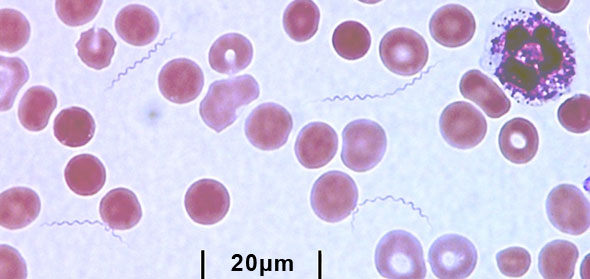
Borrelia spirochetes can be seen among red and white blood cells using proper staining and high power microscopy (Source: CDC).
Research suggests that there are two main reasons that antibiotic treatment might trigger JHR in some patients.
Cellular Components
Clinicians first suspected that there may be an endotoxin in spirochetes that is released into the body once die-off begins. Many bacteria, such as Bacillus anthracis (anthrax), produce these types of toxins as a defense mechanism. However, these spirochetes were found to not have toxins that were with biologically active in humans. Instead, researchers found that unique components of the cells that remain may trigger inflammatory responses.
In T. pallidum, lipoproteins (cell surface proteins) were found to stimulate production of tumor necrosis factor (TNF) in human macrophages. Production of TNF can lead to an unnecessary inflammatory response that results in damaged muscle and other tissue. Outer surface protein A (OspA) in Borrelia burgdorferi, one of the targets of the Western blot test, has been shown to increase cytokine response in cell cultures. In 2019, researchers identified a major cell wall component, peptidoglycan, as a possible contributing factor to lasting Lyme arthritis.
Elevated Immune Response
The host immune response and mediators of inflammation, including cytokines, histamine, and white blood cells, have all been implicated in the JHR. Research suggests that treating with antibiotics can result in a short-term immune response that can cause issues for some patients.
Studies of Borrelia burgdorferi and other Borrelia species indicate that white blood cells can cause an increased inflammatory response following ingestion of the bacteria. A receptor in white blood cells can trigger a cytokine response that results in inappropriate inflammation elsewhere. Cytokines, like IL-6 and IL-8, have been shown to increase within 2 hours of penicillin treatment for relapsing fever. Furthermore, JHR may be caused by apoptosis of white blood cells (programmed cell death) after they consume Borrelia cellular products.
JHR vs. Other Treatment Symptoms
JHR-like reactions have been reported in the treatment of infections that are not spirochetes. In particular, some patients with Bartonella species infections report feeling a worsening of symptoms when they start antibiotic treatment. What is going on? These treatment symptoms have not been well-studied, but evidence is building that antibiotics have a wide variety of effects on the body. Some of the causes may be similar, such as an increase in cellular waste products from both the target bacteria and host immune cells. They may affect the host itself, changing the functioning of host cells. They also change the microbiome, causing sudden shifts in the metabolites the host cells are receiving. And of course, some of the cells in that microbiome are themselves spirochetes.
In 2017, a case study of a man who had Bartonella quintana with bacillary angiomatosis and HIV reported that during treatment he experienced immune reconstitution inflammatory syndrome (IRIS) and a JHR. These reactions developed as he was administered antiretroviral therapy for the HIV and antibiotics for the bartonellosis. The author states that the patient experienced a JHR in the form of a rash within a day of initiating treatment and then more extreme symptoms about two days after antibiotics were discontinued. Although spirochetes are typically implicated in JHR, there is evidence that other families of bacteria cause similar reactions when the patient’s microbial burden is high. This case report is free to read on the internet.
Conclusion
It isn’t uncommon for patients treated with antibiotics to report feeling worse before they feel better. These symptoms have been most closely studied in syphilis patients, leading to a variety of theories about the causes when the infecting agent is a spirochete. Yet despite more than 100 years of observation, the exact causes of treatment symptoms have not been identified even in the case of spirochetes.
References
Butler, T. (2017). The Jarisch-Herxheimer reaction after antibiotic treatment of spirochetal infections: A review of recent cases and our understanding of pathogenesis. The American Journal of Tropical Medicine and Hygiene, 96(1), 46-52. doi:10.4269/ajtmh.16-0434 https://www.ncbi.nlm.nih.gov/pubmed/28077740
Kadam, P. et al. (2015). Delayed onset of the Jarisch-Herxheimer reaction in doxycycline-treated disease: A case report and review of its histopathology and implications for pathogenesis. The American Journal of Dermatopathology, 37(6), e68-74. doi:10.1097/DAD.0000000000000093 https://www.ncbi.nlm.nih.gov/pubmed/25033009
Centers for Disease Control and Prevention. (2015). 2015 sexually transmitted diseases treatment guidelines: Syphilis. Available at: https://www.cdc.gov/std/tg2015/syphilis.htm