Archive for the ‘Alzheimer’s’ Category

Aluminum in the Brain in Multiple Sclerosis: Regulatory and Funding Agencies Silent, Complicit

https://jameslyonsweiler.com/2018/08/18/aluminum-in-the-brain-in-multiple-sclerosis-regulatory-and-funding-agencies-silent-complicit/

By James Lyons Weiler in Cures August 18, 2018

https://jameslyonsweiler.com

MEDICAL SCIENCE proceeds along a hierarchy of evidence; often, patients are studied individually (case studies), or a small collection of patients are examined and characterized together (case series studies). Case series studies typically have smallish sample sizes and it is generally understood that larger studies will be necessary to determine more accurately the characteristics being studied.

In a new case series study, brain tissue from 14 donors with a diagnosis of MS was studied in a case series by Mold et al (2018) using transversely heated graphite furnace atomic absorption spectrometry. The study found high aluminum content (>10 ug/g dry weight) in all areas of the brain studied, with some areas exceeding 50 ug/g. They found aluminum both with cells and in the interstitium between cells. They found aluminum co-localised with structures known to be present in Secondary Progressive Multiple Sclerosis (SPMS) in the frontal cortex of one donor with SPMS.

There are a number of critical lines of evidence that make this fundamental finding critically important. Patients with MS have lower amounts of aluminum in their hair, suggesting depressed detoxification, and higher amounts are found in urine on chelation challenge testing (Fulgenzi et al., 2014). Chelation with EDTA is known to significantly reduce aluminum intoxication (Fulgenzi et al. 2014), and consumption of silica-rich mineral waters also increase urinary excretion of aluminum from patients with SPMS (Jones et al., 2017).

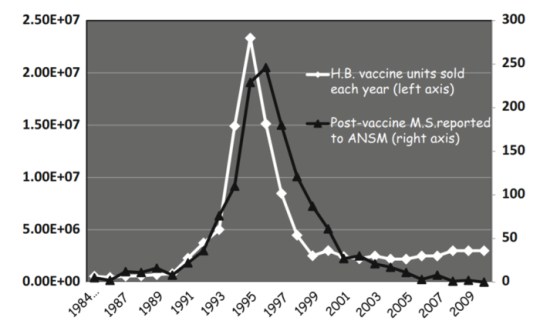
Extremely plausible direct mechanisms of the cause of MS from aluminum are known and animal studies routinely induced MS using aluminum hydroxide injections. So much evidence exists that points to aluminum as a source of strange new conditions of unknown causes, such as MMF and Gulf War Syndrome, one would think that calls to reconsider the use of aluminum in vaccines would be answered. The same team had previously found high amounts of aluminum in the brains of people with autism, and and in patients with Alzheimer’s disease. The latter result, while also important, is not surprising, as it has long been known that amyloid is part protein and part aluminum. Finally, when France brought on HepB vaccination, cases of MS following vaccination increased; when they stopped recommending the HepB vaccine, which contains aluminum hydroxide, the rate of HepB vaccine-associated MS cases dropped to near zero.
francems

Complicity

What is surprising is the lack of action on the part of the US FDA to put an end to the use of this dangerous metal in vaccines, and that the NIH is not funding more studies like this. NIH should fund studies to determine how to most safely remove aluminum from anyone exposed via vaccines; brain stem amyloidosis is a non-trivial concern. Approaches like ketogenic diet, silica-rich mineral waters, hyperbaric oxygen, EDTA, intranasal insulin and intranasal deferoxamine (to prevent brain stem amyloidosis) should all be tested in randomized clinical trails in clinical populations known to be afflicted with aluminum intoxication (autism, Alzheimer’s, MS).

What is also surprising is that the CDC and ACIP remain blithe to the morbidity and mortality their continued approval of vaccines that contain metals like aluminum and mercury. They make decisions on behalf of us all, and yet every member of ACIP with the exception of one military member has conflicts of interest with vaccine manufacturers. ACIP should review all of the literature on aluminum and make recommendations on how to phase it, and thimerosal, out of vaccines completely.

Further inaction on the part of these regulatory and funding agencies, and active denialism at this point will surely be seen by future generations as both callous disregard, and where conflicts of interest reside, complicity.

The study, conducted at the Keele University, was funded in part by the Children’s Medical Safety Research Institute.

References

Jones K et al. EBioMedicine. 2017 Urinary Excretion of Aluminium and Silicon in Secondary Progressive Multiple Sclerosis. 26:60-67. doi: 10.1016/j.ebiom.2017.10.028.

Fulgenzi A, Vietti D1, Ferrero ME. Aluminium involvement in neurotoxicity. Biomed Res Int. 2014;2014:758323. doi: 10.1155/2014/758323.

_______________

**Comment**

https://www.nationalmssociety.org/Symptoms-Diagnosis/Other-Conditions-to-Rule-Out/Lyme-Disease

Lyme disease can cause delayed neurologic symptoms similar to those seen in multiple sclerosis (MS) such as weakness, blurred vision caused by optic neuritis, dysesthesias (sensations of itching, burning, stabbing pain, or “pins and needles”), confusion and cognitive dysfunction, and fatigue. Lyme disease symptoms may also have a relapsing-remitting course. In addition, Lyme disease occasionally produces other abnormalities that are similar to those seen in MS, including positive findings on magnetic resonance imaging (MRI) scans of the brain and analysis of cerebrospinal fluid (CSF).

These similarities in symptoms and test results have led some people with MS to seek testing for the presence of antibodies to Borrelia, to determine if their neurologic symptoms are the result of Lyme disease or truly MS. The distinction is important because Lyme disease, especially when treated early, often responds to antibiotic therapy, whereas MS does not.

Studies examining Lyme disease & MS
Two studies have examined the overlap in diagnosis of MS and Lyme disease. The studies were conducted in parts of Long Island, New York, an area where Lyme disease is endemic, or regularly found.

In the first study, people who had Borrelia antibodies in their blood as well as a variety of neurologic symptoms considered to be “MS-like,” were evaluated with MRI, evoked potentials (EP) and CSF analysis, including a test for the presence of Borrelia antibodies in the spinal fluid.

While those with the MS-like illness had the highest incidence of abnormal MRIs and were the only ones among those studied to have abnormal EP and oligoclonal bands in their spinal fluid (indicating an abnormal immune response), they did not prove to have any Borrelia antibody in their spinal fluid.

The researchers concluded that the few patients with the MS-like symptoms probably had these symptoms due to MS and had also been exposed to the Borrelia bacterium.
A companion study looked for the presence of Borrelia antibodies in the blood of 100 people with the diagnosis of possible MS. Of 89 people who in fact turned out to have definite MS, only one had Borrelia antibodies. The researcher concluded that “…infection with Borrelia is infrequent in MS patients who live in an endemic area. Lyme disease is unlikely to be a significant factor in the differential diagnosis of MS.” Furthermore, the presence or antibodies to Borrelia does not prove that Borrelia is causing the neurological symptoms, only that there has been previous infection with the organism.

Just remember, “rare” is only “rare” if it isn’t you.


Herpes Viruses Implicated in Alzheimer’s Disease

https://www.the-scientist.com/news-opinion/herpes-viruses-implicated-in-alzheimer-s-disease-64246#.W1VYqg-Tels.linkedin

Herpes Viruses Implicated in Alzheimer’s Disease

SAM GANDY, ICAHN SCHOOL OF MEDICINE AT MOUNT SINAI

Herpes Viruses Implicated in Alzheimer’s Disease

A new study shows that the brains of Alzheimer’s disease patients have a greater viral load, while another study in mice shows infection leads to amyloid-β build up.

Jun 21, 2018, Anna Azvolinsky


The brains of Alzheimer’s disease patients have an abnormal build up of amyloid-β proteins and tau tangles, which, according to many researchers, drives the ultimately fatal cognitive disease. This theory is being challenged by a newer one, which posits that microbes may trigger Alzheimer’s pathology.

Two new studies, using different approaches, further bolster this pathogen theory. Analyzing the transcriptomes of post-mortem brain samples from patients with Alzheimer’s disease, one group of researchers finds that two strains of human herpesvirus are significantly more abundant than in the brains of people of the same age without Alzheimer’s disease. Gene networks in the brains of Alzheimer’s patients with these strains are also rewired such that disease-related genes are differentially expressed compared to controls.

In the other study, another team of investigators observed in mouse models and in a three-dimensional human neuronal cell culture that a Herpseviridae infection could seed amyloid-β plaques. 

“These two papers add to a weight of evidence that viruses—and pathogens in general—must now be seriously considered as causal agents in Alzheimer’s disease,” Chris Carter, who studies the genetics and epidemiology of Alzheimer’s and other neurological disorders at Polygenic Pathways in the U.K., tells The Scientist.

Over three decades, there have been accumulating data from human studies suggesting that certain microbes, namely, viruses bacteria and fungi, may trigger or promote Alzheimer’s pathology in the aging brain. 

See “Do Microbes Trigger Alzheimer’s Disease?

The Mount Sinai group initially set out to mine their RNA and DNA sequencing data from Alzheimer’s brain samples for drug targets. Then they found these viral sequences that were difficult to ignore. “I recently gave a talk that I titled, ‘I went looking for drugs but all I found was these viruses,’” study coauthor Joel Dudley, a genomics researcher at the Icahn School of Medicine at Mount Sinai, tells The Scientist.

In their study of elderly human brains, Dudley and the team from Mount Sinai sequenced more than 1,400 post-mortem brain samples, finding the first evidence that human herpesviruses 6A (HHV-6A) and 7 (HHV-7) are in greater abundance in regions of the brain including the superior temporal gyrus, anterior prefrontal cortex, and dorsolateral prefrontal cortex.

These data suggest that multiple pathogens, and not just these viruses, likely contribute to Alzheimer’s disease. 

—Chris Carter, Polygenic Pathways

Using RNA and DNA sequencing data, the team computationally generated regulatory network models that implicated the presence these viruses in altering the activity of genes linked to Alzheimer’s risk.

The researchers turned to one of the microRNAs, miR-155, found in their analysis to be suppressed by HHV-6A in the human samples, to see what the functional consequence is of this interaction. They homed in on miR-155 because it was a novel microRNA and because it had been previously linked to herpes viruses. When they knocked out the gene for miR-155 in a mouse model of Alzheimer’s disease, the animals’ brains had larger amyloid plaques and higher levels of amyloid-β compared to the mouse model with a wildtype MIR155 gene.

“Conceivably, the viral proteins are acting as transcription factors that control expression of Alzheimer’s risk genes,” coauthor Sam Gandy, a professor of neurology who specializes in Alzheimer’s disease at Mount Sinai, writes in an email to The Scientist. “Perhaps this viral dysregulation of Alzheimer’s genes that we see promotes the Alzheimer’s pathology of amyloid beta aggregation, inflammation and tau tangles,” he says.

The results, published today (June 21) in Neuron, could pave the way to new intervention strategies. “If established that these viruses indeed play a role in the development of Alzheimer’s, retroviral agents should be tested as a potential therapy,” says Dudley.

In the other study, available as a preprint on the Cell website and in Neuron July 11, Rudolph Tanzi and Robert Moir, both researchers at Harvard Medical School and Massachusetts General Hospital, and their colleagues tested how amyloid-β in the brain—which these labs previously found to be an antimicrobial—reacts to herpes simplex virus 1 (HSV1), HHV6A, and HHV6B. These strains all tend to integrate into the genomes of neurons. They found that in a culture of human neuronal cells, amyloid-β could prevent HSV1 infection and can bind and aggregate the HSV1 and HHV6 viruses. Mice infected with HSV1—which can cause encephalitis—that also had genetically elevated amyloid-β expression were protected against encephalitis, but also had increased amyloid deposits.

“These studies further add to the steadily increasing number of papers that support a microbial role in Alzheimer’s disease,” Ruth Itzhaki, a molecular neurobiologist at the University of Manchester in the U.K. who studies the link between viruses and the development of Alzheimer’s disease, writes in an email to The Scientist.

A recent epidemiology study adds real-world credence to the microbial link to Alzheimer’s. A population study in Taiwan examined more than 33,000 individuals and found that those with a herpes simplex virus infection had a 2.5-fold greater risk of developing Alzheimer’s disease. The study authors found that in those people treated with antiherpes medications, the 2.5-fold risk dropped back down to baseline. 

“The conclusion you can draw is that the antiherpes medication reduced the risk of Alzheimer’s by keeping the herpes infection in check,” says Moir.

Itzhaki agrees. This study and two others, also from Taiwan, appear to link HSV1 causally to Alzheimer’s disease, she writes. “Despite various shortcomings, these Taiwan studies are the essential first steps to a proof that a microbe could be the cause of a non-infectious disease, in this case, Alzheimer’s.” Itzhaki and a colleague wrote about these studies recently in a commentary, which aimed to interpret the “important and surprising Taiwan data” on the effectiveness of the antiviral treatment, Itzhaki tells The Scientist.

Carter cautions that the new reports should not be interpreted to mean that there is likely a single, unique Alzheimer’s pathogen, if there is one at all. “These data suggest that multiple pathogens, and not just these viruses, likely contribute to Alzheimer’s disease. It is also likely that the pathogens may vary between Alzheimer’s patients.”

The Mount Sinai team will now be verifying whether HHV6 and HHV7 are actually integrated into the genomes of Alzheimer’s patients’ brains and testing for the presence of HHV6 and HHV7 in the bloodstream and central nervous system of Alzheimer’s patients. They would like to do a study comparing living patients and controls to see if the link they observed between the viruses’ presence and changes in gene regulation related to Alzheimer’s holds up.

Tanzi’s and Moir’s labs are focusing on the role of the brain microbiome in Alzheimer’s disease. Comparing the brains of older and younger individuals, including those with Alzheimer’s, their preliminary evidence shows that the brain microbiome—which contains hundreds of bacterial and fungal species—is shifted and linked to pro-inflammatory activity. “It’s analogous to what happens with the gut microbiome in individuals with irritable bowel syndrome,” says Moir. “Our model right now is that it’s not just a single microbe, but a disturbance in the brain microbiome that can lead to Alzheimer’s disease.”

B. Readhead et al., “Multi-scale analysis of independent Alzheimer’s cohorts finds disruption of molecular, genetic, and clinical networks by human herpesvirus,” Neurondoi.org/10.1016/j.neuron.2018.05.023, 2018.

W.A. Eimer et al. “Alzheimer’s disease-associated β-amyloid is rapidly seeded by herpesviridae to protect against brain infection,” Neuron, in press, July 12, 2018.

Correction (June 21): We removed two sentences in paragraph seven. One noted the prevalence of virus in diseased brains, but did not note that the prevalence is the same in control brains. The other sentence misstated the regions of the brain where the viruses were in greater abundance compared to control brains and stated these brain regions were linked to Alzheimer’s disease. The Scientist regrets the error.

________________

**Comment**

  1.  Lyme/MSIDS patients often have viral involvement – particularly herpes strains
  2. The role of bacteria, viruses, and fungus is important and likely includes the very things Lyme/MSIDS patients have and are being treated for.
  3. This article points out another reason to take treatment for Lyme/MSIDS seriously.  If left unchecked, Lyme/MSIDS can possibly be a perfect storm for Alzheimer’s later.

For more:  https://madisonarealymesupportgroup.com/2017/01/18/a-bug-for-alzheimers/

https://madisonarealymesupportgroup.com/2016/06/09/alzheimers-byproduct-of-infection/

https://madisonarealymesupportgroup.com/2016/11/17/antibiotics-and-alzheimers/

https://madisonarealymesupportgroup.com/2016/06/03/borrelia-hiding-in-worms-causing-chronic-brain-diseases/

https://madisonarealymesupportgroup.com/2018/03/25/a-brief-history-of-neuroborreliosis-research-dementia-an-inside-look-at-two-researchers/

https://madisonarealymesupportgroup.com/2017/06/10/the-coming-pandemic-of-lyme-dementia/

https://madisonarealymesupportgroup.com/2016/11/17/alzheimers-lyme/

Dr. David Baewer discusses arboviruses & Lyme:  https://madisonarealymesupportgroup.com/2016/06/07/dr-david-baewer-coppe-labs/ Coppe Labs, in Wisconsin, provides advanced testing for leukotropic herpesviruses: EBV, CMV, HHV-6A and HHV-6B, as well as tick-borne pathogens, and their tests distinguish between latent and active infections.


Tuttle’s Response to the NEJM Article

Yesterday, I posted this:  https://madisonarealymesupportgroup.com/2018/07/26/tickborne-diseases-confronting-a-growing-threat/  (Please read the article in this link including my comments at the bottom before Tuttle’s response below so it will make more sense)

The one thing I didn’t deal with that I will point out now is this regurgitated number in the NEJM article of 10-20% of patients moving on to chronic/persistent Lyme.  The following informative article written by Lorraine Johnson points out this number to be considerably higher which corresponds to my experience as a patient advocate:  https://madisonarealymesupportgroup.com/2018/07/22/lyme-costs-may-exceed-75-billion-per-year/.  Excerpt below:

Besides the staggering financial cost to this 21st century plague, this paper, based on estimates of treatment failure rates associated with early and late Lyme, estimates that 35-50% of those who contract Lyme will develop persistent or chronic disease.

Let that sink in.

And in the Hopkins study found 63% developed late/chronic Lyme symptoms.
For some time I’ve been rankled by the repeated CDC statement that only 10-20% of patents go on to develop chronic symptoms. This mantra in turn is then repeated by everyone else.

While still an estimate, I’d say 35 to over 60% is a tad higher than 10-20%, wouldn’t you? It also better reflects the patient group I deal with on a daily basis. I can tell you this – it’s a far greater number than imagined and is only going to worsen.

Now for Tuttle’s response:

https://www.change.org/p/1120418/u/23062391?utm_medium=email&utm_source=petition_update&ut

PETITION UPDATE

Tickborne Diseases — Confronting a Growing Threat

Carl Tuttle
Hudson, NH
JUL 26, 2018 — Please see the letter below addressed to Anthony S. Fauci, M.D., Director, National Institute of Allergy and Infectious Diseases (NIAID).

It would appear that the racketeering scheme to downplay the severity of Lyme disease is rampant throughout all government health agencies.

Letter to Anthony S. Fauci, M.D:

———- Original Message ———-
From: Carl Tuttle
To: Anthony.Fauci@nih.hhs.gov
Cc: catharine.paules@nih.hhs.gov, hilary.marston@nih.hhs.gov, Marshall.Bloom@nih.hhs.gov, comments@nejm.org, ddutko@hanszenlaporte.com, chris.smith@mail.house.gov, collin.peterson@mail.house.gov, jdrazen@nejm.org, info@massmed.org, president@massmed.org, mmsvp@massmed.org
Date: July 26, 2018 at 9:16 AM
Subject: Tickborne Diseases — Confronting a Growing Threat

Tickborne Diseases — Confronting a Growing Threat

Catharine I. Paules, M.D., Hilary D. Marston, M.D., M.P.H., Marshall E. Bloom, M.D., and Anthony S. Fauci, M.D. This article was published on July 25, 2018, at NEJM.org.
https://www.nejm.org/doi/full/10.1056/NEJMp1807870

Excerpt:

“Although most cases are successfully treated with antibiotics, 10 to 20% of patients report lingering symptoms after receiving appropriate therapy.”

July 26, 2018

Office of the Director,
National Institute of Allergy and Infectious Diseases (NIAID),
National Institutes of Health,
Bethesda, MD 20892
Attn: Anthony S. Fauci, M.D., Director

Dear Dr. Fauci,

There has been a thirty year fixation on the acute stage of Lyme disease (with bulls-eye rash) after early treatment however patients with a prolonged exposure to the pathogen before diagnosis and initial treatment are almost always incapacitated.

You know that untreated strep throat progresses to rheumatic fever causing irreversible heart damage. What happens to the Lyme patient who went months, years or decades before diagnosis? Dr. Neil Spector required a heart transplant after his Lyme went undiagnosed for four years while his laboratory tests (serology) were repeatedly negative. [1]

Singer/songwriter Kris Kristofferson was being treated for Alzheimer’s disease when discovering he had undiagnosed Lyme disease. [2]

Autopsy results identify the destructive nature of Borrelia as evident in Vicky Logan’s liver (nutmeg liver), kidneys, heart, lungs and brain. The patient died after the insurer refused additional IV antibiotic therapy. [3]

There is a growing patient population of this class of disabled patient who has been ignored for nearly four decades. Lyme disease is a life-altering/life-threatening infection misclassified as a low-risk and non-urgent health issue through an elaborate racketeering scheme as outlined in the SHRADER & ASSOCIATES, LLP racketeering lawsuit. [4] The U.S. Centers for Disease Control has aligned themselves with the seven defendants/academics named in this RICO lawsuit.
From your article:

“Nonserologic platform technologies may also improve diagnostic capabilities, particularly in identifying emerging pathogens. Two previously unknown tickborne RNA viruses, Heartland virus and Bourbon virus, were discovered by researchers using next-generation sequencing to help link organisms with sets of unexplained clinical symptoms.”

When Sanger sequencing identified a case of chronic Lyme disease, the CDC stopped all communication with the Director of Milford Molecular Diagnostics. [5], [6]

The recently published Middelveen paper reported persistent infection as the majority of patients were culture positive for infection even after multiple years on antibiotics so there was no relief from current antimicrobials. Some patients had taken as many as eleven different types of antibiotics. [7]
_______________________

Dr. Fauci; your “Perspective” published in the New England Journal of Medicine does not mention anything I have presented here so it would appear that you are caught up in this racketeering scheme to suppress the severity of a disease that is destroying lives, ending careers, causing death and disability while leaving victims in financial ruin. There are no Public Service Announcements informing the public that you could become horribly disabled or die from Lyme disease.

It is time to move Lyme disease to HIGHEST ALERT and remove the CDC’s stronghold over the progress to find a curative approach for the late stage Lyme epidemic. [8]

Acknowledgment and response to this letter is requested.

Respectfully submitted,

Carl Tuttle
Lyme Endemic Hudson, NH

Cc: Attorney Daniel Dutko of Hanszen Laporte
U. S. Representatives Chris Smith and Colin Peterson


Report: Lyme Disease on Rise But Doctors Remain Skeptical

https://www.newsmax.com/t/newsmax/article/866576?section=health&keywords=lyme-disease-on-rise-misdiagnose-

Report: Lyme Disease on Rise But Doctors Remain Skeptical

New Clothing Offers Protection Against Ticks

(Stephen Chernin/Getty Images)

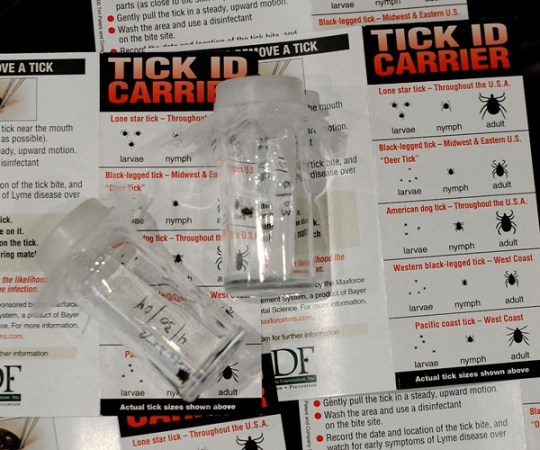
Ticks in small bottles rest on Tick ID Carrier information cards June 29, 2004 in New York City. The Centers for Disease Control (CDC) said the number of cases reported annually has more than doubled since 1991. Lyme disease was first diagnosed in the 1970s in patients around the town of Lyme, Conn. 

By Todd Beamon
Saturday, 16 Jun 2018

The federal government reports that cases of Lyme disease are on the rise, but many patients and researchers are finding that physicians are skeptical in diagnosing the deer tick-borne disease.

“It’s very serious,” Marina Makous, a family medicine doctor in Exton, Pennsylvania, told NBC News. She is a former fellow at the Neuroinflammatory Diseases Center at Columbia University’s Lyme and Tick-Borne Diseases Research Center.

“There is an underappreciation of the seriousness of this illness, especially when [physicians] don’t treat patients with Lyme disease on a daily basis,” she said.

The Centers for Disease Control and Prevention issued an updated warning last month that insect-borne diseases, especially those spread by ticks, are on the rise, having more than doubled from 2004 to 2016.

Warmer weather is an important cause of the increased cases reported to the agency, according to The New York Times.

“You can think of ticks as dirty needles,” Makous told NBC. “They carry multiple pathogens and can transmit other things that make it more difficult for the immune system to fight off Lyme disease.”

Lyme disease is caused by a spiral-shaped bacteria called Borelia burgdorferi. It is found in the saliva of the blacklegged tick, more commonly known as a deer tick.

The bacteria spreads rapidly and has complex survival mechanisms, according to the NBC report.

Though most physicians believe it can be eradicated with antibiotics, the bacteria has been shown to return after treatment in the blood and tissue of animals and humans.

Numerous patients say they live with chronic, persistent symptoms — and have had difficulty being diagnosed by their doctors.

“I’m one of the rare cases where you have an unequivocal diagnosis,” Porochista Khakpour, a New York writer and author, told NBC. “People have put that at less than 10 percent.”

After 12 years of trying to find out why she was having a range of physical ailments — from convulsions to debilitating fatigue — she learned in 2012 that she had Lyme disease after expensive blood tests from a private blood-testing company.

In her new book, “Sick: A Memoir,” Khakpour, 40, wrote that Lyme disease” is thought of as the disease of hypochondriacs and alarmists and rich people who have the money and time to go chasing the diagnosis.

Khakpour was bitten by a deer tick — and she is among the fewer than 50 percent of people with Lyme who do not remember being infected that way or seeing the famed “bulls-eye” rash typically associated with the disease.

She added that doctors often diagnosed her problems as psychiatric.

“But that didn’t explain to me why I would have fever, or why my body would be in convulsions, why I would develop these huge allergies,” Khakpour told NBC. “Then they’d say, ‘Well, the mind is very strong you know.'”

Makous called Lyme disease “the great imitator,” noting that initial treatments “may blunt the development of antibodies.”

Future tests could turn up negative, she added, though the bacteria may linger in the body.

“It’s a multi-systemic disease,” Makous explained. “There aren’t specific symptoms unique only to Lyme.

“It can look like stroke, like Alzheimer’s, like vasculitis, like neuropathy.

Makous noted that singer-songwriter Kris Kristofferson’s Lyme disease was initially misdiagnosed as Alzheimer’s in 2016.

Psychiatric symptoms like depression and anxiety could also result from Lyme — and Makous said she has seen increased signs of suicide in such patients, along with facial weakness, headaches, sensory disturbances and cognitive problems.

Khakpour, however, worries that she may never get truly better, telling NBC that she has resigned herself to living with the long-term effects of Lyme disease.

“It never seems to go away,” she said, “the feeling that as much as I achieve or as strong as I can be, this disease is smarter.”

________________

For more:  

https://madisonarealymesupportgroup.com/2016/06/09/alzheimers-byproduct-of-infection/  (Link to Kris Kristofferson’s case.  Lyme treatment turned the Alzheimer’s completely around)

https://madisonarealymesupportgroup.com/2017/01/18/a-bug-for-alzheimers/

https://madisonarealymesupportgroup.com/2018/03/25/a-brief-history-of-neuroborreliosis-research-dementia-an-inside-look-at-two-researchers/

https://madisonarealymesupportgroup.com/2017/06/10/the-coming-pandemic-of-lyme-dementia/

Psychological symptoms:  https://madisonarealymesupportgroup.com/2015/10/18/psychiatric-lymemsids/

https://madisonarealymesupportgroup.com/2018/05/19/panic-attacks-may-be-lyme-msids/

https://madisonarealymesupportgroup.com/2018/03/07/obsessive-compulsive-symptoms-in-adults-with-ld/

My only beef is the repeated mantra that warmer weather is to blame for increased infection rates.  That’s pure conjecture and many disagree with that premise: https://madisonarealymesupportgroup.com/2017/08/14/canadian-tick-expert-climate-change-is-not-behind-lyme-disease/


FREE: 7-part documentary on Autoimmune Secrets

 Approx. 6:30 Min

Discover the truth in this free 7-part documentary series, featuring over 50 doctors, scientists, researchers and survivors of thyroid disease, lupus, multiple sclerosis, rheumatoid arthritis, lyme & even Alzheimer’s & dementia plus many more!

WHAT IF THE HORDE OF HORRIFYING AND PAINFUL AUTOIMMUNE DISEASES COULD BE PREVENTED AND REVERSED THROUGH LITTLE-KNOWN PROTOCOLS THAT YOU’RE NOT BEING TOLD ABOUT BY YOUR DOCTOR?

How It Affects Lives

  • Autoimmune disease can destroy your life
  • It cripples and imprisons the elderly.
  • It robs childhood from children.
  • It takes the precious moment of sharing a meal with loved ones and turns that beautiful event into a minefield with the reality that something you eat could leave you in a fetal position in agony.
  • It takes away the things you need most—time, memories, loved ones.

Affects Your Mental Health

It can fill your life with shame… the pain, the confusion, the question, why me? It can lead you to hide… and take a life that was meant to be lived in the light into the darkness, into the shadows of existence. The truth is, shame is a dark curse that follows disease.

The ugly horde of autoimmune disease comes with many different names and forms.

Rheumatoid arthritis, lupus, colitis, Crohn’s, IBS, multiple sclerosis, and many scientists also class the neurodegenerative diseases we fear most, Alzheimer’s and dementia as in fact autoimmune disease.

There are over 80 autoimmune diseases, and over 80 million people in America alone that suffer with one or more of those 80 diseases.

With a weakened immune system, we become extremely vulnerable to other chronic diseases, including cancer, a disease which one in 2 men and 1 in 3 women will get in their lifetime today.

The truth is, it doesn’t have to be this way.

You and your loved ones don’t have to be a part of these horrible statistics. You have the power and tools to rise above the cycle of suffering and death that lurks all around you and those you love today.

It’s simple, inexpensive and extremely logical.

But, unfortunately, the pharmaceutical companies don’t want you to know about it. The answer isn’t a new drug. The truth is there are many drugs that trigger new autoimmune diseases.

Sadly, your local doctor is very unlikely to tell you about it, if they want to keep their job.

That’s why my wife and I created this free documentary series. We’ve had family members suffer and die on both her side and my side of the family from diseases that were preventable and reversible. These Deaths have left a hole in our hearts that no void can fill.

Yet giving truth to the world has made a difference in our lives.

It fills our life with purpose and reason to keep going… to keep sharing… to raise a better future for our family, and to see a better future for every precious soul we come in contact with.

Register for FREE here:  https://autoimmunesecrets.com/?oprid=9434