Archive for the ‘Activism’ Category

Ingredients in Kinrix a DTap-IPV Vaccine

http://www.thevaccinereaction.org/2017/10/ingredients-in-dtap-ipv-vaccine-kinrix/

Ingredients in DTaP-IPV Vaccine Kinrix

medical researcher mixing vial contentsSTORY HIGHLIGHTS
  • Manufacturer package inserts for each vaccine contain important information on ingredients, contraindications, reported adverse reactions, pre-licensure clinical studies and more.
  • The package insert for Kinrix (DTaP-IPV) lists the following ingredients: bovine extract, bovine casein, formaldehyde, glutaraldehyde, aluminum hydroxide, VERO cells, sodium chloride, polysorbate 80, neomycin and polymyxin B.
  • There is a glaring lack of basic science research and safety testing of vaccine ingredients.

Vaccine ingredients, their side effects and impact on human health have been a topic of debate and discussion for many years. While there has been a lot of publicity about the potential adverse effects of individual ingredients in vaccines, such as mercury and aluminum, it is also important to be aware of the potential synergistic effects of all the combined ingredients contained in each vaccine.

By federal law, vaccine manufacturers must publish a list of vaccine ingredient information in the package insert approved by the U.S. Food and Drug Administration (FDA) that accompanies vials of vaccine sold and provided to doctors’ offices, public health clinics, pharmacies and other places where vaccines are administered. Package inserts are available for all vaccines licensed for distribution in the United States on the FDA website.1 As an example, let’s look at the childhood vaccine Kinrix that is  manufactured by GlaxoSmithKline (GSK).

What is Kinrix?

In 2008, the FDA licensed GSK’s diphtheria and tetanus toxoids and acellular pertussis adsorbed (DTaP) vaccine combined with an inactivated poliovirus (IPV) vaccine known as Kinrix (DTaP-IPV).2 Kinrix is licensed for use in the U.S as the fifth dose of the DTaP vaccine series and the fourth dose of the IPV series in children between the ages of four to six years old whose previous DTaP vaccine doses were Infanrix (DTaP) and/or Pediarix (DTaP-Hepatitis B-IPV) for the first three doses, and Infanrix for the fourth dose.2

Both DTaP and IPV vaccines are recommended in the 2017 Centers for Disease Control and Prevention’s (CDC) childhood vaccine schedule.3

Ingredients in Kinrix

According to the vaccine insert for Kinrix, it is a non-infectious, sterile vaccine to be administered intramuscularly. Each dose includes diphtheria toxoid, tetanus toxoid, inactivated pertussis toxin, pertactin, filamentous hemagglutinin and antigen units of Type 1, Type 2 and Type 3 poliovirus.4

The insert describes how the diphtheria and tetanus toxin is produced:

The diphtheria toxin is produced by growing Corynebacterium diphtheriae in Fenton medium containing a bovine extract. Tetanus toxin is produced by growing Clostridium tetani in a modified Latham medium derived from bovine casein. The bovine materials used in these extracts are sourced from countries which the United States Department of Agriculture (USDA) has determined neither have nor are at risk of bovine spongiform encephalopathy (BSE). Both toxins are detoxified with formaldehyde, concentrated by ultrafiltration, and purified by precipitation, dialysis, and sterile filtration.”4

Some ingredients mentioned above are bovine extract, bovine casein, and formaldehyde. What exactly are these ingredients and what role do they play in the Kinrix vaccine?

In brief, bovine extract is a water-based extract of pituitary glands from cattle used as a stabilizer in the vaccine.5 Bovine casein is milk protein from cattle used as a medium nutrient.5 Formaldehyde is a known carcinogen,6 and is used as an inactivating agent.5

The insert goes on to state:

The acellular pertussis antigens (PT, FHA, and pertactin) are isolated from Bordetella pertussis culture grown in modified Stainer-Scholte liquid medium. PT and FHA are isolated from the fermentation broth; pertactin is extracted from the cells by heat treatment and flocculation. The antigens are purified in successive chromatographic and precipitation steps. PT is detoxified using glutaraldehyde and formaldehyde. FHA and pertactin are treated with formaldehyde. Diphtheria and tetanus toxoids and pertussis antigens (inactivated PT, FHA, and pertactin) are individually adsorbed onto aluminum hydroxide.4

Additional ingredients include glutaraldehyde, a disinfectant used as an inactivating agent, and aluminum hydroxide, which is a known neurotoxin used as an adjuvant to hyperstimulate inflammatory immune responses in an effort to make the vaccine effective.7

The Kinrix package insert further describes the production process:

The inactivated poliovirus component of KINRIX is an enhanced potency component. Each of the 3 strains of poliovirus is individually grown in VERO cells, a continuous line of monkey kidney cells, cultivated on microcarriers. Calf serum and lactalbumin hydrolysate are used during VERO cell culture and/or virus culture. Calf serum is sourced from countries the USDA has determined neither have nor are at risk of BSE. After clarification, each viral suspension is purified by ultrafiltration, diafiltration, and successive chromatographic steps, and inactivated with formaldehyde.4

VERO cells are a lineage of kidney epithelial cells extracted from an African green monkey in 1962 and used as a growth medium for polioviruses in the vaccine.5 8

The description of the production process ends with:

Each 0.5-mL dose contains aluminum hydroxide as adjuvant (not more than 0.6 mg aluminum by assay) and 4.5 mg of sodium chloride. Each dose also contains ≤100 mcg of residual formaldehyde and ≤100 mcg of polysorbate 80 (Tween 80). Neomycin sulfate and polymyxin B are used in the poliovirus vaccine manufacturing process and may be present in the final vaccine at ≤0.05 ng neomycin and ≤0.01 ng polymyxin B per dose.4

Sodium chloride is commonly known as salt used to adjust tonicity in the vaccine.5Polysorbate 80 is a surfactant used as an emulsifier.5 9 Neomycin and Polymyxin B are antibiotics used as antimicrobials in the vaccine.5

As Americans, we expect and want to believe that the vaccine recommendations being made by public health officials are evidence-based and thoroughly tested for safety; however this is not the case. The Kinrix package insert barely provides any evidence of safety testing of ingredients.

Loop Holes in Safety Testing of Vaccine Ingredients

There is a glaring lack of basic science research into the toxic effects of all the ingredients present in Kinrix and other vaccines, including evidence that ingredients have been tested for (1) entry into the body through injection; (2) synergistic toxicity of combined ingredients; and (3) long-term cumulative adverse effects on health.

The argument that such ingredients are harmless simply because they are present in miniscule amounts is not adequate.  The route of entry into the body for these ingredients is never considered during safety testing. The effect of toxins on brain and immune function through ingestion and inhalation is different from injection into a muscle in terms of how it is metabolized through biological processes in the body.10 Yet arguments made to justify the use of many vaccine ingredients focus on how the body processes toxins through ingestion and inhalation rather than injection.11 

Secondly, safety testing ignores the synergistic toxicity of all the ingredients combined in the vaccine. Synergism in toxicology refers to the effects of exposure to two of more toxins at the same time that leads to harmful health effects much more severe than the sum of individual ingredients given separately. Since children are usually given more than one vaccine at a time, safety testing of individual ingredients separately is hardly adequate to label a vaccine as safe.12 

Lastly, the long-term cumulative effects of the vaccine given in combination with other vaccines in the CDC’s recommended childhood vaccine schedule is overlooked. While small concentrations of particular chemicals used in vaccines may not necessarily lead to acute short-term health effects, chronic long-term effects of repeated exposure to small amounts of various ingredients in all vaccines administered to children have not been thoroughly studied.12

Looking back at the vaccine insert, it states, “KINRIX has not been evaluated for carcinogenic or mutagenic potential, or for impairment of fertility.”4 This statement alone implies that this childhood vaccine has not undergone thorough safety testing.

________________

**Comment**

More on DTap:  https://madisonarealymesupportgroup.com/2017/10/04/pharma-using-scare-tactics-over-pertussis-vaccine-failure/

More on aluminum:  https://madisonarealymesupportgroup.com/2017/09/21/aluminum-flawed-assumptions-fueling-autoimmune-disease-and-lyme/

Vaccines have been found to activate latent Lyme/MSIDS infections:  https://madisonarealymesupportgroup.com/2017/12/02/scottish-doctor-gives-insight-on-lyme-msids/  (Please read comment section after article for more links)

Ozone Ten Pass – Lyme/MSIDS Treatment in CA

http://lymebook.com/bryan/2017/12/03/new-lyme-treatment-is-mainstay-for-southern-california-llmd/

New Lyme treatment is mainstay for Southern California LLMD

CA DoctorDr. Mary Ellen Shannon, M.D., of Center for New Medicine, Irvine, CA. In this photo, she administers a new Lyme treatment called “ozone ten pass.”


Summary: This article will profile a new Lyme treatment, and one of the world’s leading physicians using the therapy. I’ve personally been treated by Dr. Mary Ellen Shannon, and I highly recommend her. You can contact her through her clinic, Center for New Medicine (Irvine, CA). She is an LLMD (Lyme Literate Medical Doctor).

When I wrote my first Lyme disease book, Lyme Disease and Rife Machines, I discussed the benefits of ozone therapy. Ozone therapy is incredible for many reasons. Until now, however, I believe that ozone therapy has been limited because there are no superb ways to get enough ozone into the body.

Don’t get me wrong – many of the ways in which ozone has been administered for the past several decades are good. They do work, and are useful. But they haven’t been life-changing or ground-breaking for many patients.

That is, until now. A new method of administering ozone, called “ozone ten pass”, has been a game-changer for many Lyme disease patients. Let me explain what this is.

Before ozone ten pass, the most powerful method of ozone administration was called MAH, which stands for Major Autohemotherapy. In simple terms, this is a procedure where a small amount of a patient’s blood is taken out of his or her body, and exposed to ozone, and then returned to the body. This practice has been performed for decades, especially in Russia and other countries where innovation is common in ozone therapy.

MAH has helped many Lyme patients, no doubt. But still, it wasn’t really game-changing for the vast majority.

This is why ozone ten pass is so exciting. A very smart researcher and leader in the field of ozone, Dr. Johann Lahodney, developed ozone ten pass as a way to get more ozone into the body. Essentially, ozone ten pass involves doing ten MAH treatments – all in one sitting! Blood is taken out, ozonated, and put back in the body, ten times, in about an hour.

Several years ago, ozone ten pass was new, and wasn’t widely available. However, as it has become more evident that it can be game-changing for not just Lyme disease but also many other conditions, more and more American physicians have begun to incorporate it into their practices. So it is a very good time to look into ozone ten pass, because it is much more available than it has ever been before. And furthermore, the training that doctors receive is more advanced than ever.

One unique characteristic of ozone ten pass is that each subsequent pass in the treatment can help to neutralize toxins and clean up the mess left by previous passes. And this all happens in one sitting – one treatment. This doesn’t mean that patients don’t herx with ten pass – some of them do. But, the ten pass process introduces some new and intriguing variables and benefits compared to MAH alone. (Disclaimer: Don’t forget to work closely with your doctor to determine if you should start at a full ten passes, or start at a lower amount – the treatment is very powerful and should be treated with great respect).

After researching ozone ten pass for Lyme disease, I’ve come to the conclusion that it is a BIG step forward in Lyme disease treatment. In fact, I personally have traveled to see Dr. Shannon twice. As I write this, I am in Oceanside, CA, where I am having consultation with her.

Some Lyme disease patients report having dramatic results after their first few treatments (remember, each “treatment” consists of up to ten “passes” of ozone. So when I say “one treatment,” I mean one full ten pass). More and more anecdotal evidence is popping up all over the internet.

One physician has an entire YouTube channel devoted to testimonials of patients using ozone. Many of these patients are Lyme disease patients. I enjoyed watching his videos and hearing the many stories as I made my own preparations to undergo ozone therapy with Dr. Shannon.

Also, I suggest you do a google search for “ozone ten pass Lyme disease” and read about many of the people who’ve been using this treatment. There are YouTube videos, blogs, Facebook groups, and other resources available.

Of course, ozone ten pass does require a doctor to perform, so you’ll need to find a doctor offering ozone ten pass, or travel to go see one like I did.


The Zottzman ozone device used to administer treatment

Which brings me to the doctor who I am profiling in this article: Dr. Mary Ellen Shannon, MD, of the Center for New Medicine, in Irvine, CA. Dr. Shannon has more experience administering this therapy than almost any other physician in the United States. In fact, she has administered this therapy on herself dozens of times, to cure herself of a serious life-threatening illness. I highly recommend watching her present on ozone and tell her story here. Even while ozone ten pass was new, and many physicians were very inexperienced, Dr. Shannon was using the therapy on herself daily, to regain her health. Hence, her experience, competency, and wisdom far surpass any other ozone doctor I’ve met or even heard of, with the exception of the inventor himself.

If you are considering ozone ten pass, I highly recommend Dr. Shannon, and as mentioned, I personally received treatment from her. I screened a half dozen ozone doctors and chose her because of her extensive experience and personal journey with ozone. Her clinic is equipped with near-endless state-of-the-art advanced, integrative treatment tools (Dr. Shannon jokes that her clinic is the “Disneyland” of alternative medicine!). She is also a very warm, caring, empathetic individual, and she thinks outside the box in addressing Lyme and related conditions. She has extensive experience treating many neuro-degenerative conditions, as well as cancer. Every time I see her, she is telling me about a new cutting edge Lyme disease therapy she is using in her clinic. Likewise, she is very open-minded and willing to hear you out on whatever you have to say about your own unique healing challenges and any new treatments you are considering. As an ozone doctor and an LLMD, she is fantastic.

Though it may be difficult for some people to travel all the way to Southern California to see her, I found that my own journey to this doctor was highly worthwhile. I’ve also found that ozone ten pass has played a huge role in my ongoing recovery.

Feel free to leave a comment below with thoughts or questions. You can contact Dr. Shannon at 949.680.1880 or through the clinic website.

______________

**Comment**

I’ve personally used MAH (where a pint of blood is taken out and infused with ozone) weekly for two and a half months as well as having the oxygenated blood run through infared light.  To be honest, for the money and time it takes I wasn’t impressed.  Antibiotics did far more for me for much less money; however, I knew about this ten-pass approach and begged my LLMD to do it as German doctors are using this approach for cancer with good success.  I truly feel it’s dose dependent.  For those of you in CA, this may be a game-changer for you.  Let me know how you progress.  The beauty of it is it will deal with ALL infections – including viruses.


Biologists at SF State Dig into Ticks and LD

http://news.sfsu.edu/news-story/biologists-sf-state-dig-ticks-and-lyme-disease

Woman wearing purple pullover and hat holds a pair of tweezers and a small lizard, with a forest in the background

Professor Andrea Swei prepares to pull a tick off a western fence lizard.

East Coast gets the limelight, but California’s ticks play by different rules

Lots of things probably come to mind when you think of Lyme disease, but California likely isn’t one of them. Most of the human cases of Lyme — and most research studies on it — happen in the northeastern U.S. But new work from San Francisco State University Biology Professor Andrea Swei and her former graduate student Jessica Kwan shows that the West Coast may have a thing or two to teach the East about the disease.

“The West Coast has been largely ignored,” said Swei. “And I think that’s a mistake.”

For Swei, California’s lower prevalence of Lyme is an opportunity to probe how the bacteria that causes the disease spreads differently on the West Coast. One leading explanation has to do with the different hosts that Lyme-carrying ticks prefer. In the Northeast, young ticks like to feed on the blood of small mammals like mice and chipmunks. In California, however, they have another favorite: western fence lizards. These lizards have unique blood that actually kills off the Lyme bacteria present in ticks, essentially un-infecting them.

That got Kwan thinking. If the Lyme disease bacteria dies when its host feeds on a lizard, what happens to all the rest of the tick’s microbial residents? After all, the whole community of microbes in a tick — what scientists call its “microbiome” — could affect whether Lyme-causing bacteria thrive.

The team, with Kwan at the helm, captured western black-legged ticks from around Marin County both by dragging nets through vegetation and by pulling them off lizards. They also raised some in the lab. The team then tested tens of millions of snippets of bacteria DNA from the ticks and organized these snippets by how similar they were to one another. That gave them an idea of the diversity of microbial life that was living in each tick, and how that diversity changed over the ticks’ lives.

They found that ticks harboring a less diverse community of microbes were more likely to be infected with the Lyme pathogen, and that those microbe communities actually became less diverse as the ticks fed and grew.This came as a surprise — both findings ran counter to research done back east. “We were thinking in the East Coast model,” explained Kwan. California ticks, apparently, play by different rules.

The results also hint at a more complicated role for western fence lizards in the transmission of Lyme. “They’ve been touted as this secret weapon against the Lyme disease bacteria,” Swei explained. But if they make the whole microbiome of a feeding tick less diverse, that tick may actually be more likely to harbor and spread the bacteria that causes the disease.

Swei and her team plan to keep on probing the unique California Lyme disease system. Armed with new data, they’ll keep investigating this more complicated picture of the western fence lizard’s role. They even plan to look at how different strains of the same species of Lyme-causing bacteria could change how the disease spreads. “There’s a lot we can still learn from the system here,” says Swei.

The work was published on Nov. 28 in the journal Molecular Ecology and was funded by the National Science Foundation.

_____________

LYME IS NOT RARE IN CALIFORNIA.  IN FACT IT’s EVERYWHERE BUT ANTARCTICA, but give it time and it will be there too.  

The myths must stop!

Study found here:  https://madisonarealymesupportgroup.com/2017/12/03/vertical-vs-horizontal-transmission-of-the-microbiome-in-a-key-disease-vector-ixodes-pacificus/, along with other links on ticks in the comment section after the study.

Please know that Andrew Spielman’s tick maps have been used for decades against patients.  Doctors look at the flawed maps and proclaim, “Lyme isn’t here because the tick isn’t here.”  That is getting blown out of the water on a daily basis.

https://madisonarealymesupportgroup.com/2017/08/05/cdc-maps-for-lyme-disease-not-accurate/

https://madisonarealymesupportgroup.com/2016/09/24/arkansas-kids-denied-lyme-treatment/

https://madisonarealymesupportgroup.com/2016/11/03/ld-not-in-australia-here-we-go-again/

https://madisonarealymesupportgroup.com/2017/10/24/no-lyme-in-oklahoma-yeah-right/ Explains about Spielman’s maps – 

Spielman’s triumphant discovery was short-lived….

Tick expert James H. Oliver states:

“When I started working in this area, I was told, point blank, Lyme disease was not in the South, and human Lyme disease could not occur — there were no ticks and no germs,” he recalls. But he was not convinced that the blacklegged ticks in the North and South differed much — or that Spielman’s discovery represented a separate species at all.

In a series of experiments from 1989-1990, Oliver demonstrated that so-called Northern deer ticks (dammini) and the blacklegged ticks (scapularis) found up and down the East Coast bit exactly the same animals in the lab. In 1992, he showed that even ticks from widely separated areas like Georgia and Massachusetts were genetically too similar to be different species. And breeding ticks from the North and South in the lab, Oliver demonstrated that a series of matings produced reliably fertile offspring — a crucial test of species boundaries.

Oliver’s definitive experiments blew up the idea that dammini was a new or separate species. The name dammini was dropped from the scientific literature. But Spielman’s framework — restricting Lyme to the Northern ticks — remained intact.

The notion that the ticks in the North and the South were fundamentally different still lies at the heart of the controversy over Southern Lyme. Oliver attributed most of those differences to Southern heat: To avoid it, scapularis nymphs hide out under leaf litter, biting lizards and small mammals instead of questing for larger prey on tall grass or brush.  http://steveclarknd.com/wp-content/uploads/2013/11/The-Confounding-Debate-Over-Lyme-Disease-in-the-South-DiscoverMagazine.com_.pdf


Dengue Vaccine Causing Severe Dengue

https://www.rappler.com/science-nature/life-health/190008-dengvaxia-dengue-vaccine-filipino-youth-risks

Vaccinated Filipino youth now at risk of getting severe dengue

Published November 30, 2017

After Sanofi Pasteur’s advisory on Dengvaxia, Dr Anthony Leachon says students who already got their dengue shots from DOH will live with the possibility of getting severe dengue ‘for the rest of their lives’.

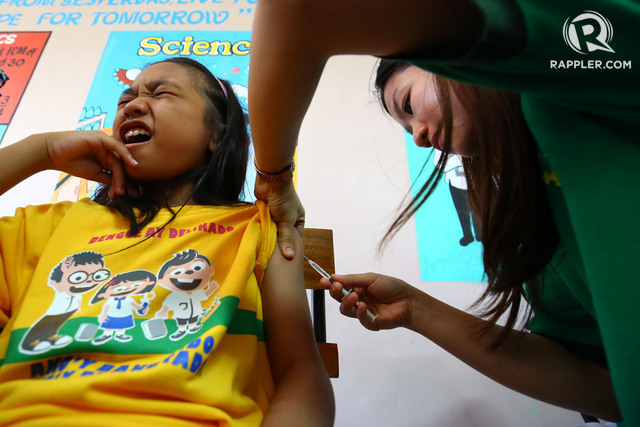
SCHOOL-BASED IMMUNIZATION. A student from Parang Elementary School gets a shot of Dengvaxia, the world's first-ever dengue vaccine. File photo by Ben Nabong/Rappler

SCHOOL-BASED IMMUNIZATION. A student from Parang Elementary School gets a shot of Dengvaxia, the world’s first-ever dengue vaccine. File photo by Ben Nabong/Rappler

MANILA, Philippines – Health advocates once again slammed the Department of Health’s (DOH) school-based immunization program after Sanofi Pasteur said its dengue vaccine poses more risk for people who have no prior infection.

Dr Anthony Leachon, former president of the Philippine College of Physicians Foundation, said on Thursday, November 30, that Sanofi’s advisory against its own vaccine is alarming for thousands of Filipino schoolchildren who already received their Dengvaxia shots.

“We don’t know the status of 700,000 kids vaccinated in NCR (National Capital Region), Region 4-A (Calabarzon), [and Region] 3 (Central Luzon) since they were not tested [for] previous exposure to dengue virus. We advised Congress and Senate that mass vaccination is not advisable without a rigid selection process,” he said.

“It means some of them will develop severe dengue; we don’t know who. All of them will have to live with this possibility for the rest of their lives,” added Leachon, who has 20 years of experience in pharmaceutical medicine.

On Thursday, Sanofi said new analysis of 6 years’ worth of clinical data revealed Dengvaxia could lead to “more cases of severe disease” when administered on a person who had never been infected by dengue prior the vaccination.

Former health chief Janette Garin launched the dengue school-based immunization program for Grade 4 students in 3 regions in April 2016, just 4 months after the Philippines approved the sale of the world’s first dengue vaccine.

A whopping P3.5 billion was allocated for it by the administration of then President Benigno Aquino III.

But this was met by strong criticism from various health advocates, who questioned the DOH’s decision for mass vaccination when studies on Dengvaxia was still being conducted at the time. (READ: DOH denies dengue vaccine to blame for 11-year-old’s death)

Garin had dispelled the public’s fears over the dengue vaccine. But a year later, Sanofi issued its announcement that confirmed the apprehensions of health advocates.

Current DOH Secretary Francisco Duque III said their technical assistance office is now meeting with individual experts to determine how to proceed following Sanofi’s advisory.

But he assured the public that children’s safety is “paramount” and will be the main consideration in their decision.

Prior to Sanofi’s announcement, DOH officials under President Rodrigo Duterte’s term said they plan to expand the dengue immunization program in Central Visayas.

‘Scam of an experimental drug’

Former health undersecretary Susan Pineda Mercado took to Facebook to express her frustration over the “biggest government funded clinical-trial-masked-as-a-public-health-program scam of an experimental drug in the history of the DOH.”

“This was reckless and irresponsible from the start and the public was deceived into thinking this vaccine would protect children from dengue. The public health community has been outraged for over a year. Legal action is now necessary,” said Mercado.

A House probe into the dengue vaccination program was conducted late last year, led by Quezon 4th District Representative Angelina Tan, health committee chairperson.

“We asked that there should be proper social preparation and precautionary/screening test should be done prior to vaccination,” said Tan.

Her committee’s recommendations were already submitted in December 2016 to the good government and public accountability panel, which has the power to investigate alleged wrongdoings of government agencies and officials.

Tan said she plans to speak to the House leadership on Monday, December 4, to follow up on action on her committee’s recommendations in view of Sanofi’s advisory. – Rappler.com

_____________

The Lyme vaccine also caused the exact same symptoms as Lyme disease.  For more:

https://madisonarealymesupportgroup.com/2017/07/01/pbs-lyme-vaccine/

https://madisonarealymesupportgroup.com/2017/01/26/lyme-vaccine-to-be-tested-on-humans/

https://madisonarealymesupportgroup.com/2017/09/07/20268/  New Lyme Vaccine Coming Soon. Caveat Empter – Buyer Beware!

Still a Pig With Lipstick: CDC Removes Link to IDSA Guidelines

https://www.lymedisease.org/touchedbylyme-cdc-lipstick-on-pig/  Touched by Lyme
by Dorothy Kupcha Leland, DEC 2017

CDC website removes link to IDSA guidelines. Just lipstick on a pig?

Thanks to Lyme advocates on Facebook this morning for pointing out that the CDC Lyme pages were updated on Dec.1, 2017, with a number of notable changes.

For instance, the agency has REMOVED the link to the Infectious Diseases Society of America’s 2006 Lyme guidelines from its Lyme treatment page. Other references to those guidelines have apparently been disappeared from throughout the website as well.

For anyone new to this issue, the IDSA guidelines have long been like a sharp poke in the eye to the Lyme community. The guidelines define Lyme so narrowly that many people are denied a diagnosis in the first place. If you do manage to get diagnosed under their restrictive criteria, the guidelines allow only very brief treatment.

Insurance companies love the IDSA Lyme guidelines, because they can avoid paying for longer treatment for people with Lyme disease. People suffering with Lyme disease hate them, because the guidelines make it difficult, if not impossible, to get the treatment they need to get well.

So, having the CDC finally remove this link from its website is…interesting.

Here’s a screen shot of the CDC’s Lyme treatment page from Nov. 1, 2017. You can see that odious link in the middle there, shining bright as day.

CDC-screenshot-1024x238

And here’s what the page looks like this morning (Dec. 2, 2017):

cdc-screenshot2

Does this represent a change of heart by the CDC regarding Lyme treatment? Probably not. If you look at the current page, the recommendations for early treatment are in line with IDSA guidelines, without naming them.

And you’ll notice that for information about “chronic Lyme disease” and long-term treatment, the CDC page kicks you to the National Institutes of Health website. If you follow the link, you’ll find the same-old, same-old tripe about how long-term treatment doesn’t help, etc. (Based on three statistically puny studies of “chronic Lyme” the NIH funded years ago.)

Perhaps the CDC is trying to make its ties to the IDSA less glaringly obvious.

What’s the old phrase about putting lipstick on a pig? Still a pig.

In a separate but related development: The primary architect of the 2006 IDSA Lyme guidelines, Dr. Gary Wormser, was recently named to the new federal Tick-Borne Diseases Working Group. LymeDisease.org is protesting his appointment, based on his flagrant financial conflicts of interest with lab companies and other commercial enterprises.

Click here to read more about this issue & sign the petition:  https://www.change.org/p/dr-richard-wolitski-remove-wormser-from-federal-tbd-working-group-due-to-financial-conflicts-of-interest

TOUCHED BY LYME is written by Dorothy Kupcha Leland, LymeDisease.org’s VP for Education and Outreach. She is co-author of When Your Child Has Lyme Disease: A Parent’s Survival Guide. Contact her at dleland@lymedisease.org