Meliana contracted sudden and severe Lyme symptoms in 2009 though she’d been very healthy her whole life. Like so many others with the disease, her life turned upside down. She pursued holistic treatments, consulted Lyme specialists and dug deep to discover the root cause of the disease. Once she realized what the emotional and energetic cause of Lyme was for her, she knew what she needed to change within herself.She went to John of God, a spiritual healer in Brazil, where her worst neuropathic symptom cleared in two days and has never returned. When she returned, both her Lyme specialist and practitioner told her she didn’t need to see them again. After 18 months of detoxing, supplements, herbs and making shifts in her life, her other symptoms completely vanished.
Mytrae believes her miracle healing was because she was committed to heal the emotional, mental and energetic root cause of Lyme, and the spiritual healing she received.
Now in great health, she wants to share her story and approach to help others struggling with the disease.
Transcript of Episode 22: Finding Emotional, Mental and Energetic Healing from Lyme
Cindy Kennedy: Well, everybody, we’re laughing here but you know who it is. This is Cindy Kennedy, and you are listening to Living With Lyme. And again, I am your host. I have a very, very interesting guest today. Her name is Mytrae Meliana. She is a holistic psychotherapist. She’s also a speaker, an author, and a sound healer. She lives in San Francisco, and we all wish we lived in San Francisco, it would be a really nice day, I bet over there, but right here in the northeast it’s cool. Anyways, she is a Lyme sufferer as well and her illness provides us with a lot of information because of the way she tackled it in terms of her treatment. So, I love, love, love her book that she wrote, and to everybody who’s listening, this is Mytrae Meliana. Welcome.
Mytrae Meliana: Thank you, Cindy. Great to be here with you. Thank you for having me on your show, on your podcast.
Cindy Kennedy: Yeah, this is very nice. I was mentioning today that when I was not well I took great comfort in reading about other people’s journeys and what they did, how they did it, would something apply to me? And when I read your story and when you and I talked before, I found that this is a great story. This is something completely different. This isn’t just the traditional medicine. This isn’t just herbal. This is something that people are going to actually learn about. This is actually going to be very educating to a lot of people, so give me your background. Tell me a bit about yourself.
Mytrae Meliana: I grew up in India, so I’m of Indian origin. My family moved to the U.S. when I was 16. So I’ve grown up with a very Indian eastern approach to life and health. I think that’s what might have been different in how I approached healing from Lyme.
Cindy Kennedy: Where do you think you contracted Lyme?
Mytrae Meliana: I have no idea. It was probably … I lived on the east coast in my 20s and 30s, so I have lived in many different places in the U.S., and I probably contracted it at some point and it was dormant in my system and then it just flared up in an instant in 2009. So, I have no idea … I didn’t have bullseye rash, I didn’t have anything like that.
Cindy Kennedy: What happened?
Mytrae Meliana: I’d been really healthy.
Cindy Kennedy: You were.
Mytrae Meliana: I was sitting in my office, I’m a psychotherapist, and I was sitting with a client and all of a sudden it felt like a switch got turned on and I had these horrific pinpricks all over my body. Like you know how your leg feels when it goes to sleep?
Cindy Kennedy: Right.
Mytrae Meliana: If you can multiply that by 100 times, it was just very intense. My mind started racing. Did the vacuum cleaner pick up … ? Is there bedbugs or scabies or lice? I just went with the usual. I did some of those treatments but nothing happened. Then, in a couple of days, the additional symptom that came was this horrible crawling under my skin, it felt like a thousand worms under my skin. Of course, there’s nothing on the surface but that was the neurological … These were neurological symptoms, which are very, very uncomfortable.
That really freaked me out because I lived a very healthy life. So I went online …
Cindy Kennedy: Of course, that’s what we do.
Mytrae Meliana: Yes, that’s what we do, and it terrifies us, and gives us hope and we want to know what it is. There were five or six things that it could’ve possibly been, anywhere from crystal meth to Lyme to different kinds of other diseases. I narrowed it down, I thought, “Well, is it Lyme?” I didn’t have any of the low energy. I didn’t have any pain. I just had these two very severe symptoms.
So I contacted a Lyme practitioner who could see me for, fortunately, the following week. She said, “Let’s put you on antibiotics, and get you something so you can sleep, and we’ll have you tested.”
Cindy Kennedy: You couldn’t sleep? You had a lot of trouble sleeping?
Mytrae Meliana: I had a lot of … Because the symptoms were so unbearable and I didn’t know what it was. I thought, “Is it contagious?” I had no idea what it was.
Cindy Kennedy: Right.
Mytrae Meliana: I could not sleep, yeah. What it did was it activated emotionally a lot of fear. But, interestingly enough, prior to this, I had had a dream telling me that I was going to go through something and that it was going … A voice actually spoke to me in my dream and said that it was going to be a purification and that I would come out on the other side. So I couldn’t help but remember that dream and feel like there was guidance, that there was some meaning to this. That it wasn’t some random fluke. That there was something in it for me beyond the disease.
Cindy Kennedy: Yeah.
Mytrae Meliana: So that gave me something, that felt like a lifeline, which I held on to the whole time. So-
Cindy Kennedy: Well, that’s nice because the majority of people who are dealing with this don’t really feel like there’d ever be an end in sight.
Mytrae Meliana: That’s right.
Cindy Kennedy: So that must’ve been something positive to hang on to.
Mytrae Meliana: It was. It was. And I felt like I was guided. I have had a spiritual practice for most of my life and I am intuitive, so I was, around that time, just getting some dreams and intonations of something larger for myself, which was sort of a hope, which was sort of a big request I put out to the universe. I felt like there was something I needed to do with my life, and I’m saying all this because I feel like it’s all connected, trying to show or talk about the holistic connections. It’s never just physical, because I’ve been asking the universe, “If there’s something more I need to do in my life, please show me. Please take me there, I’m ready.” And then, in a few months I have these dreams and then I get the Lyme.
Cindy Kennedy: Okay.
Mytrae Meliana: So that’s sort of the back history. So, I’m on antibiotics, so fortunately I can sleep and I can function. I go intensively into changing my diet and detoxing and really taking care of my nutrition, my exercise and detoxing. So I did many things. Coming from India, I’m just very comfortable with holistic treatments. So homeopathy was definitely part of it, essential oils were a part of it. And I started … Of course, my diet completely changed, just organic, no sugar, cut out the caffeine. Just cut out a lot of things, which I had just not paid a whole lot of attention to. Did a very, very intense detox. I spent two to five hours a day in the bath tub with salts, and clays, and essential oils, and also sound. I just instinctively was toning, I just was reaching for everything, and praying. I did a lot of prayer.
Cindy Kennedy: Were you able to work?
Mytrae Meliana: I was, but that was all just go see my clients. My social life kind of disappeared. I would talk to my partner by phone, and he was wonderfully supportive. He was really there, and that was a huge support.
Cindy Kennedy: Right. You can’t do this alone. You just can’t do this alone.
Mytrae Meliana: No, no. It’s impossible, and I really feel for people who don’t have a good support system. It’s essential to have support, and if it’s not then you should really reach out and find it somehow.
Cindy Kennedy: Right. And you know, we’re always encourage people to reach out, and if they don’t know where to reach out then they can contact people. There’s a lot of resources on my page for different support people, so that’s important. I have to ask before we go on, because I know your story gets even better, but when you say you’re a holistic psychotherapist … I’m intrigued by that term, what does that actually mean?
Mytrae Meliana: So that’s mind, body, spirit. Traditional Western psychotherapy is in the lineage of Freud and Young, and nowadays, even more, with evidence based work, it’s more about the mind and thoughts, and to some extent the feelings. Holistic means that everything is connected, everything is interconnected. If you’re feeling something, let’s say you’re feeling depressed, you know very understandable equation would be to say, even for a doctor to say, “Are you exercising?” You know, so literally are you using your body? Because when we don’t exercise then we don’t have endorphins and [inaudible 00:09:18], common knowledge. But more than that, we store our emotions in our body, and we all have had experience difficult things in our life. We have struggles and challenges, and if they’re not processed, that is if emotions aren’t released. Let’s say there’s trauma, or grief, or betrayal, or hurt, whatever it is, or anger, or fear. It gets lodged literally in our cells.
And our cells hold that energy, which actually can cause us to get sick. So, that’s a really important-
Cindy Kennedy: Yeah. That is very important, but what are the steps that you take when you realize that emotionally you are not able to help yourself because you really feel that negativity, or that anger, or that resentment. How do you go about processing that?
Mytrae Meliana: Well, the main thing I can think of is to reach out to somebody who does do this kind of work, because again, we cannot do this on our own. Even though I’m a psychotherapist, I need other healers to help me with my work. So there are many ways. I mean, talk therapy is sort of a traditional way, but I think it needs to go much deeper in that, and simple things that people can do is exercise. Movement is a wonderful way … When you move the body … The body has its own wisdom and intelligence, and it can discharge some of the emotions that are being held. Again, when you go into nature, or art, or singing, or dancing, any kind of the healing arts and kind of the arts, activate the right brain, which when coupled with the left brain allows the body to process and release whatever needs to be released.
There are practitioners I think just about everywhere, and even if it’s nothing just do something that you enjoy. Especially in these days when there’s so much stress, it’s so important to find some time to create that for yourself.
Cindy Kennedy: I tell people all the time, you’ve got to take … And people say, “Oh gosh, I don’t have time to take time,” and I’m like you just got to power down. You have to power down, even if it’s for 10 or 15 minutes. I think when you say movement is important, it can be as simple as a walk. It doesn’t need to be a whole class.
Mytrae Meliana: That’s right.
Cindy Kennedy: Yeah, I could barely get off the couch thinking of doing much, but if you have a friend that’ll just walk with you a short distance. It doesn’t have to be long, but getting the body moving, getting the blood flowing, it is certainly a way to help yourself both physically, and again, emotionally. I do agree. So what type of alternative help did you get or did you use outside of traditional?
Mytrae Meliana: I did see this Lyme practitioner, so beyond that, right away I knew it was an emotional cause. I knew there was a deeper cause to my illness, and that is probably a gift of my being Indian. That’s just the way I think. I’m always looking for what’s underneath this. So I did my own personal work, so one I reached out to a medical intuitive who could read my body, and my energy field, and see what was going on. And she saw a lot of parasites. She recommended some homeopathy, and directed me to a different practitioner for that. She was also able to read the emotions I was holing. There was a lot of fear, and a loss of power, and what she read was completely true to me. Having grown up in India I had lived a pretty, from aggressor perspective, a pretty disempowered life.
Cindy Kennedy: Oh, true. That is true. That’s a hard struggle, yeah.
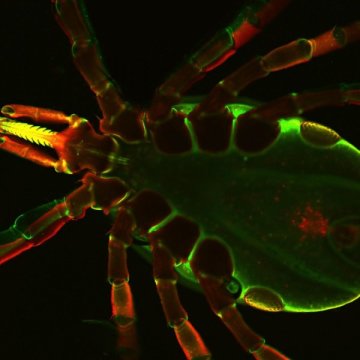
Mytrae Meliana: It is, it is. And that was my request to the universe, I had been saying I really want to come into my power. I did this exercise for myself, which I sometimes do with clients to find what is underneath whatever they’re going through, which is just this little art that I did. I drew myself, and then I drew a Lyme. I mean what does Lyme look like? So it came out as this giant spider, and I just kept drawing a series of drawings myself in relationship to Lyme, and I was terrified of this spider. When I say the word terrified it was fear, there was a lot of fear. As the series of drawings progressed I kind of was swallowed up by the spider. In essence, that is just seeing what is going to emerge. What is my deeper, what is my unconscious, subconscious saying about Lyme?
Then I asked myself the question, “Who would I be if I didn’t have Lyme?” And that was a really important question for me to ask, because it showed me where I wanted to go but maybe was afraid to go, didn’t know how to get there, but had a larger vision of who I was, which was different from how I’d known myself to be.
Cindy Kennedy: So, are you saying that you were able to gain more insight into the person that you are?
Mytrae Meliana: Yes, and the person I wanted to be.
Cindy Kennedy: It helped you transition into a stronger person? Is that what you mean?
Mytrae Meliana: It showed me. It gave me a vision of who I was going to be, and I drew myself literally as a goddess. A very powerful woman, very spiritually connected in a way I never thought of myself, because I struggled with self esteem issues for a lot of my life, but it gave me … Again, this was how I looked at it because I treated it as a symbol, just as in a dream, and this is my training of a psychotherapist. If I was in a dream with Lyme, what is a symbol of Lyme? What does Lyme mean to me? So I treated the whole thing as a symbol. To me it was a symbol of fear, and fear of my own power. So that gave me the deeper condition, the deeper meaning, a deeper peace that I needed to heal besides the physical part. I feel like that is the real jewel that a lot of people, most people, don’t look at.
Cindy Kennedy: Let me ask you a question. There is a very good book and an author, his name is George Popovici, and he wrote the book Angels Walking With Us. And he realized … He converted himself through Lyme, just changing, and he really felt that learning about yourself, the deep part of yourself that would allow people who you’ve had either anger towards, or you have had negative feelings, etcetera. But you had to actually process that information, actually allow that part of your body to heal to say it’s okay, I forgive you, I forgive this issue that happened between us, or something to that situation. Is this kind of something that you relate to? Is this kind of in your spirituality that you can say yeah, that’s very similar?
Mytrae Meliana: Yes, it was definitely a big part of it. That there were people in my family that I needed to forgive. That was definitely a part of it. There were things in the past I needed to process and let go. Only then could I really open up into this vision of myself as powerful. This is what I meant, unprocessed, it’s like we have all these life experience and they add up, and add up, and add up, and they literally damn our energy field. They literally keep our life force and our energy blocked, and that over time becomes a disease. So exactly, absolutely right. According to what you-
Cindy Kennedy: I don’t think people actually think of illness on different planes. They think of it as just physical, it’s just their body, and they don’t ever connect it with their thoughts, certainly their feelings, what drives your emotions. My husband and I did our podcast and our journey together, and there was a part that he relayed to me that I wasn’t a really nice person at points, and I think it’s because I had that anger, and I didn’t identify it. I was angry, I was angry that I was being put through this and I didn’t formulate the words, and it came out as anger. Does that sound-
Mytrae Meliana: It does, it does. And then processing whatever had made you angry, maybe it was a trigger for something that you experienced as a child or as a woman in your teens. Yeah, all the roots way back need to be freed up and released, just like repotting a plant. We need to kind of once in a while clear it, clear it, and move the energy, and you know plant it into fertilizer.
Cindy Kennedy: You want to know something? This is funny, I’m going to owe you a therapy session payment, because you just made it, you just put it together for me.
Mytrae Meliana: Great.
Cindy Kennedy: Yes, you did! The part of me being angry, and what you said about your past, you actually made me link it just now. My whole time I grew up and I wanted to feel like I was 100% cared for, so when I got into my journey with this whole problem, all I wanted was someone to take care of me so I could stop trying to go from one thing to another like who do I call next, whatever. And I think that I became angry because I still was going from one doctor to the next doctor and no one was helping, and it came out that I was angry, and that’s probably what I was angry with.
Mytrae Meliana: Yeah.
Cindy Kennedy: So thank you, so thank you.
Mytrae Meliana: You’re so welcome.
Cindy Kennedy: That was a great connection.
Mytrae Meliana: That is, that’s a perfect connection.
Cindy Kennedy: It is.
Mytrae Meliana: It’s an absolutely perfect connection, because that’s exactly it. See these kinds of things, you found it so beautifully. It’s like yes, you are longing to be taken care of in a certain at a younger age has carried through forward, and it shows up in this form of like you say going to doctor after doctor and that’s a [inaudible 00:21:16] form of care. But then it’s like how do we really care for ourselves? Which we can do now, which maybe you couldn’t do as a child, and that’s the shift. That’s the inner growth and the maturing, which just naturally has to happen, and is wanting to happen, but doesn’t know how, so it comes out in this form and once you address that then it literally shifts something in your whole energy field, and connects with the physical, your body.
Cindy Kennedy: You know some people have trouble defining spirituality. I think that in some cases, especially people who were brought up in a really strict religious area, whether it was their parents that brought them into it or maybe later in life. But what’s the difference? What would you tell the listeners the difference between spirituality and religion?
Mytrae Meliana: Yeah.
Cindy Kennedy: That might be a tough because we didn’t talk about that yet, so I hope you can-
Mytrae Meliana: Yeah, no. It’s a great question. Religion is whatever tradition or religion you might have grown up in, and it might be through a church, a temple, a mosque, whatever has been handed down to you. There are certain codes and certain ways, and it has a certain form and shape. I think of spirituality as much broader, and it’s not tied necessarily to these kinds of codes or shapes, for example; a tree is spiritual, a bird is spiritual, the wind, the ocean. These kinds of elements in nature is spiritual because it has an energy, it has a spirit, which it doesn’t confine it any way. It doesn’t have to look a certain.
Its like a tree, you go to any country and a tree is a tree, so it’s not defined, it is a particular path but it’s very unique. It’s like how did each person define their own spirituality. For some person it might be when I climb up mountains, I’m connected with my- I feel the safeness of the planet, that is spiritual. For another person it might when I sing or when I play my instrument I connect with what’s sacred in me, and that is that version. For another person it might be when I sit down in prayer, whatever the prayer is, whatever the words are that come out, that’s spiritual. So there’s no form put on it, other than going inside your heart for each person to find whatever their deepest truth is within their heart. To me that truth in their heart connects with everybody else’s heart, and the heart of the world, and the universe.
Cindy Kennedy: I think that that’s a very good thing for people to hear, because I think it … You said the word unique, and I think everybody has their unique feelings of what it is, and it doesn’t have to be the same as the next person. Being in touch with that, being, you know … I try to create a mindfulness environment. Being aware, being alert, trying to make sense of certain things that happen, and we tend as humans to dwell a lot. We ruminate, it comes in and we just don’t process it, we just keep thinking about it, and thinking about it, and not being able to break that by saying something that will clear it.
I always teach patients okay, I understand that you’re upset x, y, or z, that thought keeps coming to mind, but you need to ask yourself is there anything you can do about it now. And most times it’s going to be well no, this is about two weeks from now I’m worried about, great. So then I want you to take a nice deep breath, I want you to let it out, and I want you to allow yourself to be alert about this, but not to continue it, continue it, continue it. Let it go, because you can’t do anything about it right now, but there are a lot of things that we can do right now to help ourselves. And you have given us a lot of information, which is, I think, a very unique angle when dealing with either Lyme or any other chronic illness. I think that what you have to say is important. Some people, it might not resonate, and some people have never thought of it this way.
This has been great, this has been great, but I always end with some funny things. I gotta ask you, ready? What ticks you off? What ticks you off?
Mytrae Meliana: What’s ticks me off is when someone thinks they’re better than another person. That’s something that just gets under my skin. There’s something about no, nobody’s better than anybody. We are all … Can you just recognize that we’re different but not better or worse. I think the judgment.
Cindy Kennedy: Yeah.
Mytrae Meliana: Yeah, judgment.
Cindy Kennedy: Yeah, you always should say this is a no judgment zone. The second question is in life we’re given lemons, we can choose to either be sour or make lemonade, what’s your lemonade?
Mytrae Meliana: My lemonade is … I use my experiences I’ve gone through to help other people, and that gives me so much joy and purpose, yeah.
Cindy Kennedy: That’s awesome. I guess, you know, we are a culmination of everything we’ve been through and have worked at, and it’s all about the journey. It’s all about from where we were to where we are now. I so appreciate you sharing your story and the emotional part of it, which is so important. I want to say thanks again, and I want to tell my listens this was Mytrae Meliana, and she is in San Francisco. Please tune again to another podcast, and this has been Living With Lyme with Cindy Kennedy. Please subscribe to the website, and that will keep you connected to the newest information coming out.
So again, Mytrae thank you. I appreciate you being with us.
Mytrae Meliana: Thank you so much, its been such a pleasure.
Cindy Kennedy: All right, you take care now.