Archive for the ‘Activism’ Category

Decoding Neuro-Lyme Webinar – Dr. Rawls

https://rawlsmd.com/webinars/decoding-neurolyme/?

Decoding NeuroLyme: Live Webinar with Dr. Bill Rawls

Lyme disease can manifest in seemingly endless ways. But neurological symptoms such as brain fog, limb pain, muscle weakness, anxiety, and more can feel especially debilitating and difficult to diagnose, manage, and overcome.

So why are some people more likely to experience neurological Lyme disease — and what can you do to feel better? 

Join a live webinar with Dr. Bill Rawls, best-selling author of Unlocking Lyme, who knows firsthand what it’s like to live with chronic Lyme disease, as he demystifies neurological Lyme and offers an alternative view of causes and solutions.

You’ll learn how to take control of your health, and the essential steps for empowering your body’s natural defenses. 

PLUS: Don’t miss an exclusive special offer for webinar attendees, and have your questions ready for a LIVE Q&A on neurological Lyme disease with Dr. Rawls.

“Dr. Rawls is such a genuine resource in this bewildering Lyme maze. I appreciate you making his insights readily available.”  – David

Presented by Dr. Bill Rawls and Tim Yarborough

Wednesday, May 16th
8pm EDT

Webinar can be viewed on any device

RESERVE MY SEAT »

“Super helpful and informative. It was great to hear someone talk about this in a knowledgeable manner given that it seems like a mystery to so many others in the medical community. Thank you!” – Christian

In this webinar, Dr. Rawls will also discuss:
  • Why neurological symptoms such as cognitive impairment, nerve and limb pain, mood disruption, and more are so prevalent among Lyme sufferers
  • What causes these symptoms to become so overpowering in some people
  • Connections between neurological Lyme and other infections and chronic illnesses
  • Why conventional methods of diagnosis and treatment are limited and controversial
  • His holistic, restorative approach to creating a foundation of wellness

“Neurological symptoms are the most exasperating of all Lyme symptoms, because they disconnect you from the world at large. There is a path to recovery.” Dr. Rawls


Tens of Thousands Likely to Get TBD in Massachusetts This Year

https://www.bostonglobe.com/metro/2018/05/07/state-expert-tens-thousands-likely-will-get-tick-borne-disease-mass-this-year

Tens of thousands likely to get tick-borne disease in Mass. this year
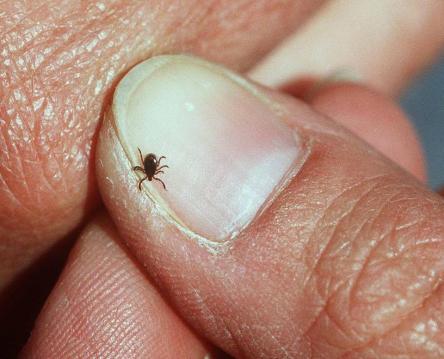
06252007_25tick-5985597An adult deer tick.  MARK WILSON/GLOBE STAFF/FILE

By Felice J. Freyer and Martin Finucane GLOBE STAFF MAY 07, 2018

Few experiences are creepier than finding a tick attached to your body — except, perhaps, pondering the harmful germs the eight-legged critter may be injecting.

But ponder no more: If you send a tick to the University of Massachusetts Amherst, you can find out exactly what manner of microbe may have infected it — and possibly, you. Lyme disease is the most prevalent, but ticks carry several other viruses, parasites, and bacteria.

People who find a tick on their body can put it in a plastic bag — dead or alive — and mail it to the UMass lab. For a fee, confidential results come by e-mail within three days.

The germs ticks carry are a matter of growing concern: Last week, the Centers for Disease Control and Prevention said that reported illnesses from mosquito, tick, and flea bites more than tripled from 2004 to 2016.

In Massachusetts in 2017, some 8,692 people tested positive for Lyme disease, up from 5,829 four years earlier. But most cases are not reported, so Dr. Catherine M. Brown, deputy state epidemiologist, estimates that about 87,000 people a year are getting Lyme disease in the state.

Anaplasmosis/ehrlichiosis, the second most common tick-borne disease, was reported 341 times in 2013, and rose to 1,226 in 2017. That’s a 260 percent increase.

“So many people in Massachusetts are being impacted by at least one of these diseases,” Brown said. “It’s increasing dramatically.”

Stephen Rich, a microbiology professor and director of the Laboratory of Medical Zoology at UMass Amherst, said the increases probably reflect both more illness and more awareness. The biggest changes are in areas, such as upstate New York, where ticks are just starting to move in, he said.

In Massachusetts, ticks are always abundant statewide, so fluctuations in the tick population have little meaning, he said. People need to think of protecting themselves from bites in the same way they put on sunscreen at the beach — a necessary precaution, every year. To avoid tick bites, wear clothing treated with permethrin, apply DEET to the skin, check for ticks after being outside, and treat your yard and pets.

The TickReport program at UMass, which Rich runs, tested 14,000 ticks last year and expects to see many more in 2018. The program, which has received ticks from all 50 states, demonstrates the power of crowdsourcing, by gathering a wealth of information on the location of different tick species and the disease-causing microbes they carry, he said.

The only other way to track ticks is to drag a cloth over bushes and test the ticks that stick to it, he said. But that just gives a snapshot of a limited area on a given day. “That doesn’t reflect the ticks that are biting people,” Rich said.

TickReport goes directly to the source — the ticks’ human targets.

People who send a tick pay $50, $100, or $200, depending on how many microbes are being tested for.

A $100,000 federal grant announced Monday will subsidize those tests for Massachusetts residents. The goal is to get a better idea of the prevalence of the 23 potentially disease-causing microorganisms that ticks can carry.

Along with a discount added by the laboratory, the federal grant will lower the cost of the $100 test to $15 for the first 1,000 ticks the lab receives; then it will lower the $50 test to $15 for the next 1,500 ticks.

TickReport has been testing ticks since 2006. About 43 percent come from Massachusetts but not evenly across the state. Rich hopes to get more ticks from underrepresented areas, particularly the North Shore, the Berkshires, and Worcester County.

The tests don’t diagnose a person but they provide information that can guide medical decisions, Rich said.

TickReport has a partnership with another crowdsourcing project — TickSpotters at the University of Rhode Island, which is free:  http://www.tickencounter.org/tickspotters

With TickSpotters, people e-mail photos of bugs they think are ticks and provide basic information such as how long each was attached. The URI group identifies the species of tick and describes the risk of illness. Often the bugs pictured aren’t even ticks — the program has received photos of weevils and lice, said Thomas N. Mather, director of URI’s TickEncounter Resource Center:  http://www.tickencounter.org

Once participants get the basics from TickSpotters, those who want to know more are urged to send the tick to TickReport to find out if it was infected.

For example, a Rhode Island woman recently sent TickSpotters a photo of a tick that had been attached to her for less than a day, Mather said. The program identified it as an adult, female, black-legged tick, and advised that the risk of infection was low because the tick hadn’t been attached long enough to transmit illness. Still concerned, the woman sent the tick to UMass, where it was found to be infected with Lyme disease.

That doesn’t mean the woman has Lyme disease. A tick must feed for 36 to 48 hours before it transmits Lyme disease. (Please see my comment below)

“If I were her, I would just be alert for symptoms. But we try to stay out of it at this point,” Mather said. The rest is up to the woman and her physician.

After years of trying to educate the public about ticks and the risk of illness, and finding that misinformation remains rampant, Mather has found TickSpotters to be a useful educational tool.

“I don’t think there’s anyone more engaged in learning about ticks than someone who has had a tick on them,” he said. “We’re personalizing education, approaching people at their most needy and receptive.”

TickSpotters, which started in 2014, has received nearly 46,000 submissions, collecting a wealth of data about locations of different species of ticks nationwide — data no one has had time to analyze, Mather said.

_____________

**Comment**

While I love the work going on here a huge faux pax has been made regarding transmission times – and it’s a big deal:  https://madisonarealymesupportgroup.com/2017/04/14/transmission-time-for-lymemsids-infection/  

Transmission Time: Only one study done on Mice. At 24 hours every tick had transmitted borrelia to the mice; however, animal studies have proven that transmission can occur in under 16 hours and it occurs frequently in under 24 hours. No human studies have been done and https://www.dovepress.com/lyme-borreliosis-a-review-of-data-on-transmission-time-after-tick-atta-peer-reviewed-article-IJGM no studies have determined the minimum time it takes for transmission.
There’s also the issue of partially fed ticks transmitting more quickly: http://iai.asm.org/content/61/6/2396.full.pdf Ticks can spontaneously detach – and the authors of this study found that they did so 15% of the time in mice. They also state that about a tenth of questing nymphs appear distended with partially fed sub-adult ticks being common. This quicker transmission is due to spirochetes presiding in the salivary glands rather than the mid-gut.

https://madisonarealymesupportgroup.wordpress.com/2016/12/07/igenex Bob Giguere of IGeneX states a case of a little girl who went outside to play about 8:30a.m. and came inside at 10:30 with an attached tick above her right eye. By 2 o’clock, she had developed the facial palsy. At the hospital she was told it couldn’t be Lyme as the tick hadn’t been attached long enough. They offered a neuro-consult…..By 4pm she couldn’t walk or talk.
A Lyme literate doctor trained by ILADS met the family in his office on a Saturday, gave her an intramuscular injection of antibiotics and within 2 hours the palsy was gone. He continued her treatment for approximately 4 weeks.

Do NOT take a “wait and see” approach when it comes to this plague.  Get on it and get on it now.  The longer you wait the greater the potential for it to embed deep within the body including the brain.  Every SINGLE attached tick should be taken as seriously as a heart attack.  Please spread the word about this.  The myths must END!

More Live CDC Lyme Protest Videos

https://www.linkedin.com/pulse/may-2018-speech-front-cdc-human-rights-lyme-relapsing-luche-thayer/

May 2018 Speech in Front of CDC: Human Rights of Lyme and Relapsing Fever Borreliosis Patients

Published on May 8, 2018
Jenna Luche-Thayer
consulting Senior Advisor – US Government, United Nations, non-profits, corporate social responsibility programs

FRIENDS,

PLEASE VIEW and SHARE & TWEET this SPEECH on the HUMAN RIGHTS of LYME and RELAPSING FEVER BORRELIOSIS PATIENTS given at the May 4th, 2018 The Lyme Army CDC Rally.

A number of police and a police dog vanished when Channel 2 News arrived to prepare their evening Broadcast of our Rally. CNN and a documentary writer also interviewed a number of us, including Enid Haller, Jenna Luche-Thayer, Kristina Petterson Bauer, Mirenda Campirano RN, April Nill Boitano, Jennifer Heath and others.

TRACTION is HAPPENING.

Part 1 of 3: Jenna Luché-Thayer May 4th, 2018 Lyme/CDC Rally Speech

Part 2 of 3: Jenna Luché-Thayer May 4th, 2018 Lyme/CDC Rally Speech

Part 3 of 3: Jenna Luché-Thayer May 4th, 2018 Lyme/CDC Rally Speech

Faithfully, Jenna

Jenna Luché-Thayer. 33 years working globally on the rights of the marginalized. Former Senior Advisor to US government and UN. Founder and Director, Ad Hoc Committee for Health Equity in ICD11 Borreliosis Codes. Founder, Global Network on Institutional Discrimination™ – Holding institutions accountable for political and scientific solutions. Email – jennaluche@gmail.com

For more protest videos: https://madisonarealymesupportgroup.com/2018/05/07/live-from-the-cdc-lyme-protest/


20K Needed For Vaccine Mutation Study

For those of you who read my posts you understand I post information about vaccines due to their ability to reactivate latent infections such as Lyme/MSIDS.  Besides that, there can be vaccine contamination and ingredients that can worsen a chronically ill person’s condition.

Logo80tall

Sound Choice Pharmaceutical Institute, an independent research institute, does cutting edge research, and seeks to raise awareness about vaccine health risks & specifically studies the issue of human fetal cell lines in vaccines and how the insertions can disrupt the function of the invaded cell. Since many scientists have hypothesized that cancer and other childhood neurological diseases such as Autism are caused by mutations in the child’s DNA, this research is paramount in teasing out what is causing or exacerbating what.

Recently, in April, SCPI raised $80,000 to complete a double-blind, placebo vaccine mutation study, but are short $20,000 for this goal.

Please consider giving for this end.  They are hoping to reach their goal today and tomorrow.

If we ever needed answers on the vaccine issue, it is now.  With nearly 1 in 60 children diagnosed with Autism, it’s a literal epidemic, and according to a highly respected Wisconsin LLMD, 80% of his Autistic patients have an underlying Lyme/MSIDS infection. To say it’s a big deal is an understatement.

To Give, go here:  https://www.givebigseattle.org/sound-choice-pharmaceutical-institute

To read more about SCPI’s, focus, research, newsletter:  http://soundchoice.org/

SCSI Scientists speak up on Vaccine Outrage: http://soundchoice.org/newsletter-march-2017/

Vaccine card:  http://soundchoice.org/wp-content/uploads/vaccineListOrigFormat.pdf

I for one am excited that there are independent researchers dedicated to doing the proper studies.  Please consider helping them out.


How LD Takes a Toll on Children in School

https://www.lymedisease.org/berenbaum-lyme-schooling/

sandy-berenbaum-headshot-238x300

By Sandra Berenbaum, Lyme-literate psychotherapist co-authored “When Your Child Has Lyme Disease.”

How Lyme disease takes a toll on children’s schooling

Lyme disease can drastically impact a child’s education. One of the biggest problems involves sleep—both too much and too little. Some children may sleep many more hours than is common for others their age. But from what I have seen, for most young Lyme patients it is just the opposite. They cannot get enough sleep and what little they get is of poor quality.

Some children completely reverse their circadian rhythms. They stay awake all night and sleep during the day. Those around them may see this as a behavior problem and assume the child is staying awake to defy the parent. But for the great majority of children with Lyme, the sleep problems are, in fact, caused by the disease.

Such sleep problems can contribute to profound fatigue. Blogger Jennifer Crystal, who writes extensively about the experience of having Lyme disease, describes it this way:

The fatigue of tick-borne diseases…is a crippling flu-like exhaustion, one that leaves muscles not sore but literally unable to function; one that makes the body feel shackled to the bed; one that makes the effort of lifting one’s head off the pillow seem like a Herculean feat. There were times, at my lowest point of illness, when I …felt too tired to breathe.

Pain And Other Symptoms

Another symptom that interferes with education is pain. Children with Lyme may have migraine-like headaches, joint pain or gastrointestinal disturbances. One of my young clients would spend up to two hours in the bathroom at a stretch, crying in agony, as her mother tried to comfort her. This unpredictable symptom made it impossible for this child to attend school. She needed homebound instruction until, with proper medical treatment, this problem cleared up.

Sensitivity to light and sound makes school intolerable for some students with Lyme. The noise of children in the halls and cafeteria may be overwhelming. For some, even the sound of a pencil scratching on a paper is too much. Fluorescent lighting in the classroom can cause burning eyes, blurred vision, or severe headaches. Furthermore, children whose brains have been affected by Lyme disease may find it extremely hard to process information and organize their time. They may have problems involving short-term memory and word-finding.

In my practice, I have not met a child with Lyme who wanted to get out of going to school when healthy enough to do so. The children I see want to attend school and to connect with their peers. Before getting sick, some had been active in sports, music, or drama. Even the quiet or shy children had found their circle of friends and their place in school.

The picture changes when Lyme symptoms emerge. At first, there might be subtle backsliding, as school attendance and performance gradually decline. After the child has been diagnosed, the parents may realize that problems at school are due to the disease and not her failure to try her best.

Unfortunately, many schools do not understand the link between the illness and academic performance. It can be useful to help educate district personnel about Lyme disease, to minimize the level of misunderstanding between the school and the family.

Addressing School-Related Problems
Here are some of the school-related problems that children with Lyme may experience:
  • Attendance—Sometimes the child is too ill to be in class. Other times, there are medical appointments that cannot be scheduled after school. Some schools have firm attendance and lateness policies that don’t make allowances for such circumstances. For children with a documented medical need to be out of school, it is important to establish a 504 plan or an Individualized Education Program (IEP) that includes a waiver of the attendance and tardiness policies.
  • Length of school day—The regular academic day is too long for many children with Lyme. Some schools may agree to a shortened day but want the child to start early in the morning when the other students arrive. That rarely works for students with the sleep problems that are typical of Lyme. They often wake up later and take longer to get ready. A shortened day, starting late, may help them stay in school and better absorb the material.
  • Bathroom access—Children with gastrointestinal symptoms must be free to go to the bathroom as needed. They should not have to ask the teacher’s permission first. This meets a physical need and avoids embarrassing the student. Some schools will easily provide this kind of support for children who need it. They may even allow the child to use the bathroom in the nurse’s office to avoid the more public student facilities.
  • Access to a quiet room—Students suffering from sensory overload or headaches need a chance to escape to a quiet place. This might be the nurse’s office or a room off of the teacher’s lounge. Taking a break like this may protect the rest of the day and avoid the need for the child to leave school early or go on homebound instruction.

No two cases of Lyme are exactly alike, with identical symptoms and challenges. There is no blueprint for educating a child with Lyme disease. Complex problems call for complex solutions.

Excerpted from “When Your Child Has Lyme Disease: A Parent’s Survival Guide,” by Sandra K. Berenbaum, LCSW, and Dorothy Kupcha Leland. Published by Lyme Literate Press. Berenbaum has a psychotherapy practice that focuses exclusively on Lyme disease patients and their families. She is a member of ILADS and advises a number of Lyme patient advocacy groups. Her website is LymeFamilies.com.

______________

**Comment**

Great article.  If children suffer in school, adults are suffering in the work-place and have unique issues and problems to consider.

For more:  https://madisonarealymesupportgroup.com/2017/09/21/should-i-tell-my-employer-i-have-lyme-disease/

https://madisonarealymesupportgroup.com/2017/10/11/why-you-may-not-want-to-tell-your-employer-you-have-lymemsids/

https://madisonarealymesupportgroup.com/2015/10/18/psychiatric-lymemsids/

https://madisonarealymesupportgroup.com/2018/03/07/obsessive-compulsive-symptoms-in-adults-with-ld/

https://madisonarealymesupportgroup.com/2018/05/07/gender-lyme-is-tick-borne-disease-different-for-women/