Archive for the ‘Activism’ Category

Paving the Way for Better Lyme Diagnostic Tests

As promised, here is the followup from earlier today on the “new” direct testing for Lyme:  https://madisonarealymesupportgroup.com/2018/10/12/direct-diagnostic-tests-for-lyme-the-closest-thing-to-an-apology-you-are-ever-going-to-get/

https://www.lymedisease.org/better-lyme-diagnostic-tests/

LYME SCI: Paving the way for better Lyme diagnostic tests

better-Lyme-diagnostics-300x300

By Lonnie Marcum

For decades, one of the biggest barriers to good medical care for Lyme disease has been a dearth of effective and accurate Lyme diagnostic tests.

Through the years, the CDC has continued to recommend an inadequate test that was designed in the 1980s.

All along, the CDC, the IDSA, and others in the medical mainstream have insisted that what’s called “two-tier Lyme serology” is the appropriate way to determine who does and does not have the illness.

Now, a group of researchers from Rutgers, Yale, Harvard, FDA, NIH, CDC and other institutions have published an article in Clinical Infectious Diseases acknowledging the failings of the current IDSA diagnostic guidelines recommended at the Dearborn Conference in 1994.

The scientists reached the following conclusion:

“The 1994 serodiagnostic testing guidelines predated a full understanding of key B. burgdorferi antigens and have a number of shortcomings.”

“A number of shortcomings? That’s putting it mildly,” says LymeDisese.org’s Founder and President Phyllis Mervine. “Since the first Lyme case was identified in 1977, the Lyme community has been crying for an accurate test and better treatment. The powers-that-be kept telling us how benign Lyme is, how great the Lyme diagnostic tests are and how easily the disease can be cured.”

Luckily, better tests are finally becoming available.

New Lyme diagnostic tests detect multiple species

As the CDC has not promoted any improvements in testing since 1994, many private laboratories have taken on the burden of research and development themselves.

One such private lab, IGeneX, has developed two new immunoblot tests capable of detecting multiple species of Borrelia (see below). The “Lyme ImmunoBlot” test is approved for use in all states including New York. The “TBRF ImmunoBlot” is currently undergoing validation review by New York State, Department of Health and thus is available to all US residents outside of New York.

IGeneX ImmunoBlots Detect:

Lyme ImmunoBlot                TBRF ImmunoBlot
B. burgdorferi B31                   B. coriaceae
B. burgdorferi 297                    B. hermsii
B. afzelii                                   B. miyamotoi
B. Californiensis                      B. parkerii
B. garinii                                  B. turcica
B. mayonii                               B. turcatae
B. spielmanii                           B. texasensis
B. valaisiana

What is the CDC-recommended test for Lyme disease?

The currently recommended Lyme diagnostic test was originally designed for surveillance (to track the spread) of a single species of bacteria—later named Borrelia burgdorferi B31—that was first detected in and around Lyme, Connecticut. That test was never intended to diagnose Borreliosis (infection caused by Borrelia) in other parts of the US or on other continents.

Today, we know there are over 300 strains of Borrelia worldwide. They are divided into two broad categories: Borrelia burgdorferi sensu lato (which causes Lyme disease), and Tick-borne Relapsing Fever Borrelia (which causes Lyme-like illness or TBRF). Let’s call these types A and B. The current Lyme test detects only a fraction of type A cases and gives anyone with type B a negative result.

As Dr. Jyotsna Shah, CEO of IGeneX explains,

“With the increase of international travel, people may get infected in various parts of the US or abroad. Thus, it is important to have a test that can detect the infection no matter where it was acquired.”

Sensitivity vs. Specificity

Currently, the CDC recommends a two-step indirect method for Lyme testing, designed to detect the body’s immune response (antibodies) to infection. The first step uses an Indirect Immunofluorescent assay or an automated ELISA. These are fast and relatively inexpensive. Only if the first step is positive will the second step be performed. The second test, a Western Blot, is more inclusive but also more complex and subject to human error.

Ideally, to design an accurate 2-tier Lyme test, the first step (ELISA) would be very sensitive (i.e. no false-negatives, but some false-positives). The second step (Western blot) used for confirmation, would be very specific (i.e. no false-positives).

In a perfect world, all tests would be 100% sensitive and 100% specific, meaning not a single person with infection would go undetected and all uninfected persons would test negative. Think of HIV, where you want to be 100% certain that you do not misdiagnose a single case.

The whole topic of “sensitivity” and “specificity” is one we hear a lot about in relation to testing, but it’s one that many of us do not fully understand. For simplicity sake, I’ll use the example of an airport metal detector to explain the two-tier testing process.

First step should detect anything questionable

Like a metal detector, you want the first step to be highly sensitive, capable of detecting anything that is remotely questionable. Thus, even metal belt buckles and key chains will set off an alarm—even though they aren’t what the security agents are looking for.

If the detector senses anything suspect, the passenger is then subjected to a second, highly specific screening that involves a hand-held wand and closer examination to determine exactly what the object is.

The idea is that it’s better to take a second look at something that may turn out to be harmless—like a watch or a metal pen—then to let somebody board the airplane with a weapon.

Likewise, the ELISA (the first step) would ideally detect all suspected cases of Lyme. Unfortunately, with the standard test for Lyme, almost 30% of the people with Lyme disease and all the people with TBRF will test negative on the first step, and never be given the second confirmatory Western blot that is far more specific.

This is akin to setting airport metal detectors so that they only find big weapons, like machine guns, and anything smaller than that will sail through without notice.

How secure would you be with such a system?

Why Lyme disease is so difficult to diagnose

  1. The majority of people do not realize they were bitten by a tick, and do not see the “bull’s-eye” rash that is typical of Lyme;
  2. It takes 2-8 weeks (or longer) for the immune system to produce the markers (antibodies) necessary for detection on standard blood testing,
  3. The bacteria can form biofilms and prefer to live in deep tissues rather than the blood stream where blood tests are most effective at detecting antibodies;
  4. Borrelia have special mechanisms called “sleeper cells” that allow them to hide from the immune system, thus further suppressing the production of antibodies;
  5. Patients with co-infections often have suppressed immune systems and many never develop antibodies to Borrelia.
  6. Seronegativity could also be due to antibody being bound in immune complexs and therefore not available for binding to antigens on the immunoblot strip.
  7. The patient may be infected with a strain of Borrelia that is not detected by standard tests.

Adding to the difficulty of diagnosis, Lyme disease is known as a “great imitator,” because it can infect every system of the body causing a myriad of symptoms that mimic illness such as Arthritis, ALS, Chronic Fatigue Syndrome (CFS), Fibromyalgia, Lupus, Multiple Sclerosis (MS) or Myalgic Encephalomyelitis (ME).

New and improved immunoblots

The primary difference between the CDC-recommended two-tier test and IGeneX’s new ImmunoBlots is the sensitivity. Where the CDC test was designed to be highly exclusive (only detects one species of Borrelia, B31), the ImmunoBlots are designed to be highly inclusive (sensitive to multiple species of Borrelia).

For many years IGeneX was able to increase the sensitivity of its Western Blot by adding an additional species, Bb 297). Today, the company has further increased the sensitivity of its new ImmunoBlots by sourcing antigens from multiple species of Borrelia from the US and Europe (see chart).

“The Lyme ImmunoBlot is intentionally more inclusive for Borrelia burgdorferi sensu lato than the currently available Western blots because we now know that other species such as B. mayonii, B. californiensis and B. spielmanii all cause disease in the US,” said Dr. Shah.

High Accuracy Across the Disease Spectrum

The accuracy of the Lyme ImmunoBlot and TBRF ImmunoBlot have been established by exhaustive testing. The sensitivity with well-characterized samples have been shown to be greater than 90%, whereas the two-tier testing recommended by CDC has a sensitivity of about 55%.

And this high degree of sensitivity does not come at the cost of specificity. IGeneX has done this by:

  1. Including two bands that are highly specific to the outer surface proteins of Borrelia (see Band 31 OspA and 34 OspB below), and
  2. Eliminating the bands that are non-specific to Borrelia (see Bands 18, 28, 30, 45, 58, 66 below)
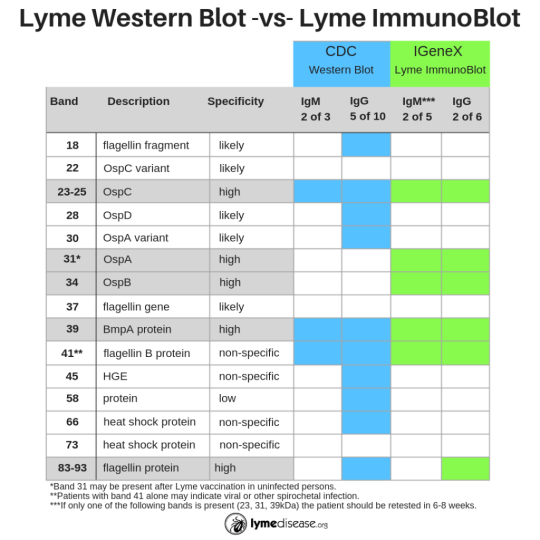
igenex-chart-1024x1024

Additionally, the ImmunoBlots detect the full spectrum of the disease: early, active and late-stage disease. This high degree of sensitivity does not come at the cost of specificity, with the ImmunoBlots showing 99 and 97% and 95 and 97.5% specificity for Lyme and TBRF IgM and IgG respectively.

Future directions

As FDA, CDC & NIH researchers are finally acknowledging, newer approaches to testing that have been effectively applied to other emerging infectious diseases show promise in the detection of Borrelia infections.

The lead author of the IDSA paper, Steven Schutzer, a physician-scientist at Rutgers New Jersey Medical School states,

”It will not be surprising to see direct tests for Lyme disease join the growing list of FDA-approved direct tests for other bacterial, fungal and viral infections that include Staphylococcus, Streptococcus, Candida, influenza, HIV, herpes and hepatitis, among others.”

The Lyme community has been waiting decades for these improvements and will applaud when these Lyme diagnostic tests become the standard of care for all patients.

LymeSci is written by Lonnie Marcum, a Licensed Physical Therapist and mother of a daughter with Lyme. Follow her on Twitter: @LonnieRhea Email her at: lmarcum@lymedisease.org .

References:
New techniques can detect Lyme disease weeks before current tests:  https://eurekalert.org/pub_releases/2018-10/ru-ntc100818.php

Pilot Study of Immunoblots with Recombinant Borrelia burgdorferi Antigens for Laboratory Diagnosis of Lyme Disease:  https://www.ncbi.nlm.nih.gov/pubmed/30110913

NCBI: Taxonomy Browser, Borrelia:  https://www.ncbi.nlm.nih.gov/Taxonomy/Browser/wwwtax.cgi

_________________

**Comment**

Lyme literate doctors (LLMD’s) trained by the International Lyme and Associated Diseases Society (ILADS) have always preferred labs such as IGeneX due to the very fact they include more bands and are more sensitive.  But, these very doctors have always known Lyme/MSIDS is a clinical diagnosis.

Lazy practitioners, on the other hand, treat this as any other infectious disease and it just can’t be treated that way.  It’s far too complex.

The CDC has undertaken a smear campaign against IgeneX any other lab that has dared to compete with their “FDA approved” tests.  I actually attended a public meeting at the WI capital where a pediatric doctor quoted right off the CDC website and called the IgeneX Lyme test, “Home-brewed.”  https://www.cdc.gov/mmwr/preview/mmwrhtml/mm6315a4.htm

“Often these are laboratory-developed tests (also known as “home brew” tests) that are manufactured and used within a single laboratory and have not been cleared or approved by FDA. Recently, CDC has received inquiries regarding a laboratory-developed test that uses a novel culture method to identify Borrelia burgdorferi, the spirochete that causes Lyme disease. Patient specimens reportedly are incubated using a two-step pre-enrichment process, followed by immunostaining with or without polymerase chain reaction (PCR) analysis. Specimens that test positive by immunostaining or PCR are deemed “culture positive” (2). Published methods and results for this laboratory-developed test have been reviewed by CDC. The review raised serious concerns about false-positive results caused by laboratory contamination and the potential for misdiagnosis (3).  CDC recommends that laboratory tests cleared or approved by FDA be used to aid in the routine diagnosis of Lyme disease. A complete searchable list of such tests is available online (4).”

Then they complete the same rant we’ve all heard 1,000 times about the distinction between “FDA approved” and “CLIA certified” and essentially diss CLIA because it doesn’t address the clinical validity of a specific test.  FDA approval, on the other hand, promises that a test has “adequate analytical and clinical validation and is safe and effective.”

Even though their tests completely suck.

Sigh.

I can only guess what it costs a lab to go through the FDA process.  Meanwhile, the CDC and their ilk spread a smear campaign to every single doctor worldwide about how bad these small, specialty labs are leaving only a handful of quaking doctors who are threatened by state medial boards on a daily basis for treating us, using them.  Let’s just say these small specialty labs have had it rough.  They have fought tooth and nail just to keep their doors open.  FDA approval has been the last thing they have been worried about.

Oh, yes, my friends, the CDC plays dirty and has a lot to answer for.

As lab certifications go, CLIA is one of the toughest, most stringent certifications a lab can undertake.  And, these smaller labs specialize in virology and bacteriology where huge monopolies like Lab Corp and Quest specialize in nothing, yet for decades have profited hugely by giving the CDC garbage can Lyme test that tells you little to squat.  If you test positively on that sucker, you’ve won the lotto.

Countless patients have tested negatively on this insensitive test and have been told they are making up symptoms for attention.  They are offered an anti-depressant and are sent home with something that could kill them.

Yeah, I’m a little ticked off.  Pardon the pun.

dog-tick-closeup-rocky-mountain-spotted-fever


New England Scientists Explore New Method for Eradicating Lyme Disease

https://triblive.com/usworld/world/14142957-74/new-england-scientists-explore-new-method-for-eradicating-lyme-disease  (Please see comment after article)

New England scientists explore new method for eradicating Lyme disease

Patrick Varine
Wednesday, Oct. 3, 2018, 5:03 p.m.

This undated file photo provided by the U.S. Centers for Disease Control and Prevention shows a blacklegged tick, also known as a deer tick, a carrier of Lyme disease.
AP

Pennsylvania is No. 1 in an unfortunate category: number of Lyme disease cases, which spiked between 2016 and 2017 according to a Quest Diagnostics report released this summer.

With more than 10,000 infections reported in the state last year, it might seem that any solution is worth trying. (**Please see my comment at end of article**)

In New England, scientists from Harvard, MIT and Tufts University have begun genetically engineering white-footed mice — which in the wild carry the Borrelia microbe that causes Lyme disease and pass it along to ticks that feed on their blood — to produce antibodies resistant to both ticks and a particular Borrelia protein. The idea is that immunizing the mice will have a trickle-down effect to the local tick population.

The plan is to eventually release small groups of mice on local islands off the coast of Massachusetts, where they can be isolated for study, to look at potential options for larger application.

For Dr. Bill Rawls of North Carolina, who contracted Lyme disease and is the author of “Unlocking Lyme,” the solution is much more complex.

“There are a lot of microbes in ticks, not just the Borrelia microbe that is associated with Lyme disease,” said Dr. Rawls, medical director for Vital Plan, an herbal supplement company. “The problem with the mouse thing is that even if it is successful, and you block the transmission of Borrelia and prevent the spread of that variety of Lyme disease, perhaps that opens the door to something worse, like Rickettsia, (a microbe associated with the spread of Rocky Mountain Spotted Fever).”

As an advocate of holistic medicine, Dr. Rawls said the increase in Lyme cases, as well as the way it affects humans, is symptomatic of a changing world.

“We’ve radically changed our food supply, we all live under oppressive stress and we don’t exercise,” he said. “And all of those factors affect our immune systems. I think it’s time our society starts looking at problems like Lyme disease in that light.”

The Borrelia microbe has been around for millions of years, as have ticks, Dr. Rawls said.

“So the question is: why are people getting much more sick with it now?” he said. “I see Lyme disease as a fundamental model for all chronic illness.”

Dr. Sam Donta, a Western Pennsylvania native who now lives in Falmouth, Mass., was the keynote speaker at the 2018 Pennsylvania Lyme Medical Conference, held this spring at Drexel University College of Medicine. He has been studying Lyme for three decades, and echoed Dr. Rawls’ view that it is a complex illness.

It is also difficult to diagnose, he said. There is no blood test to see if a person is infected.

“All the blood tests say is whether a person has been exposed,” Dr. Donta said. “I diagnose it clinically. It is a combination of symptoms.”

Those symptoms can be fatal.

The PA Lyme Resource Network is partnering with Storyhouse Documentary Theater to present “The Little Things” on Oct. 13 at Ursinus College in Collegeville outside Philadelphia. It tells the story of a family who lost their son to Lyme disease, and is being dedicated to the memory of three eastern Pennsylvania men who died of Lyme-related complications in 2017.

One of those men, Kevin Furey of Lafayette Hill, Pa., contracted five different infections from one tick bite, according to network officials.

Dr. Rawls said he is not suggesting that the white-footed house proposal is futile,

“but there’s the old saying: don’t mess with Mother Nature,” he said. “If you eliminate this microbe, do you open up other pathways for other infections?”

Patrick Varine is a Tribune-Review staff writer. You can contact Patrick at 724-850-2862, pvarine@tribweb.com or via Twitter @MurrysvilleStar.

__________________

**Comment**

I’ve been waiting for this with bated breath ever since I heard Kevin Esvelt speak at a Lyme CME conference.  I cringed then and I’m cringing now.

If you need a primer on GMO mice, start here:  https://madisonarealymesupportgroup.com/2016/06/21/first-frankenbugs-now-frankinmice/

According to a study by an independent Canadian tick researcher, there’s been an inordinate amount of stress placed on mice, when there are plenty of other reservoirs:  https://madisonarealymesupportgroup.com/2018/08/13/study-shows-lyme-not-propelled-by-climate-change/  Scott has shown that there are established populations of deer ticks in Manitoba as well as in insular, hyper-endemic Corkscrew Island, yet both are devoid of white-footed mice. He points out that there are numerous reservoir hosts that must be considered including other mammals, birds, and reptiles.  For decades we’ve been told it’s the mice. Yet a real problem in the West and South are reptiles like skinks and lizards: https://madisonarealymesupportgroup.com/2017/12/03/biologists-at-sf-state-dig-into-ticks-and-ld/, https://madisonarealymesupportgroup.com/2018/06/25/the-confounding-geography-of-lyme-disease-in-the-u-s/

So mice are only a part of the problem.  Maybe a lot less than we’ve been told.

Another point to stress is that the CRISPR gene-editing technology (tinkering with genes) has been shown to create unintended mutations.  http://articles.mercola.com/sites/articles/archive/2017/06/13/crispr-gene-editing-dangers.aspx?  This article shows 100 deletions and insertions and more than 1,500 unintended single-nucleotide mutations occurred .  

Oops.

Geneticist and virologist Jonathan Latham, Executive Director of the Bioscience Resource Project and editor of Independent Science News, has spoken out about the fallacy of industry talking points in the past.

“So far, it is technically not possible to make a single (and only a single) genetic change to a genome using CRISPR and be sure one has done so,” Latham reportedly explained.  This feat may not even be possible biologically; one small change to genome can inevitably lead to a host of other, unanticipated changes.  https://www.naturalnews.com/2018-06-14-scientists-warn-genetic-editing-of-humans-with-crispr-technology-may-lead-to-cancer.html#

In fact, experts say that CRISPR could cause hundreds of unintended DNA alterations.

Go here to watch a short 2 min video:  What is CRISPR  https://articles.mercola.com/sites/articles/archive/2017/06/13/crispr-gene-editing-dangers.aspx?

While it all seems neat and tidy on paper and in a cool colored video, what happens in the wild could be an entirely different matter.  Releasing GMO mosquitoes to supposedly eradicate Zika has shown many undesirable effects:  https://articles.mercola.com/sites/articles/archive/2016/11/08/zika-virus-wolbachia-mosquito.aspx  The $18-million project, funded in part by the Bill and Melinda Gates Foundation, involves mosquitoes that have been infected with Wolbachia bacteria, which stops viruses from growing inside the mosquito and therefore from being transmitted between people.

I wrote about that when it all went down:  https://madisonarealymesupportgroup.com/2018/02/12/wolbachia-laced-mosquitoes-being-released-why-lyme-msids-patients-might-be-negatively-affected/  (This link shows an important dog study you need to read about as well)  Take away:  in dogs, Wolbachia released into the blood stream causes wide-spread inflammation, something Lyme/MSIDS patients already struggle with.

Even the European union has ruled that CRISPR plants are GMO’s and should be subjected to the same rules:  https://www.technologyreview.com/the-download/611716/in-blow-to-new-tech-europe-court-decides-crispr-plants-are-gmos/

“It means for all the new inventions … you would need to go through the lengthy approval process of the European Union,” Kai Purnhagen, an expert at Wageningen University in the Netherlands, told Nature.

Then there’s the issue of pathogen enhancement:

According to a study by Penn State, mosquitoes infected with Wolbachia are more likely to become infected with West Nile – which will then be transmitted to humans.“This is the first study to demonstrate that Wolbachia can enhance a human pathogen in a mosquito,“ one researcher said. “The results suggest that caution should be used when releasing Wolbachia-infected mosquitoes into nature to control vector-borne diseases of humans.” “Multiple studies suggest that Wolbachia may enhance some Plasmodium parasites in mosquitoes, thus increasing the frequency of malaria transmission to rodents and birds,” he said. https://www.sciencedaily.com/releases/2014/07/140710141628.htm  So besides very probable wide spread inflammation, and that other diseases may become more prevalent due to Wolbachia laced mosquitoes, studies show Wolbachia enhances Malaria in mosquitos.  Many Lyme/MSIDS patients already struggle with Babesia, a malarial-like organism.

This article states CRISPR has the potential to cause cancer in a whole generation of humans:  https://www.naturalnews.com/2018-06-14-scientists-warn-genetic-editing-of-humans-with-crispr-technology-may-lead-to-cancer.html# (Excerpt below)

Emma Haapaniemi, a co-author of the Karolinska Institute study, explained why this is such a concerning find.

“By picking cells that have successfully repaired the damaged gene we intended to fix, we might inadvertently also pick cells without functional p53.” Dysfunctional p53 is a major cancer risk; nearly half of ovarian and colorectal cancers can be connected to a disruption in p53. Many other types of cancer, like lung, pancreatic, stomach, liver and breast cancers, can also be attributed to p53 problems.

“If transplanted into a patient, as in gene therapy for inherited diseases, such cells could give rise to cancer, raising concerns for the safety of CRISPR-based gene therapies,” Haapaniemi added.


Lastly, with Brazil’s recent explosion of microcephaly, the introduction of yet another man-made intervention (Wolbachia laced mosquitos) should be considered in evaluating potential causes and cofactors. And while the CDC is bound and determined to blame the benign virus, Zika, there are numerous other factors that few are considering – as well as the synergistic effect of all the variables combined. Microcephaly could very well be a perfect storm of events.
https://madisonarealymesupportgroup.com/2016/12/21/how-zika-got-the-blame/, https://madisonarealymesupportgroup.com/2016/03/04/health-policy-recap/, https://madisonarealymesupportgroup.com/2016/03/08/fixation-on-zikapolio/

So besides the unintended consequences of mutations and enhancement of other potential pathogens, and cancer in humans, is the issue of ethics.  Here’s some telling quotes:  https://madisonarealymesupportgroup.com/2015/12/28/frankinbugs/

“It is essential that national regulatory authorities and international organizations get on top of this — really get on top of it,” says Kenneth Oye, a political scientist at the Massachusetts Institute of Technology and lead author of the Science commentary. “We need more action.” The US National Research Council has formed a panel to discuss gene drives, and other high-level discussions are starting to take place, but Oye is concerned that regulatory changes may happen only after a high-profile gene-drive release, in other words, after it’s too late. (For a five minute audio of reporter Kerri Smith investigating the meteoric rise of CRISPR click on the link above.

On top of those difficulties, scientists do not know how all of this will affect ecosystems and are unclear if the gene drives could spread to closely related species.

Noam Prywes, PhD candidate in chemistry at Harvard, claims that CRISPR/Cas-9-based gene drives will

“add a twist – introducing one gene drive after another to correct unforeseen consequences as they are discovered,” and that “decisions by researchers would become permanently written into the genomes of entire wild populations.” He also adds that there are alternative ways to wipe out local populations of mosquitoes carrying disease that are much safer.

In this same vein, David Burwitz of Tel Aviv University, feels that gene drive research should be classified to prevent weapon development, and he’s not alone.
http://nextstageprep.com/gene-drivesthis-next-weapon-mass-destruction/ In theory, a terrorist could create a handful of insects with a gene for making a toxin, and power it with a gene drive. Pretty soon, all of these insects would make the toxin, and every insect bite would be lethal. However, according to Austin Burt, who proposed the theoretical method for making gene drives, the gene drives only work in sexually reproducing species, unlike the vast majority of genetically engineered microbes which produce asexually and they’ve only been shown to work for one generation – so far.

I’m with Dr. Rawls and Dr. Donta, “Don’t mess with Mother Nature.”  That’s what got us in this mess to begin with.


Antidepressants Cause Severe Withdrawal Symptoms Like “Hallucination,” “Mania,” & Anxiety,” New Study Reveals

http://www.greenmedinfo.com/blog/antidepressants-cause-severe-withdrawal-symptoms-hallucination-mania-anxiety-new-

Antidepressants Cause Severe Withdrawal Symptoms like “Hallucination,” “Mania,” & “Anxiety,” New Study Reveals

Wednesday, October 3rd 2018 at 6:15 pm

Written By:  Sayer Ji, Founder

© [10/3018] GreenMedInfo LLC. This work is reproduced and distributed with the permission of GreenMedInfo LLC. Want to learn more from GreenMedInfo? Sign up for the newsletter here http://www.greenmedinfo.com/greenmed/newsletter.”

New research reveals severe withdrawal symptoms in over half of those who discontinue antidepressant drugs, including lasting and even permanent damage.

A concerning new study published in the journal Addictive Behavior and titled, “A systematic review into the incidence, severity and duration of antidepressant withdrawal effects: Are guidelines evidence-based?,” reveals that antidepressants are far more addictive and harmful than previously assumed, and vindicates the long time activism on this issue spearheaded by American psychiatrists like Kelly Brogan, MD and Peter Breggin, MD.

Highlights from the paper are as follows:

  • More than half (56%) of people who attempt to come off antidepressants experience withdrawal effects.
  • Nearly half (46%) of people experiencing withdrawal effects describe them as severe.
  • It is not uncommon for the withdrawal effects to last for several weeks or months.
  • Current UK and USA Guidelines underestimate the severity and duration of antidepressant withdrawal, with significant clinical implications.

This study aimed to assess the veracity of the the U.K.’s current National Institute for Health and Care Excellence and the American Psychiatric Association’s depression guidelines which state that withdrawal reactions from antidepressants are ‘self-limiting’ (i.e. typically resolving between 1 and 2 weeks).

In order to accomplish this goal the systematic review used the following methods:

“A systematic literature review was undertaken to ascertain the incidence, severity and duration of antidepressant withdrawal reactions. We identified 23 relevant studies, with diverse methodologies and sample sizes.”

The results were reported as follows:

“Withdrawal incidence rates from 14 studies ranged from 27% to 86% with a weighted average of 56%. Four large studies of severity produced a weighted average of 46% of those experiencing antidepressant withdrawal effects endorsing the most extreme severity rating on offer. Seven of the ten very diverse studies providing data on duration contradict the UK and USA withdrawal Guidelines in that they found that a significant proportion of people who experience withdrawal do so for more than two weeks, and that it is not uncommon for people to experience withdrawal for several months.”

Side effects were wide-ranging, lasting several months or longer (including permanent dysfunction), such as: 

“Typical AD withdrawal reactions include increased anxiety, flu-like symptoms, insomnia, nausea, imbalance, sensory disturbances, and hyperarousal. Dizziness, electric shock-like sensations, brain zaps, diarrhoea, headaches, muscle spasms and tremors, agitation, hallucinations, confusion, malaise, sweating and irritability are also reported (Warner, Bobo, Warner, Reid, & Rachal, 2006, Healy, 2012). Although the aforementioned symptoms are the most common physical symptoms, there is also evidence that AD withdrawal can induce mania and hypomania, (Goldstein et al., 1999; Naryan & Haddad, 2011) emotional blunting and an inability to cry, (HolguinLew & Bell, 2013) long-term or even permanent sexual dysfunction (Csoka & Shipko, 2006).”

The study concluded:

“We recommend that U.K. and U.S.A. guidelines on antidepressant withdrawal be urgently updated as they are clearly at variance with the evidence on the incidence, severity and duration of antidepressant withdrawal, and are probably leading to the widespread misdiagnosing of withdrawal, the consequent lengthening of antidepressant use, much unnecessary antidepressant prescribing and higher rates of antidepressant prescriptions overall. We also recommend that prescribers fully inform patients about the possibility of withdrawal effects.”

The researchers also noted that the rising numbers of antidepressant prescriptions used throughout the world may be fueled by the antidepressant drug withdrawal side effects themselves:

“As the lengthening duration of AD use has fuelled rising AD prescriptions over the same time period, we must understand the drivers of such lengthening use. The evidence set out suggests that lengthening use may be partly rooted in the underestimation of the incidence, severity and duration of AD withdrawal reactions, leading to many withdrawal reactions being misdiagnosed, for example, as relapse (with drugs being reinstated as a consequence) or as failure to respond to treatment (with either new drugs being tried and/or dosages increased). This issue is pressing as long-term AD use is associated with increased severe side-effects, increased risk of weight gain, the impairment of patients’ autonomy and resilience (increasing their dependence on medical help), worsening outcomes for some patients, greater relapse rates, increased mortality and the development of neurodegenerative diseases, such as dementia.”

The concerning implications of this study to millions around the world who are on antidepressants were immediately recognized by the media, as evidenced by mainstream reporting on the topic with the following headlines:

Thanks to a small but courageous group of professionals who have been raising awareness of the profound, unintended adverse effects of psychiatric drugs and the abject absence of objective criteria for determining “mental disease,” not only are there already resources available to the public today to better understand the dangers of psychiatric drugs, but there are also programs and protocols in place to help those who are on them to come off of them safely and with the support of others who have done the same already. For instance, the program put together by Dr. Kelly Brogan — Vital Mind Reset — has produced powerful outcomes. Take a look at the testimony wall here to learn from the first hand experiences of those who underwent the program and came out drug-free, often with their psychiatric symptoms and comorbid conditions reduced or completely put into remission.

Related reading: 

Sayer Ji is founder of Greenmedinfo.com, a reviewer at the International Journal of Human Nutrition and Functional Medicine, Co-founder and CEO of Systome Biomed, Vice Chairman of the Board of the National Health Federation, Steering Committee Member of the Global Non-GMO Foundation.

Disclaimer: This article is not intended to provide medical advice, diagnosis or treatment. Views expressed here do not necessarily reflect those of GreenMedInfo or its staff.


PANS/PANDAS Awareness

Approx 4 Min

Excerpt from the documentary “My Kid Is not Crazy.”

PANS/PANDAS Awareness Day was yesterday but I didn’t get the memo until today.  🙂

While disturbing at the beginning, look how antibiotics made all the difference.  Less than four minutes of film that shows how devastating PANS can be.

How many children are slipping through the cracks and are being labeled “mentally ill?”

A prominent Lyme literate doctor in Wisconsin states that approximately 80% of his Autistic, and PANS/PANDAS patients have Lyme/MSIDS.  

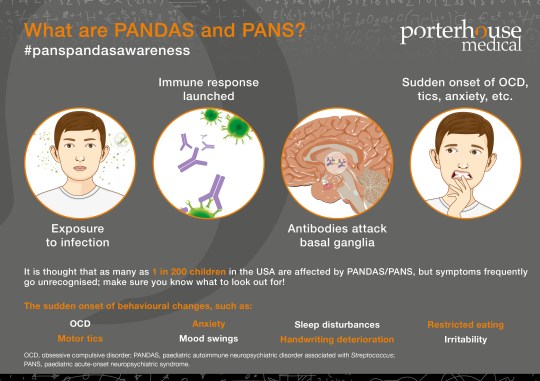
PANDAS_PANS_Infographic_V0.2

Please note the estimate that 1 in 200 children in the USA are affected by it.

You as a family member, friend, or alert medical professional have the ability to share this information when you suspect it.  Speak up.  These kids need our help.

For more:

https://madisonarealymesupportgroup.com/2017/12/01/guidelines-for-treating-pans-its-real/  Despite the fact that published diagnostic guidelines for PANS/PANDAS were created in 2015, but some physicians still feel it’s not legit.

Physicians need to take this disease seriously.

According to Margo Thienemann, MD, clinical professor of psychiatry and behavioral sciences at Stanford, and the lead author of the portion of the guidelines that address psychiatric and behavioral interventions, treatment is at least tri-part:  

  • if infection is present, treat the infection
  • treat close contacts who may be exposing the child to infection
  • treat inflammation, which is thought to cause the brain symptoms

https://madisonarealymesupportgroup.com/2017/10/08/misdiagnosed-how-children-with-treatable-medical-issues-are-mistakenly-labeled-as-mentally-ill/

https://madisonarealymesupportgroup.com/2017/06/30/child-with-lymemsidspans-told-by-doctors-she-made-it-all-up/

https://madisonarealymesupportgroup.com/2018/07/28/stories-of-pandas/

https://madisonarealymesupportgroup.com/2017/10/01/panspandas-steroids-autoimmune-disease-lymemsids-the-need-for-medical-collaboration/

https://madisonarealymesupportgroup.com/2018/09/26/more-awareness-needed-for-childrens-neurological-conditions/

https://madisonarealymesupportgroup.com/2018/09/05/pans-autism-the-immune-system-an-interview-with-expert-neurologist-dr-richard-frye/


Updates and News From Russell Labs – Wisconsin

http://labs.russell.wisc.edu/wisconsin-ticks/

Updates

August, 2018: Nymphal deer ticks are less abundant but still active in Wisconsin right now. About 20-25% of nymphs are infected with the Lyme spirochete. Overall, 2018 has been normal in terms of tick numbers.

Live in Wisconsin and want your tick identified?


Take a picture of ticks on your phone and go here:  https://uwmadison.co1.qualtrics.com/jfe/form/SV_3s1wBopYCcW0lzT

Wisconsin ticks:  http://labs.russell.wisc.edu/wisconsin-ticks/

Go to link for pictures and information on each.  There are 4 ticks listed including the Lone Star Tick, which was until recently considered a Southern tick but is here as well.  Wisconsin had its first RMSF death, transmitted by the Lone Star Tick, recently:  https://madisonarealymesupportgroup.com/2018/07/10/first-rmsf-death-in-wisconsin/

There is also a tab titled “Tick-Borne Diseases.”  Go to link to read about them.  They give WI stats as well.  Please remember ALL the numbers are low as many go unreported:

  • Lyme (Bb or Bm)
  • Borrelia miyamotoi (relapsing fever)
  • Anasplasmosis
  • Ehrlichia muris eauclairensis (EML)
  • Babesiosis
  • Powassan virus/deertick virus
  • Ehrlichia chaffeensis
  • Rocky Mountain Spotted Fever

__________________

A few points stick out to me:

  1. Please take pictures of these ticks & send them in so we finally have an accurate record.  They are asking us for help so let’s give it.  It will only help us in the end.  Flood them with ticks!
  2. Baronella didn’t make the list, yet nearly everyone I work with has it.  WHY?  Because while Bart has been found in ticks, it hasn’t been proven conclusively they transmit.  Bart is a nasty, nasty bug and alone can kill you.  Coupled with Lyme it can make you want to die.
  3. For viruses, they only list Powassan when many more are on record including Heartland and Bourbon (unfortunately they aren’t mandatory to report).  They know Heartland is transmitted by the Lone Star tick but I couldn’t even find the tick supposedly responsible for Bourbon, although it’s a killer:  https://madisonarealymesupportgroup.com/2017/07/01/one-tick-bite-could-put-you-at-risk-for-at-least-6-different-diseases/
  4. The lack of data is glaring.  Seriously.  Glaring.  Zika makes front page news here and our mosquitoes can’t even carry it.  https://madisonarealymesupportgroup.com/2018/03/13/wed-nite-the-lab-talk-on-mosquitoes-ticks-disease/  There were only 46 cases of Zika in the U.S. in 2018 – ALL due to travelers returning from affected areas.The CDC “estimates” that there are 300,000 NEW Lyme Disease cases annually in the U.S.  Anyone see a disparity here between Zika and Lyme?  (Other tick-borne diseases aren’t even on the radar yet)