Proteinuria is a risk factor for progressive kidney injury in dogs. Enhanced understanding of potential associations between canine vector-borne diseases (CVBD) and proteinuria is needed.
OBJECTIVES:
To determine the proportion of evaluated proteinuric dogs exposed to ≥1 CVBD, including Babesia spp., Ehrlichia spp., spotted-fever group Rickettsia, Bartonella spp., Anaplasma spp., hemotropic Mycoplasma spp., Borrelia burgdorferi, and Dirofilaria immitis, and to determine if demographic or clinicopathologic differences exist between proteinuric dogs exposed to CVBD versus proteinuric dogs with no evidence of CVBD exposure.
ANIMALS:
Two-hundred nine proteinuric dogs, concurrently tested for CVBD, which were examined at a single academic veterinary hospital between January 2008 and December 2015.
METHODS:
Retrospective cross-sectional study. Demographic, clinicopathologic, and CVBD test results were extracted from medical records. A multivariable logistic regression model was used to assess associations between CVBD and selected variables.
RESULTS:
Based on serology and polymerase chain reaction testing,
34% of proteinuric dogs (72/209) were exposed to ≥1 CVBD
Exposure to Rickettsia spp. (19%)
Ehrlichia spp. (12%)
B. burgdorferi (9%)
The CVBD exposure was lower in dogs tested in autumn or spring, higher in intact dogs, and higher in dogs with lower serum albumin and higher serum creatinine concentrations.
CONCLUSIONS AND CLINICAL IMPORTANCE:
Exposure to CVBD, particularly exposure to Rickettsia spp., Ehrlichia spp., and B. burgdorferi was found in proteinuric dogs from the southeast United States. Additional controlled prospective studies examining a potential causal relationship between CVBD and proteinuria are warranted.
__________________
**Comment**
The question of course is – does this also happen in humans and to what degree?
LEARNING FIRST-HAND THE POWER OF COMING TOGETHER TO GET THINGS DONE, AS LYME PATIENTS AND ADVOCATES JOINED TOGETHER IN WASHINGTON, D.C. TO LOBBY FOR LYME DISEASE RESEARCH AND AWARENESS
March 9, 2020
by Sara Tyghter, Director of Education and Outreach, GLA (pictured with HHS Deputy Secretary Eric Hargan)
As I traveled to the Center for Lyme Action’s (CLA) first Washington, D.C. “Fly In” last month, I wasn’t sure what to expect. I knew CLA, a new advocacy group focused on lobbying at the federal level, had organized a two-day program (Feb. 11-12) and that Lyme advocates would be converging on the nation’s capital to make their voices heard. But I had never done any lobbying before.
Any feelings of apprehension quickly disappeared as I joined with 60 advocates from across the country who were in D.C. to tell their Congressional representatives why federal funding to grow Lyme and other tick-borne disease programs is urgently needed. More specifically, we wanted to ensure that they maintain their strong commitment to the Kay Hagan Tick Act. Signed into law in December 2019, the Tick Act represents critical federal support for researchers as well as millions of people suffering from Lyme disease; it still requires funding ($150 million over five years) and there is no guarantee these monies will be appropriated.
Team GLA, L-R: Ambassadors Mark Liberto, Breanna Liberto, Jen Kenley, Melinda Sander, GLA Director of Education and Outreach Sara Tyghter, and GLA Peer Mentor Kiki Penn
It was rewarding meeting with those representing other Lyme organizations, or who were there on their own because they are passionately committed to ensuring Lyme disease research receives the attention it deserves. I was delighted to finally meet with six Global Lyme Alliance volunteers who are committed to raising Lyme disease awareness in their communities; these were GLA Education Ambassadors Mark Liberto and his wife, BreAnna (Pennsylvania), Jen Kenley and her mom Wendy Crane(Tennessee), Melinda Sander (Missouri), and Peer to Peer Mentor Kiki Penn (Florida). In addition, GLA supporters Alex and Lynda Moresco (Illinois) were also there to lobby their local officials.
Sen. Marsha Blackburn (R-TN) with GLA Ambassador Jen Kenley
The second day was devoted to meeting Senators and Congressional representatives, though most of us met with their staff members. CLA had supplied us with talking points and information packets for distribution. We went to meetings in various Senate office buildings and the Capitol wearing distinctive bright green neck scarfs we all had been given. (I learned that such colored identifiers are being used these days by grassroots lobbying efforts). After two days I looked at my Fitbit and saw I’d walked eight miles.
Sen. Roy Blunt (R-MO) with GLA Ambassador Melinda Sander
I along with another advocate from Connecticut met with three state offices representing our state of Connecticut—the legislative correspondent for Sen. Christopher Murphy, and legislative assistants for Sen. Richard Blumenthal and Congressman Jim Himes. At all of our meetings I was impressed by the level of knowledge regarding risks associated with contracting Lyme disease as well as the long-term complications that people living with the illness may experience. The representatives were empathetic and truly wanted to understand the overall impact of the disease on patients and their families—not just in terms of physical health, but finances and emotions as well. I walked away from each meeting feeling confident that our lobbying efforts were well received. Our meetings were truly rewarding because every office representative we met with possessed a long-standing commitment to the Lyme community, and knew the importance of allocating the funds to support the Kay Hagan Tick Act and other Lyme-related projects.
After my two days there, I felt energized and more determined than ever to spread the message that federal funds for Lyme and other tick-borne diseases must be fully committed if we are to protect the long-term health of an increasingly vulnerable segment of Americans. It was truly a worthwhile endeavor and I’m proud to have been a part of this effort. As Senator Collins said, “we must knockout these devastating diseases.” Lobbying was new to me, but I am ready to continue the fight!
The article states she tested positive but it wasn’t a 100% match. I have no idea what that means. Did she have fewer bands than the CDC requires OR was it a different strain not picked up by CDC testing? We will never know but either way current testing is problematic – as it typically is for everyone.
She was prescribed antibiotics, a new pain med, and was pain-free after 21 days showing the importance of treatment. In her case it was help that came LATE. Authorities should take note of this because they’ve been telling us that late treatment is worthless:https://www.niaid.nih.gov/diseases-conditions/lyme-disease-antibiotic-treatment-research I’m glad someone was willing to treat this poor woman. Imagine – she could still be in excruciating pain – and there are thousands more just like her.
The article states that she was lucky because not all patients are cured by antibiotics and go onto suffer chronic symptoms. TRUE.
CDC’s recommendations for Lyme epitomize institutional bias
Dr. Elizabeth Maloney delivered the following public comments to the federal Tick-Borne Disease Working Group this week.
Good morning committee members, I’m Dr. Elizabeth Maloney. I spoke with you at the January meeting and appreciate the opportunity to speak with you again.
I want to address statements made regarding the independence and neutrality of the CDC’s in-house treatment guidelines made yesterday.
I am concerned about the CDC’s in-house treatment guidelines because they epitomize the institutional bias patients, advocates and providers face with regard to Lyme disease.
A synopsis of IDSA guidelines?
Despite claims to the contrary, the CDC treatment recommendations are merely a synopsis of the IDSA guidelines. The CDC recommendations cite only four references. One of the four states that its treatment recommendations come from the IDSA, while another review ignores ILADS 2014 treatment guidelines entirely.
The sole author of the first review paper was one of four authors of the second. And that latter group included the lead author of the 2006 IDSA guidelines. This suggests that the CDC did not do its own, independent assessment of the evidence.
It was said that the CDC treatment recommendations work well for most patients with EM rashes. I’ve reviewed the comparative trial evidence and concluded that reported outcomes cannot be taken at face value.
Unsupported conclusions
My review identified significant design and execution problems as well as unsupported conclusions. Failing to discuss these obvious shortcomings suggests to me that the CDC treatment recommendations were a foregone conclusion, and that the group simply worked backwards to pick a few supporting references.
Perhaps that explains why a 2013 study of 74 EM patients by Aucott and colleagues wasn’t cited. That carefully designed study demonstrated that 21 days of doxycycline failed to return 40% to their pre-Lyme baseline at six months post-treatment, including 11% who had ongoing symptoms and functional decline and 25% who had ongoing symptoms alone. If this represents “works well for most,” we’ve set the outcome bar much too low.
The CDC suggests that US EM patients can be treated with 14 days of cefuroxime or amoxicillin, yet none of the US trials used these agents for less than 20 days. 10 days of doxycycline is said to be sufficient but of the two trials of that duration, one had a noncompletion rate of 50% and in the other, 36% of the patients were retreated.
Given the poor quality of the CDC’s process for generating recommendations, I now think it’s imperative that the curriculum development team include members who understand the limitations of the current evidence and who include a broader diversity of scientific viewpoints to avoid group think and bias. Otherwise clinicians will get the same old, same old and patients who might be helped won’t be.
Dr. Elizabeth Maloney is President of Partnership for Tick-borne Diseases Education, a 501(c) that provides educational resources to medical professionals and the public. She lives in a high-Lyme area of Minnesota.
_________________
**Comment**
I would have loved to have been a fly on the wall during that lashing.

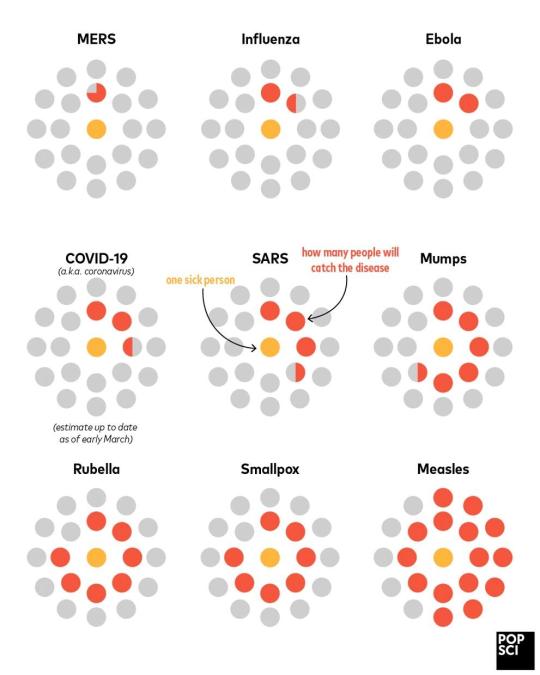 Coronavirus is on par with SARS in terms of infectiousness.