
**DISCLAIMER**
Sorry for the monologue, but it’s important.
As anyone in Lymeland knows, ‘what works for one, doesn’t work for another.’ Please keep this in mind as you read the following information that I hope will help someone. Further, I am in complete disagreement with any statements that Lyme/MSIDS can not be a persistent/chronic infection(s). The doctor in the documentary, Dr. Howard Schubiner, admits there is controversy in the medical community over chronic Lyme/MSIDS, and that he has had the experience of seeing patients ‘overtreated’ with antibiotics for weeks, months, and years. While he states he is very happy for those who are doing well with long-term of treatment, he states patients should rethink their diagnosis if they are on a merry-go-round of costly and invasive treatments that aren’t working. To this doctor I would state: while you have had the unfortunate experience of helping ‘overtreated’ patients, there are thousands upon thousands in the real world who are dying from undertreatment. Tread lightly.
While rethinking a diagnosis appears to be logically sane thinking, it’s imperative to understand treating Lyme/MSIDS is fraught with confusion, mystery, set backs, and pain. To my knowledge the only other diseases with Jarisch-Herxheimer reactions besides Lyme disease are syphilis, leptospirosis, and relapsing fever – which means unless you have had one of those diseases before, you have never experienced how confusing and relentless herxes are. They truly make you think you are losing your mind.
It is not uncommon at all for patients to hit plateaus in Lyme/MSIDS treatment. They might go through a period where they feel great only to have the dreaded symptoms, or even worse ones appear over night. This is why Lyme literate doctors describe treating this similarly to peeling back the layers of an onion. When one infection gets under control another one suddenly becomes visible.
This coinfection involvement never gets any air-play, but is crucial in understanding this beast. These infections require different medications entirely, but mainstream medicine doesn’t even consider them, so when a short course of doxy doesn’t make a person well, they simply fold up shop and declare, “you don’t have Lyme,” which could very well be true; however, they could also have Babesia, Bartonella, Relapsing Fever, or a whole host of other infections that look and act just like Lyme disease. Please go here to learn of the many issues surrounding why patients don’t get well.
So, once again, none of this is simple. Keep an open mind.
One final note: I ended up using many aspects of this technique out of desperation, completely on my own. I had no idea it was a ‘thing,’ but as they say, ‘necessity is the mother of invention.’
https://careclinic.io/somatic-tracking-pain/
Somatic Tracking for Pain: Unveiling Effective Techniques
Living with pain can be a daunting and overwhelming experience. It can drastically affect our quality of life and prevent us from fully enjoying the activities we love. However, there is a technique called somatic tracking that can help us better understand and manage our pain. In this article, we will delve into the intricacies of somatic tracking, explore its benefits, and discuss how it can be implemented in our daily lives.
Understanding Somatic Tracking
Somatic tracking is a mindfulness-based technique that involves bringing awareness to our bodily sensations and learning to interpret them. By paying attention to our physical experiences, we can develop a deeper understanding of the underlying causes of our pain and explore ways to alleviate it.
When we talk about somatic tracking, we are referring to the practice of tuning in to the sensations and signals that our bodies send us. It’s like becoming fluent in the language of our own physical experiences. Just as we can learn to interpret words and phrases in a foreign language, we can learn to interpret the messages that our bodies are constantly sending us.
Imagine this: you wake up one morning with a dull ache in your lower back. Instead of dismissing it as just another discomfort, you decide to practice somatic tracking. You close your eyes, take a deep breath, and bring your attention to the area of your back that is bothering you. As you focus on the sensation, you start to notice subtle nuances – a tightness, a twinge, a warmth. These sensations become the building blocks of your understanding. (See link for article)
________________
https://www.curablehealth.com/podcast/what-is-somatic-tracking Podcast Here
A Podcast Where Real Chronic Pain Sufferers Meet Science-Backed Solutions 💫
Join us as our expert hosts help listeners overcome obstacles to healing through evidence-based techniques.
Go here for a Somatic Tracking exercise, and here for 10 best exercises
And here for an excerpt from The Way Out: A Revolutionary, Scientifically Proven Approach to Healing Chronic Pain by Alan Gordon and Alon Ziv, the speakers from the podcast above.
And here for one person’s successful experience with Somatic Tracking without using drugs or getting surgery.
It is described as physical therapy for the brain.
https://www.thismighthurtfilm.com/
This Might Hurt
A Film about a radical treatment for chronic pain
THE PROBLEM: CHRONIC PAIN
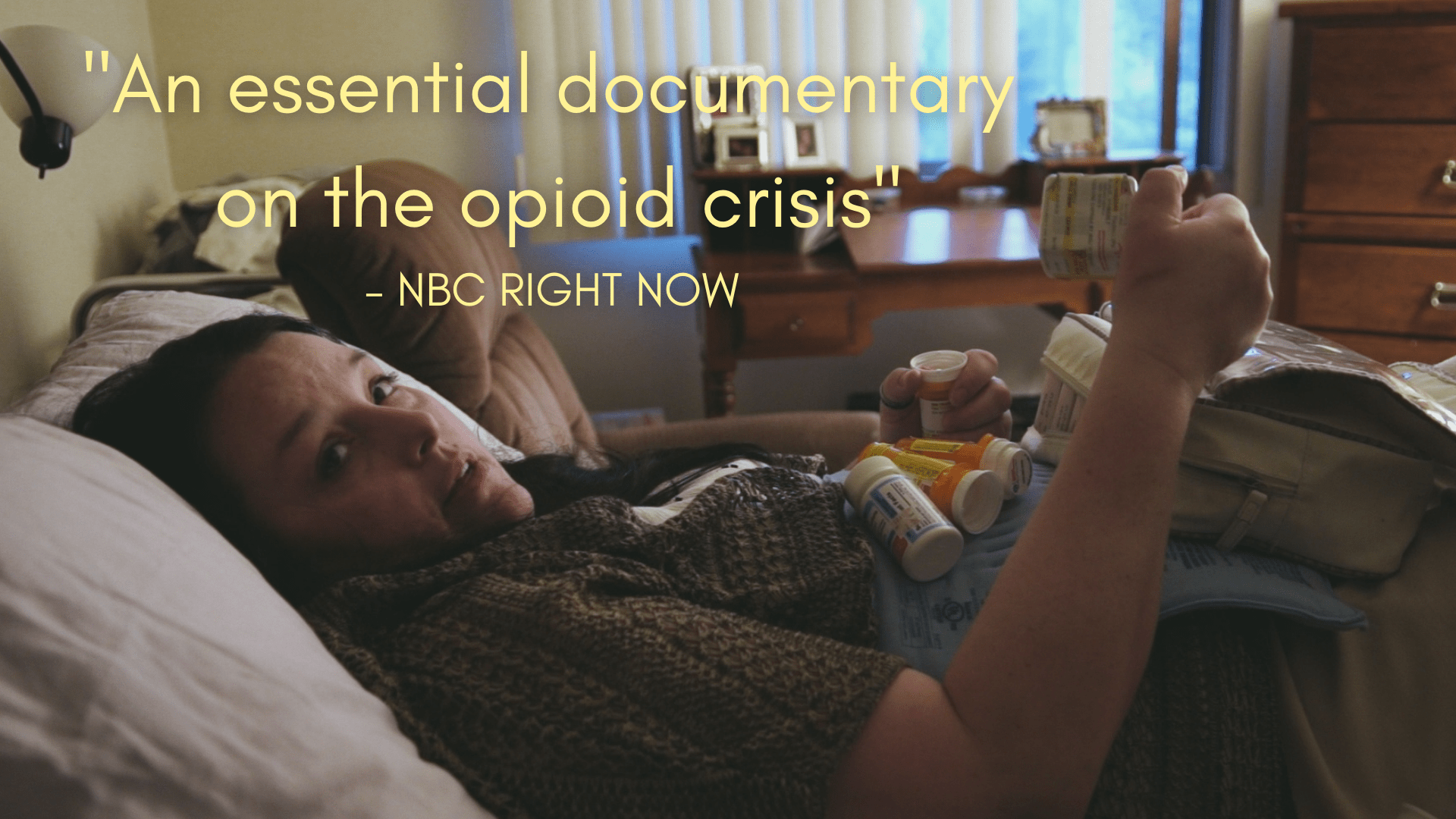
One in seven people around the world suffer from chronic pain, and nearly 80% of us will experience it at some point in our lives. The symptoms show up as back pain, neck pain, fibromyalgia, migraines, irritable bowel syndrome, anxiety, depression, fatigue, and a dozen others. The standard treatments are often ineffective, and one of the main remedies, opioids, has made the problem worse. What’s going on here?
THE FILM
This Might Hurt is a documentary that offers solutions to reduce and unlearn chronic pain. The film follows three chronic pain patients who have spent years searching for answers. Desperate for relief, they enter a new medical program — run by Dr. Howard Schubiner — that focuses on uncovering hidden causes of pain, and retraining their brains to switch the pain off.
This new paradigm for diagnosis and treatment was found to be effective in several randomized trials, and was listed as a “best practice” by the HHS’s task force to combat the opioid epidemic. This Might Hurt provides an intimate exploration and suggests a path to healing for millions.
Here are just some of the conditions that can be caused by “primary pain,” also know as brain-generated pain:

*These treatments are generally not recommended for people dealing with “secondary pain,” that is, pain that derives from cancer, fractures, muscle diseases, or infections.
NOT SURE IF THESE IDEAS APPLY TO YOUR SYMPTOMS?

5 STEPS TO UNLEARNING CHRONIC PRIMARY PAIN EXPLORED IN THIS MIGHT HURT
 Madison Area Lyme Support Group
