Archive for November, 2020

Vitamin C on COVID-19 Works

https://vimeo.com/475349585?ref=em-share    Video Here:  Approx. 17 Min.

Dr. Victor Marcial Vega

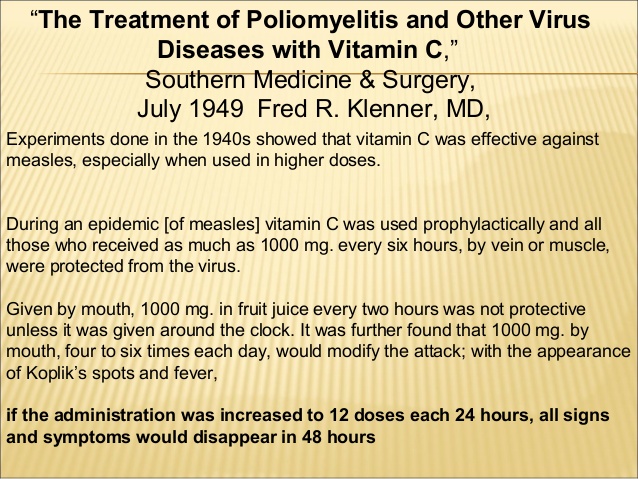
Dr Vega, MD gives info on vit C in COVID-19. He is a radiation oncologist, board certified. Interesting (8.00 min), he plans to treat in a clinical study students in high school with oral vit C, so he can prove schools can stay open with vit C. 

He informs about studies and treatment with high dose intravenous vitamin C and oral vit C in COVID-19 and other virus-related diseases.

For more:

Global Repository For Research into the Collateral Effects of COVID-19 Measures

https://collateralglobal.org  Go here for studies

A global repository for research into the collateral effects of the COVID-19 lockdown measures

iu-3

The aim of Collateral Global is to provide a resource for scholarship and research into the collateral effects of responses to the COVID-19 pandemic. There are two main facets to this:

  • on the one hand we need to understand how effective the response strategies to COVID-19 have been against their original objectives, and
  • on the other hand to build an understanding of the effect of these strategies on public health, the economy and how people live their lives.

Our aim is to gather this information from around the world and provide the data, research and other supporting material as a resource to inform public policy in the years ahead.

Study Shows Cloth Dragging for Ticks Only Catch A Minority

https://pubmed.ncbi.nlm.nih.gov/33128644/

One out of ten: low sampling efficiency of cloth dragging challenges abundance estimates of questing ticks

Affiliations expand

Abstract

Hard ticks (Acari: Ixodidae) act as important vectors of zoonotic pathogens. For instance, Borrelia burgdorferi s.l. spirochetes pose a severe health risk as aetiological agents of Lyme borreliosis. Commonly, to study the abundance of questing (host-seeking) ticks, a 1 m2 piece of cloth is dragged over vegetation for a determined distance. Here, we designed a tick-sampling study to estimate the sampling efficiency of this standard method. We established 10 m dragging transects in a hemiboreal mixed forest patch in SW Finland for a 5-day monitoring period.

  • Five of the transects were cloth-dragged 3× a day,
  • whereas another five transects were dragged 6× a day in a manner that after each morning, midday and afternoon dragging, a second dragging was conducted on the same transect immediately.

Captured Ixodes ricinus ticks were subsequently analyzed for tick-borne pathogens. The initial population size of nymphal ticks on a transect was approximated by the accumulated nymph catch from the dragging sessions. The sampling efficiency of the cloth dragging was low, as

  • a single dragging in a previously untouched vegetation strip always caught less than 12% (mean 6%) of the estimated population of active nymphs that were assumed to be questing during the study.
  • Clear results were not found for daily activity rhythm, as ticks were caught in all daily dragging sessions.
  • Approximately every third nymph and every second adult carried a pathogen, but nothing indicated that the occurrence of a pathogen affected the likelihood of the tick being caught by cloth dragging.
Our results suggest that only a minority of active ticks can be caught by a single cloth dragging. The abundance estimates in many tick investigations might thus be downward biased.

____________________

**Comment**

Cloth dragging to estimate tick prevalence has been used worldwide.  Similarly to the CDC’s past vastly low estimates of those infected with Lyme disease, and then having to increase this number 10-fold (which is still probably low), this study reveals tick prevalence to be much higher than we’ve been told due to single cloth dragging missing many ticks.  This in turn means there are more infected ticks that can transmit disease to animals and humans.

Such a simple study, yet profound in its findings.

COVID Vaccines Will Make People More Sick

https://blogs.mercola.com/sites/vitalvotes/archive/2020/11/02/covid-vaccines-will-make-people-more-sick.

COVID Vaccines Will Make People More Sick

A new study examining how informed consent is given to the COVID vaccine trial participants found that disclosure forms were not sufficient for the participants to understand that the vaccine could make them more susceptible to worse disease later.

“COVID‐19 vaccines designed to elicit neutralizing antibodies may sensitize vaccine recipients to more severe disease than if they were not vaccinated,” study authors said.

“Vaccines for SARS, MERS and RSV have never been approved, and the data generated in the development and testing of these vaccines suggest a serious mechanistic concern: that vaccines designed empirically using the traditional approach … may worsen COVID‐19 disease via antibody‐dependent enhancement (ADE).

“This risk is sufficiently obscured in clinical trial protocols and consent forms for ongoing COVID‐19 vaccine trials that adequate patient comprehension of this risk is unlikely to occur, obviating truly informed consent by subjects in these trials.”

SOURCE: The International Journal of Clinical Practice October 28, 2020

For more:  

Mechanisms Affecting the Acquisition, Persistence & Transmission of Francisella Turlarensis in Ticks

Mechanisms Affecting the Acquisition, Persistence and Transmission of Francisella tularensis in Ticks


Department of Medical Microbiology and Immunology, University of Toledo College of Medicine and Life Sciences, Toledo, OH 43614, USA
*
Author to whom correspondence should be addressed.
Microorganisms 2020, 8(11), 1639; https://doi.org/10.3390/microorganisms8111639
Received: 29 September 2020 / Revised: 15 October 2020 / Accepted: 21 October 2020 / Published: 23 October 2020
(This article belongs to the Special Issue Epidemiology of Tularemia and Francisella tularensis)

Abstract

Over 600,000 vector-borne disease cases were reported in the United States (U.S.) in the past 13 years, of which more than three-quarters were tick-borne diseases. Although Lyme disease accounts for the majority of tick-borne disease cases in the U.S., tularemia cases have been increasing over the past decade, with >220 cases reported yearly. However, when comparing Borrelia burgdorferi (causative agent of Lyme disease) and Francisella tularensis (causative agent of tularemia), the low infectious dose (<10 bacteria), high morbidity and mortality rates, and potential transmission of tularemia by multiple tick vectors have raised national concerns about future tularemia outbreaks. Despite these concerns, little is known about how F. tularensis is acquired by, persists in, or is transmitted by ticks. Moreover, the role of one or more tick vectors in transmitting F. tularensis to humans remains a major question. Finally, virtually no studies have examined how F. tularensis adapts to life in the tick (vs. the mammalian host), how tick endosymbionts affect F. tularensis infections, or whether other factors (e.g., tick immunity) impact the ability of F. tularensis to infect ticks. This review will assess our current understanding of each of these issues and will offer a framework for future studies, which could help us better understand tularemia and other tick-borne diseases.
___________________
 
**Comment**
About half of US tularemia cases are associated with tick bite, and annual cases are slowly increasing. 


http://www.siumed.edu/medicine/id/tularemia.htm
Tularemia, in aerosol form, is considered a possible bioterrorist agent that if inhaled would cause severe respiratory illness. It was studied in Japan through 1945, the USA through the 60’s, and Russia is believed to have strains resistant to antibiotics and vaccines. An aerosol release in a high population would result in febrile illness in 3-5 days followed by pleuropneumonitis and systemic infection with illness persisting for weeks with relapses. The WHO estimates that an aerosol dispersal of 50 kg of F. tularensis over an area with 5 million people would result in 25,000 incapacitating casualties including 19,000 deaths.