For Immediate Release: Thursday, November 5, 2020 For More Information Contact: Gary Ruskin (415) 944-7350 or Sainath Suryanarayanan
U.S. Right to Know, an investigative public health nonprofit group, filed a lawsuit today against the National Institutes of Health (NIH) for violating provisions of the Freedom of Information Act.
The lawsuit, filed in U.S. District Court in Washington, D.C., seeks correspondence with or about organizations such as the Wuhan Institute of Virology and the Wuhan Center for Disease Control and Prevention, as well as the EcoHealth Alliance, which partnered with and funded the Wuhan Institute of Virology.
Today’s litigation against the NIH is one part of our efforts to try to uncover what is known about the origins of SARS-CoV-2, and the risks of biosafety labs and gain-of-function research, which seeks to augment the infectivity or lethality of potential pandemic pathogens. Since July, we have filed 36 state, federal and international public records requests about these subjects.
“Preventing the next pandemic may depend crucially on understanding the origins of the present one,” said Gary Ruskin, executive director of U.S. Right to Know. “We want to know whether the US or Chinese governments, or scientists affiliated with them, are concealing data about the origins of SARS-CoV-2, or the risks of biosafety labs and gain-of-function research.”
NIH denied our FOIA request and determined to “withhold those records pursuant to Exemption 7(A), 5 U.S.C. § 552, and section 5.31 (g)(l) of the HHS FOIA Regulations, 45 CFR Part 5. Exemption 7(A) permits the withholding of investigatory records compiled for law enforcement purposes when disclosure could reasonably be expected to interfere with enforcement proceedings.”
U.S. Right to Know is an investigative research group focused on promoting transparency for public health. For more information, see our website at usrtk.org.
This house of cards has also been pointed out by Crowe, Torsten, and Engelbrecht decades ago for all the other virus ‘pandemics’ that supposedly occurred: https://www.torstenengelbrecht.com/en/virus-mania/
Children have been suggested as the facilitators of severe acute respiratory syndrome coronavirus 2 (SARS-CoV-2) transmission and amplification,1 because many affected children might be asymptomatic.2,3 Accordingly, social and public health policies, such as school closure, have been implemented in many countries. However, the role of children in asymptomatically carrying SARS-CoV-2 needs to be further explored. In this study, we investigated the frequency of individuals carrying SARS-CoV-2 among children admitted for noninfectious conditions and without any SARS-CoV-2–associated symptoms or signs and compare it with the frequency of individuals carrying SARS-CoV-2 among a similar adult population.
Methods
At the Fondazione Ca’ Granda Ospedale Maggiore Policlinico in Milan, Italy, all patients who require hospitalization after accessing either the pediatric emergency department (for participants younger than 18 years) or the adult emergency department (for individuals 18 years and older) immediately undergo a nasopharyngeal swab for the detection of SARS-CoV-2, regardless of their symptoms. If the first sample has negative results, a second one is administered within 12 to 48 hours. For this study, eligible patients were those admitted for noninfectious conditions to this hospital from March 1 to April 30, 2020. We excluded individuals presenting with any signs or symptoms possibly associated with SARS-CoV-2 infection and those with a history of close and prolonged contact with individuals who had tested positive for SARS-CoV-2 or had a history of symptoms or signs consistent with COVID-19 in the previous 21 days. Individuals with only 1 nasopharyngeal swab available were also excluded. The Milano Area 2 ethics committee approved the study, which included a waiver of informed consent because of the retrospective nature of the investigation.
Data on age, sex, the reason for admission, and development of any SARS-CoV-2 signs of infection in the following 48 hours were retrospectively collected. A comparison of proportions between the pediatric and adult cohorts was made with the 2-tailed Fisher test. An odds ratio and its 95% CIs were calculated as a measure of risk of carrying SARS-CoV-2. Significance was assumed when P < .05. Statistical analysis was performed using the open-source statistical language R, version 3.5.3 (R Foundation for Statistical Computing).
Results
In the study period, 881 children presented to the pediatric emergency department, and 83 children (34 girls and 49 boys; median [interquartile range] age, 5.3 [1.1-11.0] years) fulfilled the eligibility criteria. In the same period, among the 3610 adults presenting to the adult emergency department, 131 (51 women and 80 men; median [interquartile range] age, 77 [57-84] years) were included. The reasons for admission of the included individuals are given in the Table. Children were found to be less frequently positive than adults (1 in 83 children [1.2%] vs 12 in 131 adults [9.2%]; P = .02), with an odds ratio of 0.12 (95% CI, 0.02-0.95) compared with adults. Eleven of 12 adults were positive for SARS-CoV-2 at the first swab. None of the included individuals developed signs or symptoms of SARS-CoV-2 infection in the 48 hours after the admission.
Table. Characteristics of the Included Children and Adults (N = 214)
In this study conducted among individuals hospitalized in Milan, one of the cities with the highest SARS-CoV-2 burden in the world, about 1% of children and 9% of adults without any symptoms or signs of SARS-CoV-2 infection tested positive for the virus. It has been estimated that approximately 80% of adults with SARS-CoV-2 are asymptomatic.4 The few available reports5on children are from China and suggest that children who are asymptomatic might be 15% of individuals positive for SARS-CoV-2. In this study, children without symptoms and signs of SARS-CoV-2 carried the virus less frequently than adults, suggesting that their role as facilitators of the spreading of SARS-CoV-2 infection could be reconsidered. Along with this potential important implication, some limitations should be acknowledged: first, we retrospectively analyzed only cases requiring hospitalization, and second, we report a single-center experience. However, these preliminary results can help understanding the epidemiology of SARS-CoV-2 infections. Particularly, these data do not support the hypothesis that children are at higher risk of carrying SARS-CoV-2 asymptomatically than adults.
Accepted for Publication: May 26, 2020.
Corresponding Author: Carlo Agostoni, MD, Fondazione IRCCS Ca’ Granda, Ospedale Maggiore Policlinico, Via della Commenda 9, 20122 Milan, Italy (carlo.agostoni@unimi.it).
Author Contributions: Drs Agostoni and Costantino had full access to all of the data in the study and take responsibility for the integrity of the data and the accuracy of the analysis.
Concept and design: Milani, Rocchi, Agostoni, Costantino.
Acquisition, analysis, or interpretation of data: All authors.
Drafting of the manuscript: Milani, Costantino.
Critical revision of the manuscript for important intellectual content: Bottino, Rocchi, Marchisio, Elli, Agostoni.
Statistical analysis: Milani.
Administrative, technical, or material support: Bottino, Rocchi, Elli.
Supervision: Marchisio, Agostoni, Costantino.
Conflict of Interest Disclosures: None reported.
___________________
**Comment**
Despite this, schools and extra curricular activities have been shut-down for children. We’ve been told repeatedly children are silent but deadly.
I pray things change soon. We are raising a generation of germaphobes who have been taught to fear everything,but the truth is we live in a microbiome which includes germs and viruses, many of them beneficial. The key is to keep things in balance by supporting your immune system and eliminating toxins. Our public ‘authorities’ have purposely shifted all the attention to a virus rather than educating the public on better health practices and very real issues like the health effects of 5G, GMO food, poisonous pesticides/herbicides, and eliminating other environmental toxins in the environment and health care products.
We report 28 species of ticks (Acari: Ixodida) from Colorado (CO).
We include the soft ticks (Argasidae):
Argas (Argas) cooleyi Kohls and Hoogstraal, Argas (Persicargas) radiatus Railliet, Carios (Alectorobius) concanensis (Cooley and Kohls), Carios (Alectorobius) kelleyi (Cooley and Kohls), Ornithodoros(Pavlovskyella) hermsi Wheeler et al., Ornithodoros (Pavlovskyella) parkeri Cooley, Ornithodoros (Pavlovskyella) turicata (Dugès), Otobius (Otobius) lagophilus Cooley and Kohls, and Otobius (Otobius) megnini (Dugès).
We include the metastriate hard ticks (Ixodidae) Dermacentor (Americentor) albipictus (Packard), Dermacentor (Dermacentor) andersoni Stiles, Dermacentor (Dermacentor) parumapertus Neumann, Dermacentor (Dermacentor) variabilis (Say), Haemaphysalis (Aboimisalis) chordeilis (Packard), Haemaphysalis (Gonixodes) leporispalustris (Packard), and Rhipicephalus (Rhipicephalus) sanguineus Latreille.
Prostriate hard ticks include Ixodes (Ixodiopsis) angustus Neumann, Ixodes (Phoeloioxdes) baergi Cooley and Kohls, Ixodes (Trichotoixodes) brunneus Koch, Ixodes (Scaphixodes) howelli Cooley and Kohls, Ixodes (Phoeloioxdes) kingiBishopp, Ixodes (Phoeloioxdes) marmotae Cooley and Kohls, Ixodes (Ixodiopsis) ochotonae Gregson, Ixodes (Phoeloioxdes) sculptus Neumann, Ixodes (Ixodiopsis) soricis Gregson, Ixodes (Ixodes) spinipalpis Hadwen and Nuttall, Ixodes(Phoeloioxdes) texanus Banks, and Ixodes (Ixodiopsis) woodi Bishopp. Argas radiatus and Ixodes brunneus represent new state records.
Review of collection reports revealed that inclusion of Ixodes (Multidentatus) auritulus (Neumann), Ixodes (Phoeloioxdes) cookei Packard, Ixodes (Phoeloioxdes) marxi Banks, and Ixodes (Ixodes) pacificus Cooley and Kohls is dubious or unconfirmed and, conversely, that C. concanensis and H. chordeilis have distributions that include CO.
We list an additional five species occasionally detected and 13 exotic species intercepted in CO.
Tick-host associations, geographical distributions, and medical/veterinary importance are included.
Colloidal silver has antimicrobial properties, but it’s also a toxic heavy metal. Find out if silver is a safe and effective treatment for Lyme disease.
Question: Does colloidal silver treat Lyme disease?
The answer is yes, colloidal silver does have antimicrobial properties. The question is, do we want to use it on humans?
There’s no doubt that silver has antimicrobial properties that have been well-documented for a long time. But so does mercury. All heavy metals have some antimicrobial-type properties. We have people that are doing everything they can to get mercury and heavy metals out of their bodies, and yet they’re dumping silver into their bodies to try to kill Lyme disease bacteria.
It really doesn’t make that much sense to me. Silver is not as toxic as mercury, but it still does have some toxicity, and it’s really hard for your body to remove it. If you use it for a long time, you are going to accumulate silver in your tissues.
Back when I was struggling with Lyme disease, I actually tried colloidal silver. I took it for a short period of time, and compared to other things that I used — predominantly herbs — it didn’t seem to have quite the punch that the herbs did. One herb alone wasn’t enough, but when I took combinations of herbs, that seemed to be superior to the silver.
So, for me, herbs were really a much better choice. I still have some reservations about silver, and I think that when you look at the spectrum of things that you can use for Lyme disease, herbs rank right up there at the top. Silver is quite a bit further down the list.
When you look at overcoming Lyme disease, it’s not a week or day type of thing. You have to take the antimicrobial for months and years. It’s about long-term suppression, and the advantage of herbs is you can do that long-term suppression without toxicity to your body.
If you’re looking at treating Lyme disease with silver, remember, you’re not talking about days or weeks, you’re talking about months and years of using it, which could potentially increase the toxicity. I would put my money on the herbs as being the better therapy out there.
Dr. Rawls is a physician who overcame Lyme disease through natural herbal therapy. You can learn more about Lyme disease in Dr. Rawls’ new best selling book, Unlocking Lyme.
You can also learn about Dr. Rawls’ personal journey in overcoming Lyme disease and fibromyalgia in his popular blog post, My Chronic Lyme Journey.
_____________________
**Comment**
The important point is that treatment often lasts from months to years, often requiring numerous types of treatments. Be open minded because what works for one, often doesn’t work for another.
While my family has used a high potency colloidal silver spray for sore throats for a very short duration (a few days) with success, from my experience with other patients, I do not believe this is strong enough for Lyme/MSIDS nor do I think long term usage to be wise due to accumulating metal. Dr. Rawls makes another astute point – patients often spend thousands of dollars eliminating toxic metals from the body. Why would you purposely add more?
Treatment is long. Treatment is painful. Treatment is expensive. Treatment is controversial.
This is not to say that certain forms/combinations won’t be found to work in the future. Research is ongoing.
I also know patients who either live in areas without Lyme literate doctors OR they can not afford to see one. Necessity sometimes corners you to have to consider treatment options that are less than optimal. While unfortunate, people often have to use what’s available. I rejoice when anyone improves – on anything! Patients have often improved on things I never would have believed worked. The important thing is you look at all your options and work with your practitioner, honestly keeping track of symptoms and what works and what doesn’t.
According to a study that examined how informed consent is given to COVID-19 vaccine trial participants, disclosure forms fail to inform volunteers that the vaccine might make them susceptible to more severe disease if they’re exposed to the virus
Previous coronavirus vaccine efforts — including those for SARS, MERS and RSV — have revealed a serious concern: The vaccines have a tendency to trigger antibody-dependent enhancement (ADE)
ADE means that rather than enhance your immunity against the infection, the vaccine actually enhances the virus’ ability to enter and infect your cells, resulting in more severe disease than had you not been vaccinated
Lethal Th2 immunopathology is another potential risk. A faulty T cell response can trigger allergic inflammation, and poorly functional antibodies that form immune complexes can activate the complement system, resulting in airway damage
There’s evidence showing the elderly — who are most vulnerable to severe COVID-19 and would need the vaccine the most — are also the most vulnerable to ADE and Th2 immunopathology
According to a study that examined how informed consent is given to COVID-19 vaccine trial participants, disclosure forms fail to inform volunteers that the vaccine might make them susceptible to more severe disease if they’re exposed to the virus.
The study,1 “Informed Consent Disclosure to Vaccine Trial Subjects of Risk of COVID-19 Vaccine Worsening Clinical Disease,” published in the International Journal of Clinical Practice, October 28, 2020, points out that “COVID-19 vaccines designed to elicit neutralizing antibodies may sensitize vaccine recipients to more severe disease than if they were not vaccinated.”
“Vaccines for SARS, MERS and RSV have never been approved, and the data generated in the development and testing of these vaccines suggest a serious mechanistic concern: that vaccines designed empirically using the traditional approach (consisting of the unmodified or minimally modified coronavirus viral spike to elicit neutralizing antibodies), be they composed of protein, viral vector, DNA or RNA and irrespective of delivery method, may worsen COVID-19 disease via antibody-dependent enhancement (ADE),” the paper states.
“This risk is sufficiently obscured in clinical trial protocols and consent forms for ongoing COVID-19 vaccine trials that adequate patient comprehension of this risk is unlikely to occur, obviating truly informed consent by subjects in these trials.
The specific and significant COVID-19 risk of ADE should have been and should be prominently and independently disclosed to research subjects currently in vaccine trials, as well as those being recruited for the trials and future patients after vaccine approval, in order to meet the medical ethics standard of patient comprehension for informed consent.”
What Is Antibody-Dependent Enhancement?
As noted by the authors of that International Journal of Clinical Practice paper, previous coronavirus vaccine efforts — for severe acute respiratory syndrome coronavirus (SARS-CoV), Middle East respiratory syndrome coronavirus (MERS-CoV) and respiratory syncytial virus (RSV) — have revealed a serious concern: The vaccines have a tendency to trigger antibody-dependent enhancement.
What exactly does that mean? In a nutshell, it means that rather than enhance your immunity against the infection, the vaccine actually enhances the virus’ ability to enter and infect your cells, resulting in more severe disease than had you not been vaccinated.2
This is the exact opposite of what a vaccine is supposed to do, and a significant problem that has been pointed out from the very beginning of this push for a COVID-19 vaccine. The 2003 review paper “Antibody-Dependent Enhancement of Virus Infection and Disease” explains it this way:3
“In general, virus-specific antibodies are considered antiviral and play an important role in the control of virus infections in a number of ways. However, in some instances, the presence of specific antibodies can be beneficial to the virus. This activity is known as antibody-dependent enhancement (ADE) of virus infection.
The ADE of virus infection is a phenomenon in which virus-specific antibodies enhance the entry of virus, and in some cases the replication of virus, into monocytes/macrophages and granulocytic cells through interaction with Fc and/or complement receptors.
This phenomenon has been reported in vitro and in vivo for viruses representing numerous families and genera of public health and veterinary importance. These viruses share some common features such as preferential replication in macrophages, ability to establish persistence, and antigenic diversity. For some viruses, ADE of infection has become a great concern to disease control by vaccination.”
Previous Coronavirus Vaccine Efforts Have All Failed
In my May 2020 interview above with Robert Kennedy Jr., he summarized the history of coronavirus vaccine development, which began in 2002, following three consecutive SARS outbreaks. By 2012, Chinese, American and European scientists were working on SARS vaccine development, and had about 30 promising candidates.
Of those, the four best vaccine candidates were then given to ferrets, which are the closest analogue to human lung infections. In the video below, which is a select outtake from my full interview, Kennedy explains what happened next. While the ferrets displayed robust antibody response, which is the metric used for vaccine licensing, once they were challenged with the wild virus, they all became severely ill and died.
The same thing happened when they tried to develop an RSV vaccine in the 1960s. RSV is an upper respiratory illness that is very similar to that caused by coronaviruses. At that time, they had decided to skip animal trials and go directly to human trials.
“They tested it on I think about 35 children, and the same thing happened,” Kennedy said.“The children developed a champion antibody response — robust, durable. It looked perfect [but when] the children were exposed to the wild virus, they all became sick. Two of them died.They abandoned the vaccine. It was a big embarrassment to FDA and NIH.”
Neutralizing Versus Binding Antibodies
Coronaviruses produce not just one but two different types of antibodies:
Neutralizing antibodies,4 also referred to as immoglobulin G (IgG) antibodies, that fight the infection
Binding antibodies5 (also known as nonneutralizing antibodies) that cannot prevent viral infection
Instead of preventing viral infection, binding antibodies trigger an abnormal immune response known as “paradoxical immune enhancement.” Another way to look at this is your immune system is actually backfiring and not functioning to protect you but actually making you worse.
Many of the COVID-19 vaccines currently in the running are using mRNA to instruct your cells to make the SARS-CoV-2 spike protein (S protein). The spike protein, which is what attaches to the ACE2 receptor of the cell, is the first stage of the two-stage process viruses use to gain entry into cells.
The idea is that by creating the SARS-CoV-2 spike protein, your immune system will commence production of antibodies, without making you sick in the process. The key question is, which of the two types of antibodies are being produced through this process?
Without Neutralizing Antibodies, Expect More Severe Illness
In an April 2020 Twitter thread,6 The Immunologist noted: “While developing vaccines … and considering immunity passports, we must first understand the complex role of antibodies in SARS, MERS and COVID-19.” He goes on to list several coronavirus vaccine studies that have raised concerns about ADE.
The first is a 2017 study7 in PLOS Pathogens, ”Enhanced Inflammation in New Zealand White Rabbits When MERS-CoV Reinfection Occurs in the Absence of Neutralizing Antibody,” which investigated whether getting infected with MERS would protect the subject against reinfection, as is typically the case with many viral illnesses. (Meaning, once you recover from a viral infection, say measles, you’re immune and won’t contract the illness again.)
To determine how MERS affects the immune system, the researchers infected white rabbits with the virus. The rabbits got sick and developed antibodies, but those antibodies were not the neutralizing kind, meaning the kind of antibodies that block infection. As a result, they were not protected from reinfection, and when exposed to MERS for a second time, they became ill again, and more severely so.
“In fact, reinfection resulted in enhanced pulmonary inflammation, without an associated increase in viral RNA titers,” the authors noted. Interestingly, neutralizing antibodies were elicited during this second infection, preventing the animals from being infected a third time. According to the authors:
“Our data from the rabbit model suggests that people exposed to MERS-CoV who fail to develop a neutralizing antibody response, or persons whose neutralizing antibody titers have waned, may be at risk for severe lung disease on re-exposure to MERS-CoV.”
In other words, if the vaccine does not result in a robust response in neutralizing antibodies, you might be at risk for more severe lung disease if you’re infected with the virus.
And here’s an important point: COVID-19 vaccines are NOT designed to prevent infection. As detailed in “How COVID-19 Vaccine Trials Are Rigged,” a “successful” vaccine merely needs to reduce the severity of the symptoms.They’re not even looking at reducing infection, hospitalization or death rates.
ADE in Dengue Infections
The Dengue virus is also known to cause ADE. As explained in a Swiss Medical Weekly paper published in April 2020:8
“The pathogenesis of COVID-19 is currently believed to proceed via both directly cytotoxic and immune-mediated mechanisms. An additional mechanism facilitating viral cell entry and subsequent damage may involve the so-called antibody-dependent enhancement (ADE).
ADE is a very well-known cascade of events whereby viruses may infect susceptible cells via interaction between virions complexed with antibodies or complement components and, respectively, Fc or complement receptors, leading to the amplification of their replication.
This phenomenon is of enormous relevance not only for the understanding of viral pathogenesis, but also for developing antiviral strategies, notably vaccines …
There are four serotypes of Dengue virus, all eliciting protective immunity. However, although homotypic protection is long-lasting, cross-neutralizing antibodies against different serotypes are short-lived and may last only up to 2 years.
In Dengue fever, reinfection with a different serotype runs a more severe course when the protective antibody titer wanes. Here, non-neutralizing antibodies take over neutralizing ones, bind to Dengue virions, and these complexes mediate the infection of phagocytic cells via interaction with the Fc receptor, in a typical ADE.
In other words, heterotypic antibodies at subneutralizing titres account for ADE in persons infected with a serotype of Dengue virus that is different from the first infection.
Cross-reactive neutralizing antibodies are associated with decreased odds of symptomatic secondary infection, and the higher the titer of such antibodies following the primary infection, the longer the delay to symptomatic secondary infection …”
The paper goes on to detail results from follow-up investigations into the Dengue vaccine, which revealed the hospitalization rate for Dengue among vaccinated children under the age of 9 was greater than the rate among controls. The explanation for this appears to be that the vaccine mimicked a primary infection, and as that immunity waned, the children became susceptible to ADE when they encountered the virus a second time. The author explains:
“A post hoc analysis of efficacy trials, using an anti-nonstructural protein 1 immunoglobulin G (IgG) enzyme-linked immunosorbent assay (ELISA) to distinguish antibodies elicited by wild-type infection from those following vaccination, showed that the vaccine was able to protect against severe Dengue [in] those who had been exposed to the natural infection before vaccination, and that the risk of severe clinical outcome was increased among seronegative persons.
Based on this, a Strategic Advisor Group of Experts convened by World Health Organization (WHO) concluded that only Dengue seropositive persons should be vaccinated whenever Dengue control programs are planned that include vaccination.”
ADE in Coronavirus Infections
This could end up being important for the COVID-19 vaccine. Hypothetically speaking, if SARS-CoV-2 works like Dengue, which is also caused by an RNA virus, then anyone who has not tested positive for SARS-CoV-2 might actually be at increased risk for severe COVID-19 after vaccination, and only those who have already recovered from a bout of COVID-19 would be protected against severe illness by the vaccine.
To be clear, we do not know whether that is the case or not, but these are important areas of inquiry and the current vaccine trials will simply not be able to answer this important question.
The Swiss Medical Weekly paper9 also reviews the evidence of ADE in coronavirus infections, citing research showing inoculating cats against the feline infectious peritonitis virus (FIPV) — a feline coronavirus — increases the severity of the disease when challenged with the same FIPV serotype as that in the vaccine.
The paper also cites research showing “Antibodies elicited by a SARS-CoV vaccine enhanced infection of B cell lines in spite of protective responses in the hamster model.” Another paper,10“Antibody-Dependent SARS Coronavirus Infection Is Mediated by Antibodies Against Spike Proteins,” published in 2014, found that:
“… higher concentrations of anti-sera against SARS-CoV neutralized SARS-CoV infection, while highly diluted anti-sera significantly increased SARS-CoV infection and induced higher levels of apoptosis.
Results from infectivity assays indicate that SARS-CoV ADE is primarily mediated by diluted antibodies against envelope spike proteins rather than nucleocapsid proteins. We also generated monoclonal antibodies against SARS-CoV spike proteins and observed that most of them promoted SARS-CoV infection.
Combined, our results suggest that antibodies against SARS-CoV spike proteins may trigger ADE effects. The data raise new questions regarding a potential SARS-CoV vaccine …”
A study11 that ties into this was published in the journal JCI Insight in 2019. Here, macaques vaccinated with a modified vaccinia Ankara (MVA) virus encoding full-length SARS-CoV spike protein ended up with more severe lung pathology when the animals were exposed to the SARS virus. And, when they transferred anti-spike IgG antibodies into unvaccinated macaques, they developed acute diffuse alveolar damage, likely by “skewing the inflammation-resolving response.”
SARS Vaccine Worsens Infection After Challenge With SARS-CoV
An interesting 2012 paper12 with the telling title, “Immunization with SARS Coronavirus Vaccines Leads to Pulmonary Immunopathology on Challenge with the SARS Virus,” demonstrates what many researchers now fear, namely that COVID-19 vaccines may end up making people more prone to severe SARS-CoV-2 infection.
The paper reviews experiments showing immunization with a variety of SARS vaccines resulted in pulmonary immunophathology once challenged with the SARS virus. As noted by the authors:13
“Inactivated whole virus vaccines whether inactivated with formalin or beta propiolactone and whether given with our without alum adjuvant exhibited a Th2-type immunopathologic in lungs after challenge.
As indicated, two reports attributed the immunopathology to presence of the N protein in the vaccine; however, we found the same immunopathologic reaction in animals given S protein vaccine only, although it appeared to be of lesser intensity.
Thus, a Th2-type immunopathologic reaction on challenge of vaccinated animals has occurred in three of four animal models (not in hamsters) including two different inbred mouse strains with four different types of SARS-CoV vaccines with and without alum adjuvant. An inactivated vaccine preparation that does not induce this result in mice, ferrets and nonhuman primates has not been reported.
This combined experience provides concern for trials with SARS-CoV vaccines in humans. Clinical trials with SARS coronavirus vaccines have been conducted and reported to induce antibody responses and to be ‘safe.’ However, the evidence for safety is for a short period of observation.
The concern arising from the present report is for an immunopathologic reaction occurring among vaccinated individuals on exposure to infectious SARS-CoV, the basis for developing a vaccine for SARS. Additional safety concerns relate to effectiveness and safety against antigenic variants of SARS-CoV and for safety of vaccinated persons exposed to other coronaviruses, particularly those of the type 2 group.”
The Elderly Are Most Vulnerable to ADE
On top of all of these concerns, there’s evidence showing the elderly — who are most vulnerable to severe COVID-19 — are also the most vulnerable to ADE. Preliminary research findings14 posted on the preprint server medRxiv at the end of March 2020 reported that middle-aged and elderly COVID-19 patients have far higher levels of anti-spike antibodies — which, again, increase infectivity — than younger patients.
Immune Enhancement Is a Serious Concern
Another paper worth mentioning is the May 2020 mini review15 “Impact of Immune Enhancement on COVID-19 Polyclonal Hyperimmune Globulin Therapy and Vaccine Development.” As in many other papers, the authors point out that:16
“While development of both hyperimmune globulin therapy and vaccine against SARS-CoV-2 are promising, they both pose a common theoretical safety concern. Experimental studies have suggested the possibility of immune-enhanced disease of SARS-CoV and MERS-CoV infections, which may thus similarly occur with SARS-CoV-2 infection …
Immune enhancement of disease can theoretically occur in two ways. Firstly, non-neutralizing or sub-neutralizing levels of antibodies can enhance SARS-CoV-2 infection into target cells.
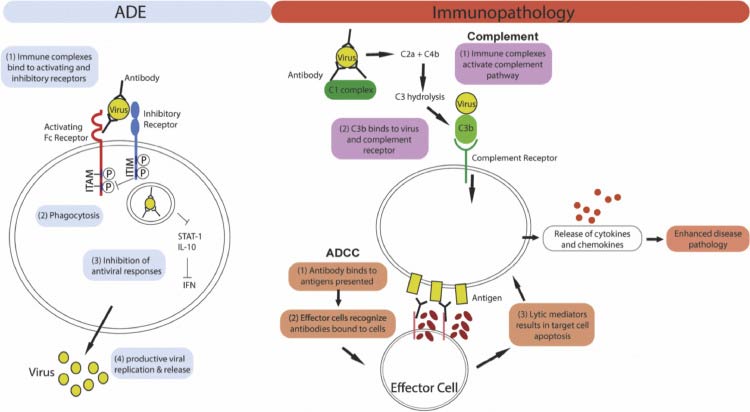
Secondly, antibodies could enhance inflammation and hence severity of pulmonary disease. An overview of these antibody dependent infection and immunopathology enhancement effects are summarized in Fig. 1 …
Currently, there are multiple SARS-CoV and MERS-CoV vaccine candidates in pre-clinical or early phase clinical trials. Animal studies on these CoVs have shown that the spike (S) protein-based vaccines (specifically the receptor binding domain, RBD) are highly immunogenic and protective against wild-type CoV challenge.
Vaccines that target other parts of the virus, such as the nucleocapsid, without the S protein, have shown no protection against CoV infection and increased lung pathology. However, immunization with some S protein based CoV vaccines have also displayed signs of enhanced lung pathology following challenge.
Hence, besides the choice of antigen target, vaccine efficacy and risk of immunopathology may be dependent on other ancillary factors, including adjuvant formulation, age at vaccination … and route of immunization.”
Figure 1: Mechanism of ADE and antibody mediated immunopathology. Left panel: For ADE, immune complex internalization is mediated by the engagement of activating Fc receptors on the cell surface. Co-ligation of inhibitory receptors then results in the inhibition of antiviral responses which leads to increased viral replication. Right panel: Antibodies can cause immunopathology by activating the complement pathway or antibody-dependent cellular cytotoxicity (ADCC). For both pathways, excessive immune activation results in the release of cytokines and chemokines, leading to enhanced disease pathology.
Do a Risk-Benefit Analysis Before Making Up Your Mind
In all likelihood, regardless of how effective (or ineffective) the COVID-19 vaccines end up being, they’ll be released to the public in relatively short order. Most predict one or more vaccines will be ready sometime in 2021.
Ironically, the data17,18,19 we now have no longer support a mass vaccination mandate, considering the lethality of COVID-19 is lower than the flu for those under the age of 60.20
If you’re under the age of 40, your risk of dying from COVID-19 is just 0.01%, meaning you have a 99.99% chance of surviving the infection. And you could improve that to 99.999% if you’re metabolically flexible and vitamin D replete.
So, really, what are we protecting against with a COVID-19 vaccine? As mentioned, the vaccines aren’t even designed to prevent infection, only reduce the severity of symptoms.Meanwhile, they could potentially make you sicker once you’re exposed to the virus. That seems like a lot of risk for a truly questionable benefit.
To circle back to where we started, participants in current COVID-19 vaccine trials are not being told of this risk — that by getting the vaccine they may end up with more severe COVID-19 once they’re infected with the virus.
Lethal Th2 Immunopathology Is Another Potential Risk
In closing, consider what this PNAS news feature states about the risk of vaccine-induced immune enhancement and dysfunction, particularly for the elderly, the very people who would need the protection a vaccine might offer the most:21
“Since the 1960s, tests of vaccine candidates for diseases such as dengue, respiratory syncytial virus (RSV), and severe acute respiratory syndrome (SARS) have shown a paradoxical phenomenon:
Some animals or people who received the vaccine and were later exposed to the virus developed more severe disease than those who had not been vaccinated. The vaccine-primed immune system, in certain cases, seemed to launch a shoddy response to the natural infection …
This immune backfiring, or so-called immune enhancement, may manifest in different ways such as antibody-dependent enhancement (ADE), a process in which a virus leverages antibodies to aid infection; or cell-based enhancement, a category that includes allergic inflammation caused by Th2 immunopathology. In some cases, the enhancement processes might overlap …
Some researchers argue that although ADE has received the most attention to date, it is less likely than the other immune enhancement pathways to cause a dysregulated response to COVID-19, given what is known about the epidemiology of the virus and its behavior in the human body.
‘There is the potential for ADE, but the bigger problem is probably Th2 immunopathology,’ says Ralph Baric, an epidemiologist and expert in coronaviruses … at the University of North Carolina at Chapel Hill.
In previous studies of SARS, aged mice were found to have particularly high risks of life-threatening Th2 immunopathology … in which a faulty T cell response triggers allergic inflammation, and poorly functional antibodies that form immune complexes, activating the complement system and potentially damaging the airways.”
Hopefully it is abundantly clear this vaccine could be the kiss of death for Lyme/MSIDS patients if ADE happens.
Not only is this vaccine NOT needed, it is experimental – which means there are many unanswered questions. The fact they are not being honest with vaccine volunteers does not bode well with transparency and honesty. If they will withhold information in early research, will they not also withhold other critical information?
Also, there are proven treatments that are working beautifully.


 Madison Area Lyme Support Group
