Archive for February, 2018

What’s in A Name? When Talking About Lyme Disease, it Matters

https://globallymealliance.org/chronic-lyme-or-ptlds/

FEBRUARY 5, 2018

by Jennifer Crystal

Before becoming so debilitated by illness that I could not work, I was a high school English teacher. My ninth grade students read Shakespeare’s Romeo and Juliet, and I’ll never forget our discussion of the lines: “What’s in a name? That which we call a rose/ By any other word would smell as sweet” (Act 11, scene ii).

Juliet is suggesting that the name we give someone or something is to an extent meaningless. To test this theory, I had my students write down the name of someone they loved. Then I told them to spit on the paper and tear it up. They were horrified.

“But it’s just a name,” I told them.

“No,” they argued. “It has an association. I can’t spit on someone I love.”

Years later, I think of that conversation when I hear people debate the nomenclature of Lyme disease. The Lyme Wars we so frequently hear about-covered in a five-part special on NBC New York and also in a New Yorker article -focuses on whether chronic Lyme actually exists. The name suggests a persistent, ongoing illness, like chronic obstructive pulmonary disease (COPD) or lupus. Those are recognized diseases whose injury and severity are not called into question, no matter how long the patient has suffered, how long it took them to get diagnosed, or whether or not the patient is undergoing treatment. Conversely, the Centers for Disease Control and Prevention (CDC) doesn’t recognize the term chronic, stating that “post treatment Lyme disease syndrome” (PTLDS) is the more appropriate term. Here the name we give to something actually matters very much.

Chronic Lyme is not the same as PTLDS. Post treatment Lyme disease syndrome assumes that a patient has undergone treatment and still has symptoms. Unfortunately, this is not the case for the vast majority of Lyme sufferers. Some patients do have persistent symptoms after treatment, but even those people cannot be gathered under one umbrella. For there are mitigating factors such as how long the person was sick before diagnosis, how long they were treated, how they responded to treatment, whether the infection crossed the blood-brain barrier, and whether the patient also has co-infections- these factors impact whether a patient will have persistent symptoms or not. No two cases of tick-borne illness are the same, meaning it’s very difficult, if not impossible, to lump those cases together

Chronic Lyme is at least a more appropriate term because it doesn’t define whether a person has undergone treatment or not. Usually, they haven’t. The reason Lyme often (though not always) becomes chronic is because it was misdiagnosed and left untreated in the first place. Under such conditions, the Lyme bacteria spend months or years replicating and circulating around the afflicted person’s body, sometimes crossing into the central nervous system. That’s what happened to me. Lyme coiled itself into my bones, joints, muscles, cells, and brain for eight years before I was accurately diagnosed. Eventually, treatment got me into a manageable state of remission, but because I had been sick for so long, I cannot be cured. Therefore, my Lyme is chronic-meaning recurring and difficult to eradicate.

My case is very different from someone who was only sick for two years, or who doesn’t have co-infections or has responded to initial treatment differently than I did. The same is true for cancer patients. A stage I breast cancer patient has a very different illness, treatment plan and prognosis than a Stage IV glioblastoma patient. They both have cancer, but when naming their illnesses, we don’t just group them together under the “C” word. Lyme disease should also be spoken of in more specific terms.

In her talk “Lexicon of Lyme” at last year’s International Lyme and Associated Diseases Society conference in Boston, Dr. Mualla McManus of the University of Sydney, Karl McManus Institute said, “Lyme disease is a household name-everyone talks about it, but no one defines it in a precise fashion.” I couldn’t agree more. There are now three recognized stages of Lyme disease, but many people don’t know about this breakdown in levels. Stage 3 is called Late Disseminated Lyme Disease. It would behoove us as patients to use this more precise wording instead of “chronic Lyme”-and certainly instead of the generic “PTLDS”-so that people can better understand the progression and prognosis of our illness.

Moreover, it’s important for us not to couch co-infections under the term Lyme disease and right now that’s all too common. These other infections are also transmitted through a tick bite; they are similar but are not the same as Lyme. For instance, it’s possible for a patient to get ehrlichia but not get Lyme disease. In another case, a patient may have Lyme and babesia, while another one might have babesia and Bartonella.

People need to understand that there are many tick-borne diseases out there and that have different symptoms from Lyme and often require different treatment. Though it’s wordy, I try to tell people that I have “chronic tick-borne diseases” rather than “chronic Lyme dis-ease,” because that phrasing is more accurate. In the future, I’ll try to say “chronic late dis-seminated tick-borne illness.” Is that a lot to throw at someone at a cocktail party? Yes. But the person I meet there wouldn’t want me to call him Jack if his name is really James. As my students discovered, there’s a lot in a name, and it’s important that we use the right ones to describe our illnesses with as much precision as we can.


jennifer crystalOpinions expressed by contributors are their own.

Jennifer Crystal is a writer and educator in Boston. She is working on a memoir about her journey with chronic tick-borne illness. Contact her at jennifercrystalwriter@gmail.com


_______________

**Comment**

I see a large mistake here and it’s to decide that length of time mandates if a case is chronic or not.  While that is true to a degree, experts have made it known that a patient can actually skip stages and many do not go through the neatly categorized symptoms.

http://www.bio.davidson.edu/people/sosarafova/assets/bio307/meprasse/page07.html

Some patients with Lyme disease may only go through one of these stages, but others experience all three (Steere, 1989). Most patients do not go through all three stages, and some patients only experience Stage 3 without ever showing symptoms of Stage 1 or 2 (Kraus et. al., 1991).

This is important because just as the little girl who got bit in the morning defied the 24-48 hour “rule” of tick transmission, her case also demonstrates that within hours, borrelia can get into the central nervous system causing tertiary, late stage symptoms: (Within 6-8 hours she could not walk or talk)  https://madisonarealymesupportgroup.com/2016/12/07/igenex-presentation/

My personal experience bears this out as well:  https://madisonarealymesupportgroup.com/2017/02/24/pcos-lyme-my-story/  Initial symptoms were all gynecological and in the middle of January in the tundra of Wisconsin.

Accurate info on transmission times:  https://madisonarealymesupportgroup.com/2017/04/14/transmission-time-for-lymemsids-infection/

We need to start over.  We need to quit looking at these poorly done, ancient Cabal studies as if they are the rule of the land and realize that there are still many, many pieces of the puzzle that are unknown.  


Lyme in the Southern Hemisphere & Sexual Transmission

http://geocities.ws/dermagicexpress/year2018/1CQA.html  By Dr. Jose’ Lapenta

ENGLISH EDITORAL:
=================
Hello friends of the network, DERMAGIC EXPRESS brings you today another interesting topic, which perhaps you had never imagined: THE LYME DISEASE SEXUAL TRANSMISSION AND ARRIVAL IN THE SOUTHERN HEMISPHERE, Disease that since its discovery and description was first attributed to the locality of LYME in Connecticut, US, and today described worldwide in NORTH HEMISPHERE, EUROPE, ASIA, (EURASIA) and the AFRICAN continent. It also raises the possibility that it is a Sexually Transmitted disease

With numerous cases on the rise each year, disease caused by the already mentioned in previous reviews THE BORRELIA BURGORFERI, A ESQPIROCHETE, which is very difficult to treat because of the resistance it offers to the treatment and because of its “ability” to “hide before the tests from laboratory.

As I said in the previous review, THE TICKS are a “BIBLE PEST”, mentioned in the book of the BIBLE, BOOK EXODUS:

“… And the dust of the earth became lice throughout the land of Egypt” … a well-knowledgeable tourist from Egypt observed that the sand seemed to move; observing more closely, he saw that the surface of the earth was a mass of tiny ticks … ”

So here comes the following observation: if it is a “BIBLE PLAGUE” such as LEPROSY AND SYPHILIS, it should be disseminated throughout the world, not just to a certain region, right?

Well, here I am going to show you that the BORRELIA BURGDORFERI, several years ago was described in several countries of South America, making this disease (LYME or ERYTHEMA MIGRANS) a global pathology; and I will mention one by one the countries where it was described with their respective observations:

The complex BORRELIA BURGDROFERI sensu lato (sl) includes agents of Lyme disease / borreliosis in NORTH AMERICA, EUROPE AND ASIA. Such as BORRELIA BURGDORFERI sensu stricto (st), Borrelia afzelii, Borrelia garinii, Borrelia bavariensis, Borrelia spielmanii, Borrelia bissettiae and Borrelia mayonii. In short: BORRELIA sensu stricto(st): LYME DISEASE in North America, South America? BORRELIA sensu lato (sl): LYME DISEASE in EUROPE AND ASIA, SOUTH AMERICA.

1.) URUGUAY:
============
In the year 2013, a study was made looking for BORRELIA sensu lato (sl) ESPIROCHETES related to species of TICKS belonging to the complex IXODES RICINUS which classically inhabit the NORTHERN HEMISPHERE, in this study the BORRELIAL infection was studied in the TICK IXODES PARARICINUS, unique species that represents the IXODES RICINUS complex in URUGUAY. Were studied 137 ticks obtained from DEER, CATTLE or VEGETATION, in 2 Uruguayan departments. It was detected by means of laboratory studies, PCR, haplotype studies, infection in 9 MALES and a group of nymphs sequences for BORRELIA BISSETTII, a species very close to American borrelia. The authors considered their study the first report of infectious ticks of BORRELIA BURGDORFERI sensu lato (sl) in South America.

Prior to this study in 2005, another investigation was made where a collection of the IXODES PARARICINUS TICKS were made, in URUGUAY and ARGENTINA, which was first described by Keirans and Cliford in 1.985, of fatted females collected from CATTLE and larvae fed with MICE AND CHICKENS. A taxonomic study was made of IXODES PARARICINUS, which is geographically distributed in: URUGUAY, ARGENTINA, and COLOMBIA, but is probably established in other countries such as BOLIVIA, BRAZIL, CHILE and PERU. It has also been found in RODENTS AND WILD BIRDS. It stands out in the study that thisTICKS is part of the IXODES PARARICINUS complex, vector of BORRELIA BURGDORFERI sensu lato (sl).

Also in Uruguay IXODES PARARICINUS was collected in the birds Turdus albicollis, Turdus rufiventris Vieillot, Syndactyla rufosuperciliata, and Basileuterus leucoblepharus, these birds have their habitat in the forests of: URUGUAY, ARGENTINA CHILE, PARAGUAY, BRAZIL, BOLIVIA, AND PERU.

In the year 2104, the criterion was unified that the IXODES PARARICINUS tick was previously described in the year 1998. Under the name of IXODES ARAGOI FONSECA, a controversy remained for years, until the last studies concluded that phylogenetically the difference between the two is minimal, being then its ORIGINAL name IXODES ARAGOI, with the pseudonym IXODES PARARICINUS.

CONCLUSION: BORRELIA BURGDOERFERI sensu lato (sl) is circulating at SOUTHERN HEMISPHERE, in URUGUAY, COLOMBIA, BOLIVIA, PARAGUAY and other countries that I describe below:

2.) BRAZIL:
=========
The case of BRAZIL is quite interesting, in the year 1992 a disease was described in HUMANS, in two siblings WITH ALL THE CHARACTERISTICS OF THE LYME DISEASE, after being bitten by ticks. The researchers were Domingos Baggio, entomologist and doctor Natalino Hajime Yoshinari. The disease under study was not recognized as A CLASSIC LYME, because the ticks did not belong to the IXODES RICINUS complex and the laboratory was negative for BORRELIA BURGDORFERI, but under an electron microscope it was detected that the causative organism was from the PHYLUM “ESPIROCHETE”.

It was classified as a new emerging zoonosis in BRAZIL under the name of BAGGIO YOSHINARI SYNDROME (BYS), practically a variant of LYME disease in the American continent, caused by the sting of TICKS, with the same clinical characteristics with the exception of with autoimmunity and recurrence.

In 2013, BORRELIA BURDORGFERI was reported in the tropical Neo region in the PAMPA URUGUAYA, isolated from the TICK IXODES ARAGOI, and between 2011 and 2016, 17 suspected cases of BORRELIOSIS SYNDROME were reported in the South of Brazil, DNA positive for BORRELIA. spp in ticks of the genus IXODES spp, specifically IXODES LONGISCUTATUS, the deepest study of haplotypes approached the species to: Borrelia carolinensis, B. bissettiae and Borrelia californiensis. Becoming the first evidence of the circulation of BORRELIA BURGDORFERI sensu lato in ticks of the genus IXODES spp IN BRAZIL, in other words the causal agent of the LYME DISEASE.

In the year 2014, a study was conducted in the rural area of ​​the state of Paraná, in BRAZIL, and the presence of BORRELIA GARINII and BORRELIA BURGDORFERI sensu stricto (st) was detected through PCR studies and DNA sequencing in Brazilian individuals, suggesting circulations these species in BRAZIL.

In that same year 2014 another study was made in that same area of ​​Paraná Brazil, collecting 224 TICKS on traction horses, (75%) of the gender DERMACENTOR NITENS and 25% AMBLYOMMA CAJANENSE, in two cases (Dermacentor nitens ticks) positivity was found for BORRELIA BURGDORFERI sensu lato, but the most interesting thing is that the DNA sequence by PCR revealed a 99.99% homology with the BORRELIA BURGDORFERI Sensu sricto (st) strain B31, another one of the strains causal agent of LYME DISEASE IN USA

In January of this year 2018 a study was carried out in BRAZIL also in horses: The objective of this study was to detect and measure the frequency of anti-BORRELIA IgG antibodies. burgdorferi American strain G39 / 40 on horses in the municipality of Sinop, MT-Brazil in the state of Mato Grosso, SEEKING EVIDENCE of the presence of the BORRELIA sensu stricto (st) which is the main causative agent of LYME DISEASE in the United States , because it is believed that a SIMILAR ESPIROQUETA is the causal agent of the BAGGIO YOSHINARI SYNDROME that I mentioned at the beginning, and of 367 horses studied 214 were POSITIVE for BORRELIA sensu stricto (78%) and in at least 75 farms there was a positive horse for BORRELIA BRURGDORFERI (92.59%) of the total, a high animal prevalence.

CONCLUSION: BORRELIA BURGORGFERI sensu stricto and sensu lato are circulating in the SOUTHERN HEMISPHERE IN BRAZIL and the BAGGIO YOSHINARI SYNDROME which has been considered a variant of the classic LYME DISEASE in this continent MAYBE IT IS THE SAME LYME DISEASE or ERYTHEMA MIGRANS as such.

3.) CHILE:
========
In the year 2014, a study was made in CHILE, where BORRELIA BURGDORFERI sensu lato (sl) was reported in endemic IXODES STILESI ticks collected in Chile from environmental vegetation and long-tailed rice rats (Oligoryzomys longicaudatus). The phylogenetic analysis placed this spirochete as a new genospecies within the Lyme borreliosis group; and the appointment of this new South American member of the LYME BORRELIA CHILENSIS VA1 borreliosis group was proposed in honor of the country of origin.

In another more recent study in 2017, it was determined that this IXODES STILESI tick also infects mice, in the South of Chile, the Pudú deer (pudu Puda). Sixty-six deer were examined over a period of two years. A total of 179 ticks of two species, IXODES STILESI and IXODES TAGLEII were collected, and BORRELIA ESPIROCHETES were found in 2 (6.45%) of the ixodes stilensi ticks, being this genetically the same as the BORRELIA CHILENSIS VA1 previously described in Chile, that which can play an important role in the prevalence of BORRELIA in that country and more studies are suggested to understand a possible pathogenicity towards humans.

CONCLUSION: BORRELIA CHILENSI V1A sensu lato (sl) is circulating in CHILE, through the IXODES STILENSI tick, hosts: the mouse Oligoryzomys longicaudatus and the Pudú Puda deer. The habitat of these 2 animals also includes ARGENTINA.

Turdus rufiventrus (rufous-bellied thrush), (Syndactyla rufosuperciliata (buff-browed foliage-gleaner), Basileuterus leucoblepharus ( white-rimmed warbler) and seabird, 4 birds that are carriers of the tick IXODES PARARICINUS, and lives in the forest and sea of : URUGUAY, ARGENTINA CHILE, PARAGUAY, BRAZIL, BOLIVIA, AND PERU.

4.) ARGENTINA:
=============
In the year 2014, a study was made on IXODES PARARICINUS ticks collected from the vegetation of the Province of Jujuy in ARGENTINA, to determine infection by BORRELIA through PCR. A male and a female of I. pararicinus collected in Jujuy were positive for Borrelia infection. Phylogenetically, THE BORRELIA found in I. pararicinus of Jujuy belongs to the complex B. BURGDORFERI sensu lato (sl), and was similar to one of the genospecies detected in IXODES ARAGOI of Uruguay. In addition, this genospecies is closely related to two known genospecies of EE. UU., Borrelia americana and Borrelia sp. Genospecies 1.

In the year 2017, another study was carried out in ARGENTINA, collecting TICKS and NYMPHS from IXODES PARARICINUS, vegetation and birds, in the Provinces of Jujuy, Tucumán and Salta; In total 82 ticks and several nymphs were studied both from the vegetation of Salta and the birds Turdus rufiventris in Tucumán, Syndactyla rufosuperciliata in Jujuy and Turdus nigriceps in Tucumán. Two (2) haplotypes of BORRELIA sp. Belonging to the BORRELIA BURGDORFERI sensu lato complex. One of them is closely related to the Borrelia genoespecies haplotypes previously reported in IXODES ARAGOI of Uruguay and IXODES. PARARICINUS from the province of Jujuy in Argentina. The authors mention that these IXODES species do not represent pathogenicity for humans. However, others say that further studies are needed to verify this claim.

More recently this year 2018 was conducted another study to investigate the presence of TICKS THAT INFECT cattle in the province of Yungaos in ARGENTINA with BORRELIA, ERLICHIOSIS and RICKETTSIA, the study showed once again that ticks of the genus IXODES PARARICINUS positive were found for BORRELIA BURGODRFERI sensu lato (sl), as I said previously phylogenetically related to IXODES ARAGOI of URUGUAY.

CONCLUSION: BORRELIA BURGDORFERI sensu lato (sl) CIRCULATE in ARGENTINA through THE TICK IXODES PARARICINUS, phylogenetically related to IXODES ARAGOI of URUGUAY.

5.) COLOMBIA:
============
In 1999, the presence of specific IgG antibodies for BORRELIA BURGDORFERI in patients with clinical manifestations of LYME DISEASE was evaluated in COLOMBIA. Were analyzed 20 samples of symptomatic patients, 1 sample of cerebrospinal fluid (CSF) of a patient with chronic and arthritic neurological manifestations and 12 samples of patients with suspicion of Lyme BORRELIOSIS, being positive in 4 samples of symptomatic patients, 2 with morphea they were positive as well as the patient with neurological manifestations. The work proposes to analyze with “caution” this disease “type lyme” and suggest that a genoespecies BORRELIA different from the sensu stricto (st) is the causal agent, In other words BORRELIA sensu lato (sl) another LYME DISEASE CAUSAL AGENT.

CONCLUSION: BORRELIA BURGDORFERI sensu lato (sl) is probably the causal agent of LYME “type” DISEASE in COLOMBIA.

6.) PERU:
=======
In the year 1999, a study was made in the Andean areas of Peru in search of bacterial infections associated with lice, prevalence of EPIDEMIC OF TIFFUS, TRENCH FEVER AND RECURRENT FEVER. Were included 194 volunteer inhabitants of the province of Calca in the Urbamba valley. Thirty-nine (20%) of the 194 volunteers had antibodies against Rickettsia prowazekii, while 24 (12%) had antibodies against Bartonella quintana and 2 against BORRELIA recurrentis.

CONCLUSION: There are no studies that confirm the PRESENCE OF BORRELIA BURGDORFERI in Peru, but the PRESENCE OF BORRELIA RECURRENTIS causal agent of the RECURRENT FEVER, was found, whose causal agent is also a BORRELIA, ESPIROCHETE, and transmitted by the bite of lice; but remember that there are 4 species of birds that carry the TICK IXODES PARARICINUS (Borrelia sensu lato sl) that circulate in the forests of PERU.

7.) VENEZUELA:
=============
And the plague came to VENEZUELA also, between the year 1992 and 1993, 74 patients were studied in Zulia State: 37 asymptomatic and 37 clinically suspects of LYME DISEASE, ELISA tests were performed and positive cases were found for BORRELIA BURGDORFERI sp: 14 of 74 (18.9%). Positive cases in the symptomatic group (29.7%) were higher than in the asymptomatic group (8.9%). The most frequent clinical diagnosis was Morphea (54.5%). The main serological diagnosis (54.32%) was obtained from chronic patients (more than one year of evolution). 45.5% of the symptomatic patients presented antibodies, despite receiving antibiotic treatment. Most of the cases had a previous visit or stay in forest or rural areas.

The authors affirm the presence of BORRELIA BURGDOFERI and LYME DISEASE in patients from the State of Zulia VENEZUELA and propose more precise studies such as the immunoblot. The relationship between MORPHEA and infection with BORRELIA is well known in the international DERMATOLOGICAL community.

CONCLUSION: BORRELIA BURGDORFERI sp and LYME DISEASE circulate in VENEZUELA also, I also found evidence in MEXICO AND ISLANDS AZORES.

SEXUAL TRANSMISSION OF LYME DISEASE:
====================================
And what do you think if I tell you that there are VARIOUS studies confirming a “probable transmission of LYME DISEASE through sexual intercourse”, vaginal and seminal fluid, I must remind you that BORRELIA is a SPIROCHETE same as SYPHILIS, and the latter is transmitted by seminal and vaginal fluid; why the BORRELIA NOT?

The first study dates from the year 2001, that is 17 years ago, which was presented at an international conference on LYME disease, in which 40% of positivity was demonstrated by PCR in semen samples (14 of 32 patients). and 1 case of vaginal fluid.

“… ALL positive semen / vaginal samples in patients with known sexual partners resulted in positive Lyme / PCR titers in their sexual partners, 3/4 patients with positive semen had unknown or unknown sexual partners to be evaluated. .. “

Another study dates from the year 2014, January 25, the researchers tested samples of semen and vaginal secretions from three groups of patients: control subjects without evidence of Lyme disease, random subjects who tested positive for Lyme disease and married heterosexual couples who had sex unprotected and tested positive for the disease.

As expected, all control subjects were negative for BORRELIA BURGDORFERI in semen samples or vaginal secretions. In contrast, all women with Lyme disease tested positive for BORRELIA BURGDORFERI in vaginal secretions, while approximately half of men with Lyme disease tested positive for Lyme spirochete in semen samples. In addition, one of the heterosexual couples with Lyme disease showed IDENTICAL STRAINS of the Lyme spirochete in their genital secretions.

“There is always some risk of getting Lyme disease from a bite in the forest,” he said. “But there may be an increased risk of getting Lyme disease in the bedroom.”

The other study dates from the year 2015 To investigate this possibility, Middelveen et al. performed the first culture study of BORRELIA in human semen and vaginal secretions.

¨ … Patients with documented LYME DISEASE, including heterosexual couples who have unprotected sex, studied genital cultures in three independent laboratories. Sperm cultures and vaginal secretions were subjected to light and dark field microscopy and were found to contain LIVING MOBILE SPIROCHETES that exhibited a characteristic wave motion and stained positively with silver Dieterlee immunostaining for B. burgdorferi.

In addition, the PCR test and molecular hybridization with highly specific DNA probes showed that living genital spirochetes were strains of BORRELIA and not treponemes. Of particular interest, it was found that a couple had BORRELIA HERMSII and not BORRELIA BURGDORFERI in their genital secretions, further implicating sexual transmission in these cases. Control subjects who tested negative for Lyme disease had no evidence of Borrelia spirochetes in their secretions … “

More studies are probably needed to confirm what these researchers have already claimed: LYME DISEASE can be transmitted sexually. We hope that the science advances without OBSTACLES towards the definitive clarification of this aspect. But the studies I show you show that it is an indisputable reality.

Would this fact help explain why this plague has spread throughout the world? sex between couples with LYME? draw your conclusions.

FINAL CONCLUSION:
=================
1.) THE LYME DISEASE no longer belongs exclusively to the NORTHERN HEMISPHERE, here are the proof that are present in the SOUTHERN HEMISPHERE. Over there I read a comment that DENGUE, ZIKA, EBOLA AND CHIKUNGUNYA WERE NOT THE NEW PEST, the new pest or plague are THE TICKS, I said this for the first time last year and I still affirm it.

2.) I invite the medical authorities of ALL the countries of the HEMISPHERE SUR, to acquire the most specific tests to diagnose the LYME DISEASE. Because it could be that you or a family member or child, has a diagnosis of JUVENILE ARTHRITIS, PAIN ON A KNEE, OR NEUROLOGICAL MANIFESTATIONS, MORPHEA, OTHERS and you may have thousands of ESPIROCHETES, BORRELIOSIS in your blood that is killing you without realizing it.

3.) And I can bet you that many doctors worldwide DO NOT EVEN KNOW what I’m talking about, because they were sold the idea that LYME’S DISEASE is only from Connecticut USA, and not a health problem that extended to all the globe; as I once said: THE NEW LEPROSY OF THE 21ST CENTURY.

4.) If it were a reality, the sexual transmission of LYME DISEASE would change the whole panorama with respect to it and maybe the “LYME WAR” that exists between ILADS International Society of Lyme Diseases and IDSA, Society of Infectious Diseases of America ARRIVES AT ITS END because the disease would be seen in another context, beyond the simple sting of a TICK in a forest, you can also acquire it in a bedroom having sex, patients would have greater access to treatment and all policies would change, that simple, end of story.

“… And God said to Moses: tell Pharaoh and his entourage, that I AM the only creator and giver of life, I will send you 10 plagues to understand … Pharaoh ignored … The plagues came , among them TICKS …. and finished with all those who did not believe him … everyone who has ulcers and their contaminated fluids will be unclean … until he heals ….. ”

BOOK OF EXODUS and GENESIS.

They were included here in addition to SYPHILIS, GONORRHEA AND LEPROSY LYME’S DISEASE?

Greetings to all

Dr. José Lapenta.

=========================================================
BIBLIOGRAPHICAL REFERENCES / REFERENCIAS BIBLIOGRAFICAS
===========================================================
1.) Borrelia burgdorferi sensu lato in Ixodes longiscutatus ticks from Brazilian Pampa. Ticks Tick Borne Dis. 2017 Oct;8(6):928-932. doi: 10.1016/j.ttbdis.2017.08.003. Epub 2017 Aug 23. [PUBMED] Dall’Agnol B1, Michel T2, Weck B2, Souza UA2, Webster A2, Leal BF1, Klafke GM2, Martins JR2, Ott R3, Venzal JM4, Ferreira CAS5, Reck J6.

2.) Evidence of Borrelia in wild and domestic mammals from the state of Minas Gerais, Brazil. Rev Bras Parasitol Vet. 2014 Apr-Jun;23(2):287-90. [PUBMED] Montandon CE1, Yoshinari NH2, Milagres BS1, Mazioli R1, Gomes GG1, Moreira HN1, Padilha Ade F3, Wanderley GG4, Mantovani E2, Galvão MA3, Langoni H4, Mafra C1.

3.) The Confounding Debate Over Lyme Disease in the South The debilitating tick-borne disease is well-documented north of the Mason-Dixon line, but does it exist beyond that?
By Wendy Orent|Wednesday, December 11, 2013. http://discovermagazine.com/2013/dec/14-southern-gothic

4.) Borrelia burgdorferi sensu lato in humans in a rural area of Paraná State, Brazil. Braz J Microbiol. 2015 Jun 1;46(2):571-5. doi: 10.1590/S1517-838246220140097. eCollection 2015 Jun. [PUBMED] Gonçalves DD1, Moura RA2, Nunes M3, Carreira T3, Vidotto O4, Freitas JC4, Vieira ML3.

5.) Ticks on passerines from the Archipelago of the Azores as hosts of borreliae and rickettsiae. Ticks Tick Borne Dis. 2015 Jul;6(5):607-10. doi: 10.1016/j.ttbdis.2015.05.003. Epub 2015 May 11.[PUBMED] Literak I1, Norte AC2, Núncio MS3, de Carvalho IL4, Ogrzewalska M5, Nováková M6, Martins TF7, Sychra O8, Resendes R9, Rodrígues P10.

6.) First record of Borrelia burgdorferi B31 strain in Dermacentor nitens ticks in the northern region of Parana (Brazil). Braz J Microbiol. 2014 Jan 15;44(3):883-7. eCollection 2013. [PUBMED]Gonçalves DD1, Carreira T2, Nunes M2, Benitez A1, Lopes-Mori FM1, Vidotto O3, de Freitas JC3, Vieira ML2.

7.) Regarding Tick-Borne Relapsing Fever in the Americas; Some Historical Aspects of a Forgotten Disease in Colombia. Vet Sci. 2016 Nov 4;3(4). pii: E33. doi: 10.3390/vetsci3040033. [PUBMED] Faccini-Martínez ÁA1, Botero-García CA2.

8.) Presence of Borrelia in different populations of Ixodes pararicinus from northwestern Argentina. Ticks Tick Borne Dis. 2017 Jun;8(4):488-493. doi: 10.1016/j.ttbdis.2017.02.008. Epub 2017 Feb 27. [PUBMED] Saracho Bottero MN1, Sebastian PS2, Carvalho LA3, Claps LG4, Mastropaolo M5, Mangold AJ1, Venzal JM3, Nava S6.

9.) Borrelia infection in Ixodes pararicinus ticks (Acari: Ixodidae) from northwestern Argentina. Acta Trop. 2014 Nov;139:1-4. doi: 10.1016/j.actatropica.2014.06.010. Epub 2014 Jun 28. [PUBMED]Nava S1, Barbieri AM2, Maya L3, Colina R3, Mangold AJ4, Labruna MB2, Venzal JM5.

10.) Borrelia burgdorferi sensu lato in Ixodes cf. neuquenensis and Ixodes sigelos ticks from the Patagonian region of Argentina. Acta Trop. 2016 Oct;162:218-21. doi: 10.1016/j.actatropica.2016.06.030. Epub 2016 Jun 29. [PUBMED] Sebastian PS1, Bottero MN2, Carvalho L3, Mackenstedt U4, Lareschi M5, Venzal JM3, Nava S2.

11.) Borrelia burgdorferi sensu lato infecting ticks of the Ixodes ricinus complex in Uruguay: first report for the Southern Hemisphere. Vector Borne Zoonotic Dis. 2013 Mar;13(3):147-53. doi: 10.1089/vbz.2012.1102. Epub 2013 Feb 12. [PUBMED] Barbieri AM1, Venzal JM, Marcili A, Almeida AP, González EM, Labruna MB.

12.) Ixodes (Ixodes) pararicinus Keirans & Clifford, 1985 (Acari: Ixodidae): description of the immature stages, distribution, hosts and medical/veterinary importance. Syst Parasitol. 2005 Mar;60(3):225-34. [PUBMED] Venzal JM1, Estrada-Peña A, Barros-Battesti DM, Onofrio VC, Beldoménico PM.

13.) A collection of ticks (Ixodidae) from wild birds in Uruguay. Exp Appl Acarol. 2005;36(4):325-31. [PUBMED] Venzal JM1, Félix ML, Olmos A, Mangold AJ, Guglielmone AA.

14.) Infection with Borrelia chilensis in Ixodes stilesi ticks collected from Pudu puda deer. Ticks Tick Borne Dis. 2017 Aug;8(5):733-740. doi: 10.1016/j.ttbdis.2017.05.007. Epub 2017 May 18. [PUBMED] Verdugo C1, Jiménez O2, Hernández C2, Álvarez P2, Espinoza A3, González-Acuña D4.

15.) Borrelia chilensis, a new member of the Borrelia burgdorferi sensu lato complex that extends the range of this genospecies in the Southern Hemisphere. Environ Microbiol. 2014 Apr;16(4):1069-80. doi: 10.1111/1462-2920.12310. Epub 2013 Nov 27. [PUBMED] Ivanova LB1, Tomova A, González-Acuña D, Murúa R, Moreno CX, Hernández C, Cabello J, Cabello C, Daniels TJ, Godfrey HP, Cabello FC.

16.) Genetic heterogeneity of Borrelia burgdorferi sensu lato in the southern United States based on restriction fragment length polymorphism and sequence analysis. J Clin Microbiol. 2001 Jul;39(7):2500-7. [PUBMED} Lin T1, Oliver JH Jr, Gao L, Kollars TM Jr, Clark KL.

17.) Antibody profile to Borrelia burgdorferi in veterinarians from Nuevo León, Mexico, a non-endemic area of this zoonosis. Reumatologia. 2016;54(3):97-102. doi: 10.5114/reum.2016.61208. Epub 2016 Jul 18. [PUBMED] Skinner-Taylor CM1, Flores MS1, Salinas JA2, Arevalo-Niño K1, Galán-Wong LJ1, Maldonado G1, Garza-Elizondo MA3.

18.) Genome Sequence of Borrelia chilensis VA1, a South American Member of the Lyme Borreliosis Group. Genome Announc. 2015 Feb 12;3(1). pii: e01535-14. doi: 10.1128/genomeA.01535-14. [PUBBMED] Huang W1, Ojaimi C1, Fallon JT1, Travisany D2, Maass A2, Ivanova L3, Tomova A, González-Acuña D4, Godfrey HP5, Cabello FC3.

19.) Isolation of live Borrelia burgdorferi sensu lato spirochaetes from patients with undefined disorders and symptoms not typical for Lyme borreliosis. Clin Microbiol Infect. 2016 Mar;22(3):267.e9-15. doi: 10.1016/j.cmi.2015.11.009. Epub 2015 Dec 8. [PUBMED] Rudenko N1, Golovchenko M2, Vancova M3, Clark K4, Grubhoffer L5, Oliver JH Jr6.

20.) A divergent spirochete strain isolated from a resident of the southeastern United States was identified by multilocus sequence typing as Borrelia bissettii. Parasit Vectors. 2016 Feb 4;9:68. doi: 10.1186/s13071-016-1353-4. [PUBMED] Golovchenko M1,2, Vancová M3, Clark K4, Oliver JH Jr5, Grubhoffer L6,7, Rudenko N8,9.

21.) [Detection of Borrelia burgdorferi antibodies in a population sample of the state of Zulia]. Article in Spanish] Invest Clin. 1994 Jun;35(2):91-104. [PUBMED] Arocha-Sandoval F1, Amesty-Valbuena A, Urbina M, Durango AI, Vargas-Montiel H.

22.) Survey of three bacterial louse-associated diseases among rural Andean communities in Peru: prevalence of epidemic typhus, trench fever, and relapsing fever. Clin Infect Dis. 1999 Aug;29(2):434-6. [PUBMED] Raoult D1, Birtles RJ, Montoya M, Perez E, Tissot-Dupont H, Roux V, Guerra H.

23.) Epidemiological investigation of Borrelia burgdorferi in horses in the municipality of Sinop-MT, Brazil. Trop Anim Health Prod. 2018 Jan 31. doi: 10.1007/s11250-017-1504-4. [Epub ahead of print] [PUBMED]. Socoloski SNG1, de Castro BG2, Cordeiro MD3, da Fonseca AH3, Cepeda MB3, Nicolino RR4, Lopes LB5.

24.) [Brazilian lyme-like disease or Baggio-Yoshinari syndrome: exotic and emerging Brazilian tick-borne zoonosis]. Rev Assoc Med Bras (1992). 2010 May-Jun;56(3):363-9. [PUBMED] [Article in English, Portuguese]. Yoshinari NH1, Mantovani E, Bonoldi VL, Marangoni RG, Gauditano G.

25.) Profile of patients with Baggio-Yoshinari Syndrome admitted at “Instituto de Infectologia Emilio Ribas”. Rev Inst Med Trop Sao Paulo. 2010 Nov-Dec;52(6):297-303. [PUBMED]. Gouveia EA1, Alves MF, Mantovani E, Oyafuso LK, Bonoldi VL, Yoshinari NH.

26.) Chronic lymphomonocytic meningoencephalitis, oligoarthritis and erythema nodosum: report of Baggio-Yoshinari syndrome of long and relapsing evolution. Rev Bras Reumatol. 2014 Mar-Apr;54(2):148-51. [PUBMED][Article in English, Portuguese].Rosa Neto NS1, Gauditano G2, Yoshinari NH1.

27.) Brazilian borreliosis with special emphasis on humans and horses. Braz J Microbiol. 2017 Jan – Mar;48(1):167-172. doi: 10.1016/j.bjm.2016.09.005. Epub 2016 Oct 4. [PUBMED] Basile RC1, Yoshinari NH2, Mantovani E2, Bonoldi VN2, Macoris DD3, Queiroz-Neto A3.

28.) Lyme borreliosis. An Bras Dermatol. 2010 Nov-Dec;85(6):930-8.[Article in English, Portuguese] [PUBMED] Santos M1, Haddad Júnior V, Ribeiro-Rodrigues R, Talhari S.

29. Borrelia burgdorferi infection and cutaneous Lyme disease, México. Emerg Infec Dis. 2007;13:1556-8. Emerg Infect Dis. 2007 Oct;13(10):1556-8. doi: 10.3201/eid1310.060630. [PUBMED] Gordillo-Pérez G1, Torres J, Solórzano-Santos F, de Martino S, Lipsker D, Velázquez E, Ramon G, Onofre M, Jaulhac B.

30.) Positive IgG Western blot for Borrelia burgdorferi in Colombia. Mem Inst Oswaldo Cruz. 1999 Jul-Aug;94(4):499-503. [PBMED]. Palacios R1, Osorio LE, Giraldo LE, Torres AJ, Philipp MT, Ochoa MT.

31.) Talhari S, Talhari AC, Ferreira LCL. Eritema cronicum migrans, eritema crônico migratório, doença de Lyme ou Borreliose de Lyme. An Bras Dermatol. 1992;65:205-9. [ Links ]

32.) Eritema crônico migrans/ Doença de Lyme – Estudo de três casos. XLII Congresso Brasileiro de Dermatologia, Goiânia, 1987. Talhari S, Schettini APM, Parreira VJ, Cruz RG, Melo IS, Talhari, AC.

33.) Doença de Lyme. Rio Dermatol 1988;2:4-5. Filgueira AL, Trope BM, Gontijo PP Filho.

34.) Lyme Disease May Be Sexually Transmitted, Study Suggests
source: http://www.prweb.com/releases/2014/01/prweb11506441.htm Carmel, CA (PRWEB) January 25, 2014

35.) Sexual transmission of Lyme disease: challenging the tickborne disease paradigm. Expert Rev Anti Infect Ther. 2015;13(11):1303-6. doi: 10.1586/14787210.2015.1081056. Epub 2015 Aug 26. [PUBMED] Stricker RB1, Middelveen MJ1.

36.) Culture and identification of Borrelia spirochetes in human vaginal and seminal secretions. Version 3. F1000Res. 2014 Dec 18 [revised 2015 Apr 27];3:309. doi: 10.12688/f1000research.5778.3. eCollection 2014. [PUBMED] Middelveen MJ1, Burke J2, Sapi E3, Bandoski C3, Filush KR3, Wang Y2, Franco A2, Timmaraju A3, Schlinger HA1, Mayne PJ1, Stricker RB1.

37.) Transhemispheric exchange of Lyme disease spirochetes by seabirds. J Clin Microbiol. 1995 Dec;33(12):3270-4. [PUBMED]. Olsen B1, Duffy DC, Jaenson TG, Gylfe A, Bonnedahl J, Bergström S.

38.) BirdLife International (2012). “Basileuterus leucoblepharus”. IUCN Red List of Threatened Species. Version 2012.1. International Union for Conservation of Nature. Retrieved 16 July 2012.Taxon identifiers. Wd: Q27075948 Avibase: D65E2A9D16D052AE eBird: whbwar2 ITIS: 950065 IUCN: 22722031

39.) BirdLife International (2012). “Syndactyla rufosuperciliata”. IUCN Red List of Threatened Species. Version 2013.2. International Union for Conservation of Nature. Retrieved 26 November 2013.

40.) BirdLife International (2012). “Turdus albicollis”. IUCN Red List of Threatened Species. Version 2013.2. International Union for Conservation of Nature. Retrieved 26 November 2013.

41.) Ticks infesting cattle and humans in the Yungas Biogeographic Province of Argentina, with notes on the presence of tick-borne bacteria. Exp Appl Acarol. 2018 Jan 27. doi: 10.1007/s10493-018-0208-4. [Epub ahead of print] [PUBMED] Saracho-Bottero MN1, Tarragona EL1, Sebastian PS1, Venzal JM2, Mangold AJ1, Guglielmone AA1, Nava S3.

42.) Validation of the taxon Ixodes aragaoi Fonseca (Acari: Ixodidae) based on morphological and molecular data. .) Zootaxa. 2014 Sep 8;3860(4):361-70. doi: 10.11646/zootaxa.3860.4.4. [PUBMED]. Onofrio VC1, Ramirez DG2, Giovanni DN3, Marcili A4, Mangold AJ5, Venzal JM6, Mendonça RZ7, Labruna MB4, Barros-Battesti DM8.

43.) Exchange of Borrelia burgdorferi between Ixodes persulcatus (Ixodidae: Acarina) sexual partners. J Med Entomol 1996;33:351-4[Crossref], [PubMed], [Web of Science ®], [Google Scholar] Alekseev AN, Dubinina HV.

44.) Recovery of Lyme spirochetes by PCR in semen samples of previously diagnosed Lyme disease patients. International Scientific Conference on Lyme Disease. 2001. Available from: http://www.anapsid.org/lyme/bach.html [Last accessed 18 April 2015] [Google Scholar] Bach G.

===================================================================

For more:  https://madisonarealymesupportgroup.com/2017/02/24/pcos-lyme-my-story/


Members Named to TBD Working Group

https://www.lymedisease.org/members-named-tbd-subcommittees/

51 members named to TBD Working Group subcommittees

From the website of the Department of Health and Human Services:

The Department of Health and Human Services (HHS) announces the names of 51 individuals who have been selected to serve on one of six subcommittees of the Tick-Borne Disease Working Group (Working Group). After reviewing the nominations, selections were made by the co-chairs overseeing each of the subcommittees. The Chair and Vice-Chair of the Working Group provided input and approved the final selections. All of the individuals were notified today, but they have not yet confirmed their availability to serve on the subcommittee that they were chosen to join. The final list of subcommittee members will be updated if any of them are no longer able to join a subcommittee.

These subcommittees were established by the Working Group members during the December 12, 2017 meeting to assist them in identifying and reviewing information that provides the background, context, and evidence needed to develop the report to Congress and the HHS Secretary as required by the 21st Century Cures Act. The subcommittees will be led by members of the Working Group. The Chair and Vice-Chair of the Working Group will work in collaboration with the subcommittee Co-Chairs and the Designated Federal Officer to ensure that the work of the subcommittees is consistent with the needs of the Working Group and committee management laws and regulations. The roles of the subcommittees, the work they will be doing, and the reports that they will provide to the Working Group will discussed at the February 12, 2018 meeting.

The members of the Tick-Borne Disease Working Group subcommittees are:

Disease Vectors, Surveillance, and Prevention
Co-Chairs: Pat Smith and Ben Beard, MS, PhD

Members

  • Jill Auerbach Founder, Tick Research to Eliminate Diseases
    Founder, Stop Ticks On People (S.T.O.P.)
  • Neeta Connally, PhD, MSPH Associate Professor, Tick-borne Disease Prevention Laboratory, Western Connecticut State
  • Katherine Feldman, DVM, MPH Senior Epidemiologist, MITRE
  • Thomas N. Mather, PhD Professor, Center for Vector-Borne Disease
    Director, TickEncounter Resource Center
  • Phyllis Mervine President, LymeDisease.org
  • Colonel Robin Nadolny, PhD COL, Medical Service Team Lead, Tick-Borne Disease Laboratory, Army Public Health Center
  • Adalberto Perez de Leon, DVM, PhD, MS Director, Knipling-Bushland U.S. Livestock Insects Research Laboratory, United States Department of Agriculture-Agricultural Research Service
  • Daniel E. Sonenshine, PhD Eminent Professor of Biological Science, Old Dominion University
  • Jean I. Tsao, PhD Associate Professor, Departments of Fisheries and Wildlife and of Large Animal Clinical Sciences, Michigan State University
  • Monica M. White President and Co-founder, Colorado Tick-Borne Disease Awareness Association
    LymeDisease.org, Lyme Disease Association, Inc., Public Tick IPM working group, Chaffee County Health Coalition
  • Stephen Wikel, PhD Professor and Chair Emeritus of Medical Sciences, St. Vincent’s Medical Center, Quinnipiac University

Pathogenesis, Transmission and Treatment
Co-Chairs: Wendy Adams, MBA and Captain Estella Jones, DVM

Members

  • Nicole Baumgarth, DVM, PhD Professor, Center for Comparative Medicine and Dept. of Pathology, Microbiology & Immunology, UC Davis
  • Patricia K. Coyle, MD Neurology Professor and Vice Chair, Dept. of Neurology
    Director, MS Comprehensive Care Center, Stony Brook University Medical Center
  • Sam Donta, MD Fellow Infectious Diseases, Infectious Disease Society of America
    Consultant, Infectious Diseases
  • Brian Fallon, MD, MPH Professor of Clinical Psychiatry, and Director, Lyme and Tick-Borne Diseases Research Center, Columbia University
  • Lorraine Johnson, JD, MBA CEO, LymeDisease.org
  • Elizabeth Maloney, MD President, Partnership for Tick-Borne Diseases Education
  • Jon Skare, PhD Professor and Associate Head, Dept. of Microbial Pathogenesis and Immunology, Texas A & M University
  • Brian Stevenson, PhD Professor, Department of Microbiology, Immunology & Molecular Genetics, University of Kentucky College of Medicine

Testing and Diagnostics
Co-Chairs: Lise E. Nigrovic, MD, MPH and Co-chair to be determined

Members

  • Charles Y. Chiu, MD, PhD Director, Abbott Viral Diagnostics and Discovery Center, UCSF
  • Roberta DeBiasi, MD, MS Chief, CNMC Division of Pediatric Infectious Diseases
    Director, Fetal Infectious Diseases Program, Co-Director, Congenital Zika Program at Children’s National
  • Noel Gerald, PhD Biologist and Senior Scientific Reviewer, Office of In Vitro Diagnostics and Radiological Health, FDA
  • Deborah Hoadley, MD, MPH Director, New England Institute for Lyme Disease and Tick-Borne Illnesses
  • Maliha Ilias, PhD Program Officer, Lyme Disease Research Bacteriology and Mycology Branch, National Institute of Infectious Diseases, NIH
  • Bobbi Pritt, MD, MSc Professor of Laboratory Medicine and Pathology, and Co-Director, Vector-Borne Diseases Laboratory Services,  Mayo Clinic
  • David Roth, JD Retired senior managing director of a private equity firm (Blackstone)
  • Steven Schutzer, MD Professor of Medicine, Rutgers New Jersey Medical School

Access to Care Services and Support to Patients
Co-Chairs: Karen Vanderhoof-Forschner, JD, MBA and Commander Scott Cooper, MMSc, PA-C

Members

  • Ana Frost, PhD The Institute for Functional Medicine
  • Holiday Goodreau President and Executive Director, The LiveLyme Foundation
  • Susan Green, JD Legislative Counsel, NatCapLyme
  • Enid Haller, LCSW, PhD Executive Director, Lyme Center of Martha’s Vineyard
    Martha’s Vineyard Lyme Support Group
  • Paula Jones Jackson President & Co-Founder, Midcoast Lyme Disease Support & Education (MLDSE)
  • Colonel Nicole Malachowski Retired, US Air Force
  • Leonard Schuchman, DO, MPH, FAAFP Osteopathic Physician
  • Sheila M. Statlender, PhD Clinical Psychologist, Private Practice
  • Kathleen Steele, LCSW Psychotherapist

Vaccine and Therapeutics
Co-Chairs: Robert Smith, MD, MPH, FACP, FIDSA and Dennis Dixon, PhD

Members

  • Monica E. Embers, PhD Assistant Professor, and Director, TNPRC Vector-borne Diseases Core, Division of Bacteriology and Parasitology, Tulane National Primate Research Center
  • Maria Gomes-Solecki, PhD Associate Professor, Department of Microbiology, Immunology and Biochemistry, University of Tennessee Health Science Center
  • Utpal Pal, PhD Professor, University of Maryland
  • Stanley A. Plotkin, MD Emeritus Professor of Pediatrics, University of Pennsylvania
  • Juan Salazar, MD, MPH, FAAP Professor and Chair, Department of Pediatrics, University of Connecticut Medical School, and Physician in Chief and Executive VP, Connecticut Children’s Medical Center
  • Leigh Ann Soltysiak, MS Self-employed, Owner, Principal Commercialization & Strategy Consultant, Silverleaf Consulting, LLC
  • David H. Walker, MD The Carmage and Martha Walls Distinguished University Chair in Tropical Diseases, and Professor, Department of Pathology, and Executive Director, Center for Biodefense and Emerging Infectious Diseases, The University of Texas Medical Branch

Other Tick-Borne Diseases and Co-Infections
Co-Chairs: Richard Horowitz, MD and Allen Richards, PhD

Members

  • Megan Dulaney, MS Senior Interagency Liaison, DOD Center for Health Engagement, Uniformed Services University for the Health Sciences, Henry M. Jackson Foundation for the Advancement of Military Medicine
  • Marna Ericson, PhD Assistant Professor, Department of Dermatology, and Director, Dermatology Imaging Center, University of Minnesota
  • Christine Green, MD Physician, Green Oaks Medical Center, PC, and Director, LymeDisease.org
  • Charles Lubelczyk, MPH Vector Ecologist, Maine Medical Center Research Institute
  • Ulrike G. Munderloh, DVM, PhD Professor, University of Minnesota, Department of Entomology
  • Christopher D. Paddock, MD, MPHTM Rickettsial Zoonoses Branch, CDC
  • Samuel S. Perdue, PhD Section Chief, Basic Sciences, Bacteriology and Mycology Branch, DMID/NIAID/NIH
  • Sam R. Telford III, ScD Professor of Infectious Disease and Global Health
    Cummings School of Veterinary Medicine, Tufts University

_________________

For more on what the Working Group does:  https://madisonarealymesupportgroup.com/2016/11/30/latest-on-21st-cca/

Some downsides of the 21st CCA:  https://madisonarealymesupportgroup.com/2016/12/14/21st-cca-wolf-in-sheeps-clothing/  The 21st Century Cures Act introduced in 2015 and expanded in 2016 weakens informed consent protections for people participating in experimental vaccine clinical trials. It allows drug companies to use surrogate endpoints to evaluate the effectiveness of vaccines and permits the FDA to accept novel statistical analyses and clinical experience related to a new vaccine’s reactivity, instead of requiring drug companies to conduct large randomized clinical trials to demonstrate safety. It prevents vaccine manufacturers from being sued in civil court if an FDA licensed vaccine given to a pregnant woman causes the injury or death of her unborn child in the womb.


Study Shows 630% More Aerosolized Flu Virus Particles Emitted by Flu-Vaccinated – A Message to Ethical MD’s

http://www.pnas.org/content/115/5/1081

Infectious virus in exhaled breath of symptomatic seasonal influenza cases from a college community

Jing YanMichael GranthamJovan PantelicP. Jacob Bueno de MesquitaBarbara AlbertFengjie LiuSheryl EhrmanDonald K. Milton and EMIT Consortium
  1. Edited by Peter Palese, Icahn School of Medicine at Mount Sinai, New York, NY, and approved December 15, 2017 (received for review September 19, 2017)

Significance

Lack of human data on influenza virus aerosol shedding fuels debate over the importance of airborne transmission. We provide overwhelming evidence that humans generate infectious aerosols and quantitative data to improve mathematical models of transmission and public health interventions. We show that sneezing is rare and not important for—and that coughing is not required for—influenza virus aerosolization. Our findings, that upper and lower airway infection are independent and that fine-particle exhaled aerosols reflect infection in the lung, opened a pathway for a deeper understanding of the human biology of influenza infection and transmission. Our observation of an association between repeated vaccination and increased viral aerosol generation demonstrated the power of our method, but needs confirmation.

Abstract

Little is known about the amount and infectiousness of influenza virus shed into exhaled breath. This contributes to uncertainty about the importance of airborne influenza transmission. We screened 355 symptomatic volunteers with acute respiratory illness and report 142 cases with confirmed influenza infection who provided 218 paired nasopharyngeal (NP) and 30-minute breath samples (coarse >5-µm and fine ≤5-µm fractions) on days 1–3 after symptom onset. We assessed viral RNA copy number for all samples and cultured NP swabs and fine aerosols. We recovered infectious virus from 52 (39%) of the fine aerosols and 150 (89%) of the NP swabs with valid cultures. The geometric mean RNA copy numbers were 3.8 × 10⁴/30-minutes fine-, 1.2 × 10⁴/30-minutes coarse-aerosol sample, and 8.2 × 10⁸ per NP swab. Fine- and coarse-aerosol viral RNA were positively associated with body mass index and number of coughs and negatively associated with increasing days since symptom onset in adjusted models. Fine-aerosol viral RNA was also positively associated with having influenza vaccination for both the current and prior season. NP swab viral RNA was positively associated with upper respiratory symptoms and negatively associated with age but was not significantly associated with fine- or coarse-aerosol viral RNA or their predictors. Sneezing was rare, and sneezing and coughing were not necessary for infectious aerosol generation. Our observations suggest that influenza infection in the upper and lower airways are compartmentalized and independent.

The association of current and prior year vaccination with increased shedding of influenza A might lead one to speculate that certain types of prior immunity promote lung inflammation, airway closure, and aerosol generation. This first observation of the phenomenon needs confirmation. If confirmed, this observation, together with recent literature suggesting reduced protection with annual vaccination, would have implications for influenza vaccination recommendations and policies.

___________

https://jameslyonsweiler.com/2018/02/02/a-message-to-ethical-mds-the-problem-with-the-2017-8-flu-vaccine-is-the-2016-7-flu-vaccine/  (Please read entire article here by James Lyons Weiler)

Letter to ethical MD’s (snippets below):

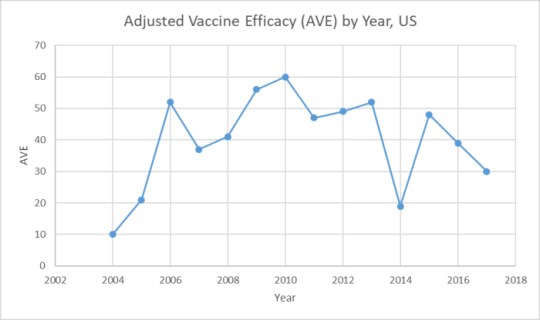
The last time the flu vaccine was 60-70% effective was eight years ago.

fluave

“This is the CDC’s data  https://www.cdc.gov/flu/professionals/vaccination/effectiveness-studies.htm  Clearly, Gupta’s “Years” is, in immunological memory, a singular “Year”. Only once out of the last 14 years was the flu vaccine above 59% – that the value was not 60-70%, it was 60%.

This type of misrepresentation is a consistent penchant within the media and of course from the CDC to exaggerate and highly emphasize only positive views and diminish, dismiss, or ignore any negative views on the safety and efficacy of vaccines.

The Jury is In: The Flu Vaccine Reduces its Own Efficacy

Too many studies now exist that have independently come to the same conclusion: increases in the uptake of flu vaccine reduces that vaccine’s effectiveness in the following year – and some studies show the negative effects of mass influenza vaccination last two years.

The studies reporting those results are reviewed in my article, “Diseases with Unknown Etiology Trace Back to Mass Vaccination Against Influenza in 1976“, and they are extensive and damning. https://jameslyonsweiler.com/2018/01/31/diseases-with-unknown-etiology-trace-back-to-mass-vaccination-against-influenza-in-1976/

Patients have a right to know the specific nature of their infections, and survivors in families of those who die from respiratory infections deserve an accurate cause of death. Coroners should certainly be required to provide an accurate cause of death in so-called “flu” mortalities. Health departments should be required to count only deaths due to confirmed influenza infection as “flu” – otherwise their numbers perpetuate misperception on the risk of influenza infection, and cause fear leading to increased vaccination. How is this seen as a good thing? The population deserves good and honest doctors and stewards of public health.

HHS could demand swab results for all suspected cases of “flu deaths” with a press release and enforce them with random audits. This annual ritual of fear-mongering over “flu-deaths” hides the fact that as long as thimerosal is injected into patients, they are at increased risk of other infections. And due to heterologous immunity, even without thimerosal, flu vaccines can confuse the immune system and muddle up ineffective immune response by trying to re-purpose B-cells trained on the wrong virus, hobbling the immune system making it unresponsive to similar viruses. Such as next year’s flu strain.

We do need objectivity to arise immediately throughout the public health system in the US, starting with HHS, then to CDC and to all Health Departments around the country. Many studies have also found problems with Tamiflu. But no emergency epidemiological study is addressing the question – why are so many young people dying from “flu”? Many of the reports I’ve seen include mention that they person had not only been vaccinated, they also had taken Tamiflu. And many had taken Tylenol. It’s time to ask the tough questions. The science is there on problems with Tylenol for vaccine-induced fever, and it must be taken into consideration. Fever due to respiratory infections after flu vaccination is still vaccine-induced.

A look at the issues with Tamiflu (see primary scientific literature reviewed here) shows that we cannot ignore the possibility that the human immune system is not infinitely resilient, and that medicine’s approaches to tackling “the flu” is imprecise, not evidence-based, and self-defeating. I’m not talking about the number of antigens the human body can take; I’m talking about the amount of tweaking it can tolerate, especially given the aluminum-dense childhood vaccination schedule. The allopathic medical community would do very well to heed the studies that show that Vitamin D helps alleviate both vaccine injury and severity of viral infections. It helps resolve the unfolded protein response without killing the cells. And the science of ER stress (endoplasmic reticulum stress) shows that Thimerosal is, after all, not safe for human use. Same for aluminum.

Real Reform is Coming – It’s a Mathematical Certainty

Vaccines injure people every day, and kill people every week. Each injury and death informs family members, co-workers, and schoolmates. The flaws in vaccines, combined with misinformation campaigns on safety, fuel the fire and build the vaccine risk aware army. It’s a peaceful army, filled with individuals who are hurt so badly, they do not want others to suffer the same fate. They are altruistic. And under informed, ethical and distributed leadership, they are finding their momentum.

Vaccine safety science reform means removing those in the CDC and HHS that perpetuated the debacle as it grew to proportions that even they could no longer easily deny it. And that’s fine. Let them go. There are many excellent professionals capable of replacing them – people who have not been involved in cooking studies to alter the public’s perception of vaccine risk. People who have withstood unwarranted and unfair criticism by those who live in cowardice of reality. People who now no longer afraid to publish their views. An important question is who among my colleagues in Academic Public Health, and which doctors in Pediatric medicine are willing to #bebrave and take on a debacle as huge as a failed national immunization program? Who will stand up to the AAP and tell them they are wrong?

If you are that type of doctor, it will be easier if you trust those who have worked at this for years. Read Dr. Paul Thomas’ book, The Vaccine Friendly Plan. After the resignations, have him come and teach the entire CDC and HHS what he knows. Consider Dr. Alvin Moss’s wisdom – ask him to create a Conflicts of Interest Policy for CDC and HHS, as he has done for the rest of academic medicine. Bring in Dr. Bob Sears from California, who was willing to stare down threats of the loss of his license to practice medicine because he dared to continue to practice medicine in the face of wanton misinformation and pressure from the AAP. Consider Dr. Richard Frye, and Dr. Chris Exley from the UK, who care first and foremost about the truths that impact total health. Dr. Frye would be great as the new NIH Director, in my opinion. Let these people form a new national public health direction that overrides existing contracts. There are others. Like Dr. Judy Mikovits whose character stands much taller than those who tried – and failed – to silence her – on the issue of adventitious agents in viral vaccines (specifically and quite problematic: retroviruses). Ask Dr. Ted Fogarty about Ethical Vaccinomics, and testing for vaccine injuries. Bring in Dr. John Piesse from Australia and end his persecution there, and put his good will toward safety to work here. We would be lucky to have him.

Create a Manhattan Project focused on reducing vaccine injuries, not on making currently licensed vaccines safer. They are old, and stale, and tired, and they, too, need to go. Bring in exciting new developments in artificial immunization like microneedle patches. Bring in Dr. Kanduc to screen epitopes that are unsafe. Drop aluminum, as many have now called for, and bring in calcium carbonate – if needed at all. Let those pharmaceutical companies who created the disaster make good on their promises to stop making their vaccines. Then we will see new approaches to artificial immunization that compete on the platform of safety.

Don’t just end COIs at ACIP: End ACIP. Create a Vaccine Safety Commission that enforces Science Integrity. Open up the markets. Let ideas thrive. Let consumers choose. Let the FDA do its job. Let the people’s experiences be heard. Establish a paradigm in which the end consumer has a say in the quality of the product. Strip the CDC of the ability to hold patents. End the CDC Foundation. End the differences between drugs and biologics and require randomized clinical trials – with proper placebos, not aluminum hydroxide – for vaccines. Repeal the 1986 Act that protects drug companies from liability for faulty vaccines. Perform random spot checks of vaccines in practices for contamination. The total sum of policies in the National Immunization Program, and the burden of morbidity on the population is a serious threat to our National Security.

Let some new faces and voices drive this reform. Bring in Dr. Dan Neides who had to escape the Cleveland Clinic after speaking his conscience. Let him oversee the transition. Bring in Dr. Brian Hooker to personally issue the pink slips to those who must now go from the CDC. Let all of those named here share his or her experience with Congress. Have Dr. Thompson testify. We need truth and reconciliation. And we need it 42 years ago.

There are MDs who sit in the shadows, silent, and afraid of job loss, sanction, ridicule. Step up. Let your views be known to the current Administration. Join Physicians for Informed Consent. You are not alone. You can help be part of the solution. Attend Health Department meetings and speak up for Informed Consent. Speak up for vaccine exclusions for kids in homes with high lead levels. Speak up for spacing out vaccines and skipping them. Speak up for tolerance and understanding of the pain and anguish parents of kids with autism experience when they are told it’s genetic, they know it’s environmental, and they are told they have to vaccinate their other babies. Speak up against calling CPS for parents who want to take the time they have under the law to consider vaccinations. And, of course, do right by your patients. Listen to their concerns. Inform them of both risks and benefits, as required by Federal Regulations. Let them know they are enrolling themselves or their children (and unborn baby) in post-licensure vaccine safety clinical trials (as required by Federal Regulations). Provide medical and philosophical exemptions for school waivers as required by the laws of your state and the rule of your own conscience. The AAP does not represent the rights and will of the people of the United States of America. Our legislation does.

Let’s aim to not make 2020 vaccination look anything like 2019. We have solutions. We’re now aiming for Healthy People 2050, and the current vaccines have very little to do with our vision. By the way, these ideas don’t come (exclusively) from me. They are shared by hundreds of thousands of American citizens, many of whom have been made sick or lost loved ones to vaccines. #werenotgoingaway #releasetheothermemos #hearthiswell #notmine #Vaxxed #cdctruth #saveourbabies #bebrave #ipak #cdcwhistleblower #rfkcommission #educatebeforeyouvaccinate #vaxxed #learntherisk #wedid #cdclied #stopmandatoryvaccination #learntherisk.”

____________

**Comment**

More just keeps popping out of Pandora’s Box regarding vaccines.

This recent talk shows how vaccines are causing Lyme/MSIDS patients to relapse as well as worsen:  https://madisonarealymesupportgroup.com/2018/02/04/dr-muth-immune-issues-and-lyme-msids/

https://madisonarealymesupportgroup.com/2017/12/02/scottish-doctor-gives-insight-on-lyme-msids/  Scottish doctor treating a number of young women who fell ill after their HPV vaccination, which seems to have stimulated a latent Lyme infection to reactivate.

https://madisonarealymesupportgroup.com/2016/04/24/gardasil-and-bartonella/  Asymptomatic girls after receiving Gardasil activated dormant Bartonella which was confirmed by testing.

Great video on the flu vaccine’s ineffectiveness:  https://madisonarealymesupportgroup.com/2015/11/08/flu-vaccine-causes-the-flu/

I could go on and on to infinity.  Something must be done.  Be a part of the solution.


Dr. Muth – Immune Issues and Lyme/MSIDS

Published January, 2018

Dr. Debra Muth, ND, WHNP, BSNH, MSNH, ARNP, BAAHP spoke at the Madison Area Lyme Support Group  She discusses various bacterial, viral and immunological effects that activate the immune system and cause symptoms to increase, as an over active immune system can mimic Lyme/MSIDS symptoms. She believes it’s important to look at all angles of the immune system and how it affects patients.

She reviews how Marcon’s, Viruses, Heavy Metals and vaccines activate the immune system and cause increased brain inflammation. She discusses treatment options available to date, including the RK protocol and how it can assist with Lyme treatment, as well as how it fits in with treatment successes in her practice.

Vaccne and inlammation Madison Support Group 2018  Accompanying pdf