Archive for June, 2016

Morgellons – Believe it

https://www.lymedisease.org/new-studies-morgellons/  Two new studies presented at the recent CEHMDF annual meeting in Texas show a bacterial, infective process.

“Morgellons disease is a multi-system illness characterized by the formation of unusual, sometimes brightly colored fibers within skin. It is a debilitating, painful and life impacting condition. In addition to slowly healing skin lesions, an array of multi-system symptoms can occur, including fatigue, joint and muscle pain, intestinal problems and neurological symptoms including behavioral changes. Patients with Morgellons disease may shed unusual particles from the skin described as fibers, “sand” or seed-like black specks, or crystallized particles.”

Many medical professionals believe Morgellons sufferers suffer from delusions.

In both 2013 and 2015, international scientists contradicted this theory by showing borrelia spirochetes in skin samples.  But, similarly to MSIDS (multi systemic infectious disease syndrome or Lyme with friends) denial, most mainstream doctors deny the science.

Two additional laboratories (Oklahoma State and IGenex) have now replicated finding multiple bacterial species as well as three different species of borrelia DNA in Morgellons skin samples.

Defending Morgellon’s patients, Oklahoma State’s Dr. Wymore states,

“Collectively, the research into Morgellons disease clearly shows a bacterial, infective process in these patients. In contrast, and despite the bombastic claims of some, there is zero convincing, scientific evidence that Morgellons is a psychogenic illness.”

The CEHMDF is the recognized authority and primary funding source for Morgellons disease medical-scientific research. There are neither grants, nor any other public or private funding to support research for Morgellons. Donations are tax deductible in the US. To learn more about Morgellons disease go to www.MorgellonsDisease.org.
Babesia Cure?

http://news.yale.edu/2016/06/06/combination-therapy-cures-tick-borne-illness-mice

Yale researchers have found that combining atovaquone and ELQ-334, at low doses, cleared Babesia in mice and prevented recurrence up to 122 days.

ELQ stands for Endochin like quinolone and is a preclinical candidate that targets the liver and blood stages of malarial organisms.

http://malariajournal.biomedcentral.com/articles/10.1186/1475-2875-13-339  It’s been known since 1948 that Endochin has anti-malarial properties; however, it has proven to be ineffective in vivo against human malaria.  Recent advances have suggested revisiting previously abandoned lead molecules to be possible viable anti-malarial drug candidates.

http://www.ncbi.nlm.nih.gov/pubmed/23019377  ELQ-271 and ELQ-316 are effective against acute and latent toxoplasmosis.

When I asked my pharmacist about the ELQ’s, he said he couldn’t find anything about the manufacturing process, and that as far as side effects, there won’t be a much information available until ELQ-334 proceeds further in the approval process. Sometimes side effects don’t show up until well after drugs have been on the market.  He also stated that there were only 800 cases of neuropathy from 1998-2013 reported to the FDA for quinolines.  

While I could be wrong, Endochin like quinolone could possibly mean it is made with fluoride.

http://articles.mercola.com/sites/articles/archive/2009/07/18/antibiotics-to-avoid–the-plague-due-to-fdas-oversight-failure.aspx  Quinolones are made with fluoride, which enables them to penetrate into tissue, including your brain.  This ability is what makes them valuable against tick borne infections.

Omniflox, Raxar, Trovan, Zagam, and Tequin have all been banned due to their side effects; however, Cipro, Levaquin, Avelox, and Floxin continue to be prescribed.

In Dr. Cohen’s 2001 study, the following side effects were documented:

*Nervous system symptoms occurred in 91 percent of patients (pain, tingling and numbness, dizziness, malaise, weakness, headaches, anxiety and panic, loss of memory, psychosis)
*Musculoskeletal symptoms in 73 percent of patients (tendon ruptures, tendonitis, weakness, joint swelling)
*Sensory symptoms in 42 percent of patients (tinnitus, altered visual, olfactory, and auditory function)
*Cardiovascular symptoms in 36 percent of patients (tachycardia, shortness of breath, chest pain, palpitations)
*Skin reactions in 29 percent of patients (rashes, hair loss, sweating, intolerance to heat or cold)
*Gastrointestinal symptoms in 18 percent of patients (nausea, vomiting, diarrhea, abdominal pain)
A comprehensive list of reactions can be found at Dr. Cohen’s site Medication Sense.

According to Dr. Mercola, quinolones are too often prescribed for minor problems such as sinus, bladder, and prostate infections. He feels these super-antibiotics should be used as a last line of defense.


Be armed with facts to make an informed decision about these antibiotics with your LLMD (Lyme literate doctor).  One of the most experienced LLMD’s in Wisconsin states that he has used quinolones for over 20 years without tendon rupture.  It’s important to notify your doctor immediately if you notice symptoms such as tendon pain or anything else that doesn’t seem right.


Have Test – Can Travel

image002

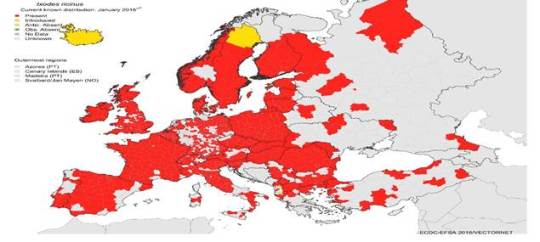
Lyme disease is under-reported and increasing in the United States, with as many as 300,000 new cases a year. But did you know that Lyme disease is not just here in the United States? With 68 million Americans traveling abroad last year alone, business travelers, vacationers, and people in the military should be aware of the facts: Over 80 countries of Europe and Asia have reported cases of Lyme, with more than 360,000 cases reported over the last two decades. Mexico reports cases of patients being infected when visiting the forested areas. Canada describes the increasing numbers of infected black-legged ticks. Not all countries have mandatory reporting, so these statistics do not account for all of the cases of disease. At least three species of Borrelia may be responsible:
*Borrelia burgdorferi
*Borrelia garinii
*Borrelia afzelii

Because of this, travelers returning to the U.S. showing symptoms of a tick-borne illness should be tested for more than Borrelia burgdorferi.

Coppe Laboratories is the only commercial reference laboratory testing for multiple genospecies including these European strains.

Using selective antigens (VlsE and OspC), Coppe’s Lyme panel is highly sensitive, which increases the likelihood of detection of antibodies from multiple strains of the Borrelia bacteria. Densitometry software is used to read the immunoblots, rather than relying on visual identification. Indeterminate results are less than 1% providing clear interpretation and actionable results.

In addition to the high–quality testing of Borrelia, Coppe Laboratories provides testing for Babesia and exclusive testing for Powassan virus. As a courtesy, Coppe will file insurance on behalf of the patient.

For more information, please visit our website at www.coppelabs.com.

Alzheimer’s – Byproduct of Infection?

http://articles.mercola.com/sites/articles/archive/2016/06/09/alzheimers-disease-brain-infection.

Harvard Researchers are saying that beta-alyloid proteins are part of your innate immune response and may be beneficial as they trap foreign invaders such as bacteria and viruses; however, these traps form the plaque seen in Alzheimer’s.

Study author Rudolph E. Tanzi, Ph.D., of Harvard Medical School and Massachusetts General Hospital states, “Each plaque had a single bacterium at its center.”  Mice that didn’t produce beta-amyloid were at greater risk of dying from the infection and did not have any plaques in their brains.”

They are theorizing that a small amount of beta-amyloid is protective whereas larger amounts could be damaging, and similarly to leaky gut syndrome, we tend to have a leaky blood-brain barrier the older we get.

Ruth Itzhaki, Ph.D., professor emeritus of molecular neurobiology at Britain’s University of Manchester, and colleagues in 1991 linked Alzheimer’s to herpes simplex virus 1 (HSV-1) – the type that causes cold sores.  There are currently more than 100 studies supporting this link.

Itzhaki states,
” … [W]e propose that infectious agents, including HSV-1, Chlamydia pneumonia, and spirochetes, reach the CNS [central nervous system] and remain there in latent form.  These agents can undergo reactivation in the brain during aging, as the immune system declines, and during different types of stress (which similarly reactivate HSV-1 in the periphery).  The consequent neuronal damage — caused by direct viral action and by virus-induced inflammation — occurs recurrently, leading to (or acting as a cofactor for) progressive synaptic dysfunction, neuronal loss, and ultimately AD [Alzheimer’s disease].  Such damage includes the induction of Aβ [amyloid beta] which, initially, appears to be only a defense mechanism.”

In addition to viruses, bacteria, and fungus, an infectious protein called TDP-43 (think prions and Mad Cow Disease) has also been linked to AD as well as low Vitamin D (helps build the immune system and brain chemicals that protect brain cells).  

http://www.examiner.com/article/kris-kristofferson-has-lyme-disease-memory-loss-misdiagnosed-as-alzheimer-s  Singer, Kris Kristofferson, went through this private hell.  He was wrongly diagnosed with Alzheimer’s but had Lyme Disease.  For years doctors told Kristofferson it was either Alzheimer’s or dementia, and may have been the result of blows to his head from boxing, football and rugby.  The medication he was given gave him bad side effects and didn’t help.

Sound familier?

Since starting treatment for Lyme Kristofferson “has made remarkable strides.”  His wife Lisa said,

“all of the sudden he was back.” Although he still has some bad days, there are other days when he is “perfectly normal,” she said.

Please tell your family and friends who have an Alzheimer’s or dementia diagnosis this story.  We need to look out for one another.

Dr. David Baewer – Coppe Labs

Approx 1 hour:  Published on Jun 6, 2016
Dr. David Baewer, MD, PhD, Chief Medical Officer of Coppe Laboratories, Waukesha, WI presents information about the relation of arboviruses to MSIDS (multi systemic infectious disease syndrome – or Lyme with friends) to the Madison Area Lyme Support Group

While there is no “standard” treatment for most viruses, please know there is much you can do to make your body a tough target:  https://madisonarealymesupportgroup.com/2016/03/28/combating-viruses/

Coppe is collecting ticks for their research.  If you are interested in being a part of some excellent research, put your tick(s) in a baggie in the freezer and contact them at:
Coppe Laboratories
W229 N1870 Westwood Dr.
Waukesha, WI 53186
(262) 574-0701
(262) 574-0703
info@coppelabs.com
They will send you what you need to get them to the lab alive.

Coppe is a CLIA-certified lab that is the only lab besides the CDC who tests for Powassan Virus.  They also provide advanced testing for leukotropic herpesviruses: EBV, CMV, HHV-6A and HHV-6B, as well as tick-borne pathogens, and their tests distinguish between latent and active infections.  Their Lyme panel uses recombinant VlsE and OspC antigens to increase sensitivity as well as tests multiple strains of borrelia, the European species B. garinii, B. afzelii, and B. miyamotoi.  Testing recommended 4-6 weeks after initial tick bite.

For those of you who are new to this, please do not wait 4-6 weeks to be seen by a doctor if you are bitten by a tick.  Time is of the essence with MSIDS.  The longer you wait, the deeper the pathogens travel making treatment infinitely more difficult.  You have a few options – see your regular practitioner if you are certain they will treat you immediately.  Chances are very high you can nip this in the bud with doxycycline; however, the fear is if you have remaining symptoms.  Some practitioners will allow you a second round of doxy which may do the trick.  If not, and you have symptoms, do not mess around.  Get to an LLMD (Lyme Literate Doctor – someone trained by ILADS) immediately.  Remember, Lyme (borrelia) rarely travels alone.  https://madisonarealymesupportgroup.com/2016/02/13/lyme-disease-treatment/

Also, be careful about feeling “safe” if a tick has not been attached for 24-48 hours.  This video, created by Lyme Action Network shows that transmission times have never been experimentally determined with humans.  All the transmission times have been determined using animal studies and transmission has occurred in under 16 hours.  They have no idea of the transmission times of the various co-infections; however, they estimate it only takes 15 minutes for transmission of Powassan Virus.   

Also worth noting:  I believe strongly it’s just a matter of time before science conclusively shows Lyme (borrelia) and various coinfections to be STD’s as well as passed congenitally and via breast milk:

Borrelia found in semen and vaginal secretions – with couples having the identical strain: Presented at the Western Regional Meeting of the American Federation for Medical Research, Carmel, CA, January 25, 2014. http://afmr.org/Western/.

http://www.lymerick.net/Transmission-Bb-contact.htm

Spirochete-like bacteria in vag smears

https://www.lymedisease.org/lyme-basics/lyme-disease/children/

http://www.scientificamerican.com/article/mothers-may-pass-lyme-disease-to-children-in-the-womb/