13 Min.

How to Protect Your Kids From Toxic Chemicals

Aly Cohen

“On average we use 47 products in a day.”

Dr. Aly Cohen is a board certified rheumatologist and integrative medicine specialist, as well as an environmental health expert. She has collaborated with the Environmental Working Group, Cancer Schmancer, and other disease prevention organizations, and is co-editor of the textbook, “Integrative Environmental Medicine”, part of the Oxford University Press, Weil Integrative Medicine Library. In 2015, she created TheSmartHuman.com to share environmental health and prevention information with the public.

She lectures nationally on ‘environmental health’ topics for elementary/high schools, colleges/universities, medical schools, and physician training programs, and she is a regular expert guest for television, print, and podcasts. Dr. Cohen is working to educate and empower the ‘next generation’ to make safer, smarter lifestyle choices through the creation of environmental health and prevention curriculum for schools nationally. Her consumer book, “Non-Toxic: Living Healthy in a Chemical World”, will be released in 2020. You can follow her health tips and recommendations on Facebook: The Smart Human, Twitter and Instagram: @thesmarthuman and read her blog and posts at TheSmartHuman.com. Dr. Aly Cohen is a board certified rheumatologist and integrative medicine specialist, as well as an environmental health expert.

She has collaborated with the Environmental Working Group, and has written the textbook, “Integrative Environmental Medicine” for the Weil/Oxford University Press series. In 2015, she created TheSmartHuman.com to share environmental health and prevention information with the public. She lectures nationally on ‘environmental health’ topics and is a regular expert guest for television, print, and podcasts. Dr Cohen is working to educate and empower the ‘next generation’ to make safer, smarter lifestyle choices through environmental health and prevention curriculum. Her consumer book, “Non-Toxic: Guide to Living Healthy in A Chemical World”, will be released in 2020.

You can follow her health tips and recommendations on Facebook: The Smart Human, Twitter and Instagram: @thesmarthuman and read her blog and posts at TheSmartHuman.com! This talk was given at a TEDx event using the TED conference format but independently organized by a local community. Learn more at https://www.ted.com/tedx

___________________

NOTE FROM TED: Some of the claims made in this talk lack sufficient scientific evidence. This talk only represents the speaker’s perspective around the relationship between chemicals and disease which remains an emerging field of study. TEDx events are independently organized by volunteers. The guidelines we give organizers are described in more detail here: http://storage.ted.com/tedx/manuals/t…

https://www.kbia.org/post/finding-lyme-disease-diagnosis-i-knew-something-was-wrong-Listen to the audio within link

Finding a Lyme Disease Diagnosis: ‘I Knew Something Was Wrong’

• DEC 17, 2019

Deanna Terrien and Wanda Kelley are sisters who live in Jackson, Missouri. Several years ago, Deanna was diagnosed with Lyme disease.

They spoke about some of the different ways the disease has impacted her body, and about how exhausting it was to get a diagnosis in the first place.

Deanna: I was able to do a lot of things at first, you know, taking care of the kids after school and work and going to the grocery store, I was able to do all that. I started getting fatigue at first, and insomnia. And those were pretty much my first symptoms.

Then anxiety started. So, since I really hadn’t had any other experiences before with my health, I, you know, started going to the doctor. They couldn’t really find anything.

I ended up going to several different doctors – endocrinologist, rheumatologist, neurologist – trying to figure out what was wrong, and it wasn’t until about 2014, I had to end up having four surgeries. I had my gallbladder removed. I had to have an ERCP [endoscopic retrograde cholangiopancreatography] and stents put in between my liver and pancreas.

Then I had to have adhesions removed, scar adhesions, that were around my liver and my pancreas, and I ended up having two hernias that had to be repaired.

So, my body was seriously depleted at that time. I did go back to work after six months, and my body still wasn’t right. So, I knew something was wrong, and that’s when a friend of mine, she had Lyme disease and actually is now in remission and she suggested that I go get tested, and I did and found out that it was Lyme disease.

So, that was really kind of a relief actually, knowing that I wasn’t going crazy and knowing exactly what was causing it. I started treatment with antibiotics and supplements to help my nutrition. But then I lost my husband two years ago to cancer and pretty much after that – not having insurance, it’s been really rough.

And recently my blood count has dropped severely low to like 7.3, and they’re wanting to do a blood transfusion, which I refused, but now they’re going to do iron infusions. So, that’s kind of where I’m at right now.

Wanda Kelley: I thought my sister was gonna die. I literally seen her turn gray and different colors.

Deanna: … losing a lot of weight

Wanda: Very rapidly.

Deanna: Yeah…

Wanda: Losing her teeth

Deanna: And that was right around when my Mom was passing away – she had heart failure.

Well, my friend Cynthia is the one that, you know, said, “I think you have Lyme,” you know, “from everything you told me,” and I was like, “there’s no way,” you know, “I don’t have that. There’s something else.”

But the doctors told me was just fibromyalgia, and I knew it was something else. So, when I went to Dr. Crist in Columbia, he was extremely nice; found out I had Lyme disease, started me on treatment – but I was still making it. I was still working, but I got so bad…

But it’s extremely frustrating though that people are truly sick out there. Do not have health care. They cannot get the care they need, and you know, like with me, right now, if I don’t get Medicaid, there’s a potential I could die.

_________________

**Comment**

When are doctors going to wake up?  How many people have to go through this similar nightmare?  How many more need to be misdiagnosed with anything but Lyme/MSIDS?

Thank God for Dr. Crist!

To watch a video of him discussing Lyme Disease:

 Approx. 15 Min. (Part 1)

Dr. Crist uses IGeneX and Immunosciences Labs for testing – as do most Lyme literate doctors.  CDC two-tiered testing is worthless.  He states to avoid the commercial laboratories most doctors use for Lyme testing.  I couldn’t agree more.

 Approx. 9 Min

He discusses treatment and also the fact that he’s had more people die from tick-borne illness than issues with antibiotics.


https://news.hamlethub.com/ridgefield/life/64907-clairfying-a-tragic-situation-and-understanding-lyme-disease

Clarifying a tragic situation and understanding Lyme Disease

HamletHub and several other media outlets recently reported about a 21 year old Ridgefield male who was charged with assault on Friday, November 15.

We have since learned of this man’s plight and offer our apologies for any insensitivity on our part. This 2016 RHS grad has been dealing with the very serious, complicated, and often misunderstood symptoms of Lyme Disease and has been diagnosed with Bartonella and Babesia, both co-infections of the disease. We have also learned that his actions were the direct result of manifestations of this horrific illness. 

We would like to clear the air and explain more about Lyme Disease in order to let the community know that this man and his family, upstanding and longtime residents, have been battling a disease which, unfortunately, can have tragic consequences. We offer thoughts and prayers for healing for all.

According to a report published by the US Library of Medicine, Lyme Disease,  transmitted to humans through the bite of infected blacklegged ticks, can be associated with various psychiatric presentations due to inflammation causing neurodegenerative changes (read more here) as was the case with this 21 year old, a warm, loving and hardworking member of our community who has absolutely no history of aggressive behavior. 

Please read more about Lyme Disease here. This is a disease we must not battle alone.

________________

For more:  https://madisonarealymesupportgroup.com/2015/10/18/psychiatric-lymemsids/

https://madisonarealymesupportgroup.com/2019/09/17/ignoring-psychiatric-lyme-disease-at-our-peril/

https://madisonarealymesupportgroup.com/2019/08/11/the-unfortunate-connections-between-lyme-disease-mental-illness/

Mainstream medicine has yet to acknowledge and embrace the seriousness of this complex disease which often involves far more than just Lyme disease.  The wide spread systemic inflammation this causes is unbelievable.  They also have yet to acknowledge the effects upon the brain and behavior.

In this claims report, the #1 treatment sought by Lyme patients was psychological care:  https://madisonarealymesupportgroup.com/2019/12/14/trends-and-patterns-in-lyme-disease-an-analysis-of-private-claims-data/

Until mainstream medicine wakes up from its coma, Lyme/MSIDS patients will continue to be told they are just imagining things.

https://www.uprootinglyme.com/8-reasons-why-the-standard-western-blot-is-a-poor-diagnostic-indicator-of-lyme/?

8 Reasons Why The Standard Western Blot Is A Poor Diagnostic Indicator of Lyme – and tips for making sense of your lab result

 In Understanding Lyme

This post was inspired by one of my practitioner-students who is in the process of both healing her own Lyme disease and co-infections, and learning how to be the best resource and guide for her own patients.

It is confusing for everyone, including health professionals, that the diagnostic testing for Lyme disease is so poor, and often meaningless.  

If you’ve had a tick bite you might be wondering if you contracted Lyme and want to take the blood test to see if infection shows up.  If you’ve had Lyme in the past and been treated, but still have remaining health issues, you may questioningwant to know if it’s still active through blood work.  Or, if you have a mysterious chronic disease that might be caused by Lyme-Borreliosis and/or its co-infections, the blood work could tell you if your illness is due to Lyme disease.  Right?

It’s vitally important to know what the CDC’s standard Western Blot test for Lyme is good for, and what it is not.  Unfortunately, it’s not good for much, but there are some key indicators that can be useful.

First, here are 8 reasons why it is such a poor diagnostic tool:

1. Poor test sensitivity. The CDC standard western blot (SWB) is not as sensitive as blots done by companies that specialize in testing tick borne disease, such as Igenex, and misses approximately 50% of cases (statistics vary, but it’s a lot!).   False negative are common, often moreso in people who are very sick. Blots performed by Lyme specialty labs are more sensitive, however there are still a percentage of false negatives, especially in the late stages of the disease.

2. Diagnostic criteria. Even if a patient tests positive for a highly specific Borrelia band (bands 18, 23, 31, 34, 37, 39, 83 and 94) indicating exposure, a test will still be considered negative.

The CDC created a high standard for medical reporting of  Lyme disease cases for tracking and statistical use that requires at least 2 bands of IgM or at least 5 bands of IgG to qualify for a positive result.  Their standard was not intended to become doctor’s diagnostic guideline, yet it was adopted by the Infectious Disease Society of America’s (IDSA’s) guideline and has been.

3. Interpretation of the test is subjective. A test result depends on the skill of the technician who reads it. Different people can come up with different results. A strong positive on a band will likely be read the same by lab-techdifferent people but a weaker positive may have different interpretations.  This is one reason it is recommended to use a Lyme-literate lab such as Igenex. 

4. All antibody bands are not created equal!   SWB surveillance for IgG includes 5 that are non-specific to Borrelia, and several that could only be attributed to Borrelia (and it excludes 3 others that are Borrelia specific).  There is definitely room for improving the standard lab test for Lyme disease, simply by using more of the Borrelia-specific bands.  Igenex testing includes two more Borrelia specific bands than the SWB.

5. Different antibody bands may become positive during different stages of the infection.  It is common that the first antibodies to appear is for band 41, yet it is non-specific and would be called “negative”.  Weeks, months or years later, if re-tested, different antibodies (bands) may appear, and there may be more or fewer bands that show up.

This depends on many factors, including the stage of disease, the health or decline of the immune system, what treatments you have received, and more.
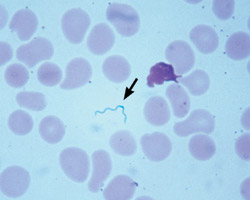
borrelia-in-blood6. Borrelia exists sparsely in the blood.  This is the reason it is difficult to test for it directly and an antibody panel is used.  PCR tests look for DNA directly in the blood but only detect a small number of cases.

Yet an antibody test only works well when the microbe is visible to the immune system, and can generate antibodies against it.  Lyme-borreliosis and the other stealth co-infections have numerous survival techniques of immune system evasion, including techniques for cloaking themselves and disrupting the body’s natural immune system response.

7. Failure to generate antibodies.  An antibody test also only works if a person’s immune system is strong enough to generate an antibody response. Late stage patients or immune compromised patients may not mount an appropriate antibody response.

8. Species Variation. There are 5 known subspecies, and over 100 strains of Borrelia in the US and 300 worldwide (source: http://www.ILADS.org), yet the SWB only tests bands for 1 subspecies of Borrelia burgdorferi; specialized testing labs such as IGENEX test for only two.  Ideally, the testing would be region-specific.

That was a lot of information to take in, so here are 3 main points to take away, to help you self-advocate and navigate the Lyme diagnosis maze:

  • If you are dealing with an acute case of Lyme disease or a recent bite, know that any Lyme test given before 6 weeks out is not likely to be accurate, since it takes that long for your body to generate the antibodies to the bands that the Western Blot tests for. tick

  • I didn’t waste any time discussing the ELISA test for Lyme disease in this article – and don’t waste any of your time with this lab!  For numerous reasons, it is even less accurate than the Western Blot for detecting Lyme-Borreliosis.
  • If your Lyme Western Blot came back negative, and you are a little or a lot sick, it is meaningless.  You may very well still have Lyme disease.  Try 6-8 weeks of a natural antimicrobial protocol, and re-test.  You will be more likely to show antibodies at this time (but it’s not a guarantee).
  • Always ask for a copy of your blood work, and look at the test results yourself.  If you have one of the Lyme Borreliosis-specific bands that are positive (again, that’s bands 18, 23, 31, 34, 37, 39, 83 and 94) – even just 1! – even though the CDC (and therefore most doctors) would call it negative, this is a clear positive diagnostic indicator of Lyme disease.  
  • Keep in mind that what you’re suffering from could be a different stealth pathogen, such as Babesia or Bartonella, which require a different lab test, and are also notoriously difficult to detect.

fishing-sunsetThere are times when it becomes impossible to determine whether someone’s health problems are due to Lyme-borreliosis infection or not.

The good news is, from the holistic medical perspective you can still recover your health and your life through treatment that is based on your symptom presentation and the restoration of your energy, immunity and vitality – regardless of whether you ever determine the cause.  The question then becomes, do you want a diagnosis, OR DO YOU WANT TO GET BETTER?


If you are confused about whether or not you have Lyme, a co-infection, or other complex chronic disease, call us at 845-687-6211 or email info@uprootinglyme.com to set up an in-person or virtual holistic Lyme consultation at reasonable rates. We’ll help you interpret your labs and co-create a strategic holistic treatment plan. Navigating Lyme disease is confusing, and confusion can cost you time and money that could be spent on getting the treatment you need. Contact us now!

____________________

**Comment**

Great article with many valid points.  CDC 2-tiered testing is virtually worthless and the required arbitrary and stringent antibody levels are asinine.  For a quote on this:

“setting arbitrary level of antibodies to diagnose a disease that has not been amenable to Koch’s postulates seems open to question.  By the same token, ignoring antibody results unless they meet arbitrary levels seems suspect.  The vast majority of patients in this series showed some WB antibody exposure, but many did not meet the arbitrary limits set….in our present state of knowledge, the diagnosis of chronic Lyme disease is a clinical one.  Many of the patients in this series have suffered serious ‘hurts’ when they have been told that they could not have LD because their WB did not meet arbitrary limits.”  Dr. Waisbren https://madisonarealymesupportgroup.com/2017/07/09/idsa-founder-used-potent-iv-antibiotics-for-chronic-lyme/

I’ve been in discussion with a PhD who is researching Lyme testing. He feels, as do I, that testing should initially cast a wide net with follow up testing being more specific; however, just the opposite is true with current testing.  He also questions the CDC insistence that p41 is too non-specific to use.  

According to microbiologist Tom Greer p41 is the flagellin protein of all spirochetes and is usually the first to appear after a Bb infection. Western Blot explained by Grier

For another great read on testing:  https://madisonarealymesupportgroup.com/2018/09/12/lyme-testing-problems-solutions/

Please remember that this testing is ONLY for Lyme disease and will NOT pick up coinfections.  The tests for those, as stated in this article, are just as abysmal.

A trained Lyme literate doctor is experienced in understanding the symptoms of all of these pathogens and will diagnose you clinically.  They understand the limitations of testing.  The Horowitz questionnaire has been validated and is a much better indicator of infection:  https://madisonarealymesupportgroup.com/wp-content/uploads/2016/01/symptomlist.pdf  If you suspect you are infected, print this out, fill it out, and take it with you to your first appointment.  Avoid mainstream medicine if at all possible as they are truly in the dark ages with all things tick-borne.

Until medical professionals realize this is not a straight forward disease, patients need to seek help from those who understand it.

https://www.medscape.com/viewarticle/922645?src=rss

Immunoassay May Help Identify Pediatric Lyme Arthritis

By Marilynn Larkin

December 18, 2019

NEW YORK (Reuters Health) – In Lyme disease-endemic areas, a C6 peptide enzyme immunoassay (EIA) test may help guide initial management of children with acute arthritis, an observational study suggests.

“Children with Lyme disease frequently present to the emergency department with an inflamed joint,” Dr. Lise Nigrovic of Boston Children’s Hospital told Reuters Health by email. “Although Lyme arthritis is initially treated with oral antibiotics, many children will undergo an invasive procedure such as a joint tap or even wash-out as part of the initial evaluation.”

“We demonstrated that the C6 EIA test, a previously approved first-tier test for Lyme disease, with results available within a few hours, could be used to safely guide initial management for children with inflamed joints to avoid unnecessary invasive procedures for children with Lyme arthritis,” she said.

The authors performed C6 EIA tests on 911 children presenting to a Pedi Lyme Net emergency department from 2015-2019. Lyme arthritis was defined as a positive or equivocal C6 EIA test followed by a positive supplemental immunoblot result; septic arthritis was defined as a positive synovial fluid culture result or a positive blood culture result with synovial fluid pleocytosis. Other cases were considered inflammatory arthritis.

As reported in Pediatrics, C6 EIA test results indicated that 211 children (23.2%) had Lyme arthritis, 11 (1.2%) had septic arthritis, and 689 (75.6%) had other inflammatory arthritis.

A positive or equivocal C6 EIA result had a sensitivity of 100% and specificity of 94.2% for Lyme arthritis. None of the 250 children with a positive or equivocal C6 EIA result had septic arthritis. However, of those with a positive first-tier Lyme disease test result, 75 underwent arthrocentesis (30%) and 27 had an operative joint washout performed (10.8%).

Dr. Eugene Shapiro of Yale School of Medicine in New Haven, Connecticut, coauthor of a related editorial, commented by email to Reuters Health, “In an area in which Lyme disease is endemic, although a positive C6 ELISA result in a child with arthritis of the knee is suggestive of Lyme disease, it does not rule out the possibility that it is due a different bacterium such as Staphylococcus aureus. Clinical judgement is still critical in deciding how to manage such patients.”

Lyme disease specialist Dr. Tania Dempsey, founder of Armonk Integrative Medicine in New York, commented, “The C6 EIA test has shown promise over the older ELISA test that is part of the two-tier Lyme testing recommended by the U.S. Centers for Disease Control and Prevention, dating back to 1995. There are serious limitations to the two-tier test, including a nearly 50% false-negative rate.”

“While this study shows promise . . . to accurately identify Lyme arthritis with the use of the C6 EIA test, it is not clear what the false negative rate was,” she told Reuters Health by email. “Their numbers show that they were able to diagnose 23.2% of children with Lyme arthritis and 1.2% with septic arthritis. But 75.6% were identified as having inflammatory arthritis, which means that the diagnosis is unclear. Based on the published false negative rate of this test, we can assume that a fair percentage of those with inflammatory arthritis probably had Lyme arthritis.”

“One key point is that the study design included a confirmatory immunoblot test for C6 EAI positive or equivocal results. This would be equivalent to a two-tier test,” she noted. However, “no immunoblot testing was done on any of the C6 EAI- negative results. Since we we know a large number of patients will be missed by this (test), it is discouraging to think of all those patients who might still be suffering with Lyme disease that was undetected with the screening C6 EAI test.”

“There is no question that we need better testing for Lyme disease,” she said. “The C6 EIA has some benefits but is clearly not sufficient.

SOURCE: http://bit.ly/34fODsR and http://bit.ly/2EgdP8g Pediatrics, online December 13, 2019.

__________________

**Comment**

While this article desires to make you believe this test is accurate, Dr. Demsey clearly points out it has many problems including not knowing what the false negative rate was, as well as the fact 75.6% were identified as having inflammatory arthritis –  meaning that the diagnosis is unclear. And lastly, based on the published false negative’s, a fair percentage of those with inflammatory arthritis probably had Lyme arthritis.

Take away:  The test still sucks.

For more:  https://madisonarealymesupportgroup.com/2019/03/07/yet-another-worthless-study-showing-2-tiered-lyme-testing-can-not-rule-infection-out/

https://madisonarealymesupportgroup.com/2019/12/01/c6-peptide-test-for-lyme-disease-may-indicate-borrelia-miyamotoi-infection/

https://madisonarealymesupportgroup.com/2019/08/15/borrelia-miyamotoi-infection-leads-to-cross-reactive-antibodies-to-the-c6-peptide-in-mice-men/

https://madisonarealymesupportgroup.com/2018/09/12/lyme-testing-problems-solutions/