https://www.ncbi.nlm.nih.gov/pubmed/32106890

2020 Feb 27;13(1):106. doi: 10.1186/s13071-020-3969-7.

Borrelia miyamotoi and Borrelia burgdorferi (sensu lato) identification and survey of tick-borne encephalitis virus in ticks from north-eastern Germany.

Abstract

BACKGROUND:

Ixodes ricinus is the most common tick species in Europe and the main vector for Borrelia burgdorferi (sensu lato) and tick-borne encephalitis virus (TBEV). It is involved also in the transmission of Borrelia miyamotoi, a relapsing fever spirochete that causes health disorders in humans. Little is known regarding the circulation of Borrelia species and the natural foci of TBEV in north-eastern Germany. The goal of this study was to investigate the infection rates of Borrelia spp. and of TBEV in I. ricinus ticks from north-eastern Germany.

METHODS:

Ticks were collected by flagging from 14 forest sites in Mecklenburg-Western Pomerania between April and October 2018. RNA and DNA extraction was performed from individual adult ticks and from pools of 2-10 nymphs. Real time reverse transcription PCR (RT-qPCR) targeted the 3′ non-coding region of TBEV, while DNA of Borrelia spp. was tested by nested PCR for the amplification of 16S-23S intergenic spacer. Multilocus sequence typing (MLST) was performed on B. miyamotoi isolates.

RESULTS:

In total, 2407 ticks were collected (239 females, 232 males and 1936 nymphs). Female and male I. ricinus ticks had identical infection rates (both 12.1%) for Borrelia spp., while nymphal pools showed a minimum infection rate (MIR) of 3.3%. Sequencing revealed four Borrelia species: B. afzelii, B. garinii, B. valaisiana and B. miyamotoi.

  • Borrelia afzelii had the highest prevalence in adult ticks (5.5%) and nymphs (MIR of 1.8%)
  • Borrelia miyamotoi was identified in 3.0% of adults and registered the MIR of 0.8% in nymphs
  • Borrelia valaisiana was confirmed in 2.5% adult ticks and nymphs had the MIR of 0.7%
  • B. garinii was present in 1.1% of adults and showed a MIR of 0.1% in nymphs
  • The MLST of B. miyamotoi isolates showed that they belong to sequence type 635.
  • No tick sample was positive after RT-qPCR for TBEV RNA.

CONCLUSIONS:

The prevalence of B. miyamotoi in I. ricinus ticks registered similar levels to other reports from Europe suggesting that this agent might be well established in the local tick population.

The detection of B. burgdorferi (s.l.) indicates a constant circulation in tick populations from this region.

___________________

**Comment**

If four borrelia species were discovered in German ticks, it’s highly likely these same ticks are transmitting to humans. German patients are sunk if doctors are utilizing worthless CDC 2-tiered testing as it ONLY uses one strain, which isn’t even discussed in this paper (B. burgdorferi).

Borrelia afzelii, miyamotoi, and garinii ALL are pathogenic to humans.

This 2004 article shows they found valaisiana in the cerebrospinal fluid in a, “61-year-old man with a history of spastic paraparesis, which is strong clinical evidence of advanced neuroborreliosis.” They further state, “This report is the first of genetic detection of B. valaisiana in CSF, which indicates a probable association of this genospecies with disease in humans.”  https://wwwnc.cdc.gov/eid/article/10/9/03-0439_article

Sixteen years later we still don’t know if valaisianna is pathogen to humans.

This, right here, is why we don’t need more climate data.
We need to know what is causing disease in humans, and how to detect it (test), and treat it.

For more:  https://madisonarealymesupportgroup.com/2018/11/07/ticks-on-the-move-due-to-migrating-birds-and-photoperiod-not-climate-change/

http://med.stanford.edu/news/all-news/2020/03/potential-treatment-for-lingering-lyme-disease.html

Potential treatment for Lyme disease kills bacteria that may cause lingering symptoms, study finds

Screening thousands of drugs, Stanford scientists determined that in mice, azlocillin, an antibiotic approved by the Food and Drug Administration, eliminated the bacteria that causes Lyme disease.

By TRACIE WHITE, a science writer in the Office of Communications. Email her at tracie.white@stanford.e

MAR 12, 2020

For decades, the routine treatment for Lyme disease has been standard antibiotics, which usually kill off the infection. But for up to 20% of people with the tick-borne illness, the antibiotics don’t work, and lingering symptoms of muscle pain, fatigue and cognitive impairment can continue for years — sometimes indefinitely.

A new Stanford Medicine study in lab dishes and mice provides evidence that the drug azlocillin completely kills off the disease-causing bacteria Borrelia burgdorferi at the onset of the illness. The study suggests it could also be effective for treating patients infected with drug-tolerant bacteria that may cause lingering symptoms.

“This compound is just amazing,” said Jayakumar Rajadas, PhD, assistant professor of medicine and director of the Biomaterials and Advanced Drug Delivery Laboratory at the Stanford School of Medicine. “It clears the infection without a lot of side effects. We are hoping to repurpose it as an oral treatment for Lyme disease.” Rajadas is the senior author of the study, which was published online March 2 in Scientific Reports. The lead author is research associate Venkata Raveendra Pothineni, PhD.

“We have been screening potential drugs for six years,” Pothineni said. “We’ve screened almost 8,000 chemical compounds. We have tested 50 molecules in the dish. The most effective and safest molecules were tested in animal models. Along the way, I’ve met many people suffering with this horrible, lingering disease. Our main goal is to find the best compound for treating patients and stop this disease.”

Hunting for alternative drug

Frustrated by the lack of treatment options for Lyme disease patients with lingering symptoms, Rajadas and his team began hunting for a better alternative in 2011. In 2016, they published a study in Drug Design, Development and Therapy that listed 20 chemical compounds, from about 4,000, that were most effective at killing the infection in mice. All 20 had been approved by the Food and Drug Administration for various uses. One, for instance, is used to treat alcohol abuse disorder.


In this most recent study, azlocillin, one of the top-20 contenders, was shown to eclipse a total of 7,450 compounds because it is more effective in killing B. burgdorferi and causes fewer side effects. Lyme disease affects more than 300,000 people annually, according to the Centers for Disease Control and Prevention. It can affect various organs, including the brain, skin, heart, joints and nervous system, and cause heart problems and arthritis if untreated. Symptoms include fever, headaches, chills, and muscle and joint pain.

Traditional antibiotics, such as doxycycline, are effective as an early course of treatment for the infection in the majority of patients, but it remains unclear why these drugs fail to treat 10% to 20% of patients, Rajadas said.

“Some researchers think this may be due to drug-tolerant bacteria living in the body and continuing to cause disease,” said Rajadas, who is also a member of the Lyme Disease Working Group at Stanford. “Others believe it’s an immune disorder caused by bacteria during the first exposure, which causes a perpetual inflammation condition. Whatever the cause, the pain for patients is still very real.”

Azlocillin comes out on top

The drug, which is not on the market, was tested in mouse models of Lyme disease at seven-day, 14-day and 21-day intervals and found to eliminate the infection. For the first time, azlocillinwas also shown to be effective in killing drug-tolerant forms of B. burgdorferi in lab dishes, indicating that it may work as a therapy for lingering symptoms of Lyme disease.

Pothineni and Rajadas have patented the compound for the treatment of Lyme disease and are working with a company to develop an oral form of the drug. Researchers plan to conduct a clinical trial. 

Rajadas is also a professor of bioengineering and therapeutic sciences at the University of California-San Francisco.

Other Stanford co-authors are Hari-Hara S. K. Potula, PhD, senior research scientist; postdoctoral scholars Aditya Ambati, PhD, and Venkata Mallajosyula, PhD; senior research scientist Mohammed Inayathullah, PhD; and intern Mohamed Sohail Ahmed.

A researcher at Loyola College in India also contributed to the work.

The study was funded by the Bay Area Lyme Foundation and Laurel STEM Fund.


Those who go on to experience lingering symptoms are 40-60% of all patients:  https://madisonarealymesupportgroup.com/2019/02/25/medical-stalemate-what-causes-continuing-symptoms-after-lyme-treatment/ We keep being told it’s only 10-20% when that group only includes those diagnosed and treated early.  It doesn’t and shouldn’t included a larger group of 30-40% who are diagnosed and treated late.  Add the two groups and you have up to 60% going on with chronic symptoms.  That’s a big deal and should warrant much more attention than it’s currently getting.
The study mentions –
  • disulfiram:  Excerpt:  An interesting drug candidate identified in the study was the alcohol dehydrogenase inhibitor, disulfiram. Though the drug is used as a treatment of alcohol abuse, recently its anticancer potential has also been discovered. It has been known to make complexes with metal ions and cause the disruption of the proteasome, leading to death of the cancer cells. Similarly, the metabolites of the drug molecule have been known to significantly inhibit the growth of a number of bacterial species, including the biofilm-forming Pseudomonas aeruginosa.62 The drug molecule has a good bioavailability, and it passes the blood–brain barrier to show its effect in the central nervous system. Though most of the studies are concerned to the use of the drug molecule in alcoholism yet, being a safe, FDA-approved molecule, the drug can be repurposed for its antibacterial potential.  Study here:  https://flightpath.bio/wp-content/uploads/2020/02/liegner.pdf
  • azlocillin and cefataxime:   Excerpt:  As we observe that azlocillin sodium and cefotaxime acid show low MIC values, we studied time kill studies to determine the rate of antimicrobial activity. In our observation, both azlocillin sodium and cefotaxime acid reduced Borrelia no 3-log10-unit (99.9%) between 48 hours and 72 hours at concentrations 2.5 μM and 5 μM, respectively.  Study here:  https://flightpath.bio/wp-content/uploads/2020/03/s41598-020-59600-4.pdf
Azlocillin is currently only available overseas and in IV form but a company called Flightpath biosciences https://flightpath.bio/pipeline/ is working on an oral formulation and says it has demonstrated in vivo efficacy in mice. This could be a good alternative to Disulfiram as it doesn’t carry some of the risks associated with DSF and doesn’t require a whole lifestyle change.
From their website:

Azlocillin was approved as Azlin® by the FDA on September 3rd, 1982 as a semisynthetic broad spectrum penicillin antibiotic to treat Pseudomonas aeruginosa via intravenous administration. Commercially, the drug was safe and well tolerated and had a limited side effect profile, with warnings and contraindications related only to a patient history of penicillin sensitivities.

In laboratory plate experiments, our scientific team demonstrated that azlocillin significantly inhibited the growth of drug-tolerant Borrelia burgdorferi (Bb) bacteria in a manner far better than doxycycline (the standard of care).

Azlocillin also reduced Lyme disease related inflammation in mice infected with Bb for seven days, compared to the saline control, telismartin, and doxycycline. Upon completion of additional pharmacokinetic and efficacy studies in animals at Tulane University, we hope to advance FP-101 into clinical trials in acute and PTLDS indications in the near future.  https://flightpath.bio/pipeline/

https://www.pennlive.com/life/2020/03/almost-half-of-deer-ticks-carry-lyme-disease-new-study.html

Almost half of deer ticks carry Lyme disease: New study

Blacklegged/deer tick

The blacklegged ticks, Ixodes pacificus (depicted here), and I. scapularis, are known vectors for the zoonotic spirochetal bacteria, Borrelia burgdorferi, which is the pathogen responsible for causing Lyme disease. The ticks, inoculated with the bacterium when they bite infected mice, squirrels and other small animals, subsequently pass the pathogens to their human victims when they obtain a blood meal. Here, you are looking at a dorsal view of a female I. pacificus hard tick. (Courtesy of CDC/ James Gathany; William L. Nicholson, Ph.D.)

Nearly half of more than 2,000 deer ticks collected last year for a new study in Connecticut were infected with Lyme disease.

Of 2,068 deer ticks tested at the Center for Vector Biology and Zoonotic Diseases at the Connecticut Agricultural Experiment Station in New Haven, Connecticut, 46 percent carry the Lyme disease pathogen Borrelia burgdorferi.

About 13 percent also carried the human disease-causing pathogen Babesia microti, which causes babesia, a life-threatening infection of the red blood cells in humans.

Researchers found that 9 percent of the adult ticks carried Anaplasma phagocytophilum, which causes anaplasmosis, which is marked by fever, headache, chills and muscle aches; 2 percent carried Borrelia miyamotoi, which cause hard tick relapsing fever, bacterial infection that can cause recurring bouts of fever, headache, muscle and joint aches and nausea; and 1 percent carried Powassan virus, which can cause Powassan encephalitis, which produces symptoms of fever, headache, vomiting and weakness, and can lead to encephalitis) meningitis.

The ticks were gathered in the first year of a new federally funded Connecticut-wide surveillance program for ticks and associated tick-borne diseases.

More than 2,500 ticks were collected throughout spring, summer and fall 2019 from 40 publicly accessible locations in all eight Connecticut counties and screened for five different human disease-causing pathogens.

Deer ticks, also known as black-legged ticks, were the most collected species, at 2,068 adult ticks, followed by American dog tick, at 437; lone star tick, at 3; and Asian longhorned tick, at 2.

All adult female and nymphal deer ticks were tested at CAES for the presence of the five different disease-causing pathogens.

About 15 percent of the nymphs carried Lyme disease, 6 percent carried babesiosis, 5 percent carried anaplasmosis and 2 percent carried hard tick relapsing fever.

The survey was funded by a one-year grant issued from the Centers for Disease Control and Prevention through the Connecticut Department of Public Health and has potential to continue into a multi-year effort to document tick and pathogen abundances statewide to inform the public so appropriate precautions are taken when spending time outdoors.

_________________

**Comment**

So, similarly to CDC 2-tiered testing, “heads you win, tails you lose.” 

A while back I posted the following information about nationwide tick testing results:

Our current research shows that 60% of tick tested are infected with at least one disease causing organism, 38% are co-infected with two or more, 15% carry three or more, and 5% of the ticks tested carry four or more.  https://www.tickcheck.com/statistics

The percentage of Wisconsin ticks being infected, as of 2017:

On average, about 22 percent of deer tick nymphs in Wisconsin have been found to be infected with Borrelia burgdorferi. The infection rate for adults is about twice as high, around 40-45 percent. In some locations, though, researchers have found infection rates as high as 75 percent of the tick population.

The number of deer ticks in specific areas of Wisconsin can vary widely by area, by landscape, and by forest type. Researchers have not found any relationship with the numbers of white-footed mice or white-tailed deer in any given areas.  https://www.wiscontext.org/deer-ticks-wisconsin-and-diseases-they-carry

Russell Labs states the following:

In 2019, we documented established populations of the deer tick in every Wisconsin County except for Dodge and Winnebago. In those two counties, we found a very low number. Any forested locations could be a source of deer ticks and Lyme Disease.  https://wisconsin-ticks.russell.wisc.edu

Waukesha, Dane, and Sauk counties have the highest reported rates of Lyme disease in Wisconsin: https://dhsgis.wi.gov/DHS/EPHTracker/#/map/Lyme%20Disease/lymeIndex/NOTRACT/Cases/lymeCtyIndex1

Please remember, this is only covers Lyme disease statistics. Wisconsin is home to many other diseases spread by ticks and we are a hot spot for Powassan Virus.
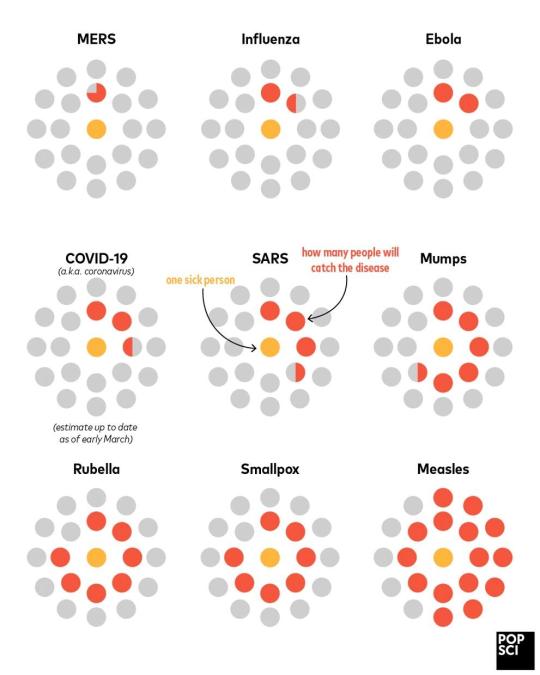
0-16Coronavirus is on par with SARS in terms of infectiousness.

Infographic by Sara Chodosh

https://www.popsci.com/story/health/how-diseases-spread/

https://globallymealliance.org/lobbying-for-lyme-disease-on-capitol-hill/

LEARNING FIRST-HAND THE POWER OF COMING TOGETHER TO GET THINGS DONE, AS LYME PATIENTS AND ADVOCATES JOINED TOGETHER IN WASHINGTON, D.C. TO LOBBY FOR LYME DISEASE RESEARCH AND AWARENESS

March 9, 2020

by Sara Tyghter, Director of Education and Outreach, GLA (pictured with HHS Deputy Secretary Eric Hargan)

lobby-for-lyme_sara-tyghter_eric-hargan

As I traveled to the Center for Lyme Action’s (CLA) first Washington, D.C. “Fly In” last month, I wasn’t sure what to expect. I knew CLA, a new advocacy group focused on lobbying at the federal level, had organized a two-day program (Feb. 11-12) and that Lyme advocates would be converging on the nation’s capital to make their voices heard. But I had never done any lobbying before.

Any feelings of apprehension quickly disappeared as I joined with 60 advocates from across the country who were in D.C. to tell their Congressional representatives why federal funding to grow Lyme and other tick-borne disease programs is urgently needed. More specifically, we wanted to ensure that they maintain their strong commitment to the Kay Hagan Tick Act. Signed into law in December 2019, the Tick Act represents critical federal support for researchers as well as millions of people suffering from Lyme disease; it still requires funding ($150 million over five years) and there is no guarantee these monies will be appropriated.

lobbying for lyme
Team GLA, L-R: Ambassadors Mark Liberto, Breanna Liberto, Jen Kenley, Melinda Sander, GLA Director of Education and Outreach Sara Tyghter, and GLA Peer Mentor Kiki Penn

It was rewarding meeting with those representing other Lyme organizations, or who were there on their own because they are passionately committed to ensuring Lyme disease research receives the attention it deserves. I was delighted to finally meet with six Global Lyme Alliance volunteers who are committed to raising Lyme disease awareness in their communities; these were GLA Education Ambassadors Mark Liberto and his wife, BreAnna (Pennsylvania), Jen Kenley and her mom Wendy Crane (Tennessee), Melinda Sander (Missouri), and Peer to Peer Mentor Kiki Penn (Florida). In addition, GLA supporters Alex and Lynda Moresco (Illinois) were also there to lobby their local officials.

Rep. Vicky Hartzler's (R-MO) Senior Legislative Asst Bryan McVae, GLA volunteer Alex Moresco, GLA Ambassador Melinda Sander
Rep. Vicky Hartzler’s (R-MO) Senior Legislative Asst Bryan McVae, GLA volunteer Alex Moresco, GLA Ambassador Melinda Sander

After arriving, we all went to the Capitol for training and later to attend an awards dinner honoring Sen. Susan Collins (R-ME) and others who have sponsored and supported legislation for Lyme disease. Others receiving awards were Senator Tina Smith (D-Minnesota), Congressman Chris Smith (R-New Jersey) and Congresswoman Anna Eshoo(D-California).

Sen. Marsha Blackburn (R-TN) with GLA Ambassador Jen Kenley (
Sen. Marsha Blackburn (R-TN) with GLA Ambassador Jen Kenley

The second day was devoted to meeting Senators and Congressional representatives, though most of us met with their staff members. CLA had supplied us with talking points and information packets for distribution. We went to meetings in various Senate office buildings and the Capitol wearing distinctive bright green neck scarfs we all had been given. (I learned that such colored identifiers are being used these days by grassroots lobbying efforts). After two days I looked at my Fitbit and saw I’d walked eight miles.

Sen. Roy Blunt (R-MO) with GLA Ambassador Melinda Sander

I along with another advocate from Connecticut met with three state offices representing our state of Connecticut—the legislative correspondent for Sen. Christopher Murphy, and legislative assistants for Sen. Richard Blumenthal  and Congressman Jim Himes. At all of our meetings I was impressed by the level of knowledge regarding risks associated with contracting Lyme disease as well as the long-term complications that people living with the illness may experience. The representatives were empathetic and truly wanted to understand the overall impact of the disease on patients and their families—not just in terms of physical health, but finances and emotions as well. I walked away from each meeting feeling confident that our lobbying efforts were well received. Our meetings were truly rewarding because every office representative we met with possessed a long-standing commitment to the Lyme community, and knew the importance of allocating the funds to support the Kay Hagan Tick Act and other Lyme-related projects.

After my two days there, I felt energized and more determined than ever to spread the message that federal funds for Lyme and other tick-borne diseases must be fully committed if we are to protect the long-term health of an increasingly vulnerable segment of Americans. It was truly a worthwhile endeavor and I’m proud to have been a part of this effort. As Senator Collins said, “we must knockout these devastating diseases.” Lobbying was new to me, but I am ready to continue the fight!