Revealed: Basic Math Error Likely Cause Of Global Coronavirus Panic!
Published on
Written by Jim Holt
Before the US economy disintegrates into nothingness — Will any so-called expert out there also notice that the WHO Director caused a global coronavirus panic over a basic math error?
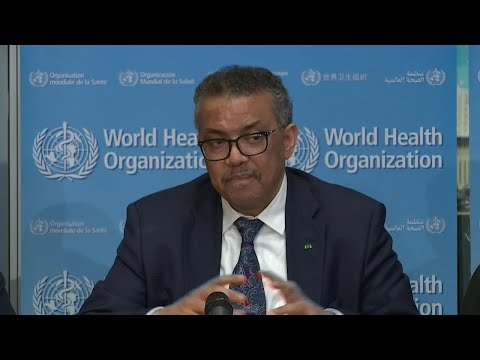
The controversial Ethiopian politician and Director General of the World Health Organization (WHO), Tedros Adhanom Ghebreyesus, claimed in a press conference in early March that the fatality rate for the coronavirus was many multiples that of the fatality rate of the common flu.
While many people globally have built up immunity to seasonal flu strains, COVID-19 is a new virus to which no one has immunity. That means more people are susceptible to infection, and some will suffer severe disease.
Globally, about 3.4% of reported COVID-19 cases have died. By comparison, seasonal flu generally kills far fewer than 1% of those infected.
This statement led to the greatest panic in world history as the global elite media shared and repeated that the coronavirus was many, many times more deadly than the common flu.
The Problem Is His Statement Is False.
It Was Not Accurate!
As The Gateway Pundit reported Monday, the coronavirus mortality rate reported by the media as stated by Dr. Ghebreyesus is completely inaccurate.
Here’s a summary of the analysis updated with today’s latest numbers proving the Director General’s statement was very misleading and materially false:
N/A – not available
A look at the numbers:
** Tedros Adhanom Ghebreyesus used the actual number of deaths due to coronavirus divided by confirmed cases to get his 3.4% mortality rate number (from last week -since that time the mortality rate based on current reported numbers is near 4%)
** Tedros Adhanom Ghebreyesus then compared the actual coronavirus mortality rate to an estimated flu mortality rate of 0.1% — The US flu mortality rate is based on an estimated 22,000 deaths divided by an estimated 36 million flu cases giving a 0.1% mortality rate.
** Tedros Adhanom Ghebreyesus compared known numbers for coronavirus (3.4 percent mortality rate) but did not include the estimated number of those infected who are asymtomatic. This number is likely in the tens of thousands and could be in the millions! There is no way of knowing right now. One study released this week revealed that 6 of 7 people infected by coronavirus are asymptomatic! They do not know they are infected!
** Tedros Adhanom Ghebreyesus then compared the known numbers of 206,845 cases of coronavirus to the millions of estimated annual cases of flu cases. Again he does not include the asymtomatic cases, the 6 of 7 people infected who do not suffer severe symptoms.
** If asymtomatic cases are included in Ghebreyesus’s calculation the actual mortality rate of the coronavirus is somewhere between 0.2% to 0.8% or lower.
**Tedros Adhanom Ghebreyesus’s calculations of a 3.4% mortality rate is off by nearly 3.0%!
Ghebreyesus compared apples to oranges and his numbers were completely inaccurate!
* * * * * * * * * * *
As of Wednesday morning.
There were 7,301 confirmed cases in the US.
There were 116 confirmed deaths associated with the coronavirus in the US.
The mortality rate for those two sets of numbers is 1.6%.
We also know that according to a new study by the journal Science — 6 of 7 coronavirus victims, or 86% of infections, were undocumented.
If latest study published in the Science journal is correct then the coronavirus scare will be the greatest hoax in world history causing trillions and trillions of dollars in economic damage.
The WHO and Tedros Adhanom Ghebreyesus need to be held responsible!
PRINCIPIA SCIENTIFIC INTERNATIONAL, legally registered in the UK as a company
incorporated for charitable purposes. Head Office: 27 Old Gloucester Street, London WC1N 3AX.
__________________
**Comment**
No one is denying there are serious, even fatal cases of viral illnesses (some are of the Corona type). There always have been and there always will be. No one is diminishing the need for everywhere to take care of themselves (something we should already be doing) and avoid people when sick. What is going on right now; however, is beyond sanity and needs to be checked and reigned in.
I’m far more worried about the actions of panic-driven people than I am of a virus.
And then there’s this interesting 2015 article: https://www.nature.com/news/engineered-bat-virus-stirs-debate-over-risky-research- that has a recently added disclaimer that their story is being unwittingly used for unverified theories that this virus was engineered. Two of the authors work at the Key Laboratory of Special Pathogens & Biosafety, Institute of Virology, in Wuhan, China
Key take-aways from the article (you be the judge about engineered viruses):
Scientists investigated a virus found in horseshoe bats in China and then created a chimeric virus which included part of the bat virus and part SARS virus. They found this newly created virus infects human airway cells.
Virologist Simon Wain-Hobson points out that this novel virus grows “remarkably well” in human cells, and “If the virus escaped, nobody could predict the trajectory.”
The study began before a US moratoriumon federal funding for this type of SARS, influenza, and MERS research that increases virulence (gain of function). The NIH allowed it to proceed and concluded the work was not so risky as to fall under the moratorium.
Per usual, there’s people who stand to gain a lot from a panic. I wish I could say scientists are immune from this, but more and more science is being hijacked by unethical people who care more about obtaining grants than they do about the truth. We see this in Lyme/MSIDS research, vaccine research, and in many other areas. Also, authorities are covering up details about the origin of this virus and the role they played in its potential spread.
The truly frightening aspect, besides the diminishing individual freedoms and negative impact on the economy, is the forthcoming vaccine which has been fast-tracked and bypasses important animal testing phase:
This study provides a novel method of documenting established populations of bird-feeding ticks. Single populations of the blacklegged tick, Ixodes scapularis, and the rabbit tick, Haemaphysalis leporispalustris, were revealed in southwestern Québec, Canada. Blacklegged tick nymphs and, similarly, larval and nymphal rabbit ticks were tested for the Lyme disease bacterium, Borrelia burgdorferi sensu lato (Bbsl), using PCR and the flagellin (flaB) gene, and 14 (42%) of 33 of blacklegged tick nymphs tested were positive. In contrast, larval and nymphal H. leporsipalustris ticks were negative for Bbsl. The occurrence of Bbsl in I. scapularis nymphs brings to light the presence of a Lyme disease endemic area at this songbird nesting locality. Because our findings denote that this area is a Lyme disease endemic area, and I. scapularis is a human-biting tick, local residents and outdoor workers must take preventive measures to avoid tick bites. Furthermore, local healthcare practitioners must include Lyme disease in their differential diagnosis.
___________________
**Comment**
The article is quick to point out that while THIS study didn’t find Bbsl in H. leporsipalustris ticks (rabbit tick), past research has. If you read the entire study you will see the following excerpts:
4.4. H. leporispalustris Vector Competency
In this study, we did not identify Bbsl in H. leporispalustris ticks. However, Banerjee et al. detected Lyme disease spirochetes in H. leporispalustris ticks collected from a snowshoe hare, Lepus americanus, in northern Alberta [47]. As well, Scott et al. discovered Borrelia lanei-like spirochetes and a Babesia divergens-like piroplasm concurrently in a H. leporispalustris (female) collected from an eastern cottontail, Sylvilagus floridanus, in southern Manitoba [48]. Scott & Durden provide the first record of a Bbsl-positive H. leporispalustris (nymph) collected from an avian host (Swainson’s Thrush) in Canada [14]. Previously, Scott et al. found Bbsl in a H. leporispalustris larva parasitizing a passerine (Canada Warbler) in Québec suggesting that this tick species is a reservoir-competent host [8]. During southbound, fall migration in Canada, larval and nymphal H. leporispalustris frequently parasitize passerines, and are widely dispersed in southern regions.
4.5. Ticks Co-infest Songbirds
One Veery was co-infested with H. leporispalustris (one nymph and one larva), and I. scapularis (two nymphs). Not only is there a breeding colony of I. scapularis present in this Laurentian River basin, an established population of H. leporispalustris is also there. Since these ixodid ticks were collected during the nesting and fledgling period, this bird parasitism denotes a cohabitation of two tick species in this sylvan locale, and signifies that these two tick species are sympatric. The Veery has trans-border and trans-equatorial migration during its northward spring flight, and has a breeding range in southern Canada, including southwestern Québec and northern United States; the wintering range is in central and southeastern Brazil (Figure 4). During the breeding, nesting, and fledgling period, Veeries have localized activity in juxtaposition to the stationary nest. When the young have fledged the nest, these passerines replenish their fat reserves, and prepare for the southbound trek to wintering ranges in southern latitudes during August and September. In late July, they typically moult in preparation for the southbound marathon flight.
Why this is important: because we continue to be told that ONLY the black legged tick transmits Lyme to humans. Here we are told transmission by the rabbit tick (H. leporispalustris) is rare:https://en.wikipedia.org/wiki/Haemaphysalis_leporispalustris
The following pathogens have been found in the rabbit tick:
The two studies used as references in the wikipedia article state the following about the rabbit tick. While Lyme (borrelia) isn’t mentioned (but should be), Rickettsia is:
We have been able to isolate 2 strains of rickettsiae from the rabbit tickHaemaphysalis leporispalustris, indistinguishable from R. rickettsii isolated from humans in our country (Costa Rica).http://www.ajtmh.org/content/journals/10.4269/ajtmh.1985.34.564
Regarding borrelia (Lyme) in the rabbit tick please note that in 4.4 above, Scott et al. found Bbsl in a H. leporispalustris larva parasitizing a Warbler suggesting that this tick species is a reservoir-competent host. In essence, the rabbit tick clearly has borrelia strains within it. And further, during southbound, fall migration in Canada, larval and nymphal H. leporispalustris frequently parasitize passerines, and are widely dispersed in southern regions.In essence, ticks with borrelia are infecting birds that are then going South and spreading their pathogens there.
Let’s say hypothetically that the rabbit tick is incapable of transmitting Lyme to humans. Who’s to say that an animal that is co-infested with both black-legged ticks & rabbit ticks (as happened in this study) can’t then harbor all of these pathogens simultaneously that could in the the future be be transmitted to humans through the feedings of successive ticks?
I’m just a simple woman, but it appears to me that nobody is considering this. They would rather look at old studies that state emphatically that only certain ticks in certain locations can transmit to humans and then smugly send patient after patient home with an anti-depressant. Either we are all nuts or lying, OR something is happening out there that isn’t being picked up. I vote for the latter.
The study shows that established borrelia infested ticks feeding on songbirds are spreading borrelia (and other things I’m sure) into new areas – far away from where they started and rodents are maintaining the cycle all year round.
There is no “safe” time of the year.
Lastly, of epidemiological merit 100% of tested American Robins were positive for Bbsl.
Multiple methodologies have been used to detect antibodies to Babesia microti. Use of an indirect immunofluorescence assay (IFA) has been the most widely used approach, but IFAs have varied as to which antibody class or classes are being detected and in regard to cutoff titers. In this study, 245 different patients with polymerase chain reaction (PCR)-confirmed B. microti infection were tested by a polyvalent IFA using serum collected within 3 days of the date the blood sample for PCR testing was obtained. Of the 245 patients, 243 (99.2%) had a positive serologic test result (i.e., ≥1:64). Of the 243 patients who were seropositive, 242 (99.6%) had a titer of ≥1:256, 236 (97.1%) had a titer of ≥1:512, and 210 (86.4%) had a titer of ≥1:1024. In conclusion, high titer seropositivity based on a polyvalent IFA is to be expected at the time of PCR confirmation of active babesiosis in clinical practice.
ANTI-BORRELIA ANTIBODY STAINING OF CULTURED BIOFILMS IN HUMAN BLOOD
Peter Kemp
Private researcher at Private borreliosis research
INTRODUCTION
Antibody staining can detect specific proteins when a sample contains matching antigens. This experiment used polyclonal antibodies to borrelia burgdorferi targeting at least 5 different proteins. The antibodies used are proprietary off-the-shelf products conjugated with the popular FITC fluorescent molecule and sold by KPL and Abcam. When FITC is excited with blue light it fluoresces and emits green light. With the correct filtering, it is possible to observe only subjects which are fluorescing at specific wavelengths including agents to which the antibodies have bound.
SAMPLE DONORS
All seven UK adult blood sample donors were chronically and long-term ill and six had previously been diagnosed with Myalgic Encephalomyelitis (M.E.). All had symptoms which correspond with Lyme disease.
METHOD
Donors provided 4mls of venous blood in lavender-top vacutainer tubes with EDTA. The blood collection tubes were kept upright for several hours to allow the cells to settle and achieve a degree of cell layering. Gentle centrifuging for 20 minutes at ~20 to 40g’s further compacted and layered the cells. Most of the plasma was drawn-off with a pipette without disturbing the cell layers. 1.5 to 2mls of BSK was gently added to the tubes, minimising disturbance of the cell layers. The tubes were kept at room temperature or incubated at 30°C. Incubation appears to speed the development of a biofilm. After 3 to 7 days all samples developed a bound cluster at the top of the cell layers. This was associated with a cohesive fluid more viscous than the culture medium and which appeared clear to the naked eye. Under the microscope it was slightly milky. The cluster and its associated slime were obtained by removing most of the BSK with a pipette. The cluster could then be ‘grasped’ with a 3ml disposable pipette and with the tube tilted to ~45° or more – was carefully dragged up the side of the tube and deposited on a slide. Sometimes it was easier to grasp the cluster with tweezers, but these have to be very narrow to reach into the tube. Each sample was usually sufficient to prepare 3 – 4 slides. To each slide a drop of FITC conjugated anti-borrelia burgdorferi conjugated antibody, pre-diluted at 10 or 20 to 1, was added and gently mixed.
RESULTS
The results are presented as pairs of micrographs. The top photo in each matched pair, show a normal darkfield image with only the fluorescence emission filter in place. The bottom photo of the pair shows the same field of view with the fluorescence excitation filter installed. In some images refocusing may have slightly offset some subjects. The images can be seen here: https://www.flickr.com/photos/76898309@N08/albums/72157713385691712
DISCUSSION
The experiment requires replication which includes healthy controls which I will not conduct.
It is notable that in experiments with freshly drawn or stored whole blood, minimal signs of staining with anti-B.b antibodies occurs. After simple culture with BSK, some white blood cells appear to contain granules that react and aside from these a few tiny agents are seen to have stained. It is only after culture with BSK using the method described above that spectacular staining occurred. The culture method layers white blood cells and probably a good number of platelets at the top of the sample. This is where the slime substance is found and where the clumped blood cells contain and/or are surrounded by antigenic material. This suggests the possibility that some white blood cells may be reactive. However, further experiments showed that with lymphocytes, eosinophils and basophils, only a small proportion contained granules within the cytoplasm that bound the antibodies.
Replication of the experiment with monoclonal antibodies could help to determine whether a cross-reaction is occurring, and potentially improve efficiency by identifying which particular B.b. proteins are being expressed, if any.
All donors in the current experiment had been ill and symptomatic for many years, mostly for over a decade. If replication as suggested proved the method for identifying infection with B.b., further experiments with shorter term infections would be required to identify within what time range a 4ml blood sample would be reactive.
Brenna and Joel Siebold are seen with their son, Leo, 2, at their home in Mount Horeb, Wis., on Feb. 14, 2020. Leo has heterotaxy syndrome, a condition in which his internal organs are abnormally arranged, causing frequent hospital visits for the family. On Sept. 5, 2018, Leo was taken to the American Family Children’s Hospital in Madison, Wis., with a fever. Medical personnel reported them for possibly abusing the then 9-month-old, citing tiny bruises on his body. Although they were cleared of the allegations, the Siebolds say the episode left them with lingering trauma.
Brenna Siebold had just returned home from teaching third grade at Mount Horeb Intermediate Center. Her 9-month-old son, home with his sitter, was acting sluggish. She took Leo’s temperature: 103 degrees.The fever was only the latest health scare in Leo’s short life. He was born with heterotaxy syndrome, in which the internal organs are abnormally arranged. He had already endured two surgeries, and doctors instructed the Siebolds, of Mount Horeb, to bring him to the emergency room any time he ran a fever above 100.4 degrees.
That day, Sept. 5, 2018, Brenna dropped off her older children, Jocelyn and Jonah, at her parents’ house. Her husband, Joel, was at work as a custodian at Glacier Creek Middle School in Cross Plains. Then she drove Leo to a familiar destination: American Family Children’s Hospital in Madison.
Coburn Dukehart / Wisconsin Watch
Leo Siebold, 2, is seen with his brother Jonah, 5, at their home in Mount Horeb, Wis., on Feb. 14. Medical personnel at American Family Children’s Hospital in Madison, Wis., reported their parents, Brenna and Joel Siebold, of possible abuse to Leo when he was 9 months old. Police and child welfare officials ruled the allegations unfounded, but Brenna Siebold says she is now “petrified” to take any of their five children to the hospital.
The visit was traumatic. Leo thrashed and screamed while ER staff and Siebold struggled to hold him down to insert a needle into his veins and poke a catheter into his groin. “There was blood all over the table,” Siebold recalled.
The following day, staff confronted the Siebolds about bruises found on Leo — bruises that Dr. Barbara Knox, head of the hospital’s Child Protection Program, flagged as possible signs of abuse.
The encounter sparked an investigation that threatened to rip apart the Siebold family and ruin their careers. Surgical scars on Leo were listed as bruises. Demonstrably false information was inserted into his medical record. And Knox allegedly misrepresented herself as a specialist in an attempt to convince the family to approve additional medical testing.
Police instantly dismissed the abuse allegation. Child welfare officials would clear the couple after two months. But the episode left Brenna Siebold “petrified” of seeking emergency medical care for their children, including twins, Hazelle and Hank, born in December.
University of Wisconsin-Madison
Dr. Barbara Knox was placed on paid leave in mid-2019 while University of Wisconsin officials investigated “unprofessional acts that may constitute retaliation against and/or intimidation of internal and external colleagues.” Knox voluntarily left her position at the medical school and the American Family Children’s Hospital in October. She now works for Alaska CARES, a child abuse response and evaluation program in Anchorage.
Now Knox — considered a national expert on child abuse who testifies as an expert for prosecutors around the country — is under the microscope.
The University of Wisconsin placed her on paid leave in mid-2019 after colleagues inside and outside of the hospital accused her of intimidation or retaliation, an internal letter shows.
Dr. Ellen Wald, chairwoman of the Department of Pediatrics at the UW School of Medicine and Public Health, wrote to Knox on July 5, saying the administrative leave involved concerns about “your workplace behavior, including unprofessional acts that may constitute retaliation against and/or intimidation of internal and external colleagues.”
The university took three months to produce that two-page letter after Wisconsin Watch filed a November public records request for complaints against Knox in her personnel file.
After the letter was released, a UW-Madison spokeswoman confirmed that Knox voluntarily left her $204,000-a-year position as an instructor and physician at the UW-affiliated children’s hospital in October.
UW Health spokesman Tom Russell said the hospital took “appropriate action” after investigating the allegations against Knox but declined to specify what that was.
Russell also said UW Health hired a consultant in September to evaluate the Child Protection Program — and implemented recommendations for improvement. Among them: a monthly multi-disciplinary conference to review cases.
Knox now works as the medical director of Alaska CARES, a child abuse response and evaluation program based at the Children’s Hospital at Providence in Anchorage. President of the nonprofit Academy on Violence and Abuse, Knox also has worked with the FBI.
Courtesy of the Siebold family
Leo Siebold’s arm is seen on Sept. 8, 2018, one day after he was released from American Family Children’s Hospital. The hospital reported Brenna and Joel Siebold to police and child welfare officials after medical personnel found tiny bruises on Leo, then 9 months old, that they labeled as possible signs of abuse. The Siebolds say this bruise likely was sustained during a traumatic trip to the emergency room three days earlier as ER staff and Brenna Siebold struggled to hold Leo down to insert a needle and catheter.
Two email messages with questions about her leave and about the Siebold case were not returned. A voicemail asking Knox to respond to the questions also was not returned.
Knox is a prominent member of the growing field of child abuse pediatrics. Board certification for child abuse pediatrics began in 2009. As of 2018, there were 346 such physicians in the United States, including five in Wisconsin.
As the specialty has grown, so has outside scrutiny of its work. News investigationsand advocacy groups are increasingly questioning some of these doctors’ qualifications to separate the hundreds of thousands of legitimate cases of child abuse from accidents or underlying medical conditions.
In addition to the Siebolds, Wisconsin Watch has heard from two other Madison-area parents who report being cleared of child abuse allegations after American Family Children’s Hospital reported them to authorities.
Russell defended the work of the Child Protection Program. Abuse is a leading cause of death and disability in children, and program staff are dealing with “some of the toughest issues imaginable,” he said. The program’s staff and physicians “are committed to approaching each patient and family with empathy, compassion and support during intensely stressful times,” Russell added.
Knox ‘pressured’ colleague to find abuse
Soon after arriving at the children’s hospital in 2006, Knox drove the prosecution of Jennifer Hancock, a Verona day care provider who was convicted of killing an infant in her care. Hancock, now serving a 13-year prison term, is appealing the conviction in Dane County Circuit Court.
Hancock’s attorneys, led by the UW Law School-based Wisconsin Innocence Project, presented three medical experts during testimony in late 2019 and early 2020 who say pre-existing medical problems could have contributed to the 2007 death of the 4-month-old. Among the experts: the UW Hospital forensic pathologist who conducted the baby’s autopsy.
Coburn Dukehart / Wisconsin Watch
Jennifer Hancock glances back at her family in Dane County Circuit Court in Madison, Wis., on Dec. 19, 2019. Hancock, 49, is seeking a new trial after being convicted for the death of a 4-month-old child in her care. The forensic pathologist who testified at trial has since changed his view of the cause of death from abuse to “undetermined.” Hancock is serving a 13-year prison sentence for first-degree reckless homicide for the baby’s 2007 death.
Dr. Michael Stier testified that Knox and others at that hospital pressured him to conclude that the child was abused, possibly coloring his testimony at the 2009 trial.
During a post-conviction motion hearing in November, Stier said he felt “peer pressure” to conclude that the baby suffered a skull fracture and that it was caused by abuse. Anyone who voiced an objection, he testified, “probably would’ve been laughed out of the room and told to go back to medical school.”
“It’s possible, either consciously or subconsciously, the narrative that I provided under oath … is partly based on that,” Stier testified.
Stier said he has witnessed brain bleeding similar to that child in other people who died from natural causes, accidents or drug overdoses. The baby also had a heart virus that may have contributed, Stier said.
He is sure the infant had no skull fracture.
Coburn Dukehart / Wisconsin Watch
Dr. Michael Stier, forensic pathologist at the University of Wisconsin Hospital, testifies in Dane County Circuit Court in Madison, Wis., on Nov. 21, 2019. Stier’s testimony helped to convict Jennifer Hancock, a Verona day care provider, in the 2007 death of a 4-month-old baby in her care. Stier has since changed the interpretation of his findings, identifying several possible causes of the baby’s death besides abuse.
“If I were to testify at trial today, I would not testify that (the baby’s) death was caused by non-accidental inflicted injury,” Stier wrote in a sworn affidavit. “Instead, I would testify that there is no definitive cause of death. In other words, the cause of death is undetermined.”
In August, Dane County Deputy District Attorney Matthew Moeser sent a letter informing a defense attorney in another case that the UW had placed Knox on administrative leave while it investigated complaints about her behavior.
The move came as Knox was working with Moeser, the prosecutor in the Hancock case, and on two FBI cases, according to the UW.
In response to emailed questions, Dane County District Attorney Ismael Ozanne did not address the UW’s decision to place Knox on leave. In his 10 years as district attorney, Ozanne wrote that he has never had a reason to doubt the diagnoses of the Child Protection Program. He said the program, where “necessary or appropriate,” consults other specialists at the hospital in reaching its diagnoses.
Coburn Dukehart / Wisconsin Watch
Dane County District Attorney Ismael Ozanne is seen in Dane County Circuit Court in Madison, Wis., on Dec 19, 2019, prior to the start of Jennifer Hancock’s hearing. Ozanne wrote in an email that he has never had a reason to doubt the diagnoses of the Child Protection Program.
“I have faith that the members of that program have made assessments and offered opinions based on sound medical science,” he wrote. “The UW Child Protection Program relies upon research that is widely accepted by many entities such as the American Academy of Pediatrics and the Society for Pediatric Radiology.
“My office’s goal in any prosecution is to seek the truth and to pursue justice. The UW Child Protection Program has been and remains an invaluable partner in this work.”
Parents accused of abuse
On Leo Siebold’s second day in American Family Children’s Hospital, three women approached the Siebolds and two of their children, Leo and Jonah, along with Brenna’s parents, in a playroom. One was Knox, who identified herself as a “blood specialist,” according to the Siebolds and Brenna’s parents, Randy and Nancy Gerke.
Brenna Siebold was instantly suspicious. She had talked to Leo’s hematologist at the hospital earlier that day, and that doctor had not mentioned any problems. UW Health declined to address the allegation that Knox had misrepresented herself, and Knox did not respond to emailed questions about the incident.
Coburn Dukehart / Wisconsin Watch
Brenna Siebold is seen with her son Leo, 2, and daughter Hazelle, 2 months, at their home in Mount Horeb, Wis., on Feb. 14. Siebold is speaking out about the unfounded allegations of possible child abuse leveled against them by Dr. Barbara Knox and members of the Child Protection Program at American Family Children’s Hospital in Madison, Wis. Knox has since voluntarily left the hospital after being investigated for unprofessional acts toward colleagues.
Siebold said Knox eventually admitted she was there on behalf of the Child Protection Program. She mentioned the bruises on Leo’s arms, legs and torso. She wanted the Siebolds to consent to a full body X-ray and additional blood tests. Her suspicion: possible abuse.
The hospital’s guidance advised doctors to notify the Child Protection Program of even small bruises found on infants who are not yet “cruising,” or pulling themselves up on furniture. Such bruises, the guidance warned, are “sentinel” injuries that can signal possible child abuse. Knox helped to write the policy, basing it on “national guidelines and practice,” Russell said.
The Siebolds offered several innocent explanations for Leo’s bruises. Perhaps they came from Leo’s “Army crawling” over toys on the wooden floor of the family home — or from Leo’s struggle with Brenna Siebold and ER staff during the examination a day earlier. Knox and physician assistant Amanda Palm rejected those theories. The hospital reported the bruises to authorities as “unexplained.”
In this family video clip, Leo Siebold is seen crawling on the floor of his Mount Horeb, Wis., home on Sept. 1, 2018. On Sept. 7, 2018, American Family Children’s Hospital officials reported Joel and Brenna Siebold to authorities for possible abuse, citing small bruises on Leo, then 9 months old. The Siebolds say they told Dr. Barbara Knox and physician assistant Amanda Palm that Leo was “Army crawling,” which could explain the bruises. The hospital reported the bruises as “unexplained.”
Video courtesy of the Siebold family.
(Go to link for video)
Mount Horeb Police officers Susan Zander and Jenn Schaaf interviewed the Siebolds at the hospital; one officer knew Brenna Siebold personally. They quickly discounted the allegations, writing in a one-paragraph police report that the bruises were “caused by medical staff.”
After a two-month investigation, the Dane County Department of Human Services also concluded there was no evidence of abuse.
Minor bruises could spark even more investigations under a bill introduced in 2019 by U.S. Sen. Tammy Baldwin, D-Wisconsin. It would create a $10 million demonstration program on how to use “sentinel injuries” in children 7 months and younger, including minor bruises, to detect — and prevent — child abuse and fatalities.
Doctor charged with abuse — experts disagree
Recently, a Milwaukee hospital’s handling of child abuse allegations has attracted national attention. Officials at Children’s Wisconsin hospital say they are investigating their approach to identifying child abuse after NBC News reported on a disputed case involving one of the hospital’s own doctors. In late January, Dr. John Cox was criminally charged with abusing a 1-month-old infant whom he and his wife, fellow Children’s Wisconsin physician Dr. Sadie Dobrozsi, were adopting.
University of Wisconsin-Madison
Dr. Barbara Knox and physician assistant Amanda Palm are seen on the cover of the Spring 2018 Physician Assistant Spotlight newsletter. The article features the Child Protection Program at the American Family Children’s Hospital. Palm is quoted as saying, “Knowing that you’re helping is really powerful.”
The story cited 15 experts, including physicians from Children’s Wisconsin, who identified a series of medical mistakes and misstatements that cast doubt on whether the baby showed signs of abuse. Authorities removed the infant from the couple’s home last May.
Cox had taken the baby to the hospital after he fell asleep with her in bed and feared he may have rolled onto her. The child later was found to have a broken collarbone.
Unnamed emergency room doctors quoted in the NBC News story described an “out of control” child abuse team at Children’s Wisconsin that routinely reported minor injuries to authorities. In addition, three doctors at the hospital told NBC News that the child abuse team instructed them to alter medical records — labeling children as possible abuse victims even when the doctors did not suspect it.
The story quoted experts who found the baby’s birthmarks were mistaken for bruises and that a crucial blood test to determine whether the infant had a bleeding disorder that could have caused bruising was misinterpreted.
Kate Judson, executive director of the nonprofit Center for Integrity in Forensic Sciences in Madison, told Wisconsin Watch that a finding of child abuse requires ruling out other causes by taking a thorough history, diagnostic testing and consultations with experts such as hematologists, endocrinologists, neurologists and dermatologists.
But she has seen child abuse pediatricians ignore these “important steps,” claiming they themselves have the expertise to make these determinations — even ignoring contradictory expert opinions and laboratory testing, which she called “disconcerting.”
Coburn Dukehart / Wisconsin Watch
Jennifer Hancock, 49, is seeking a new trial after being convicted of homicide in 2009 for the death of a 4-month-old boy who was in her care. A medical expert who testified in the first trial has since changed the interpretation of his findings. Hancock is currently serving a 13-year prison sentence for first-degree reckless homicide for the 2007 death of the infant. Hancock is seen in Dane County Circuit Court in Madison, Wis., on Dec. 19, 2019.
Judson said these doctors can wield significant power within a hospital and “physicians can run into problems when they get sideways with child abuse pediatricians.” She cited cases of doctors who faced discipline or criminal prosecutionfor contradicting the findings of child abuse pediatricians.
Madison attorney Notesong Thompson, a former member of the Wisconsin Child Abuse and Neglect Prevention Board, believes child advocacy teams at hospitals have “way too much power” and are “running amok.”
“Child advocacy is the reason I went to law school,” she said. “It sickens me how it’s become so twisted.”
Thompson was an emergency room nurse for 17 years at Children’s Wisconsin where she worked with Cox. Thompson told Wisconsin Watch she is certain her former colleague is innocent.
“If you think about the nicest person in the world being accused of child abuse — that’s John,” she said.
Surgical scars marked as bruises
Courtesy of the Siebold family
Leo Siebold is seen on Sept. 8, 2018, one day after he was released from American Family Children’s Hospital. The hospital reported Brenna and Joel Siebold to police and child welfare officials after medical personnel found tiny bruises on Leo, then 9 months old, that they labeled as possible signs of abuse. The Siebolds were cleared of the allegations.
During a lengthy interview at the dining room table of their home in Mount Horeb — a village known for its large carved wooden trolls dotting Main Street — the Siebolds documented issues similar to those raised in the Cox case.
The couple showed photos taken of Leo shortly before and after his hospitalization. The bruises on his arms, leg and abdomen were tiny — barely visible. Joel Siebold says Leo did have a few bruises that “obviously came from being held in the ER.” But Amanda Palm reported many more.
“She found bruises everywhere — things that weren’t even there,” he recalled. “His surgical scars — he has two scars on each side of his abdomen. She charted those.”
Brenna Siebold jumped in. “She was charting diaper rash — like the tabs from the diaper. You get a little red — she was charting those.”
UW Health declined to discuss the situation, citing patient confidentiality.
The Siebolds found false information in Leo’s medical records, including an incorrect reference to the family being covered by BadgerCare, the state’s health insurance program for low-income residents. “That whole entire thing was just made up,” Joel Siebold said. “Nothing in that is true — at all.”
Coburn Dukehart / Wisconsin Watch
The Siebolds are seen at their home in Mount Horeb, Wis., on Feb. 14. From left are: Joel; Jocelyn, 9; Hazelle, 2 months; Hank, 2 months; Jonah, 5; Brenna and Leo, 2. Brenna Siebold is a teacher and her husband Joel works as a school custodian. The allegations of possible child abuse that officials at a Madison, Wis., hospital made against them — later declared unfounded — threatened to ruin their careers and split up their family, they say.
Brenna Siebold remains haunted by her family’s run-in with Knox’s team at American Family Children’s Hospital. She wonders how less-educated parents — or ones without such strong community ties and family support — could weather such accusations.
That is why she is speaking out.
“I knew there were other people out there like us — and who we will never know because of (health care) confidentiality,” Siebold said.
“I worried about a single mother. I worried about a mother of color. I worried about a family that doesn’t speak English. … And that’s the teacher in me. I was like, ‘If this happens, I want to prevent (it.)’ ”