
Powassan Virus
http://www.cmaj.ca/content/161/11/1419.short The Powassan Virus was discovered in Powassan, Ontario in 1958 when a 5-year-old boy died of severe encephalitis.
https://www.youtube.com/watch?v=4gKNa6JBeH8 A brief explanation by Dr. Michael Smith. (approx. 1 min)
http://wwwnc.cdc.gov/eid/article/18/10/12-0621_article POW is a single-stranded RNA virus in the genus Flavivirus of the Flaviviridae family. There is substantial serologic cross-reaction with other flaviviruses (dengue, St. Louis encephalitis, yellow fever, Japanese B encephalitis, West Nile virus). RNA viruses generally have high mutation rates. Both prototypic (POWV) and deer tick virus (DTV) genotypes exist and are cousins to the tick-borne encephalitis virus causing significant illness in Europe. All sequenced strains in Minnesota are of the DTV genotype.
https://www.dhs.wisconsin.gov/tickborne/powa-april-2010-wmj.pdf Presence of POW-lineage viruses has been well documented in at least 38 mammal species including small and medium sized wild animals (rodents, woodchucks, skunks) and domestic animals (dogs, cats), with several species of ticks proven to be vectors at this time. Human infection with Powassan Virus has been documented in North America and Russia.
Selection bias in identifying the infection may exist, diminishing the reported incidence to only patients with severe disease.
http://www.cdc.gov/mmwr/preview/mmwrhtml/mm5035a4.htm Because of the lack of awareness and the need for specialized laboratory tests to confirm diagnosis, the frequency of POW encephalitis may be greater than previously suspected. POW encephalitis should be included in the differential diagnosis of all encephalitis cases occurring in the northern United States, especially the Northeast. Laboratory tests for POW virus infection are not commercially available but can be requested through state public health laboratories for testing at CDC; however, Coppe Laboratories, right here in Waukesha, Wisconsin, has a direct and indirect test for Powassan virus. It requires a simple blood draw. http://wisconsinwoodlands.org/study-of-wisconsin-ticks/ In this article Coppe Lab collected more than 2,000 ticks and found borrelia (the causative agent in Lyme Disease) in more than half as well as a high number of POW/deer tick viruses in ticks of hyper-endemic regions of NW Wisconsin, and that ticks carrying disease are in almost every county in WI.
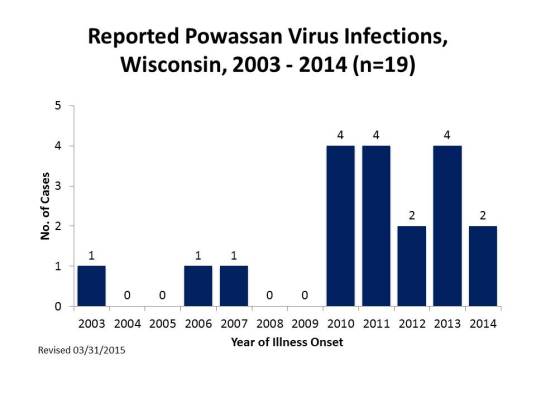
Graph taken from:
https://www.dhs.wisconsin.gov/tickborne/powassan.htm
The virus is becoming more common in humans and appears to differ from Lyme Disease (borrelia) in that it is transmitted much more quickly (within minutes) and fatally (10-15% of cases), with 60% of patients who survive have permanent neurological dysfunction; however, please know that there is disagreement in the medical community on transmission times and much remains unclear. It is warned that only a single strain of POW has been used to determine vector competence or transmission time or viral amount to cause clinical illness. http://labs.russell.wisc.edu/wisconsin-ticks/powassan-virus/
https://wwwnc.cdc.gov/eid/article/23/8/16-1971_article A study in Marshfield, WI showed that when 95 patients were tested for suspected tick-borne disease, 66% showed evidence of current or prior Lyme infection. Of those patients, 17% had serologic evidence of acute POWV infection, demonstrating that POWV may affect more patients than we know.
The biggest challenge in addressing the Powassan infection will be distinguishing it from Lyme disease. The similarity of their etiology and symptomatology is extraordinary. If symptoms exacerbate rapidly, then that may be the critical sign that a Powassan virus is present.
http://naturalsociety.com/powassan-virus-ticks-now-carrying-virus-worse-than-lyme-disease/ The Powassan virus attacks the nervous system and can infect the brain causing inflammation (encephalitis). It can also affect the lining of the brain (meningitis). Symptoms vary widely from none to death. http://wwwnc.cdc.gov/eid/article/18/10/12-0621_article Patients with POW infection typically exhibit encephalitis after an incubation period of 1–4 weeks. Fever and headache are common. Mental status changes, cerebellar symptoms (trouble with motor control, attention, and language), and weakness or paralysis in half of the body (reported in 50% of cases) are also common and may be severe. Results of CSF testing and brain imaging are generally consistent with viral encephalitis. Reverse transcription PCR of CSF, serologic testing of CSF, and serologic testing of serum are the preferred diagnostic tests, but they are not widely available. Pathogenesis is due to lymphocytic infiltration of perivascular neuronal tissue with a predilection for gray matter, including thalamus, midbrain, and cerebellum. Other symptoms include but are not limited to: fever, headache, vomiting, weakness, and memory loss.
http://www.caryinstitute.org/newsroom/more-tickborne-diseases-other-lyme-maybe-just-don-t-go-outside In this case a high school student was mildly ill for several weeks with a cough, but then collapsed and died.
http://wwwnc.cdc.gov/eid/article/18/10/12-0621_article
Case Report: On May 30, 2011 a 67-year-old woman from Aitkin, Minnesota checked into the Abbott Northwestern Hospital in Minneapolis, complaining of dizziness, high fever, chills, nausea and malaise, as well as intermittent confusion with slurred speech. As an avid gardener and hiker, the woman had been exposed to a number of vectors endemic to her area, such as deer ticks and mosquitos. She also had a long history of medical issues, including colon cancer, hypertension, cutaneous lupus, and a remote cerebral aneurysm, which was treated surgically. Although the patient was alert upon arrival at the medical facility, by the next day her condition severely deteriorated. Within hours she became unresponsive. Over night her breathing stopped completely and she required intubation. The patient remained in her comatose state for nearly two weeks before the medical ventilator was removed and she died. It was not until after the patient’s death that serological testing was able to identify Powassan Virus (POWV) as the disease agent.
https://www.lymedisease.org/lyme-sci-powassan-update/ Powassan Virus put North Carolina Senator Kay Hagan into a 43-day coma, and while recovering she has difficulty speaking and is still unable to walk.
Arbovirus Infection MnLA Jan 2016-3 Very informative slide presentation by Dr. David Baewer, Chief Medical Officer, Coppe Laboratories, Waukesha, Wisconsin.
For an excellent article on how viruses work:
http://science.howstuffworks.com/life/cellular-microscopic/virus-human.htm
Please discuss all treatment options with your health care professional
Antibiotics are not effective against viruses, and no effective anti-viral drugs have been discovered for POW, hence there is no specific treatment; however, there is much that can be done to improve the immune system, thereby, lessoning the effects of the virus, as well as taking medications to reduce brain swelling, respiratory support, and IV fluids.
http://health-truth.com/our-program/health-articles/chronic-fatigue-syndrome/how-to-conquer-the-viral-bacterial-syndrome/ According to Michael Biamonte, C.C.D., the immune system uses nutrients from food to manufacture substances that attack and kill viruses. Viruses help bacteria by invading the cells in an area, and if the immune system is too weak, bacteria begin to swarm the damaged cells invaded by the virus. As the virus begins to die having gone through its life cycle, the bacteria then start a secondary infection. For an MSIDS (multi systemic infectious disease syndrome) patient, they might be fighting borrelia (Lyme), Babesia, Bartonella, and many more pathogens, on top of viruses. This makes their disease much more complex.
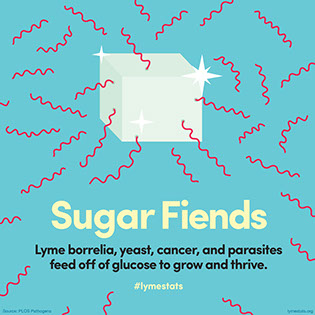 Graphic from Lymestats.org
Biomonte says to avoid sugar as it reduces the number of white bloods cells which fight off infection. He states that garlic is the most effective food against all infections as well as Echinacea, Zinc, water-soluble vitamin A, protein (stimulates the adrenal and thyroid), and eggs (contain large quantities of lecithin).
http://science.howstuffworks.com/life/cellular-microscopic/light-virus.htm Interestingly, a study done at Arizona State and Johns Hopkins shows strong, quick blasts of purple light from a low power laser can kill viruses by vibrating and damaging their outer shells, but unlike other treatments doesn’t cause mutatations leading to viral resistance. Blood UV radiation, similarly to the laser, also kills viruses by breaking down their cell walls.
Anti-virals:
Green Tea
Licorice (glycyrrhizin)
Pau D-Arco
Olive Leaf
Elderberry
Zinc
Garlic
Echinacea
St. John’s Wort
Coconut oil
Eucalyptus oil
Vitamin C
Monolaurin
More on Powassan: https://madisonarealymesupportgroup.com/2017/06/28/powassan-can-kill/
https://madisonarealymesupportgroup.com/2017/05/05/powassan-another-reason-to-avoid-ticks/
 Graphic courtesy of
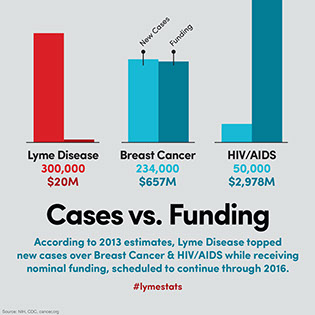 Permission from
  Permission by Lymestats.org
