Archive for the ‘Uncategorized’ Category

Study Showing Results Testing Babesia Microti

Babesiosis in the blood supply is a big problem.  This study was to determine the effectiveness of Enzyme Immunoassay (EIA).  The study, in Transfusion, showed that (EIA) for B. microti had a specificity in a non endemic population of 99.93%.  It had a sensitivity of 91.1% among clinical babesiosis patients who are IFA-positive, and is said to work well and is cost effective.

http://onlinelibrary.wiley.com/doi/10.1111/trf.13618/abstract  Levin, A. E., Williamson, P. C., Bloch, E. M., Clifford, J., Cyrus, S., Shaz, B. H., Kessler, D., Gorlin, J., Erwin, J. L., Krueger, N. X., Williams, G. V., Penezina, O., Telford, S. R., Branda, J. A., Krause, P. J., Wormser, G. P., Schotthoefer, A. M., Fritsche, T. R. and Busch, M. P. (2016), Serologic screening of United States blood donors for Babesia microti using an investigational enzyme immunoassay. Transfusion. doi: 10.1111/trf.13618
This project was supported by the National Heart Lung and Blood Institute at the National Institutes of Health through SBIR Phase I and Phase II Contract HHSN268201000047C, and by Blood Systems Research Institute Contract 10734.

BACKGROUND
The tick-borne pathogen Babesia microti has become recognized as the leading infectious risk associated with blood transfusion in the United States, yet no Food and Drug Administration–licensed screening tests are currently available to mitigate this risk. The aim of this study was to evaluate the performance of an investigational enzyme immunoassay (EIA) for B. microti as a screening test applied to endemic and nonendemic blood donor populations.
STUDY DESIGN AND METHODS
The study aimed to test 20,000 blood donors from areas of the United States considered endemic for B. microti and 10,000 donors from a nonendemic area with the investigational B. microti EIA. Repeat-reactive samples were retested by polymerase chain reaction (PCR), blood smear, immunofluorescent assay (IFA), and immunoblot assay. In parallel, serum samples from symptomatic patients with confirmed babesiosis were tested by EIA, IFA, and immunoblot assays.
RESULTS
A total of 38 of 13,757 (0.28%) of the donors from New York, 7 of 4583 (0.15%) from Minnesota, and 11 of 8363 (0.13%) from New Mexico were found repeat reactive by EIA. Nine of the 56 EIA repeat-reactive donors (eight from New York and one from Minnesota) were positive by PCR. The specificity of the assay in a nonendemic population was 99.93%. Among IFA-positive clinical babesiosis patients, the sensitivity of the assay was 91.1%.
CONCLUSION
The B. microti EIA detected PCR-positive, potentially infectious blood donors in an endemic population and exhibited high specificity among uninfected and unexposed individuals. The EIA promises to provide an effective tool for blood donor screening for B. microti in a format amenable to high-throughput and cost-effective screening.

Fry and Die

http://www.wsj.com/articles/a-six-minute-plan-to-rid-clothes-of-ticks-1464635032

A study in the journal Ticks and Tick-borne Diseases, says just six minutes spinning dry clothes in a hot dryer should kill all ticks and reduce the risk of tick-related illnesses.  The Centers for Disease Control and Prevention currently recommends washing tick-infested clothes and then drying them for one hour.

The recent research found that drying time can be significantly reduced if clothes aren’t washed first, as ticks are extremely sensitive to dryness.

“The researchers washed and dried hundreds of lab-raised blacklegged ticks (Ixodes scapularis) and immature nymphs, five at a time, in cloth bags in residential washers and dryers in Vermont, Maine and Massachusetts. Ticks and nymphs that survived washing were dried with wet towels at low and high heat. Control ticks were placed in containers at room temperature. In separate experiments, bugs were dried—without pre-washing—with dry towels at various temperatures.

The bugs survived cold-water washes, 94% survived warm-water washes, and 50% survived hot-water washes. Ticks that survived washing took 70 minutes to kill in dryers on low heat and 50 minutes at high heat. All control ticks survived for 24 hours.

By comparison, all ticks and nymphs dried with dry towels were killed in four to 11 minutes, depending on the temperature.

The researchers did include a caveat. The cloth bags that the ticks were washed and dried in may have protected the ticks from heat and dryness.”

While it might give all of us maniacal pleasure to “Fry and Dry” ticks, how about we collect them for researchers?

https://madisonarealymesupportgroup.com/2016/02/18/send-ticks-on-vacation/  You can send them to Arizona or to Coppe Lab in Wisconsin:

Coppe Laboratories
W229 N1870 Westwood Dr.
Waukesha, WI 53186

(262) 574-0701
(262) 574-0703
info@coppelabs.com

If you want to send them to Coppe, put the tick in a zip lock baggie and stick in your freezer.  Contact the lab and they will send you what you need to get them to the lab alive.

While this may not seem as fun you can relish the fact the researchers have to squish all the stomach contents out and spin them in a centrifuge or something – so they will still suffer.

For more info about how ticks survive extreme cold, see:  https://madisonarealymesupportgroup.com/2016/01/20/polar-vorticks/

Nutritional Video

MSIDS (multi systemic infectious disease syndrome – or Lyme with friends) patients are faced with numerous decisions when they finally get diagnosed:  1) Finding a LLMD (lyme literate doctor – specially trained to effectively treat the disease(s), 2) Having to change ingrained habits such as diet, sleep habits, and basically revamping everything in their lives, despite the fact they are often cognitively impaired and can hardly think let alone make major decisions.  It can be an enormous task just separating medications!

The following video is excellent at explaining many nutritional myths we’ve grown up with including – fat is bad.  It also points out a few things that are helpful for weight loss, since many MSIDS patients gain weight while in treatment.  

It also discusses digestive enzymes with ingredients I cover in the article about systemic enzymes:  https://madisonarealymesupportgroup.wordpress.com/2016/04/22/systemic-enzymes/

Warning:  It does become an infomercial toward the end.  Again, I’m not selling anything or advocating this particular brand.  You could just as easily take each of these ingredients separately; however, it may help some of you get started, particularly if you don’t have the brain power to hunt down all of these things yourself.  Some LLMD’s personally go to supplement labs and have reputable supplements in their office which can truly help with decisions patients have to make.  Others; however, only give antibiotics.  Since this disease(s) is so invasive and can infect and monkey with every part of the body, it’s imperative to replace what the body isn’t making or is imbalanced in, have a good, nutritional diet, as well as making sure the body is detoxing all of these dead organisms.

http://3harmfulfoods.com/video_022516a_5.php  Dr. Amy Lee, Bariatric Physician
Dr. Lee has board certifications in internal medicine, physician nutrition and obesity medicine specialty. She practices internal medicine with a heavy emphasis on nutrition, wellness and weight management. Her goal is to standardize a diet plan that is evidence based through educating her patients and providing proven solutions that work.

A Review of Bio X4:   http://supplementpolice.com/bio-x4/

May Meeting Reminder

https://madisonarealymesupportgroup.wordpress.com/2016/05/09/may-meetings-coppe-labs/

Don’t forget Dr. Baewer of Coppe Labs will be speaking this Saturday (May 28, 2016) at 2:30pm about Powassan Virus, other Arboviruses, and Coppe’s research.

See you there!

Toxoplasmosis

Toxoplasma-gondii-660x380

Toxoplasma gondii,

by AJ Cann http://phenomena.nationalgeographic.com/2013/04/26/mind-bending-parasite-permanently-quells-cat-fear-in-mice/

http://www.cdc.gov/parasites/toxoplasmosis/epi.html Toxoplasmosis is caused by a common protozoan parasite, Toxoplasma gondii, and is the leading cause of death attributed to food borne illness in the U.S. More than 60 million carry it but are asymptomatic. It is also on the of the CDC’s “Neglected Parasitic Infections,” and has been targeted for public health action.

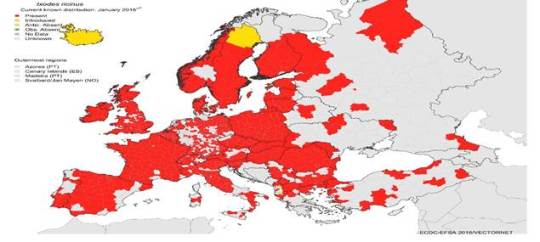
Transmission:  food (undercooked contaminated meat, or knives, utensils, cutting boards, or other foods that had contact with contaminated meat), congenitally (mother to infant), blood transfusions, and organ transplants. Sexual transmission is theorized. In 2009 it was found in Ixodes ricinus ticks (commonly thought to be in Europe, also called the castor bean tick) also known to transmit tick-borne encephalitis virus, Lyme, Anaplasma, Tularemia, Rickettsia, and Babesia:  https://www.researchgate.net/publication/40846277_The_occurrence_of_Toxoplasma_gondii_and_Borrelia_burgdorferi_sensu_lato_in_Ixodes_ricinus_ticks_from_Eastern_Poland_with_the_use_of_PCR

“In the congenital form, toxoplasmosis may lead to abortion, neo-natal death, or foetal abnormalities (e.g. ocular damage).  Toxoplasmic encephalitis and disseminated toxoplasmosis have been observed in persons with immunodeciencies,
such as AIDS patients [64]. Human infections are caused mainly by genotypes I and II of T. gondii. Type II has been isolated from patients with congenital toxoplasmosis and AIDS, whereas type II and III strains are often isolated from animals [23, 27″

However, cats, the only known hosts, play an important role, by eating infected rodents, birds, or other small animals and shedding oocysts in their feces up to 3 weeks after infection. An infected cat contaminates the litter box and/or the soil or water if it goes outside. Transmission to humans occurs after accidental ingestion. In the human host, the parasites form tissue cysts in skeletal muscle, myocardium, brain, and eyes, and may remain for the life of the host, and can reactivate when the immune system is compromised.

http://www.ncbi.nlm.nih.gov/pubmed/16457490  There is evidence of coinfection of Toxoplasmosis with Lyme Disease. This particular patient was initially diagnosed with MS and had symptoms of clumsiness and weakness of the right extremities, and years later was also diagnosed with LD (borrelia). Toxoplasmosis is significant in people who are immuno-suppressed, and Lyme Disease will trigger a previous asymptomatic case.

http://chronic-lyme-disease-solutions.com/Toxoplasmosis.html  http://www.mayoclinic.org/diseases-conditions/toxoplasmosis/basics/symptoms/con-20025859

Symptoms: body aches, swollen lymph nodes, fatigue, headache, confusion, seizures, coordination problems, fever, lung problems, blurred vision, encephalitis, mental illnesses such as schizophrenia, depression, and bipolar disorder. It has been linked with anti-social, aggressive, and jealous behavior in men, and promiscuity in women. Children born with it may develop hearing loss, mental disability, blindness, and even death.

http://www.theatlantic.com/magazine/archive/2012/03/how-your-cat-is-making-you-crazy/308873/  Stanford’s Robert Sapolsky and British groups say that Toxoplasmosis in lab rats changes the wiring in their brains which can take away their fear response, drawing them to their number one predator — cats. Years ago Czech scientist, Jarosav Flegr, noticed reckless traits in his own behavior which included crossing the street in the middle of dense traffic and openly scorning the Communists who ruled his native Czechoslovakia. He accidentally discovered he had the parasite when he was asked to donate blood to test a diagnostic kit for Toxo. He discovered that the French have infection rates as high as 55%, due to their desire for steak prepared saignant, which literally means, “bleeding,” while Americans have a 10-20% infection rate. Neurobiologist Ajai Vyas found Toxo cysts in rat testicles and semen and that the protozoan then moves into the female womb, typically infecting 60% of pups, then heads to her brain to affect her behaviors eventually getting back to the cat. This leads to the possibility of sexual transmission in humans. The research also found that 75% of the females preferred the infected males. Psychiatrist E. Fuller Torry points out that schizophrenia rose in prevalence in the latter half of the 18th century just when people in London and Paris started keeping cats as pets. He believes that 75% of schizophrenia is associated with infections, with Toxo a significant portion.

Once a human becomes infected the parasite needs to get back into the cat, the only place where it sexually reproduces. Due to the impoverished Soviet economy, Flegr gave personality tests and computer-based tests to assess reaction times to infected and non infected Czech students. His findings were so strange he tested then civilian and military populations. He found: infected men wore rumpled old clothes, had fewer friends, and were more hesitant, while infected women wore expensive, designer brands, had more friends, and were extremely trusting – doing what they were told. Both had slower reaction times, less attentiveness, an abnormal fear response, and were two and a half more times more likely to be in traffic accidents. Two Turkish studies have replicated the traffic accident finding. He also also found that 12 of 44 schizophrenia patients had reduced gray matter, with the decrease occurring almost exclusively in those who tested positive for Toxoplasmosis.

http://www.medicalnewstoday.com/articles/295012.php?trendmd-shared=0  Medical News Today reported on a study claiming the parasite is responsible for around a fifth of schizophrenia cases. Now, new research by Johns Hopkins provides further evidence of this association after reviewing two previous studies which identified a link between cat ownership in childhood and development of schizophrenia and other mental disorders later in life and then  comparing them with the results of a 1982 National Alliance for the Mentally Ill (NAMI) questionnaire.  The questionnaire revealed that around 50% of individuals who had a cat as a family pet during childhood were diagnosed with schizophrenia or other mental illnesses later in life, compared with 42% who did not have a cat during childhood. 

T. gondii may be the culprit. 

Researchers at the Academic Medical Centre in Amsterdam, the Netherlands conducted a meta-analysis of more than 50 studies that established a link between T. gondii and increased risk of schizophrenia.

http://www.medicalnewstoday.com/articles/247346.php   Women carrying IgG antibodies to Toxo when giving birth have a higher risk of self-harm or suicide later on, especially if antibody levels are high.

Diagnosis:  http://www.mayoclinic.org/diseases-conditions/toxoplasmosis/basics/tests-diagnosis/con-20025859 Serology to check for antibodies to the parasite, although tissue cysts may be observed through stained biopsy. The CDC recommends all positive results be confirmed by a specialty lab for Toxoplasmosis. In some cases if testing is done too soon, there will be a false negative, and it would be wise to consider retesting later to give the body a chance to produce antibodies. A positive means you are actively infected or that you are asymptomatic. Congenital cases are found using molecular methods such as PCR or with an ultrasound scan that reveals hydrocephalus (fluid in the brain). A negative ultrasound does NOT rule out infection.

Please see your health practitioner for Treatment

Treatment: Healthy people keep the organism in check and do not require treatment; however, if you are also fighting MSIDS, you should consider this organism in your treatment picture.
http://www.mayoclinic.org/diseasesconditions/toxoplasmosis/basics/treatment/con-20025859
Pyrimethamine (Daraprim), a malarial drug is the typical drug of choice, which may prevent your ability to absorb the B vitamin, folate, necessitating supplementation. In conjunction, Sulfadiazine is used, with Clindamycin (Cleocin) as an alternative. Those with HIV/AIDS may need to take these medications for life or until the CD4 remains high for 3-6 months. Spiramycin, an experimental drug in the U.S., is used in Europe to reduce a baby’s risk of neurological problems and may be obtained from the FDA.

Similarly to borrelia, the causative agent of Lyme Disease, once the parasite is in brain cells; however, antibiotics cannot kill off the thick-walled cysts.

Prevention: http://www.mayoclinic.org/diseases-conditions/toxoplasmosis/basics/prevention/con-20025859

*Wear gloves when you garden or handle soil and wash your hands thoroughly with soap and water afterward.
*Don’t eat raw or undercooked meat.
*Wash kitchen utensils thoroughly. After preparing raw meat, wash cutting boards, knives and other utensils in hot, soapy water to prevent cross contamination of other foods. Wash your hands after handling raw meat.
*Wash all fruits and vegetables. Scrub fresh fruits and vegetables, especially if you plan to eat them raw. Remove peels when possible, but only after washing.
*Don’t drink unpasteurized milk. Unpasteurized milk and other dairy products may contain toxoplasma parasites.
*Cover children’s sandboxes. If you have a sandbox, cover it when your children aren’t playing in it to keep cats from using it as a litter box.

If you’re pregnant or otherwise at risk of toxoplasmosis or its complications, take these steps to protect yourself:
*Help your cat stay healthy. Keep your cat indoors and feed it dry or canned cat food, not raw meat. Cats can become infected after eating infected prey or undercooked meat that contains the parasite.
*Avoid stray cats or kittens. Although all stray animals need good homes, it’s best to let someone else adopt them. Most cats don’t show signs of T. gondii infection, and although they can be tested for toxoplasmosis, it may take up to a month to get the results.
*Have someone else clean your cat’s litter box. If that’s not possible, wear gloves and a face mask to change the litter. Then wash your hands well. Change the litter daily so that excreted cysts don’t have time to become infectious.

More on Toxo:  https://madisonarealymesupportgroup.com/2018/06/20/brazil-569-confirmed-cases-of-toxoplasmosis-of-which-50-are-pregnant-women/

https://madisonarealymesupportgroup.com/2018/08/01/risky-business-linking-t-gondii-entrepreneurship-behaviors/