Archive for the ‘Tularemia’ Category

Two Exotic Disease-Carrying Ticks Identified in Rhode Island & First Case of Parasitic Soft Ticks Reported in New Jersey

https://www.sciencetimes.com/articles/27511/20200929/two-exotic-disease-carrying-ticks-identified-rhode-island.

Two Exotic Disease-Carrying Ticks Have Just Been Identified in Rhode Island

Sep 29, 2020

Local authorities in Rhode Island announced that two new tick species were identified on Block Island. The tick species were traced back to Eurasia and Asia origins.

Dr. Danielle Tufts from Columbia University identified the two species Haemaphysalis longicornis (Asian long-horned tick) and Haemaphysalis punctata (red sheep tick), reported the state’s Department of Environmental Management (DEM). (See link for article) 
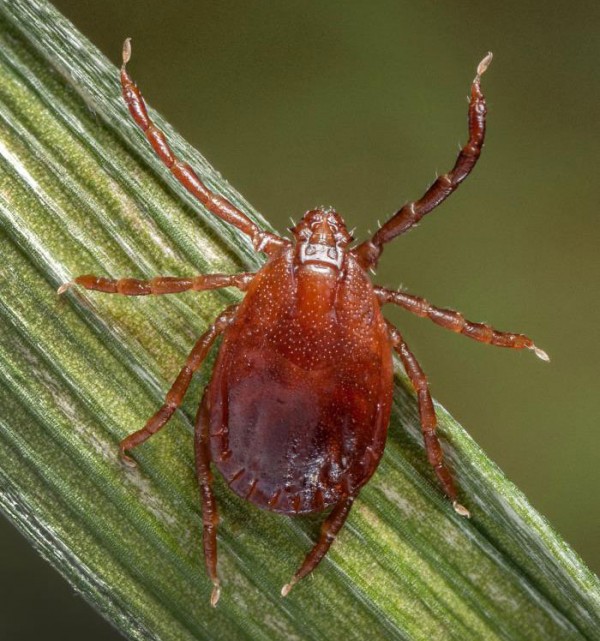
Two Exotic Disease-Carrying Ticks Had Just Been Identified in Rhode Island

(Photo: Asian long-horned tick, adult female dorsal view climbing on a blade of grass – Photo by James Gathany; CDC)

____________________

**Comment**

Both ticks are considered live-stock pests but they can and do bite humans, transmitting diseases.  Farmers, hunters, and hikes are at greater risk.

  • The red sheep tick is identified with Tick paralysis, Tick Borne Encephalitis virus, Tribec virus, Bhanja virus, Crimean-Congo haemorrhagic fever virus, Babesia bovis, Theileria recondita, Coxiella burneti, Francisella tularensis.  http://www.bristoluniversitytickid.uk/page/Haemaphysalis+punctata/17/#.X3S-TS2ZOWgCattle: Babesia major, Babesia bigemina, Theileria mutans, Anaplasma marginale and Anaplasma centrale

    Sheep: Babesia motasi, Theileria ovis

H.-punctata-female-dorsal-0-300x225

Red sheep tick, Adult female dorsal view

https://medicalxpress.com/news/2020-09-jersey-1.html

Bat tick found for the first time in New Jersey
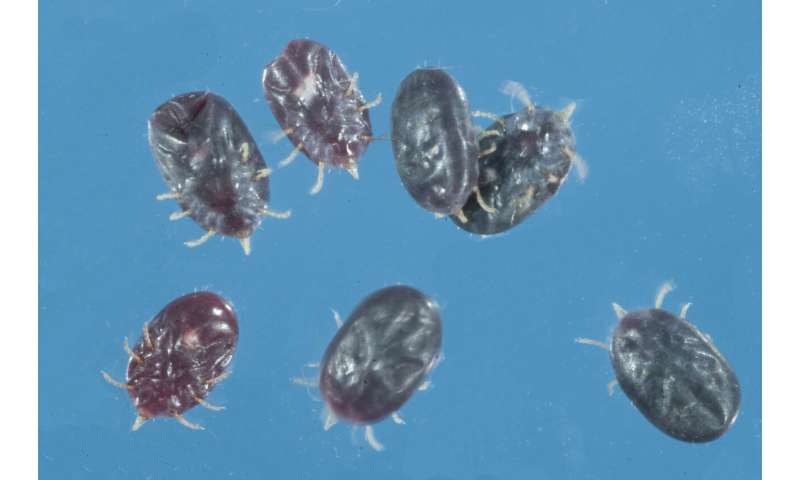
Bat tick found for the first time in New Jersey

A tick species associated with bats has been reported for the first time in New Jersey and could pose health risks to people, pets and livestock, according to a Rutgers-led study in the Journal of Medical Entomology.

This species (Carios kelleyi) is a “soft” . Deer ticks, which carry Lyme disease, are an example of “hard” ticks.

“All ticks feed on blood and may transmit pathogens (disease-causing microbes) during feeding,” said lead author James L. Occi, a doctoral student in the Rutgers Center for Vector Biology at Rutgers University-New Brunswick. “We need to be aware that if you remove from your belfry, attic or elsewhere indoors, ticks that fed on those bats may stay behind and come looking for a new source of blood. There are records of C. kelleyi biting humans.”  (See link for article)

___________________

**Comment**

A few important points:

  1. A related species, Carios jersey, was found in amber 2001
  2. C. kelleyi has been found in 29 states so far
  3. Public health risk remains unknown, but it has been found to be infected with harmful pathogens in other states
  4. There are reports of this tick feeding on humans
  5. The bat it feeds on regularly roosts in attics and barns
  6. It has been identified with rickettsia and borrelia (Lyme):  https://www.sciencedirect.com/topics/agricultural-and-biological-sciences/carios
I can’t help but notice the bat connection, as well as the following:

https://www.newsbreak.com/news/2058858379813/first-case-of-parasitic-soft-ticks-reported-in-new-jersey  The current pandemic has been accompanied by cases of other illnesses and diseases such as African Swine Flu, Ebola, Bubonic Plague, West Nile Virus, Dengue outbreaks around the world.
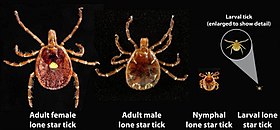

Health Officials Warn Lone Star Ticks Multiplying In Connecticut

https://www.newtownbee.com/06282020/health-officials-warn-lone-star-ticks-multiplying-in-state/

Health Officials Warn Lone Star Ticks Multiplying In State

280px-Lone-star-tick-stages-cdc CDChttp://www.cidrap.umn.edu/news-perspective/2013/07/researchers-trace-novel-heartland-virus-missouri-ticks Public Domain

As if Newtown Health District Director Donna Culbert was not busy enough handling coronavirus issues, she is now grappling with the news that the aggressive lone star tick is proliferating in the region.

Culbert, who has made tickborne disease education a hallmark of her administration, told The Newtown Bee this week that the latest news from colleague Goudarz Molaei, PhD, at the Connecticut Agricultural Experiment Station (CAES) is disturbing considering how many local residents are already suffering from related illnesses.

“The Newtown Health District is always concerned about tick bites and tick-borne disease, and news of the lone star tick becoming established in the region adds to the concern,” Culbert said. “Although our office has not yet received a lone star tick submitted to our office for identification yet this year, I am not naive enough to think that they aren’t out there.”

Review Connecticut’s latest information about the lone star tick by CLICKING HERE  (See link for article)

____________________

**Comment**

Key Quote:  

Previously limited to the southeastern US, lone star ticks have been detected in areas with no previous record of activity….

And that includes Wisconsin:

Excerpt:

….he diagnoses approximately 1 patient per month with Alpha-gal allergy and that the reactions can be severe, from passing out to life-threatening reactions.

The lone star tick is an aggressive biter that gives highly irritating bites.  It’s known to transmit:


Serendipitous Treatment of Tularemia in Pregnancy

https://www.ncbi.nlm.nih.gov/pmc/articles/PMC6804751/

Serendipitous Treatment of Tularemia in Pregnancy

Published online 2019 Sep 24. doi: 10.1093/ofid/ofz413

Abstract

We present a young pregnant woman who developed ulceroglandular tularaemia following a bite wound from a kitten. She grew Francisella tularensis from the ulcer. While awaiting bacterial culture results and serology for Bartonella, she was treated with azithromycin, with resolution of fever and axillary tenderness. Treatment recommendations for tularemia are either gentamicin or doxycycline, both of which can be perilous to the fetus. A Centers for Disease Control and Prevention report on the macrolide susceptibility of North American isolates of this organism has been underappreciated. The unanticipated result from this patient may give another potential option for treatment of tularemia in pregnancy.

__________________

Please know ticks transmit Tularemia:  https://madisonarealymesupportgroup.com/2019/02/18/tularemia-in-minnesotan-ticks/

https://madisonarealymesupportgroup.com/2016/10/25/of-rabbits-and-men/

It also kills: https://madisonarealymesupportgroup.com/2018/09/28/after-tularemia-death-experts-stress-education/

Now, Dr. Brown said an increasing number of cases of tularemia that were transmitted by a tick bite are being seen. Tularemia is transmitted by dog ticks, which also can transmit Rocky Mountain spotted fever. Lyme disease, babesiosis and erlichiosis, which are transmitted by tiny deer ticks, also occur on the Vineyard.

And with the relatively recent spread on the Island of lone star ticks, a new species, Dr. Brown said there is added concern about the potential for more disease transmission.

Sweden Reports Surge in Tularemia Cases

http://outbreaknewstoday.com/sweden-reports-surge-in-tularemia-cases-29406/

Sweden reports surge in tularemia cases

August 12, 2019

By NewsDesk  @infectiousdiseasenews

The number of reported cases of human tularemia has increased significantly in Sweden during the end of July and the beginning of August, according to the Public Health Agency of Sweden, or Folkhälsomyndigheten (computer translated).

Image/Folkhälsomyndigheten

A total of 212 confirmed cases have been reported, significantly more than reported during an average year, officials note.

Most cases of illness have been reported from Dalarna, Gävleborg and Örebro counties, but the last week also saw an increase in the counties of Västerbotten and Norrbotten. Since the number of illness cases is usually highest in September, the outbreak is expected to grow further in the coming weeks.

The animals most likely to carry the disease are wild hares, hence the name rabbit fever, aka tularemia and rodents, but it can also be transferred to humans via mosquito bites and occasionally tick bites.

Tularemia can be transmitted to people, such as hunters, who have handled infected animals. Infection can also arise from the bite of infected insects (most commonly ticks and deer flies); by exposure to contaminated food, water, or soil; by eating, drinking, putting hands to eyes, nose, or mouth before washing after outdoor activities; by direct contact with breaks in the skin; or by inhaling particles carrying the bacteria (through mowing or blowing vegetation and excavating soil).

Typical signs of infection in humans may include fever, chills, headache, swollen and painful lymph glands, and fatigue. If tularemia is caused by the bite of an infected insect or from bacteria entering a cut or scratch, it usually causes a skin ulcer or pustule and swollen glands. Eating or drinking food or water containing the bacteria may produce a throat infection, mouth ulcers, stomach pain, diarrhea and vomiting. Inhaling the bacteria may cause an infection of the lungs with chest pain and coughing.

Tularemia can be effectively treated with antibiotics. Untreated tularemia can lead to hospitalization and may be fatal if not diagnosed and treated appropriately.

_________________

For more:  https://madisonarealymesupportgroup.com/2016/10/25/of-rabbits-and-men/

https://madisonarealymesupportgroup.com/2019/02/18/tularemia-in-minnesotan-ticks/

https://madisonarealymesupportgroup.com/2019/08/23/ticks-are-one-way-tularemia-can-be-spread-rabbits-are-another/

https://madisonarealymesupportgroup.com/2018/09/28/after-tularemia-death-experts-stress-education/

https://madisonarealymesupportgroup.com/2018/02/27/tularemia-infected-ticks-found-on-sorrento-valley-trail-in-ca

https://madisonarealymesupportgroup.com/2018/09/19/glandular-tularemia/


Ticks Are One Way Tularemia Can Be Spread. Rabbits Are Another

https://www.lymedisease.org/tularemia/

Ticks are one way tularemia can be spread. Rabbits are another.