Archive for the ‘Testing’ Category

Integrated Tick Management Reduces Ticks by 93% Study Finds

https://www.ncbi.nlm.nih.gov/pubmed/31853763

2019 Dec 18. doi: 10.1007/s10493-019-00452-7. [Epub ahead of print]

Evaluating the effectiveness of an integrated tick management approach on multiple pathogen infection in Ixodes scapularis questing nymphs and larvae parasitizing white-footed mice.

Abstract

We investigated the effectiveness of integrated tick management (ITM) approaches in reducing the burden of infection with Borrelia burgdorferi, Babesia microti, and Anaplasma phagocytophilum in Ixodes scapularis. We found a

  • 52% reduction in encountering a questing nymph in the Metarhizium anisopliae (Met52) and fipronil rodent bait box treatment combination as well as a
  • 51% reduction in the combined white-tailed deer (Odocoileus virginianus) removal, Met52, and fipronil rodent bait box treatment compared to the control treatment.
  • The Met52 and fipronil rodent bait box treatment combination reduced the encounter potential with a questing nymph infected with any pathogen by 53%.
  • Compared to the control treatment, the odds of collecting a parasitizing I. scapularis infected with any pathogen from a white-footed mouse (Peromyscus leucopus) was reduced by 90% in the combined deer removal, Met52, and fipronil rodent bait box treatment and by
  • 93% in the Met52 and fipronil rodent bait box treatment combination.
Our study highlights the utility of these ITM measures in reducing both the abundance of juvenile I. scapularis and infection with the aforementioned pathogens.

____________________

For more:  https://madisonarealymesupportgroup.com/2019/04/12/tick-prevention-2019/

https://madisonarealymesupportgroup.com/2019/07/18/frequent-prescribed-fires-can-reduce-risk-of-tick-borne-diseases/

https://madisonarealymesupportgroup.com/2018/04/03/fire-good-news-for-tick-reduction/

https://madisonarealymesupportgroup.com/2018/05/27/study-conforms-permethrin-causes-ticks-to-drop-off-clothing/

https://madisonarealymesupportgroup.com/2019/06/16/study-shows-effectiveness-of-factory-treated-permethrin-impregnated-clothing-works/

https://madisonarealymesupportgroup.com/2019/08/09/military-eyes-bug-repellent-coating-to-replace-permethrin-in-uniforms/


Borrelia Detection & Lyme Disease: The Current UK Situation

https://www.linkedin.com/pulse/borrelia-detection-lyme-disease-current-uk-situation-chris-newton/?

Borrelia detection and Lyme disease: the current UK situation

Chris Newton
Chris Newton
Research Director CIMMBER (Center forImmuno-Metabolism, MicrobiomeSee More

Part 2. Anatomy of a serology test system: antigen selection, sensitivity and specificity

(This article continues from the one published at the end of November 2019)

Laboratory confirmation of Borrelia infection in the UK is based around the protocol laid down in 1995 by the Centres for Disease Control (CDC) in the US. The concept developed at this time was that a two-tier systems should be used, where the first-tier test should be a high sensitivity assay, such as an ELISA, followed by a more specific, but less sensitive, immunoblot. It would appear that in the UK, some of the regional hospital laboratories use the DiaSorin Liaison XL auto-analyser as a screening approach. If positive or equivocal, a further patient sample should be sent to the reference laboratory, where the first-tier assay is the C6 ELISA and the second tier is a microarray immunoblot assay (ViraChip from Viramed; Theel et al., 2018), a more robust version of the previous line blot system (itself a replacement for the Western blot.

It would appear that in effect, a three-tier system is operated to provide laboratory confirmation of Lyme disease in some regions of the UK. From the recent PHE meeting held in Liverpool on the 22nd November, an abstract was presented where analysis performed by the Bristol NHS Trust using the DiaSorin methodology, was compared to C6 ELISA results obtained by the RIPL at Porton Down. Out of 3131 tests performed at the Bristol laboratory, 296 samples tested positive for IgM antibodies to Borrelia and 195 tested positive for IgG antibodies.

No alt text provided for this image

As the first screening of samples was performed by the Bristol lab., one must assume that the -ve category (for Bristol) in the above table (reproduced from Albur et al., 2019) arrises as a result of the medical professional having enough clinical suspicion of Lyme disease for another blood sample to be tested at Porton Down.

By considering the positive tests in the table above, it would appear that the DiaSorin test is more sensitive for both IgM and IgG detection than the C6 (considerably more so for IgM than IgG). For samples from patients who previously had a negative test result in Bristol, half the samples are now positive with the C6 (74/149) for IgM, and 19.6% of samples that were originally negative at Bristol are now positive for IgG with the C6. These re-test results possibly provide evidence of seroconversion (the development of an antibody response to Borrelia), as the repeat sampling would have been performed at least two weeks after the first, giving more time for an antibody response to develop. This observation suggests that the difference between the two test systems is even more significant in terms of test sensitivity- a difference that favours of the DiaSorin test.

So what might explain the difference in sensitivity between the two test systems? In an attempt to answer this we must return to where we left off in Part 1, namely the effect of antigen selection on sensitivity and specificity.

As discussed in the previous article, as a methodology, serology for Lyme disease screening determines the presence of antibodies to proteins on the outside of the Borrelia microorganism. Antibody detection is achieved by selecting an appropriate antigenic protein (a protein that activates the immune system) on the surface of the microorganism. A traditional approach to find such antigens is to prepare a protein extract from the organism and then to run these proteins on a polyacrylamide gel and perform a Western blot. In this process, proteins from a gel are transferred to nitrocellulose paper (blotted) and the paper is exposed to patient sera. Once excess serum is washed away, a second enzyme-labelled antibody specific to human IgM or IgG is incubated with the paper and after washing off excess, a substrate for the enzyme is added that allows proteins recognised by antibodies in the patient serum to be identified. A typical example of a western blot is shown below.

No alt text provided for this image

The Western blot above is from the 1988 paper by Hansen et al. This paper describes the development of a Borrelia ELISA based around the p41 antigen. Proteins are often described by their molecular weight in kDaltons; p41 is flagellin, the major component of the Borrelia flagellum. The p41 protein is highly antigenic and the figure above shows that purified p41 strongly reacts to antibodies in serum from an individual with Lyme disease. Hansen and colleagues then tested how much p41 was needed in comparison to the crude protein extract to give the highest difference between a control serum and serum from a Lyme patient. Their original graph is shown below.

No alt text provided for this image

The y-axis shows colour development in the ELISA wells (see Part 1 for outline of ELISA design), whilst the x-axis is the dilution of both protein extract and the p41 protein. To establish the assay with p41 as antigen, a dilution of 3200 was used as this gave the highest differential between 1, values for a control serum and 4, values for serum from a Lyme patient. For the control serum of curve 2, it is clear that there is more non-specific binding with the crude protein extract from the Swedish strain of Borrelia burgdorferi.

This dilution of p41 was then used to coat plastic wells of multi-well plates and these plates were used to test serum from uninfected individuals (controls), from those with symptoms of Lyme disease and from individuals infected with other spirochaetes (that have flagella and thus may cross-react). A section from one of the original figures from the Hansen et al. paper is reproduced below.

No alt text provided for this image

In comparison to wells coated withe the total protein extract from Borrelia (left), for p41 as antigen, there is reasonably clear differentiation between controls and patient samples (LMR). Samples from Syphilis-infected individuals (SY1/2) show some cross-reactivity but much less so than for wells coated with the crude protein extract. These studies clearly demonstrate how the choice of antigen changes both sensitivity and specificity. The cut-off, or assay threshold for positivity has to be raised for the crude extract (horizontal line). Due to such a lack of specificity, sensitivity is lost, meaning that many more patients with symptoms of Lyme disease fall below the threshold for positivity.

Whilst p41 would appear to be ideal for fist-tier screening of suspected Lyme cases, the perception of wide ranging cross-reactivity to other organisms meant that throughout the 1990s other Borrelia antigens were considered in preference (the unfortunate dismissal of p41 as a screening antigen will be returned to in Part 3 of this article).

No alt text provided for this image

The search for antigens since the the mid 1980s has given rise to a spectrum of antigenic proteins for antibody detection. On the right is a list of proteins identified by Roger Evans and colleagues (2010) from a MedLine search for protein bands on Western blots. From the 1990s onwards, at least 20 companies have developed assay systems based on a number of these proteins.

Returning now to the issue of antigen choice and the difference between the two ‘first-tier’ screening systems used in the UK. The DiaSorin system for IgM detection uses two recombinant antigens, OspC, an outer surface protein that appears to show specificity for IgM detection in the early phase of infection, and the VlsE protein. For IgG, the DiaSorin test system uses a recombinant VlsE alone. In contrast, for both IgM and IgG detection, the C6 of Immumetics uses a short sequence of 25 amino acids corresponding to an invariant region in the protein.

No alt text provided for this image

This is not the only difference between the two systems. The DiaSorin LIAISON test uses a chemoluminescent assay format where the second antibody is labelled with a light-emitting probe (see diagram above taken from the paper of Cinquanta et al., 2017). Chemiluminescent immunoassays (CLIA) have the potential for analytical sensitivity many orders of magnitude greater than ELISA (Cinquanta et al., 2017). As described in Part 1 of this article, an increase in sensitivity will decrease the analytical detection limit for antibodies. For Borrelia antibody detection, a decrease in cut-off or working detection limit, will only be realized if by choice of the most appropriate antigen, specificity also increases (the figure concerning p41 detection above is an example of how antigen selection determines specificity, that in turn, determines the assay cut-off and hence clinical sensitivity).

Although both the DiaSorin and C6 tests use the VlsE antigen, DiaSorin use a full length recombinant protein whereas the C6 uses a 25 amino acid sequence of the VlsE protein (Liang et al., 1999). So it would appear that in the UK we have a screening assay for Borrelia that is rather different to the true first-tier test used in the reference laboratory at Porton Down.

From these data provide by the Bristol NHS trust (Table at beginning of this article) it would appear that the DiaSorin CLIA is more sensitive than the C6, especially so for IgM. With respect to further comparison of assay systems, a significant study was published last year by Pegalajar-Jurado et al. The CDC recommended two tier-test paradigm of ELISA, EIA (enzyme immunoassay) or CLIA before an immunoblot, was compared to a first-tier with an EIA or CLIA followed by a second tier with a similar type of assay. These algorithms are described in the figure below (taken from Pegalajar-Jurado et al., 2018).

No alt text provided for this image

This study used well characterised samples from the CDC (Molins et al., 2016) and made comparisons of several assay types including the DiaSorin CLIA and the C6 from Immumetics. Although complex, the major table from this study is reproduced in its entirety below.

No alt text provided for this image

Whilst the distinction between IgM and IgG positivity has not been made in the above table, it of high significance that particularly for Early Lyme disease with EM, the MTTT algorithm outperforms the STTT algorithm for all assay combinations. Also significant, is the inclusion of data from the DiaSorin VlsE/C6 combination showing no loss in specificity, as noted by the control samples tested.

Currently testing within some regions of the UK conforms to the VlsE/C6 algorithm with the exception that the DiaSorin CLIA for VlsE is performed several weeks before a repeat test with the C6 at the reference laboratory. Also, samples that are positive with the C6 in reference laboratory at Porton Down, are re-tested with the ViraChip system. This three-tier algorithm doesn’t fit into either the MTTT or the STTT paradigm.

So what can we conclude from all this?

Primarily, a review of the current serological testing paradigm for Lyme disease within the UK is urgently needed.

Although data provided by the Bristol NHS trust suggest that the DiaSorin CLIA in UK format is more sensitive than the C6, it is essential that further studies are conducted where the same serum samples are tested in both assay systems (DiaSorin CLIA and C6). Whilst data provided by Pegalajar-Jurado and colleagues (2018) suggest that the VlsE/C6 MTTT algorithm is more effective than the STTT algorithm for early laboratory diagnosis of Lyme disease, we cannot make the same assumption for a UK cohort of samples/patients. The same format of study as reported by Pegalajar-Jurado and colleagues must be conducted in the UK.

Also, it is not know whether all suspected cases of Lyme disease are tested within the local hospital trust and therefore give rise to a three-tier protocol (DiaSorin CLIA, followed some weeks later by a C6 and a Virotech Line blot). Unless it is experimentally investigated, it cannot be assumed that a three-tier protocol will give the same overall sensitivity as a two-tier protocol.

Centers for Disease Control and Prevention. (1995) Recommendations for test performance and interpretation from the Second National Conference on Serologic Diagnosis of Lyme Disease. MMWR Morb Mortal Wkly Rep 44:590 –591

Theel ES, Sorenson M, Grangera D. (2018) Evaluation of a Novel Microarray Immunoblot Assay for Detection of IgM- and IgG-Class Antibodies to Borrelia burgdorferi. J. Clin. Microbiol 56 (11) e00992-18

Albur M, Hamilton F, MacGregor K (2019) Serodiagnosis of Lyme disease: Cheese and Chalk or Peas in a Pod? Lyme and tick-born disease research in the UK. PHE conference. Liverpool, 21-22nd November 2019

Hansen K, Hindersson P, Pedersen NS (1988) Measurement of Antibodies to the Borrelia burgdorferi Flagellum Improves Serodiagnosis in Lyme Disease. J Clin Microbiol. 26 (2): 338-346

Evans R, Mavin S, McDonagh S, Chatterton JM, Milner R, Ho-Yen DO. (2010) More specific bands in the IgG western blot in sera from Scottish patients with suspected Lyme borreliosis. J. Clinical Pathol. Doi:10.1136/jcp.2010.076307

Cinquanta L, Fontana DE, Bizzaro N (2017) Chemiluminescent immunoassay technology: what does it change in autoantibody detection? Autoimmun Highlights 8:9 https://doi.org/10.1007/s13317-017-0097-2

Liang FT, Alvarez AL, Gu Y, Nowling JM, Ramamoorthy R, Philipp MT (1999) An Immunodominant Conserved Region Within the Variable Domain of VlsE, the Variable Surface Antigen of Borrelia burgdorferi. J Immunol November 163 (10) 5566-5573

Pegalajar-Jurado A, Schriefer ME, Welch RJ, Couturier MR, MacKenzie T, Clark RJ, Ashton LV, Delorey MJ, C Molinsa CR. (2018) Evaluation of Modified Two-Tiered Testing Algorithms for Lyme Disease Laboratory Diagnosis Using Well-Characterized Serum Samples. Journal of Clinical Microbiology 56 (8) e01943-17

Molins CR, Delorey MJ, Sexton C, Schriefer ME. (2016). Lyme borreliosis serology: performance with several commonly used laboratory diagnostic tests and a large resource panel of well-characterized patient samples. J Clin Microbiol 54:2726–2734. https://doi.org/10.1128/JCM .00874-16

Branda JA, Strle K, Nigrovic LE, Lantos PM, Lepore TJ, Damle NS, Ferraro MJ, Steere AC. 2017. Evaluation of modified 2-tiered serodiagnostic testing algorithms for early Lyme disease. Clin Infect Dis 64:1074–1080. https://doi.org/10.1093/cid/cix043.

_________________

Go here for part 1:  https://www.linkedin.com/pulse/borrelia-detection-lyme-disease-chris-newton/

8 Reasons Why the Standard Western Blot is a Poor Diagnostic Indicator of Lyme & Tips for Making Sense of Your Lab Result

https://www.uprootinglyme.com/8-reasons-why-the-standard-western-blot-is-a-poor-diagnostic-indicator-of-lyme/?

8 Reasons Why The Standard Western Blot Is A Poor Diagnostic Indicator of Lyme – and tips for making sense of your lab result

 In Understanding Lyme

This post was inspired by one of my practitioner-students who is in the process of both healing her own Lyme disease and co-infections, and learning how to be the best resource and guide for her own patients.

It is confusing for everyone, including health professionals, that the diagnostic testing for Lyme disease is so poor, and often meaningless.  

If you’ve had a tick bite you might be wondering if you contracted Lyme and want to take the blood test to see if infection shows up.  If you’ve had Lyme in the past and been treated, but still have remaining health issues, you may questioningwant to know if it’s still active through blood work.  Or, if you have a mysterious chronic disease that might be caused by Lyme-Borreliosis and/or its co-infections, the blood work could tell you if your illness is due to Lyme disease.  Right?

It’s vitally important to know what the CDC’s standard Western Blot test for Lyme is good for, and what it is not.  Unfortunately, it’s not good for much, but there are some key indicators that can be useful.

First, here are 8 reasons why it is such a poor diagnostic tool:

1. Poor test sensitivity. The CDC standard western blot (SWB) is not as sensitive as blots done by companies that specialize in testing tick borne disease, such as Igenex, and misses approximately 50% of cases (statistics vary, but it’s a lot!).   False negative are common, often moreso in people who are very sick. Blots performed by Lyme specialty labs are more sensitive, however there are still a percentage of false negatives, especially in the late stages of the disease.

2. Diagnostic criteriaEven if a patient tests positive for a highly specific Borrelia band (bands 18, 23, 31, 34, 37, 39, 83 and 94) indicating exposure, a test will still be considered negative.

The CDC created a high standard for medical reporting of  Lyme disease cases for tracking and statistical use that requires at least 2 bands of IgM or at least 5 bands of IgG to qualify for a positive result.  Their standard was not intended to become doctor’s diagnostic guideline, yet it was adopted by the Infectious Disease Society of America’s (IDSA’s) guideline and has been.

3. Interpretation of the test is subjective. A test result depends on the skill of the technician who reads it. Different people can come up with different results. A strong positive on a band will likely be read the same by lab-techdifferent people but a weaker positive may have different interpretations.  This is one reason it is recommended to use a Lyme-literate lab such as Igenex. 
4. All antibody bands are not created equal!   SWB surveillance for IgG includes 5 that are non-specific to Borrelia, and several that could only be attributed to Borrelia (and it excludes 3 others that are Borrelia specific).  There is definitely room for improving the standard lab test for Lyme disease, simply by using more of the Borrelia-specific bands.  Igenex testing includes two more Borrelia specific bands than the SWB.

5. Different antibody bands may become positive during different stages of the infection.  It is common that the first antibodies to appear is for band 41, yet it is non-specific and would be called “negative”.  Weeks, months or years later, if re-tested, different antibodies (bands) may appear, and there may be more or fewer bands that show up.

This depends on many factors, including the stage of disease, the health or decline of the immune system, what treatments you have received, and more.

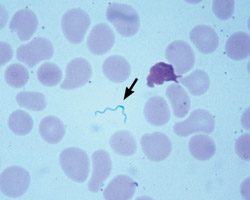
borrelia-in-blood6. Borrelia exists sparsely in the blood.  This is the reason it is difficult to test for it directly and an antibody panel is used.  PCR tests look for DNA directly in the blood but only detect a small number of cases.


Yet an antibody test only works well when the microbe is visible to the immune system, and can generate antibodies against it.  Lyme-borreliosis and the other stealth co-infections have numerous survival techniques of immune system evasion, including techniques for cloaking themselves and disrupting the body’s natural immune system response.

7. Failure to generate antibodies.  An antibody test also only works if a person’s immune system is strong enough to generate an antibody response. Late stage patients or immune compromised patients may not mount an appropriate antibody response.

8. Species Variation. There are 5 known subspecies, and over 100 strains of Borrelia in the US and 300 worldwide (source: http://www.ILADS.org), yet the SWB only tests bands for 1 subspecies of Borrelia burgdorferi; specialized testing labs such as IGENEX test for only two.  Ideally, the testing would be region-specific.

That was a lot of information to take in, so here are 3 main points to take away, to help you self-advocate and navigate the Lyme diagnosis maze:

  • If you are dealing with an acute case of Lyme disease or a recent bite, know that any Lyme test given before 6 weeks out is not likely to be accurate, since it takes that long for your body to generate the antibodies to the bands that the Western Blot tests for. tick
  • I didn’t waste any time discussing the ELISA test for Lyme disease in this article – and don’t waste any of your time with this lab!  For numerous reasons, it is even less accurate than the Western Blot for detecting Lyme-Borreliosis.
  • If your Lyme Western Blot came back negative, and you are a little or a lot sick, it is meaningless.  You may very well still have Lyme disease.  Try 6-8 weeks of a natural antimicrobial protocol, and re-test.  You will be more likely to show antibodies at this time (but it’s not a guarantee).
  • Always ask for a copy of your blood work, and look at the test results yourself.  If you have one of the Lyme Borreliosis-specific bands that are positive (again, that’s bands 18, 23, 31, 34, 37, 39, 83 and 94) – even just 1! – even though the CDC (and therefore most doctors) would call it negative, this is a clear positive diagnostic indicator of Lyme disease.  
  • Keep in mind that what you’re suffering from could be a different stealth pathogen, such as Babesia or Bartonella, which require a different lab test, and are also notoriously difficult to detect.

fishing-sunsetThere are times when it becomes impossible to determine whether someone’s health problems are due to Lyme-borreliosis infection or not.
The good news is, from the holistic medical perspective you can still recover your health and your life through treatment that is based on your symptom presentation and the restoration of your energy, immunity and vitality – regardless of whether you ever determine the cause.  The question then becomes, do you want a diagnosis, OR DO YOU WANT TO GET BETTER?


If you are confused about whether or not you have Lyme, a co-infection, or other complex chronic disease, call us at 845-687-6211 or email info@uprootinglyme.com to set up an in-person or virtual holistic Lyme consultation at reasonable rates. We’ll help you interpret your labs and co-create a strategic holistic treatment plan. Navigating Lyme disease is confusing, and confusion can cost you time and money that could be spent on getting the treatment you need. Contact us now!

____________________

**Comment**

Great article with many valid points.  CDC 2-tiered testing is virtually worthless and the required arbitrary and stringent antibody levels are asinine.  For a quote on this:

“setting arbitrary level of antibodies to diagnose a disease that has not been amenable to Koch’s postulates seems open to question.  By the same token, ignoring antibody results unless they meet arbitrary levels seems suspect.  The vast majority of patients in this series showed some WB antibody exposure, but many did not meet the arbitrary limits set….in our present state of knowledge, the diagnosis of chronic Lyme disease is a clinical one.  Many of the patients in this series have suffered serious ‘hurts’ when they have been told that they could not have LD because their WB did not meet arbitrary limits.”  Dr. Waisbren https://madisonarealymesupportgroup.com/2017/07/09/idsa-founder-used-potent-iv-antibiotics-for-chronic-lyme/

I’ve been in discussion with a PhD who is researching Lyme testing. He feels, as do I, that testing should initially cast a wide net with follow up testing being more specific; however, just the opposite is true with current testing.  He also questions the CDC insistence that p41 is too non-specific to use.  

According to microbiologist Tom Greer p41 is the flagellin protein of all spirochetes and is usually the first to appear after a Bb infection. Western Blot explained by Grier

For another great read on testing:  https://madisonarealymesupportgroup.com/2018/09/12/lyme-testing-problems-solutions/

Please remember that this testing is ONLY for Lyme disease and will NOT pick up coinfections.  The tests for those, as stated in this article, are just as abysmal.

A trained Lyme literate doctor is experienced in understanding the symptoms of all of these pathogens and will diagnose you clinically.  They understand the limitations of testing.  The Horowitz questionnaire has been validated and is a much better indicator of infection:  https://madisonarealymesupportgroup.com/wp-content/uploads/2016/01/symptomlist.pdf  If you suspect you are infected, print this out, fill it out, and take it with you to your first appointment.  Avoid mainstream medicine if at all possible as they are truly in the dark ages with all things tick-borne.

Until medical professionals realize this is not a straight forward disease, patients need to seek help from those who understand it.

Immunoassay May Help Identify Pediatric Lyme Arthritis

https://www.medscape.com/viewarticle/922645?src=rss

Immunoassay May Help Identify Pediatric Lyme Arthritis

By Marilynn Larkin

December 18, 2019

NEW YORK (Reuters Health) – In Lyme disease-endemic areas, a C6 peptide enzyme immunoassay (EIA) test may help guide initial management of children with acute arthritis, an observational study suggests.

“Children with Lyme disease frequently present to the emergency department with an inflamed joint,” Dr. Lise Nigrovic of Boston Children’s Hospital told Reuters Health by email. “Although Lyme arthritis is initially treated with oral antibiotics, many children will undergo an invasive procedure such as a joint tap or even wash-out as part of the initial evaluation.”

“We demonstrated that the C6 EIA test, a previously approved first-tier test for Lyme disease, with results available within a few hours, could be used to safely guide initial management for children with inflamed joints to avoid unnecessary invasive procedures for children with Lyme arthritis,” she said.

The authors performed C6 EIA tests on 911 children presenting to a Pedi Lyme Net emergency department from 2015-2019. Lyme arthritis was defined as a positive or equivocal C6 EIA test followed by a positive supplemental immunoblot result; septic arthritis was defined as a positive synovial fluid culture result or a positive blood culture result with synovial fluid pleocytosis. Other cases were considered inflammatory arthritis.

As reported in Pediatrics, C6 EIA test results indicated that 211 children (23.2%) had Lyme arthritis, 11 (1.2%) had septic arthritis, and 689 (75.6%) had other inflammatory arthritis.

A positive or equivocal C6 EIA result had a sensitivity of 100% and specificity of 94.2% for Lyme arthritis. None of the 250 children with a positive or equivocal C6 EIA result had septic arthritis. However, of those with a positive first-tier Lyme disease test result, 75 underwent arthrocentesis (30%) and 27 had an operative joint washout performed (10.8%).

Dr. Eugene Shapiro of Yale School of Medicine in New Haven, Connecticut, coauthor of a related editorial, commented by email to Reuters Health, “In an area in which Lyme disease is endemic, although a positive C6 ELISA result in a child with arthritis of the knee is suggestive of Lyme disease, it does not rule out the possibility that it is due a different bacterium such as Staphylococcus aureus. Clinical judgement is still critical in deciding how to manage such patients.”

Lyme disease specialist Dr. Tania Dempsey, founder of Armonk Integrative Medicine in New York, commented, “The C6 EIA test has shown promise over the older ELISA test that is part of the two-tier Lyme testing recommended by the U.S. Centers for Disease Control and Prevention, dating back to 1995. There are serious limitations to the two-tier test, including a nearly 50% false-negative rate.”

“While this study shows promise . . . to accurately identify Lyme arthritis with the use of the C6 EIA test, it is not clear what the false negative rate was,” she told Reuters Health by email. “Their numbers show that they were able to diagnose 23.2% of children with Lyme arthritis and 1.2% with septic arthritis. But 75.6% were identified as having inflammatory arthritis, which means that the diagnosis is unclear. Based on the published false negative rate of this test, we can assume that a fair percentage of those with inflammatory arthritis probably had Lyme arthritis.”

“One key point is that the study design included a confirmatory immunoblot test for C6 EAI positive or equivocal results. This would be equivalent to a two-tier test,” she noted. However, “no immunoblot testing was done on any of the C6 EAI- negative results. Since we we know a large number of patients will be missed by this (test), it is discouraging to think of all those patients who might still be suffering with Lyme disease that was undetected with the screening C6 EAI test.

There is no question that we need better testing for Lyme disease,” she said. “The C6 EIA has some benefits but is clearly not sufficient.

SOURCE: http://bit.ly/34fODsR and http://bit.ly/2EgdP8g Pediatrics, online December 13, 2019.

__________________

**Comment**

While this article desires to make you believe this test is accurate, Dr. Demsey clearly points out it has many problems including not knowing what the false negative rate was, as well as the fact 75.6% were identified as having inflammatory arthritis –  meaning that the diagnosis is unclear. And lastly, based on the published false negative’s, a fair percentage of those with inflammatory arthritis probably had Lyme arthritis.

Take away:  The test still sucks.

For more:  https://madisonarealymesupportgroup.com/2019/03/07/yet-another-worthless-study-showing-2-tiered-lyme-testing-can-not-rule-infection-out/

https://madisonarealymesupportgroup.com/2019/12/01/c6-peptide-test-for-lyme-disease-may-indicate-borrelia-miyamotoi-infection/

https://madisonarealymesupportgroup.com/2019/08/15/borrelia-miyamotoi-infection-leads-to-cross-reactive-antibodies-to-the-c6-peptide-in-mice-men/

https://madisonarealymesupportgroup.com/2018/09/12/lyme-testing-problems-solutions/


Bartonella & Blood: Infection of Erythrocytes

https://www.galaxydx.com/bartonella-and-blood/

Bartonella and Blood: Infection of Erythrocytes