Archive for the ‘Testing’ Category

New Health Center Opens For People With Tick-Borne Diseases in Pennsylvania

https://wnep.com/2019/04/10/new-health-center-opening-for-people-with-tick-borne-diseases/  News Video in Link

New Health Center Opens for People with Tick-Borne Diseases

African Tick Found on Untraveled U.K. Horse

https://www.ncbi.nlm.nih.gov/pubmed/30876825

2019 Apr;10(3):704-708. doi: 10.1016/j.ttbdis.2019.03.003. Epub 2019 Mar 9.

Hyalomma rufipes on an untraveled horse: Is this the first evidence of Hyalomma nymphs successfully moulting in the United Kingdom?

Abstract

During September 2018, a tick was submitted to Public Health England’s Tick Surveillance Scheme for identification. The tick was sent from a veterinarian who removed it from a horse in Dorset, England, with no history of overseas travel. The tick was identified as a male Hyalomma rufipes using morphological and molecular methods and then tested for a range of tick-borne pathogens including;

  • Alkhurma virus
  • Anaplasma
  • Babesia
  • Bhanja virus
  • Crimean-Congo Haemorrhagic fever virus
  • Rickettsia
  • Theileria

The tick tested positive for Rickettsia aeschlimannii, a spotted fever group rickettsia linked to a number of human cases in Africa and Europe.

This is the first time H. rufipes has been reported in the United Kingdom (UK), and the lack of travel by the horse (or any in-contact horses) suggests that this could also be the first evidence of successful moulting of a Hyalomma nymph in the UK. It is postulated that the tick was imported into the UK on a migratory bird as an engorged nymph which was able to complete its moult to the adult stage and find a host.

This highlights that passive tick surveillance remains an important method for the detection of unusual species that may present a threat to public health in the UK. Horses are important hosts of Hyalomma sp. adults in their native range, therefore, further surveillance studies should be conducted to check horses for ticks in the months following spring bird migration; when imported nymphs may have had time to drop off their avian host and moult to adults. The potential human and animal health risks of such events occurring more regularly are discussed.

_________________________

A ProMED-mail post

A tick capable of carrying a host of killer illnesses has been found in the UK for the very 1st time, health officials have revealed.

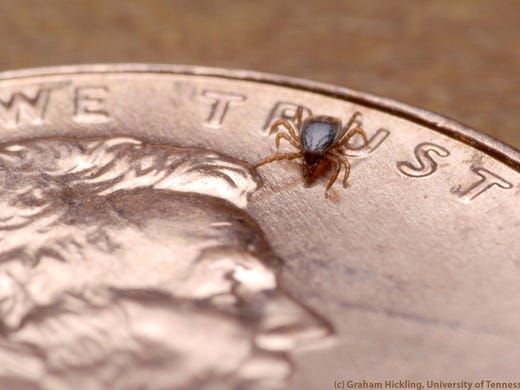
The _Hyalomma rufipes_ tick – a small blood-sucking arachnid – is usually confined to Africa, Asia and parts of southern Europe. But Public Health England [PHE] has now revealed one of the ticks, 10 times larger than others, was discovered in Dorset last year [2018]. The creature itself wasn’t found to be carrying the deadly Crimean-Congo Haemorrhagic fever virus (CCHF).

The disturbing find, which could ‘present a threat to public health in the UK’, has been documented in the journal Ticks and Tick-borne Diseases.

A vet at The Barn Equine Surgery in Wimborne removed the tick from a horse last September [2018]. They then sent it to PHE’s tick surveillance team. Writing in the journal, the PHE team said: ‘This is the first time _Hyalomma rufipes_ has been reported in the United Kingdom. ‘The lack of travel by the horse – or any in-contact horses – suggests that this could also be the 1st evidence of successful moulting of a _Hyalomma_ nymph in the UK.’

The team of researchers who found the tick was led by Kayleigh Hansford, of PHE’s medical entomology and zoonoses ecology group.

Writing in the journal, they said it is suspected the tick hitched a ride on a migratory bird before landing in the UK. Neither the infested horse, nor other horses in the stable had travelled anywhere and no further ticks were detected on any of the horses. It is thought the tick travelled on a swallow because they are known to nest in the stables of horses and migrate from Africa to the UK for summer.

The UK climate, known to be getting warmer, is thought to be a major limiting factor for the survival of _Hyalomma rufipes_. However, the unusually warm weather experienced during the summer of 2018 may have been a factor for helping it moult – become an adult.

Currently, the ticks are found in Greece, Northern China, Russia, Turkey, Iraq, Syria, Pakistan, Egypt, Yemen and Oman.

The World Health Organization last year [2018] named CCHF as one of 10 pathogens that pose the most ‘urgent’ threat to humanity.

Figures show the virus – most often spread through tick bites – kills around 40% of humans that it strikes. The horrific illness is said to manifest ‘abruptly’, with initial symptoms including fever, backache, headache, dizziness and sore eyes.

[Byline: Stephen Matthews]


Communicated by:
ProMED-mail Rapporteur Mary Marshall

[Not mentioned in detail in the above report, the PHE team, using morphological and molecular methods, then tested for a range of tick-borne pathogens including: Alkhurma virus, Anaplasma, Babesia, Bhanja virus, Crimean-Congo Haemorrhagic fever virus, Rickettsia and Theileria. The tick tested positive for _Rickettsia aeschlimannii_, a spotted fever group rickettsia linked to a number of human cases in Africa and Europe.

The critical question is if this is a single tick transported into Dorset, or represents one tick of a local breeding population. Transportation of a single tick by a migrating bird is a reasonable possibility. Immature (nymph) _Hyalomma_ usually feed on birds, rodents, and hares. Nymphs are often transported from one place to another by migrating birds. For example, a migrating bird carrying a CCH virus-infected _Hyalomma marginatum_ nymph can introduce the virus into new localities and infect humans and domestic livestock (Larry S.Roberts, 2009). Continued surveillance in the area where the single tick was found, as well as generally in the UK over the spring and summer months, would be prudent.


Latent Lyme Disease Resulting in Chronic Arthritis & Early Career Termination in a U.S. Army Officer

https://www.ncbi.nlm.nih.gov/m/pubmed/30839071/

Latent Lyme Disease Resulting in Chronic Arthritis and Early Career Termination in a United States Army Officer.

Weiss T, et al. Mil Med. 2019.

Abstract

Lyme disease is a continuing threat to military personnel operating in arboriferous and mountainous environments. Here we present the case of a 24-year-old Second Lieutenant, a recent graduate from the United States Military Academy, with a history of Lyme disease who developed recurrent knee effusions following surgery to correct a hip impingement. Although gonococcal arthritis was initially suspected from preliminary laboratory results, a comprehensive evaluation contradicted this diagnosis.

Despite antibiotic therapy, aspiration of the effusions, and steroid treatment to control inflammation, the condition of the patient deteriorated to the point where he was found to be unfit for duty and subsequently discharged from active military service. This case illustrates the profound effect that latent Lyme disease can have on the quality of life and the career of an active duty military member. It highlights the need for increased surveillance for Borrelia burgdorferi (B. burgdorferi) in military training areas and for the early and aggressive diagnosis and treatment of military personnel who present with the symptoms of acute Lyme disease.

Published by Oxford University Press on behalf of the Association of Military Surgeons of the United States 2019.

________________
**Comment**
Our military has been in ‘harms way’ for decades. Glad this case study was made.  I have military friends who receive training in Northern Wisconsin. They sleep outside and literally pick thousands of ticks off their bodies. I can only imagine the high numbers of soldiers with similar stories not being counted or recognized.
Excerpt: 
After congressional investigation, he was finally discharged from the Air Force after 14 years of highly recognized and awarded military service that ended in shame because doctors did not understand Lyme disease.  Attorneys laughed and joked as they decided he was no longer fit for duty and discharged him from the Air Force without benefits, pay, or health insurance. He was essentially dumped on the streets homeless, disabled, and unable to work, with a wife and a child to provide for.
Three decades later, the VA still cannot diagnose Lyme disease based upon symptoms.
The VA did not recognize Lyme disease until the mid-1990s. That means that veterans who had Lyme disease before then were misdiagnosed and some are perhaps homeless and disabled.  According to Sims the government is no wiser today than before they recognized Lyme disease.
The real problem is:
military and VA healthcare systems follow CDC two-tier tests Lyme disease guidelines that capture less than 10% of Lyme disease cases nationwide.
Over 90% of Lyme disease cases are diagnosed and treated by a minority of doctors who specialize in Lyme disease and tick-borne disease and understand CDC guidelines are fatally flawed.
He also states that according to many medical experts, the largest cause of death from Lyme disease is suicide.
Soldiers are also forced to get vaccines and many are injured by them:
Ticks are found:

Beaches:  https://madisonarealymesupportgroup.com/2018/06/07/ticks-on-beaches/

Rocks and picnic benches: https://madisonarealymesupportgroup.com/2017/03/13/ticks-found-on-rocks/

Caves:  https://madisonarealymesupportgroup.com/2018/04/23/tick-borne-relapsing-fever-found-in-austin-texas-caves/, and https://madisonarealymesupportgroup.com/2017/10/27/israeli-kids-get-lyme-disease-from-ticks-in-caves/

Birds:  https://madisonarealymesupportgroup.com/2017/08/17/of-birds-and-ticks/

California:  https://madisonarealymesupportgroup.com/2018/05/19/infected-ticks-in-california-its-complicated/

In the South:  https://madisonarealymesupportgroup.com/2018/05/31/no-lyme-in-the-south-guess-again/, and https://madisonarealymesupportgroup.com/2017/10/06/remembering-dr-masters-the-rebel-for-lyme-patients-who-took-on-the-cdc-single-handedly/, and https://madisonarealymesupportgroup.com/2017/03/02/hold-the-press-arkansas-has-lyme/

Southern Hemisphere: https://madisonarealymesupportgroup.com/2018/02/06/lyme-in-the-southern-hemisphere-sexual-transmission/

Australia:  https://madisonarealymesupportgroup.com/2016/11/03/ld-not-in-australia-here-we-go-again/

And everywhere else…..

Remember, there are 300 strains and counting of Borrelia worldwide and 100 strains and counting in the U.S.  Current CDC two-tiered testing tests for ONE strain!  Do the math….

Lyme has been found in ALL 50 states and is worldwide:  https://madisonarealymesupportgroup.com/2018/08/18/lyme-found-in-all-50-states/
And remember, Lyme is the rock star we know by name.  There are plenty of other illnesses ticks transmit and it isn’t JUST the black-legged tick.
There’s no such thing as a “safe” tick or an “irrelevant” tick bite.


FREE Tick Testing for Pennsylvanians

https://www.ticklab.org

Have you been bitten by a tick & Want it Tested?

The Pennsylvania Tick Research Lab can analyze your tick, testing for tick-borne diseases. Order your test online by clicking link above.

If the tick is a deer tick (Ixodes scapularis), the following 4 pathogens are tested for:

  • Borrelia burgdorferi (Lyme disease)
  • Anaplasma phagocytophilum (anaplasmosis)
  • Babesia microti (babesiosis)
  • Powassan virus Lineage II (Deer tick virus).

If the tick is a non-deer tick, the following 4 pathogens are tested for:

  • Borrelia burgdorferi (Lyme disease)
  • Ehrlichia chaffeensis (ehrlichiosis)
  • Rickettsia general species (RMSF)
  • Francisells tularensis (tularemia)

Out of State residents may also have a basic panel for $50 which includes 3 tests depending upon the tick species, $100 for an advanced panel which includes 6 tests, and $175 for the comprehensive panel which covers all pathogens related to the tick species.

There are options to upgrade to advanced and comprehensive testing panels at discounted rates for Pennsylvanian residents. If you want the advanced/comprehensive testing a check needs to be included with the tick.

Once they receive the tick, test results are obtained within three business days.

Please feel free to email wildlifedna@esu.edu or call 570-422-7892 if you have any questions.

_________________

**Comment**

Tick testing is a great service; however, testing isn’t always 100% accurate and it’s also possible to have symptoms before the results come back.

In this case, a little girl couldn’t walk or talk within 4-6 hours of tick attachment:  https://madisonarealymesupportgroup.com/2016/12/07/igenex-presentation/. Great video by microbiologist Holly Ahern on transmission times. The longer the tick is attached, the greater the risk, however….

Minimum time required to transmit Lyme disease has never been determined as well as transmission times for many other pathogens. Coinfection is common

https://madisonarealymesupportgroup.com/2018/10/30/study-shows-lyme-msids-patients-infected-with-many-pathogens-and-explains-why-we-are-so-sick/


Borrelia bissetti Found in Canadian Deer Ticks

https://www.ncbi.nlm.nih.gov/m/pubmed/30395480/

Identification of Borrelia bissettii in Ixodes scapularis ticks from New Brunswick, Canada.

Lewis J, et al. Can J Microbiol. 2019.

Abstract

Lyme disease is a tick-borne disease that is emerging in Canada. The disease is caused by spirochetes of the Lyme borreliosis group, which is expanding as new species are discovered. In Canada, Lyme disease risk has so far been assessed primarily by detection of Borrelia burgdorferi sensu stricto. Of Ixodes scapularis ticks collected between 2014 and 2016 in New Brunswick, Canada, 7 were shown to be infected with Borrelia bissettii by nested PCR and sequencing of 5 B. bissettii genes. Since different Borrelia species are associated with different clinical manifestations and are not detected with the same diagnostic tests, the identification of a previously undocumented or underreported pathogenic Borrelia species has important implications for public and veterinary medicine.

_________________

**Comment**

Again, the important issue here is that current CDC 2-tiered tests only test for ONE strain of borrelia when there are 300 and counting strains worldwide being transported everywhere by migrating birds, rodents, lizards, and mammals – including humans.

Before you discount Borrelia bissetti as being “somewhere else,” please know it was found in Chicago rodents:  https://www.ncbi.nlm.nih.gov/pubmed/11075925. These strains are unlike previous Borrelia isolates from NW Illinois and Wisconsin.

This excellent pdf has studies of bissetti in everything from mice to human heart valves: ws-B.Bissettii1  The pdf also makes an excellent point that desperately needs to be addressed:  Borrelia strains sequenced are strains that have been grown in culture medium. What about the diverse strains identified in the Southeastern United States that cannot be cultured? It also gives two studies showing that changing criteria of the Western Blot & mixing borrelia strains increased testing sensitivity.

 Time for the CDC to roll up their sleeves and deal with this. It is way past time.

For more on testing:  https://madisonarealymesupportgroup.com/2018/01/16/2-tier-lyme-testing-missed-85-7-of-patients-milford-hospital/

https://madisonarealymesupportgroup.com/2018/10/12/direct-diagnostic-tests-for-lyme-the-closest-thing-to-an-apology-you-are-ever-going-to-get/

Key quote:  

“These serologic tests cannot distinguish active infection, past infection, or reinfection.”

In plain English, these tests don’t show squat.