Archive for the ‘research’ Category

Did Robin Williams Have Lyme

http://whatislyme.com/lewy-body-dementia-putting-the-puzzle-pieces-together/

The results are in.  The autopsy report shows Robin Williams had Lewy Body Dementia, and microbiologist Tom Grier has a hypothesis:

“Alpha-Synuclein deposition inside the neurons may be a consequence of the presence of Borrelia inside the same neuron.”

To prove this hypothesis would require some special in-vitro work with human brain neurons.

Notable people who suffered from Lewy body dementia include:
• Actor Robin Williams
• Actress Estelle Getty
• Music industry icon Casey Kasem
• Athlete: Artist Don Featherstone, creator of the lawn flamingo.

Student Lyme Documentary


Wonderful 26 minute documentary put out by student filmmakers from SUNY Broome Community College in New York exploring the impact of Lyme disease in their local area.

A few comments:  they state that 70-80% of those bitten by a tick will get a bullseye rash, but according to ILADS (International Lyme and Associated Diseases Society), that number is less than 50%.  Hardly anyone I talk to (and I talk to many) has seen a tick or a rash.  In fact, I would go as far to say seeing a bullseye rash is the exception, not the norm.

Also, I felt they were extremely generous in their wording of many items such as testing for instance.  They said they weren’t foolproof.  Now that’s an understatement: https://www.lymedisease.org/lyme-basics/lyme-disease/diagnosis/

Did You Know?

52% of patients with chronic Lyme disease are negative by ELISA but positive by Western blot (Donta 2002).  Between 20-30% of patients with confirmed Lyme disease are seronegative (Aguero-Rosenfeld 1996, 1993; Donta 1997).  The College of American Pathologists (CAP) found that ELISA tests to not have adequate sensitivity to be used for screening purposes (Bakken 1997). LLMDs consider the specificity of the particular bands that test positive for a patient.  The NIAID views the Western blot as the best method for detecting Borrelia antibodies.  Although the CDC requires 5 of 10 bands to IgC surveillance purposes, 2 of 5 bands have specificity of 93-96% and a sensitivity of 100% (Engstrom 1995).

Two-Tier Testing
The most common diagnostic tests for Lyme disease are indirect ones. They measure the patient’s antibody response to the infection, not the infection itself. The two most-used antibody tests are the enzyme-linked immunosorbent assay (ELISA) and the Western blot. The CDC recommends that doctors first order an ELISA to screen for the disease and then confirm the disease with a Western blot.

During the first four-to-six weeks of Lyme infection, these tests are unreliable because most people have not yet developed the antibody response that the test measures. Even later in the illness, the two-tiered testing is highly insensitive

missing roughly half of those who have Lyme disease.

Screen-Shot-2014-08-25-at-5.08.30-PM

Chart from Lymedisease.org

HIV/AIDS is diagnosed with tests that are both highly sensitive and highly specific. They are accurate more than 99% of the time.  How well would  AIDS patients accept testing that was accurate less than half the time?

I felt they were also generous in their dialogue about whether Lyme Disease is chronic or not.  

http://norvect.no/230-peer-reviewed-studies-show-evidence-of-persistent-lyme-disease/  According to NorVect, a Nordic non-profit organization, there are 230 studies stating borrelia persists.  I can’t believe this is still being debated.

And lastly, there is Sapi’s recent work showing borrelia biofilms exist, further demonstrating the challenge in eradication.    http://consumer.healthday.com/diseases-and-conditions-information-37/lyme-disease-news-454/lyme-disease-agent-that-eludes-antibiotics-found-study-708316.html

The CDC remains strangely quiet.  Meanwhile an African proverb comes to mind:

“The ax forgets; the tree remembers.”

We may be cognitively impaired, but we are far from stupid!


Health Policy Recap

Recap of the Evidence Based Health Policy Project held at the Wisconsin Capital yesterday:

Dr. Osorio, Associate Professor and Researcher, Department of Pathobiological Sciences, UW Madison spoke on Zika. If you are unfamiliar with this virus, please read: https://madisonarealymesupportgroup.wordpress.com/2016/02/05/zika-sexually-transmitted/  The most important take aways from his slide show was : 1)  80% of those infected with Zika don’t even know they have it.  2)  1 in 5 will have mild symptoms (fever, rash, joint pain, or conjunctivitis) lasting up to a week, and while those in Africa and South America are experiencing high infection rates, WI isn’t even on the radar (my words). One of the most important things he emphatically stated was that Zika caused the deaths of two babies due to two tissue samples that had Zika in them. (please hold this thought, I will deal with this later)

Next, Susan Paskewitz, Professor and Researcher, Medical Entomology Laboratory, UW Madison spoke primarily on West Nile Virus and Lyme Disease – with an emphasis on ticks and mosquitos. They have found some West Nile in mosquitos in WI but that the Northern mosquitos can not even carry Zika. She also stated that in regards to Lyme (borrelia), the two notorious carriers are the Dog tick (wood tick) and the deer tick (black legged tick), and that there is between 30,000 and 40,000 reported cases of Lyme (borrelia) in Wisconsin. She also stated that Wisconsin is a hot spot for Anaplasma with over 500 cases. She affirmed that ticks in WI are everywhere and on the move and that due to this, the disease has expanded as well.  There is a nifty website where you can check out great information on ticks here: labs.russell.wisc.edu/wisconsin-ticks/.

After the slide shows they gave time for questions.

These are the things I spoke about:

*Since the EBHPP’s purpose and goals are to give timely, high quality information for evidence based decision making to increase UW research and teaching in topical issues of state public policy, I asked if it wasn’t perhaps more beneficial to discuss and act on something that Wisconsinites can get in their backyard, bedroom, and can spread congenitally?

*In regards to Zika I pointed out the statistics mentioned above as well as the fact that results of 2 tissue samples showing Zika is NOT evidence that the virus caused microcephaly that that we have viruses all over us, some good, some bad, but that doesn’t mean we are experiencing symptoms or active infection. Correlation is simply not the same as causality. There needs to be in depth studies on thousands of babies – those with and those without microcephaly, with pregnant women enrolled prospectively being monitored throughout the pregnancy with conclusive laboratory evidence.

*I also proposed two events that happened in the past year that more probably could have caused this microcephaly: 1) Brazil’s National Vaccine Schedule with DTap for Pregnant women to be given in the 27th week, 36th week, and up to 20 days prior to the expected date of birth – regardless of the lack of safety or effectiveness of Boostrix being established in pregnant women and that the Brazilian government has been vaccinating perhaps hundreds of thousands of pregnant women.

Published on Mar 29, 2016 Published on Mar 29, 2016 (15 min)
NVIC’s Barbara Loe Fisher reviews the medical literature that reveals that pertussis vaccines are not effectively preventing pertussis infection. To learn more continue to watch this commentary or read the fully referenced version at www.NVIC.org.  Join NVIC’s Advocacy Portal to protect vaccine choice at www.NVICadvocacy.org.

2) A report published by the Physicians in the Crop-Sprayed Villages of Argentina that discounts the theory that the increase in microcephaly is due to Zika and that a chemical known as pyriproxyfen (C20 H19 NO3), a pyridine-based pesticide to eradicate mosquitoes has been applied by the State on drinking water used by the affected population for 18 months. Then I reminded them of our own experience of using DDT which caused birth defects and even deaths. Both of these events were about the length of the gestational period – just in time to see microcephaly. (Zika has been around for over 40 years and never caused problems before)

http://www.thevaccinereaction.org/2016/05/new-york-aerial-sprays-altosid-and-vectobac-pesticides-to-combat-zika/ Yet, despite Médicos de Pueblos Fumigados arguing that an insect growth regulator used in Brazil might actually be the reason for the microcephaly, the New York City Department of Health and Mental Hygiene is releasing similar growth regulators, Altosid and VectoBac, in pellet form from low-flying helicopters in Brooklyn, Queens, Staten Island, and The Bronx.

*I also spent considerable time discussing the plight of Lyme patients. That we are co-infected with numerous pathogens which make our cases far more complex than most realize. I spoke of borrelia, alone, and that it is pleomorphic with three shapes it can change into at will and that proper treatment needs to address this complexity and that 21 days of doxycycline, the current CDC standard of care is like throwing sand into the ocean. I spoke of 3 generations of Wisconsinites living under the same roof – all infected with MSIDS (multi systemic infectious disease syndrome). I explained that the myth that Lyme (borrelia) only causes a little joint pain and fatigue needs to be dispelled and that there is significant cognitive and psychological impairment with some suffering with severe anxiety, rage, confusion, depression, and memory loss.

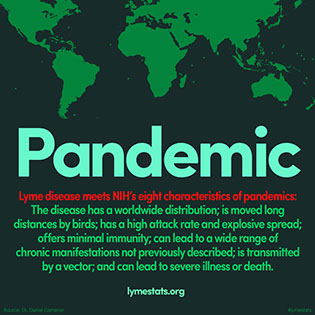
115_pandemic316x316

http://lymestats.org

Let’s stop talking about exotic tropical diseases and focus on what’s keeping Wisconsinites sick!


Anxiety

Suffering with anxiety while fighting MSIDS (multi systemic infectious disease syndrome) can be debilitating.  I remember the days when my husband would literally start shaking while talking with people.  He never knew when it would strike.  He could be having lunch with a sales rep or standing in the foyer of someone’s home.  He dreaded it, and I felt completely helpless.  He is completely free of anxiety after three years of treatment.  And while I feel treatment is truly the answer, there are often things we have to do to assist our bodies.

https://www.youtube.com/watch?v=rQS3oPTgDmM  Published on Apr 23, 2015  Could diet and nutrition be central determinants of mental health? Find out when Trudy Scott, CN, provides evidence presented at The Anxiety Summit, seasons 1 and 2, which has showcased vitally important research now available to integrative practitioners and to people who suffer with anxiety, panic attacks, social anxiety and OCD. The gut-brain connection and microbiome, methylation, adverse effects of benzodiazapines, the role of inflammation, and controversial opinions about serotonin, GABA and urinary neurotransmitter testing are a few of the concepts that will be shared.

https://www.youtube.com/watch?v=5wP1xFcXFZo  Published on Feb 21, 2014  “Using Targeted Individual Amino Acids to Overcome Anxiety, Panic, Worry, Negativity, Cravings and Emotional Eating” with Food Mood Expert Trudy Scott

Supplementing with specific individual amino acids can raise neurotransmitter levels and balance brain chemistry, alleviating anxiety, fear, worry, panic attacks, and feeling stressed or overwhelmed. They can also be supportive in addressing other issues that contribute to or exacerbate anxiety, such as sugar cravings, emotional eating and addictions. In addition, supplemental amino acids can help with depression, PMS, poor focus/ADHD and insomnia, which often co-occur with anxiety.

This presentation will cover symptoms of low serotonin, low GABA, low endorphins, and low catecholamine neurotransmitters. How to raise these neurotransmitter levels with the amino acids l-tryptophan, GABA, d- phenylalanine (DPA) and l-tyrosine, thereby improving mood and ending emotional eating will be taught. The use of glutamine to stabilize low blood sugar, leading to improved mood and gut health will also be addressed.

Trudy says: “The amino acids are key to the success of my practice. They help my clients eliminate stress-eating, and make food changes without feeling deprived and only having to use willpower. My clients feel calm and happy right away, giving them hope, while their other health and nutritional challenges are addressed. Many people suffering from various health concerns could receive tremendous relief with the proper use of amino acids”.

Quite often with MSIDS, we find ourselves dealing with side issues.  Which came first, the infection of MSIDS or the condition?  In nearly every case, the science is completely lacking, but unless dealt with will stop our healing.  Pyroluria is perhaps one such condition.  Normally considered an “inherited” condition associated with inner tension and anxiety, especially in social settings, and is made worse by stress, MSIDS sufferers should consider it.

Discuss all treatment information to your health care practitioner. 

http://lymediseaseguide.org/lyme-disease-zinc-and-pyroluria  Dr. Dietrich Klinghardt claims that most patients he treats for autism or Lyme disease have pyroluria, a defect in the synthesis of haemoglobin which causes excess excretion of zinc. His treatment for the condition is extremely high doses of zinc (200mg or more each day) although this level of zinc can cause nausea, adversely affect copper levels in the body (leading to anaemia), double the risk of prostate cancer, and result in diarrhoea, stomach pain, and vomiting in some. Patients should be extremely cautious regarding zinc supplementation whether suffering from Lyme disease or not as excess levels can build up quite quickly if pyroluria is not present.

Pyroluria is also known as kryptopyrroluria (KPU) or the Mauve Factor and is most commonly observed in women, possibly due to the more overt effects of chronic deficiency in B6 and zinc that may result in women during their teens and early twenties. Symptoms associated with pyroluria include halitosis (bad breath), severe stretch marks, fatigue, poor concentration, confusion, sleep disturbances, poor appetite or increased appetite, mood swings, pale skin, multiple food allergies, and changes in libido (raising or lowering). Some patients may be prescribed antidepressants such as Prozac as low levels of zinc and B6 can reduce the production of the neurotransmitter serotonin which regulates mood (amongst other things). Patients may be persistently depressed to some degree with symptoms exacerbated (in women) as part of the premenstrual syndrome (PMS).

The recommended daily allowances for zinc (in the US) are 8milligrams (8mg) for women and 11mg for men, although these used to be around 15mg a few years ago and have been lowered in recent years; anything over 50mg per day is considered excessive. Those with pyroluria however, may be advised to take supplements containing vitamin B6 and levels of zinc above the generally recommended levels but taking high levels of either nutrient is inadvisable without medical supervision (excessive B6 may lead to a kind of peripheral neuropathy when taken long-term).

https://www.youtube.com/watch?v=yYlZWuclkFA&ebc=ANyPxKp7mcnAx12iMGs_zB6ubuX_HWBCznJrjwQzuJPm55chzcn2zv0w70pkVRRMStcznXtE8nJl  Published on Jun 19, 2014  Pyroluria is more common than we realize and has overlaps with social anxiety and introversion. Carl Pfeiffer did the initial research while working with schizophrenic patients and found that the key nutrients zinc, vitamin B6 and evening primrose oil reduced and often eliminated symptoms.

This presentation will review:

• The associated signs and symptoms of this condition
• The concerns with pyroluria urine testing, and why the pyroluria questionnaire may be a better option
• Fatty acid testing
• Concerns with low vitamin B6 and zinc markers
• Food sources and supplemental forms of these nutrients
• Additional supportive nutrients
• Risk factors related with excess intake of some of the nutrients
• Tips to enhance absorption
• Review of a supportive protocol and its duration

This presentation will also examine the connection of pyroluria to gluten intolerance, inflammation, stress, heavy metals, low serotonin, insomnia, women’s hormonal health, methylation mutations and low histamine. Case studies will be discussed.

http://www.publichealthalert.org/kpuhpu-a-major-piece-of-the-puzzle-in-overcoming-chronic-lyme-disease.html#at_pco=smlrebh-1.0&at_si=56c7495ab3bd3a80&at_ab=per-2&at_pos=3&at_tot=auto  Here is an excellent article written by Scott Forsgren on KPU/HPU.

The HPU complex is a biochemical marker and neurotoxic substance frequently identified in the urine of patients with autism, learning disabilities, alcoholism, substance abuse, schizophrenia, ADHD, Down syndrome, depression, bipolar disorders, and even criminal behavior. Some estimate the incidence of KPU to be 40-70% in schizophrenia; 50% in autism; 30% in ADHD; and 40-80% in alcoholism and substance abuse.  HPU may be an inherited condition but it can also be induced by childhood psychological trauma or chronic infections. Dr. Klinghardt has found the incidence of HPU in Lyme disease to be 80% or higher; in patients with heavy metal toxicity (lead, mercury, cadmium, and others) over 75%; and in children with autism over 80%. These are very significant percentages of the patient population with chronic illness that may benefit from a treatment program which addresses HPU. Normal, healthy controls do not test positive for HPU. Dr. Klinghardt believes that it is not possible to have chronic symptomatic Lyme disease as an adult without a preceding mold illness or the patient having developed HPU. He postulates that the biotoxins from microbes block one or more of the eight enzymes of heme synthesis. This leads to a significant loss of key minerals in white blood cells which effectively disarms cellular immunity.


Last year, Certified Nutritionist Trudy Scott interviewed researchers, doctors, psychiatrists, nutritionists, consumer advocates, and psychologists on natural solutions for anxiety.

http://www.theanxietysummit.com  By going here, you can purchase recordings/transcripts, or contact Scott for any upcoming free on-line events.


Chiropractic care and MSIDS

Those suffering from MSIDS (multi systemic infectious disease syndrome – or Lyme with friends) quickly discover that successful treatment is holistic.  Killing pathogens is certainly an important arm of treatment, but so is detoxing those dead pathogens, as well as improving immune system function.

http://www.chiro.org/research/ABSTRACTS/Immune_Responses_to_Spinal_Manipulation.shtml

According to Frank M. Painter, D.C., studies demonstrate an accumulation of evidence that indicates spinal manipulation may influence the immune system‘s response to various stimuli and reduces production of pro-inflammatory mediators associated with tissue damage and pain.  Some studies also give evidence that manipulation may induce and enhance production of the immunoregulatory cytokine IL-2 as well as the production of immunoglobulins.  http://www.chiro.org/research/ABSTRACTS/Effects_of_Chiropractic.shtml  Other results show manipulative treatment may influence T and B lymphocyte numbers, NK cell numbers, antibody levels, phagocytic activity, and plasma beta endorphin levels.  

http://articles.mercola.com/sites/articles/archive/2016/02/28/wellness-chiropractic

Chiropractic care has been vilified since the 60’s with a “persistent tendency to suppress physicians from referring patients to chiropractors — so much so that Dr. Chester Wilk ended up filing an antitrust suit against the American Medical Association (AMA) in 1976.”  Wilk eventually won and in 1987, the court ruled that the AMA had engaged in an unlawful conspiracy in restraint of trade to contain and eliminate the chiropractic profession.

According to chiropractors, chiropractic care is similar to seeing a dentist and needs to be done on a regular basis to maintain the health of your spine, because even regular activities can contribute to a less than optimal functioning.

One of the best ways to find a good wellness chiropractor is by word of mouth. You may also want to find out if he or she is trained in any other treatment modalities, such as muscle testing, applied kinesiology, or neuroemotional technique (NET). There are literally dozens of different techniques that can have a profound impact on addressing the bioenergetic component of disease, not just the structural.

Tips for Choosing a Wellness Chiropractor:
Meet the doctor. Many chiropractors will agree to a no-cost consultation to determine whether you are a good match. To make this visit as productive as possible, here are a few things to consider:
Does the practice focus on vertebral subluxation and wellness? Physical, biochemical, and psychological stress may result in spinal subluxations that disrupt nerve function and compromise your health.

Does the doctor “walk the talk”? If he or she is overweight, looks unhealthy, or does not live a healthy lifestyle, this speaks volumes regarding their commitment to wellness.
Do the two of you “click”? Do you like each other? Do you communicate well? Avoid a doctor who seems rushed, talks down to you, or seems disinterested in listening to your concerns.
Does the doctor use objective assessments of nerve function? Since your care is not based just on addressing pain, your chiropractor should be using some form of objective assessment of your nerve function, as spinal subluxations can sometimes be asymptomatic.  Non-invasive instruments that measure the electrical activity in your muscles, and/or a thermal scanner that evaluates the function of your autonomic nervous system can be used, for example.

What treatment techniques are used? Chiropractic techniques include low-force adjustments by hand, and more forceful adjustments using instruments. Ask which technique would be used on you, and if you have a preference, make sure the doctor is willing to use it.

On Saturday, April 9, from 2:30pm-4:45pm, Dr. Eileen Isom DC, CCST, Certified Spinal Trauma Specialist, of Madison Chiropractic, will be speaking at the Madison Lyme Support Group.  Dr. Isom uses NUCCA technique which is unique because it frees the nervous system of interference by using a precise, non-invasive, gentle touch technique.

The NUCCA technique brings several generations of clinical research to correcting the serious problem of the Atlas (the bone your head sets on) Subluxation Complex. By using precise and objective x-ray views of the head and neck, mathematical measurement and analysis are made of the misalignment.  There is no twisting, popping, or cracking with this gentle, yet effective procedure.

Some of the many symptoms that can be relieved by correction of the Atlas Subluxation Complex include but are not limited to:

Neck and back pain
Headaches and Migraines
Hypertension
Chronic pain or stress
Leg and arm numbness
Scoliosis
TMJ
Fibromyalgia
Sinus and allergy problems
Herniated disc
Seizures
Depression
Attention Deficit Disorder
Hormonal Imbalance
Athletic and auto injuries
Bed wetting
Cerebral Palsy
Multiple Sclerosis
Arthritis

Chiropractic care may be something you need to investigate further in your MSIDS journey as it can alleviate pain, help you structurally, as well as optimize your immune system.

For more information on NUCCA, go to:  http://www.nucca.org/what-is-nucca/