Archive for the ‘research’ Category

Prevalence of Bb in Poland

https://www.ncbi.nlm.nih.gov/m/pubmed/29575881/

Prevalence of Borrelia burgdorferi in ticks removed from skin of people and circumstances of being bitten – research from the area of Poland, 2012-2014.

Gałęziowska E, et al. Ann Agric Environ Med. 2018.

Abstract

INTRODUCTION: During feeding, the tick sucks blood from the host along with the pathogens that are in the blood, simultaneously exchanging its own pathogens with the host. Humans can also be a host. It is important to understand the most typical circumstances in which people might become infected with Borrelia burgdorferi. This knowledge will help to prepare health education programmes aimed at the prevention of Lyme disease and other tick-borne diseases.

OBJECTIVE: The aim of the study was to determine the percentage of ticks infected with Borrelia burgdorferi sensu lato, depending on the circumstances of getting bitten.

MATERIAL AND METHODS: The research material consisted of ticks acquired from people who had been bitten, and questionnaires completed by these people. 510 ticks were acquired from 257 females and 253 males. Following delivery of a tick for testing, the stage of its development was determined and a molecular assay of Borrelia burgdorferi DNA performed.

RESULTS: A positive result of the nested-PCR test was obtained in 78 ticks, which represents 15.30% of all ticks. The infected ticks were collected from male (41 ticks – 52.56%) and female subjects (37 ticks – 47.44%). The biggest number of infected ticks were collected in autumn (54 ticks – 69.23%) and from people who had been into forests (44 ticks – 56.41%). Among the people from whom the infected ticks were acquired, the dominating group included persons over 16 years of age (53 persons – 67.95%) and children aged 0-5 years (16 persons – 20.51%). One in four infected ticks were acquired from the southwestern (20 ticks – 25.64%) and eastern regions of Poland (21 ticks – 26.92%).

CONCLUSIONS: Infestation of ticks infected with Lyme disease spirochete in this study proved to be variable and depend on the season, the area of tick attack and the region in Poland. The results of the study clearly show that ticks infected with Borrelia burgdorferi inhabit all regions of Poland. The results are consistent with National Institute of Hygiene data which indicates that Lyme disease cases are recorded in all regions of Poland.

______________

**Comment**

Glad the word is getting out but what about coinfections?  When are researchers going to test for Babesia, Bartonella, Mycoplasma, viruses, funguses, and more?  While Lyme (Bb) is bad, the coinfections are just as bad and put them WITH Lyme and they are devastating.  This is important to know as it necessitates different drugs and until this is dealt with people are not going to get well.

For More:  https://madisonarealymesupportgroup.com/2017/07/01/one-tick-bite-could-put-you-at-risk-for-at-least-6-different-diseases/ (Actual number is 16 and counting)
https://madisonarealymesupportgroup.com/2018/02/16/tbd-serochip-will-identify-six-tick-borne-pathogens/

https://madisonarealymesupportgroup.com/2018/04/03/cdc-deliberately-avoids-direct-detection-testing-methods-for-ld/

Aggressiveness, Violence, Homicidality, Homicide, & LD

https://www.ncbi.nlm.nih.gov/pubmed/29576731

Neuropsychiatr Dis Treat. 2018 Mar 9;14:693-713. doi: 10.2147/NDT.S155143. eCollection 2018.

Aggressiveness, violence, homicidality, homicide, and Lyme disease.

Bransfield RC1.

No study has previously analyzed aggressiveness, homicide, and Lyme disease (LD).

MATERIALS AND METHODS:
Retrospective LD chart reviews analyzed aggressiveness, compared 50 homicidal with 50 non-homicidal patients, and analyzed homicides.

RESULTS:
Most aggression with LD was impulsive, sometimes provoked by intrusive symptoms, sensory stimulation or frustration and was invariably bizarre and senseless. About 9.6% of LD patients were homicidal with the average diagnosis delay of 9 years. Postinfection findings associated with homicidality that separated from the non-homicidal group within the 95% confidence interval included suicidality, sudden abrupt mood swings, explosive anger, paranoia, anhedonia, hypervigilance, exaggerated startle, disinhibition, nightmares, depersonalization, intrusive aggressive images, dissociative episodes, derealization, intrusive sexual images, marital/family problems, legal problems, substance abuse, depression, panic disorder, memory impairments, neuropathy, cranial nerve symptoms, and decreased libido. Seven LD homicides included predatory aggression, poor impulse control, and psychosis. Some patients have selective hyperacusis to mouth sounds, which I propose may be the result of brain dysfunction causing a disinhibition of a primitive fear of oral predation.

CONCLUSION:
LD and the immune, biochemical, neurotransmitter, and the neural circuit reactions to it can cause impairments associated with violence. Many LD patients have no aggressiveness tendencies or only mild degrees of low frustration tolerance and irritability and pose no danger; however, a lesser number experience explosive anger, a lesser number experience homicidal thoughts and impulses, and much lesser number commit homicides. Since such large numbers are affected by LD, this small percent can be highly significant. Much of the violence associated with LD can be avoided with better prevention, diagnosis, and treatment of LD.

_______________

For More:

https://madisonarealymesupportgroup.com/2017/06/20/suicide-lyme-and-associated-diseases/

https://madisonarealymesupportgroup.com/2017/07/12/suicide-and-chronic-lyme-disease/

https://madisonarealymesupportgroup.com/2017/03/21/military-veterans-suicide-and-lymemsids/

Correlation of Natural Autoantibodies & Heart Disease-related Antibacterial Antibodies in Pericardial Fluid: Mycoplasma, Bb, & Chlamydia

https://www.ncbi.nlm.nih.gov/m/pubmed/29573404/

Correlation of natural autoantibodies and cardiovascular disease-related antibacterial antibodies in pericardial fluid of cardiac surgery patients.

Simon D, et al. Clin Exp Immunol. 2018.

Abstract

Our previous studies showed that anti-citrate synthase (a-CS) IgM natural autoantibodies are present in healthy individuals without previous antigen stimulation, but no studies have investigated their presence in the pericardial fluid (PF). Therefore we detected the natural anti-CS IgG/M autoantibody levels in plasma and PF of cardiac surgery patients and investigated their relationship with cardiovascular disease-associated bacterial pathogens. PF and blood samples of 22 coronary artery bypass graft (CABG) and 10 aortic valve replacement (AVR) patients were tested for total Ig levels, natural autoantibodies and infection-related antibodies using ELISA and Luminex methods. The B cell subsets were measured by flow cytometry. The total Ig subclass levels were 4-8 times lower in PF than in plasma, but the natural anti-CS IgM autoantibodies showed a relative increase in PF. The frequency of CD19+ B lymphocytes was significantly lower in PF than in blood (P=0.01) with a significant relative increase of B1 cells (P=0.005). Mycoplasma pneumoniae antibody positive patients had significantly higher anti-CS IgM levels. In CABG patients we found a correlation between anti-CS IgG levels and Mycoplasma pneumoniae, Chlamydia pneumoniae and Borrelia burgdorferi antibody titers. Our results provide the first evidence that natural autoantibodies are present in the PF and they show significant correlation with certain antibacterial antibody titers in a disease specific manner.

__________________

Chlamydia-like organisms found in ticks:  https://madisonarealymesupportgroup.com/2016/10/07/chlamydia-like-organisms-found-in-ticks/

Mycoplasma:  https://madisonarealymesupportgroup.com/2015/08/12/connecting-dots-mycoplasma/

https://madisonarealymesupportgroup.com/2017/07/16/mycoplasma-and-other-intracellular-bacterial-infections-in-rheumatic-diseases-comorbid-condition-or-cause/

https://madisonarealymesupportgroup.com/2016/02/07/mycoplasma-treatment/


A Protein Helps Bb Outsmart the Immune System

https://www.sciencedaily.com/releases/2018/04/180402171044.htm  University of Maryland.  ScienceDaily, 2 April 2018.

How a protein helps bacteria outsmart the human immune system

Findings have major implications for tick-borne diseases like Lyme disease

Summary:
New research has uncovered a mechanism by which the bacteria that cause Lyme disease fight innate immune responses, and observed a never-before-seen phenomena demonstrating the bacteria can spring back in the body weeks later. Understanding this type of bacteria, one of only a few pathogens that can actually persist in the body for long periods of time, has major implications for treatment of tick-borne diseases like Lyme disease.

FULL STORY:

180402171044_1_540x360

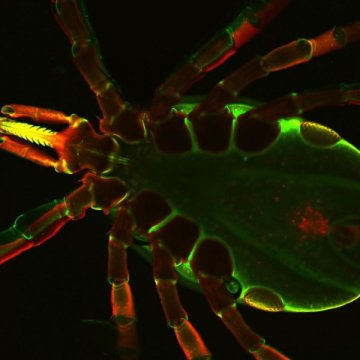
Ixodes scapularis ticks transmit the pathogens of Lyme disease, resulting a multisystem illness in a variety of animals and humans. The image shows bottom side a live Ixodes tick as seen under a confocal immunofluorescence microscope.
Credit: Dr. Utpal Pal, University of Maryland

Researchers have uncovered a mechanism by which the bacteria that cause Lyme disease persist in the human body and fight the body’s early, innate immune responses. Dr. Utpal Pal, Professor in Veterinary Medicine at the University of Maryland (UMD), has been studying the Borrelia burgdorferi bacteria throughout his 12 years with UMD, and his work has already produced the protein marker used to identify this bacterial infection in the body. Now, Dr. Pal has isolated a protein produced by the bacteria that disables one of the body’s first immune responses, giving insight into mechanisms that are largely not understood.

He has also observed a never-before-seen phenomena demonstrating that even without this protein and with the immune system responding perfectly, the bacteria can spring back in the body weeks later. Understanding this type of bacteria, which is among only a few pathogens that can actually persist in the body for long periods of time, has major implications for the treatment of tick-borne diseases like Lyme disease, which is an increasingly chronic and consistently prevalent public health issue.

“Most people don’t realize that they actually are walking around with more bacterial cells in their bodies than their own cells, so we are really bags of bacteria,” explains Pal. “Most are good, but the second your body detects something that is a pathogen and can cause disease, your immune system starts to work.” The body sends a first, nonspecific wave of attack to kill the bacteria detected that doesn’t belong. This happens within a few hours to days. If this doesn’t work, it takes seven to ten days to learn about the enemy and send a large second wave of reinforcements to kill what is left. “Lyme disease is actually caused by your immune system,” explains Pal. “This bacteria wins the first battle, and your body overreacts so much that it causes intense inflammation in all the joints and areas that the bacteria spreads by sending so many reinforcements to kill it. Borrelia is then killed, but the inflammation remains and causes many of your symptoms for Lyme disease. That is why killing Borrelia in the first wave of immunity is so important.”

The Centers for Disease Control and Prevention (CDC) estimate about 300,000 cases of Lyme disease annually in the United States. However, these cases are largely underestimated and reported due to the attention given to mosquito-transmitted diseases like malaria.

“The majority of all vector-borne diseases in the US are actually tick-borne, and 6 of the 15 distinct tick diseases are transmitted by the Ixodes tick we study in our lab,” says Pal. “The symptoms of these diseases present similarly to many other illnesses and are hard to pin down, so they are vastly underreported and an even bigger public health concern locally and globally than people realize.”

Now, chronic Lyme disease is a growing concern. Six to twelve months after traditional antibiotic therapy, many people have non-objective symptoms that return with varying intensity and no current treatment strategy, known as Post-Treatment Lyme Disease Syndrome.

Dr. Pal’s research has shed some light on this issue and paved the way for future research and treatment options by discovering that even without the protein used to beat the first wave of immune defense, infection can reoccur in the body weeks later.

“This means there is a second line of defense for Borrelia just like for our body’s immune system. This had never been observed before and gives us insight into what could be causing these chronic Lyme disease cases,” explains Pal.

Dr. Pal is frequently consulted for his expertise and has written books on this highly versatile bacteria. The federal government has recently put more emphasis on tick-borne disease research and a major public health issue with the passage of the 21st Century Cures Act. As part of this, Dr. Pal was asked to serve on a Tick-Borne Disease Working Group Subcommittee for the U.S. Department of Health & Human Services (DHHS) focused on vaccines and therapeutics for tick-borne diseases, driving future research in the field. Dr. Pal currently holds two concurrent multi-million dollar RO1 grants from the National Institutes of Health (NIH) for this work, only granted for highly important and influential research.

“I am fascinated by Borrelia, and this discovery will open the door for much more work to treat and control important diseases like Lyme disease,” says Pal.

Journal Reference:  Quentin Bernard, Alexis A. Smith, Xiuli Yang, Juraj Koci, Shelby D. Foor, Sarah D. Cramer, Xuran Zhuang, Jennifer E. Dwyer, Yi-Pin Lin, Emmanuel F. Mongodin, Adriana Marques, John M. Leong, Juan Anguita, Utpal Pal. Plasticity in early immune evasion strategies of a bacterial pathogen. Proceedings of the National Academy of Sciences, 2018; 201718595 DOI: 10.1073/pnas.1718595115


Encephalopathy in Adult with Cat-scratch Disease

https://www.ncbi.nlm.nih.gov/m/pubmed/29507029/

Encephalopathy in an adult with cat-scratch disease.

Samarkos M, et al. BMJ Case Rep. 2018.

Abstract

We report the case of a 53-year-old healthy man, presenting with confusion. The patient had been clinically diagnosed with cat-scratch disease (CSD) and prescribed a 10-day course of doxycycline orally. Approximately a week after he had completed the treatment, he was admitted to our department with confusion. Neurological examination revealed expressive dysphasia with no motor or sensory deficits. Cerebrospinal fluid (CSF) examination showed only increased content. Imaging with CT and MRI of the brain did not reveal any abnormalities, and funduscopy was normal. Serology confirmed Bartonella henselae infection. CSD-associated encephalopathy was confirmed based on the clinical manifestations, CSF findings and positive serology. The patient was treated with a combination of doxycycline and rifampin and he rapidly improved with complete neurological recovery within 7 days. Encephalopathy is an unusual manifestation of CSD in adults with excellent prognosis.

PMID

29507029 [ – in process]

_____________
**Comment**
Bartonella is a zinger and far more damaging than is being recognized.  Many Lyme/MSIDS patients have it and struggle with the far reaching symptoms.  While it is recognized that certain ticks carry it, it is still not widely accepted as a tick borne illness and until it is, regular doctors won’t consider even testing for it.  Be your own advocate.