Archive for the ‘research’ Category

Transmission of Borrelia Miyamotoi By Tranovarially-Infected Larval Ticks

https://www.ncbi.nlm.nih.gov/m/pubmed/30007502/

Transmission of the relapsing fever spirochete, Borrelia miyamotoi, by single transovarially-infected larval Ixodes scapularis ticks.

Breuner NE, et al. Ticks Tick Borne Dis. 2018.

Abstract

The relapsing fever spirochete, Borrelia miyamotoi, is increasingly recognized as a cause of human illness (hard tick-borne relapsing fever) in the United States. We previously demonstrated that single nymphs of the blacklegged tick, Ixodes scapularis, can transmit B. miyamotoi to experimental hosts. However, two recent epidemiological studies from the Northeastern United States indicate that human cases of hard tick-borne relapsing fever peak during late summer, after the spring peak for nymphal tick activity but coincident with the peak seasonal activity period of larval ticks in the Northeast. These epidemiological findings, together with evidence that B. miyamotoi can be passed from infected I. scapularis females to their offspring, suggest that bites by transovarially-infected larval ticks can be an important source of human infection. To demonstrate experimentally that transovarially-infected larval I. scapularis ticks can transmit B. miyamotoi, outbred Mus musculus CD1 mice were exposed to 1 or 2 potentially infected larvae. Individual fed larvae and mouse blood taken 10 d after larvae attached were tested for presence of B. miyamotoi DNA, and mice also were examined for seroreactivity to B. miyamotoi 8 wk after tick feeding.

We documented B. miyamotoi DNA in blood from 13 (57%) of 23 mice exposed to a single transovarially-infected larva and in 5 (83%) of 6 mice exposed to two infected larvae feeding simultaneously. All 18 positive mice also demonstrated seroreactivity to B. miyamotoi. Of the 11 remaining mice without detectable B. miyamotoi DNA in their blood 10 d after infected larvae attached, 7 (64%) had evidence of spirochete exposure by serology 8 wk later.

Because public health messaging for risk of exposure to Lyme disease spirochetes focuses on nymphal and female I. scapularis ticks, our finding that transovarially-infected larvae effectively transmit B. miyamotoi should lead to refined tick-bite prevention messages.

______________


**Comment**

A mother tick CAN transmit to her own children.  (Just as human mothers can):  https://madisonarealymesupportgroup.com/2018/06/19/33-years-of-documentation-of-maternal-child-transmission-of-lyme-disease-and-congenital-lyme-borreliosis-a-review/

This is why it is unwise to focus on months of the year regarding when you can and can not become infected.  First, ticks are marvelous ecoadaptors and can survive the harshest environments:  https://madisonarealymesupportgroup.com/2018/08/13/study-shows-lyme-not-propelled-by-climate-change/.  Second, we can’t just be concerned with one stage of the tick but recognize the potential transmission of ALL stages to infect.

There’s a high probability more than ticks can transmit:  https://madisonarealymesupportgroup.com/2017/02/24/pcos-lyme-my-story/

Then, there’s the added complexity of being able to transmit many things simultaneously:  https://madisonarealymesupportgroup.com/2017/07/01/one-tick-bite-could-put-you-at-risk-for-at-least-6-different-diseases/

They are finding ticks in places they shouldn’t be making geographical maps virtually useless:  https://madisonarealymesupportgroup.com/2018/07/16/ticks-that-carry-lyme-disease-are-spreading-fast/  (Please also read my comment at end of article)

Time for researchers to quit sounding so “all knowing,” and write research articles carefully, making sure to remember that what they write will and has been used against patients in every possible way imaginable.
Plus, everything they thought they knew is constantly changing.

Altering Human Genetics Through Vaccination

I’ve been sitting on this article for a while but with the push for gene-editing on mice and insects feel compelled to share it now while the iron’s hot.  To understand how this relates to Lyme/MSIDS, please see my comment at the end of the article.

https://worldmercuryproject.org/news/altering-human-genetics-through-vaccination/

June 28, 2018

Altering Human Genetics Through Vaccination

Children’s Health Defense Note: CHD has internal documents in which the FDA acknowledges that technology that allows for the creation of these new vaccines has outpaced their ability to predict adverse events. Shouldn’t our federal agencies be calling for a moratorium until we have that knowledge—especially since it is heavily reported that the CDC/FDA post-marketing surveillance systems are inadequate to pick up problems after licensure?

By Jon Rappoport, Contributing Writer, Children’s Health Defense

The National Institute of Allergy and Infectious Diseases (NIAID) has launched efforts to create a vaccine that would protect people from most flu strains, all at once, with a single shot.

Over the years, I’ve written many articles refuting claims that vaccines are safe and effective, but we’ll put all that aside for the moment and follow the bouncing ball.

Massachusetts Senator and big spender, Ed Markey, has introduced a bill that would shovel no less than a billion dollars toward the universal flu-vaccine project.

Here is a sentence from an NIAID press release that mentions one of several research approaches:

“NIAID Vaccine Research Center scientists have initiated Phase 1/2 studies of a universal flu vaccine strategy that includes an investigational DNA-based vaccine (called a DNA ‘prime’)…”

This is quite troubling, if you know what the phrase “DNA vaccine” means. It refers to what the experts are touting as the next generation of immunizations.

Instead of injecting a piece of a virus into a person, in order to stimulate the immune system, synthesized genes would be shot into the body. This isn’t traditional vaccination anymore. It’s gene therapy.

In any such method, where genes are edited, deleted, added, no matter what the pros say, there are always “unintended consequences,” to use their polite phrase. The ripple effects scramble the genetic structure in numerous unknown ways.

This is genetic roulette with a loaded gun. Anyone and everyone on Earth injected with a DNA vaccine will undergo permanent and unknown genetic changes…
Here is the inconvenient truth about DNA vaccines—
They will permanently alter your DNA.

The reference is the New York Times, 3/15/15, “Protection Without a Vaccine.” It describes the frontier of research—the use of synthetic genes to “protect against disease,” while changing the genetic makeup of humans. This is not science fiction:

“By delivering synthetic genes into the muscles of the [experimental] monkeys, the scientists are essentially re-engineering the animals to resist disease.”

“’The sky’s the limit,’ said Michael Farzan, an immunologist at Scripps and lead author of the new study.”

“The first human trial based on this strategy — called immunoprophylaxis by gene transfer, or I.G.T. — is underway, and several new ones are planned.” [That was three years ago.]

“I.G.T. is altogether different from traditional vaccination. It is instead a form of gene therapy. Scientists isolate the genes that produce powerful antibodies against certain diseases and then synthesize artificial versions. The genes are placed into viruses and injected into human tissue, usually muscle.”

Here is the punchline:

“The viruses invade human cells with their DNA payloads, and the synthetic gene is incorporated into the recipient’s own DNA. If all goes well, the new genes instruct the cells to begin manufacturing powerful antibodies.”

Read that again: “the synthetic gene is incorporated into the recipient’s own DNA.”

Alteration of the human genetic makeup.

Not just a “visit.” Permanent residence. And once a person’s DNA is changed, he will live with that change—and all the ripple effects in his genetic makeup—for the rest of his life.

The Times article taps Dr. David Baltimore for an opinion:

“Still, Dr. Baltimore says that he envisions that some people might be leery of a vaccination strategy that means altering their own DNA, even if it prevents a potentially fatal disease.”

Yes, some people might be leery.  If they have two or three working brain cells.

This is genetic roulette with a loaded gun. Anyone and everyone on Earth injected with a DNA vaccine will undergo permanent and unknown genetic changes…

And the further implications are clear. Vaccines can be used as a cover for the injections of any and all genes, whose actual purpose is re-engineering humans in far-reaching ways.

The emergence of this Frankenstein technology is paralleled by a shrill push to mandate vaccines, across the board, for both children and adults. The pressure and propaganda are planet-wide.

The freedom and the right to refuse vaccines has always been vital. It is more vital than ever now.

It means the right to preserve your inherent DNA.

The author of three explosive collections, THE MATRIX REVEALED, EXIT FROM THE MATRIX, and POWER OUTSIDE THE MATRIX, Jon was a candidate for a US Congressional seat in the 29th District of California. He maintains a consulting practice for private clients, the purpose of which is the expansion of personal creative power. Nominated for a Pulitzer Prize, he has worked as an investigative reporter for 30 years, writing articles on politics, medicine, and health for CBS Healthwatch, LA Weekly, Spin Magazine, Stern, and other newspapers and magazines in the US and Europe. Jon has delivered lectures and seminars on global politics, health, logic, and creative power to audiences around the world. You can sign up for his free NoMoreFakeNews emails here or his free OutsideTheRealityMachine emails here.

___________________


**Comment**

Frightening information, indeed, and reminiscent of Brave New World.

Hopefully regarding DNA based (gene-editing) vaccines, the evidence for harm is self-evident.

Regarding how this specifically could affect Lyme/MSIDS patients, the vaccine issue should STILL be self evident in the harm it could cause chronically/persistently infected people, but secondly, they are gene-editing mice and mosquitoes and releasing them into the wild in hopes of eradicating Lyme and Zika with unintended consequences:  https://madisonarealymesupportgroup.com/2018/10/11/new-england-scientists-explore-new-method-for-eradicating-lyme-disease/

In brief, gene editing has shown unintended consequences of mutations, enhancement of other pathogens, cancer in humans, and very real ethical issues. 

Lastly, while many think the only problem some have with aborted fetal tissue in vaccines is only an ethical one, I was told by people with far more experience than I, that putting human DNA from a certain gender into another human of a different gender, could also have unintended consequences – transgenderism.

Please read my entire comment at end of article within link.  This is scary business.  Please speak out in your sphere of influence.  


Ehrlichiosis Masquerading as Thrombotic Thrombocytopenia Purpura

https://www.ncbi.nlm.nih.gov/m/pubmed/30279260/

Ehrlichiosis masquerading as thrombotic thrombocytopenic purpura.

Chen D, et al. BMJ Case Rep. 2018.

Abstract

Ehrlichiosis is a rare tickborne illness that can manifest from an asymptomatic, self-limiting disease to a severe presentation with encephalopathy and renal failure. Ehrlichiosis is diagnosed largely based on patient history with confirmatory tests including peripheral blood smear, serology and PCR. Empiric treatment is warranted in patients with suspected tick bites as a delay in treatment can result in multiorgan failure. We discuss a case of ehrlichiosis that presented with the classic pentad of thrombotic thrombocytopenic purpura (TTP). A history of a tick bite was elicited and intravenous doxycycline 100 mg two times a day was initiated. Tick panel results revealed a positive Ehrlichia chaffeensis IgG and IgM titres, consistent with human monocytic ehrlichiosis. Autoimmune workup and antibodies to Borrelia burgdorferi were negative, and ADAMTS13 activity assay results were inconsistent with TTP. The patient completed 14 days of intravenous doxycycline and had an uneventful recovery.

PMID

30279260 [ – in process]

__________________________
**Comment**
Thrombotic Thrombocytopenic Purpura (TTP) causes tiny blood clots throughout your body.  This can block blood vessels and impede blood flow.  The clots can use up too many platelets which in turn can inhibit clot formation when you need it.
Symptoms include:
  • Purplish bruises (purpura) from no obvious cause
  • tiny red or purple spots that look like a rash
  • skin may turn yellowish (jaundice)
  • skin may look pale
  • fever
  • fatigue
  • confusion
  • weakness
  • headache
  • In very serious cases, a stroke, major internal bleeding, or a coma can occur
Warning!
In May 2017, an article in the CDC “Emerging Infectious Diseases” Journal, warns that ehrlichiosis infections are being “grossly underreported” in the U.S. with as many as 97-99% of infections going unrecognized. They are projecting that the actual number of annual cases could go as high as 1/2 the number of Lyme disease cases—which would mean we may already have over 150,000 cases of ehrlichiosis annually. (3)
Rickettsiae and Ehrlichia belong to a broad group of bacteria that can be spread by a tick bite. These infections can be transmitted alone or at the same time as Lyme disease and are commonly known as co-infections.


The Ehrlichia (E) group includes: (5, 6, 7, 8,)

  • chaffeensis: the cause of human monocytic ehrlichiosis (HME)
  • ewingii
  • muris-like (EML)

Symptoms
While some cases of ehrlichiosis are mild, the disease can be severe or fatal if not treated correctly, even in previously healthy people. Severe symptoms of ehrlichiosis may include difficulty breathing, respiratory failure, bleeding disorders, kidney or heart failure.

Because Ehrlichia infect white blood cells (the cells that fight infection), and mitochondria (the powerhouse of the human cell) the consequences of untreated infection may have long-lasting effects.(9) I often wonder if undiagnosed Ehrlichiosis isn’t responsible for some portion of the millions of people with the mysterious illness known as “Myalgic Encephalomyelitis” or “Chronic Fatigue Syndrome”.

Other symptoms of ehrlichiosis can include:

  • Fever/chills and headache (majority of cases)
  • Fatigue/malaise (over two-thirds of cases)
  • Muscle/joint pain (25% – 50%)
  • Nausea, vomiting and/or diarrhea (25% – 50%)
  • Cough (25% – 50%)
  • Confusion or brain fog (50% of children, less common in adults)
  • Lymphadenopathy (47% – 56% of children, less common in adults)
  • Red eyes (occasionally)
  • Rash (approximately 60% of children and 30% of adults)

Diagnosis And Treatment
Like other tick-borne diseases, diagnostic blood tests will frequently be false-negative during the first weeks of illness. And like other tick-borne diseases, treatment is most effective if started early. For this reason, healthcare providers must use their best clinical judgement and treat patients based upon early symptoms alone.

According to the CDC website: “The diagnosis of ehrlichiosis must be made based on clinical signs and symptoms, and can later be confirmed using specialized confirmatory laboratory tests. Treatment should never be delayed pending the receipt of laboratory test results, or be withheld on the basis of an initial negative laboratory result.”

The CDC goes on to say: “Doxycycline is the first line treatment for adults and children of all ages and should be initiated immediately whenever ehrlichiosis is suspected.” (10)

Patients who are treated early may recover quickly on outpatient medication, while those who experience a more severe illness may require intravenous antibiotics, prolonged hospitalization or intensive care.

Direct Test for LD. Carl Tuttle Chews up CDC & Spits Them Out.

https://www.change.org/p/the-us-senate-calling-for-a-congressional-investigation-of-the-cdc-idsa-and-aldf/u/23412818?

Direct Diagnostic Tests for Lyme Disease

Carl Tuttle
Hudson, NH
OCT 13, 2018 —

Latest message to the TBD Working Group:
———- Original Message ———-
From: Carl Tuttle <runagain@comcast.net>
To: jaucott2@jhmi.edu, tickbornedisease@hhs.gov
Cc:
Date: October 12, 2018 at 1:48 PM

Subject: Re: News Release: Dr. Sin Hang Lee Accuses CDC of Resorting to Politically Motivated False Science to Cover Up Its Failure to Promote More Exacting Test for Lyme Disease

To the Tick Borne Disease Working Group,

Please see the viewpoint below recently published in Clinical Infectious Diseases regarding direct detection tests for Lyme disease.

I have purposely highlighted coauthor Martin E Schriefer of the Centers for Disease Control because he was one of the CDC officials working directly with Dr. Sin Lee of Milford Molecular Diagnostics regarding “direct detection” of Lyme disease.

All communication from the CDC stopped with Dr. Lee with absolutely no explanation whatsoever prompting the current lawsuit.
And now we see Schriefer’s name on this publication pushing for DNA tests?

It’s time to fire the CDC and take control of this runaway plague as all the evidence indicates deliberate mishandling of a disease that is destroying lives, ending careers while leaving its victims in financial ruin.

Carl Tuttle
Lyme Endemic Hudson, NH

CORRECTED PROOF

Direct Diagnostic Tests for Lyme Disease

Steven E Schutzer, Barbara A Body, Jeff Boyle, Bernard M Branson, Raymond J Dattwyler, Erol Fikrig, Noel J Gerald, Maria Gomes-Solecki, Martin Kintrup, Michel Ledizet, Andrew E Levin, Michael Lewinski, Lance A Liotta, Adriana Marques, Paul S Mead, Emmanuel F Mongodin, Segaran Pillai, Prasad Rao, William H Robinson, Kristian M Roth, MARTIN E SCHRIEFER, Thomas Slezak, Jessica L Snyder, Allen C Steere, Jan Witkowski,Susan J Wong, John A Branda

Clinical Infectious Diseases, ciy614, https://doi.org/10.1093/cid/ciy614

Published: 11 October 2018

Abstract
Borrelia burgdorferi was discovered to be the cause of Lyme disease in 1983, leading to seroassays. The 1994 serodiagnostic testing guidelines predated a full understanding of key B. burgdorferi antigens and have a number of shortcomings. These serologic tests cannot distinguish active infection, past infection, or reinfection. Reliable direct-detection methods for active B. burgdorferi infection have been lacking in the past but are needed and appear achievable. New approaches have effectively been applied to other emerging infections and show promise in direct detection of B. burgdorferi infections.

______________________________

THE FOLLOWING EMAIL WAS PREVIOUSLY SENT TO THE TBD WORKING GROUP AND POSTED AS AN UPDATE HERE: https://www.change.org/p/the-us-senate-calling-for-a-congressional-investigation-of-the-cdc-idsa-and-aldf/u/23321574

Subject: Re: News Release: Dr. Sin Hang Lee Accuses CDC of Resorting to Politically Motivated False Science to Cover Up Its Failure to Promote More Exacting Test for Lyme Disease

On September 25, 2018 at 11:11 AM Carl Tuttle <runagain@comcast.net> wrote:

To the Tick-Borne Disease Working Group,

Before you read the following press release I would like to point out that Patient #45 from Table 2 of the attached CDC document titled, “Reply to Response to Motion to Dismiss” (page 26) had a bulls-eye rash and a single positive Western blot Band 41 which as you know is the flagellar antigen of Borrelia burgdorferi.

Patient #45 has a case of early Lyme confirmed by the bulls-eye rash but hadn’t yet produced a full set of antibodies to the infection. Dr. Lee’s 16S rRNA gene sequencing was able to accurately detect early infection before antibody production.

The CDC claims the following:

“ with respect to pretreatment patients, he (Dr. Sin Hang Lee) reported B. burgdorferi in a patient whose antibody testing failed to indicate the presence of the disease at all (patient 45). Attachment I at 4287 and 4292. Therefore, Dr. Lee’s tests were not accurate.”

For the record, you will find the following statement from the CDC website:

Diagnosis, Testing, and Treatment

https://www.cdc.gov/lyme/faq/index.html

Excerpt:
As with serologic tests for other infectious diseases, the accuracy of the test depends upon the stage of disease. During the first few weeks of infection, such as when a patient has an erythema migrans rash, the test is expected to be negative.

______________________________________

The CDC is responsible for the current Lyme disease crisis where patients cannot obtain a timely diagnosis through accurate early detection.

This perpetuated outdated dogma of using a restricted pattern of antibody tests for disease definition is now on record disclosing the hidden agenda of the bureaucrats in charge of the Lyme disease policy.

MILFORD MOLECULAR DIAGNOSTICS

2044 Bridgeport Avenue
Milford, CT 06460
http://www.dnalymetest.com

September 25, 2018

Media Contact:
Kevin Moore
203-788-8497

FOR IMMEDIATE RELEASE

In Unprecedented CDC lawsuit, Dr. Sin Hang Lee Accuses CDC of Resorting to Politically Motivated False Science to Cover Up Its Failure to Promote More Exacting Test for Lyme Disease

Milford, Conn. – Dr. Sin Hang Lee, the Connecticut based pathologist who, in May, filed an unprecedented $57.1 million Lyme disease related lawsuit against theUnited States Centers for Disease Control and Prevention (CDC),charged the CDC in a legal filing* this week of employing false, pseudo-scientific theories in order to justify its own anti-consumer actions aimed at perpetuating Lyme disease testing by a flawed technology previously endorsed by the CDC. It is also believed that certain current and former CDC representatives receive personal financial gains (royalties) as a result of their having worked on the approval and promotion/CDC endorsement of a Lyme disease serology test.

According to Dr. Lee, the truth behind the CDC’s inexplicable retreat from supporting a cutting-edge test capable of diagnosing Lyme disease infections with 100% accuracy, came to the surface in the CDC’s lawsuit-related recent filing in theU. S. Court of Federal Claims. For the purpose of suppressing direct detection tests to diagnose early Lyme disease infections, the CDC’s lawyers wrote,

“with respect to pretreatment patients, he (Dr. Sin Hang Lee) reported B. burgdorferi in a patient whose antibody testing failed to indicate the presence of the disease at all (patient 45). Attachment I at 4287 and 4292. Therefore, Dr. Lee’s tests were not accurate.”

Dr. Lee informed the Court through his legal counsel,

“Using Lyme disease serology test results to overrule 16S ribosomal RNA gene sequencing diagnosis of Lyme borreliosis is to practice Lysenkoism in disguise.” It is serious when the CDC allows its policies to be made on the basis of bogus science, said Dr. Lee.

Dr. Sin Hang Lee, a Connecticut pathologist and the plaintiff in the $57.1 million lawsuit against the CDC, said Lyme disease is actually a chronic tick-borne borrelia infection or its sequelae because this bacterial infection has not been diagnosed correctly at the early stage for timely appropriate treatment.

The world’s scientific literature of medicine all agrees that 16S rRNA DNA sequencing of bacterial genes in patient specimens is a tool to reach irrefutable diagnosis of bacterial infections, including those due to Borrelia, even if antibodies to the bacteria in the patient are not measurable.

When a government authority, like the CDC, insists upon using a negative antibody testing result to overrule the 16S rRNA gene sequencing diagnosis of Borrelia burgdorferi infection in official federal court documents, this is concrete evidence that the CDC has resorted to Lysenkoism to perpetuate Lyme disease in the United States, said Dr. Lee through his lawyer*.

Lysenkoism once prevailed in the Soviet Union under Stalin when bogus science was used to suppress true biological and medical sciences and to punish the scientists and medical doctors who did not follow the Party Line. Since the CDC has now, for the first time, officially narrowed the case definition of Lyme disease in a Federal Court case as an illness to be diagnosed by testing the antibodies against a particular strain of Borrelia burgdorferi to the exclusion of all other direct detection diagnostics, including Sanger sequencing, this Party Line must be challenged by evidence-based science in the public eye as well as in Court, said Dr. Lee.

* See document, called Sur-Reply filed on September 20, 2018 at the U.S. Federal Court of Claims in response to the CDC statements previously submitted to the Court on August 27, 2018.
###
Attachments:
1. Lee – Reply to Response to Motion to Dismiss
2. Lee – Sur-Reply re Motion to Dismiss 2018-09-20

Carl Tuttle
Lyme Endemic Hudson, NH

_____________

For more:  

https://madisonarealymesupportgroup.com/2018/10/12/direct-diagnostic-tests-for-lyme-the-closest-thing-to-an-apology-you-are-ever-going-to-get/

Key quote: “These serologic tests cannot distinguish active infection, past infection, or reinfection.”

In plain English, the CDC’s “FDA approved” two-tiered tests don’t show squat.

Direct detection is nothing new. Dr. Sin Hang Lee sued the CDC over their suppression of HIS direct detection test. https://madisonarealymesupportgroup.com/2018/08/15/milford-pathologist-fires-broadside-at-cdc-motion-to-discuss/
Another great article showing how they’ve worked tirelessly to suppress direct detection tests: https://madisonarealymesupportgroup.com/2018/04/03/cdc-deliberately-avoids-direct-detection-testing-methods-for-ld/

https://madisonarealymesupportgroup.com/2018/10/12/paving-the-way-for-better-lyme-diagnostic-tests/  (This article does a great job explaining the tests)

In the comment section I explain how small labs like IGeneX have been poisonously smeared by the CDC.  I actually attended a public meeting at the WI capital where a pediatric doctor quoted right off the CDC website and called the IgeneX Lyme test, “Home-brewed.”

https://www.cdc.gov/mmwr/preview/mmwrhtml/mm6315a4.htm
“Often these are laboratory-developed tests (also known as “home brew” tests) that are manufactured and used within a single laboratory and have not been cleared or approved by FDA. 

Patients, the doctors who dare treat them, and these smaller labs specializing in bacteriology and virology have been quaking in their boots for decades due to the antics of the CDC.

The CDC is a bully, plain & simple.

Paving the Way for Better Lyme Diagnostic Tests

As promised, here is the followup from earlier today on the “new” direct testing for Lyme:  https://madisonarealymesupportgroup.com/2018/10/12/direct-diagnostic-tests-for-lyme-the-closest-thing-to-an-apology-you-are-ever-going-to-get/

https://www.lymedisease.org/better-lyme-diagnostic-tests/

LYME SCI: Paving the way for better Lyme diagnostic tests

better-Lyme-diagnostics-300x300

By Lonnie Marcum

For decades, one of the biggest barriers to good medical care for Lyme disease has been a dearth of effective and accurate Lyme diagnostic tests.

Through the years, the CDC has continued to recommend an inadequate test that was designed in the 1980s.

All along, the CDC, the IDSA, and others in the medical mainstream have insisted that what’s called “two-tier Lyme serology” is the appropriate way to determine who does and does not have the illness.

Now, a group of researchers from Rutgers, Yale, Harvard, FDA, NIH, CDC and other institutions have published an article in Clinical Infectious Diseases acknowledging the failings of the current IDSA diagnostic guidelines recommended at the Dearborn Conference in 1994.

The scientists reached the following conclusion:

“The 1994 serodiagnostic testing guidelines predated a full understanding of key B. burgdorferi antigens and have a number of shortcomings.”

“A number of shortcomings? That’s putting it mildly,” says LymeDisese.org’s Founder and President Phyllis Mervine. “Since the first Lyme case was identified in 1977, the Lyme community has been crying for an accurate test and better treatment. The powers-that-be kept telling us how benign Lyme is, how great the Lyme diagnostic tests are and how easily the disease can be cured.”

Luckily, better tests are finally becoming available.

New Lyme diagnostic tests detect multiple species

As the CDC has not promoted any improvements in testing since 1994, many private laboratories have taken on the burden of research and development themselves.

One such private lab, IGeneX, has developed two new immunoblot tests capable of detecting multiple species of Borrelia (see below). The “Lyme ImmunoBlot” test is approved for use in all states including New York. The “TBRF ImmunoBlot” is currently undergoing validation review by New York State, Department of Health and thus is available to all US residents outside of New York.

IGeneX ImmunoBlots Detect:

Lyme ImmunoBlot                TBRF ImmunoBlot
B. burgdorferi B31                   B. coriaceae
B. burgdorferi 297                    B. hermsii
B. afzelii                                   B. miyamotoi
B. Californiensis                      B. parkerii
B. garinii                                  B. turcica
B. mayonii                               B. turcatae
B. spielmanii                           B. texasensis
B. valaisiana

What is the CDC-recommended test for Lyme disease?

The currently recommended Lyme diagnostic test was originally designed for surveillance (to track the spread) of a single species of bacteria—later named Borrelia burgdorferi B31—that was first detected in and around Lyme, Connecticut. That test was never intended to diagnose Borreliosis (infection caused by Borrelia) in other parts of the US or on other continents.

Today, we know there are over 300 strains of Borrelia worldwide. They are divided into two broad categories: Borrelia burgdorferi sensu lato (which causes Lyme disease), and Tick-borne Relapsing Fever Borrelia (which causes Lyme-like illness or TBRF). Let’s call these types A and B. The current Lyme test detects only a fraction of type A cases and gives anyone with type B a negative result.

As Dr. Jyotsna Shah, CEO of IGeneX explains,

“With the increase of international travel, people may get infected in various parts of the US or abroad. Thus, it is important to have a test that can detect the infection no matter where it was acquired.”

Sensitivity vs. Specificity

Currently, the CDC recommends a two-step indirect method for Lyme testing, designed to detect the body’s immune response (antibodies) to infection. The first step uses an Indirect Immunofluorescent assay or an automated ELISA. These are fast and relatively inexpensive. Only if the first step is positive will the second step be performed. The second test, a Western Blot, is more inclusive but also more complex and subject to human error.

Ideally, to design an accurate 2-tier Lyme test, the first step (ELISA) would be very sensitive (i.e. no false-negatives, but some false-positives). The second step (Western blot) used for confirmation, would be very specific (i.e. no false-positives).

In a perfect world, all tests would be 100% sensitive and 100% specific, meaning not a single person with infection would go undetected and all uninfected persons would test negative. Think of HIV, where you want to be 100% certain that you do not misdiagnose a single case.

The whole topic of “sensitivity” and “specificity” is one we hear a lot about in relation to testing, but it’s one that many of us do not fully understand. For simplicity sake, I’ll use the example of an airport metal detector to explain the two-tier testing process.

First step should detect anything questionable

Like a metal detector, you want the first step to be highly sensitive, capable of detecting anything that is remotely questionable. Thus, even metal belt buckles and key chains will set off an alarm—even though they aren’t what the security agents are looking for.

If the detector senses anything suspect, the passenger is then subjected to a second, highly specific screening that involves a hand-held wand and closer examination to determine exactly what the object is.

The idea is that it’s better to take a second look at something that may turn out to be harmless—like a watch or a metal pen—then to let somebody board the airplane with a weapon.

Likewise, the ELISA (the first step) would ideally detect all suspected cases of Lyme. Unfortunately, with the standard test for Lyme, almost 30% of the people with Lyme disease and all the people with TBRF will test negative on the first step, and never be given the second confirmatory Western blot that is far more specific.

This is akin to setting airport metal detectors so that they only find big weapons, like machine guns, and anything smaller than that will sail through without notice.

How secure would you be with such a system?

Why Lyme disease is so difficult to diagnose

  1. The majority of people do not realize they were bitten by a tick, and do not see the “bull’s-eye” rash that is typical of Lyme;
  2. It takes 2-8 weeks (or longer) for the immune system to produce the markers (antibodies) necessary for detection on standard blood testing,
  3. The bacteria can form biofilms and prefer to live in deep tissues rather than the blood stream where blood tests are most effective at detecting antibodies;
  4. Borrelia have special mechanisms called “sleeper cells” that allow them to hide from the immune system, thus further suppressing the production of antibodies;
  5. Patients with co-infections often have suppressed immune systems and many never develop antibodies to Borrelia.
  6. Seronegativity could also be due to antibody being bound in immune complexs and therefore not available for binding to antigens on the immunoblot strip.
  7. The patient may be infected with a strain of Borrelia that is not detected by standard tests.

Adding to the difficulty of diagnosis, Lyme disease is known as a “great imitator,” because it can infect every system of the body causing a myriad of symptoms that mimic illness such as Arthritis, ALS, Chronic Fatigue Syndrome (CFS), Fibromyalgia, Lupus, Multiple Sclerosis (MS) or Myalgic Encephalomyelitis (ME).

New and improved immunoblots

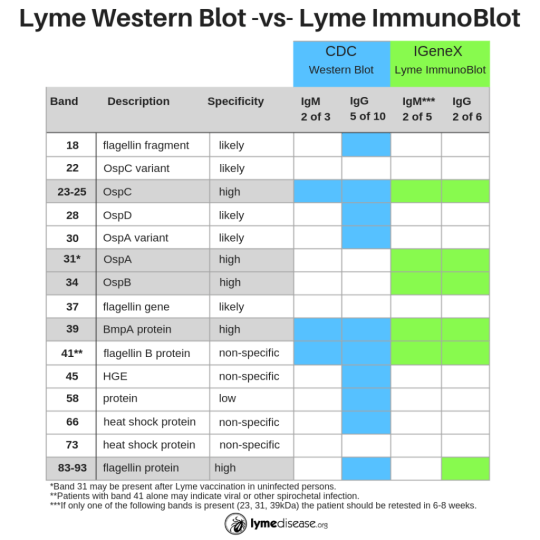
The primary difference between the CDC-recommended two-tier test and IGeneX’s new ImmunoBlots is the sensitivity. Where the CDC test was designed to be highly exclusive (only detects one species of Borrelia, B31), the ImmunoBlots are designed to be highly inclusive (sensitive to multiple species of Borrelia).

For many years IGeneX was able to increase the sensitivity of its Western Blot by adding an additional species, Bb 297). Today, the company has further increased the sensitivity of its new ImmunoBlots by sourcing antigens from multiple species of Borrelia from the US and Europe (see chart).

“The Lyme ImmunoBlot is intentionally more inclusive for Borrelia burgdorferi sensu lato than the currently available Western blots because we now know that other species such as B. mayonii, B. californiensis and B. spielmanii all cause disease in the US,” said Dr. Shah.

High Accuracy Across the Disease Spectrum

The accuracy of the Lyme ImmunoBlot and TBRF ImmunoBlot have been established by exhaustive testing. The sensitivity with well-characterized samples have been shown to be greater than 90%, whereas the two-tier testing recommended by CDC has a sensitivity of about 55%.

And this high degree of sensitivity does not come at the cost of specificity. IGeneX has done this by:

  1. Including two bands that are highly specific to the outer surface proteins of Borrelia (see Band 31 OspA and 34 OspB below), and
  2. Eliminating the bands that are non-specific to Borrelia (see Bands 18, 28, 30, 45, 58, 66 below)
igenex-chart-1024x1024

Additionally, the ImmunoBlots detect the full spectrum of the disease: early, active and late-stage disease. This high degree of sensitivity does not come at the cost of specificity, with the ImmunoBlots showing 99 and 97% and 95 and 97.5% specificity for Lyme and TBRF IgM and IgG respectively.

Future directions

As FDA, CDC & NIH researchers are finally acknowledging, newer approaches to testing that have been effectively applied to other emerging infectious diseases show promise in the detection of Borrelia infections.

The lead author of the IDSA paper, Steven Schutzer, a physician-scientist at Rutgers New Jersey Medical School states,

”It will not be surprising to see direct tests for Lyme disease join the growing list of FDA-approved direct tests for other bacterial, fungal and viral infections that include Staphylococcus, Streptococcus, Candida, influenza, HIV, herpes and hepatitis, among others.”

The Lyme community has been waiting decades for these improvements and will applaud when these Lyme diagnostic tests become the standard of care for all patients.

LymeSci is written by Lonnie Marcum, a Licensed Physical Therapist and mother of a daughter with Lyme. Follow her on Twitter: @LonnieRhea Email her at: lmarcum@lymedisease.org .

References:
New techniques can detect Lyme disease weeks before current tests:  https://eurekalert.org/pub_releases/2018-10/ru-ntc100818.php

Pilot Study of Immunoblots with Recombinant Borrelia burgdorferi Antigens for Laboratory Diagnosis of Lyme Disease:  https://www.ncbi.nlm.nih.gov/pubmed/30110913

NCBI: Taxonomy Browser, Borrelia:  https://www.ncbi.nlm.nih.gov/Taxonomy/Browser/wwwtax.cgi

_________________

**Comment**

Lyme literate doctors (LLMD’s) trained by the International Lyme and Associated Diseases Society (ILADS) have always preferred labs such as IGeneX due to the very fact they include more bands and are more sensitive.  But, these very doctors have always known Lyme/MSIDS is a clinical diagnosis.

Lazy practitioners, on the other hand, treat this as any other infectious disease and it just can’t be treated that way.  It’s far too complex.

The CDC has undertaken a smear campaign against IgeneX any other lab that has dared to compete with their “FDA approved” tests.  I actually attended a public meeting at the WI capital where a pediatric doctor quoted right off the CDC website and called the IgeneX Lyme test, “Home-brewed.”  https://www.cdc.gov/mmwr/preview/mmwrhtml/mm6315a4.htm

“Often these are laboratory-developed tests (also known as “home brew” tests) that are manufactured and used within a single laboratory and have not been cleared or approved by FDA. Recently, CDC has received inquiries regarding a laboratory-developed test that uses a novel culture method to identify Borrelia burgdorferi, the spirochete that causes Lyme disease. Patient specimens reportedly are incubated using a two-step pre-enrichment process, followed by immunostaining with or without polymerase chain reaction (PCR) analysis. Specimens that test positive by immunostaining or PCR are deemed “culture positive” (2). Published methods and results for this laboratory-developed test have been reviewed by CDC. The review raised serious concerns about false-positive results caused by laboratory contamination and the potential for misdiagnosis (3).  CDC recommends that laboratory tests cleared or approved by FDA be used to aid in the routine diagnosis of Lyme disease. A complete searchable list of such tests is available online (4).”

Then they complete the same rant we’ve all heard 1,000 times about the distinction between “FDA approved” and “CLIA certified” and essentially diss CLIA because it doesn’t address the clinical validity of a specific test.  FDA approval, on the other hand, promises that a test has “adequate analytical and clinical validation and is safe and effective.”

Even though their tests completely suck.

Sigh.

I can only guess what it costs a lab to go through the FDA process.  Meanwhile, the CDC and their ilk spread a smear campaign to every single doctor worldwide about how bad these small, specialty labs are leaving only a handful of quaking doctors who are threatened by state medial boards on a daily basis for treating us, using them.  Let’s just say these small specialty labs have had it rough.  They have fought tooth and nail just to keep their doors open.  FDA approval has been the last thing they have been worried about.

Oh, yes, my friends, the CDC plays dirty and has a lot to answer for.

As lab certifications go, CLIA is one of the toughest, most stringent certifications a lab can undertake.  And, these smaller labs specialize in virology and bacteriology where huge monopolies like Lab Corp and Quest specialize in nothing, yet for decades have profited hugely by giving the CDC garbage can Lyme test that tells you little to squat.  If you test positively on that sucker, you’ve won the lotto.

Countless patients have tested negatively on this insensitive test and have been told they are making up symptoms for attention.  They are offered an anti-depressant and are sent home with something that could kill them.

Yeah, I’m a little ticked off.  Pardon the pun.

dog-tick-closeup-rocky-mountain-spotted-fever