Archive for the ‘research’ Category

Medical Cannabis Superior to Opioids for Chronic Pain, Study Finds

http://www.greenmedinfo.com/blog/medical-cannabis-superior-opioids-chronic-pain-study-finds?

Medical Cannabis Superior To Opioids for Chronic Pain, Study Finds

“© [Nov 4, 2018] GreenMedInfo LLC. This work is reproduced and distributed with the permission of GreenMedInfo LLC. Want to learn more from GreenMedInfo? Sign up for the newsletter here http://www.greenmedinfo.com/greenmed/newsletter.”

Sufferers of chronic pain have been faced with a perilous decision—risk a crippling addiction to opioids or find a way to live with the pain. A new clinical study has focused on medical cannabis as an alternative to opioids, and the results may be a turning point towards a safe, plant-based option for easing pain

A new study published in the European Journal of Internal Medicine represents hope for millions of sufferers of chronic pain. Researchers at the Cannabis Clinical Research Institute at Soroka University Medical Center, and Ben-Gurion University of the Negev (BGU), found that medical cannabis can significantly reduce chronic pain without adverse effects, particularly among adults aged 65 and older. Use of cannabis, aka medical marijuana, was found to be both safe and effective for elderly patients experiencing pain because of another medical condition, such as cancer, multiple sclerosis, Parkinson’s disease, Crohn’s disease, ulcerative colitis, and post-traumatic stress disorder.

One of the head researchers in this study, Prof. Victor Novack, M.D., is a professor of medicine in the BGU Faculty of Health Sciences (FOHS), as well as BGU’s Chair in Internal Medicine. He also heads the Soroka Cannabis Clinical Research Institute. According to Prof. Novack, M.D.:

“Older patients represent a large and growing population of medical cannabis users, [yet] few studies have addressed how it affects this particular group, which also suffers from dementia, frequent falls, mobility problems, and hearing and visual impairments.”[1]

The study surveyed 2,736 patients aged 65 years and older, at the inception of medical cannabis treatment, and throughout the 33-month study period. Surveys indicated the most common reasons for using cannabis were pain (66.6%) and cancer (60.8%). Methods of ingestion included cannabis-infused oils and smoking or vaporizing the herb. After six months of cannabis therapy, researchers provided a follow-up questionnaire which sought to determine any changes to pain intensity and quality of life, as well as any adverse events that were experienced. 901 of the original respondents replied.

After 6-months of medical marijuana treatment (all statistics are +/-):

  • 94% reported an improved overall condition, and a 50% reduction in pain
  • 60% reported improved quality of life, from “bad” or “very bad” to “good” or “very good”
  • 70% reported moderate to significant improvement in their condition
  • 20% of respondents stopped using opioids or reduced their dose

Notably, the most common side effects reported were mild: dizziness (9.7%) and dry mouth (7.1%), a far cry from the high-percentage of opioid-related deaths that are linked to chronic pain.[2] BGU researchers believe that utilizing cannabis may decrease the use of other prescription medications, including opioids, and encourage further research into this plant-based alternative, especially as it relates to an aging population.

Chronic pain is a problem that affects an estimated 100 million Americans.[3] It is also one of the most significant public health problems in the United States, with an estimated cost to society of $560-$635 billion annually, an amount equal to about $2,000 for every person living in the U.S.[4] Meanwhile, the nation’s growing opioid epidemic sees 1 of every 550 chronic opioid users dying within three years of their first opioid prescription.[5] While natural alternatives to deadly opiates are rarely offered by medical doctors, medical marijuana may be the drug that bridges this senseless gap. Research is beginning to mount that shows more promise than the medical establishment can long ignore.

Neuropathy is a type of chronic pain that presents as tingling and numbness in the hands and feet, often due to nerve damage from complications of cancer or diabetes, among other causes. A 2017 meta-analysis of prior studies on neuropathy found that cannabis, particularly selected isolates called cannabinoids, can provide analgesic benefit in patients with chronic neuropathy. Cannabis can also be used as an adjunct to other pain therapies, potentially lowering the amount of dangerous synthetic medication that is required to relieve pain. A recent study on the Opioid-Sparing Effect of Cannabinoids found that when cannabinoids were administered with opioids, specifically morphine, nearly four times less morphine was needed to achieve the same analgesic effect. This presents further evidence for cannabis as a means of reducing cases of opiate dependency and death.

While the politics of cannabis are exceedingly complex, the truth of this miraculous plant is becoming increasingly obvious: it heals the human body. The fact that it does so without the need for a black-box warning of Serious Adverse Events ensures that cannabis is the future of medicine. While clinical studies in the United States have been impeded due to cannabis’s classification as a Schedule One Controlled Substance (meaning the substance has no medicinal value), other countries have taken the lead. A UK study seeking to reduce chronic pain in advanced cancer patients not fully relieved from use of opioids, found that a cannabis extract composed of THC (Tetrahydrocannabinol) and CBD (Cannabidiol), two of the active constituents in cannabis, reduced pain by more than 30% from baseline when compared with placebo, with no serious adverse effects.

Beyond the realm of chronic pain, cannabis has been shown to positively support individuals dealing with post-traumatic stress. It has demonstrated effectiveness at calming the often-debilitating side effects of inflammatory bowel disease, aka Crohn’s disease. Isolates from the cannabis plant have shown promise at treating “incurable” diseases such as Grave’s disease and brain cancer, and work better than traditional medications for Alzheimer’s disease. With so much evidence of profound medicinal value, legislation based on old systems of control will not long hold back the tide. There are simply too many health benefits to be obtained from the cannabis plant.

For additiona research on the medical benefits of cannabis, visit the GreenMedInfo database on the subject.


Resources

[1] https://www.sciencedaily.com/releases/2018/02/180213111508.htm

[2] Service Use Preceding Opioid-Related Fatality. Olfson, Wall, Wang, Crystal, Blanco. Am J Psychiatry. 2017 Nov 28:appiajp201717070808. doi: 10.1176/appi.ajp.2017.17070808.

[3] Institute of Medicine Report from the Committee on Advancing Pain Research, Care, and Education: Relieving Pain in America, A Blueprint for Transforming Prevention, Care, Education and Research. The National Academies Press, 2011. http://books.nap.edu/openbook.php?record_id=13172&page=1.

[4] IOM (Institute of Medicine) 2011. Relieving Pain in America: A Blueprint for Transforming Prevention, Care, Education and Research, Washington, DC; The National Academies Press.

[5] Gabapentin, opioids, and the risk of opioid-related death: A population-based nested case-control study. Gomes, Juurlink, Antoniou, Mamdani, Paterson, van den Brink. PLoS Med. 2017 Oct 3;14(10):e1002396. doi: 10.1371/journal.pmed.1002396. eCollection 2017 Oct.



ATA190 Cell Therapy – Could This Work for Some Lyme/MSIDS Patients?

https://multiplesclerosisnewstoday.com/2018/11/21/phase-1-trial-ata190-cell-therapy-shows-promise-treating-progressive-ms/

Phase 1 Trial of ATA190 Cell Therapy Shows Promise in Treating Progressive MS

Phase 1 Trial of ATA190 Cell Therapy Shows Promise in Treating Progressive MS

Atara Biotherapeutics’ investigational ATA190, a cell therapy that wipes out immune B-cells infected with the Epstein-Barr virus (EBV), led to neurological improvements and reduced symptoms in patients with primary and secondary progressive multiple sclerosis (MS), a Phase 1 trial shows.

The trial results were published in the Journal of Clinical Investigation Insightin a study titled “Epstein-Barr virus-specific T cell therapy for progressive multiple sclerosis.”

ATA190 is a T-cell immunotherapy that targets immune B-cells and plasma cells in the brain and spinal cord that have been infected with EBV. There is increasing evidence linking EBV infection with MS.

ATA190 is made from a patient’s own (autologous) immune cells, which are collected and modified in a lab to target the EBV-infected cells, then infused back into the patient’s blood. The goal is for the modified immune T-cells to recognize EBV-infected B-cells and kill them.

The Phase 1 trial (ACTRN12615000422527), conducted at the QIMR Berghofer Medical Research Institute and The University of Queensland, in Australia, evaluated the safety and efficacy of ATA190 as a treatment for progressive MS.

The study enrolled 10 patients — five with primary progressive MS (PPMS) and five with secondary progressive MS (SPMS). Patients had experienced progressive neurological deterioration due to MS for a mean of 10.1 years.

Participants were treated with four escalating doses of ATA190, administered intravenously over a period of eight weeks. The lowest and first dose was 5 million modified T-cells, followed by doses of 10, 15, and 20 million. Patients were followed for 27 weeks after the first infusion.

Results showed that ATA190 was well-tolerated, with no severe adverse events detected during the study. One patient experienced a potential treatment-related adverse event — dysgeusia, a distortion of the sense of taste.

Efficacy was measured by several parameters, including changes in the Expanded Disability Status Scale (EDSS) score, fatigue, as well as cognitive and other neurological parameters. Researchers also analyzed patients’ brains by magnetic resonance imaging (MRI) and tested their cerebrospinal fluid (CSF) — the liquid around the brain and spinal cord — for the presence of antibodies.

Seven of the 10 patients had improvements in neurological parameters — such as increased productivity, cognition, and word finding — accompanied by a reduction in symptoms. These benefits began two to 14 weeks after the first infusion.

Fatigue, one of the most disabling and hard-to-manage symptoms of MS, was reduced across the group — the median Fatigue Severity Scale score was lower at week 27 compared to the beginning of the study. This decrease, however, didn’t reach statistical significance.

Analysis of the CSF showed that levels of antibodies were reduced at the end of the study in four out of nine patients. Moreover, three of those four patients showed neurological improvements.

Patients received T-cells with different degrees of reactivity against EBV. Six patients who received T-cells with strong EBV reactivity showed clinical improvement; three of those experienced improvements in the EDSS score.

The other four patients received T-cells with weak EBV reactivity; of these, one showed improvement. None experienced a change in the EDSS score.

The team said that overall, the results show that the benefits seen are linked with T-cell effects.

“We previously presented promising initial ATA190 results in patients with progressive MS, and [now] the published results confirm our earlier observations,” Professors Michael Pender, of The University of Queensland, and Rajiv Khanna, coordinator of QIMR Berghofer Centre for Immunotherapy and Vaccine Development, the study’s lead authors, said in a press release.

“Findings from the study support growing evidence that targeting EBV-positive B-cells is a potential novel treatment modality for MS and merit additional investigation,” Pender and Khanna said.

“T-cell therapy targeting only EBV-infected B-cells is a treatment modality that could offer favorable safety and durable efficacy,” they wrote, adding that their work “sets the stage for further clinical trials with autologous and allogeneic EBV-targeted T-cell therapy in MS.”

Atara is developing another therapy, ATA188, to eliminate EBV-infected B-cells in the central nervous system. ATA188 uses immune cells from donors, not from the patients themselves — an allogenic therapy.

“We are also advancing an ongoing Phase 1 off-the-shelf, allogeneic ATA188 study in patients with progressive MS across clinical sites in the U.S. and Australia. We look forward to continued development of both programs, including our plans to initiate a randomized ATA190 MS study,” said Dietmar Berger, MD, PhD, global head of research and development of Atara Biotherapeutics.

___________________

**Comment**

I can’t help but think this therapy could help many Lyme/MSIDS patients.  EBV is often a player in our illness and many have written about it:

https://madisonarealymesupportgroup.com/2018/04/25/ebv-protein-can-turn-on-genes-for-autoimmune-diseases/

https://madisonarealymesupportgroup.com/2017/11/04/24514/  (EBV – A Key Player in Chronic Illness)

Folks with Lyme/MSIDS have been misdiagnosed with EBV: https://madisonarealymesupportgroup.com/2017/04/11/diagnosed-with-ebv-had-lyme/ and others have it as well as tick-borne infections.

The involvement with numerous viruses is quite common in patients as well.  https://madisonarealymesupportgroup.com/2018/10/30/study-shows-lyme-msids-patients-infected-with-many-pathogens-and-explains-why-we-are-so-sick/  For the first time, Garg et al. show a 85% probability for multiple infections including not only tick-borne pathogens but also opportunistic microbes such as EBV and other viruses.

https://madisonarealymesupportgroup.com/2018/04/21/neurological-lyme-disease-what-you-need-to-know/

“Once microbes start becoming active, inflammation increases and immune functions are further compromised, establishing what I call Chronic Immune Dysfunction (CID). In its weakened state, the immune system allows reactivation of viruses such as Epstein Barr virus (EBV), Cytomegalovirus (CMV), and other similar viruses — all of which most people harbor in their tissues. These viruses are commonly associated with neuroinflammation, and they tend to complicate the picture of LNB.”

This study shows elevated B-cells in those with untreated Lyme:  https://www.frontiersin.org/articles/10.3389/fimmu.2018.01634/full

http://simmaronresearch.com/2018/09/post-treatment-lyme-disease-unmasked-immune-holes/  Mouse studies have shown that the Borrelia burgdorferi bacteria that cause Lyme disease hammer the B-cells….

Results

We herein identify plasmablasts as a key B cell population that correlates with resolution of Bb infection and Lyme disease in humans.   The authors

They found that B-cells called plasmablasts were elevated prior to antibiotic treatment in patients who returned to health. Plasmablasts are activated B-cells which circulate for a time in the blood in response to an infection. The higher level of plasmablasts in the recovered patients suggests that these patients simply mounted a stronger immune response to the infection. That was kind of a no-brainer, but the strength of the study was that they were able to specify what part of our amazingly complex immune system the problem was in.

They also determined that the patients who returned to health also exhibited significantly greater clonal expansion: their activated B-cells produced more clones designed to target and get rid of the bacteria. Again, in retrospect, not a surprising finding, but one that does open up a possible treatment option that hasn’t previously been available.


Human Activity May Influence the Distribution and Transmission of Bartonella Bacteria

https://www.sciencedaily.com/releases/2018/11/181115145107.htm

Human activity may influence the distribution and transmission of Bartonella bacteria

November 15, 2018
Source:  PLOS

Summary:
A new study suggests that humans play an important role in disease risk, infection patterns, and distribution of Bartonella, advancing current understanding of Bartonella’s evolutionary history and how the bacteria may be transmitted between humans and other animal species.

FULL STORY
Bartonella bacteria are disease-causing, blood-borne pathogens found in various mammal species. A study in PLOS Neglected Tropical Diseases by Hannah Frank and colleagues at Stanford University, California suggests that humans play an important role in disease risk, infection patterns, and distribution of Bartonella, advancing current understanding of Bartonella’s evolutionary history and how the bacteria may be transmitted between humans and other animal species.

Cross-species Bartonella transmission poses a threat to public health, wildlife, and domestic animals. However, the evolution of Bartonella strains and mechanisms of cross-species transmission are not well understood. To determine the bacteria’s evolutionary history and global distribution, researchers constructed global phylogenies using sequences accessed from public databases and built models to test their hypotheses. Additionally, they analyzed instances of Bartonella spillover from animals to humans using genetic isolates and case data collected from scientific literature.

The authors note that “phylogenetic inferences about the origin of infections should be interpreted with caution as they are heavily influenced by available data and the taxa that have been sampled.” More data are needed to verify findings and fill in remaining knowledge gaps. However, their study advances scientific understanding of human impacts on the spread of infectious disease:

“In thinking about disease transmission between animals and humans, we often focus on the animals as the source of new human infections and not the role of the humans in influencing their own risk. Our findings suggest that humans play a significant role in changing infection patterns not only for ourselves but for our domestic animals and wildlife, too.”

Story Source:

Materials provided by PLOS. Note: Content may be edited for style and length.

Journal Reference:

Hannah K. Frank, Scott D. Boyd, Elizabeth A. Hadly. Global fingerprint of humans on the distribution of Bartonella bacteria in mammals. PLOS Neglected Tropical Diseases, 2018; 12 (11): e0006865 DOI: 10.1371/journal.pntd.0006865

__________________

**Comment**

For more on Bartonella:  https://madisonarealymesupportgroup.com/2016/01/03/bartonella-treatment/

https://madisonarealymesupportgroup.com/2018/09/20/humana-bartonellosis-perspectives-of-a-veterinary-internist/

https://madisonarealymesupportgroup.com/2018/07/10/bartonella-henselae-neuroretinitis-in-patients-without-cat-scratch/

https://madisonarealymesupportgroup.com/2018/11/10/neurological-presentations-of-bartonella-henselae-infection/

https://madisonarealymesupportgroup.com/2017/10/23/opthalmic-manifestations-of-bartonella-infection/

https://madisonarealymesupportgroup.com/2017/01/04/endocarditis-consider-bartonella/


UC Study: Hungry Ticks Work Harder to Find You

https://www.uc.edu/news/articles/2018/11/n2048879.html

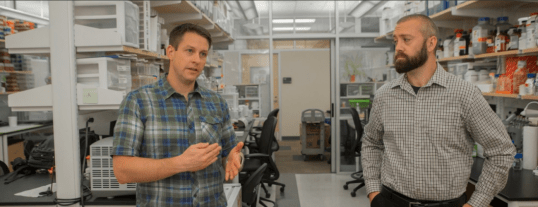
Screenshot_2018-11-27 UC study Hungry ticks work harder to find youUC professors Andrew Rosendale, left, and Joshua Benoit discuss their research project in Benoit’s lab. Photo/Joseph Fuqua II/UC Creative Services

UC study: Hungry ticks work harder to find you

University of Cincinnati biologists discover the parasite’s metabolism speeds up after months of fasting so it can pursue a meal


Ticks are hardy little brutes that can go as long as a year without a meal.

Now scientists at the University of Cincinnati say the hungrier ticks are, the harder they try to find you or other hosts. The findings could have implications for the spread of tick-borne disease such as Lyme or Rocky Mountain Spotted Fever.

“Starved ticks are more likely to look for a host,” said Andrew Rosendale, lead author of the study and UC adjunct assistant professor of biology. “Other studies have found that starved ticks take larger blood meals. They’re attached to the host longer, which provides a greater opportunity to transmit diseases.”

The study was published in the journal Molecular Ecology.

“The more they were starved, the more they were priming themselves for that next blood meal.”  Andrew Rosendale,UC biology professor

A closeup of a tick questing with its forelegs stretched out.

A lab tick reaches out its forelegs in a behavior called questing. Photo/Joseph Fuqua II/UC Creative Services


Ticks drink blood as larvae, nymphs and adults but spend most of their lives on the ground in tall grass, patiently biding their time for a victim and presumably ignoring their rumbling stomachs.

Finding a suitable animal upon which to feed is hard, so ticks must be prepared to wait. And wait. Rosendale, who also works as assistant professor at Mount St. Joseph University, said being able to go long periods without a meal is a tick’s superpower.

Biologists in UC’s McMicken College of Arts and Sciences studied the changing gene expression and physiology of lab-raised dog ticks that were subjected to more than 36 weeks of starvation.

Studies have found that starving animals often take bigger risks, such as hunting more dangerous prey or exposing themselves to predators to forage for food. UC’s research suggests ticks are no exception.

In the wild, adult ticks explore the undergrowth and climb tall grass. They reach out with the claws on their forelegs, a behavior called questing, to snag an animal’s fur or your denim jeans. Then they burrow into their hosts with mouthparts shaped like ratchets that keep them in place.


UC professor Joshua Benoit gestures while making a point in his biology laboratory.

UC biology professor Joshua Benoit studies disease vectors such as mosquitoes and ticks in his lab. Photo/Joseph Fuqua II/UC Creative Services

“People want to think of parasites as being awful things. But in ecosystems they’re important regulators in keeping populations in check.”  Joshua Benoit,UC biology professor

In the lab, UC researchers stimulated the ticks’ questing behavior by breathing into identical glass cylinders. (Ticks can sense carbon dioxide so they know when a possible meal is close at hand.) Biologists recorded differences in activity between just-fed ticks and starving ones. They found that starved ticks had higher activity levels and increased questing behavior than recently fed ones.

Starved ticks also had marked changes in their physiology and gene expression.

Ticks can go so long between meals because of their slow metabolism.

“In the absence of any host cues, they go into a dormant state where they don’t move around a lot,” UC biology professor Joshua Benoit said.

This helps conserve energy for the ticks’ preferred wait-and-see ambush strategy.

But after three months without food, a tick’s metabolism actually increases significantly — by as much as 100 percent — and remains at this higher rate for weeks in association with its increased activity. In fact, some researchers collect ticks in the wild by placing dry ice in the woods to entice them with the sublimation of carbon dioxide.


A UC student in long pants and a T-shirt drags a white linen flag along tall weeds with other students doing likewise behind him.

UC biology student Benjamin Davies drags a linen flag across tall grass to catch ticks for a related study at UC’s Center for Field Studies. Photo/Jay Yocis/UC Creative Services


Likewise, UC biologists found that genes related to immunity were activated by starvation, which could be another survival mechanism. Animals that feed on blood must have a immune system capable of fighting bacteria and other microorganisms. By activating genes associated with immunity, ticks might be preparing for an imminent meal.

More strangely, UC biologists found that genes associated with a starved tick’s salivary glands were activated. Saliva is known to help ticks drink more blood more quickly, a useful ability when you’re clinging precariously to a moving animal in thick brush. The sticky saliva also helps cement the tick to the host.

“The more they were starved, the more they were priming themselves for that next blood meal,” Rosendale said.

The project demonstrates the value UC places on research in its strategic direction, Next Lives Here.

The study was funded by the U.S. Department of Agriculture, UC’s Faculty Development Research Grant and the National Science Foundation. UC graduate Megan Dunlevy and Marshall McCue of the metabolic measurement firm Sable Systems International contributed to the study.


Students in labcoats and safety glasses work at a lab bench with pipettes and other equipment.

UC biology students Alicia Fieler, left, Madisen Kimbrel and Benjamin Davies perform labwork on ticks they collected in the field in this 2017 file photo. Photo/Jay Yocis/UC Creative Services


UC is tracking tick populations at its Center for Field Studies and in several forests in the Great Parks of Hamilton County, Ohio. Benoit and Rosendale have collaborated on several other tick studies.

Tick larvae feed mostly on mice and rabbits they find close to the ground. Nymphs and adults feed on larger mammals they reach by climbing up tall blades of grass. Benoit said ticks typically do not climb up trees or drop onto animals from the tree canopy. So if you find a tick on your head, it likely climbed up from your legs or waist.  (Please see comment at end of article)

Ticks are susceptible to temperature and humidity. Even short bouts of dehydration can shorten a tick’s lifespan considerably in the wild. But Rosendale said ticks are expanding their territories to exploit new habitat made available by climate change.  (Please see comment at end of article)

Ticks are especially problematic for wildlife such as moose that live in regions where the cold historically kept parasite numbers in check. Infested animals are sometimes called “ghost moose” because they rub off their dark fur to remove ticks.

“We’ve studied the moose tick as well in our lab. Moose are particularly susceptible because they’re not good at grooming themselves of ticks. They can be infested with thousands and thousands of ticks, so much so that they can die from blood loss,” Rosendale said.

Andrew Rosendale gestures while making a point surrounded by lab equipment.

UC biology professor Andrew Rosendale has spent years studying tick-borne illness. Photo/Joseph Fuqua II/UC Creative Services


While ticks might make a short list of most-reviled creatures, Benoit said they serve an important ecological role.

“People want to think of parasites as being awful things. But in ecosystems they’re important regulators in keeping populations in check. They transmit diseases that will kill deer, rabbits or mice,” Benoit said.

“Ecosystems are [delicate] networks. So eliminating a parasite could have major implications,” he said. “Two years of rabbit reproduction is a lot of rabbits.”

The earliest ticks recorded are more than 90 million years old and fed on dinosaurs. Benoit said there is something almost admirable about a natural design that has been perfected by evolution.

“Biologically, they’re interesting,” Benoit said. “They’re perfectly adapted to one thing: survival.”


A student wearing safety glasses holds a tick up to her face in a test tube.

UC student Madisen Kimbrel holds a tick in a test tube in a biology lab. Photo/Jay Yocis/UC Creative Services

__________________

**Comment**

While ticks do not typically climb trees or drop from them, THEY CAN.  It would be a huge mistake to omit this possibility. Legendary news anchor Mike Schneider, in this video states he received a bite from a tick that dropped down from a tree at a garden party on a deck.  I recently spoke with him at the ILADS convention and he stands by this belief:  https://madisonarealymesupportgroup.com/2017/07/13/tv-anchor-speaks-out-about-lyme-disease/

I know others who have said ticks have blown into their swimming pool from neighboring trees.  My neighbor, using his lawnmower on a tick infested area, blew them onto my house where they then got through the screen cracks and onto my basement wall.  (true story)

While it’s true ticks are susceptible to temperature and humidity, independent Canadian tick researcher, John Scott shows tick proliferation has nothing to do with climate change but rather migrating birds and photoperiod:  https://madisonarealymesupportgroup.com/2018/08/13/study-shows-lyme-not-propelled-by-climate-change/

Scott’s in-house tick studies have shown that black-legged ticks require 14 hours of daylight to molt. If ticks can’t molt, they can’t move on to their next life-cycle. Photoperiod is innate and can not be altered by the climate. He states:

“The hypothesis that I. scapularis ticks will expand further north in the Prairie Provinces because of climate change is not only unscientific, but deceiving.”

The study points out that both ticks and spirochetes are ecoadaptive survivors as demonstrated by the fact borrelial spirochetes have survived for thousands of years https://www.utoronto.ca/news/u-t-researchers-find-ancient-iceman-s-infection-helps-lyme-disease-bone-loss-discovery, https://madisonarealymesupportgroup.com/2018/02/12/the-persistent-spiral-the-ancient-history-of-lyme-disease-and-tick-borne-infections/, and so have infected ticks: http://www.sci-news.com/paleontology/blood-engorged-tick-dominican-amber-04757.html (This one infected with a Babesia species). This survival demonstrates adaptation to any potential climate shifts.

Another problem with the climate change models is they overlook the fact that deer ticks were established in northwestern Ontario, southern Manitoba and were already in central Canada prior to 1970. What they predict to happen in the future has already happened in Canada. Their oversight caused a skewed rate of tick expansion and a miscalculation of northward projected movement.

“For blacklegged ticks, climate change is an apocryphal issue.” – John Scott

On top of all of this, warmer winters are lethal to black legged ticks as there is less snow cover.  Ticks seek out leaf litter and snow cover in harsh weather.

More climate data will NOT help Lyme/MSIDS patients one iota.


Gone Baby Gone – Christopher Gillberg on PANDAS/PANS

https://gnc.gu.se/english/gillberg-s-blog/gone-baby-gone?

1514077_gnc

Gone baby gone

post by Christopher Gillberg 2nd October 2018

It has been 25 years since Susan Swedo described the condition now referred to as PANDAS* (which, more recently, has come to be included as a subgroup of the somewhat larger group PANS**). Swedo had herself previously examined children who after bouts of rheumatic fever (brought on by streptococcus infection) had developed Sydenham’s chorea, a condition characterised by abnormal motor movements of the face, hands and feet, and in many cases speech difficulties, slowed cognitive processing, obsessive-compulsive thoughts, concentration difficulties, hyperactivity and other psychiatric symptoms as well. Onset of Sydenham’s chorea is usually quite acute, but typically only occurs many months after a streptococcus infection has concluded.

PANDAS/PANS is similar to Sydenham’s chorea in all relevant aspects where mental symptoms are concerned, but they manifest more dramatically; motor control issues, however, are much less pronounced or completely absent. Onset is often extremely acute – from one day to the next, or at the very least from one week to the next. A child who has previously only shown minimal or moderate signs of autism, ADHD or other ESSENCE problems (problems mild enough to generally not warrant any diagnosis) are suddenly stricken with severe separation anxiety, obsessive-compulsive thoughts and actions, tics, concentration difficulties, emotional withdrawal, tantrums, crying spells or even severe psychosis-like symptoms. Quite often they also start wetting themselves and acting as though their development has regressed by several years. Some children with this dramatic symptomatology have recently gone through a streptococcus infection (in which case it might be reasonable to consider PANDAS), whereas in other cases there is no proven link to infection whatsoever (whether streptococcus or otherwise). There are some cases where, even without any clear link to streptococcus infection, penicillin treatment still appears to reduce symptoms. However, the reason for this is unknown.

The CNC/GNC is conducting a research study on PANS in children and adolescents and the first results are currently being published.

There are a number of things that I would like to strongly emphasise now that we have completed this study on PANS, the first Swedish study of its kind aimed only at children, adolescents and their families:

1. PANS exists and is not “a hoax” or “fabricated”.
2. PANS has nothing to do with Münchhausen syndrome, which is to say that this is not something that sick or weird parents have come up with.
3. The child has usually had some minor problems before the frightening deterioration occurs.
4. Immune diseases among close family members are not uncommon.
5. We know almost nothing about the causes behind it.
6. We do not know how common it is.
7. We do not know how closely related it is to regressive autism, Sydenham’s chorea or Landau-Kleffner syndrome.

All of this means that continued research on PANS should be a top priority, especially at institutions equipped with both knowledge and an interest in expanding that knowledge base, such as the CNC/GNC in Gothenburg and the OCD team/Astrid Lindgren Children’s Hospital in Stockholm.

Anyone who feels that their child has suddenly been “spirited away” without any explanation must have some avenue towards help and understanding. Most importantly, we need to figure out what is best for all the children who one day start acting in an unrecognisable manner, almost as if their old selves were “gone”. Almost nothing can be worse in this situation than to meet so-called experts who do nothing but mistrust and question one’s account of the symptoms and the circumstances surrounding their onset.

Families living with PANS know how terrible it can be to suddenly feel as though they have “lost a healthy child”. By allowing these families to meet doctors and psychologists who are knowledgeable in the field, we can at least give them a chance to feel like they “got their child back”.

*PANDAS=Pediatric Autoimmune Neuropsychiatric Disorder Associated with Streptococcal infection
**PANS=Pediatric Acute-onset Neuropsychiatric Syndrome

Christopher Gillberg will be one of the speakers at the SANE Sweden 2019 PANS Conference. For more information, please visit the following link!

___________________

More on PANDAS/PANS:  https://madisonarealymesupportgroup.com/2018/07/28/stories-of-pandas/

https://www.mercurynews.com/2014/04/19/misdiagnosed-bipolar-one-girls-struggle-through-psych-wards-before-stanford-doctors-make-bold-diagnosis-and-treatment/

https://madisonarealymesupportgroup.com/2017/10/01/panspandas-steroids-autoimmune-disease-lymemsids-the-need-for-medical-collaboration/

https://madisonarealymesupportgroup.com/2018/09/26/more-awareness-needed-for-childrens-neurological-conditions/

https://madisonarealymesupportgroup.com/2018/09/05/pans-autism-the-immune-system-an-interview-with-expert-neurologist-dr-richard-frye/

https://madisonarealymesupportgroup.com/2018/10/10/pans-pandas-awareness/

https://madisonarealymesupportgroup.com/2017/06/30/child-with-lymemsidspans-told-by-doctors-she-made-it-all-up/

https://madisonarealymesupportgroup.com/2018/08/01/the-3-pans-myths-that-are-ruining-lives/

https://madisonarealymesupportgroup.com/2017/10/08/misdiagnosed-how-children-with-treatable-medical-issues-are-mistakenly-labeled-as-mentally-ill/