Archive for the ‘research’ Category

Biomarker for Chronic Fatigue Syndrome Identified

http://med.stanford.edu/news/all-news/2019/04/biomarker-for-chronic-fatigue-syndrome-identified.html

Biomarker for chronic fatigue syndrome identified

Stanford scientists devised a blood-based test that accurately identified people with chronic fatigue syndrome, a new study reports.
APR 292019

Ron Davis

Ron Davis is the senior author of a paper that describes a blood test that may be able to identify chronic fatigue syndrome.  Steve Fisch

People suffering from a debilitating and often discounted disease known as chronic fatigue syndrome may soon have something they’ve been seeking for decades:

scientific proof of their ailment

Researchers at the Stanford University School of Medicine have created a blood test that can flag the disease, which currently lacks a standard, reliable diagnostic test.

Too often, this disease is categorized as imaginary,” said Ron Davis, PhD, professor of biochemistry and of genetics. When individuals with chronic fatigue syndrome seek help from a doctor, they may undergo a series of tests that check liver, kidney and heart function, as well as blood and immune cell counts, Davis said. “All these different tests would normally guide the doctor toward one illness or another, but for chronic fatigue syndrome patients, the results all come back normal,” he said.

The problem, he said, is that they’re not looking deep enough. Now, Davis; Rahim Esfandyarpour, PhD, a former Stanford research associate; and their colleagues have devised a blood-based test that successfully identified participants in a study with chronic fatigue syndrome. The test, which is still in a pilot phase, is based on how a person’s immune cells respond to stress. With blood samples from 40 people — 20 with chronic fatigue syndrome and 20 without — the test yielded precise results, accurately flagging all chronic fatigue syndrome patients and none of the healthy individuals.

The diagnostic platform could even help identify possible drugs to treat chronic fatigue syndrome. By exposing the participants’ blood samples to drug candidates and rerunning the diagnostic test, the scientists could potentially see whether the drug improved the immune cells’ response. Already, the team is using the platform to screen for potential drugs they hope can help people with chronic fatigue syndrome down the line.

A paper describing the research findings was published online April 29 in the Proceedings of the National Academy of Sciences. Davis is the senior author. Esfandyarpour, who is now on the faculty of the University of California-Irvine, is the lead author.

Providing the proof

The diagnosis of chronic fatigue syndrome, when it actually is diagnosed, is based on symptoms — exhaustion, sensitivity to light and unexplained pain, among other things — and it comes only after other disease possibilities have been eliminated. It is also known as myalgic encephalomyelitis and designated by the acronym ME/CFS.

It’s estimated that 2 million people in the United States have chronic fatigue syndrome, but that’s a rough guess, Davis said, and it’s likely much higher.

For Davis, the quest to find scientific evidence of the malady is personal. It comes from a desire to help his son, who has suffered from ME/CFS for about a decade. In fact, it was a biological clue that Davis first spotted in his son that led him and Esfandyarpour to develop the new diagnostic tool.

We clearly see a difference in the way healthy and chronic fatigue syndrome immune cells process stress.

The approach, of which Esfandyarpour led the development, employs a “nanoelectronic assay,” which is a test that measures changes in miniscule amounts of energy as a proxy for the health of immune cells and blood plasma. The diagnostic technology contains thousands of electrodes that create an electrical current, as well as chambers to hold simplified blood samples composed of immune cells and plasma. Inside the chambers, the immune cells and plasma interfere with the current, changing its flow from one end to another. The change in electrical activity is directly correlated with the health of the sample.

The idea is to stress the samples from both healthy and ill patients using salt, and then compare how each sample affects the flow of the electrical current. Changes in the current indicate changes in the cell: the bigger the change in current, the bigger the change on a cellular level. A big change is not a good thing; it’s a sign that the cells and plasma are flailing under stress and incapable of processing it properly. All of the blood samples from ME/CFS patients created a clear spike in the test, whereas those from healthy controls returned data that was on a relatively even keel.

“We don’t know exactly why the cells and plasma are acting this way, or even what they’re doing,” Davis said. “But there is scientific evidence that this disease is not a fabrication of a patient’s mind. We clearly see a difference in the way healthy and chronic fatigue syndrome immune cells process stress.”

Now, Esfandyarpour and Davis are expanding their work to confirm the findings in a larger cohort of participants. Recruitment for the larger project, which aims to further confirm the success of the diagnostic test, is being done on a rolling basis. Those who are interested in participating should contact clinical research coordinator Anna Okumu.

Doubling up

In addition to diagnosing ME/CFS, the researchers are also harnessing the platform to screen for drug-based treatments, since currently the options are slim.

“Using the nanoelectronics assay, we can add controlled doses of many different potentially therapeutic drugs to the patient’s blood samples and run the diagnostic test again,” Esfandyarpour said.

If the blood samples taken from those with ME/CFS still respond poorly to stress and generate a spike in electrical current, then the drug likely didn’t work. If, however, a drug seems to mitigate the jump in electrical activity, that could mean it is helping the immune cells and plasma better process stress. So far, the team has already found a candidate drug that seems to restore healthy function to immune cells and plasma when tested in the assay. The drug, while successful in the assay, is not currently being used in people with ME/CFS, but Davis and Esfandyarpour are hopeful that they can test their finding in a clinical trial in the future.

All of the drugs being tested are either already approved by the Food and Drug Administration or will soon be broadly accessible to the public, which is key to fast access and dissemination should any of these compounds pan out.

Davis is a member of Stanford Bio-X, the Stanford Cancer Institute and the Stanford Maternal & Child Health Research Institute.

Other Stanford authors of the study are research scientists Neda Nemat-Gorgani and Julie Wilhelmy and research assistant, Alex Kashi.

The study was funded by the Open Medicine Foundation. Davis is the director of the foundation’s scientific advisory board.

Stanford’s departments of Genetics and of Biochemistry also supported the work.

**Comment**
A few things stick out:
  1. This researcher, like those doing the heavy lifting in the Lyme/MSIDS world, are personally vested. They find things because this is more than a job to them. They NEED answers for either themselves or their loved ones.
  2. “Not Looking deep enough,” is a problem in the Lyme/MSIDS world as well. Look deeper!
  3. Due to this man’s work, some patients are finally going to be taken seriously. This is HUGE.
  4. Notice that ME/CFS is a clinical diagnosis just like Lyme/MSIDS. Because testing is so poor or doesn’t exist, patients aren’t believed due to a number or lack of a number on paper. 
  5. I have to think that “eliminating other disease possibilities” is the fly in the ointment with ME/CFS. How can you eliminate Lyme/MSIDS when doctors can’t find it to begin with and they aren’t willing to look deeper?


Data Shows Lyme Disease Has Increased – Even in Areas That Aren’t Endemic

Laboratory Blood-Based Testing for Lyme Disease at a National Reference Laboratory.

Lee-Lewandrowski E, et al. Am J Clin Pathol. 2019.

Abstract

OBJECTIVES: We evaluated trends in Lyme disease (LD) testing at a national reference laboratory.

METHODS: LD screening enzyme immunoassay and Western blot testing data performed at Quest Diagnostics during 2010 to 2016 were analyzed nationally and at the state level.

RESULTS: Overall, 593,800 (11.3%) results were positive of 5,255,636 tests. There was an increase in the rate of positivity over the last 2 years of the study and an increase in the number of positive tests in 2016. Positive tests were observed in all 50 states and the District of Columbia. New York had the most positive tests, whereas Connecticut had the highest positivity rate when normalized to state populations. Some states with historically low rates of LD (eg, Texas, Florida, and California) showed significant increases in testing and positivity rates over time.

CONCLUSIONS: LD testing and positivity have increased in recent years, including in states not historically associated with the disease.

__________________

**Comment**

Please send this around. Nobody should EVER again be told,

“You can’t have Lyme because it doesn’t exist here.”

This study demonstrates it’s in every single state. Period.

Yet, this recent article shows people are still being told they can’t have it:  https://madisonarealymesupportgroup.com/2019/04/22/its-just-crazy-why-is-lyme-disease-treatment-so-difficult-to-find-in-mississippi/


Tick in Boy’s Ear Had to Be Surgically Removed

https://www.nejm.org/doi/full/10.1056/NEJMicm1812049?query=TOC

Tick Attached to the Tympanic Membrane

  • David Kasle, M.D.,
  • and Erik Waldman, M.D.


A 9-year-old boy presented to the pediatric otolaryngology clinic with a sensation of the presence of a foreign body in his right ear. He also reported that he had heard buzzing noises in his right ear 3 days earlier. He lived in Connecticut and had been playing outdoors at school. He had no pain, tinnitus, or loss of hearing. On physical examination, a tick was seen on the right tympanic membrane, with surrounding inflammation. Removal of the tick with guidance from an operative microscope was attempted in the office, but the tick could not be removed. The patient was subsequently transferred to the operating room for removal of the tick while he was under general anesthesia. The tick was again seen attached to the tympanic membrane; the tick’s capitulum was buried beneath the epidermal layer of the tympanic membrane. The underlying fibrous layer of the membrane remained intact. The tick was removed with a day hook, with guidance from an operative microscope. Subsequent pathological testing identified the tick as Dermacentor variabilis. After extraction of the tick, the patient had no signs or symptoms suggestive of systemic illness, and he was treated with ciprofloxacin eardrops for an abrasion of the tympanic membrane. One month later, the patient was doing well; he had no fever or rashes, and the tympanic membrane had healed well.


**Comment**

The American Dog tick or Wood tick transmits tularemia, RMSF, Anaplasmosis, and tick paralysis (fully engorged female).

I hope they keep following this child.

Ticks can end up in the wildest places:  https://madisonarealymesupportgroup.com/2019/01/03/tick-bite-in-ear-gave-uk-teacher-rickettsial-typhus-infection/

https://madisonarealymesupportgroup.com/2017/07/30/ticks-found-on-eyeball-buttocks-and-penis/

The Functional & Molecular Effects of Doxycycline Treatment on Borrelia Burgdorferi Phenotype

https://www.frontiersin.org/articles/10.3389/fmicb.2019.00690/full?

ORIGINAL RESEARCH ARTICLE

Front. Microbiol., 18 April 2019 | https://doi.org/10.3389/fmicb.2019.00690

The Functional and Molecular Effects of Doxycycline Treatment on Borrelia burgdorferi Phenotype

John R. Caskey1,2†, Nicole R. Hasenkampf1, Dale S. Martin1, Vladimir N. Chouljenko2, Ramesh Subramanian2, Mercedes A. Cheslock1 and Monica E. Embers1*

Recent studies have shown that Borrelia burgdorferi can form antibiotic-tolerant persisters in the presence of microbiostatic drugs such as doxycycline. Precisely how this occurs is yet unknown. Our goal was to examine gene transcription by B. burgdorferi following doxycycline treatment in an effort to identify both persister-associated genes and possible targets for antimicrobial intervention. To do so, we performed next-generation RNA sequencing on doxycycline-treated spirochetes and treated spirochetes following regrowth, comparing them to untreated B. burgdorferi. A number of genes were perturbed and most of those which were statistically significant were down-regulated in the treated versus the untreated or treated/re-grown. Genes upregulated in the treated B. burgdorferi included a number of Erp genes and rplU, a 50S ribosomal protein. Among those genes associated with post-treatment regrowth were bba74 (Oms28), bba03, several peptide ABC transporters, ospA, ospB, ospC, dbpA and bba62. Studies are underway to determine if these same genes are perturbed in B. burgdorferi treated with doxycycline in a host environment.

Introduction

The efficacy of antibiotic treatment for Lyme disease has been a contentious issue among physicians and researchers (DeLong et al., 2012; Halperin, 2015). In particular, the ability of commonly used and recommended therapy regimens to cure disease has been called into question (Cameron et al., 2014). Evidence to indicate that infection is not eradicated by conventional antibiotics such as doxycycline and ceftriaxone has been provided by studies in mice (Hodzic et al., 2008, 2014; Barthold et al., 2010), dogs (Straubinger et al., 1997) and in our own studies of non-human primates (Embers et al., 2012, 2017; Crossland et al., 2018). In actuality, eradication of the spirochetes following antibiotic treatment of a disseminated infection has not been achieved in any animal model tested (Straubinger et al., 1997; Bockenstedt et al., 2002, 2012; Hodzic et al., 2008, 2014; Barthold et al., 2010; Embers et al., 2012). Despite these findings, the mechanisms of post-treatment disease are not well understood (Aucott, 2015). The symptoms which a significant portion of patients experience could result from autoimmunity (Weinstein and Britchkov, 2002), immune responses to residual, dead spirochetes (Bockenstedt et al., 2002, 2012), or a remaining infection. Each of these plausible explanations may also be acting in concert.

Studies on the development of antibiotic-tolerant Borrelia burgdorferi persisters have been conducted using in vitro experimentation, and research on the development of drug tolerance in general is expanding (Meylan et al., 2018). B. burgdorferi has been shown to develop persisters in the presence of doxycycline (Caskey and Embers, 2015), amoxicillin, and ceftriaxone (Sharma et al., 2015). The mechanism by which B. burgdorferi persists is driven by stochastically determined slowed growth (Caskey and Embers, 2015) and gene expression is altered (Feng et al., 2015). The ability of this spirochete to enter a slow-growing, dormant phase likely results from the evolution of its zoonotic cycle (Stewart and Rosa, 2018). Within the tick, the spirochetes encounter a nutrient-poor environment which lasts several months. Population growth increases after the blood meal (Piesman et al., 1990), but quickly subsides and becomes stagnant.

Commonly prescribed antibiotics for Lyme disease, including doxycycline and amoxicillin, are also microbiostatic. The mechanism of interfering with protein translation operates upon actively dividing cells, so may be less effective in slow-growing populations. Such antibiotics are able to stop the growth of the bacteria such that the immune system can target and clear the infection. However, B. burgdorferi persists in an immune host environment, and the multiple modes of immune evasion (Embers et al., 2004; Hastey et al., 2012) may also reduce the effectiveness of microbiostatic antibiotics.

In the set of experiments described in this report, two keys aspects of doxycycline-treated B. burgdorferi phenotype were evaluated. First, the functionality of antibiotic-treated spirochetes was assessed by testing infectivity in immune-deficient and immune-competent murine hosts. Second, the molecular adaptation to doxycycline treatment was comprehensively investigated with next-generation sequencing to obtain transcriptional profiles of spirochetes that were treated and those that were treated and re-grew. These studies allow us to better understand both functional and molecular phenotypes to drug-tolerant B. burgdorferipersisters and to identify potential targets for treatment.

Materials and Methods

Ethics Statement

Practices in the housing and care of mice conformed to the regulations and standards of the Public Health Service Policy on Humane Care and Use of Laboratory Animals, and the Guide for the Care and Use of Laboratory Animals. The Tulane National Primate Research Center (TNPRC) is fully accredited by the Association for the Assessment and Accreditation of Laboratory Animal Care-International. The Tulane University Institutional Animal Care and Use Committee approved all animal-related protocols, including the infection and sample collection from mice.

Borrelia Culture and Antibiotic Treatment Regimen

Low passage (p4 or p5) Borrelia burgdorferi sensu stricto strain B31 clonal isolate 5A19 (Purser and Norris, 2000) was grown at 34°C in BSK-II media (Zuckert, 2007), as described previously (Barbour, 1984). Because the spirochetes are microaerophilic and gene expression is affected by oxygen levels (Seshu et al., 2004) they were grown in a tri-gas incubator set at 5% CO2, 3% O2, and the remainder N2. For the infectivity assay in mice, three sets of 50 ml B. burgdorferi cultures were inoculated from frozen stocks and grown to 5 × 10⁷ cells/mL. In a previous study, we determined the density-independent minimum inhibitory concentration (MIC) for this strain in a 5 day treatment protocol to be 2.5 μg/ml and the minimum bactericidal dose to be 50 μg/mL (Caskey and Embers, 2015). Thus, the B. burgdorferi cultures to be used for the bioassay were either not treated (0 μg/mL), treated with a concentration (10 μg/mL doxycycline) higher than the MIC but not greater than the minimum bactericidal concentration (MBC), or treated with the MBC. In all cases, BSK-II media was determined to be the optimal growth media for the experimental conditions after comparing growth rates of B. burgdorferi in BSK-II and BSK-H (data not shown). At day 5, the cultures were checked for motility by dark field microscopy (Johnson, 1989) (for RNA seq experiments) and for viability by BacLight staining (for bioassay in mice, as shown in the Supplementary Material).

For RNA sequencing, duplicate in vitro experiments to determine gene expression under antibiotic-treated, and antibiotic-withdrawn conditions were conducted with three groups and two biological replicates of each group performed separately. The spirochetes were grown to 5 × 10⁷ cells/mL as described (Caskey and Embers, 2015). Group 1, (untreated) consisted of RNA from an untreated B. burgdorferi control. Group 2 (treated), consisted of RNA from B. burgdorferi treated with 50 μg/mL doxycycline for 5 days. Group 3 (treated/re-grown), consisted of RNA from B. burgdorferi treated with 50 μg/mL doxycycline for 5 days, then allowed to regrow until the population reached the initial pre-treatment concentration of 5 × 10⁷ cells/ml; this re-growth occurred between 10 and 12 days after the end of the treatment period.

Bioassay in Mice

A sample of 2 × 10⁵ B. burgdorferi derived from one of the three treatment groups was needle-inoculated into severe combined immune-deficient CB-17. SCID mice and C3H/HeN mice (Charles River Labs). Ear punch biopsies (2 mm) were taken on day 14 for all mice. On day 21, the mice were euthanized, and tissues including ear skin, heart, bladder, spleen and tibiotarsal joints were harvested. Tissues were used for culture in 5 mL of BSK-II and preserved in RNALaterTM to perform RT-PCR for both flaB and ospC genes. This was not performed in one experimental set of mice. The culture tubes were incubated in a tri-gas incubator as described above, and checked 2–3 times weekly, for up to 45 days, for signs of motility. The experiment was repeated three times, with a total of five control group SCID mice and C3H mice, a total of three 10 μg/mL doxycycline-treated-group SCID mice and C3H mice, and a total of seven 50 μg/mL-doxycycline-treated-group SCID mice and C3H mice. A summary of the experimental design is shown in Figure 1.

BacLight Staining for Viability

To determine the proportion of live and dead B. burgdorferi following doxycycline treatment, Live/Dead BacLight® (Molecular Probes) staining was performed on untreated and 50 μg/mL-treated B. burgdorferi per the manufacturer’s instructions. Briefly, 1.0 μL of 1.67 mM SYTO-9, a green nucleic acid stain, and 1.0 μL of 1.67 mM propidium iodide, which will only stain cells with damaged cell membranes red, were thawed and mixed in equal proportions. A volume of 1.5 μL of the stain mixture was then added to 500 μL of B. burgdorferisuspended in phosphate buffered saline, pH 7.4 (Gibco), incubated in the dark for 15 min, then applied to a slide and coverslip for viewing and counting. The samples were viewed and counted in live/dead ratios using a fluorescent microscope. The excitation/emission maxima for SYTO-9 is 480/500 nm, and 490/635 nm for propidium iodide. Images captured were obtained using a Nuance FX®36 fluorescence microscope (Leica) and software, with an optimal emission filter range of 500–560 nm for SYTO-9, and 600–650 nm for propidium iodide. Results were calculated as percent viability, and reported as mean ± SD per group.

RT-PCR

Mouse tissues collected from the assessment of infectivity by antibiotic-treated spirochetes were subjected to RT-PCR on the flaB and ospC genes as described (Embers et al., 2012). B. burgdorferi in these tissues was detected by a nested RT-PCR program utilizing 5S and 23S-targeted primers (Postic et al., 1994). This included external forward and reverse primers (CTGCGAGTTCGCGGGAGA-3′fwd; 5′-TCCTAGGCATTCACCATA-3′rev) and internal forward and reverse primers (5′-GAGTAGGTTATTGCCAGGGTTTTATT-3′fwd; 5′-TATTTTTATCTTCCATCTCTATTTTGCC-3′rev) targeting the 5S-23S intergenic sequence. Several genes identified as differentially expressed post-antibiotic treatment were subjected to standard RT-PCR to confirm the trend in gene expression. RNA was extracted from in vitro-cultured B. burgdorferi from each condition (untreated, treated and treated/re-grown) using the RNeasy kit.

A total of 10 ng RNA was added as template for the Qiagen® One-step RT-PCR kit. Briefly, 0.4 nM of forward primer and 0.8 nM of the reverse primer were added to each reaction. The recommended cycling steps were used with annealing temperature up to 5°C below the melting temperature of each primer. Primers for amplification included: BB0778 = 5′TGTATGCACTGGTAGAAATA-3′(fwd) and 5′-TTTAACCTCTCCGTCTTTAT-3′(rev); BBA66 = 5′-GTTACAACCGTACCCGGAAATA-3′(fwd) and 5′-GCTGTCTTGGTTGACTAAAG-3′(rev); BBL39 = 5′-GGTGCTTGCAAGATTCATACTTC-3′(fwd) and 5′-CTCCTAAGTCTGCCCAGTTATT-3′(rev); BBN39 = 5′AGGAATCAGAAGACGAAGGATTAG-3′(fwd) and 5′-AACTTAGGCTCTTCGTAACCAG-3′(rev); BBJ09 = 5′-CAAGCTAAAGAGGCCGTAGAA-3′(fwd) and 5′-GCAAGCTTTGTATTGTTCGTAGT-3′(rev). Reactions were performed in a volume of 25 μl and 12 μl of each reaction was loaded onto the gel.

Preparation of RNA for Sequencing

Borrelia burgdorferi cultures were grown to 5 × 10⁷ cells/mL for the control, treated, and treated/regrown groups in 50 mL conical tubes in BSK-II media. For the control group, total RNA was extracted, while the treated and treated/regrown groups were treated with 50 μg/mL doxycycline for 5 days. On day 5, total RNA from the treated B. burgdorferi culture was extracted, while the treated/regrown B. burgdorferi culture was resuspended in doxycycline-free media, and monitored for regrowth. When the culture regrew to the initial concentration, total RNA was extracted. RNA extraction was done according to the Qiagen® RNEasy® Mini Kit manufacturer’s instructions. In all cases, RNA was kept in a –80° freezer when not being processed, and freeze-thaw cycles were kept to a minimum. After RNA extraction, the total RNA was assessed for concentration and purity with a ThermoFisher Scientific® NanoDropTM 2000 spectrophotometer. Samples with a total RNA concentration less than 300 ng/μL were not used in downstream steps. Next, for all groups, ribosomal RNA was depleted from the samples using Invitrogen Ribominus® kits that followed the manufacturer’s instructions. Finally, the RNA for all groups was then processed according to the Life Technologies Ion Total RNA-Seq kit v2 sample preparation instructions. RNA integrity was verified using a BioAnalyzer (Applied Biosystems) prior to RNASeq.

Analysis of RNASeq Data

The B. burgdorferi genome FASTA and gene annotation GTF files were downloaded from PATRIC1 and the NCBI2 databases. After sequencing, the reference FASTA and annotation files were created from the B. burgdorferi chromosome and plasmids using a bash script and the sequenced samples were aligned using Bowtie2 (Langmead and Salzberg, 2012). Read counts were calculated for each gene using Htseq, and the software package DESeq2 was used to calculate differential gene expression between conditions (Anders et al., 2015). A cutoff of p < 0.05 using a Bonferroni False Discovery Rate (FDR) test, included in the DESeq2 package, was used to assess statistical significance between experimental conditions.

Construction of the http://borreliarna.tech Database

The database was constructed using a typical Drupal 7.x installation. A node was created for each gene, and using the pages module, html tables were created to display information for entire plasmids and the chromosome. Drupal indexed information for each node (webpage), which allowed the genes to be searchable using a search field. The data from the RNASeq experiment was also uploaded to the nodes, and designed to be searchable. The raw data are also available on the SRA (NCBI) database (accession # SUB5253665).

Results

Doxycycline Levels That Prevent Re-growth of B. burgdorferi in Culture Do Not Uniformly Prevent Infectivity of the Spirochetes in Mice

Three conditions of B. burgdorferi were tested for infectivity in mice (Figure 1) including untreated, 10 μg/mL doxycycline-treated, and 50 μg/mL doxycycline-treated. The doxycycline concentration of 10 μg/mL was utilized to serve as a treatment that is higher than the MIC but below the MBC, and the doxycycline concentration of 50 μg/mL was utilized based on previous work that determined it as the MBC for doxycycline (Caskey and Embers, 2015).

  • untreated control had 100% motile B. burgdorferi in the culture
  • culture treated with 10 μg/mL doxycycline had approx. 20% motile B. burgdorferi
  • culture treated with 50 μg/mL had 0% motile B. burgdorferi

We hypothesized that doxycycline treatment would inhibit growth of the spirochetes, but not kill them. Thus, we surmised, they should grow in the scid mice, but not in the immunocompetent (C3H) mice because dormant or slow-growing spirochetes may not be able to evade the immune response of the host. As shown in Table 1, fewer mice were colonized (as indicated by organ culture) by the antibiotic-treated B. burgdorferi, but positive organ cultures were apparent from both C3H and scid mice. One single positive culture was used to score them as positive. In the initial experiment, the untreated B. burgdorferi were grown for 5 days after reaching a density of 5 × 10⁷ and had reached stationary phase prior to inoculation of mice. Thus, control mice (injected with 0 μg/mL-treated spirochetes) were not uniformly positive. For mice inoculated with 10 μg/mL-treated B. burgdorferi versus 0 μg/mL-treated B. burgdorferi, no significant differences in colonization were observed. The only somewhat significant difference was the number of scid mice infected with 50 μg/mL-treated B. burgdorferi versus 0 μg/mL-treated B. burgdorferi (Fisher’s exact test, 2-tailed p = 0.0885).

With respect to the molecular detection, mouse tissues were tested by RT-PCR for viability. Using several different targets, mice treated with 0 or 10 μg/mL were reliably positive, which correlated well with culture results. For those treated with 50 μg/mL of doxycycline, only one mouse was positive by RT-PCR and this result was found in the joint tissue by a nested set of primers. Amplification of B. burgdorferi genes from ear and heart tissue of mice inoculated with antibiotic-treated spirochetes is shown in Supplementary Figure 1.

Genes That Are Upregulated Following Doxycycline Treatment May Reflect Entry Into Dormancy

To investigate the gene expression of B. burgdorferi during treatment with doxycycline and regrowth, three sample groups of B. burgdorferi were grown in BSK-II as untreated (G1), treated (G2), and treated/regrown (G3), where untreated was an untreated control, treated were spirochetes treated with the MBC of doxycycline, and regrown were spirochetes treated with the MBC of doxycycline then monitored for regrowth (see Figure 1, “Experimental Design”). Figure 2 shows a “volcano” plot comparing the significantly affected genes in doxycycline-treated versus untreated B. burgdorferi. Using the log2 fold change above 2, the number of significantly up-regulated genes was 20 and the number of down-regulated genes was 40. A heat map comparing the groups is shown in Figure 3. During treatment, the bb0778 gene, which encodes the ribosomal protein L21, was significantly upregulated (p < 0.05; Ojaimi et al., 2003). This upregulation suggests that the doxycycline bound only to the 30S subunit, and not to other lower-affinity binding sites in the 50S ribosome, as has been proposed as a mechanism of action (Schnappinger and Hillen, 1996; Korobeinikova et al., 2012). Also, upregulated in the treatment versus control group were three Erp proteins (ErpA, ErpN, and ErpQ). The paralogous gene products of bbP38 (ErpA) and bbL39 (ErpN) were also subjected to RT-PCR to confirm the differential regulation (Figure 4). Operon-associated Erp proteins were also affected, but did not make the log fold change and significance cut-off in all cases. In order of upregulation in the treatment group were Erps A, N, P, G, B, and O. A compilation of the data showing relative fold changes and p-values can be found at the borreliarna.tech website. The expression of one gene, bba66, was increased in both the treated and the treated/regrown, whereas the others were also expressed, albeit at a lower level, in the untreated samples. The majority (50%) of the genes that were significantly differently expressed (p < 0.05) after treatment with doxycycline were found on lp54 (designated as BBA.._), most of which were down-regulated (Table 2). This includes outer surface protein-encoding genes associated with entry into the mammalian host (e.g., osm28, p35, ospD, ospC, cspA, and dbpA). The down-regulation of ospA was also observed; this may reflect a global down-regulation in gene expression and representative of the in vitro phenotype as ospA is down-regulated upon primary infection.

As expected, a large number of genes were down-regulated in the treated group versus the untreated group. These are associated with positive growth regulation, infection/virulence and metabolism. These included virulence factors, peptide and nucleic acid transporters, superoxide dismutase, and adenylate kinase.

Genes That Are Up-Regulated by B. burgdorferi Following Treatment and Re-growth May Be Associated With Exit From Dormancy

Many of the genes that were down-regulated upon treatment, were subsequently, and not surprisingly, up-regulated during re-growth (Table 3). Those genes that are upregulated in treated/regrown B. burgdorfericompared to those untreated may be of primary importance in establishing re-growth. In particular, bba03, bba74 (oms28), ospA, ospD, bba62, cspA and the oligopeptide permease protein genes oppF and oppD were up-regulated. Several of these gene products (outlined in the discussion) are associated with the habitation within the tick, and may therefore be indicators of dormancy, or exit from dormancy when expressed upon the blood meal (Caimano et al., 2016).

Several of these genes (bbl39/ErpN, ospA, bbn39/ErpQ) were much more abundant in the treated/re-grown compared to the untreated, indicating that they are associated with exiting dormancy rather than logarithmic growth, given that the growth phase was similar in the two groups.

Discussion

The results of the bioassay in mice demonstrate that after treatment with the MBC of doxycycline, the spirochetes were able to host adapt, and evade immune pressure to establish an infection. The number of spirochetes injected into each mouse was held constant, but viability was not assessed. Therefore, the number of actively growing B. burgdorferi was likely significantly reduced after doxycycline treatment. What is most interesting about the result is that no significant differences were observed in the spirochete infectivity when immunocompetent versus immunodeficient mice were used. This result suggests that exit from dormancy may occur very rapidly in vivo, allowing the immunoevasive phenotype to become established.

We have previously demonstrated that the persister cell phenotype appears to be generated stochastically and driven by slowed growth (Caskey and Embers, 2015). In this study, we aimed to identify gene expression patterns associated with the survival and re-growth of B. burgdorferi in the antibiotic environment. While a similar study in which RNASeq was applied to antibiotic treatment of B. burgdorferi was conducted (Feng et al., 2015), several important distinctions between that study and ours should be made. In that report by Feng et al, in vitro-cultured Bb were treated with either doxycycline or amoxicillin (50 μg/mL) for 6 days and then subjected to RNASeq, with comparison to the untreated control. Genes that were up-regulated by 2-fold or more were ascribed significant and the pathways affected were elucidated. In our study, we treated a slightly denser culture (5 × 10⁷ versus 1 × 10⁷) with doxycycline at the same dose (50 μg/ml) for 5 days. An aliquot of the treated cells was allowed to re-grow, such that we had 3 treatment groups. In addition, we performed RNASeq on duplicate samples and ascribed significance using both fold-change and p-values to account for variation between samples. Both studies shed light on the mechanisms that Bb may use to establish persistence and re-grow. The Feng study identified a large number of genes as upregulated following treatment, whereas we found that the vast majority of genes were down-regulated, likely owing to a global decline in transcription. In the Feng study, the ClpPprotease was indicated as the most highly up-regulated gene in treated B. burgdorferi. It was up-regulated in our screen as well (0.43-fold), but not determined to be significant. The genes found to be significantly increased in treated versus control encoded several Erp proteins and a 50S ribosomal protein (bb0778). This was verified by standard RT-PCR, as shown in Figure 4. The results in Figure 4 are derived from amplifying transcript from an equal quantity of input RNA. We did not have a good constitutively transcribed gene that is consistently expressed in all groups equally to be used as a housekeeping gene control, based on the RNASeq data. Thus, these results are not fully quantitative but only meant for validation of the RNASeq results.

We fully expected that genes categorized by involvement in the stress response (Bugrysheva et al., 2003; Drecktrah et al., 2015; Cabello et al., 2017) and DNA repair mechanisms (Fisher et al., 2017) would be significantly up-regulated with antibiotic treatment. However, this did not appear to be the case with either the Feng study or our own. The mechanisms governing the development of persister cells are not easily discerned by these RNASeq analyses, perhaps because the spirochetes stochastically enter dormancy (Caskey and Embers, 2015) and regrowth is determined by non-heritable traits. One supposition may be that instead, post-transcriptional, or even post-translational events such as lysine acetylation (Fisher et al., 2017; Bontemps-Gallo et al., 2018) govern the entry and exit from dormancy in the antibiotic environment. For example, in the toxin-mediated growth reduction within S. typhimurium, the toxins (TacT) add a post-translational modification (acetylation) to tRNA, which is reversed by a peptidyl tRNA hydrolase (Cheverton et al., 2016). A toxin-antitoxin system for Borrelia persister development has not been identified, but enzymatic modification of translational components could be involved in formation of persister cells and their re-growth. Nonetheless, we have identified a number of surface proteins which may be antigenic and serve as targets for novel immunotherapeutic strategies.

BBA62 is a 169 aa outer membrane protein located on plasmid lp54 that is annotated for North American and European strains of B. burgdorferi. It was found to be the most highly upregulated outer membrane protein in the treated/regrown group. BBA74 (Oms28), originally thought to be a porin (Skare et al., 1996), is an outer surface protein of 257 amino acids. The bba74 gene is also located on plasmid lp54 it is thought to be expressed only in the tick and during blood-feeding, as it is induced by temperature shift within the tick, but not with host adaptation in the mammal (Mulay et al., 2007, 2009). That we are seeing it induced after doxycycline treatment is of interest and may parallel what we see with OspA (below). OspD is an outer membrane protein, located on plasmid lp38, which is known to be antigenic (Li et al., 2013) and expressed more highly in ticks than in the mammalian host (Li et al., 2007). BBA62 was described in 1997 as a 6.6 kD lipoprotein that did not appear to induce antibodies by animals needle-inoculated with B. burgdorferi (Lahdenne et al., 1997). The authors postulated that high-level expression of lp6.6 is associated with the arthropod phase of the spirochetal life cycle and that expression of the gene is downregulated during mammalian infection. OspA is known to be expressed in ticks and was the target of the only Lyme vaccine, which was shown to block transmission of B. burgdorferi (de Silva et al., 1996).

Analyses of bba74 expression by primer extension of wild-type B. burgdorferi grown in vitro, along with in vivo-cultivated wild-type and rpoS mutant spirochetes, revealed that, like ospA, bba74 is transcribed by sigma (70) and is subject to RpoS-mediated repression within the mammalian host. Meanwhile, ospA, ospB, and ospD appear to be regulated by the stress-response regulator bosR (Wang et al., 2013). These gene products are possible markers of dormancy, given their expression in ticks and in late Lyme arthritis (Li et al., 2013). In our study, bosR was shown to be up-regulated 0.325-fold following treatment and rpoS was up 0.386-fold; however, the p-values indicate that these were not significant perturbations. Interestingly, nine Erp proteins were found to be up-regulated by BosR (Ouyang et al., 2009), so perhaps even the slight increase in expression of this gene in response to doxycycline can have significant effects on gene regulation.

The use of RNASeq to study adaptation (Drecktrah et al., 2015; Arnold et al., 2016, 2018) has led to significant understanding of the changes in gene expression associated with growth phase and illumination of regulatory pathways. In this report, we add to this understanding through the analysis of the response to antibiotic, and elucidate possible antigenic targets (Oms28, OspA and several Erp proteins) for improved therapeutic intervention. The extension of these studies should be aimed at a better understanding of molecular adaptation to antimicrobial treatment in vivo.

Ethics Statement

Practices in the housing and care of animals conformed to the regulations and standards of the PHS Policy on Humane Care and Use of Laboratory Animals, and the Guide for the Care and Use of Laboratory Animals. The Tulane National Primate Research Center is fully accredited by the Association for the Assessment and Accreditation of Laboratory Animal Care-International. The Institutional Animal Care and Use Committee of the Tulane National Primate Research Center approved all animal-related protocols, including the infection, treatment, and sample collection from mice.

Author Contributions

JC performed research experiments and data analysis, and contributed significantly to writing. ME conceived the experiments, participated in analyses, and contributed significantly to writing. NH, DM, and MC performed the experiments and proofed the manuscript. VC contributed to the experiments and data analysis. RS contributed to the data analysis.

Funding

The research was funded by 2P20-RR020159-08 for The Louisiana Center of Biomedical Research Excellence (CoBRE) in Experimental Infectious Disease Research, COBRE Grant No. 5 P30 GM110760 (LSU), Global Lyme Alliance, and the Steven and Alexandra Cohen Foundation.

Conflict of Interest Statement

The authors declare that the research was conducted in the absence of any commercial or financial relationships that could be construed as a potential conflict of interest.

Acknowledgments

We would like to thank Dr. Konstantin “Gus” Kousoulas, at the Louisiana State University GeneLab for research support with RNA sequencing. We also thank Mary Jacobs for critical review of the manuscript.

Supplementary Material

The Supplementary Material for this article can be found online at: https://www.frontiersin.org/articles/10.3389/fmicb.2019.00690/full#supplementary-material

Footnotes

  1. ^https://www.patricbrc.org/
  2. ^https://www.ncbi.nlm.nih.gov/genbank/

References

Anders, S., Pyl, P. T., and Huber, W. (2015). HTSeq—a Python framework to work with high-throughput sequencing data. Bioinformatics 31, 166–169. doi: 10.1093/bioinformatics/btu638

PubMed Abstract | CrossRef Full Text | Google Scholar

Arnold, W. K., Savage, C. R., Brissette, C. A., Seshu, J., Livny, J., and Stevenson, B. (2016). RNA-Seq of Borrelia burgdorferi in multiple phases of growth reveals insights into the dynamics of gene expression, transcriptome architecture, and noncoding RNAs. PLoS One 11:e0164165. doi: 10.1371/journal.pone.0164165

PubMed Abstract | CrossRef Full Text | Google Scholar

Arnold, W. K., Savage, C. R., Lethbridge, K. G., Smith, T. C. II, Brissette, C. A., Seshu, J., et al. (2018). Transcriptomic insights on the virulence-controlling CsrA, BadR, RpoN, and RpoS regulatory networks in the Lyme disease spirochete. PLoS One 13:e0203286. doi: 10.1371/journal.pone.0203286

PubMed Abstract | CrossRef Full Text | Google Scholar

Aucott, J. N. (2015). Posttreatment lyme disease syndrome. Infect. Dis. Clin. North Am. 29, 309–323. doi: 10.1016/j.idc.2015.02.012

PubMed Abstract | CrossRef Full Text | Google Scholar

Barbour, A. (1984). Isolation and cultivation of lyme disease spirochetes. Yale J. Biol. Med. 57, 521–525.

Google Scholar

Barthold, S. W., Hodzic, E., Imai, D. M., Feng, S., Yang, X., and Luft, B. J. (2010). Ineffectiveness of tigecycline against persistent Borrelia burgdorferi. Antimicrob. Agents Chemother. 54, 643–651. doi: 10.1128/AAC.00788-09

PubMed Abstract | CrossRef Full Text | Google Scholar

Bockenstedt, L., Mao, J., Hodzic, E., Barthold, S., and Fish, D. (2002). Detection of attenuated, noninfectious spirochetes in Borrelia burgdorferi-infected mice after antibiotic treatment. J. Infect. Dis. 186, 1430–1437. doi: 10.1086/345284

PubMed Abstract | CrossRef Full Text | Google Scholar

Bockenstedt, L. K., Gonzalez, D. G., Haberman, A. M., and Belperron, A. A. (2012). Spirochete antigens persist near cartilage after murine Lyme borreliosis therapy. J. Clin. Invest. 122, 2652–2660. doi: 10.1172/jci58813

PubMed Abstract | CrossRef Full Text | Google Scholar

Bontemps-Gallo, S., Gaviard, C., Richards, C. L., Kentache, T., Raffel, S. J., Lawrence, K. A., et al. (2018). Global profiling of lysine acetylation in Borrelia burgdorferi B31 reveals its role in central metabolism. Front. Microbiol. 9:2036. doi: 10.3389/fmicb.2018.02036

PubMed Abstract | CrossRef Full Text | Google Scholar

Bugrysheva, J., Dobrikova, E. Y., Sartakova, M. L., Caimano, M. J., Daniels, T. J., Radolf, J. D., et al. (2003). Characterization of the stringent response and rel(Bbu) expression in Borrelia burgdorferi. J. Bacteriol. 185, 957–965. doi: 10.1128/JB.185.3.957-965.2003

PubMed Abstract | CrossRef Full Text | Google Scholar

Cabello, F. C., Godfrey, H. P., Bugrysheva, J. V., and Newman, S. A. (2017). Sleeper cells: the stringent response and persistence in the Borreliella(Borrelia) burgdorferi enzootic cycle. Environ. Microbiol. 19, 3846–3862. doi: 10.1111/1462-2920.13897

PubMed Abstract | CrossRef Full Text | Google Scholar

Caimano, M. J., Drecktrah, D., Kung, F., and Samuels, D. S. (2016). Interaction of the Lyme disease spirochete with its tick vector. Cell Microbiol.18, 919–927. doi: 10.1111/cmi.12609

PubMed Abstract | CrossRef Full Text | Google Scholar

Cameron, D. J., Johnson, L. B., and Maloney, E. L. (2014). Evidence assessments and guideline recommendations in Lyme disease: the clinical management of known tick bites, erythema migrans rashes and persistent disease. Expert Rev. Anti Infect. Ther. 12, 1103–1135. doi: 10.1586/14787210.2014.940900

PubMed Abstract | CrossRef Full Text | Google Scholar

Caskey, J. R., and Embers, M. E. (2015). Persister development by Borrelia burgdorferi populations in vitro. Antimicrob. Agents Chemother. 59, 6288–6295. doi: 10.1128/aac.00883-15

PubMed Abstract | CrossRef Full Text | Google Scholar

Cheverton, A. M., Gollan, B., Przydacz, M., Wong, C. T., Mylona, A., Hare, S. A., et al. (2016). A Salmonella toxin promotes persister formation through acetylation of tRNA. Mol. Cell 63, 86–96. doi: 10.1016/j.molcel.2016.05.002

PubMed Abstract | CrossRef Full Text | Google Scholar

Crossland, N. A., Alvarez, X., and Embers, M. E. (2018). Late disseminated lyme disease: associated pathology and spirochete persistence posttreatment in rhesus macaques. Am. J. Pathol. 188, 672–682. doi: 10.1016/j.ajpath.2017.11.005

PubMed Abstract | CrossRef Full Text | Google Scholar

de Silva, A. M., Telford, S. R. III, Brunet, L. R., Barthold, S. W., and Fikrig, E. (1996). Borrelia burgdorferi OspA is an arthropod-specific transmission-blocking Lyme disease vaccine. J. Exp. Med. 183, 271–275. doi: 10.1084/jem.183.1.271

PubMed Abstract | CrossRef Full Text | Google Scholar

DeLong, A. K., Blossom, B., Maloney, E. L., and Phillips, S. E. (2012). Antibiotic retreatment of Lyme disease in patients with persistent symptoms: a biostatistical review of randomized, placebo-controlled, clinical trials. Contemp. Clin. Trials 33, 1132–1142. doi: 10.1016/j.cct.2012.08.009

PubMed Abstract | CrossRef Full Text | Google Scholar

Drecktrah, D., Lybecker, M., Popitsch, N., Rescheneder, P., Hall, L. S., and Samuels, D. S. (2015). The Borrelia burgdorferi RelA/SpoT homolog and stringent response regulate survival in the tick vector and global gene expression during starvation. PLoS Pathog. 11:e1005160. doi: 10.1371/journal.ppat.1005160

PubMed Abstract | CrossRef Full Text | Google Scholar

Embers, M. E., Barthold, S. W., Borda, J. T., Bowers, L., Doyle, L., Hodzic, E., et al. (2012). Persistence of Borrelia burgdorferi in rhesus macaques following antibiotic treatment of disseminated infection. PLoS One 7:e29914. doi: 10.1371/journal.pone.0029914

PubMed Abstract | CrossRef Full Text | Google Scholar

Embers, M. E., Hasenkampf, N. R., Jacobs, M. B., Tardo, A. C., Doyle-Meyers, L. A., Philipp, M. T., et al. (2017). Variable manifestations, diverse seroreactivity and post-treatment persistence in non-human primates exposed to Borrelia burgdorferi by tick feeding. PLoS One 12:e0189071. doi: 10.1371/journal.pone.0189071

PubMed Abstract | CrossRef Full Text | Google Scholar

Embers, M. E., Ramamoorthy, R., and Philipp, M. T. (2004). Survival strategies of Borrelia burgdorferi, the etiologic agent of Lyme disease. Microbes Infect. 6, 312–318. doi: 10.1016/j.micinf.2003.11.014

PubMed Abstract | CrossRef Full Text | Google Scholar

Feng, J., Shi, W., Zhang, S., and Zhang, Y. (2015). Persister mechanisms in Borrelia burgdorferi: implications for improved intervention. Emerg. Microbes Infect. 4:e51. doi: 10.1038/emi.2015.51

PubMed Abstract | CrossRef Full Text | Google Scholar

Fisher, R. A., Gollan, B., and Helaine, S. (2017). Persistent bacterial infections and persister cells. Nat. Rev. Microbiol. 15, 453–464. doi: 10.1038/nrmicro.2017.42

PubMed Abstract | CrossRef Full Text | Google Scholar

Halperin, J. J. (2015). Chronic lyme disease: misconceptions and challenges for patient management. Infect. Drug Resist. 8, 119–128. doi: 10.2147/idr.s66739

PubMed Abstract | CrossRef Full Text | Google Scholar

Hastey, C. J., Elsner, R. A., Barthold, S. W., and Baumgarth, N. (2012). Delays and diversions mark the development of B cell responses to Borrelia burgdorferi infection. J. Immunol. 188, 5612–5622. doi: 10.4049/jimmunol.1103735

PubMed Abstract | CrossRef Full Text | Google Scholar

Hodzic, E., Feng, S., Holden, K., Freet, K. J., and Barthold, S. W. (2008). Persistence of Borrelia burgdorferi following antibiotic treatment in mice. Antimicrob. Agents Chemother. 52, 1728–1736. doi: 10.1128/AAC.01050-07

PubMed Abstract | CrossRef Full Text | Google Scholar

Hodzic, E., Imai, D., Feng, S., and Barthold, S. W. (2014). Resurgence of persisting non-cultivable Borrelia burgdorferi following antibiotic treatment in mice. PLoS One 9:e86907. doi: 10.1371/journal.pone.0086907

PubMed Abstract | CrossRef Full Text | Google Scholar

Johnson, R. C. (1989). Isolation techniques for spirochetes and their sensitivity to antibiotics in vitro and in vivo. Rev. Infect. Dis. 11(Suppl. 6), S1505–S1510. doi: 10.1093/clinids/11.Supplement_6.S1505

CrossRef Full Text | Google Scholar

Korobeinikova, A. V., Garber, M. B., and Gongadze, G. M. (2012). Ribosomal proteins: structure, function, and evolution. Biochemistry 77, 562–574. doi: 10.1134/S0006297912060028

PubMed Abstract | CrossRef Full Text | Google Scholar

Lahdenne, P., Porcella, S. F., Hagman, K. E., Akins, D. R., Popova, T. G., Cox, D. L., et al. (1997). Molecular characterization of a 6.6-kilodalton Borrelia burgdorferi outer membrane-associated lipoprotein (lp6.6) which appears to be downregulated during mammalian infection. Infect. Immun. 65, 412–421.

PubMed Abstract | Google Scholar

Langmead, B., and Salzberg, S. L. (2012). Fast gapped-read alignment with Bowtie 2. Nat. Methods 9, 357–359. doi: 10.1038/nmeth.1923

PubMed Abstract | CrossRef Full Text | Google Scholar

Li, X., Neelakanta, G., Liu, X., Beck, D. S., Kantor, F. S., Fish, D., et al. (2007). Role of outer surface protein D in the Borrelia burgdorferi life cycle. Infect. Immun. 75, 4237–4244. doi: 10.1128/iai.00632-07

PubMed Abstract | CrossRef Full Text | Google Scholar

Li, X., Strle, K., Wang, P., Acosta, D. I., McHugh, G. A., Sikand, N., et al. (2013). Tick-specific borrelial antigens appear to be upregulated in american but not european patients with lyme arthritis, a late manifestation of Lyme Borreliosis. J. Infect. Dis. 208, 934–941. doi: 10.1093/infdis/jit269

PubMed Abstract | CrossRef Full Text | Google Scholar

Meylan, S., Andrews, I. W., and Collins, J. J. (2018). Targeting antibiotic tolerance, pathogen by pathogen. Cell 172, 1228–1238. doi: 10.1016/j.cell.2018.01.037

PubMed Abstract | CrossRef Full Text | Google Scholar

Mulay, V., Caimano, M. J., Liveris, D., Desrosiers, D. C., Radolf, J. D., and Schwartz, I. (2007). Borrelia burgdorferi BBA74, a periplasmic protein associated with the outer membrane, lacks porin-like properties. J. Bacteriol. 189, 2063–2068. doi: 10.1128/jb.01239-06

PubMed Abstract | CrossRef Full Text | Google Scholar

Mulay, V. B., Caimano, M. J., Iyer, R., Dunham-Ems, S., Liveris, D., Petzke, M. M., et al. (2009). Borrelia burgdorferi bba74 is expressed exclusively during tick feeding and is regulated by both arthropod- and mammalian host-specific signals. J. Bacteriol. 191, 2783–2794. doi: 10.1128/jb.01802-08

PubMed Abstract | CrossRef Full Text | Google Scholar

Ojaimi, C., Brooks, C., Casjens, S., Rosa, P., Elias, A., Barbour, A., et al. (2003). Profiling of temperature-induced changes in Borrelia burgdorferigene expression by using whole genome arrays. Infect. Immun. 71, 1689–1705. doi: 10.1128/IAI.71.4.1689-1705.2003

PubMed Abstract | CrossRef Full Text | Google Scholar

Ouyang, Z., Kumar, M., Kariu, T., Haq, S., Goldberg, M., Pal, U., et al. (2009). BosR (BB0647) governs virulence expression in Borrelia burgdorferi. Mol. Microbiol. 74, 1331–1343. doi: 10.1111/j.1365-2958.2009.06945.x

PubMed Abstract | CrossRef Full Text | Google Scholar

Piesman, J., Oliver, J. R., and Sinsky, R. J. (1990). Growth kinetics of the lyme disease spirochete (Borrelia Burgdorferi) in vector ticks (Ixodes Dammini). Am. J. Trop. Med. Hyg. 42, 352–357. doi: 10.4269/ajtmh.1990.42.352

PubMed Abstract | CrossRef Full Text | Google Scholar

Postic, D., Assous, M. V., Grimont, P. A., and Baranton, G. (1994). Diversity of Borrelia burgdorferi sensu lato evidenced by restriction fragment length polymorphism of rrf (5S)-rrl (23S) intergenic spacer amplicons. Int. J. Syst. Bacteriol. 44, 743–752. doi: 10.1099/00207713-44-4-743

PubMed Abstract | CrossRef Full Text | Google Scholar

Purser, J. E., and Norris, S. J. (2000). Correlation between plasmid content and infectivity in Borrelia burgdorferi. Proc. Natl. Acad. Sci. U.S.A.97, 13865–13870. doi: 10.1073/pnas.97.25.13865

PubMed Abstract | CrossRef Full Text | Google Scholar

Schnappinger, D., and Hillen, W. (1996). Tetracyclines: antibiotic action, uptake, and resistance mechanisms. Arch. Microbiol. 165, 359–369. doi: 10.1007/s002030050339

CrossRef Full Text | Google Scholar

Seshu, J., Boylan, J. A., Gherardini, F. C., and Skare, J. T. (2004). Dissolved oxygen levels alter gene expression and antigen profiles in Borrelia burgdorferi. Infect. Immun. 72, 1580–1586. doi: 10.1128/iai.72.3.1580-1586.2004

PubMed Abstract | CrossRef Full Text | Google Scholar

Sharma, B., Brown, A. V., Matluck, N. E., Hu, L. T., and Lewis, K. (2015). Borrelia burgdorferi, the causative agent of Lyme disease, forms drug-tolerant persister cells. Antimicrob. Agents Chemother. 59, 4616–4624. doi: 10.1128/aac.00864-15

PubMed Abstract | CrossRef Full Text | Google Scholar

Skare, J. T., Champion, C. I., Mirzabekov, T. A., Shang, E. S., Blanco, D. R., Erdjument-Bromage, H., et al. (1996). Porin activity of the native and recombinant outer membrane protein Oms28 of Borrelia burgdorferi. J. Bacteriol. 178, 4909–4918. doi: 10.1128/jb.178.16.4909-4918.1996

PubMed Abstract | CrossRef Full Text | Google Scholar

Stewart, P. E., and Rosa, P. A. (2018). Physiologic and genetic factors influencing the zoonotic cycle of Borrelia burgdorferi. Curr. Top. Microbiol. Immunol. 415, 63–82. doi: 10.1007/82_2017_43

PubMed Abstract | CrossRef Full Text | Google Scholar

Straubinger, R. K., Summers, B. A., Chang, Y. F., and Appel, M. J. (1997). Persistence of Borrelia burgdorferi in experimentally infected dogs after antibiotic treatment. J. Clin. Microbiol. 35, 111–116.

PubMed Abstract | Google Scholar

Wang, P., Dadhwal, P., Cheng, Z., Zianni, M. R., Rikihisa, Y., Liang, F. T., et al. (2013). Borrelia burgdorferi oxidative stress regulator BosR directly represses lipoproteins primarily expressed in the tick during mammalian infection. Mol. Microbiol. 89, 1140–1153. doi: 10.1111/mmi.12337

PubMed Abstract | CrossRef Full Text | Google Scholar

Weinstein, A., and Britchkov, M. (2002). Lyme arthritis and post-Lyme disease syndrome. Curr. Opin. Rheumatol. 14, 383–387. doi: 10.1097/00002281-200207000-00008

CrossRef Full Text | Google Scholar

Zuckert, W. R. (2007). Laboratory maintenance of Borrelia burgdorferi. Curr. Protoc. Microbiol. 4, 12C.1.1–12C.1.10. doi: 10.1002/9780471729259.mc12c01s4

PubMed Abstract | CrossRef Full Text | Google Scholar

Keywords: Lyme disease, antibiotic, Borrelia (Borreliella) burgdorferi, RNASeq analysis, mice

Citation: Caskey JR, Hasenkampf NR, Martin DS, Chouljenko VN, Subramanian R, Cheslock MA and Embers ME (2019) The Functional and Molecular Effects of Doxycycline Treatment on Borrelia burgdorferi Phenotype. Front. Microbiol. 10:690. doi: 10.3389/fmicb.2019.00690

Received: 30 November 2018; Accepted: 19 March 2019;
Published: 18 April 2019.

Edited by:

Alessandra Polissi, University of Milan, Italy

Reviewed by:

Peter Kraiczy, Goethe-Universität Frankfurt am Main, Germany
Sébastien Bontemps-Gallo, Institut Pasteur de Lille, France

Copyright © 2019 Caskey, Hasenkampf, Martin, Chouljenko, Subramanian, Cheslock and Embers. This is an open-access article distributed under the terms of the Creative Commons Attribution License (CC BY). The use, distribution or reproduction in other forums is permitted, provided the original author(s) and the copyright owner(s) are credited and that the original publication in this journal is cited, in accordance with accepted academic practice. No use, distribution or reproduction is permitted which does not comply with these terms.

*Correspondence: Monica E. Embers, members@tulane.edu

Present address: John R. Caskey, Wisconsin National Primate Research Center, Madison, WI, United States


Is the Sky Truly Going to Fall For Patients With the ‘Untreatable’ Form of Lyme Disease?

Is the Sky Truly Going to Fall For Patients With the ‘Untreatable’ Form of Lyme Disease?

0dd86-theskyisfalling

By Alicia Cashman MS, Lyme patient and advocate

4/29/19

Recently an article appeared in Newsweek titled,“Untreatable Form of Lyme Disease Could Hit 2 Million Americans By 2020, Scientists Warn”(1). The title of this article is misleading at best and inaccurate at worst and will mislead many to falsely believe that Lyme disease cannot be treated properly.

If you are new to the world of Lyme, please understand there is huge polarity in the medical and research communities on nearly every single aspect of it.  Disagreements on definitions, testing, diagnosis & treatment, and even on an understanding of the very organism itself abound. Thousands, possibly millions of patients are left alone to suffer in the fray with doctors too afraid to even treat them (2).

Lyme disease, around since the beginning of time, was “discovered” over 40 years ago by William Burgdorferi, but since then research has been scant and controlled by a highly vested group of individuals with patents on everything from test kits and vaccines, to other metabolomics (3). There are currently two lawsuits against the Centers of Disease Control (CDC) for the mishandling (4,5). The CDC completely ignores credible animal and foreign studies, continues to fixate on the acute phase, only supports its own research, and is run by what many call, “The Cabal.”

On the opposite end of the pendulum from the CDC and Infectious Disease Society of America (IDSA) is the International Lyme and Associated Diseases Society (ILADS), a group that despite persecution by state medical boards abiding by the antiquated and unscientific CDC criteria, dare to treat patients appropriately. While the CDC states that 21 days of doxycycline will essentially “cure” Lyme disease at every stage, yet denying that people can be chronically/persistently infected, ILADS states this disease is far more complex and requires many nuances to treatment. Recent research supports their stance.

Just last year, Garg et al. stated in their groundbreaking paper, “Our findings recognize that microbial infections in patients suffering from TBDs (tick borne diseases) do not follow the one microbe, one disease Germ Theory as 65% of the TBD patients produce immune responses to various microbes” (6). This polymicrobial aspect is completely ignored by the CDC/IDSA, yet research has shown patients that are infected with numerous pathogens have more severe disease of longer duration, not to mention the need for different medications for a longer period of time due to the stealthy nature of the pathogens but also due to immune suppression (7).

Garg et al. also highlighted the fact that borrelia is pleomorphic, which simply means that it has the ability to shape-shift when it feels threatened (6). Pleomorphism is also completely denied by the CDC. There are essentially four forms borrelia can take: spirochete, cell wall, non-cell wall (cyst or dormant form), and biofilm (a protective colony). At least two studies to date demonstrate that the CDC’s mono-therapy of doxycycline may actually push borrelia into the non-cell wall/dormant form to reemerge later when conditions are opportune (8,9). This could very well cause or exacerbate brain diseases such as Alzheimer’s, dementia, ALS, Parkinson’s, and many others (10). Patients have been misdiagnosed with these diseases only to find out much later that they are in fact infected with Lyme and/or the other pathogens that come with it (11). Once they start proper antimicrobial treatment effectively dealing with all the pathogens, these symptoms disappear altogether or improve dramatically.

Drilling this home further, Pathologist Alan MacDonald found borrelia (Lyme) DNA in 7 out of 10 brain specimens in patients who died from Alzheimer’s, and Dr. Klinghardt has gone on record stating that he’s never had a single patient with Alzheimer’s, ALS, Parkinson’s, or MS who didn’t test positive for Lyme (12). 

Most of the quibbling is over patients who remain with symptoms, and despite what the CDC states, there’s a lot of them.

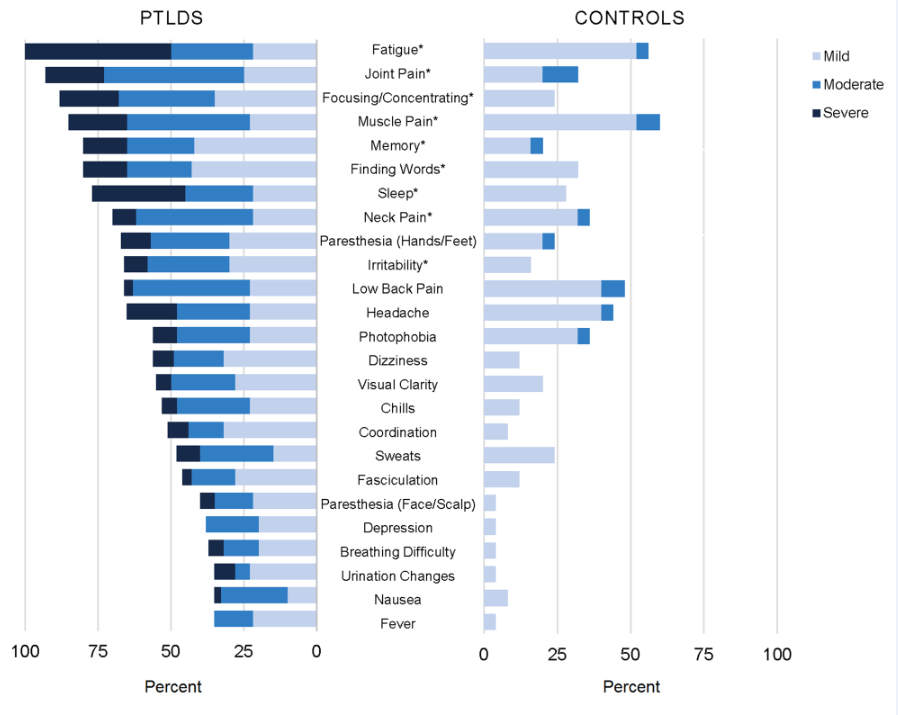
Recently, microbiologist Holly Ahern wrote about this issue of persistent symptoms clearly delineating that the CDC and mainstream researchers have been quoting and utilizing an inaccurate statistic about this important but neglected group (13). She states that the CDC’s usage of 10-20% of patients who remain with symptoms, whom the CDC labels Post Treatment Lyme Disease Syndrome (PTLDS), only includes patients who were diagnosed and treated quickly. It does not and should not include a much larger group who are infected for weeks to years before getting a proper diagnosis and treatment. Research shows this second group to be 30-40% of patients. Simply adding the two groups, reveals that 60% of Lyme patients end up with chronic symptoms. This higher percentage more accurately reflects what I see as a patient advocate. Simple math also shows that if the CDC estimates state that there are over 400,000 new cases of Lyme disease each year (more than double that of breast cancer), that means more than 24,000 will have continuing symptoms. This is per year – mind you.

This crucial issue has been denied by the CDC, and is important not only from the standpoint that 5.8 million Americans are living with Alzheimer’s, and dementia deaths have doubled in the last two decades (14), both of which could be caused or exacerbated by Lyme disease and/or the various coinfections that come with it, but because only certain drugs work on the various forms of borrelia as well as these coinfections. In fact, besides potentially pushing the spirochetal form into the cyst form to reemerge later, the CDC mono-therapy of doxycycline only works on two of the four forms (8). The remaining forms necessitate different drugs and potentially a longer treatment time – far longer than days. Bizzarely, my own dog with asymptomatic Lyme disease was treated for months by our veterinarian. 

The other glaring issue is that the falsely skewed low percentages do not accurately reflect the numbers of those suffering with debilitating symptoms, which will automatically place it further down the pipeline of crucial research needing to be done. It’s the proverbial “Catch-22” with sick patients left to cope.

For the Newsweek article to state that this is an “untreatable” form of Lyme is a tad bit early since the CDC doesn’t even recognize pleomorphism, the polymicrobial nature of the disease, and that borrelia can even persist. While researchers, mainly from outside the U.S., have published studies on all these factors, the U.S. sits idly by, only doing yet again more research on the acute phase with faulty study parameters, and the continued CDC stance of using a simplistic mono-therapy that potentially could very well make patients worse-off in the long run. My own experience and that of many, many others is that we wouldn’t be alive today without treatment given by experienced practitioners utilizing judiciously applied and varied long-term antimicrobials.

I must add here that this is a far more herculean issue than it appears at first blush. Due to the CDC guidelines, doctors for decades have been persecuted by State Medical Boards for utilizing anything outside these literal mandates. My own doctor had to pay fifty-thousand dollars in legal fees to keep his practice (15). He’s far from alone. This is happening all over the U.S. as well as in other countries (2), and it’s often insurance companies turning them in.

Recently, I wrote an article about experienced and successful treatment nuances after Dr. Joseph Burrascano created a video for ILADS (16). In it, he not only lays out the sordid and politically motivated details of the history surrounding Lyme disease, but explains his in house studies performed with other health professionals to determine antibiotic efficacy utilizing microscopy. Let’s just say it’s a far cry more complex than 21 days of doxycycline which for the knottiness of Lyme disease and it’s coinfections is akin to throwing sand into the ocean.

While I’m thankful journalists are writing about this very real 21st century plague that has become a true pandemic, I hope they start doing their homework and report the fact this disease has been downplayed, denied, and mishandled for decades. The author of the Newsweek article not only used yellow journalism but erroneously used a picture of an American dog tick/wood tick that while capable of transmitting numerous pathogens, to date does not even transmit Lyme disease. Few journalists are studying the contradictory science and presenting both sides. Most articles read as CDC/IDSA propaganda, and that propaganda is killing people.

With all that is coming out on the seriousness of Lyme disease, the increasingly high infection rates, and the continued suffering of so many, the CDC, NIH, IDSA, and the big-name institutions working with them blithely continue on the same short-sighted road without blinking, while patients are still unable to get a proper diagnoses and treatment (17), and are still being told, “It’s all in your head”(18,19, 20).

The sky is going to fall for those with Lyme disease if authorities continue to ignore worldwide research and fail to act on discoveries that show this plague is quite outside the box they’ve created for it. The only possible box this fits into is Pandora’s.  If you are a patient or someone with a loved one fighting this battle, there’s hope with proper treatment.

References

  1. Gander, Kashmira. “Untreatable Form of Lyme Disease Could Hit 2 Million Americans By 2020, Scientists Warn.” April 23, 2019. Newsweek. https://www.newsweek.com/untreatable-form-lyme-disease-could-hit-two-million-americans-2020-scientists-1403338.  Accessed April 24, 2019.
  2. Teotonio, Isabel. “Everything About Lyme Disease is Steeped in Controversy.  Now Some doctors Are Too Afraid to Treat Patients.” The Star. Dec.14, 2018. https://www.thestar.com/life/health_wellness/2018/12/14/everything-about-lyme-disease-is-steeped-in-controversy-now-some-doctors-are-too-afraid-to-treat-patients.html  Accessed April 26, 2019.
  3. Lyme Disease Association, Inc. “Conflicts of Interest in Lyme Disease: Laboratory Testing, Vaccination, and Treatment Guidelines.” April 2001. http://lyme.kaiserpapers.org/pdfs/Conflicts.pdf
  4. Sin Hang Lee, M.D., v. The United States. 18-686 C. U.S. Court of Federal Claims. (2018) https://www.dropbox.com/s/zem4v9sceg1v63d/Lee%20CDC%20Complaint%205-15-2018.pdf?dl=0
  5. Torrey et al. v. Infectious Disease Society of America et al. 5:17-cv-00190-RWS. U.S. States District Court For the Eastern District of Texas Texarkana Division. (2019)  https://madisonarealymesupportgroup.com/wp-content/uploads/2019/04/c8b05-torreyamendedcomplaint3-26-19.pdf
  6. Garg et al. (2018) “Evaluating Polymicrobial Immune Responses in Patients Suffering From Tick-borne Diseases.” Scientific Reports.  doi: 10.1038/s41598-018-34393-9  https://www.ncbi.nlm.nih.gov/pmc/articles/PMC6206025/
  7. Krause et al. (1996) Concurrent Lyme Disease and Babesiosis: Evidence of Increased Severity and Duration of Illness. JAMA.  http://www.lymepa.org/c07%20Lyme%20disease%20and%20Babesiosis%20coinfection.pdf
  8. Sapi et al. (2011) “Evaluation of in-vitro antibiotic susceptibility of different morphological forms of Borrelia burgdorferi.” Dovepress. doi: https://doi.org/10.2147/IDR.S19201
  9. Caskey et al. (2019) “The Functional and Molecular Effects of Doxycycline Treatment on Borrelia Burgdorferi Phenotype.” Frontiers in Microbiology. doi: https://doi.org/10.3389/fmicb.2019.00690
  10. Neuroscience News. “Researchers Identify Virus and Two Types of Bacteria As Major Causes of Alzheimer’s.” March 9, 2016. https://neurosciencenews.com/microbes-alzheimers-neurology-3826/.  Accessed April 26, 2019.
  11. “Kris Kristofferson’s Memory Loss Caused by Lyme Disease.” Youtube, Uploaded by FoxNews, June 9, 2016.https://www.youtube.com/watch?v=oW1eFC2trJE
  12. Dr. Mercola.  “Under Our Skin: The Untold Story of Lyme Disease.” mercola.com. October 13, 2012. https://articles.mercola.com/sites/articles/archive/2012/10/13/under-our-skin-documentary.aspx  Accessed April 26, 2019.
  13. Ahern, Holly. “Medical Stalemate: What Causes Continuing Symptoms After Lyme Treatment?” Feb. 19, 2019. lymedisease.org.  https://www.lymedisease.org/lyme-stalemate-ahern/  Accessed April 26, 2019. 
  14. Dr. Mercola. “Dementia Deaths Have Doubled in Two Decades.” mercola.com. March 28, 2019. https://articles.mercola.com/sites/articles/archive/2019/03/28/alzheimers-death-rate-doubled.aspx?  Accessed April 26, 2019.
  15. Zell, Fran. “Wisconsin Lyme Doctor Gets Reprieve.” Daily KOS. Jan. 29, 2012. https://www.dailykos.com/stories/2012/01/29/1059800/-Wisconsin-Lyme-doctor-gets-reprieve. Accessed April 26, 2019.
  16. Cashman, Alicia. “Why Lyme/MSIDS Research Remains in the Dark Ages.” Feb. 22, 2019. Madison Lyme Support Group. https://madisonarealymesupportgroup.com/2019/02/22/why-mainstream-lyme-msids-research-remains-in-the-dark-ages/.  Accessed April 26, 2019.
  17. Broom, Brian. “‘It’s Just Crazy’: Why Is Lyme Disease Treatment So Difficult to Find in Mississippi?” April 19, 2019. Mississippi Clarion Ledger. https://www.clarionledger.com/story/sports/outdoors/2019/04/19/lyme-disease-mississippi-treatment-symptoms-support-group-diagnosis-doctors-hard-to-find/3246908002/  Accessed April 26, 2019. 
  18. Golan, Jacquelyn. “It’s All in Your Head – Until Finally a Lyme Diagnosis.” lymedisease.org. Sept. 21, 2017.https://www.lymedisease.org/circuitous-route-lyme-diagnosis/.  Accessed April 27, 2019. 
  19. Dennis, Lori. “Lyme is ‘All in Your Head’ – A Wake-up Call to Mental Health Professionals.” madinamerica.com. March 4, 2017. https://www.madinamerica.com/2017/03/lyme-wake-up-call/.  Accessed April 27, 2019. 
  20. Bedrinana, Jessie. “Why Are Physically Sick Children Labeled As Mentally Ill?”  lymedisease.org.  June 30, 2017. https://www.lymedisease.org/jessie-bedrinana/. Accessed April 27, 2019.