Archive for the ‘Psychological Aspects’ Category

FDA Approves Ketamine Nasal Spray For Depression

https://www.psychologytoday.com/us/blog/when-your-adult-child-breaks-your-heart/201903/fda-approves-ketamine-nasal-spray-treat

FDA Approves Ketamine Nasal Spray to Treat Depression

New hope for treatment-resistant depression.

Posted Mar 08, 2019

In the popular imagination, depression may feel unbearable, but it’s often fleeting. All it takes is a quick visit to a therapist or psychiatrist, a magic pill, and a few therapy sessions. The majority of depression patients, however, report significant side effects. These side effects are often severe enough to cause a person to stop taking the drug. For about a quarter of depression patients, symptoms don’t improve at all. That leaves millions of Americans without adequate treatment for their depression.

For years, anecdotal data and preliminary research have suggested that ketamine might act as a rapid depression cure. Thanks to more advanced recent clinical trials, we now know this to be the case. And now, ketamine could soon enter the market, helping millions of people who have either treatment-resistant depression or who cannot tolerate the side effects of traditional SSRIs.

The U.S. Food and Drug Administration (FDA) this week approved a new treatment developed by Janssen Pharmaceuticals, Inc. Esketamine will be marketed under the brand name Spravato as a nasal spray. This ketamine-based treatment has shown significant benefits in clinical trials, though researchers still do not understand how it works.

Ketamine for Depression: What the Research Says

Ketamine is an anesthetic often used in veterinary practice. It has also been abused as a club drug. When the drug is used appropriately and under close observation in a psychiatric setting, it can alleviate depression. Clinical trials on the new version of the drug, a nasal spray, point to similar results.

The new drug, esketamine, is a close chemical cousin of ketamine. Available as a nasal spray, the FDA has approved it for use in a doctor’s office. A patient takes the dose at a clinic, where they are then monitored for two hours. Depending on the severity of the depression, patients then receive doses once or twice weekly.

The Rochester Center for Behavioral Medicine was one of the sites in the national trial, which found that Spravato lowered depression scores on a depression inventory by an average of 21 points, compared to 17 points for a placebo. Another found that just a quarter of Spravato users relapsed, compared to 45 percent of people who received a placebo.

Preliminary research suggests that ketamine may be especially effective at eliminating suicidal thoughts and feelings, which are the most dangerous component of depression.

How Does Ketamine Work?

Esketamine is a glutamate receptor modulator, thought to help restore deficits in the brain cells of people affected by major depression. The precise mechanisms through which this drug works will be the subject of further research.

One of the most common side effects of ketamine use is hallucinations. Some doctors believe these hallucinations may actually play a key role in the drug’s efficacy. Some users report out of body experiences, or profound spiritual realizations that change their perspectives on life. It could be that these experiences alter a person’s way of thinking, or even act as a sort of brain reset.

It’s also unclear whether any of the branded forms of ketamine are more effective than the original anesthetic. Early research primarily used the anesthetic, but newer studies use branded forms, including the recently approved nasal spray. Both versions appear to work.

Ketamine’s manufacturers say its cost will be consistent with that of other mental health specialty drugs—probably between $500 to $800 per dose, which is a figure that does not take into account pre-negotiated insurance discounts or patient copays. It’s not yet clear how much a typical patient can expect to pay. When compared to the typical costs of life with depression—lost productivity, potentially years of therapy or failed antidepressants—a few hundred dollars could actually be a bargain.

Do We Really Need Another Antidepressant?

To those not well-versed in the world of psychiatric care, it might seem like antidepressants are overused, too readily available, and the cause of far too many unpleasant side effects. The data suggest otherwise. While antidepressants can and do save lives, many patients with depression don’t get better. Others have to try multiple drugs or drug cocktails before they get relief.

The U.S. is experiencing a suicide epidemic. Suicide claimed 45,000 lives in 2016 alone. In more than half of U.S. states, suicide has increased by 30 percent or more over the last two decades. Many people with depression don’t seek help because they don’t believe it is available. Others turn to the mental health system only to be let down, further propelling them into despair.

Spravato offers real hope to suffering people. What’s more, future treatments may be on the horizon. Preliminary data suggests that ketamine may also offer rapid relief of PTSD symptoms. As research continues, we may get closer not only to unraveling depression, but also better understanding the roots of psychological suffering.

References

Cartwright, C., Gibson, K., Read, J., Cowan, O., & Dehar, T. (2016). Long-term antidepressant use: Patient perspectives of benefits and adverse effects. Patient Preference and Adherence, 10, 1401-1407. doi:10.2147/ppa.s110632

Greenfieldboyce, N. (2018, June 07). CDC: U.S. suicide rates have climbed dramatically. Retrieved from https://www.npr.org/sections/health-shots/2018/06/07/617897261/cdc-u-s-suicide-rates-have-climbed-dramatically

Ketamine as a rapid treatment for post-traumatic stress disorder (PTSD). (n.d.). Retrieved from https://clinicaltrials.gov/ct2/show/NCT00749203

_________________

**Comment**

Ketamine is used for starting and maintaining anesthesia and induces a trance-like state while providing pain relief, sedation, and memory loss. It can cause confusion and hallucinations as it wears off.  Discovered in 1962 it was used in the Vietnam War due to its safety and is on the WHO’s list of essential medicines.  It’s also used as a recreational drug in raves and as a club drug.  Due to this, it’s a schedule III substance in the U.S.

That said, it’s been shown to limit borrelia (Lyme) in vitro:  https://madisonarealymesupportgroup.com/2018/03/10/ketamine-limits-bb-in-vitro/

It’s also been shown to relieve chronic pain, improve quality of life, reduce depression and suicidal ideation, and reduce opioid consumption:  https://madisonarealymesupportgroup.com/2017/09/14/iv-ketamine-in-ptls/

Human Bartonellosis: An Underappreciated Public Health Problem?

https://www.mdpi.com/2414-6366/4/2/69

Trop. Med. Infect. Dis. 2019, 4(2), 69; https://doi.org/10.3390/tropicalmed4020069

Human Bartonellosis: An Underappreciated Public Health Problem?

Published: 19 April 2019
(This article belongs to the Special Issue Recent Advancements on Arthropod-Borne Infectious Diseases)

Abstract

Bartonella spp. bacteria can be found around the globe and are the causative agents of multiple human diseases. The most well-known infection is called cat-scratch disease, which causes mild lymphadenopathy and fever. As our knowledge of these bacteria grows, new presentations of the disease have been recognized, with serious manifestations. Not only has more severe disease been associated with these bacteria but also Bartonella species have been discovered in a wide range of mammals, and the pathogens’ DNA can be found in multiple vectors. This review will focus on some common mammalian reservoirs as well as the suspected vectors in relation to the disease transmission and prevalence. Understanding the complex interactions between these bacteria, their vectors, and their reservoirs, as well as the breadth of infection by Bartonella around the world will help to assess the impact of Bartonellosis on public health. View Full-Text

tropicalmed-04-00069-g001
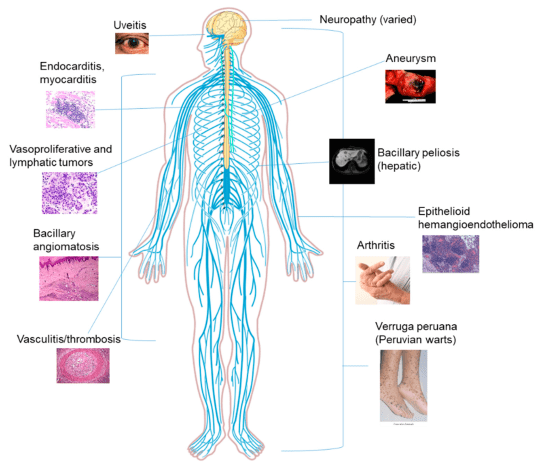
Figure 1  The Clinical Manifestations of Bartonellosis
Excerpt from full-text
Known diseases caused by Bartonella infections include:
  • Carrion’s disease
  • cat-scratch disease
  • chronic lymphadenopathy
  • trench fever
  • chronic bacteraemia
  • culture-negative endocarditis
  • bacilliary angiomatosis
  • bacilliary peliosis
  • vasculitis
  • uveitis [1,2,4,6,7,9,10,11].
Recently, Bartonella infections have been linked to more diverse manifestations such as:
  • hallucinations
  • weight loss
  • muscle fatigue
  • partial paralysis
  • pediatric acute-onset neuropsychiatric syndrome (PANS)
  • other neurological manifestations [6,8,10].

A few case studies have also documented Bartonella in tumors, particularly vasoproliferative and those of mammary tissue [12,13,14]. The potential involvement of this pathogen in breast tumorigenesis is both disconcerting and warrants significantly more research.

Bartonella spp. are zoonotic pathogens transmitted from mammals to humans through a variety of insect vectors including the sand fly, cat fleas, and human body louse [4,5]. New evidence suggests that ticks, red ants, and spiders can also transmit Bartonella [15,16,17,18]. Bed bugs have been implicated in the transmission cycle of B. quintana and have been artificially infected [19]. B. quintana was found in bed bug feces for up to 18 days postinfection [19]. The diversity of newly discovered Bartonella species, the large number and ecologically diverse animal reservoir hosts, and the large spectrum of arthropod vectors that can transmit these bacteria among animals and humans are major causes for public health concern.

Regarding ticks….

3.2. Arachnids (Spiders and Ticks)

Over the last 10 years, the topic of ticks transmitting Bartonella species has been widely debated. Evidence exists to support the transmission of Bartonella through many different species of ticks.

Ixodid ticks, also known as hard ticks, appear to be the main type of tick associated with these bacteria. Tick cell lines have been used to show that Bartonella can replicate and survive within:

  • Amblyoma americanum (Lone Star Tick)
  • Rhipicephalus sanguineus (Brown Dog Tick)
  • Ixodes scapularis cells [77] (Deer Tick)

In California, questing ticks of

  • Ixodes pacificus (Western Black legged Tick)
  • Dermacentor occidentalis (Pacific Coast Tick)
  • Dermacentor variabilis (American Dog Tick)

were collected when in the adult and nymphal stages and tested for Bartonella by PCR for the citrate synthase gene. [78]. All types of ticks were found to contain Bartonella DNA, although in varying percentages and locations. These data alone do not prove that ticks can transmit Bartonella spp. Bacteria; however, the results do show Bartonella DNA occurring naturally in these wild ticks.

In Palestine,

  • Hyalomma spp. (Genus of hard-bodied tick) found in Asia, Europe, & North and South Africa.
  • Haemphysalis spp. (The Asian Long-horned tick is an example)
  • Rhipicephalusspp. (Hard-bodied tick native to tropical Africa)

ticks were collected from domestic animals and tested by PCR for the Bartonella intergenic transcribed spacer (ITS) region [38]. These ticks were infected with 4 strains of Bartonella: B. rochalimae, B. chomelii, B. bovis, and B. koehlerae [38]. While this study tested a collection of ticks found on domestic animals, the results suggest that individuals in close contact with these animals should be aware of the potential for transmission through tick bites.

In a sampling of ticks (Ixodes scapularis and Dermacentor variabilis) and rodents (Peromyscus leucopus) from southern Indiana, the midgut contents of the tick species and rodent blood were analyzed by 16S sequencing. Bartonella was present in a moderate percentage (26% in D. variabilis and 13.3% in I. scapularis) of larvae and nymphs of both tick species, even those scored as unengorged, but was present in the majority (97.8%) of the rodents tested [79].
A survey of ticks from 16 states in the U.S. revealed that the overall prevalence of Bartonella henselae in Ixodes ticks was 2.5% [80].
Interestingly, the highest rate of both Borrelia spp. (63.2%) and B. henselae (10.3%) was found in Ixodes affinis ticks collected from North Carolina.
Ixodes ricinus has been the focus of studies that support tick transmission of Bartonella spp. in Europe. This is because I. ricinus is an important vector for tick-borne diseases in Europe [81]. I. ricinus have been collected in the larval, nymphal, and adult stages in Austria [82]. The analyses revealed that 2.1% of all ticks were infected with Bartonella spp., with the highest rate in ticks derived from Vienna (with a 7.5% infection rate), and that adult ticks had a higher prevalence than other stages [82].
B. henselae, B. doshiae, and B. grahamii DNA were amplified, and this was the first study to find Bartonella-infected ticks in Austria [82].
A recent One Health perspective review on Bartonella indicated that the overall presence of Bartonella in ticks (combining evidence from multiple surveillance studies) was approx. 15% [83].
B. henselae DNA has also been isolated from I. ricinus removed from an infected cat. However, whether the cat gave the tick Bartonella or vice versa cannot be established, so the vector competence of these ticks for transmission cannot be determined [30].
A lab in France has studied the relationship between I. ricinus and Bartonella transmission. One study focused on the ability of ticks to maintain infection from one life stage to the next and tested a vertical transmission from adults to eggs. The authors used B. henselae and found that a transstadial transmission was possible and that a transovarial transmission was not likely [84]. The researchers also supplied evidence to support the vector competency of I. ricinus by amplifying B. henselae DNA from the salivary glands of infected ticks and by amplifying DNA from blood 72 h after infected ticks fed through an artificial system [84]. Although the evidence strongly suggests the ability of ticks to transmit these bacteria, the system employed artificial means for feeding; therefore, one major critique has been that it is not representative of a natural blood meal from a host.
To address this issue, another experiment was performed to the assess vector competency of I. ricinus to transmit Bartonella birtlesii [85]. Mice were infected with B. birtlesii through an intravenous injection via a tail vein, and once mice were infected, naïve ticks were fed on the mice and kept for 3 months to molt. Nymphal ticks were shown to transmit B. birtlesii to naïve mice, and adult ticks were shown to infect blood through a feeder method [85]. B. birtlesii was identified in the blood of the recipient mice through PCR and immunofluorescence [85]. This evidence strongly supports the transmission of these bacteria by ticks. However, the limitation is that this only supports I. ricinus’ ability to transmit a very specific strain of Bartonella, B. birtlesii, which is not linked to human disease.
Concerns such as these related to vector competence and transmission can only be quelled by repeated studies utilizing multiple strains of Bartonella and differing tick species.
An interesting case study provided evidence of spiders transmitting Bartonella. A mother and two sons suffered from neurological symptoms following bites suspected from woodlouse hunter spiders [18]. Bartonella henselae DNA was amplified from the blood of the family as well as from a woodlouse and a woodlouse hunter spider near the family’s home [18]. It cannot be determined if the family contracted the bacteria from the woodlouse or the woodlouse hunter spider or if the lice and spiders contracted the bacteria from the family. This case study points to the importance for diagnosticians to test for bacterial infections after suspected arachnid bites. It also emphasizes the lack of knowledge on the possible vectors that transmit Bartonella as well as the range of manifestations by infection with Bartonella.

___________________

**Comment**

I think we can safely state that Bartonella IS an under appreciated health problem.


Help for Tic Disorders, OCD, Tourett’s, PANS & PANDAS

https://xn123.infusionsoft.app/app/page/maria-rickert-hong-webinar?

webinar signup

Victoria Barrios hosts the Thriving with a Tic Disorder online summit, which explores the root causes of tic disorders.

In this webinar, she’ll discuss highlights from what she’s learned from experts in her summit such as:

•William Walsh MD of the Walsh Research Institute

•Robert Melilo DC, developer of the Brain Balance program

•Jane Hersey of the Feingold Association

•Anke Zimmerman, homeopath

•Mark Blaxill, author of “The Age of Autism”


We’ll talk about things such as:

•Triggers of tics such as food additives and medication

•Nutritional deficiencies/imbalances

•Oxidative stress

•Neurotransmitter deficiencies/imbalances

•The role of stress and anxiety

•Homeopathy

•Drug-free approaches


Join us to ask your own questions!

RSVP at link above.

As a child, Victoria Barrios was diagnosed with Tourette Syndrome, a neurological disorder that involves uncontrollable, repetitive movements or tics.

After cutting out any and all added and artificial sugars and preservatives, her symptoms were no longer controlling her and she was able to function in society again.

Her world later shifted when she discovered that within two weeks of eliminating any and all dairy products she had not ONE sign of acne. 

She finally understood how food could either be our nourishment or our destruction.

She is now a health coach who is the host of the Thriving with a Tic Disorder online summit.

**Be sure to sign up, even if you can’t attend in person so you can get the replay when it comes out the next day.** 

___________________
**Comment**
According to a prominent WI LLMD, 80% of his Autistic and PANS patients have Lyme/MSIDS.

When Lyme Disease & Ehlers-Danlos Syndrome Overlap

https://www.lymedisease.org/lyme-ehlers-danlos/

When Lyme disease and Ehlers-Danlos syndrome overlap


Ketamine – Reduces Depression-related Behaviors in Mice, Limits Bb in vivo, & Relieves Chronic Pain

https://neurosciencenews.com/ketamine-depression-reversal-11069/

Ketamine reverses neural changes underlying depression-related behaviors: Mouse study

Summary: The formation of prefrontal cortex dendritic spine formation sustains the remission of depressive related symptoms and behaviors following ketamine treatment by restoring lost spines.

Source: NIH/NIMH

Researchers have identified ketamine-induced brain-related changes that are responsible for maintaining the remission of behaviors related to depression in mice — findings that may help researchers develop interventions that promote lasting remission of depression in humans. The study, funded by the National Institute of Mental Health (NIMH), part of the National Institutes of Health, appears in the journal Science.

Major depression is one of the most common mental disorders in the United States, with approximately 17.3 million adults experienced a major depressive episode in 2017. However, many of the neural changes underlying the transitions between active depression, remission, and depression re-occurrence remain unknown. Ketamine, a fast-acting antidepressant which relieves depressive symptoms in hours instead of weeks or longer, provides an opportunity for researchers to investigate the short- and long-term biological changes underlying these transitions.

“Ketamine is a potentially transformative treatment for depression, but one of the major challenges associated with this drug is sustaining recovery after the initial treatment,” said study author Conor Liston, M.D., Ph.D., of Weill Cornell Medicine, New York City.

To understand mechanisms underlying the transition from active depression to remission in humans, the researchers examined behaviors related to depression in mice. Researchers took high-resolution images of dendritic spines in the prefrontal cortex of mice before and after they experienced a stressor. Dendritic spines are protrusions in the part of neurons that receive communication input from other neurons. The researchers found that mice displaying behaviors related to depression had increased elimination of, and decreased the formation of, dendritic spines in their prefrontal cortex compared with mice not exposed to a stressor. This finding replicates prior studies linking the emergence of behaviors related to depression in mice with dendritic spine loss.

In addition to the effects on dendritic spines, stress reduced the functional connectivity and simultaneous activity of neurons in the prefrontal cortex of mice. This reduction in connectivity and activity was associated with behaviors related to depression in response to stressors. Liston’s group then found that ketamine treatment rapidly restored functional connectivity and ensemble activity of neurons and eliminated behaviors related to depression. Twenty-four hours after receiving a single dose of ketamine, mice exposed to stress showed a reversal of behaviors related to depression and an increase in dendritic spine formation when compared to stressed mice that had not received ketamine. These new dendritic spines were functional, creating working connections with other neurons.

The researchers found that while behavioral changes and changes in neural activity in mice happened quickly (three hours after ketamine treatment), dendritic spine formation happened more slowly (12-24 after hours after ketamine treatment). While further research is needed, the authors suggest these findings might indicate that dendritic spine regrowth may be a consequence of ketamine-induced rescue of prefrontal cortex circuit activity.

This shows a brain

Although dendritic spines were not found to underly the fast-acting effects of ketamine on behaviors related to depression in mice, they were found to play an important role in maintaining the remission of those behaviors. Using a new technology developed by Haruo Kasai, Ph.D., and Haruhiko Bito, Ph.D., collaborators at the University of Tokyo, the researchers found that selectively deleting these newly formed dendritic spines led to the re-emergence of behaviors related to depression.

“Our results suggest that interventions aimed at enhancing synapse formation and prolonging their survival could be useful for maintaining the antidepressant effects of ketamine in the days and weeks after treatment,” said Dr. Liston.

“Ketamine is the first new anti-depressant medication with a novel mechanism of action since the 1980s. Its ability to rapidly decrease suicidal thoughts is already a fundamental breakthrough,” said Janine Simmons, M.D., Ph.D., chief of the NIMH Social and Affective Neuroscience Program. “Additional insights into ketamine’s longer-term effects on brain circuits could guide future advances in the management of mood disorders.”

ABOUT THIS NEUROSCIENCE RESEARCH ARTICLE

Source:
NIH/NIMH
Media Contacts:
Nick Miller – NIH/NIMH
Image Source:
The image is in the public domain.

Original Research: Open access.
Liston, C. et al. “Sustained rescue of prefrontal circuit dysfunction by antidepressant-induced spine formation”. Science. doi:10.1126/science.aat8078

Abstract

Sustained rescue of prefrontal circuit dysfunction by antidepressant-induced spine formation

The neurobiological mechanisms underlying the induction and remission of depressive episodes over time are not well understood. Through repeated longitudinal imaging of medial prefrontal microcircuits in the living brain, we found that prefrontal spinogenesis plays a critical role in sustaining specific antidepressant behavioral effects and maintaining long-term behavioral remission. Depression-related behavior was associated with targeted, branch-specific elimination of postsynaptic dendritic spines on prefrontal projection neurons. Antidepressant-dose ketamine reversed these effects by selectively rescuing eliminated spines and restoring coordinated activity in multicellular ensembles that predict motivated escape behavior. Prefrontal spinogenesis was required for the long-term maintenance of antidepressant effects on motivated escape behavior but not for their initial induction.

____________________

**Comment**

Ketamine is used for starting and maintaining anesthesia and induces a trance-like state while providing pain relief, sedation, and memory loss. It can cause confusion and hallucinations as it wears off.  Discovered in 1962 it was used in the Vietnam War due to its safety and is on the WHO’s list of essential medicines.

It’s also used as a recreational drug in raves and as a club drug.  Due to this, it’s a schedule III substance in the U.S.

That said, it’s been shown to limit borrelia in vitro:  https://madisonarealymesupportgroup.com/2018/03/10/ketamine-limits-bb-in-vitro/

It’s also been shown to relieve her chronic pain, improve quality of life, reduce depression and suicidal ideation, and reduce opioid consumption:  https://madisonarealymesupportgroup.com/2017/09/14/iv-ketamine-in-ptls/