Archive for the ‘Lyme’ Category

Rickettsiales in Ticks Removed From Outdoor Workers From Georgia & Florida

https://wwwnc.cdc.gov/eid/article/25/5/18-0438_article

Volume 25, Number 5—May 2019

Research Letter

Rickettsiales in Ticks Removed from Outdoor Workers, Southwest Georgia and Northwest Florida, USA

Elizabeth R. Gleim1Comments to Author , L. Mike Conner, Galina E. Zemtsova, Michael L. Levin, Pamela Wong, Madeleine A. Pfaff, and Michael J. Yabsley  DOI: 10.3201/eid2505.180438

The southeastern United States has multiple tick species that can transmit pathogens to humans. The most common tick species, Amblyomma americanum, is the vector for the causative agents of human ehrlichioses and southern tick-associated rash illness, among others (1). Dermacentor variabilis ticks can transmit the causative agent of Rocky Mountain spotted fever, and Ixodes scapularis ticks can transmit the causative agents of Lyme disease, babesiosis, and human granulocytic anaplasmosis (1). Although less common in the region, A. maculatum ticks are dominant in specific habitats and can transmit the causative agent of Rickettsia parkeri rickettsiosis (1).

Persons who have occupations that require them to be outside on a regular basis might have a greater risk for acquiring a tickborne disease (2). Although numerous studies have been conducted regarding risks for tickborne diseases among forestry workers in Europe, few studies have been performed in the United States (2,3). The studies that have been conducted in the United States have focused on forestry workers in the northeastern region (2). However, because of variable phenology and densities of ticks, it is useful to evaluate tick activity and pathogen prevalence in various regions and ecosystems.

Burn-tolerant and burn-dependent ecosystems, such as pine (Pinus spp.) and mixed pine forests commonly found in the southeastern United States, have unique tick dynamics compared with those of other habitats (4). The objective of this study was to determine the tick bite risk and tickborne pathogen prevalence in ticks removed from forestry workers working in pine and mixed pine forests in southwest Georgia and northwest Florida, USA.

During June 2009–December 2011, forestry workers in southwestern Georgia (7 counties) and northwestern Florida (1 county) submitted ticks crawling on or attached to them. We identified ticks and tested them for selected pathogens (Appendix). Immature forms of the same species from the same day and person were pooled (<5 nymphs and <20 larvae) for testing.

A total of 53 persons submitted 362 ticks (Table). Excluding larvae, the most common tick species submitted was A. maculatum, followed by A. americanum, I. scapularis, and D. variabilis. On 4 occasions, 1 person submitted A. tuberculatum ticks (3 batches of larvae and 1 batch of nymphs) from a longleaf pine site in Baker County, Georgia. Average submissions per persons were 2.6 ticks (median 1 tick), but 1 person submitted 100 ticks. A total of 24 persons submitted ticks more than once, and they submitted an average of 0.08–6.5 ticks/month (overall average submission rate of 1.1 ticks/month). Three ticks were engorged (1 D. variabilis adult, 1 A. americanum nymph, and 1 Amblyomma sp. nymph); only the Amblyomma sp. nymph was positive for a pathogen (R. amblyommatis).

  • Rickettsia spp. prevalence was 36.4% in adult, 27.9% in nymphal, and 20% in larval A. americanum ticks; R. amblyommatis was the only species identified (Table).
  • Rickettsia spp. were detected in 23% of A. maculatum adults; R. amblyommatis was most common (6.0%), followed by R. parkeri (4.8%).
  • A previously detected novel Rickettsia sp. was identified in 10 of 11 A. tuberculatum larval pools and was reported by Zemtsova et al. (6). An additional pool of A. tuberculatum nymphs was tested in this study and also was positive for the novel Rickettsia sp.
  • E. chaffeensis was detected in 1 A. maculatum adult (prevalence 1.2%), and Panola mountain Ehrlichia sp. was detected in 2 A. maculatum adults (prevalence 2.4%) and 1 D. variabilis adult (prevalence 10%).
  • No ticks were positive for Borrelia spp., E. ewingii, or Anaplasma phagocytophilum.

Thus, forestry workers were found to encounter ticks on a regular basis, and peak encounter rates reflected previously reported tick seasonality in this region (4). Only 3 (0.8%) of the ticks submitted were engorged, indicating prompt removal of most ticks and thus low risk for pathogen transmission. A. maculatum, a fairly uncommon tick in the southeastern United States, was the most commonly submitted tick. However, A. maculatum ticks dominate in regularly burned pine ecosystems (4), which is where most of these workers spent their time.

We observed several unique findings related to pathogens during this study. Larvae and nymphs of A. tuberculatum ticks were submitted on multiple occasions, a tick rarely reported on humans (7). These findings in conjunction with the identification of a novel Rickettsia sp. (6), suggest that additional research is warranted. This study also identified E. chaffeensis and Panola Mountain Ehrlichia in A. maculatum ticks. Although A. americanum ticks are considered the primary vector of Ehrlichia spp., these pathogens have been occasionally reported in questing A. maculatum ticks, suggesting that this tick might be involved in their transmission cycles (5,8). We also detected Panola Mountain Ehrlichia in 1 D. variabilis tick. Thus, further research regarding these alternative tick species as potential vectors of these pathogens is warranted, particularly in the case of A. maculatum ticks, which were a common species on forestry workers and are widespread in this region (4).

At the time of this study, Dr. Gleim was a research scientist at the University of Georgia, Athens, GA. She is currently a disease ecologist at Hollins University, Roanoke, VA. Her research interests include wildlife and zoonotic diseases with a particular emphasis on tickborne diseases.

Acknowledgments

We thank the persons whom submitted ticks for this study and members of the Yabsley and Levin laboratories for providing laboratory assistance.

This study was supported by the Centers for Disease Control and Prevention/University of Georgia (UGA) collaborative grant (#8212, Ecosystem Health and Human Health: Understanding the Ecological Effects of Prescribed Fire Regimes on the Distribution and Population Dynamics of Tick-Borne Zoonoses); the Oxford Research Scholars Program at Oxford College of Emory University; the Joseph W. Jones Ecological Research Center, the Warnell School of Forestry and Natural Resources (UGA); the Southeastern Cooperative Wildlife Disease Study (UGA) through the Federal Aid to Wildlife Restoration Act (50 Statute 917); and Southeastern Cooperative Wildlife Disease Study sponsorship from fish and wildlife agencies of member states.

References

  1. Stromdahl  EY, Hickling  GJ. Beyond Lyme: aetiology of tick-borne human diseases with emphasis on the south-eastern United States. Zoonoses Public Health. 2012;59(Suppl 2):48–64. DOIPubMed
  2. Covert  DJ, Langley  RL. Infectious disease occurrence in forestry workers: a systematic review. J Agromed. 2002;8:95–111. DOIPubMed
  3. Lee  S, Kakumanu  ML, Ponnusamy  L, Vaughn  M, Funkhouser  S, Thornton  H, et al. Prevalence of Rickettsiales in ticks removed from the skin of outdoor workers in North Carolina. Parasit Vectors. 2014;7:607. DOIPubMed
  4. Gleim  ER, Conner  LM, Berghaus  RD, Levin  ML, Zemtsova  GE, Yabsley  MJ. The phenology of ticks and the effects of long-term prescribed burning on tick population dynamics in southwestern Georgia and northwestern Florida. PLoS One. 2014;9:e112174. DOIPubMed
  5. Loftis  AD, Kelly  PJ, Paddock  CD, Blount  K, Johnson  JW, Gleim  ER, et al. Panola Mountain Ehrlichia in Amblyomma maculatum From the United States and Amblyomma variegatum (Acari: Ixodidae) From the Caribbean and Africa. J Med Entomol. 2016;53:696–8. DOIPubMed
  6. Zemtsova  GE, Gleim  E, Yabsley  MJ, Conner  LM, Mann  T, Brown  MD, et al. Detection of a novel spotted fever group Rickettsia in the gophertortoise tick. J Med Entomol. 2012;49:783–6. DOIPubMed
  7. Goddard  J. A ten-year study of tick biting in Mississippi: implications for human disease transmission. J Agromed. 2002;8:25–32. DOIPubMed
  8. Allerdice  ME, Hecht  JA, Karpathy  SE, Paddock  CD. Evaluation of Gulf Coast ticks (Acari: Ixodidae) for Ehrlichia and Anaplasma species. J Med Entomol. 2017;54:481–4.https://www.ncbi.nlm.nih.gov/entrez/query.fcgi?cmd=Retrieve&db=PubMed&list_uids=28031351&dopt=Abstract

Table

_____________________

**Comment**

Again, folks down South should be taken seriously when they present with symptoms.  BTW: Southern advocates tell me that STARI looks, smells, and feels just like Lyme disease.  

Lyme IS in the South:  https://madisonarealymesupportgroup.com/2016/10/25/hope-for-southerners/

The take home: Clark is finding borrelia (Lyme) strains in the South that the current CDC two-tier testing will never pick up in a thousand years.

https://www.researchgate.net/publication/285584725_Isolation_of_live_Borrelia_burgdorferi_sensu_lato_spirochetes_from_patients_with_undefined_disorders_and_symptoms_not_typical_for_Lyme_diseases

The take home: Clark found live Bbsl (bissettii-like strain) in people from the Southeast who had undefined disorders not typical of LD, and were treated for LD even though they were seronegative, proving that B. bissetti is responsible for worldwide human infection.

He also showed DNA of Bbsl in Lone Star ticks which might be a bridge vector of transmission to humans.

Dr. Clark was the first to report finding LD spirochetes in animals and ticks in South Carolina, as well as in wild lizards in South Carolina and Florida. He has documented the presence of LD Borrelia species, Babesia microti, Anaplasma phagocytophilum, Rickettsia species, and other tick-borne pathogens in wild animals, ticks, dogs, and humans in Florida and other southern states.

Clark is infected.  Surprised?  This is why he’s finding answers – it’s much more than a job to him.

https://madisonarealymesupportgroup.com/2018/05/31/no-lyme-in-the-south-guess-again/

https://madisonarealymesupportgroup.com/2019/03/19/jacksonville-family-shares-daughters-9-month-diagnosis-of-rare-disease-which-isnt-rare-lyme/

Time to start believing people!

Protect Yourself. Check Yourself For Ticks

0-7

More on prevention:  https://madisonarealymesupportgroup.com/2019/04/12/tick-prevention-2019/

Image

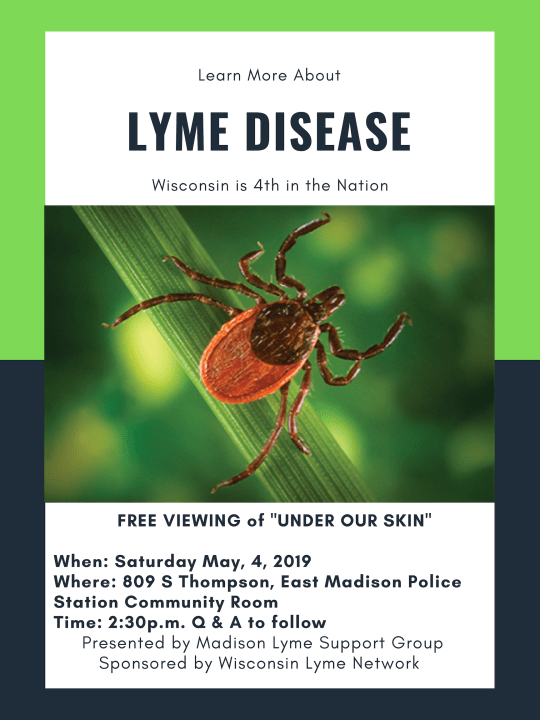
Reminder: Lyme Awareness Event in Madison, Wisconsin

Mark Jason Lim

When Lyme Disease Doesn’t Go Away

https://news.columbia.edu/news/when-lyme-disease-doesnt-go-away

When Lyme Disease Doesn’t Go Away

It’s tick season. Here’s what Brian Fallon, the director of Columbia’s Lyme & Tick-borne Diseases Research Center, has to say about combating chronic Lyme disease.
By

Carla Cantor
April 29, 2019

Brian A. Fallon, (VP&S ’85, MPH ’85) spent his early career working with patients whose medical symptoms were a mystery. The Columbia University Irving Medical Center psychiatrist became one of the foremost researchers of hypochondria and somatic disorders, or psychological illness that manifests as physical symptoms.

He might have stayed with that specialty had he not begun in the early 1990s to see a surge in referrals of patients with chronic, unexplained symptoms who had all been healthy—until they got Lyme disease. These patients suffered from chronic pain, fatigue and cognitive problems that had a debilitating effect on their lives. They all had been treated with antibiotics with partial response but then relapsed.

Since such persistent infection was considered impossible, they were told they were hypochondriacs.

“At the time, the medical community was saying that initial antibiotic therapy led to a cure,” Fallon said. “I found this hard to believe given the suffering among these patients. We needed to look further.”

Since 2007 Fallon has headed Columbia’s Lyme & Tick-borne Diseases Research Center, a joint effort by the Global Lyme Alliance, the Lyme Disease Association and the Columbia University Medical Center Board of Trustees. It is the first such academic research center in the country, and its mission is to tackle the core clinical questions of the disease and identify better diagnostics, biomarkers and treatments.

Fallon discusses why this is a pivotal time in the world of Lyme disease.

Book cover of Conquering Lyme Disease

Q. Lyme disease was first reported in the United States in 1977 in the town of Old Lyme, Connecticut.  How far have we come?

A. We still have many unanswered questions, but there has been tremendous progress. We now know the cause of the disease, a bacterium called Borrelia burgdorferi, and its multi-system manifestations. We know many of the biologic tricks the organism uses to evade the human immune response and we know its genetic makeup, as it has been fully sequenced. We know that while most Borrelia are easily eradicated with a standard course of antibiotics, some persist despite treatment. We briefly had a vaccine on the market, which is no longer available, but a new vaccine is now in clinical trials. Despite advances in some areas, there remain serious problems, most prominently that the epidemic of Lyme disease continues to expand both geographically and in the number of new cases—an estimated 400,000 in the United States each year.

Q. What are the symptoms of chronic Lyme disease and how is it diagnosed? What percentage of Lyme sufferers go on to have chronic problems?

A. Most patients do well if the infection is recognized and treated early. In about 10 to 20 percent of cases, patients develop a more severe disease whose symptoms can include debilitating pain, fatigue, headaches, mental fog causing difficulty with memory or finding words, irritability and  sleep disorders. Unfortunately, because our blood tests are antibody-based and can remain positive for years even when infection is no longer present, it is hard to determine whether a patient’s recurrent symptoms are due to persistent infection, a new infection or a post-infectious disorder.

Q. Why does post-treatment Lyme disease affect some people and not others?

A. This is an important question for which we have only preliminary answers. Infection by a more invasive strain of the Borrelia microbe, rather than one that only causes skin manifestations, increases the risk of more severe disease. Certain genetic markers increase the risk of chronic Lyme arthritis. Patients with a history of multiple physical illnesses and other life stressors may have less resilience to infection. And because the tick may transmit other microbes, some patients may have two or more infections.

Q. What are the current treatments for persistent Lyme disease?

A. There are multiple approaches to the treatment of lingering symptoms, but there haven’t been any new, large clinical trials in the U.S. on chronic Lyme-related symptoms in over 10 years. Studies in Europe of early Lyme disease indicate that some of these patients improve without further treatment over the course of one year after initial antibiotic therapy. Patients with chronic symptoms need a personalized approach based on the cause of their symptoms.

Q. Is there hope of finding a cure?

A. Absolutely. With precision medicine approaches, biomarkers are now emerging that appear able to predict who might respond to standard antibiotic therapy and those who might not. This provides an opening for testing new treatment approaches for the latter group, leading to improved long-term outcome.


Dr. Fallon is co-author of Conquering Lyme Disease: Science Bridges the Great Dividewith Dr. Jennifer Sotksy ( VP&S’16,) a fourth-year psychiatry resident at Columbia University Irving Medical Center. (Columbia University Press, 2017 hardcover,  2019 paperback)

For media inquiries or more information, contact Carla Cantor at 212-854-5276 or carla.cantor@columbia.edu.

__________________

**Comment**

  • Again, the erroneous percentages of 10-20% of patients going on to develop persistent symptoms is inaccurate.  There’s a whole lot more of us out here in Lyme-land than that.  Please read:  https://madisonarealymesupportgroup.com/2019/02/25/medical-stalemate-what-causes-continuing-symptoms-after-lyme-treatment/  In a nutshell, microbiologist Holly Ahern points out that the 10-20% the CDC calls PTLDS only includes those patients diagnosed and treated early.  It does not and should not include a large subset of patients (30-40%) diagnosed and treated late.  When you add the two groups together, you get 60% of patients going on to struggle with persisting symptoms.  This is an important detail as it shows the vast numbers struggling as well as the need for high priority research studying this issue.  


  • He discusses strains of borrelia.  I learned something the other day – that borrelia (Lyme) is unique in that bacteria are typically only allowed 1 species name, but due to honoring Willy Burgdorfer, all borrelia are “Lyme.” This little fly in the ointment is a huge reason many are not getting diagnosed.  Current 2-tiered testing only tests for 1 strain. I was told by a researcher to think of the Borrelia burgdorferi sensu lato complex as an umbrella, and the 23 genospecies are dangling from it (soon to be 24, BTW!) This may be why Southerners struggle with getting a diagnosis. STARI may be one of these borrelia that doesn’t fit into the box researchers have created for this night-mare.


  • He also found IV’s give much higher blood levels of drugs than orals, and that the following variables necessitated IV treatment:
    1. Spinal tap shows high inflammation (high protein)
    2. High Sed rate and synovitis (inflammation of synovial membrane)
    3. People sick for more than 1 year
    4. Age over 60
    5. Acute carditis
    6. Immune deficiency
    7. Those who used immunosuppressants
    8. Failed oral treatment


  • If you study this for 1 second you begin to appreciate the complexity of treating this which mainstream doctors still haven’t even accepted.


  • The fact that there haven’t been any new, large clinical trials in the U.S. on chronic Lyme-related symptoms in over 10 years is unacceptable when you consider that this is two times more prevalent than breast cancer.  HELLO?  Where’s the green ribbons and huge institutions raising funds for Lyme research?  Oh, yeah, I remember, our researchers are using their own microscopes in their basements!  https://lymelifescapeswithcaroline.com/2014/03/25/dr-alan-b-macdonald/  MacDonald is shown in the documentary, “Under Our Skin.”  


  • BTW: when MacDonald presented his culture findings (direct testing) at a meeting of the NY State medical society where there were many detractors from Yale & Stoneybrook who didn’t want their patented serological tests to be usurped. They accused him of falsifying his results.  Dr. McDonald then went on to prove conclusively it was Lyme by morphology, silver staining, monoclonal antibodies staining, DNA PCR and finally electron microscopy.  Frustrated, he quit the field and moved to Texas leaving all his old files in Burrascano’s basement until twenty years went by and he became interested again due to Alzheimer’s research & picked up his old files. https://madisonarealymesupportgroup.com/2019/02/22/why-mainstream-lyme-msids-research-remains-in-the-dark-ages/


Data Shows Lyme Disease Has Increased – Even in Areas That Aren’t Endemic

Laboratory Blood-Based Testing for Lyme Disease at a National Reference Laboratory.

Lee-Lewandrowski E, et al. Am J Clin Pathol. 2019.

Abstract

OBJECTIVES: We evaluated trends in Lyme disease (LD) testing at a national reference laboratory.

METHODS: LD screening enzyme immunoassay and Western blot testing data performed at Quest Diagnostics during 2010 to 2016 were analyzed nationally and at the state level.

RESULTS: Overall, 593,800 (11.3%) results were positive of 5,255,636 tests. There was an increase in the rate of positivity over the last 2 years of the study and an increase in the number of positive tests in 2016. Positive tests were observed in all 50 states and the District of Columbia. New York had the most positive tests, whereas Connecticut had the highest positivity rate when normalized to state populations. Some states with historically low rates of LD (eg, Texas, Florida, and California) showed significant increases in testing and positivity rates over time.

CONCLUSIONS: LD testing and positivity have increased in recent years, including in states not historically associated with the disease.

__________________

**Comment**

Please send this around. Nobody should EVER again be told,

“You can’t have Lyme because it doesn’t exist here.”

This study demonstrates it’s in every single state. Period.

Yet, this recent article shows people are still being told they can’t have it:  https://madisonarealymesupportgroup.com/2019/04/22/its-just-crazy-why-is-lyme-disease-treatment-so-difficult-to-find-in-mississippi/