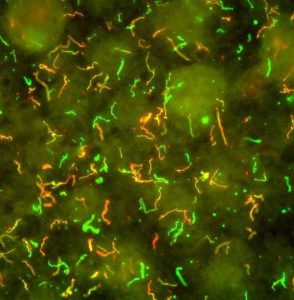
According to Dr. Raj Patel, if you have been treated for chronic Lyme disease and are not getting better, toxic mold could be a contributing factor.
In his experience, one half of all unresolved Lyme disease cases are due in part to inflammation caused by mold illness.
Dr. Patel has over 20 years’ clinical experience in medicine, treating chronic Lyme disease, chronic fatigue, mold illness, autism and related conditions.
He recently shared information and insights about his approach to Lyme and mold at LymeDisease.org’s MyLymeData2017 conference in San Ramon, California.
Exposure to Lyme and mold are very common occurrences, Dr. Patel says, but not all people who are exposed will come down with symptoms. Patients with a strong immune system may be unaffected, but those with a weakened immune system, or other contributing factors, can become chronically ill.
Signs and symptoms
The signs and symptoms for mold illness are very similar to chronic Lyme disease:
- Fatigue, weakness
- Focus/concentration issues, word recall, memory issues
- Confusion, disorientation, mood swings
- Muscle aches, cramps, joint pain, morning stiffness
- Skin sensitivity, light sensitivity
- Cough, shortness of breath, dizziness
- Excessive thirst, increased urination, static shocks
- Numbness and tingling, unusual pain, “ice pick’ pain
- Abdominal pain, diarrhea, appetite swings
- Headaches, tremors, metallic taste
- Temperature regulation problems, day/night sweats (more at night)
- Red eyes, tearing, sinus problems
Dr. Patel’s backstory is particularly intriguing. He suffered years of progressive fatigue after attending medical school in New Jersey before finally being diagnosed with and treated for Lyme disease.
Years later, after repeated exposure to a water-damaged building, he came down with mold illness and all of his Lyme symptoms came back. The treatment he recommends to his patients is the same method he used to heal himself.
Predisposing factors for mold illness
- Genetic predisposition
- History of exposure to mold or water-damaged buildings
- A weakened immune system due to viral, parasitic and/or bacterial co-infections
- Autoimmune illness
Genetic predisposition
According to Dr. Patel, common genetic defects seen in patients with mold illness are within the methylation detox pathways (MTHFR), and the Human Leukocyte Antigens (HLAs).
We each receive a set of genes from our parents, so any person has the potential for no defects, to be heterozygous (1 defect from 1 parent) or homozygous (2 defects—1 from each parent).
MTHFR is a gene that instructs the human body on how to convert folic acid from the foods we eat to a usable form of Vitamin B called methyl-folate. Methyl-folate is involved in the proper function of almost every system in the human body including: cell repair, making neurotransmitters (that control sleep, moods, memory), metabolizing fats, activating the immune system and clearing the body of toxins and heavy metals.
People who have methylation defects will have more difficulty healing from infections and clearing toxins like mold and heavy metal.
HLAs are antigens that are found on the surface of nearly every human cell in the body. These antigens help the immune system identify foreign invaders.
If there is a defect on an HLA gene a person will have difficulty clearing toxins and infections. Approximately 24% of the normal population carry an HLA defect, making them more susceptible to mold illness.
What is mold illness?
Dr. Patel says mold is the number one cause of uncontrolled inflammation involving the innate immune system. Chronic Inflammatory Response Syndrome (CIRS) happens when repeated exposure to toxins causes the immune system to go haywire. CIRS can be triggered by the combination of mycotoxins, volatile organic compounds (VOCs), and other inflammatory toxins found in water-damaged environments.
Over time, this inflammation causes damage in the following:
- Disrupted melatonin (sleep disturbances)
- Gut inflammation (food sensitivities, irritable bowel, immune deregulation)
- Compromised Hypothalamic-Pituitary-Adrenal (HPA) axis (severe fatigue)
- Disrupted Vitamin D metabolism (increased viral activity)
- Low testosterone (fatigue, low libido)
- Caudate atrophy (diminished motivation)
- Swelling and enlargement of the forebrain and cortical gray matter
Testing for mold
Environmental Relative Moldiness Index (ERMI) is a DNA analysis of settled dust collected in buildings to determine the concentration of 36 species of mold associated with water-damaged buildings. For more information on ERMI see mycometrics.com
Dr. Patel recommends using the ERMI cloth method, and collecting samples from each room in the building where dust has settled for 4-6 weeks. The top shelf, above cabinets, above door jams, along baseboards, above ceiling fans are all good places for collecting dust.
For two-story buildings, he recommends using two separate ERMI kits. If the ERMI score comes back borderline, clean the building then re-test. If the score comes back with high levels of mold, it is considered a dangerous living environment for those with mold illness.
Patients with severe mold illness will need to decide whether to remodel (remediate) or remove themselves permanently from the environment.
Diagnostic tests for mold illness*
There is no single test for detecting mold illness in humans. In addition to a full workup that would include testing for autoimmune diseases, he recommends testing for specific hormones and inflammatory markers as listed below.
Tests for detecting chronic inflammation specific to Lyme and mold illness:
- Low VIP (Vasoactive Intestinal Polypeptide) – lower than 23 (Lyme &/or mold)
- Low MSH (Melanocyte Stimulating Hormone) – lower than 35 (Lyme &/or mold)
- Low VEGF (Vascular Endothelial Growth Factor) -lower than 31 (Lyme &/or mold)
- Hi TGFb1 (Transforming Growth Factor Beta-1) – greater than 7,000 (Lyme &/or mold)
- Hi MMP9 (Matrix Metallopeptidase-9) – greater than 500 (Lyme &/or mold)
- Hi C4a (Compliment Component 4) above 2,800 but below 10,000 (Lyme w/out mold)
- Hi C4a (Compliment Component 4) greater than 10,000 (Lyme & mold)
- NeuroQuant MRI swelling and enlargement of forebrain and cortical gray matter, caudate atrophy, pallidum enlargement. (Lyme will have putamen atrophy, right thalamus enlarged)
*For more information on laboratory testing see SurvivingMold.com
Treating Lyme disease in the context of mold illness
- Eliminate exposure. Most importantly, people must eliminate their exposure to mold from the home, school, workplace and regular hangouts including church. It is absolutely critical the Lyme patient have a mold-free sanctuary. Regularly changing central heat A/C filters and adding freestanding HEPA air filtration systems will help. If high mold content is found, the only options are remediation or vacating the premises.
- Reduce inflammation. Dr. Patel recommends using binders like bentonite, cholestyramine (CSM), Welchol, or activated charcoal to reduce inflammation. Patients who are immunocompromised and have signs of chronic viral reactivation (HHV6/EBV/CMV/Parvovirus) may need to treat with antiviral medication. If C4a markers come down on the antiviral, that is diagnostic of viral reactivation. If C4a markers come down on the binders, it indicates mold illness.
- Treat Lyme and coinfections. Once the mold is eliminated and the inflammatory markers have come down, you can begin treatment for Lyme and co-infections. If treatment is begun before the CIRS is under control, the patient will not get better. Dr. Patel recommends treatment at a low and slow pace with patients who have genetic defects in their detox pathways and a history of CIRS.
- Treat MARCoNS (Multiple Antibiotic Resistant Coagulase Negative Staphylococci). Diagnosis of MARCoNS is made with a deep nasal swab that is sent to the lab for culture. If positive, the patient it treated with BEG (Bacitracin/EDTA/Gentamycin) nasal spray. If the MARCoNS is resistant to Gentamycin, treat with BEC (Bacitracin/EDTA/Clindamycin). Typical dose is two sprays four times per day for four weeks (ramped up to full dose slowly).
- Prepare patient for VIP (Vasoactive Intestinal Peptide). Dr. Patel says VIP helps his patients repair the chronic inflammatory damage left behind by mold and Lyme, and regain the last 30% of their health. VIP is an 11-step protocol devised by Dr. Ritchie Shoemaker. It reverses the inflammatory pathways so that patients will become less reactive to mold in the future, and should be overseen by a practitioner who is trained in CIRS. You can learn more about how Dr. Patel treats mold illness here.
Avoiding mold exposure
Dr. Patel says, “quite simply, the more mold exposure is avoided, the faster the patient responds to antimicrobials.”
Dr. Patel is board-certified in Family Medicine and has completed extensive post-graduate studies in autism spectrum disorders, Lyme disease and mold illness. He is an active member of Defeat Autism Now (DAN) and the International Lyme and Associated Diseases Society (ILADS), and has completed advanced training in pediatric Lyme disease. He currently practices integrative medicine at Medical Options for Wellness in Foster City, California.
LymeSci is written by Lonnie Marcum, a Licensed Physical Therapist and mother of a daughter with Lyme. Follow her on Twitter: Email her at: lmarcum@lymedisease.org .