High Density of MS Patients in Wisconsin — But Why?
— Health records show prevalence may be three times the norm in some areas
by Judy George, Senior Staff Writer, MedPage Today June 7, 2022
Large numbers of multiple sclerosis (MS) patients appear to be clustered in southeastern Wisconsin, and researchers are trying to find out why.
Healthcare records showed densities of MS patients as high as 1,000 cases per 100,000 persons in some Wisconsin zip codes, about three times the norm of 353 per 100,000 population in the Midwest, reported Ahmed Obeidat, MD, PhD, of the Medical College of Wisconsin and Froedtert Hospital in Milwaukee, in a platform session at the 2022 annual meeting of the Consortium of Multiple Sclerosis Centers.
“The numbers were eye-opening,” Obeidat told MedPageToday.
Some clusters of MS patients lived in areas near aluminum manufacturers, he observed.
“I noticed a large number of patients who came to see me in the clinic from areas that are at a distance from my practice location,” Obeidat said. “Frequently I saw people coming from the same town or the same zip code, so I asked the question: is there a clustering of MS cases in Wisconsin?”
“When I looked at the areas where these patients came from, I noticed aluminum manufacturing plants,” he continued. “I reviewed the literature and found previous reports of large amounts of aluminum in brain tissue of people living with MS and other neurodegenerative disorders.”
“If anything, we are underestimating the overall numbers, because we have access only to the cases we follow at our health system,” Obeidat noted.
(See link for article)
____________________
SUMMARY:
People in Wisconsin are also affected by vitamin D deficiency due to lack of sunlight.
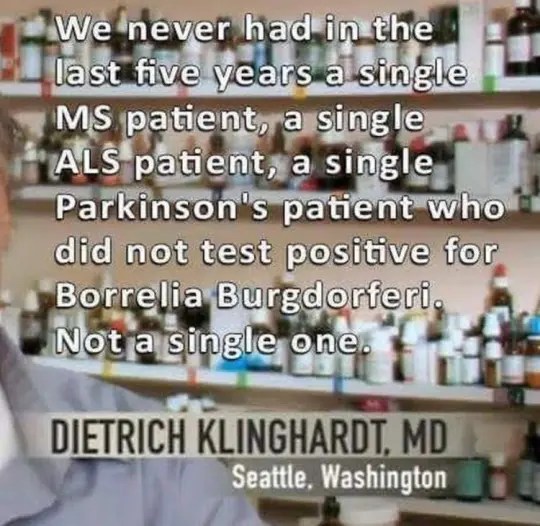
https://multiplesclerosis.net/clinical/differences-ms-lyme-diseaseThis article highlights that testing for Lyme will reveal the answer; however, testing for Lyme is abysmaland everyone and their dog knows this. Since Lyme is a bacterial infection and MS is not it would seem prudent to try antimicrobials on patients to observe their response. Also, educated Lyme literate doctors sometimes use an antimicrobial “challenge” test before Lyme testing as many patients do not make enough antibodies to test positive until the pathogen is disabled/killed and floating around in the blood stream to be detected. Unfortunately both of these ideas are shunned by mainstream medicine, to the peril of thousands of patients.
A Sacramento mom is sharing her struggle with Lyme disease in hopes of helping others who may be undiagnosed and suffering from the chronic symptoms of the disease.
Melissa Moya has formed the Lyme Fight Foundation, dedicated to educating people who have Lyme disease and to help protect those who don’t.
The history of Lyme disease has a Wisconsin chapter. It’s still being written.
From the first case documented by a Milwaukee dermatologist to ongoing research at the University of Wisconsin, the state has played a big role in Lyme disease.
Xia Lee, a postdoctoral vector biologist in the University of Wisconsin-Madison Department of Entomology, shows an adult black-legged tick, in the Susan Paskewitz Lab in Madison, Wis., on Sept. 21, 2021. Lyme disease in Wisconsin has grown as the black-legged ticks that cause the disease have spread across the state. (Coburn Dukehart / Wisconsin Watch)
Reading Time: 3minutesWisconsin Watch is a nonprofit newsroom that focuses on government integrity and quality of life issues. Sign up for our newsletter for more stories straight to your inbox.In 1970, a Wisconsin dermatologist first documented what would soon be called Lyme disease across the country.
The patient had removed a tick from his skin three months earlier in north-central Wisconsin. Scrimenti treated the patient with penicillin based on medical literature he had read out of Europe.
“The patient became symptom-free within 48 hours,” he wrote in the journal article in 1970. “There has been no recurrence of symptoms for the past year.” However, Scrimenti said the cause of the disease was “uncertain.”
Scrimenti, who died in 2013, later began treating patients in Milwaukee and served on the review board of a journal on tick-borne diseases in the early 1990s.
Over the past three decades, Susan Paskewitz, a medical entomologist at University of Wisconsin-Madison, has documented the growing prevalence of ticks in Wisconsin.
Paskewitz found that deer ticks, also called black-legged ticks, have moved steadily from northwest to southwest, and then into the central and eventually slowly into the eastern and southern Wisconsin.
“They invaded our state entirely,” Paskewitz said in a 2021 Wednesday Nite @ The Lab episode. She said the regeneration of forests decimated by logging in the early 1900s and rebounding of the deer population are the main drivers in Wisconsin. Paskewitz said warming temperatures caused by climate change are expected to lengthen the tick season and accelerate their northward march into Canada.
Confirmed cases of Lyme disease per 100,000 Wisconsin residents, 2020. (Wisconsin Department of Health Services)
Xia Lee, a tick biologist in Paskewitz’s lab, has studied the insects for more than a decade. Lee is soft-spoken, but when he talks about the parasites, he marvels at their “beauty.”
Lee explained that the Lyme-bearing ticks live between two and three years. They acquire blood meals from animal hosts at each stage of life — larva, nymph and adult.
“These guys are always born uninfected, and they have to pick up the infections when they feed on their first animal (hosts),” Lee said, pointing to the lab-raised larvae.
He said that larvae pick up pathogens during their first blood meal from infected small mammals, such as the white-footed mouse. They subsequently transmit those pathogens during their second meal as nymphs and their third meal as adults.
A Yale study has found that about 20% to 30% of the black-legged tick nymphs carry the bacterium that causes Lyme disease in southern New England, while the rate of infected adult ticks is 30% to 50%. The tick can also be infected with other microbes at the same time, carrying and transmitting other pathogens and making people sick with Lyme and other tick-borne diseases such as anaplasmosis and babesiosis.
Xia Lee, a postdoctoral vector biologist in the University of Wisconsin-Madison Department of Entomology, is seen in the Susan Paskewitz Lab in Madison, Wis., on Sept. 21, 2021. Lee hopes to develop a Lyme disease vaccine for mice, which spread the disease to ticks that feed on them and later infect humans. (Coburn Dukehart/Wisconsin Watch)
Once an infected tick latches on a human, it falls off when full. If a tick is removed within 24 hours, the likelihood of transmission is very low, Lee said. However, when a poppy seed-sized nymphal tick firmly attaches itself to the skin, detecting and removing it is difficult, increasing the risk of infection.
Lee noted that Wisconsin never got the proper recognition as the site of the first case of the disease. That honor went to the town of Lyme in Connecticut, which remains one of the states with the highest incidence rates in the country.
“We like to joke about it and say that Wisconsin was actually the first state where Lyme disease was detected,” he said, “but we never got the glory for naming (it).”
The nonprofit Wisconsin Watch (www.WisconsinWatch.org) collaborates with WPR, PBS Wisconsin, other news media and the University of Wisconsin-Madison School of Journalism and Mass Communication. All works created, published, posted or disseminated by Wisconsin Watch do not necessarily reflect the views or opinions of UW-Madison or any of its affiliates.
Sarah A. Hook , Seonghye Jeon, Sara A. Niesobecki, AmberJean P. Hansen, James I. Meek, Jenna K.H. Bjork, Franny M. Dorr, Heather J. Rutz, Katherine A. Feldman, Jennifer L. White, P. Bryon Backenson, Manjunath B. Shankar, Martin I. Meltzer, and Alison F. Hinckley
Author affiliations: Centers for Disease Control and Prevention, Fort Collins, Colorado, USA (S.A. Hook, A.F. Hinckley); Centers for Disease Control and Prevention, Atlanta, Georgia, USA (S. Jeon, M.B. Shankar, M.I. Meltzer); Connecticut Emerging Infections Program, Yale School of Public Health, New Haven, Connecticut, USA (S.A. Niesobecki, A.P. Hansen, J.I. Meek); Minnesota Department of Health, St. Paul, Minnesota, USA (J.K.H. Bjork, F.M. Dorr); Maryland Department of Health, Baltimore, Maryland, USA (H.J. Rutz, K.A. Feldman); New York State Department of Health, Albany, New York, USA (J.L. White, P.B. Backenson)
Cite This Article
Abstract
Approximately 476,000 cases of Lyme disease are diagnosed in the United States annually, yet comprehensive economic evaluations are lacking. In a prospective study among reported cases in Lyme disease–endemic states, we estimated the total patient cost and total societal cost of the disease. In addition, we evaluated disease and demographic factors associated with total societal cost. Participants had a mean patient cost of ≈$1,200 (median $240) and a mean societal cost of ≈$2,000 (median $700). Patients with confirmed disseminated disease or probable disease had approximately double the societal cost of those with confirmed localized disease. The annual, aggregate cost of diagnosed Lyme disease could be $345–968 million (2016 US dollars) to US society. Our findings emphasize the importance of effective prevention and early diagnosis to reduce illness and associated costs. These results can be used in cost-effectiveness analyses of current and future prevention methods, such as a vaccine.
_________________
**Comment**
And here you have it. The sudden concern for costs due to the need for “prevention methods”, specifically a “vaccine,” which, BTW is the most lucrative venture for scientists – the big cash cow they are all vying for with your tax dollars.
Sorry. Not buying it. I’m so over this global propaganda that puts everyone into a box and treats everyone identically. This has never been done in medicine until now. A “vaccine” can never and will never be a magic bullet for anything – particularly Lyme/MSIDS.
While societal cost is undoubtedly high, it isn’t high enough to get an injection that to date still has OspA in it – the very thing causing illness and has been linked to severe adverse reactions. The desperate need for effective, affordable, safe treatments just isn’t interesting to researchers and our government due to the small monetary return – yet the very thing that would alleviate patient suffering around the world.
Further, studies are never done with the chronically infected so millions do not fit into the “vaccine” paradigm at all and never will. But the chronically ill just don’t matter. It’s all for the “greater good,” whoever that is.
Alicia Cashman is a patient and an advocate for people with Lyme disease. She has been battling the symptoms of Lyme disease for more than 10 years and runs the Madison Area Lyme Support group in Madison, Wis. Over the years she has treated her symptoms — which included migrating joint pain, extreme fatigue, insomnia and mental fog — with a variety of antibiotics, as well as homemade capsules, creams and tinctures. She was photographed at her former home in Sun Prairie, Wis., on Jan. 31, 2020. (Coburn Dukehart / Wisconsin Watch)
Reading Time: 11minutes
Wisconsin Watch is a nonprofit newsroom that focuses on government integrity and quality of life issues. Sign up for our newsletter for more stories straight to your inbox. and donate to support our fact-checked journalism.Crystal Pauley, a former physician assistant, didn’t believe in so-called chronic Lyme disease — until she became sick.
Many health care providers reject chronic Lyme disease as a diagnosis. One 2010 survey found that just six out of 285 primary care doctors surveyed in Connecticut — an epicenter for the tick-borne infection — believed that symptoms of Lyme disease persist after treatment or in the absence of a positive Lyme test.
When Pauley worked for the La Crosse, Wisconsin-based Gundersen Health System, she remembered hearing about a friend from high school battling chronic Lyme in Australia. But she had her doubts. “I’m working in the medical field,” she said. “We’ve never learned about that.”
Years later, Pauley has changed her mind. Pauley tested positive for Lyme in 2020. She suffers from unrelenting fatigue, joint pain and brain fog. She walks up stairs sideways because of the unbearable knee pain. Pauley said she has become “pseudo-Lyme literate” because of her own personal journey.
Pauley belongs to a cohort of patients with Lyme-like symptoms but negative test results or patients with positive test results who suffer from lingering symptoms long after treatment. They call it chronic Lyme disease, while the Centers for Disease Control and Prevention labels it as Post-Treatment Lyme Disease Syndrome (PTLDS). The CDC says there is no known treatment for the condition.
“Their symptoms are always real. They’re experiencing them,” said Dr. Joyce Sanchez, an infectious-disease associate professor at the Medical College of Wisconsin who treats Lyme patients with persistent symptoms.
“If someone is having physical symptoms and isn’t feeling listened to, then they’ll have mental health repercussions and then that will impact their physical well-being,” she said. “And then it’s a spiral that if you don’t address both components of health, you’re not going to make much progress on either side. And they will continue to feel sick.”
Wisconsin Watch talked with five Wisconsin patients, all women, who have been searching for validation and experimenting with personalized treatments as part of a long and sometimes grueling battle with the illness. The infection comes from tiny ticks primarily found in the northeastern United States, including in Wisconsin — which is a hot spot for Lyme, ranking No. 5 among states for Lyme cases in 2019.
One of the five tested positive for Lyme using a two-step testing recommended by the U.S. Centers for Disease Control and Prevention. Three others tested positive using a test not recommended by the CDC. The fifth woman was diagnosed as possibly suffering from the disease by a “Lyme-literate” practitioner.
Wide-ranging symptoms
All of the five patients share commonalities. They’ve never noticed the signature “bull’s eye” rash around the tick bite, the hallmark of Lyme disease, which is seen in 70% to 80% of patients. But relentless waves of rheumatologic, cardiac and neurological symptoms have flattened their lives. Some of them were previously fit and healthy.
Pauley, 37, who as a student cranked through medical textbooks, began having trouble remembering a simple medication direction. She put up sticky notes around her office to jar her memory.
Alicia Cashman, 57, runs the Madison Area Lyme Support Group. She recalled unbearable pelvic pain beginning in 2010. “This causes pain of a magnitude that makes you want to die,” she said.
The pain metastasized quickly. She felt joint pain, headaches, insomnia and extreme fatigue. “It was so bad that I just wanted to be in a dark room with no smell, no sound, no light. Your body has succumbed to this,” she said.
Shelbie Bertolasi, 47, is a stay-at-home mother in Waukesha with four children ages 5 to 24. Until about seven years ago, she was healthy and stuck to a workout routine.
Shelbie Bertolasi was diagnosed with Lyme disease in July 2020 after suffering for many years with a variety of medical issues, including sweats, joint pain, rashes, intestinal issues and a miscarriage of twins. A naturopath finally recommended a Lyme test after she visited numerous doctors who she says failed to take her symptoms seriously. “I just want people to understand that Lyme is real. It’s not in our head. I want doctors to understand. I told doctors about my brain fog. My regular doctor wouldn’t even believe me.” She is seen at her home in Waukesha, Wis., on Dec. 1, 2021. (Coburn Dukehart/Wisconsin Watch)
Bertolasi’s health steadily deteriorated starting in early 2015 when she miscarried twins. Then, she developed a high fever, with stomach and intestinal pain. She lost 30 pounds in a month due to constant diarrhea. Doctors flagged and treated excessive bacteria in her small intestine. She felt better but gradually was beset by continual pain in her joints, back, knees and hip.
Sometimes, she loses feeling in her feet. “It’s a nuisance when you’re in the middle of (driving), and you can’t feel the pedals that well,” she said.
Judy Stevens, 52, a former school counselor and psychotherapist from Wauwatosa, says shortly after the loss of her father, she was hit by joint pain, brain fog, insomnia, hair loss and night sweats. She was an athletic person, a cross-country coach at school and a triathlete.
None of these women recalled seeing a tick, except Jessica Croteau, who lives in Rice Lake. The 34-year-old noticed a tick on her neck in the summer of 2019 at home and started to have flu-like symptoms, but she tested negative for Lyme. Croteau suffered bouts of low-grade fever, a stiff neck and gastrointestinal problems. She ended up visiting the emergency room when her blood pressure spiked.
Going down ‘rabbit holes’
Often, chronic Lyme patients present multiple symptoms that make their diagnosis challenging. They bounce from one specialist to another to tackle each problem, but each diagnosis cannot explain all of the symptoms they are experiencing.
Cashman underwent an MRI because of her severe pelvic pain, and the results found two deflating ovarian cysts which can cause severe pain in the lower abdomen. But that diagnosis did not explain the unbearable pain that gravitated to her knees and to her head. She recalled that the swollen knee “got red hot to touch,” and she developed a fever. Cashman began to look for causes. “Not everything is Lyme, but everything can be (Lyme),” she said. “It’s a weird thing, but you got to go down these rabbit holes.”
Croteau saw specialists, including emergency physicians, a cardiologist, a kidney specialist and an immunologist. All the tests she took were negative for Lyme disease. She was told the problems may be related to psychological issues.
“So basically, it’s been a timeline of two years of not being taken seriously, just pushed away — either told I can’t do anything for you (or) there’s nothing really wrong with you,” Croteau said.
Judy Stevens, 51, was diagnosed with Lyme disease in July 2017, but thinks she may have had it since childhood. Her symptoms included brain fog, depression, insomnia, and she said she was often treated as a psychiatric patient by the more than 30 different doctors she saw. Prior to remission in 2020, she says she was taking more than 40 herbs and supplements a day. She estimated it cost her $25,000 to $50,000 a year to treat her Lyme disease. “It was a huge strain on us. I can’t even imagine not having the resources,” she said. “This is people’s reality. It’s really costly to get better and stay better.” She is pictured at her home in Wauwatosa, Wis., on Dec. 1, 2021. (Coburn Dukehart / Wisconsin Watch)
A medical provider suggested that she seek counseling and increase her dose of anti-anxiety medicine. But the pain in her joints and wrists were real, and her knuckles often got swollen. The brain fog made it hard for her to punch in a phone number correctly.
Bertolasi saw a pain specialist, a psychiatrist, a spinal therapist and a neurologist. They diagnosed her with SI joint dysfunction. Back surgery, therapy and exercise relieved some of her pain, but her knees continue to hurt. She was told, “You’re getting older, (so) things don’t work as well as they used to.”
Unsatisfied, in 2019, Bertolasi saw a rheumatologist who ordered several tests, including for rheumatoid arthritis and lupus, and the results were all negative. And the forgetfulness has persisted; she has left her phone in the refrigerator.
“You’re just surrounded by this dark (mental) fog, and you just don’t know how to navigate your way through,” she said.
After seeing around 30 specialists, Stevens had a bag of medications, including many prescribed psychotropic drugs. She went on those drugs, and her psychiatric symptoms got worse. However, she doesn’t blame doctors, who generally specialize in one area of the body or a family of diseases.
“When you have a whole slew of symptoms, it’s hard for the physicians to dig deeper,” she said.
Sometimes, patients with waning and waxing symptoms are labeled as malingerers who are faking symptoms to get attention. “This is very common with people with Lyme,” Stevens said.
Sanchez, the infectious disease doctor, worries that patients who do not get answers from mainstream medicine may gravitate toward unproven — and expensive — alternatives. But she sees no harm in some strategies that may offer relief, including meditation, tai chi, acupuncture or massage therapy.
No quick fix
Two of the five women interviewed by Wisconsin Watch have been diagnosed through the CDC’s two-step testing regimen: the ELISA test followed by the Western Blot, two different ways of looking for Lyme antibodies in the patient’s blood. Pauley tested positive for Lyme using the CDC’s recommended criteria, and Stevens tested positive on just one of the two tests.
Two others used a laboratory that administers the same tests but uses less-stringent criteria to determine whether a person has Lyme. Cashman and Bertolasi both tested positive through that testing. A 2014 Columbia University study found that some labs using their own criteria reported more false positive results — 57% — among people with no history of Lyme than the 25% false-positive rate using CDC criteria. Croteau used three different laboratories but tested negative each time.
With a Lyme disease diagnosis, Pauley took the standard treatment, doxycycline, for three weeks. But when she completed the antibiotic therapy, she felt even worse. While her memory has improved, she
Judy Stevens is seen in the September 2015 photo when she says she was suffering from undiagnosed chronic Lyme disease. “I had lost 30 pounds and was almost put on a feeding tube. I clearly look very distressed and weak. At this time, I was diagnosed with an eating disorder, even though I was eating,” she said. Ten days later she had symptoms of Bell’s palsy in her face, and her husband took her to the emergency room because he thought she was having a stroke. She was told it was likely stress and was sent home. (Courtesy of Judy Stevens)
has developed muscle pain, and her knees hurt even more. She felt tired, saying she could sleep 10 to 16 hours a day. But her doctor, following standard protocol, has told her she is done with treatment.
The same thing happened to Stevens. The doctor prescribed her 30 days of doxycycline and suggested that she seek a “Lyme-literate” doctor as she could not prescribe any longer course of antibiotics.
Stevens’ doctor followed CDC guidance, which recommends against prolonged antibiotic treatment, saying the harm outweighs the benefit. Sanchez echoed the argument, saying that doctors must weigh the risks and benefits of antibiotics, just like other prescribed medications.
“If we don’t see any plus side benefit to it, then we’re only exposing people to unnecessary risks,” she said. “Nothing comes with a free lunch. It’s important to be thoughtful about the right antibiotic at the right dose for the right amount of time.”
She also said some antibiotics could bring down inflammation as a side effect, making some patients feel better. This is also the point at which some patients begin experimenting with treatments that mainstream medicine does not recognize.
Sufferers try unconventional treatments
Cashman, living in Cataract, Wisconsin was also diagnosed with Bartonella, or Cat scratch disease, and went through five years of “systemic, holistic” treatments, which included a host of herbs, antibiotics, a high dose of vitamin C and supplements. She also received ozone therapy and laser therapy for pain relief. She is now nearly symptom-free, but still deals with spine stiffness.
Alicia Cashman shows a variety of treatments she uses for her chronic Lyme disease. Seen on her counter is a jar of homemade Japanese knotweed tincture, as well as a bottle of Dimethyl Sulfoxide (DMSO) and MSM power, which she puts into a homemade pain ointment — seen in the jar on the right. “We call it a ‘do it yourself disease’ because you have to be an active participant in your own healing,” she says. “I attribute my health today to doctors who were willing to work outside the box.” Photo taken Jan. 31, 2020. (Coburn Dukehart / Wisconsin Watch)
A bottle of A-Bart, an herbal supplement, is seen at the home of Shelbie Bertolasi in Waukesha, Wis., on Dec. 1, 2021. The bottle costs $90 and is just one of the many supplements Bertolasi takes to treat her chronic Lyme disease. “We spend tons and tons of money on treatments. There are things my family can’t do because of all the money we have to spend to treat the Lyme,” she says. (Coburn Dukehart / Wisconsin Watch)
Stevens found two Lyme-literate doctors in Wisconsin who are versed in both Western and alternative medicine. She said she was co-infected with Relapsing Fever, Babesiosis and Bartonella. She said her treatments are highly individualized, and her doctors tweak her therapies from time to time. At one point, Stevens was on more than 40 types of herbs and supplements.
“I’m living proof that I got better as a result of all those herbal treatments,” she said. “I was not on antibiotics for four or five months.”
Bertolasi turned to a Lyme-literate doctor who also treats one of her friends with similar symptoms. Besides Lyme, she was also diagnosed with Bartonella. She has completed a 14-month course of antibiotics. Now, besides taking herbal supplements, Bertolasi follows a strict diet excluding alcohol, dairy, gluten and sugar to reduce inflammation in her body.
Shelbie Bertolasi explains the variety of supplements she takes to treat her Lyme disease. Berolasi has spent the past few years treating her symptoms with a variety of supplements, some of which cost anywhere from $30 to $90 a bottle. She estimates she spends about $500 a month on supplements. She is seen at her home in Waukesha, Wis., on Dec. 1, 2021. (Coburn Dukehart/Wisconsin Watch)
She said she is at least 80% better than about a year ago. Her memory has somewhat returned. Still, brain fog waxes and wanes — as does pain in her joints and lower back.
Croteau tested negative with three Lyme disease tests, but she was diagnosed by a Lyme-literate doctor with Bartonella and “questionable” Lyme disease. The doctor prescribed her doxycycline, triggering a severe reaction that Lyme-infected patients sometimes experience during treatment.
When Croteau found herself pregnant, the doctor suggested she take amoxicillin and clindamycin in low doses during her pregnancy. She stopped taking them after giving birth to her second child in late October 2021 and has been symptom free for the following two months. Croteau said her symptoms have returned since January, including fatigue and brain fog, neck stiffness, headache and nausea. She cares for her newborn at home and hasn’t started any treatment due to financial constraints.
‘A rich person’s disease’
Since chronic Lyme is not a recognized disease, it’s difficult to get insurance coverage, so patients are usually stuck paying out of pocket for treatment.
Pauley, who lives in Woodstock, Illinois, is still searching for affordable treatments.
Her dementia-like symptoms made it impossible to continue working as a veterinary assistant, and she quit her veterinary clinic job in 2020. Previously, she had quit her physician assistant job in La Crosse and moved back to Illinois.
“It was hard,” she said. “I went from the middle-upper class to the poverty line.”
She went to see a Lyme-literate doctor in Milwaukee in August, when she was also suspected to have Bartonella. Pauley was charged $525 per hour for the initial consultation fee, not counting testing fees and supplements. She was irritated to hear the doctor refer to it as “a rich person’s disease.”
“It’s hard to understand any doctors that charge like Beverly Hills lifestyle out in the Midwest,” she said. “We’re not celebrities, and I don’t get paid 30 million per film.”
Stevens said her average costs out of pocket range from $25,000 to $50,000 a year. “It was a huge strain on us,” she said. “This is why a lot of people can’t get better, because they can’t afford it.”
Cashman knows the financial burdens chronic Lyme patients bear, too.
She estimates she has spent $150,000 out of pocket for treatments that she and her husband — who also is a chronic Lyme patient — have taken over the years. Cashman has found ways to reduce the costs by, for example, buying pounds of ground herbs and making her own capsules at home.
Although all five women interviewed by Wisconsin Watch have tried unconventional treatments, they say they are skeptical about anyone who claims their chronic illness can be cured quickly.
Alicia Cashman leads a meeting of the Madison Area Lyme Support Group at the East Madison Police Station in Madison, Wis., on Feb. 8, 2020. About 13 other people were in attendance, some of whom had driven from ore than an hour away. The group shared personal experiences with chronic Lyme disease. Also pictured is Olivia Parry of Madison, Wisc. (Coburn Dukehart/Wisconsin Watch)
“(If it) is just a quick fix to make money, and I’m just very leery of it,” Bertolasi said.
And they are using their experiences to help others. Pauley has become an advocate for lower health care costs. Bertolasi is writing a Lyme-friendly cookbook to chronicle recipes that have worked for her.
Although Stevens said being a chronic Lyme patient is “like a full-time job,” she wants people to know there is hope.
“You can be in terrible shape, but you can get better,” Stevens said. “It’s really easy to go down the road of ‘poor me,’ but it is possible to get better. There is hope. You can reach remission.”
The nonprofit Wisconsin Watch (www.WisconsinWatch.org) collaborates with WPR, PBS Wisconsin, other news media and the University of Wisconsin-Madison School of Journalism and Mass Communication. All works created, published, posted or disseminated by Wisconsin Watch do not necessarily reflect the views or opinions of UW-Madison or any of its affiliates.
__________________
**COMMENT**
The title is somewhat misleading and gives the appearance we are not using vetted medical treatments.
This particular article focuses on patients, while a previous article written by the same author does a better job of educating about the politicization and polarization in the medical community on all aspects of Lyme/MSIDS – including treatments.
When going down the historical rabbit-hole of Lyme/MSIDS you learn that doctors have split off from the IDSA (Infectious Disease Society of America) and have formed their own group called ILADS (International Lyme and Associated Diseases Society). The reason for the split was due to the fact doctors saw that extremely sick patients were not being treated fairly or properly. ILADS has their own doctor education/training and these doctors are called “Lyme literate,” which simply means they are educated on:
lyme and numerous other tick-borne infections are persistent, which can lead to life-long symptoms
lyme & other coinfections are pleomorphic (shape shifting)
these infections stealthily avoid the immune system and many treatments
Many patients, after being kicked to the curb and gaslit by mainstream medicine, find out the hard way that they need someone with experience and an open mind which leads them to Lyme literate doctors where they receive appropriate treatment. While this treatment can include herbs in various forms, and other alternative treatments, many receive standard antimicrobials in the form of antibiotics.
Patients are not crazy, deserve to be heard and believed, and can get appropriate help and treatment but have to go outside mainstream medicine to find it.