Archive for the ‘Lyme’ Category

TODAY: Lyme Q&A – Dr. Marty Ross

https://mailchi.mp/treatlyme.com/1826-lyme-qa-4798611?e=ca57c36072

Sign Up for Thursday’s Lyme Q&A Webinar

Thursday at 4PM Seattle time (PST), I answer your live questions in our WebinarJam Event — Conversations with Marty Ross MD.

  • Get answers you need.
  • Improve your Lyme and tick-borne diseases management — mold toxicity too!

Questions & Answers Leading to Health Improvements.

  • Your written questions, plus my responses create the answers and solutions you need.

Go Deeper. 

Educational Only

Be aware, this forum is educational only and does not substitute for a visit with your health care provider to discuss the questions you have. However, you can bring the community driven response from Dr. Ross to your health care provider for follow up.

Register Here

The Hidden Truth About Lyme Disease: Dr. Christian Perronne

http://

The Hidden Truth About Lyme Disease

Dr. Christian Perronne

Sept. 26, 2025

Former head of the Infectious and Tropical Diseases Department at Raymond-Poincaré Hospital in Garches, Professor Christian Perronne has held key positions at the French High Council for Public Health and the WHO. The author of several books, he has established himself as one of the most committed voices for the recognition of Lyme disease and chronic infections.

In this exclusive interview, Professor Christian Perronne retraces the history of Lyme disease. He explains why diagnostic tests are so unreliable. He describes the consequences of medical inaction and presents possible treatment options. He also discusses his fight to finally have Lyme disease recognized internationally.

What you’ll discover in Professor Perronne’s uncensored interviews:

  • What to do if you’re diagnosed with Lyme disease (and if you’re not)
  • Crypto-infections: these invisible infections, responsible for many chronic diseases… sometimes even linked to certain cancers.
  • Hidden revelations surrounding the pandemic: censorship, unspoken information, conflicts of interest… and, above all, how to protect yourself against the next mass manipulation. – In the face of the heart attack “epidemic,” Professor Perronne reveals the keys to strengthening your heart, your vascular system, and your immunity.

Video Chapters:

0:00 – Powerful Introduction: Perronne’s Accusations and Fight

1:19 – The Exceptional Career of Professor Christian Perronne

3:10 – Lyme Disease: A Lifelong Battle

7:00 – Origins and Historical Hypotheses Around Lyme Disease

23:00 – Patient Testimonies and Medical Detours

34:46 – What to Do if Lyme Disease Is Suspected?

37:29 – Possible Treatments: Antibiotics, Vitamins, Herbal Medicine

41:16 – Conclusion and Introduction to Cryptoinfections

______________

**Comment**

Dr. Perronne isn’t new to controversy and the medical machine.  He was fired as France’s Vaccine Policy Chief for stating that ‘COVID policy is ‘completely stupid and unethical.’ I highly recommend reading the article as he goes through COVID point by point, completely blowing it all out of the water.  He was eventually exonerated.

Dr. Perronne’s doubts about the system started with Lyme/MSIDS, forcing him to choose between compliance or truth, which led him to become a Lyme literate doctor who has spoken out widely in support of treating Lyme patients appropriately a well as the fact these  infections are serious but overlooked and denied by many ‘authorities’ and doctors.

Perronne has written a recent book titled:  “Crypto-infections: Denial, Censorship and Suppression―the Truth About What Lies Behind Chronic Disease”

The accepted message is that humankind has largely conquered infectious disease with a mixture of antibiotics and vaccines, yet it is becoming increasingly clear that chronic hidden or latent infections (crypto-infections) lie behind many of today’s big killers, including heart disease, dementia, and cancer. As an exemplar of how the organisms responsible can hide in plain sight, causing devastation while the medical world is in denial, Borrelia burgdorferi—the bacterium responsible for Lyme disease—has led Dr Perronne to clash with his fellow specialists in infectious disease (ID) and challenge the status quo. From his experience as one of France’s, and the world’s, leading ID specialists, he examines the threats that both Lyme in particular and crypto-infections in general pose and how we can rise to the challenge.

Thank God for men like Perronne who care more about the truth than their reputation and comfort.  We owe him a debt of gratitude.


Easier to Obtain Medically Assisted Death Than Treatment for Chronic Lyme Disease

https://medicaldetective.substack.com/p/you-can-get-medically-assisted-dying-easier-than-treatment-for-chronic-lyme-disease?

You Can Get Medically Assisted Dying Easier Than Treatment for Chronic Lyme Disease

There are certain aspects of medicine and specifically medical politics that make my blood boil. All of my calm abiding meditation goes out the window when I see the Canadian broadcasting system continuing their biased attack on Lyme disease patients in Canada, especially when it is easier to get medically assisted dying in a country than it is to get treated for a chronic illness. This is what was in the news media this week, once again:

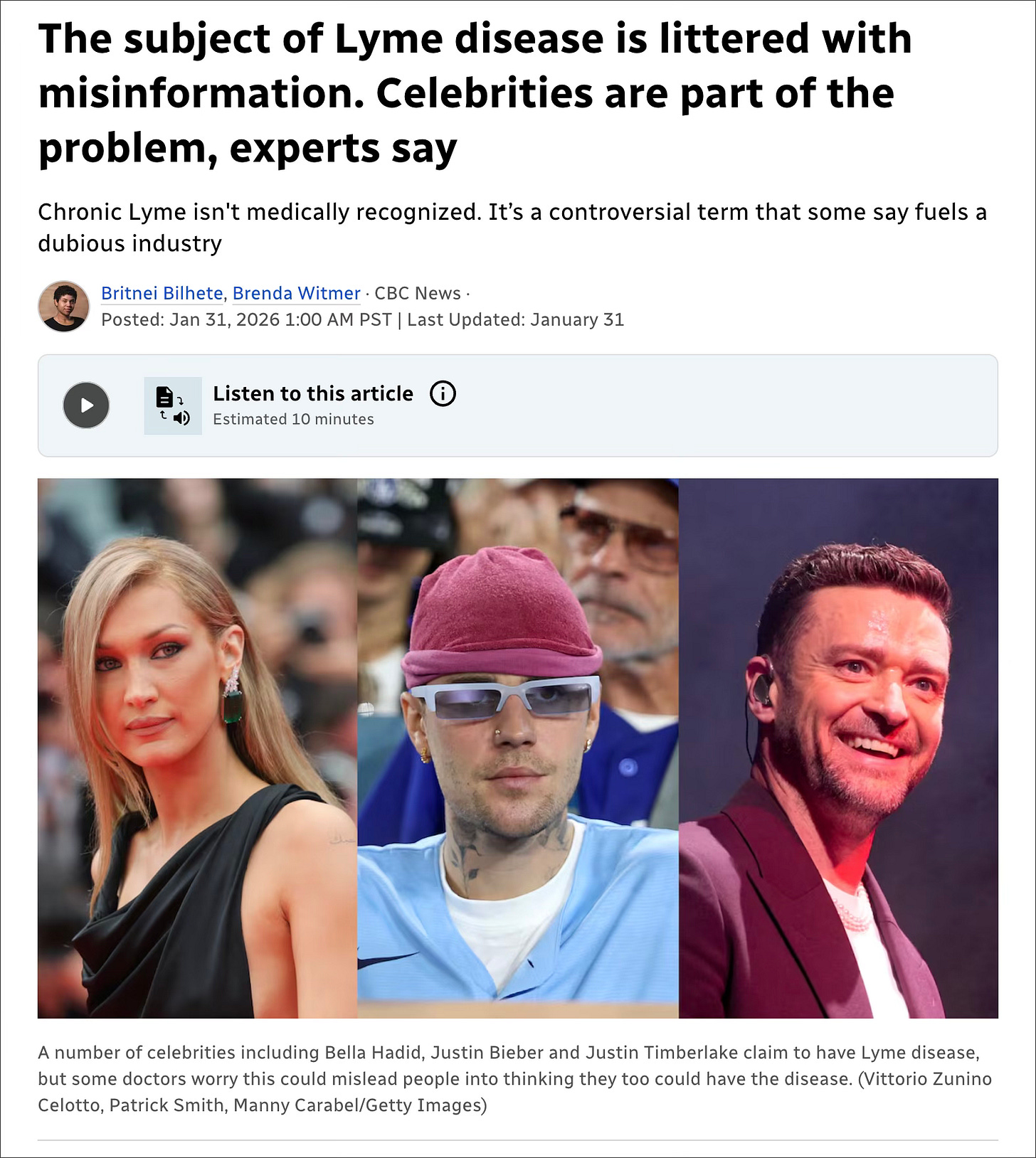
Lyme disease is littered with misinformation. Celebrities are part of the problem, experts say. Chronic Lyme isn’t medically recognized. It’s a controversial term that some say fuels a dubious industry.

[A number of celebrities including Bella Hadid, Justin Bieber and Justin Timberlake claim to have Lyme disease, but some doctors worry this could mislead people into thinking they too could have the disease. (Vittorio Zunino Celotto, Patrick Smith, Manny Carabel/Getty Images)https://www.cbc.ca/news/investigates/celebrity-chronic-lyme-industry-9.7056234]

This news article from a Canadian broadcasting system, casting doubt on whether chronic Lyme disease and persistent infection is real, was released the same week that this article was highlighted by LymeDisease.org on January 27th:

Does anyone in the news media actually do a medical search (or know how to do one) before reporting news and purporting to know the truth? The article on the persistence of Lyme disease came out several days before the Canadian broadcasting system released their news feed. This is the second article I saw on the subject of chronic Lyme being a ‘non-disease’ coming out of Canada in the past few weeks, where the best they can do is to slam medical clinics trying to help patients. See the last Medical Detective Substack I did on sleuthing the ‘mysterious brain disease in Canada’ which likely involves some patients having chronic tick-borne illness mixed with mold and other environmental toxins:

(See link for article)
_______________
**Comment**
Important excerpt:
The newer guidelines by the IDSA do not incorporate any of the recent science on biofilms and persisters, and the Canadian healthcare system has chosen to adopt IDSA guidelines instead of giving doctors a choice, as we have here in the US to follow ILADS guidelines.
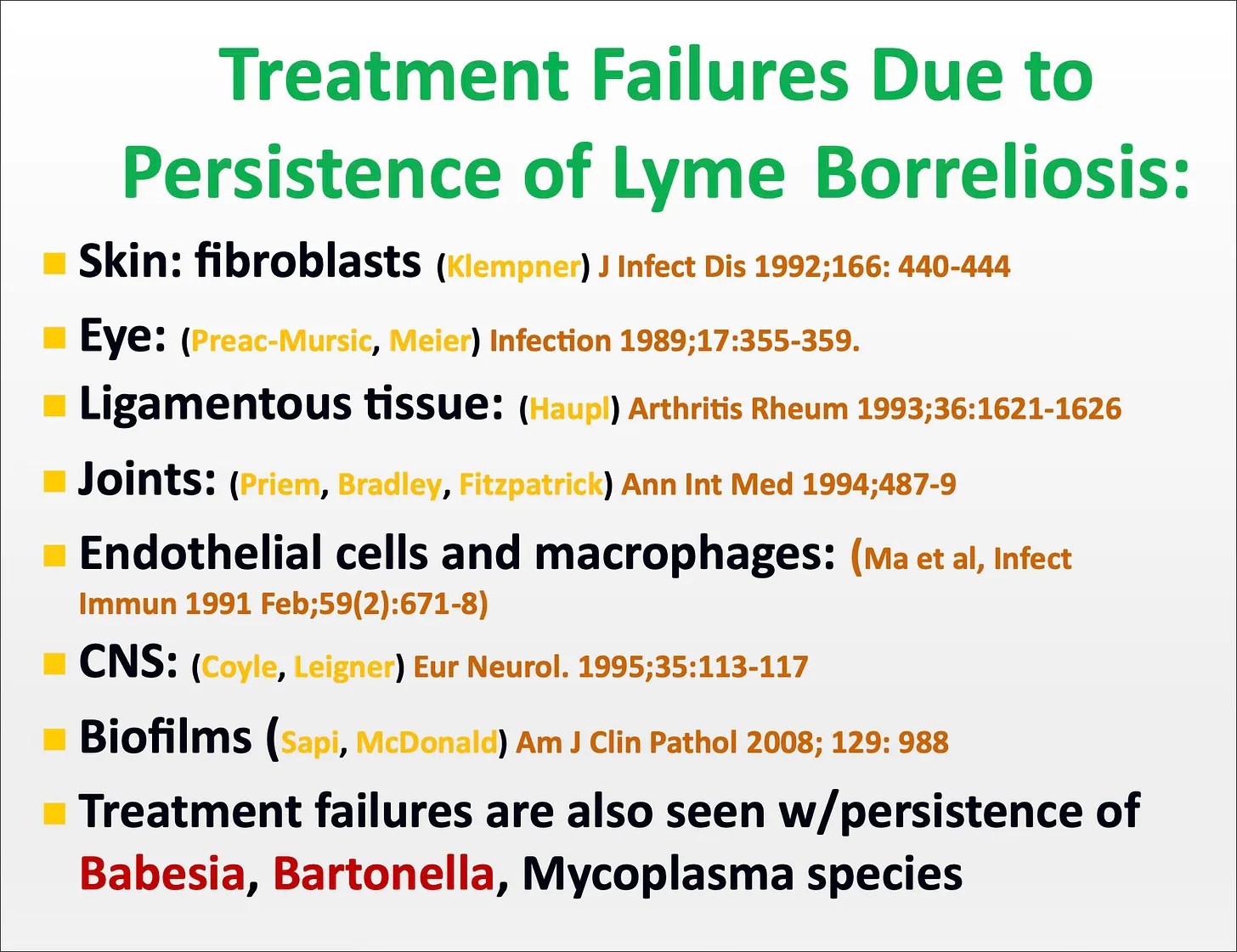
As Dr. Horowitz points out, his findings on persistence were published SEVEN years ago yet were never mentioned in the Canadian news story. But studies showing persistence were found even far before that:
I already did a summary of the horrifically biased Canadian piece here, where I summarize and point out the myriad of errors; however, I highly recommend reading Dr. Horowitz’s piece as he takes a deep, deep dive into the subject and the fact that some with potentially treatable illness are applying for medical assistance in dying.  The blatant denial of chronic, persistent Lyme/MSIDS will only further this practice.
I will end with a potent quote:

You Can Die from Lyme Disease. We Don’t Need More Help Getting There ~ Dr. Richard Horowitz

For more:

Do You Still Need to Worry About Ticks in the Winter? (YES)

https://www.southernliving.com/are-ticks-dormant-in-winter

Do You Still Need To Worry About Ticks In The Winter?

Here’s what to know about these parasites.
A close-up shows a tick moving across light-colored pants,
Credit: Getty Images

You typically don’t encounter as many insects while you’re outdoors in winter as you do the rest of the year. But that doesn’t mean everything  that bites is hunkered down until spring. “Many tick species will have adults active during the winter months,” says Sonja L, Swiger, PhD, professor, medical entomologist and extension specialist with Texas A&M AgriLife. “Since ticks are blood feeders, they do quite well throughout the winter months because they are on a host.”

Of course, ticks don’t just bite; they also carry diseases that make people and pets sick. “The most commonly encountered tickborne pathogen in the Southeast is Rocky Mountain spotted fever,” says Swiger. But Lyme disease is also a threat, though it’s not transmitted at the same rate as it is in places such as the Northeast. Other diseases that ticks can pass to people and pets include ehrlichiosis and anaplasmosis.

In addition, if you think a cold or snowy winter will knock down ticks, that’s just wishful thinking. Harsh weather doesn’t really impact the tick population as a whole. “Ticks have been around for millions of years and are very good at what they do. They know how to survive,” says Eric Benson, PhD, professor emeritus and extension entomologist with  Clemson University. “During winter, many species of ticks go into diapause, a state when they reduce their metabolism to conserve energy to survive.”

 Here’s what else you should know about ticks in winter:  (See link for article)

_____________

**Comment**

Great reminder to stay vigilant.

The article points out what this website has been publishing for years: ticks are marvelously ecoadaptive and will simply hide under leaf litter or snow when weather becomes harsh. This also proves that the climate and/or ‘climate change‘ has nothing to do with tick survival and disease propagation.  They are simply built to survive.  About the only thing they can’t handle is fire!

The article then lists ways to prevent tick bites.  Go here for a multi-pronged approach.  Pet owners have nearly two times the risk of finding ticks, so multiple areas need to be addressed.

For more:

More on the ‘climate change’ agenda:

The Often Overlooked Link Between Oral Health and Lyme Disease

https://www.lymedisease.org/oral-health-lyme-disease/

The often overlooked link between oral health and Lyme disease

By Terri McCormick

1/19/26

Lyme disease and other tick-borne illnesses are often discussed in terms of joints, nerves, and immune dysfunction. One critical area is frequently overlooked: the mouth.

That gap was the focus of a recent clinical lecture on oral–systemic health and its relevance to tick‑borne disease, presented by Dr. Alexander Volchonok, a board‑certified periodontist with advanced training in biologic dentistry. He collaborated with Dr. Susan Marra, a physician who treats complex chronic illness, including Lyme disease and co‑infections.

Their central message was clear: oral health extends beyond the teeth and gums. From a whole-body perspective, the mouth plays an active role in immune regulation, inflammation, and systemic signaling. In some patients with tick-borne disease, unresolved oral inflammation may contribute to ongoing immune activation and stalled recovery.

This is especially relevant for the Lyme community, where many patients hit treatment plateaus despite appropriate antimicrobial and supportive care. Identifying hidden sources of persistent inflammation may help explain why progress sometimes slows.

How the mouth connects to the rest of the body

The mouth is a primary gateway between the outside world and the immune system. Microbes, nutrients, toxins, and inflammatory signals pass through the oral cavity and can influence immune activity throughout the body.

The oral cavity hosts one of the body’s most active microbiomes, made up of hundreds of bacterial species along with fungi and viruses. When balanced, this ecosystem helps regulate immune function, support digestion, contribute to healthy blood flow through nitric oxide production, and protect the body’s natural barriers.

The gums are an important part of the body’s defense system. When they’re healthy, they help keep germs and irritants from entering the bloodstream. But if that balance is disrupted, inflammation in the mouth can worsen and send signals that affect the immune system throughout the body.

Oral microbiome dysbiosis and chronic inflammation

Oral disease develops when the microbiome shifts from a healthy balance (symbiosis) to an imbalanced state (dysbiosis). In dysbiosis, protective bacteria decline, harmful species expand, inflammatory biofilms form, and the immune system remains chronically activated.

This shift can be accelerated by factors commonly seen in people with Lyme disease and other complex chronic illnesses, including immune dysregulation, medication effects, reduced saliva flow, nutrient deficiencies, chronic stress, and autonomic dysfunction.

Once dysbiosis takes hold, oral inflammation may become self-sustaining, contributing not only to local problems in the mouth but also adding to the body’s overall inflammatory load.

Periodontal disease as a chronic inflammatory driver

A major focus of the lecture was periodontal disease, an infection-driven inflammatory condition affecting the tissues that support the teeth. It can progress from mild gum inflammation to deep pockets, bone loss, and eventual tooth loss.

Importantly, periodontal disease often advances quietly. Pain is not always present, especially in early or moderate stages. Chronic inflammation at the gum line creates a persistent wound with direct access to the bloodstream, allowing inflammatory mediators and microbial byproducts to influence the body’s wider immune response.

In patients with tick-borne disease, where immune regulation is already impaired, this ongoing inflammatory input may compound symptoms and hinder recovery.

Dental and jawbone pathology that may go unrecognized

The lecture also addressed dental and jawbone problems that may not be immediately apparent during routine dental exams. These include infections associated with teeth that have lost their blood supply (sometimes called necrotic teeth) and areas of impaired bone healing following dental procedures.

One example was jawbone that fails to heal properly after extractions, wisdom tooth removal, or other dental trauma. Reduced blood flow and low oxygen levels in these areas can limit the body’s ability to detect and resolve inflammation.

Because these issues are often silent, patients may have no symptoms even while underlying problems persist and add to the body’s overall immune load.

Why antibiotics alone may not resolve the issue

In tick‑borne disease, some tissue environments are notoriously difficult for systemic treatments to reach. The lecture noted that the oral cavity can share these same challenges—such as biofilm formation, low‑oxygen pockets, and reduced blood flow in diseased areas.

As a result, antimicrobial therapy may reduce symptoms without fully resolving underlying inflammatory drivers if oral disease remains unaddressed. This does not suggest antibiotics are ineffective, but rather that persistent oral inflammation may continue to stimulate immune responses even when systemic treatment is appropriate.

How oral health fits into Lyme disease care

From a whole-body perspective, oral health is not a stand-alone issue. It’s part of an interconnected network involving the immune system, nervous system, vascular system, and inflammatory signaling pathways.

Addressing oral disease is not a replacement for medical treatment of Lyme disease. Instead, it may serve as an important adjunct within an integrated care model, particularly for patients who struggle to make lasting progress despite appropriate treatment.

Why this information matters to the Lyme community

This lecture did not claim that oral disease causes Lyme disease. Rather, it highlighted how unresolved oral inflammation and hidden dental pathology may contribute to ongoing immune activation and complicate recovery in some individuals.

For people living with Lyme disease and associated co-infections, the mouth may be an overlooked source of inflammatory stress. Integrating oral health into a whole-body evaluation may help clinicians and patients identify contributors to illness that would otherwise remain hidden.

The key takeaway is not to assume dental issues are the root of chronic illness, but to recognize that oral health may be an important piece of the puzzle when healing stalls.

About the speakers

This discussion on oral–systemic health and its relevance to tick-borne disease was led by Dr. Alexander Volchonok and Dr. Susan Marra, two clinicians working at the intersection of complex chronic illness and whole-body care.

Dr. Volchonok is a board-certified periodontist with advanced training in biologic dentistry. His clinical work focuses on the relationship between oral health, inflammation, and systemic disease, with particular attention to dental and jawbone conditions that may go unrecognized during routine care. During the presentation, Dr. Marra noted that his combination of specialty training and biologic dentistry expertise is rare in the United States.

Dr. Marra is a physician who treats patients with complex chronic illness, including Lyme disease and associated co-infections. Her work centers on immune dysregulation, chronic inflammation, and integrative care approaches for patients who struggle to achieve sustained improvement.

Terri McCormick is a writer and advocate with LymeDisease.org. She is author of the forthcoming book Being Misdiagnosed: Stories That Reveal the Hidden Epidemic of Lyme Disease.

For more: