Madison Area Lyme Support Group

  • About/Contact
  • Articles & Documents
  • Meetings
  • Petitioning the State of Wisconsin
  • Photographs
  • Videos

Archive for the ‘Inflammation’ Category

Lyme Disease & POTS

https://www.globallymealliance.org/blog/lyme-disease-and-pots?

Lyme Disease and POTS

by Jennifer Crystal on February 3, 2023

<span id="hs_cos_wrapper_name" class="hs_cos_wrapper hs_cos_wrapper_meta_field hs_cos_wrapper_type_text" style="" data-hs-cos-general-type="meta_field" data-hs-cos-type="text" >Lyme Disease and POTS</span>
Learn about the connection between Lyme disease, POTS, and Lyme carditis, and discover the importance of early diagnosis and specialized medical care.

Have you heard of POTS?

Between my freshman and sophomore years of college, I was bitten by a tick while working at a summer camp in the woods of Maine. As I’ve described in many of my blog posts, it took eight years for me to be accurately diagnosed, and during that time I suffered from a range of physical and neurological symptoms. During the fall semester of my sophomore year, I had flu-like symptoms as well as symptoms of what the college nurses thought were panic attacks.

Looking back now, I wonder if my heart palpitations, lightheadedness, and dizziness were in fact signs POTS, or Postural orthostatic tachycardia syndrome. At the time, POTS was little if at all understood, but now researchers and physicians are seeing POTS not just in Lyme disease patients but also in conditions like long COVID and ME/CFS.

POTS occurs when moving from lying to standing causes an increase in heart rate by at least 30 beats per minute for adults and 40 beats per minute for children. In addition to this abnormal increase in heart rate, the Heart Rhythm Society defines POTS as a clinical syndrome characterized by symptoms of lightheadedness, blurring of vision, palpitations, intolerance to exercise, and fatigue, as well as the absence of orthostatic hypotension[i] (meaning the blood pressure does not drop when the heart rate rises). I experienced all of these symptoms that fall in college. Had POTS been more well-known, its symptoms could have pointed puzzled medical practitioners in the direction of tick-borne disease. That was 1997; a recent study shows that the incidence of POTS has increased four-fold since 2000.[ii]

Another Lyme-related condition, Lyme carditis

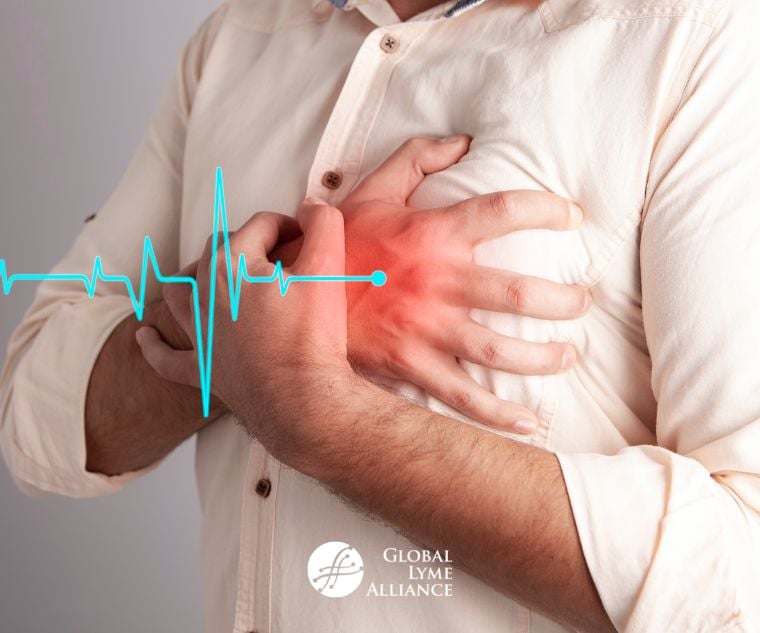
Heart-related symptoms such as racing heartbeat can also be a sign of another condition known as Lyme carditis, when the Lyme bacteria goes to the heart. This can cause atrioventricular block, often referred to as “heart block,” which is an electrical disconnect between the upper and lower chambers of the heart, causing them to beat at different rhythms. Lyme carditis can also manifest as costochondritis (inflammation of the cartilage that connects the ribs to the breastbone), tachycardia (racing heart rate) and bradycardia (slow heart rate). It can also cause myopericarditis (inflammation of the heart muscle and lining), which patients may feel as chest pain or shortness of breath.

Though Lyme carditis is rare, according to a 2008 study, 4% to 10% of all patients with Lyme borreliosis. Whenever the clinical suspicion of Lyme carditis arises, an ECG is mandatory to detect or exclude an atrioventricular conduction block.

If you have already been diagnosed with Lyme disease, it’s important that your doctor check specifically for Lyme carditis, and also evaluate you for POTS. If you are experiencing symptoms of either Lyme carditis or POTS, see a Lyme Literate Medical Doctor (LLMD) to find out if tick-borne disease may be the cause. I only wish I had seen a LLMD sooner; I might have avoided years of suffering.

Click here to read more blogs.

[i] https://www.ncbi.nlm.nih.gov/pmc/articles/PMC7255540/

[ii]  Epidemiology of postural tachycardia syndrome. [Apr;2020 ];AbdelRazek M, Low P, Rocca W, Singer W. https://n.neurology.org/content/92/15_Supplement/S18.005 Neurology. 2019 92:0.

The above material is provided for information purposes only. The material (a) is not nor should be considered, or used as a substitute for, medical advice, diagnosis, or treatment, nor (b) does it necessarily represent endorsement by or an official position of Global Lyme Alliance, Inc. or any of its directors, officers, advisors or volunteers. Advice on the testing, treatment or care of an individual patient should be obtained through consultation with a physician who has examined that patient or is familiar with that patient’s medical history.
Writer

Jennifer Crystal

Opinions expressed by contributors are their own. Jennifer Crystal is a writer and educator in Boston. Her work has appeared in local and national publications including Harvard Health Publishing and The Boston Globe. As a GLA columnist for over six years, her work on GLA.org has received mention in publications such as The New Yorker, weatherchannel.com, CQ Researcher, and ProHealth.com. Jennifer is a patient advocate who has dealt with chronic illness, including Lyme and other tick-borne infections. Her memoir, One Tick Stopped the Clock, was published by Legacy Book Press in 2024. Ten percent of proceeds from the book will go to Global Lyme Alliance. Contact her via email below.

Email: lymewarriorjennifercrystal@gmail.com

Category:

Heart Issues, Inflammation, Lyme, research

DMSO Transforms The Treatment of Infectious Diseases

https://www.midwesterndoctor.com/p/dmso-transforms-the-treatment-of?

DMSO Transforms The Treatment of Infectious Diseases

How DMSO can treat many challenging infections

A Midwestern Doctor
Dec 29, 2024

Story at a Glance:

•Dimethyl Sulfoxide (DMSO) is a remarkably safe naturally occurring substance that has a variety of remarkable properties that make it well suited to treating a variety of challenging medical conditions (e.g., pain, injuries, wounds, strokes, spine injuries, autoimmune conditions, cancer, and internal organ diseases).

•DMSO has broad antimicrobial properties, protects the body from microbial toxins (e.g., from C. diff), eliminates antibiotic resistance, and serves as a vehicle that can bring antimicrobials deep into the body and treat otherwise inaccessible infections.

•DMSO significantly enhances the treatment of many common bacterial infections (e.g., of the head, mouth, and skin) and many severe bacterial infections that require hospitalization (e.g., tuberculosis, sepsis, peritonitis, severe lung infections, osteomyelitis). In many cases, this has allowed an individual requiring an amputation of a chronically infected area to instead fully recover.

•DMSO has significant antiviral properties, which have most extensively been studied for herpes and shingles (both of which it excels in treating), but also in a variety of other conditions (e.g., feline panleukopenia, one of the most deadly conditions cats face.

•DMSO has significant value in treating challenging fungal and parasitic infections. Additionally, evidence suggests its utility in treating cancer and autoimmune disorders arise from DMSO’s unique antimicrobial properties.

•In this article, we will review the body of evidence showing DMSO’s remarkable contributions to the treatment of infectious diseases and provide guidance on how DMSO can be used to treat many of the conditions listed in this article.

Introduction

DMSO is a remarkably safe and naturally occurring substance (provided you use it correctly) that rapidly improves a variety of conditions medicine struggles with — particularly chronic pain. For reference, those conditions included:

  • Strokes, paralysis, a wide range of neurological disorders (e.g., Down Syndrome and dementia), and many circulatory disorders (e.g., Raynaud’s, varicose veins, hemorrhoids), which I discussed here.
  • A wide range of tissue injuries such as sprains, concussions, burns, surgical incisions, and spinal cord injuries (discussed here).
  • Chronic pain (e.g., from a bad disc, bursitis, arthritis, or complex regional pain syndrome), which I discussed here.
  • A wide range of autoimmune, protein, and contractile disorders such as scleroderma, amyloidosis, and interstitial cystitis (discussed here).
  • A variety of head conditions, such as tinnitus, vision loss, dental problems, and sinusitis (discussed here).
  • A wide range of internal organ diseases such as pancreatitis, infertility, liver cirrhosis, and endometriosis (discussed here).
  • A wide range of skin conditions such as burns, varicose veins, acne, hair loss, ulcers, skin cancer, and many autoimmune dermatologic diseases (discussed here).

In turn, since I started this series, it struck a cord and has now been seen by millions of people, and I have received over 1400 reports of remarkable responses to DMSO many readers have had (which can be read here).

This begs an obvious question — if a substance capable of doing all of that exists, why does almost no one know about it? Simply put, like many other promising therapies, it fell victim to a pernicious campaign by the FDA which kept it away from America despite decades of scientific research, Congressional protest, and thousands of people pleading for the FDA to reconsider their actions. Consider for example, this 60 Minutes program about DMSO that aired on March 23, 1980.  (Go to top link to watch program)

DMSO and Infectious Diseases

DMSO has a variety of unique properties that make it incredibly well suited to addressing microbial infections (e.g., bacteria, fungi, viruses, and parasites).

These include:

  • While non-toxic, it has an antiseptic effect that is harmful to microorganisms, especially the smallest ones (mycobacteria, cell wall deficient bacteria, and viruses). This property appears to be the most beneficial for herpes, shingles, and other complex conditions, which I believe have a microbiological component (e.g., cancer and autoimmunity).
  • It can remove the antibiotic resistance of bacteria. This is particularly helpful in widespread problematic infections that have gradually developed a resistance to many existing antibiotics (e.g., tuberculosis) and challenging infections that are not responding to antibiotics (e.g., ones that would otherwise require an amputation).
  • It can further increase the sensitivity of already susceptible microorganisms to antimicrobial agents.
  • It can deliver antimicrobial agents to areas that are typically difficult to reach (e.g., deep in a bone) and also directly to regions that would otherwise require a systemic application of the medication.
  • It can increase circulation to many parts of the body, something which is often critical for resolving illnesses (as a healthy blood supply allows the immune system to enter and heal diseased areas). Likewise, pretreatment with DMSO has been shown to increase the immune system’s ability to resist a subsequent infection.
  • Much in the same way DMSO protects cells from a wide variety of lethal stressors, it can also protect them from the harmful effects of bacterial toxins (e.g., with the most pertinent applications studied being for sepsis and clostridium difficile). Likewise, it can also mitigate the toxicity of antimicrobial agents taken for a prolonged period.

DMSO and Bacterial Infections

DMSO has six properties that make it useful in treating bacterial infections.

  1. Data suggests DMSO increases bacterial cell membrane permeability and concurrently creates changes in the cell indicative of damage to its membrane. In addition to directly eliminating bacteria, it also reduces their ability to prevent antibiotics from entering them. In turn, existing data shows DMSO has a much greater ability to increase the potency of antibiotics that target structures inside bacteria rather than ones that target their cell wall (e.g., penicillin).
    Note: this property is particularly important for tuberculosis as it has a robust external barrier that impairs antibiotic entry.
  2. By increasing membrane permeability, it can also make bacteria more susceptible to taking up the nucleic acids of lethal bacteriophages (viruses that kill bacteria and have been extensively researched outside of America due to their efficacy in treating a wide range of bacterial infections).
  3. DMSO can often simply dissolve bacteria and cause their contents to leak out.
  4. DMSO can interfere with the normal functioning of bacteria. A 1977 study, for instance, found that it interferes with the production of membrane proteins that E. coli (and other bacteria) need for metabolism.
  5. As discussed throughout a previous article, DMSO greatly improves circulation (which, when impaired often leads to chronic infections).
  6. In the same way DMSO can protect cells from various lethal stressors (discussed here), DMSO effectively mitigates the harmful effects of many bacterial toxins.

Cancer and Autoimmunity

One of DMSO’s widely recognized properties is that it causes cancerous cells to revert to normal. In researching that, I came across a fascinating study that tested cancer patients for pleomorphic bacteria (something many previous pioneers of successful but suppressed alternative cancer therapies like Rife and Naessens also believed caused many cancers). While difficult to culture, pleomorphic bacteria were eventually isolated from the blood of some of them, in the blood of some of those who had been around those who had recently died from cancer for a prolonged period.

Note: the morphology of the bacteria is extensively described in the paper, but essentially matches what many other pleomorphic researchers have found over the years.

The pleomorphic model of bacteria (discussed further here) essentially states that bacteria can significantly change their morphology (to the point they are almost unrecognizable from their original form), that these changes are often done in response to their environment, and that some forms are relatively harmless to the body, while others cause disease. In turn, since things that kill bacteria often transform them into ones that are more pathogenic, a longtime belief within certain schools of natural medicine is that the goal should be to change the terrain of the body to encourage a benign morphology of bacteria rather than trying to kill them all off.

A large group of modern researchers studied this subject for decades (e.g., hundreds of research studies they conducted are summarized in this wonderful textbook by Lida Mattman). Five of their key observations were:

  1. Antibiotics will often fail to kill every bacteria present and then trigger those that survive to enter a primitive survival state known as a “cell wall deficient” (CWD) form resembling a mycoplasma. This process in turn, was most commonly triggered by antibiotics that attack bacterial cell walls (which characterizes many commonly used antibiotics).
  2. CWD bacteria are very hard to detect (most standard microbial methods will determine that no organisms are there when CWDs are present).
  3. When conditions are more optimal for survival, CWD organisms can revert to the active form and cause an infection that had been eliminated with antibiotics to suddenly and inexplicably recur (which, for example, we frequently see with urinary tract infections).
  4. Once present, CWD bacteria will often enter cells and cause chronic inflammation because the immune system will attack cells with the CWD bacteria.
  5. Many different unexplained autoimmune disorders (e.g., sarcoidosis) have characteristic CWD bacteria present that can be repeatedly identified from their inflamed tissue (the textbook cites an exhaustive amount of data substantiating this).

While standard antibiotics are ineffective in treating CWD infections, non-standard ones (e.g., erythromycin or minocycline) often are, but the sensitivity to those antibiotics is highly variable depending on the causative organism.

In practice, we find 10-15% of chronic illnesses (including blood clots and cancers) have a pleomorphic etiology, but rather than try to eliminate those organisms with antibiotics (which always have side effects), we instead give signaling products derived from healthy bacteria that cause the pathologic bacteria to transform into a non-harmful form, which in those applicable cases, frequently yields remarkable results (e.g., this approach is very useful for lupus and many cancers). Likewise, I believe this model explains a longstanding belief within natural medicine that giving antibiotics for an acute infection often transforms it into a chronic illness down the road.

Note: ultraviolet blood irradiation is also quite effective at eliminating these organisms and the diseases they cause. 

Lastly, Individuals with chronic fatigue syndrome often find relief from DMSO, which some have attributed to its antiviral properties (e.g., towards Epstein Barr). This for example, is a letter Stanley. Jacob received from a patient.

Note: Readers have also reported to me (e.g., here, here, and here) that DMSO helped their chronic fatigue.  (See link for article)

______________

**Comment**

Please note that DMSO did best when it was coupled with antibiotics or other antimicrobials.

For more:

  • https://madisonarealymesupportgroup.com/2018/03/02/dmso-msm-for-lyme-msids/
  • https://madisonarealymesupportgroup.com/2024/11/01/how-dmso-cures-eye-ear-nose-throat-and-dental-disease/
  • https://madisonarealymesupportgroup.com/2024/10/25/how-dmso-treats-incurable-autoimmune-and-contractile-disorders/
  • https://madisonarealymesupportgroup.com/2024/09/16/dmso-its-remarkable-properties/
  • https://madisonarealymesupportgroup.com/2024/12/18/dmso-protects-heals-organs-and-revolutionizes-the-skin/

Category:

C-diff, Cancer, Dentistry, Eye Issues, Inflammation, Lyme, Pain Management, Parasites, research, Treatment, Viruses

The Power Trio: NAD+, Glutathione, & Methylcobalamin in Lyme Treatment

https://www.lymedisease.org/power-trio-nad-glutathione-b12/

The power trio: NAD+, glutathione, and methylcobalamin in Lyme treatment

California’s Board of Pharmacy may soon restrict access to a variety of compounds that many Lyme patients find essential to getting well. This doctor explains why she thinks that’s a bad idea–and how you can take action to stop it. Sign the petition here.

By Pamela M. Davis, MD

If you’re dealing with Lyme disease or know someone who is, you’ve probably heard about NAD+, glutathione, and methylcobalamin. These compounds are generating significant buzz in the Lyme treatment community, and for good reason.

Let’s dive into what makes these treatments so promising and why they might be game-changers for Lyme patients.

Living with Lyme disease is like fighting a battle on multiple fronts. From crushing fatigue to brain fog, from joint pain to neurological symptoms, Lyme can feel overwhelming.

What makes it particularly challenging is how the bacteria affects multiple body systems simultaneously, creating a complex web of symptoms that can be difficult to address.

Enter the power trio

This is where our three heroes come in: NAD+, glutathione, and methylcobalamin. When properly compounded in sterile conditions (this part is crucial!), these substances work together to support your body’s natural healing processes. Let’s break down how each one helps.

Your cellular battery charger: NAD+

Think of nicotinamide adenine dinucleotide (NAD+) as your cells’ rechargeable battery. In Lyme disease, these batteries often run dangerously low. Here’s what NAD+ does:

  • Boosts energy production at the cellular level
  • Helps clear the mental fog that many Lyme patients struggle with
  • Supports your body’s repair systems
  • Helps regulate sleep cycles (which are often disrupted in Lyme patients)

Real talk: Many Lyme patients report feeling a noticeable uptick in energy and mental clarity within days of starting NAD+ treatment. Especially when it is given intravenously. While individual results vary, the energy boost can be significant enough to help patients return to daily activities they’d previously given up.

Your body’s master detoxifier: glutathione

If NAD+ is your battery charger, glutathione is your body’s cleanup crew. During Lyme treatment, your body deals with a lot of toxins, both from the bacteria themselves and from their die-off during treatment.

Here’s where glutathione shines:

  • Neutralizes harmful free radicals that cause inflammation
  • Supports your liver in processing and eliminating toxins
  • Helps reduce the severity of herxheimer reactions
  • Strengthens your immune response

Pro tip: Many Lyme patients find that glutathione helps them tolerate their primary treatments better by reducing side effects and detox symptoms.

Your nerve repair expert: methylcobalamin

This active form of vitamin B12 is particularly crucial for Lyme patients dealing with neurological symptoms.

Here’s what makes it special:

  • Directly supports nerve repair and protection
  • Helps improve brain fog and cognitive function
  • Supports energy production
  • Aids in mood regulation

The best part? Methylcobalamin’s benefits often become noticeable within weeks, particularly in areas of cognitive function and energy levels.

Better together: the synergy effect

While each of these compounds is powerful on its own, the magic really happens when they work together. Think of it as a well-coordinated team: NAD+ provides the energy; glutathione handles the cleanup; methylcobalamin repairs the damage. Together, they create a comprehensive support system for your body during Lyme treatment.

What makes this approach different? The key lies in proper compounding and administration. When these substances are prepared in sterile conditions and administered properly (usually through IV or injection), they can:

  • Reach therapeutic levels more effectively
  • Work more quickly than oral supplements
  • Provide more consistent results
  • Support your primary Lyme treatment protocol

Real-world implementation

If you’re considering these treatments, here’s what you should know:

  • They work best as part of a comprehensive treatment plan
  • Proper administration via IV or injection is crucial for effectiveness
  • Response can vary from person to person
  • Regular monitoring helps optimize results

Looking Forward: The use of these compounds in Lyme disease treatment continues to evolve, with new protocols and applications being developed. While they’re not a magic bullet, they represent a powerful tool in the Lyme treatment toolkit.

The bottom line

For many Lyme patients, the combination of NAD+, glutathione, and methylcobalamin provides valuable support during treatment. While they shouldn’t replace your primary Lyme protocol, they can significantly enhance your body’s ability to heal and manage symptoms.

Remember: Always work with a qualified healthcare provider who understands both Lyme disease and these compounds. They can help you determine the right protocol for your specific situation and ensure you’re getting the highest quality, properly compounded versions of these supplements.

Alarming developments in California

Recently the California Board of Pharmacy (BOP) has proposed limiting and/or completely blocking access to these life changing compounds. They are also looking to further reduce the number of credentialed compounding pharmacies operating in the state of California.

Because of the need to control costs and to keep these compounds fresh and protected from excessive heat in order for them to be effective, local pharmacies are key.

Firefighters in particular are making statements about their need to have easy access to glutathione to help their lungs recover after battling fires.

Please consider signing the petition to stop the pharmacy board from closing the very necessary compounding pharmacies and blocking access to these very effective treatments.

Dozens of vitamins, antioxidants, enzymes, peptides, hormones and herbs that are legal, effective and needed by so many suffering with chronic diseases are also at risk of being banned by the California board of Pharmacy. Even if you are from another state, your opinion matters because where California goes many other states might follow.

You can give a public comment at the Board of Pharmacy meeting on November 7. You can either do this in person in San Diego, or online via WebEx. Go to StopTheBOP to learn more about this issue and how you can make your opinion known.

*Disclaimer: This post is for informational purposes only and should not be considered medical advice. Always consult with your healthcare provider before starting any new treatment protocol.*

Pamela Davis, MD, is in private practice in Los Angeles. She sees patients in person and via telemedicine, and can be reached through her website.

Category:

Detoxing, Inflammation, Lyme, Sleep, Supplements, Treatment

IBD Masquerading as Lyme Disease

https://pubmed.ncbi.nlm.nih.gov/37392196/

Borrelia Burgdorferi, a Root Cause of Inflammatory Bowel Disease: A Case Report of Successful Treatment and Remission

Elliot Dinetz, Yusuf Saleeby

PMID: 37392196

Abstract

Background: The Borrelia species is recognized to cause a myriad of non-specific symptoms among Lyme patients. It has also been documented in the literature to have the ability to incite autoimmune responses. Despite this, very few clinical cases have ever put together the autoimmune connection to such infections, including in Crohn’s disease.

Case presentation: A 14-year-old adolescent male with a previous diagnosis of Crohn’s disease was discovered to have underlying Lyme disease caused by Borrelia burgdorferi infection. Identifying this as a potential cause of his autoimmune condition, an integrative medical approach was initiated, resulting in successful treatment and complete remission.

Conclusions: Lyme disease should be recognized as a potential trigger of autoimmune conditions, especially Crohn’s disease. This underlying cause is novel to the literature and may help many patients obtain the proper diagnosis so that curative treatment may be received.

_____________

**Comment**

Inflammatory bowel disease (IBD) is a term that describes disorders involving long-standing (chronic) inflammation of tissues in your digestive tract. Types of IBD include:

  • Ulcerative colitis. This condition involves inflammation and sores (ulcers) along the lining of your large intestine (colon) and rectum.
  • Crohn’s disease. This type of IBD is characterized by inflammation of the lining of your digestive tract, which often can involve the deeper layers of the digestive tract. Crohn’s disease most commonly affects the small intestine. However, it can also affect the large intestine and uncommonly, the upper gastrointestinal tract.

Both ulcerative colitis and Crohn’s disease usually are characterized by diarrhea, rectal bleeding, abdominal pain, fatigue and weight loss.  Source

Category:

Inflammation, Lyme, research

First Swedish Studies Expose 5G Symptoms

https://drtesslawrie.substack.com/p/the-first-5g-studies-have-emerged?

The first 5G studies have emerged from Sweden exposing symptoms linked to 5G radiation

What will control this rampant industry?

Dr. Tess Lawrie

Oct 16, 2024

A recent scientific article published in Reviews on Environmental Health reviews seven small-scale studies on microwave syndrome associated with the rollout of 5G.

Despite many scientists raising concerns about the potential negative impacts of fifth generation (5G) technology on health, governments and industry have ignored calls for a moratorium on 5G deployment.

Prior to the accelerated rollout of 5G technology in 2020 (under cover of the Covid lockdowns) very little research had been conducted on the biological effects of exposure to 5G radiofrequency (RF) radiation and no long-term health studies were available. A few animal studies, however, revealed negative effects on the liver, kidneys, brain, muscles, bones and plasma after exposure to 5G frequencies around 3.5 GHz.

Mobile phone carrier waves operate within the microwave frequency range. Since the 1960s, we have known that microwave radiation is harmful to health, with symptoms of ‘microwave syndrome’ including difficulties sleeping, headaches, fatigue, irritability, concentration problems, loss of short-term memory, emotional distress, depression, anxiety, unusual touch-based sensations including burning skin, cardiovascular symptoms, shortness of breath, and muscle- and joint pain.

In Sweden, since the rollout of 5G, seven small case studies were conducted that tracked the health impacts of high RF radiation on 16 people living or working close to 5G base stations or towers (within 3 to 538 metres). These individuals, who ranged in age from four to 83 years, started experiencing symptoms characteristic of microwave syndrome shortly after the activation of 5G. In most cases, their symptoms waned or disappeared after they moved away from the source. In the studies, each person rated, on a scale of zero to ten, their experience of 41 different health issues associated with microwave syndrome.

______________

**Comment**

In a recent post ‘Vaccines’ & Harmful Intent it was stated that the COVID ‘plandemic’ was the excuse used to inject billions with a mysterious cocktail of untested and unproven  nanotechnology.  I would argue the same can be said for 5G, AI, Wifi, 3D, digital ID, and smart meter rollout, all of which have not been proven to be safe, and in fact have been connected to a wide range of disease in all biological life forms.

For more:

  • https://madisonarealymesupportgroup.com/2024/03/13/chd-sues-att-on-behalf-of-woman-who-alleges-cell-tower-caused-51-strokes/
  • https://madisonarealymesupportgroup.com/2023/10/24/must-read-how-5g-turbo-cancer-and-wwiii-collide/
  • https://madisonarealymesupportgroup.com/2020/04/25/coronavirus-science-policy-politics-5g/
  • https://madisonarealymesupportgroup.com/2020/07/26/paper-claiming-5g-induces-coronavirus-in-skin-cells-silently-removed/
  • https://madisonarealymesupportgroup.com/2020/03/31/how-surveillance-5g-are-being-fast-tracked-under-the-pretext-of-fighting-coronavirus-study-showing-risks-to-health/
  • https://madisonarealymesupportgroup.com/2024/03/15/wifi-3d-5g-ai-minority-report-in-the-making/

Category:

Activism, Inflammation

Search

Archives

Lyme Non-Profits

  • Wisconsin Lyme Network Facebook

Lyme Resources

  • Affordable Blood Draws/injections in Wisconsin
  • Blood Draws in Madison
  • Columbia Specimen Bank 646-774-7503
  • Dental Care For Children With Autism
  • Find a Lyme Support Group
  • IGeneX, Inc. (lab testing)
  • ILADS (International Lyme And Associated Diseases Society)
  • Learn about Lyme
  • Lyme Bio Bank (NDRI & Bay Area Lyme Foundation)
  • Lyme Curriculum & Educational Activities
  • Lyme Disease Association
  • Lyme Info
  • Lyme Resource Zip File
  • Lyme-Symptoms
  • Lymedisease.org (Formally CALDA)
  • LymeLight Foundation
  • National Suicide Hotline
  • On-line Mental Health Therapy
  • SE Wisconsin Support Group
  • Substance Abuse Rehab Centers in Wisconsin
  • Substance Misuse Support
  • Suicide & Social Media
  • Tick borne disease education
  • Tick Borne Disease Prevention: Stuff for Kids
  • Tick Prevention
  • Tick-Borne Disease Alliance
  • TRUTHCURES
  • What is Lyme

Online Support Groups

  • Lyme Support Group of Southeast Wisconsin (Facebook)
  • Military Lyme Info
  • Military Lyme Support (Facebook)
  • Parents Whose Children Have Lyme/MSIDS
  • Wisconsin/Illinios Lyme (Facebook)

Visitors

  • 8,064,772

Top Posts & Pages

  • 90% of US Cheese is GMO By Pfizer & Timeline to Replace Dairy With SynBio "Milk" Proteins
  • Proof That the Pandemic Was Planned & With Purpose
  • Cancer Journal Cyberattacked After Confirming Global mRNA 'Vaccine' Turbo Cancer Crisis
  • Somatic Tracking for Pain
  • Lyme Disease Increases Gynecological Health Risks in Women
  • Know Your Ticks
  • This is the Difference Between Probiotics and Prebiotics
  • FREE Webinar Tonight: Get Your Life Back From Chronic Fatigue
  • When a Tick Changes the Game: Jared Allen's Battle with Alpha-Gal Syndrome
  • How to Create & Use Chlorine Dioxide (MMS1) & Nebulizer Protocol

Categories

  • Activism
  • Adrenals
  • Allodynia
  • Alpha Gal Meat Allergy
  • Alzheimer's
  • Anaplasmosis
  • Anaplasmosis Treatment
  • Autism
  • Babesia
  • Babesia Treatment
  • Bartonella
  • Bartonella Treatment
  • Biofilm
  • Borrelia Miyamotoi (Relapsing Fever Group)
  • C-diff
  • Cancer
  • Candida
  • Chiropractic Care for MSIDS
  • Climate
  • Clinic
  • Corrections
  • Dentistry
  • Detoxing
  • diet and nutrition
  • Disability
  • Educational handouts
  • Ehrlichiosis
  • Ehrlichiosis Treatment
  • EMF
  • Eye Issues
  • Genetic Mutations
  • Gut Health
  • Hearing Loss
  • Heart Issues
  • Hemp Oil
  • Herbs
  • Hormones
  • Hyperthermia
  • Inflammation
  • Interstitial Cystitis
  • Lyme
  • Lyme Disease Treatment
  • Lyme Vaccine
  • Malaria
  • Marijuana
  • Mast Cell Activation Syndrome (MCAS)
  • Meetings
  • Mold
  • Morgellons
  • mosquitoes
  • Mycoplasma
  • Mycoplasma Treatment
  • Pain Management
  • PANS
  • Parasite Treatment
  • Parasites
  • Pregnancy
  • Prevention
  • Psychological Aspects
  • Q Fever
  • research
  • Rickettsia
  • Rocky Mountain Spotted Fever
  • Sleep
  • Supplements
  • Support Group Presentations
  • Syphilis
  • Testing
  • thyroid
  • Tickborne Relapsing Fever
  • Ticks
  • Toxoplasmosis
  • Transmission
  • Treatment
  • Tularemia
  • Uncategorized
  • vaccines
  • Viruses
  • Zika

Older Posts

Newer Posts

Madison Area Lyme Support Group
  • Subscribe Subscribed
    • Madison Area Lyme Support Group
    • Join 687 other subscribers
    • Already have a WordPress.com account? Log in now.
    • Madison Area Lyme Support Group
    • Subscribe Subscribed
    • Sign up
    • Log in
    • Report this content
    • View site in Reader
    • Manage subscriptions
    • Collapse this bar
 

Loading Comments...