Ultimate Guide to Gluten-Free Living
|
|
|
|
https://vitalplan.com/pages/welcome
|
|
|
|
https://vitalplan.com/pages/welcome
**Comment**
Food is medicine and no amount of supplements or treatment takes its place. Without the foundational backbone of nourishing foods, we will never achieve health.
The following article makes it abundantly clear why they are culling chickens, eggs, beef cows, and pushing us to eat bugs. Further, this article shows how the government is persecuting farm cooperatives by raiding and seizing traditional, healthy foods.
https://childrenshealthdefense.org/defender/13-enemies-of-food-freedom-gates-who-wef-rockefeller/?
By Tracy Thurman
In every war, there is necessarily an enemy force, and the war on our food supply is no exception.
My previous article addressed the ongoing attacks on farmers across the globe. In today’s article, we will look at some of the culprits behind this agenda.
For anyone who delved into the entities behind the tyrannical COVID-19 policies, many names on the list below will seem quite familiar.
Bayer/Monsanto
Bayer merged with Monsanto in 2018, combining the companies responsible for Agent Orange and pioneering chemical warfare.
In 1999, Monsanto’s CEO Robert Shapiro bragged that the company planned to control “three of the largest industries in the world — agriculture, food, and health — that now operate as separate businesses. But there are a set of changes that will lead to their integration.”
Today these chemical manufacturers control a huge percentage of the world’s food supply.
Cargill and the U.S. Department of Agriculture
Cargill is a World Economic Forum (WEF) partner and the largest private company in the U.S. This behemoth monopolizes unimaginably vast swaths of the global food industry, including meat processing in the U.S.
Cargill’s business practices, along with bigger-is-better policies enforced by their cronies at the U.S. Department of Agriculture (USDA), have led to the closures of many local abattoirs which forced farmers to depend on a few corporate mega-slaughterhouses.
This leaves farmers waiting 14 months or longer for butchering slots, for which they often must transport their animals hundreds of miles — indeed, farmers and ranchers must book processing dates up to a year before the animal is even born.
The high fees charged by Cargill’s slaughterhouses contribute to the skyrocketing price of meat — all while the farmers themselves are barely paid enough to cover the cost of raising the livestock.
The USDA, meanwhile, makes sure their policies prevent farmers from processing meat themselves on their own farms.
Wellcome Trust
The Wellcome Trust, the former owner of Glaxo before it merged with SmithKline, played a major role in Britain’s COVID-19 debacle and is unapologetic about its goal of reducing your food sovereignty.
Wellcome Trust funds Livestock, Environment and People, or LEAP, an organization dedicated to developing and testing behavioral modifications to coerce the public into removing meat and dairy from their diets.
LEAP’s co-director Susan Jeffs bemoans that motivating people with environmental impact labels on their foods does not seem to work: “People are already settled into very established habits” and suggests instead altering what the industry provides, thereby forcing consumer choice.
Wellcome Trust researchers recommend “availability interventions” that “rely less on individual agency” to reduce access to animal food products.
Researcher Rachel Pechey opines that “meat taxes show a promising evidence for effectiveness but have been less acceptable in survey work … we don’t want to just go for the most acceptable [solutions].”
The World Health Organization
Dr. Tedros Adhanom Ghebreyesus, the World Health Organization’s (WHO) director-general, would like you to believe that food production is responsible for almost one-third of the global burden of disease.
He calls for transforming the global food system toward plant-based foods, reducing meat and dairy in our intake, and enforcing policies to save the climate through restricting diet.
A WHO 2022 report concluded that “considerable evidence supports shifting populations towards healthful plant-based diets that reduce or eliminate intake of animal products.”
World Economic Forum
You are likely familiar with the WEF and their Great Reset agenda.
Visit their webpage and treat yourself to such morsels as “5 reasons why eating insects could reduce climate change,” “Why we need to give insects the role they deserve in our food systems,” and “Why we might be eating insects soon.”
Suffice it to say that their plans for your dietary future are clear.
EAT Forum, the Lancet, and their Big Tech and Big Chemical partners
The EAT Forum is “dedicated to transforming our global food system through sound science, impatient disruption and novel partnerships.”
It was co-founded by the aforementioned Wellcome Trust, the Strawberry Foundation and the Stockholm Resilience Centre.
Their FReSH initiative — Food Reform for Sustainability and Health — aims to transform the global food system.
Partners in the FReSH initiative include Google, Cargill, Syngenta, Unilever, Pepsico and many chemical processors such as BASF, Bayer, and DuPont — a rather odd cast of characters for developing a healthy and sustainable dietary plan.
EAT’s Shifting Urban Diets Initiative advocates for cities to adopt the Lancet-endorsed Planetary Health Diet, in which plant-based proteins are set to replace meat and dairy. Red meat is limited to 30 calories per day.
A report drafted by EAT found that the transformation they want to foist upon our diets is “unlikely to be successful if left up to the individual,” and “require(s) reframing at the systemic level with hard policy interventions that include laws, fiscal measures, subsidies and penalties, trade reconfiguration and other economic and structural measures.”
The Rockefeller Foundation
Members of the Rockefeller family may carry more blame than anyone else in history for turning agriculture away from independent family farms towards corporate conglomerates.
In 1947, Nelson Rockefeller founded the International Basic Economy Corporation (IBEC) to modernize and corporatize agriculture in South America, particularly in Brazil and Venezuela.
IBEC transformed farming to depend on expensive machinery and inputs that priced subsistence peasant farmers out of viability.
The American International Association for Economic and Social Development, or AIA, a Rockefeller-funded philanthropic organization, helped build the market through which IBEC could enrich its owners.
While IBEC’s promotional literature claimed that the company was generously assisting the Third World by providing necessary consumer products while turning a profit, on closer examination, it was simply a business enterprise built on the Rockefellers’ old Standard Oil model, in which smaller competitors are forced out using monopolistic practices before prices are raised.
This tactic was taken to a whole new level with the so-called Green Revolution, first in Mexico in the 1940s, then in the Philippines and India in the 1960s, as well as in the U.S.
Traditional farming practices such as the use of manure as fertilizer for heirloom native crops were replaced with a model of mechanized chemical farming, using Rockefeller-funded new seed varieties which had been developed to require petrochemical fertilizers and pesticides to produce significantly increased crop yields compared to the traditional crops grown by peasant farmers in these countries.
It is worth noting that the Rockefellers, as oil oligarchs, stood to profit handsomely from the petroleum-based fertilizers and pesticides that this new method demanded.
The crops grown were almost all cereal crops like rice and replaced more nutrient-dense, traditional crops like millet.
India experienced an increase in food but a decrease in nutrition: with more empty calories but fewer fruits, vegetables and animal proteins, micronutrients disappeared from the diet.
Anemia, blindness, fertility problems, low birth weight and immune impairment increased.
While the Green Revolution was hailed as the solution to world hunger and poverty, it also poisoned local water supplies, depleted the soil and left farmers drowning in debt as they could no longer independently produce the fertilizer and seeds they needed.
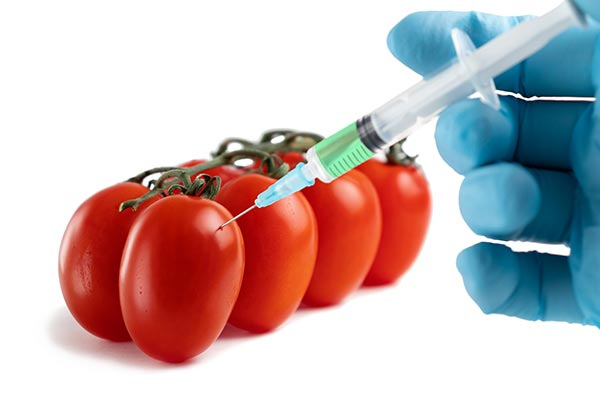
Informed readers can see how the later Monsanto genetically modified organism, or GMO, Roundup-Ready seed model followed this playbook established by the Rockefellers.
In 2006, the Rockefeller Foundation, Bill Gates and others pushed the Alliance for a Green Revolution in Africa, or AGRA, and they again followed this proven playbook.
Since AGRA’s launch, African biodiversity has been lost, and the number of severely undernourished people in sub-Saharan Africa has increased by nearly 50%, even by the United Nations’ own reports.
Just as in India, farmers are being tricked into abandoning nutrient-dense, drought-resistant crops like heirloom millet in exchange for the empty calories of GMO corn.
Hundreds of African organizations have demanded that this neocolonial project end, leaving the future of African agriculture in the hands of the native farmers who know the land best.
Now the Rockefeller Foundation has set its sights on the U.S. food system with its Reset the Table agenda, handily launched in 2020 just weeks after the Great Reset was announced.
Under rosy language calling for inclusivity and equity, the report states that “success will require numerous changes to policies, practices, and norms.”
This includes a major focus on data collection and objectives that align closely with the One Health Agenda — more on that in a future article.
Bill Gates and the Gates Foundation
Gates has followed the Rockefeller playbook for fumigating his fortune and transforming his image — while building more wealth — through the cynical ploy of philanthrocapitalism.
His fingers are deep in every public health pie, and his influence is nearly equal in the food wars.
Besides financing the development of fake meats, he is behind the aforementioned AGRA program, is investing in geoengineering programs to dim the sun, and as of January 2021, owned 242,000 acres of prime U.S. farmland, making him the largest private owner of farmland in the U.S.
It is disconcerting to think that a man who believes we should phase out real meat controls so much of the method of production.
USAID and BIFAD
Another organization pushing you to eat bugs is the U.S. Agency for International Development or USAID. This may surprise some of you who think of USAID as an organization dedicated to helping third-world countries, rather than as a longtime Trojan horse for CIA operations.
(Skeptical of that claim? Go down the rabbit hole here and here and here and here.)
The Board for International Food and Agricultural Development, known as BIFAD, released a report titled, “Systemic Solutions for Climate Change Adaptation and Mitigation.”
This report calls for a complete transformation of the food supply and global agriculture. They propose to do this through environmental, social and governance, or ESG scores, carbon tracking and eating insects.
So how do these organizations manage to push their agenda on the global population?
We will cover that in a future article.
Originally published by Brownstone Institute.
Tracy Thurman is an advocate for regenerative farming, food sovereignty, decentralized food systems and medical freedom.
https://www.lymedisease.org/members/lyme-times/special-issues/mast-cell/nine-treatments-mcas/
While there is no cure for MCAS, that certainly doesn’t mean you’re simply at the mercy of your misbehaving mast cells. There are a number of tools you can put into place that can work in conjunction to minimize or even eradicate symptoms and help restore balance to your immune system.
Because each person grappling with MCAS is unique, there is no one-size-fits-all treatment strategy. Rather, managing MCAS requires a trial-and-error approach – experimenting with different treatments and lifestyle tweaks to see what works best for you.
Histamine is one of the primary pro-inflammatory mediators released when mast cells degranulate. So, getting your histamine levels under control is a top priority. One way to do this is by following a “low-histamine diet” – an elimination diet that aims to minimize the amount of histamine you ingest from foods and beverages.
While reducing high-histamine foods can be helpful, the best way to truly identify and track which foods may be a trigger, is to keep a daily log of what you’re eating and drinking and the severity of your symptoms. This will help you identify any patterns and more easily recognize foods that may be contributing to your symptoms. As someone who’s had to work through my own personal food sensitivities, I promise taking the time to get to the bottom of this is worth it.
Diamine oxidase (DAO) is the main enzyme responsible for degrading histamine. However, if you’re not producing enough of this crucial enzyme, histamine can begin to accumulate and run amok – triggering many of the symptoms associated with MCAS.

That’s where DAO supplements come in. DAO supplements increase the DAO levels in the digestive tract – reducing the level of histamine entering the bloodstream and floating around in your body which can provide some relief from the symptoms associated with histamine overload.
There are a number of DAO supplements available over the counter, but be careful – ordering from Amazon may be convenient, but it’s also where fake and/or poor quality supplements run galore. (See my website for supplements I approve of.)
While DAO supplements are excellent for reducing the amount of histamine absorbed from the food you ingest, these mighty supplements are unable to enter your bloodstream to reduce the amount of histamine produced within your body. This means that excess histamine produced by your own cells needs to be addressed by other methods. Which is where natural antihistamines and mast cell stabilizers can be useful:
These compounds bind to histamine receptors – essentially blocking histamine from binding to receptors and triggering symptoms. You’ve likely heard of the common over-the-counter antihistamine Benadryl which can be great for immediate relief but can also cause you to build tolerance and require more and more to get the same relief. Some better options to focus on are natural sources of antihistamines like:

These natural antihistamines can help soothe symptoms and naturally reduce histamine levels.
Mast cell stabilizers prevent degranulation and stabilize your mast cells. A few well-known, natural compounds that exhibit mast cell stabilizing activities include:
But the truth is, having to take a conglomeration of antihistamines and mast cell stabilizers (on top of potential DAO supplements) can get expensive and overwhelming. To get relief without the expense or headache, I recommend a blend of flavonoids, antioxidants, enzymes, and botanicals that can help block histamine and stabilize your mast cells – providing you with comprehensive support for relief from MCAS symptoms.
There is no single factor that has been shown as the definitive cause of MCAS. However, various microbes can disrupt the immune system and cause mast cells to go haywire. Two major environmental triggers of MCAS include mold and an elevated overall toxic burden.
If you’re struggling with MCAS, it’s absolutely essential to reduce the body’s microbial and toxic burden. This typically requires a thorough assessment of your environment as well as making some adjustments to your lifestyle to minimize exposure to mold and other environmental toxins. (See link for article)
For more:
https://www.treatlyme.net/guide/a-silent-problem-do-you-have-yeast

Too many yeast in the intestines lead to a number of problems in Lyme disease. Here are a few.
________________
For more: