Archive for the ‘Borrelia Miyamotoi (Relapsing Fever Group)’ Category

Tick-borne Relapsing Fever: An Unrecognized Cause of Fever in Travelers

https://www.ncbi.nlm.nih.gov/pubmed/32014353/

2020 Jan 31. pii: S0248-8663(20)30010-2. doi: 10.1016/j.revmed.2019.12.022. [Epub ahead of print]

Tick-borne relapsing fever : An unrecognized cause of fever in travelers

[Article in French]

Abstract

INTRODUCTION:

Tick-borne relapsing fever is a usual cause of fever in West Africa. Except relapsing febrile episodes, there are no pathognomonic signs and diagnosis is difficult because Borrelia density in patient’s blood is low.

CASE REPORTS:

Tick-borne relapsing fever was revealed by the presence of spirochetes in a blood sample to search malaria in two men, 24 and 31 year-old, returned from Mali.

CONCLUSION:

This diagnosis should be evocated in patients having fever after a trip in infested area, as malaria, both infections can be associated.

_________________

**Comment**

I got news for you.  Borrelia density is low in many patients’ blood.  This is a common problem and one of the reasons why patients continue to test negative.

Cats Carry All Types of Ticks & Tick-Borne Diseases

https://danielcameronmd.com/cats-carry-types-ticks-tick-borne-diseases/

CATS CARRY ALL TYPES OF TICKS AND TICK-BORNE DISEASES

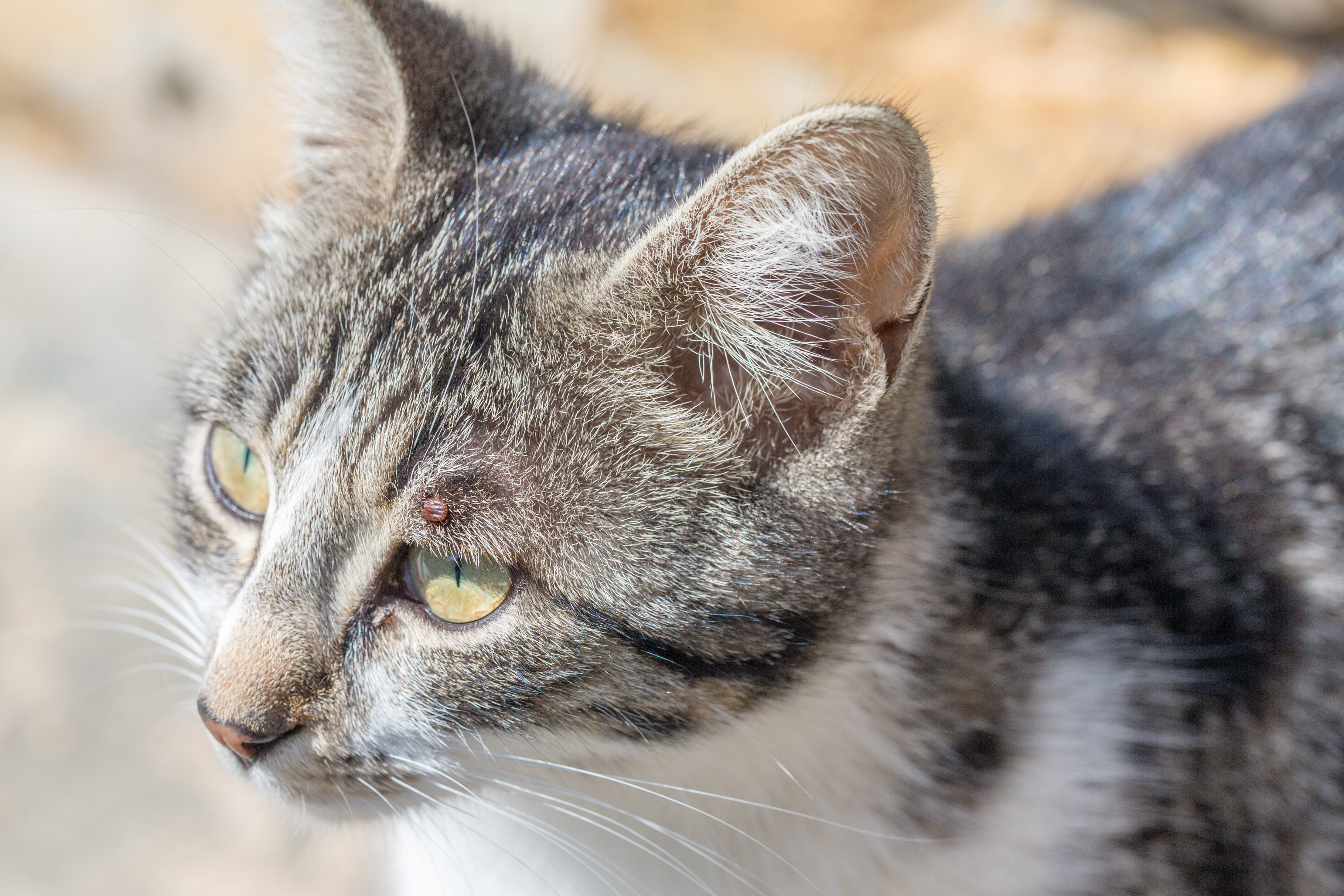
Did you know the cat you may be cuddling with on your couch every evening could be infected with a host of tick-borne diseases? Unlike our canine friends, cats are typically not symptomatic when it comes to such diseases. But as researchers have found, that doesn’t mean they are free from disease.

Updated: April 22, 2019

In a study by Shannon and colleagues, 160 ticks and blood samples were collected from 70 healthy cats brought to the Mid Atlantic Cat Hospital in Queenstown, Maryland. [1]

The authors found that the cats were carrying 3 species of ticks including 83 Lone Star ticks (Amblyomma americanum), 7 American dog ticks (Dermacentor variabilis) and 70 black-legged ticks (Ixodes scapularis.)

Out of the 160 ticks, 22 (13.8%) tested positive by PCR for Bartonella spp., Borrelia burgdorferi, or Borrelia miyamotoi. However, only 25 of the 70 cats were able to be fully tested.

Nine of those cats (36%) were positive for exposure to at least one of the following tick-borne pathogens: Borrelia burgdorferi, Ehrlichia ewingii, Anaplasma phagocytophilum, Borrelia miyamotoi, Bartonella clarridgeiae and Bartonella henselae.

“We also found at least one cat blood sample to test positive for antibodies to each of the four tick-borne agents we screened for,” the authors state.

According to the authors’ review of the literature, the risk to pet owners is unclear. “Pet ownership has been implicated in vector-borne pathogen transmission and has been identified as a potential risk factor for such diseases in some studies, but not others.”

Nevertheless, screening for ticks may prove helpful, providing advanced warning of disease risk to humans “upon recognition of an uncommon or unexpected pathogen in a pet or pet-derived parasite,” Shannon concludes.

Author’s note: Keeping your cat indoors can prevent it from picking up ticks that could be passed onto you or other family members. 

References:
  1. Shannon AB, Rucinsky R, Gaff HD, Brinkerhoff RJ. Borrelia miyamotoi, Other Vector-Borne Agents in Cat Blood and Ticks in Eastern Maryland. EcoHealth. 2017.

___________________

**Comment**

For some reason many people believe cats are immune to tick bites.  This article clearly shows this to be a fallacy.  Besides being bitten by ticks and infected with the pathogens within them, cats are known for carrying and transmitting Bartonella:

https://madisonarealymesupportgroup.com/2019/05/28/woman-wakes-up-with-black-eye-swollen-face-after-cat-scratch-that-left-her-on-iv-drip-for-four-days/

https://madisonarealymesupportgroup.com/2019/06/28/cat-scratch-disease-vet-suffers-extreme-fatigue-for-a-decade-after-catching-rare-severe-case-of-bartonella-infection-that-isnt-rare/

https://madisonarealymesupportgroup.com/2019/03/24/cat-scratch-disease-caused-teens-schizophrenia-like-symptoms-report-says/

As you can see from these links, Bartonella is far more than swollen lymph nodes, and many do not even present with that symptom at all.  If you suspect Bartonella, please print and fill out this questionnaire:  https://madisonarealymesupportgroup.com/2011/09/25/the-bartonella-checklist-copyrighted-2011-james-schaller-md-version-11/  If you have a preponderance of symptoms, take this to your doctor and discuss it.  For Bartonella treatments see:  https://madisonarealymesupportgroup.com/category/bartonella-treatment/

In my experience, not only do many Lyme patients also have Bartonella, it is often harder to resolve than Lyme.  Testing for these coinfections is just as abysmal as Lyme testing is so knowing symptoms is a must for a clinical diagnosis as many will never test positive.  This website is full of patients who had Bartonella who were negative on testing.

After 4 Painful Years, CNY Woman’s Mystery Illness Finally Traced to Rare Tick-borne Bacteria (which isn’t rare)

https://www.syracuse.com/health/2019/12/after-four-painful-years-a-cny-womans-mystery-illness-finally-solved.html

After 4 painful years, CNY woman’s mystery illness finally traced to rare tick-borne bacteria

Rare tick borne disease ravaged young woman’s health

“It was like the flu, but for only four days straight,” recalled Allyn, 22, of Skaneateles. “They would test for strep, they would test for mono, and everything would be negative. We thought it was just some weird virus.”

Every few months, the fever returned and disappeared after four days. Until the fall of 2017, when Allyn was a junior at Colgate. This time, the fever stayed, and brought along fatigue and excruciating pain in her joints and muscles.

“You know when you have the flu and your body aches? It was like that times a million,” said Allyn, who was a runner in high school. “I was an extreme athlete, and I couldn’t walk up my stairs to my room anymore. We could tell something was terribly wrong.”

The quest to understand what was wrong, and how to cure it, has consumed Allyn’s life. Since that first fever, Allyn has suffered severe migraines, tingling in her arms and legs that felt like bugs crawling beneath her skin, extreme fatigue, heart palpitations, shortness of breath so constricting that she gasped for air after a flight of stairs, inability to concentrate, and anxiety attacks that convinced her she was dying.

Allyn has seen neurologists, Lyme disease specialists, acupuncturists and chiropractors. She’s been diagnosed with strep throat, chronic fatigue syndrome and Lyme disease. She took dozens of supplements and antibiotics, drank celery juice every morning for four months, and even shut herself inside a claustrophobic hyperbaric chamber in Florida.

Nothing worked.

No one could understand what had turned a star high school athlete into a young woman so sick she couldn’t climb the 10 stairs to her childhood bedroom, or why she wasn’t getting better.

“Those are the darkest days, when you’re trying everything and nothing is working,” said Allyn’s mother, Meg O’Connell. “As a parent you want to shake the doctors and say, ‘You have to take care of my child right now!’”

Finally, this summer, Allyn got a definitive answer. She was diagnosed as one of the first two people in Central New York to contract an emerging tick-borne disease called miyamotoi.

Miyamotoi is so new that, unlike Lyme disease, it doesn’t have a common name, but is referred to simply the species of the bacterium that causes it. It’s in the same genus as the Lyme bacterium, but is more closely related to a group of diseases known as tick-borne relapsing fever.

Tick populations are increasing in Upstate New York, and they are bringing debilitating disease to tens of thousands of people. If it wasn’t bad enough that deer ticks already carried six bacteria and viruses, they and miyamotoi have now evolved to add a new weapon to the arsenal.

Miyamotoi infections were first found in humans in 2011 and confirmed in the Northeast in 2013. Scientists are still studying how it’s transmitted, and many doctors are unfamiliar with the disease, said Brian Leydet, a professor and tick expert at SUNY College of Environmental Science and Forestry, in Syracuse.

“That’s what’s terrifying about it: knowing so little about it, and it’s in our back yard,” Leydet said.

Like many people suffering from tick-borne diseases, Allyn doesn’t remember being bitten. She suspects she picked up the tick while hiking or running trails, and that it hid beneath her long blond hair. Ticks seek out hard-to-see places on the body, like the scalp or behind the knees, and then attach to the skin for 24 to 48 hours, sucking blood and disgorging pathogens.

Allyn also doesn’t remember the date of the first fever, but she lucidly recalls the day the illness took over her life: Oct. 6, 2017, a date she mourns each year. She was walking down the long hill from Colgate to the village of Hamilton when she was overcome with pain and massive fatigue.

“I had to sit down because I didn’t think I could walk the rest of the way home,” she recalled. “I was just having shooting pain all through my muscles and knees and elbows. It felt like everything was breaking in my body.”

She couldn’t focus enough to drive, so her parents brought her home to Skaneateles. She saw a nurse practitioner in Syracuse whom Allyn had worked for, Carolyn Christie-McAuliffe. She drew 30 vials of blood, Allyn recalled.

Allyn returned to Colgate, hoping it was just a case of mononucleosis that would go away so she could finish her junior year. Then the test results came in. The first one, Allyn recalled, counted the markers of inflammation in her body.

“The normal range is about 40 to 60. Mine was 800,” she said. “Carolyn called me and said, ‘You have to go home immediately. Something is really wrong.’”

Allyn took a medical leave from Colgate and returned home yet again. Three days later McAuliffe called with a diagnosis: Lyme disease. There was something odd about the test results, though, that would later become an important clue. While the initial screening test was positive for Lyme, the confirmatory test, called the Western blot, was abnormal, but negative for Lyme, Allyn said.

Allyn went on a four-week course of doxycycline, the standard regimen for Lyme patients. She only felt worse; now the disease was enveloping her brain in a fog.

“I would wake up every morning and not remember what I did,” she recalled. “I’d be watching a TV show I’d been watching for years and I wouldn’t know what was happening. I couldn’t read because I couldn’t concentrate, and I couldn’t really understand words. Most of the days I would lay awake in bed staring at the wall.”

The shattering knee and elbow pain returned. She had “horrible migraines.” She was short of breath and her heart started skipping beats. Her legs and arms tingled with pins and needles. Sitting home alone, Allyn developed paranoia and panic attacks, calling her parents in the middle of the day to say she was dying.

O’Connell remembers her own pain watching her daughter’s.

“It’s just so sad to see someone struggle for two-plus years,” said O’Connell, executive director of the Allyn Foundation. “When you have an ill child, you just want to take that burden from them. You ask, ‘Why couldn’t that have happened to me instead?’”

O’Connell had joined the CNY Lyme and Tick-Borne Disease Alliance. At an early meeting of the alliance, O’Connell met Dr. Kris Paolino, a new physician at Upstate Medical University who specialized in Lyme cases. Paolino, an infectious disease specialist, had helped develop vaccines for Ebola and malaria at the Walter Reed Army Institute of Research in Washington, D.C.

“I happened to say to him that my daughter has Lyme and we can’t get rid of these fevers,” O’Connell recalled. “He said, ‘Make an appointment and come see me.’”

At that first appointment, Allyn recounted her frustrating and painful journey.

“The main thing I try to do is to listen to the patient’s story first,” said Paolino, hired in 2016 as part of Upstate’s battle against the growing threat of tick-borne disease. “In many cases you’re trying to figure out what’s real and what’s not.”

As Allyn’s story unfolded, Paolino noted the clues that raised doubt about the Lyme diagnosis: the relapsing fevers, the neurological symptoms, and that ambiguous Western blot test.

Those suggested miyamotoi. Another round of tests confirmed it.

“I’m not sure if she had ever had Lyme,” Paolino said. “I think it was probably miyamotoi all this time.”

It’s not hard to understand why doctors would suspect Lyme over miyamotoi. The abnormal Western blot test result after a positive Lyme test can be confounding, and miyamotoi is almost unheard of. Just 10 cases of miyamotoi were reported to the state health department from 2001 to 2016, compared to nearly 80,000 cases of Lyme disease.

Paolino said he has now four miyamotoi patients.

“I think there’s probably more people that are undiagnosed than we think,” he said. “It is a fairly new emerging pathogen in the region.”

Paolino prescribed an intense regimen of intravenous antibiotics for Allyn. First doctors inserted a thin tube that ran from Allyn’s upper right arm to her heart. Every night for seven weeks, she said, she spent a half hour pumping two syringes of the antibiotic ceftriaxone into the tube.

The treatment seems to be helping, Allyn and O’Connell said.

“As Dr. Paolino said, ‘Don’t go out and run a marathon yet,’ but we have been really encouraged,” O’Connell said. “She has not had a fever, her blood work is better, her glands are not swollen. She can take longer walks. It will still be another six to 12 months to build up her body because all of it’s been through, but I would say we’re hopefully optimistic.”

No one knows yet if Allyn is cured, what damage the years of treatments might have caused, or if her symptoms will linger even if the bacteria are gone. Paolino said there’s reason for optimism because relapsing fever diseases similar to miyamotoi can be cured by antibiotics. Miyamotoi is so new, however, there’s little research on how patients fare if the disease has been left untreated for years.

“The longer the symptoms are present, you see more damage to the nerves and more damage to the joints that could be more of an irreversible process,” Paolino said. “The hope is that she’ll continue to feel well and she won’t relapse, but I don’t have a definitive answer.”

Fatigue remains a constant presence, Allyn said, but she is slowly regaining strength. She can take her 8-month-old German shepherd, Oaklie, for two walks a day now. She has been attending Colgate part-time, and can do homework in the morning before she gets too tired.

“I’ve gotten a little bit better, but how much better will I get?” she wonders.

It’s time, she said, to find out. On Saturday, she and her boyfriend moved to Boulder, Colorado, where Allyn has an aunt and uncle. She plans to complete her Colgate degree in education and cellular neuroscience by taking her final three classes at the University of Colorado. She’s not ready for a 9-to-5 job, and doesn’t know when she will be, but she hopes to start part-time in a café or bakery. And as she gets stronger, Allyn hopes to put on skis and hiking boots again.

“Life is so short and you could get sick any day,” she said. “Why not go for a hike or go skiing?”

__________________

For more:  https://madisonarealymesupportgroup.com/2018/08/17/borrelia-miyamotoi-found-to-occur-nationwide-in-japan/

https://madisonarealymesupportgroup.com/2018/02/15/b-miyamotoi-in-ca-ticks-for-a-long-time/The following article explains that Borrelia Miyamotoi is not new to California.  

First considered nonpathogenic, it wasn’t even reported until 2011 in Russia.  http://www.nejm.org/doi/full/10.1056/NEJMc1215469  Diagnosis relies on PCR testing during acute infection and two-tiered testing for Lyme will not pick it up. 

It is not a reportable illness so prevalence is pure conjecture.  

Dr. Horowitz states clinicians should be vigilant for clinical pictures that look like viral infections such as high fever, headache, and muscle and joint pain.  

In publications, only 16% of patients presenting with BMD were seropositive for IgG and/or IgM antibody to B. miyamotoi rGlpQ, so PCR should also be considered in patients with a history of tick bites and appropriate clinical manifestations.

This is also an important reminder that new strains and species are being discovered continually, so nothing about Tick Borne Illness should be set in stone and open minds are a must.

https://madisonarealymesupportgroup.com/2018/02/14/borrelia-miyamotoi-in-ca-serodiagnosis-is-complicated-by-multiple-endemic-borrelia-species/ (Study found here)

https://www.lymedisease.org/lyme-sci-study-finds-lots-b-miyamotoi-california-ticks/  


C6 Peptide Test For Lyme Disease May Indicate Borrelia Miyamotoi Infection

https://danielcameronmd.com/c6-peptide-test-lyme-disease-borrelia-miyamotoi-infection/

C6 PEPTIDE TEST FOR LYME DISEASE MAY INDICATE BORRELIA MIYAMOTOI INFECTION

The C6 enzyme immunoassay (EIA) is often used to diagnose Lyme disease. The test is based on the C6 peptide of the Borrelia burgdorferi sl VlsE protein. But a recent study suggests the C6 peptide test may also indicate an infection with Borrelia miyamotoi, another tick-borne disease.

Koetsveld and colleagues examined C6 reactivity in sera from both mice infected with Borrelia miyamotoi and from 46 patients with PCR-positive Borrelia miyamotoi disease (BMD).

They found, “Cross-reactivity against the C6-peptide was confirmed in 21 out of 24 mice experimentally infected with B. miyamotoi.” And a C6 antibody response was present in 39 of 46 patients. ¹

Interestingly, another recent study “showed that in a set of 43 sera from 24 patients with [Borrelia miyamotoi disease] from the United States the C6 ELISA was also positive in the vast majority (>90%) of convalescent phase serum samples.” ²

Koetsveld warns, however, that since “BMD [Borrelia miyamotoi disease] and Lyme borreliosis are found in the same geographical locations, caution should be used when relying solely on C6-reactivity testing.”

According to a new study, the C6 peptide test used to diagnose Lyme disease may also be helpful in identifying Borrelia miyamotoi. CLICK TO TWEET

They recommend further testing if the Western blot is negative.

“We propose that a positive C6 EIA with negative immunoblot, especially in patients with fever several weeks after a tick bite, warrants further testing for B. miyamotoi.

Testing for the glycerophosphodiester phosphodiesterase (GlpQ) gene may be helpful in detecting B. miyamotoi infection.

“Our results demonstrate that cross-reactive antibodies against the C6 peptide regularly occur in patients with [Borrelia miyamotoi disease],” writes Koetsveld.

He adds, “with as much as 90% (95% CI 68.3–98.8) of patients being C6-reactive in samples taken 10 to 19 days after onset of disease.”

Editor’s note: It is also possible that the patients could have seronegative Lyme disease concurrent with B. miyamotoi.  In fact, 10 of their 39 patients were reactive by Western blot for Lyme disease.
References:
  1. Koetsveld J, Platonov AE, Kuleshov K, et al. Borrelia miyamotoi infection leads to cross-reactive antibodies to the C6 peptide in mice and men. Clin Microbiol Infect. 2019.
  2. Molloy, P.J., Weeks, K.E., Todd, B., and Wormser, G.P. Seroreactivity to the C6 peptide in Borrelia miyamotoi infections occurring in the northeastern United States. Clin Infect Dis. 2018; 66: 1407–1410

Borrelia Miyamotoi Infection Leads to Cross-Reactive Antibodies to the C6 Peptide in Mice & Men

https://www.clinicalmicrobiologyandinfection.com/article/S1198-743X(19)30418-5/fulltext

Borrelia miyamotoi infection leads to cross-reactive antibodies to the C6 peptide in mice and men

Joris Koetsveld1,,'Correspondence information about the author Joris Koetsveld
Alexander E. Platonov2
Konstantin Kuleshov2
Alex Wagemakers1
Dieuwertje Hoornstra1
Wim Ang3
Sandor Szekeres4
Gilian L.A. van Duijvendijk5
Erol Fikrig6
Monica E. Embers7
Hein Sprong4
Joppe W. Hovius1,∗∗,'Correspondence information about the author Joppe W. Hovius

Abstract

Objectives

Borrelia miyamotoi is a relapsing fever Borrelia, transmitted by hard (Ixodes) ticks, which are also the main vector for Borrelia burgdorferi. A widely used test for serodiagnosis of Lyme borreliosis is an EIA based on the C6 peptide of the B. burgdorferi sl VlsE protein. We set out to study C6 reactivity upon infection with B. miyamotoiin a large well-characterized set of Borrelia miyamotoi disease (BMD) patient sera and in experimental murine infection.

Methods

We performed in-silico analyses, comparing the C6-peptide to immunodominant B. miyamotoi variable large proteins (Vlps). Next, we determined C6 reactivity in sera from mice infected with B. miyamotoi and in a unique longitudinal set of 191 sera from 46 BMD patients.

Results

In-silico analyses revealed similarity of the C6-peptide to domains within B. miyamotoi Vlps. Cross-reactivity against the C6-peptide was confirmed in 21/24 mice experimentally infected with B. miyamotoi.Moreover, 35/46 BMD patients had a C6 EIA Lyme-index higher than 1.1 (positive). Interestingly, 27/37 patients with a C6 EIA Lyme-index higher than 0.9 (equivocal) were negative when tested for specific B. burgdorferi sl antibodies using a commercially available immunoblot.

Conclusions

We show that infection with B. miyamotoi leads to cross-reactive antibodies to the C6-peptide. Since BMD and Lyme borreliosis are found in the same geographical locations, caution should be used when relying solely on C6-reactivity testing. We propose that a positive C6 EIA with negative immunoblot, especially in patients with fever several weeks after a tick bite, warrants further testing for B. miyamotoi.

_________________

**Comment**

For a great read on cross -reactivity in testing:  https://lymemd.blogspot.com/2014/08/labcorp-and-lyme-western-blot.html  Written by Dr. Jaller

The article makes some excellent points:

  • As of 2014 Labcorp no longer allows physicians to order Western Blots for Lyme disease. The only test available is the ELISA with reflex to Western Blot if positive.
  • They have also taken away the C6 peptide.  The results are presented as only negative if less than 0.91
  • Some ID doctors are inappropriately applying the HIV testing paradigm in the case of Lyme testing
  • The IDSA claims, without reference, there’s a lot of false positive Lyme Western Blots because of cross reactivity
  • The test was developed based on a meeting 20 years ago for surveillance (an epidemiology or research tool) not for diagnosis
  • The long arm of the IDSA has managed to promote its agenda by manipulating the CDC and now Labcorp
  • CDC’s Dr. Beard’s s comment to the author was an admission that politics have trumped reason, logic and science when he stated about the flawed testing, “Well, that’s the party line.”
The testing stronghold dilemma continues unabated in the topsy-turvy world of Lymeland.

Remember….

64357008_10217935576008450_2638357839671721984_n

“I am Barbara Johnson. I am a biochemist by training and I am speaking today on behalf of the Centers for Disease Control and Prevention concerning serodiagnosis of Lyme disease. Specifically, my statement is in support of (the) IDSA recommendation in the guidelines to use two-tiered serology (an ELISA screening test followed by Western Blots if ELISA positive) to support the diagnosis of Lyme disease in patients who have manifestations other than acute erythema migrans.  – IDSA Lyme Disease Review Panel Hearing, July 30, 2009

For more dirty deeds done dirt cheap: ConflictReport