Archive for the ‘Bartonella’ Category

High Prevalence, Diversity, & Coinfection of Bartonella in Saudi Arabian Gerbils

https://www.ncbi.nlm.nih.gov/m/pubmed/30071312/

Molecular assessment of Bartonella in Gerbillus nanus from Saudi Arabia reveals high levels of prevalence, diversity and co-infection.

Kleynhans DJ, et al. Infect Genet Evol. 2018.

Abstract

Bartonellae bacteria are associated with several re-emerging human diseases. These vector-borne pathogens have a global distribution, yet data on Bartonella prevalence and diversity in the Arabian Peninsula are limited. In this study we assessed the Bartonella infection status of the Baluchistan gerbil (Gerbillus nanus), a species associated with pastoral communities throughout the Middle East region, using a multi-gene PCR screening approach.

The results demonstrated that 94 (68.1%) of the 138 gerbils trapped on a monthly basis, over a period of one year, were PCR-positive. Sequencing of the gltA gene region confirmed the presence of four discrete Bartonella lineages (I-IV) and high levels of co-infection (33.0%). Each of the four lineages, varied in overall abundance (7.5%-47.9%) and had discernible seasonal peaks. Bartonella status was significantly correlated with ectoparasite presence, but not with sex, nor with season. Statistical analyses further revealed that co-infected individuals had a significantly higher relative body condition. Multi-locus sequence analysis (MLSA) performed with a concatenated dataset of three genetic loci (gltA, nuoG, and rpoB), 1452 nucleotides (nt) in length confirmed that lineage IV, which occurred in 24 PCR-positive animals (25.5%), is most closely related to zoonotic B. elizabethae. The remaining three lineages (I-III) formed a monophyletic clade which, on the basis of gltA was shown to contain bartonellae from diverse Gerbillinae species from the Middle East, suggestive of a gerbil-associated species complex in this region. Lineage I was identical to a Candidatus B. sanaae strain identified previously in Bushy-tailed jirds (Sekeetamys calurus) from Egypt, wherease MLSA indicate that lineages II and III are novel. The high levels of infection and co-infection, together with the presence of multiple Bartonella lineages indicate that Gerbillus nanus is likely a natural reservoir of Bartonella in the Arabian Peninsula.

_________________

**Comment**

Bartonella is highly prevalent in Lyme/MSIDS patients, yet, mainstream medicine isn’t even looking at it.  If they do look at it they make the mistake of downplaying its significance.  This article is yet another example of its proliferation and presence.  Ticks are also ectoparasites yet many deny its ability to transmit Bartonella.  This issue needs to be resolved; however, since so many Lyme/MSIDS patients have it, it’s either transmitted directly from ticks OR the tick bite and subsequent immune suppression causes asymptomatic cases to reactivate.  Either way, it is an important issue.

https://madisonarealymesupportgroup.com/2016/01/03/bartonella-treatment/  Fifteen species of gram-negative aerobic Bartonella are known to infect humans; however Dr. Ricardo Maggi’s statement is quite telling, “This case reinforces the hypothesis that any Bartonella species can cause human infection.”

https://madisonarealymesupportgroup.com/2011/09/25/the-bartonella-checklist-copyrighted-2011-james-schaller-md-version-11/  If you suspect Bartonella, print off and fill out this checklist.  While the symptoms are many and varied, my husband had unexplained and sudden anxiety, irritability, rage, sudden knee-jerk reactions, skin tags & severe itching, and we both felt as if someone beat the bottoms of our feet with a hammer.  Proper treatment ameliorated all of these symptoms.

https://madisonarealymesupportgroup.com/2019/01/02/bartonella-in-entire-canadian-family/
https://madisonarealymesupportgroup.com/2018/10/02/1st-documented-case-of-girl-with-blood-stream-infection-with-bartonella-with-coinfection-of-another-bartonella-strain/

https://madisonarealymesupportgroup.com/2018/11/10/neurological-presentations-of-bartonella-henselae-infection/

Bartonella & Langerhans’ Cell Histiocytosis (Cancer)

https://www.ncbi.nlm.nih.gov/pubmed/30556266

2018 Dec 17:e27573. doi: 10.1002/pbc.27573. [Epub ahead of print]

Disseminated Bartonella henselae disease mimicking Langerhans’ cell histiocytosis.

Abstract

Bartonella henselae, the causative agent of cat-scratch disease, has been recognized to be responsible for a broad range of clinical syndromes. We report the case of a patient with disseminated B. henselae infection mimicking Langerhans cell histiocytosis at presentation and its successful management with neurosurgery, prolonged antibacterial therapy, and observation.

________________

**Comment**

Langerhans’ cell histiocytosis is a supposed “rare” disorder that looks like cancer (some say it is cancer).  The above case study implicates Bartonella.

Bartonella is known to cause granulomas

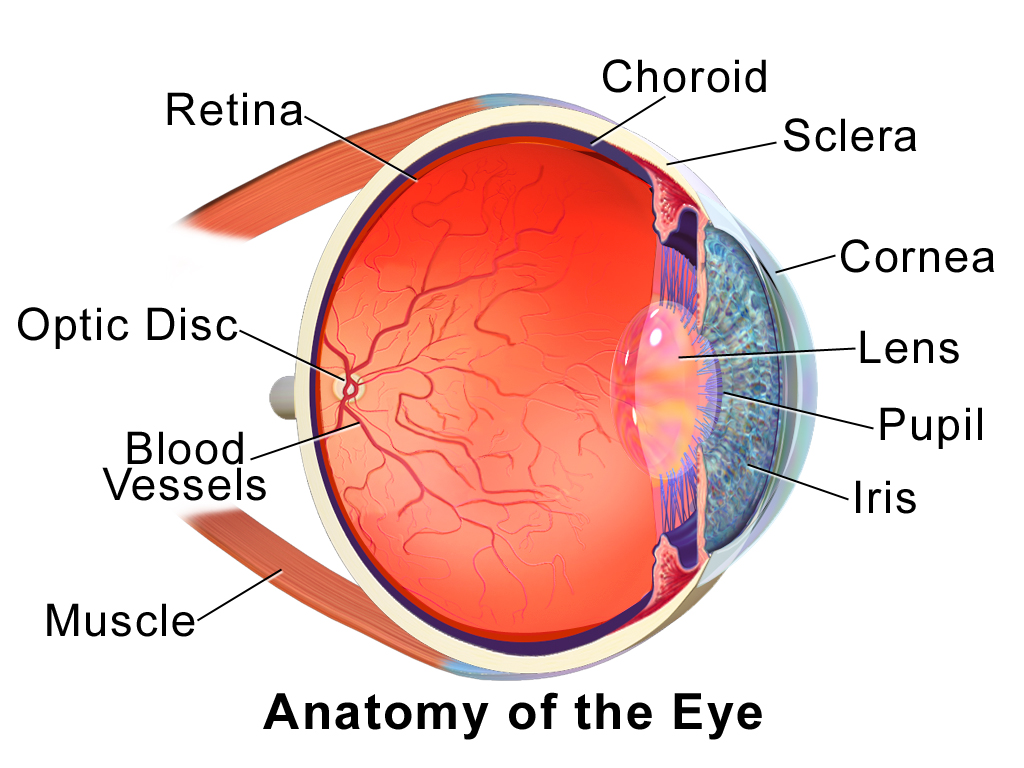
https://madisonarealymesupportgroup.com/2018/09/06/ocular-manifestations-of-bartonellosis/  Bartonella spp. infections continue to be a common cause uveitis with ophthalmic manifestations ranging from neuroretinits, vascular occlusions, to choroidal granulomas.

Blausen.com staff (2014). “Medical gallery of Blausen Medical 2014”. WikiJournal of Medicine 1 (2). DOI:10.15347/wjm/2014.010. ISSN 2002-4436. – Own work, CC BY 3.0, https://commons.wikimedia.org/w/index.php?curid=29025014

The choroid is the vascular layer of the eye, containing connective tissues, and lying between the retina and the sclera.

https://madisonarealymesupportgroup.com/2018/03/04/bartonella-erythema-nodosum-atypical-presentations/  The finding of bilateral enlarged axillary lymph nodes with necrosis and granulomas led to the diagnosis of Bartonella infection, an unusual cause of erythema nodosum.

Granulomas represents a chronic inflammatory response initiated by various infectious and noninfectious agents.  https://medical-dictionary.thefreedictionary.com/granuloma

Langerhans cell histiocytosis is a type of eosinophilic granuloma

https://ghr.nlm.nih.gov/condition/langerhans-cell-histiocytosis  Excerpt below:

Langerhans cell histiocytosis is a disorder in which excess immune system cells called Langerhans cells build up in the body. Langerhans cells, which help regulate the immune system, are normally found throughout the body, especially in the skin, lymph nodes, spleen, lungs, liver, and bone marrow. In Langerhans cell histiocytosis, excess immature Langerhans cells usually form tumors called granulomas. Many researchers now consider Langerhans cell histiocytosis to be a form of cancer, but this classification remains controversial.

In approximately 80 percent of affected individuals, one or more granulomas develop in the bones, causing pain and swelling. The granulomas, which usually occur in the skull or the long bones of the arms or legs, may cause the bone to fracture.

Granulomas also frequently occur in the skin, appearing as blisters, reddish bumps, or rashes which can be mild to severe. The pituitary gland may also be affected; this gland is located at the base of the brain and produces hormones that control many important body functions. Without hormone supplementation, affected individuals may experience delayed or absent puberty or an inability to have children (infertility). In addition, pituitary gland damage may result in the production of excessive amounts of urine (diabetes insipidus) and dysfunction of another gland called the thyroid. Thyroid dysfunction can affect the rate of chemical reactions in the body (metabolism), body temperature, skin and hair texture, and behavior.  In 15 to 20 percent of cases, Langerhans cell histiocytosis affects the lungs, liver, or blood-forming (hematopoietic) system; damage to these organs and tissues may be life-threatening.

Older names that were sometimes used for forms of Langerhans cell histiocytosis include eosinophilic granuloma, Hand-Schüller-Christian disease, and Letterer-Siwe disease.

More on Bartonella:  https://madisonarealymesupportgroup.com/2016/01/03/bartonella-treatment/

https://madisonarealymesupportgroup.com/2018/09/06/ocular-manifestations-of-bartonellosis/

https://madisonarealymesupportgroup.com/2017/01/04/endocarditis-consider-bartonella/

https://madisonarealymesupportgroup.com/2018/11/05/skull-infection-due-to-bartonella/

https://madisonarealymesupportgroup.com/2017/09/13/dr-fox-cat-scratch-fever-warning/

https://madisonarealymesupportgroup.com/2016/11/29/bartonella-seizures/

https://madisonarealymesupportgroup.com/2018/11/10/neurological-presentations-of-bartonella-henselae-infection/

https://madisonarealymesupportgroup.com/2018/11/05/skull-infection-due-to-bartonella/


Bartonella in Entire Canadian Family

https://www.ncbi.nlm.nih.gov/m/pubmed/30589638/

Bartonella spp. Bloodstream Infection in a Canadian Family

Breitschwerdt EB, et al. Vector Borne Zoonotic Dis. 2018.

Abstract

Historically, Bartonella spp. have been associated with febrile illness (Oroya fever, trench fever, and cat scratch disease), endocarditis (numerous Bartonella spp.), and vasoproliferative lesions (Bartonella bacilliformis, Bartonella quintana, Bartonella henselae, and Bartonella vinsonii subsp. berkhoffii), occurring most often but not exclusively in immunocompromised patients. Recently, bloodstream infections with various Bartonella spp. have been documented in nonimmunocompromised individuals in association with a spectrum of cardiovascular, neurologic, and rheumatologic symptoms. As documented in this family, symptoms for which the medical implications remain unclear can occur in multiple family members infected with one or more Bartonella spp. Serial serologic and molecular microbiological findings supported exposure to or infection with Bartonella spp. in all seven family members. Either antibiotics failed to eliminate bacteremic infection, resulted in partial resolution of symptoms, or potentially reinfection occurred during the 19-month study period. There is a substantial need for clinical research to clarify the extent to which Bartonella spp. bacteremia induces nonspecific cardiovascular, neurologic, or rheumatologic symptoms for ongoing improvement in the sensitivity and specificity of diagnostic testing, and clarification as to if, when, and how to treat patients with documented Bartonella spp. bacteremia.

_________________

More on Bartonella:  https://madisonarealymesupportgroup.com/2018/05/07/fox-news-bartonella-is-the-new-lyme-disease/

https://madisonarealymesupportgroup.com/2016/08/09/a-bartonella-story/

https://madisonarealymesupportgroup.com/2016/01/03/bartonella-treatment/

Various strains have been found in eye fluid, the heart (myocarditis and endocarditis), and cysts, and can infect by nearly anything puncturing the skin and exchanging bodily fluids – including needles. Evidence also suggests congenital transmission.

Symptoms are largely associated with where the blood flow is compromised. The reason many have pain in the soles of their feet is due to inflammation caused by microvascular trauma. It has been known to cause cysts around dental roots leading to chronic and hard to diagnose head and face pain as well as root canals. This microvascular trauma is also to blame for brain issues causing psychological issues such as anxiety, anger, and suicidal thoughts, since the small vessel disease affects executive function. A cog is literally caught in the wheel. As neurotransmitters become depleted due to overstimulation, depression rears its ugly head. A vicious cycle ensues.
Due to the cyclical nature of Bartonella and that it exists in very low amounts in human blood, blood tests are unreliable. It also has a long division time between 22-24 hours and requires a special growth environment. There is a Triple Draw through Galaxy which collects blood over 8 days to maximize the test, stating a 90% reduction in false negatives.


Research News: Dr. Steven Phillips

https://www.stevenphillipsmd.com

Research News

In the link above, Dr. Steven Phillips talks about two research projects he is working on.

  1. The first project is a joint venture between Duke, Johns Hopkins, and Tulane which was fully funded by the Steven and Alexandra Cohen Foundation. The goal is to use a specialized high thoughput proteomics platform to find new drugs to treat Lyme and bartonella. It’s the same precision medicine technology used to find drugs for cancer and HIV, only this time it’s finally turned toward eradicating Lyme and Bartonella. And we already have lots of initial hits!
  2. The second project is further along thanks to funding from Bay Area Lyme Foundation. We’ve moved forward with starting drug formulation and laboratory testing. I’m working alongside Dr. Neil Spector of Duke, Dana Parish, Dr. Ed Breitschwerdt and his team from Galaxy Diagnostics and NC State, and too many others to list here. We’re developing what we believe will be a game-changing drug for the treatment of bartonella and Lyme, made possible by this joint-development effort involving some of the smartest folks from academia, the private sector, and the non-profit world.  First, we plan to demonstrate in the test tube that we can eradicate these bacteria after they’ve infected cells. If all goes well, then it’s on to an animal study, and from there, human trials. This project has been funded by Bay Area Lyme Foundation, an organization which leads the fight against Lyme disease by funding research with a goal to put an end to this pandemic. We are also funded by our publicly announced co-funding partnership with Lyme Connection, a premier non-profit Lyme foundation under the auspices of the Town of Ridgefield, CT. Unlike general pool donations where you don’t know where your donation is going, with our co-funding effort, the following link specifically directs that donations go toward developing this new drug:  Click on link to Make a Tax Deductible Donation to Fund Our Research:  https://co.clickandpledge.com/sp/d1/default.aspx?wid=134576

A big thank you to our newest research funding partner, RescueRenovations.

They do general contracting and mold abatement and will donate 5% of any job to our research if you mention donating to Project Bartonella. You can contact them at RescueRenovations.net and if you know of another company that also wants to become a research funding partner, please let us know.

More on Dr. Phillips:  https://madisonarealymesupportgroup.com/2017/10/04/dr-steven-phillips-writing-book-on-lyme-and-bartonella-treatment/

https://madisonarealymesupportgroup.com/2016/07/11/dr-phillips-completely-trounces-cdc/

https://madisonarealymesupportgroup.com/2016/07/01/unedited-interview-with-dr-phillips-fox-5-ny/

https://madisonarealymesupportgroup.com/2016/04/03/dr-phillips-does-it-again/


Naturally Recovering Autism, Lyme Disease, & Coinfections

 58 Min

November, 2018

Naturally Recovering Autism (18) Lyme Disease and its Co-infections

With Karen Thomas and Dr. Jodie A. Dashore:  https://naturallyrecoveringautism.com/about/

Want to hear Thomas’ weekly radio show?  Go here and sign up:  https://naturallyrecoveringautism.com/weekly-radio-show/