Archive for the ‘Babesia’ Category

Avid Hiker Meets Bad Bug, Ends Up With Babesiosis

https://www.stltoday.com/lifestyles/health-med-fit/health/to-your-good-health/avid-hiker-meets-bad-bug-ends-up-with-babesiosis/article_

Avid hiker meets bad bug, ends up with babesiosis

Dear Dr. Roach • I am an avid hiker, and I live in an area with lots of Lyme disease. I recently developed some fever, headache, shaking chills and dark urine, and just felt awful. My doctor did some blood tests and said I had Babesia and/or Anaplasma. Are these related to Lyme disease? — I.J.M.


Answer • Like Lyme disease, babesiosis (caused usually by Babesia microti) and anaplasmosis (caused by Anaplasma phagocytophilium) can be spread by the bite of the deer tick, Ixodes scapularis, but neither bacteria species is related to Borrelia burgdorferi, the cause of Lyme disease. These diseases are not well-known by most people, nor even by many general doctors outside the areas where they are common, such as Wisconsin and Connecticut.

Babesiosis causes fever as high as 105.6 F, fatigue and feeling unwell. Dark urine is occasionally present. There are nonspecific lab findings, such as anemia and low platelet counts, but the diagnosis is confirmed by seeing the bacteria inside the red blood cells or by sophisticated blood testing (PCR). Treatment is with azithromycin and atovaquone.

Anaplasmosis has a generally lower fever, muscle aches, headache, chills and the same feeling of being unwell (called “malaise” in medical literature). Blood counts frequently show low white blood cell counts. The diagnosis is made by antibody or PCR testing, but treatment is usually started in the appropriate setting even before positive results. Treatment is with doxycycline.

Tickborne diseases may exist at the same time, so consideration must be given to people having both anaplasmosis and babesiosis, with or without Lyme disease.Doxycycline treatment for anaplasmosis also treats early Lyme disease, but does not treat babesiosis.

Both anaplasmosis and babesiosis can be very severe in people with immune system disease, such as HIV or an organ transplant. Older people are also at higher risk for severe disease.

Readers may email questions to ToYourGoodHealth@med.cornell.edu or send mail to 628 Virginia Dr., Orlando, FL 32803.

________________

**Comment**

This article reminds us of issues that demand answers:

  1. Why does mainstream medicine STILL know so little about tick-borne diseases after 40 years? https://madisonarealymesupportgroup.com/2019/08/22/early-diagnosis-necessitates-lyme-savvy-doctors/
  2. Why is testing STILL being used that is so unreliable after 40 years?  https://madisonarealymesupportgroup.com/2019/08/05/controversies-challenges-in-treating-lyme-other-tick-borne-diseases/
  3. Please notice the doctor’s wise usage of “usually caused by?” This is wise because it could be one of a number of strains of Babesia.
  4. Please notice the the doctor’s wise explanation that a tick bite can transmit a whole host of pathogens – not just Lyme and sometimes not Lyme at all.  This issue is what is completely being neglected in mainstream medicine because doctors aren’t looking at all for any of these coinfections that can come with or without Lyme. Since testing is abysmal for ALL of them, they should be educated in symptomology since diagnosis has always been and still is a clinical diagnosis. Testing is not accurate and should not be the sole means of diagnosis.
  5. Little research has been done on concurrent infection & what it does to the body and how it affects testing:  https://madisonarealymesupportgroup.com/2018/10/30/study-shows-lyme-msids-patients-infected-with-many-pathogens-and-explains-why-we-are-so-sick/  But this recent study shows by Garg et al. shows a 85% probability for multiple infections including not only tick-borne pathogens but also opportunistic microbes such as EBV and other viruses.  Mainstream medicine isn’t touching this with a ten foot pole.
  6. The good doctor points out that anaplasmosis and babesiosis can be very severe in people with compromised immune systems. I believe tick borne illness compromises the immune system greatly and it’s only logical to conclude that concurrent infection with numerous pathogens do so even more. Add a few opportunistic infections like Chlamydia and EBV, and you have a patient as sick as a dog:  https://madisonarealymesupportgroup.com/2016/10/07/chlamydia-like-organisms-found-in-ticks/https://madisonarealymesupportgroup.com/2017/04/11/diagnosed-with-ebv-had-lyme/  This is why patients are so sick and why standard mono therapy often doesn’t work.
Taking into account the totality of these issues presents an entirely different picture than what authorities such as the IDSA and CDC present.

This is often a complex illness with many moving parts which necessitates various drugs of longer duration than currently being used.

The CDC/IDSA “One size fits all” approach just doesn’t work. Until authorities take into account these variables and allow doctors to treat patients accordingly, it’s a losing battle – and make no mistake about it – it’s the patients who loose.
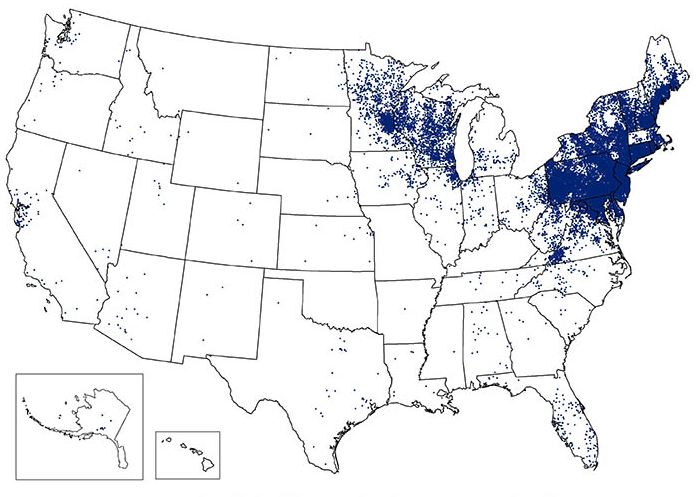
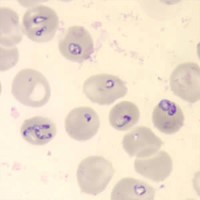
 

Prevalence of Babesia in Canadian Blood Donors: June – October 2018

https://www.ncbi.nlm.nih.gov/pubmed/31385317

2019 Aug 5. doi: 10.1111/trf.15470. [Epub ahead of print]

Prevalence of Babesia in Canadian blood donors: June-October 2018.

Abstract

BACKGROUND:

The erythrocytic protozoan parasite Babesia microti, the cause of human babesiosis, is transmitted not only by tick bites but also via blood transfusion. B. microti is endemic in the northeastern/upper midwestern United States, where partial screening of blood donations has been implemented. In Canada, a 2013 study of approximately 14,000 donors found no B. microti antibody-positive samples, suggesting low risk at that time.

METHODS:

Between June and October 2018, 50,752 Canadian donations collected from sites near the US border were tested for Babesia nucleic acid by transcription-mediated amplification (TMA). Reactive donations were tested for B. microti by IgG immunofluorescence assay and polymerase chain reaction. A subset of 14,758 TMA nonreactive samples was also screened for B. microti antibody. Donors who tested reactive/positive were deferred, asked about risk factors, and were requested to provide a follow-up sample for supplemental testing.

RESULTS:

One sample from Winnipeg, Manitoba, was TMA and antibody reactive. Of the 14,758 TMA-nonreactive donations tested for antibody, four reactive donations were identified from southwestern Ontario near Lake Erie. None of the interviewed donors remembered any symptoms, likely tick exposure, or relevant travel within Canada or the United States.

CONCLUSIONS:

This is the largest B. microti prevalence study performed in Canada. The results indicate very low prevalence, with only one TMA-confirmed-positive donation of 50,752 tested. This donor was from the only region in Canada where autochthonous infection has been reported. Seropositive donations in southwestern Ontario suggest low prevalence; travel should not be ruled out given the proximity to the US border.

____________________

For more: I would caution authorities in believing there is a low prevalence of Babesa. I’ve heard it takes a trained eye to see it and is rarely detected using only 1 diagnostic test. I think the word is out on the seriousness of tick-borne disease. Let’s not go back in time by adopting a carefree approach. We should be looking hard and using accurate testing methods.

 https://madisonarealymesupportgroup.com/2016/06/02/study-showing-results-testing-babesia-microti/

https://madisonarealymesupportgroup.com/2019/07/28/tick-borne-infection-risk-in-blood-transfusion/

https://madisonarealymesupportgroup.com/2017/09/27/premature-infants-develop-babesia-via-blood-transfusion/

https://madisonarealymesupportgroup.com/2019/07/11/characteristics-of-transfusion-transmitted-babesia-microti-american-red-cross-2010-2017/  This clearly shows there were more than 200 Babesia transfusion-transmissions reported. It also shows you don’t have to reside in an endemic area or travel to an endemic area to get it. The article also clearly points out that the geographic range of ticks is expanding, which means the pathogens they carry will as well.

According to Dr. Ken Singleton, Babesia is rarely detected using one diagnostic test alone.  http://www.lymebook.com/chronic-lyme-testing-and-diagnosis

Excerpts:

Lyme-aware physicians generally screen for 2 strains—Babesia microti and WA-1 (Babesia duncani)—by testing for antibodies (by IFA or ELISA testing) made by the body against those organisms.

Another very useful test for Babesia is known as the FISH (fluorescent in situ hybridization) test. The FISH test is performed on thin blood smears (tests used to detect germs in white blood cells) and is able to detect the RNA (genetic material) of Babesia. If this test is positive, it is very strong evidence of the presence of active Babesia. The advantage of the FISH test is that it will detect other subspecies of Babesia in addition to B. microti and B. duncani. (A direct thick and thin blood smear using a staining technique called “Giemsa” can also be done by one’s local or commercial labs to look for Babesia organisms in red blood cells; however, it is an insensitive test except during acute Babesia, particularly when fever is present.)

A final potentially useful test is the Babesia PCR (polymerase chain reaction). Unfortunately, in my experience it is also not a sensitive test and is the least useful of the three tests mentioned.

All three of these tests—Babesia IFA, FISH, PCR—are available through IgeneX, a laboratory specializing in Lyme disease and other tick-borne organisms. Medical Diagnostics Laboratory (MDL) has two of the tests—Babesia ELISA and PCR. Both labs are excellent and I utilize both regularly. (See the resources section for more information.) However, as mentioned, Babesia can frequently escape detection by diagnostic tests. Therefore, many times babesiois must be a clinical diagnosis made by physicians who are experienced in its detection and treatment.

How many Canadian people slipped through the cracks?


Tick-Borne Infection Risk in Blood Transfusion

https://www.galaxydx.com/blood-transfusion-tick-borne-disease-babesia/

Tick-Borne Infection Risk in Blood Transfusion

https://madisonarealymesupportgroup.com/2017/09/27/premature-infants-develop-babesia-via-blood-transfusion/

North Central Integrated Pest Alert

https://www.ncipmc.org/projects/pest-alerts1/

image.png

They have the following for ticks and specific diseases:

https://www.ncipmc.org/projects/pest-alerts1/brown-dog-tick-vector-for-rocky-mountain-spotted-fever/

https://www.ncipmc.org/projects/pest-alerts1/rocky-mountain-spotted-fever-rickettsia-rickettsii/

https://www.ncipmc.org/projects/pest-alerts1/ticks-and-tick-borne-diseases/


FREE Tick Testing – Adds Bartonella Pathogen Assay

https://www.prnewswire.com/news-releases/bay-area-lyme-foundation-tick-testing-program-adds-bartonella-pathogen-assay-300883339.html