Received: 12 May 2021 / Revised: 15 June 2021 / Accepted: 16 June 2021 / Published: 21 June 2021
Abstract
Recent scholarship supports the use of tick bite encounters as a proxy for human disease risk. Extending entomological monitoring, this study was designed to provide geographically salient information on self-reported tick bite encounters by survey respondents who concomitantly reported a Lyme disease (LD) diagnosis in a state perceived as non-endemic to tick-borne illness. Focusing on Texas, a mixed-methods approach was used to compare data on tick bite encounters from self-reported LD patientswith county-level confirmed cases of LD from the U.S. Centers for Disease Control and Prevention (CDC),as well as serological canine reports.
A greater proportion of respondents reportednot recalling a tick bite in the study population, but a binomial test indicated that this difference was not statistically significant. A secondary analysis compared neighboring county-level data and ecological regions.
Using multi-layer thematic mapping, our findings indicated that tick bite reports accurately overlapped with the geographic patterns of those patients previously known to be CDC-positive for serological LD and with canine-positive tests for Borrelia burgdorferi, anaplasmosis, and ehrlichiosis, as well as within neighboring counties and ecological regions. LD patient-reported tick bite encounters, corrected for population density, also accurately aligned with official CDC county hot-spots. Given the large number of counties in Texas, these findings are notable.
Overall, the study demonstrates that direct, clinically diagnosed patient reports with county-level tick bite encounter data offer important public health surveillance measures, particularly as it pertains to difficult-to-diagnose diseases where testing protocols may not be well established. Further integration of geo-ecological and socio-demographic factors with existing national epidemiological data, as well as increasingly accessible self-report methods such as online surveys, will contribute to the contextual information needed to organize and implement a coordinated public health response to LD.
______________________
Important excerpts:
Primary care physicians may under-diagnose LD in areas perceived as non-endemic [33].
Misdiagnosis was reported in seventy-two percent of respondents in a large survey [34], indicating the need for improved surveillance beyond entomology that links tick encounters with human disease risk, which can inform diagnostic approaches.
The need for expanded and improved LD research and knowledge is highly apparent for the benefit of both patients and health practitioners.
Given that LD is often labeled a “contested illness,” TTS respondents who may be perceived as “faking it” could easily report any random county if their tick bites were indeed a false entry in the TTS survey. In other words, it would be highly unlikely that the totality of respondents’ tick bite reports would map directly to confirmed official CDC cases or canine serological findings through attempted deception. TTS-reported tick bites overlap almost exactly with CDC-confirmed LD cases in county-level and eco-region analyses. In one case, in a county in which TTS respondents did not overlap with human cases, tick encounter reports did overlap with a positive canine county.
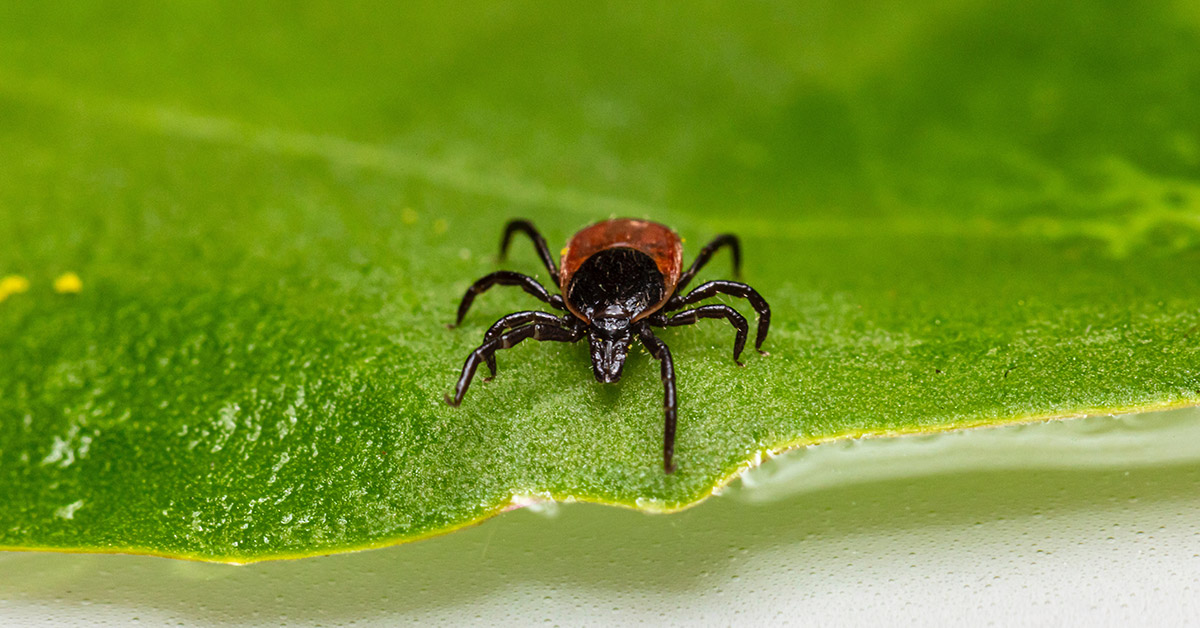
You know it’s bad when researchers have to deal with the myth that patients are considered deceivers.
STATEN ISLAND, N.Y. — For the last four years, researchers from Columbia University have been studying the rise in tick populations and Lyme disease on Staten Island — and the work continues this summer as they drag for ticks, set up hair traps and place trail cameras in residents’ backyards.
The researchers are studying both parks and residential areas to better understand the ecology of ticks and the risk of tick-transmitted diseases in urban environments. And ticks are now being found across all of Staten Island, not just in the southernmost parts.
It spreads SFTS (sever fever with thrombocytopenia syndrome), “an emerging hemorrhagic fever,” causing fever, fatigue, headache, nausea, muscle pain, diarrhea, vomiting, abdominal pain, disease of the lymph nodes, and conjunctival congestion, but the potential impact of this tick on tickborne illness is not yet known.
IGeneX 2021 Presentation Wisconsin Naturopathic Doctors Association (WNDA)
May 10, 2021
See Dr. Joseph Burrascano presenting on behalf of IGeneX Laboratory at the annual WNDA conference. Topics cover testing for Lyme Disease, Tick-Borne Relapsing Fever, Bartonella, Babesia, Rickettsia, Anaplasma, and Ehrlichia.
Dr. Burrascano discusses the Lyme ImmunoBlot test for early Lyme, validated with CDC test samples, that will identify 93% of cases.
He discussed a 2018 study of over 10,000 patient samples from nearly every state which found patients testing positive for the following pathogens:
Tick-borne pathogens (TBPs) pose a major threat to human health in Europe and the whole northern hemisphere. Despite a high prevalence of TBPs in Ixodes ricinus ticks, knowledge on the incidence of tick-borne diseases in humans infested by this tick species is limited. This study was conducted in the year 2019 on patients who presented themselves to the Pasteur Institute Novi Sad with tick infestations. Ticks (n = 31) feeding on human (n = 30) and blood samples from the same individuals were collected by physicians and a microfluidic real-time high-throughput PCR system was used to test the genomic DNA of the samples for the presence of 27 bacterial and eight parasitic microorganisms in Serbia. Except for one Rhipicephalus sanguineus s.l. adult male tick, all ticks infesting humans were morphologically identified as I. ricinus.
A high proportion of ticks (74%, 23/31) were infected with at least one of the tested TB microorganisms, being Rickettsia helvetica (54 %, 17/31) the most common pathogen, but
Borrelia afzelii (9 %, 3/31),
Anaplasma phagocytophilum (6 %, 2/31),
Borrelia miyamotoi (6 %, 2/31), and
Francisella like-endosymbiont (6 %, 2/31),
Borrelia valaisiana (3 %, 1/31),
Borrelia lusitaniae (3 %, 1/31),
Rickettsia felis (3 %, 1/31) and
Rickettsia aeschlimannii (3 %, 1/31) were also identified.
Despite the high infection rate of TBPs in ticks, only two human blood samples (6 %, 2/30) tested positive for the presence of TBPs, one patient (code H12, 67 years old female) was diagnosed with Borrelia spp. and the other patient was diagnosed (code H17, 71 years old female) with R. felis infection. The tick infesting patient H12 tested positive for B. afzelii, and R. helvetica and the tick infesting patient H17 tested positive for R. felis. Upon clinical examination, both patients were diagnosed with erythema migrans. No additional discomfort was reported by the patient and no additional pathology was observed by the physician. We concluded that humans bitten by I. ricinus in Serbia are exposed to a diverse array of TBPs with clinical impact in the Serbian cohort studied.
PhD student Austin Rau analyzed the cases of three serious — but lesser-known — tick-borne diseases in Wisconsin and found that they are increasing, moving, and varying over time across the state.
CHARLIE PLAIN | SEPTEMBER 22, 2020
Lyme disease is easily the most well-known type of tick-borne infection, but there are others that make people sick as well. Recently, a new study from the School of Public Health analyzed the cases of three other serious — but lesser-known — tick-borne diseases in Wisconsin and found that they are increasing, moving, and varying over time.
Study lead author and PhD student Austin Rau
“Compared to Lyme disease, less research has been completed on non-Lyme tick-borne infections and awareness of these diseases is lower,” says lead author and PhD student Austin Rau. “If you ask most people, they couldn’t name what the second most-common tick-borne disease is.”
For the study, Rau and his team examined patient data from the Marshfield Clinic Healthcare System, which serves north and central Wisconsin. They analyzed patient electronic medical records for the period of 2000-2016 for clinic laboratory results confirming or supporting cases of three non-Lyme diseases from ticks: anaplasmosis, babesiosis, and ehrlichiosis. All three diseases are bacterial or parasitic infections from the bite of deer ticks and can be difficult to diagnose. In most cases, the infections produce on-going flu-like symptoms.
Rau used his specialized training in geographical information systems and spatial analysis to map where the nearly 3,000 patients diagnosed with the diseases lived in order to determine the risk of having a positive laboratory test result in those areas.
Anaplasmosis
2,728 cases of anaplasmosis were identified.
People in northern Wisconsin were at greatest risk for having a positive laboratory test result.
The risk area for anaplasmosis shifted from west to east the study years.
The years of greatest risk were 2010-2016.
June to August were found to be peak months for positive laboratory test results, with a five times greater risk compared to other months.
Babesiosis
213 cases of babesiosis were identified.
People in northwest Wisconsin were at greatest risk for having a positive laboratory test result.
The area of greatest risk was in the southern part of the clinic’s territory at the start of the study period before shifting north and then west over time.
The years of greatest risk were 2011-2013.
July to August were peak months for positive laboratory test results, raising the risk for babesiosis by seven times compared to other months.
Ehrlichiosis
Only 15 cases of ehrlichiosis were identified.
The number of cases were too small to determine any significant trends.
“It’s interesting to see that the two diseases — anaplasmosis and babesiosis — had differentgeographic patterns of risk — why is that,” asks Rau. “It could be due to a difference in infection prevalence among the ticks for these two diseases. It could also be because of the movement of ticks and animals they attach onto, such as white-tailed deer.”
According to the researchers, the behaviors of people likely are an important factor as well, and activities, such as hiking and hunting, could increase their risk of being infected by a tick.
Rau says the study’s methods and findings can help healthcare providers in Wisconsin and other regions where ticks live to determine potential hot spots and better prepare for tick season.
“It’s helpful for physicians and public health workers to know the months and geographic areas that pose the highest risk so that they can expect and be on the lookout for cases,” says Rau. “It’s also good for people to know when and where their risk of possible infection is higher so they can take appropriate measures to prevent tick bites.”
_______________________
**Comment**
Updates:
Warmer temperatures mean that adult deer ticks are now active. Be sure to start tick checks whenever you have been outside.
**Warning** There are a number of inaccuracies within the article.
Excerpt:
With peak tick season imminent in the upper Midwest, researchers at the University of Wisconsin-Madison are hopeful more people will download and use a free smartphone app that helps track and identify the tiny blood-sucking arachnids.
The Tick App launched in Wisconsin in time for the 2018 tick season, and more than 600 people in the state have downloaded it so far. The app is part of a behavioral study being carried out by researchers at UW-Madison and Columbia University in New York who are seeking to better understand where and how people encounter ticks. They’re particularly interested in finding out what activities people are doing (and where they’re doing them) when they encounter black-legged (or deer) ticks (Ixodes scapularis), which often carry the bacterium that causes Lyme disease.