Lyme Facts 2017
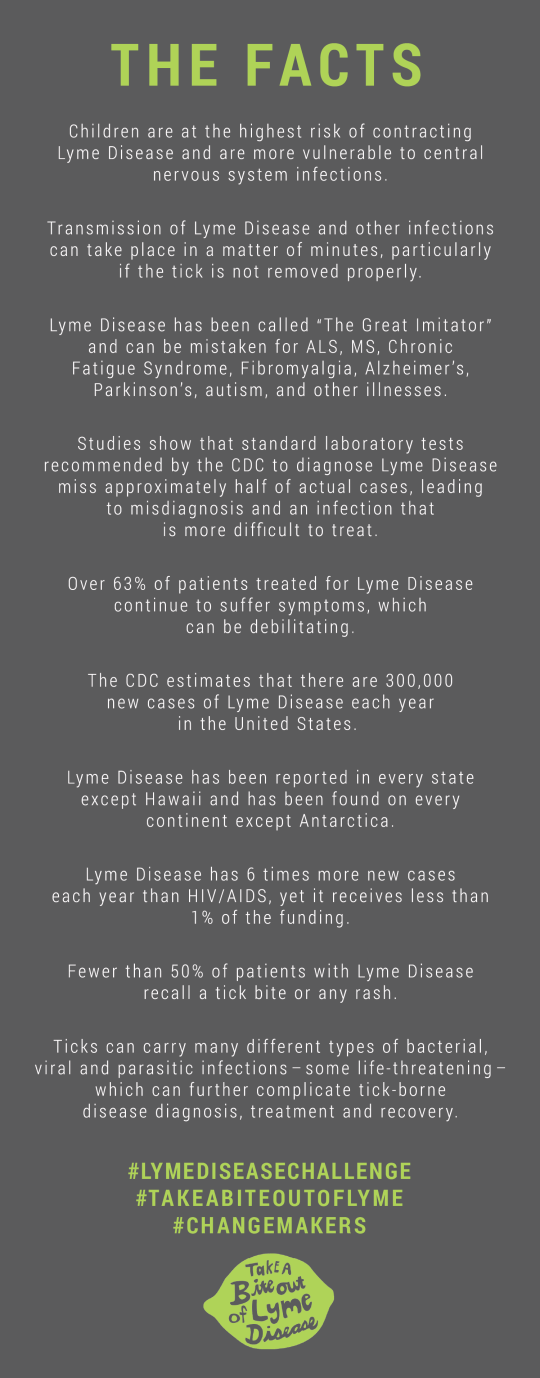
http://lymediseasechallenge.org Please see this website for more great info!

http://www.waupacanow.com/2017/05/09/hoffmann-dr-j-greg/#_
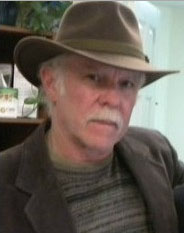
Dr. J. “Greg” Hoffmann, age 66, of Hartford, Eagle River and Waupaca, passed away on Sunday, May 7, 2017.
He was born on July 26, 1950 in Hartford to parents Dr. J. Gregory and Marie (nee Schwartz) Hoffmann. “Doc” continued the family legacy of practicing medicine throughout the state. He was nationally recognized as a specialist in treating Lyme Disease. Family, friends and patients will always remember his compassion, bedside manor, his “old school” approach to his profession and his “cowboy” attitude. He loved the outdoors, spending time hunting, fishing and enjoying his cabin in the north woods.
Dr. Hoffmann is survived by two children, Erica (fiancé James Estrada) Hoffmann and Shane (Erika); one granddaughter, Madison; brother, Tom (Krista); nieces, Lindsay (Shane) Becker, Courtney (Zach) Fricke; nephew, Cassidy (Cristy); former spouse, Anne (nee Rublee) Hoffmann. Also survived by other relatives and many friends. Dr. Hoffmann is preceded in death by his parents.
A time of visitation and support for family and friends will be held at St. Kilian Catholic Church, 264 W. State St., Hartford on Thursday, May 11 from 4:00 p.m. – 7:00 p.m. Mass of Christian Burial will be celebrated at St. Kilian Catholic Church, on Friday, May 12 at 10:30 a.m. Committal Service will be held at Clearwater Lake Cemetery on Friday, May 12 at 4:30 p.m. A gathering will be held after the committal to continue the memories and fellowship at the Oneida Village in Three Lakes, WI. In lieu of flowers, memorials are appreciated to St. Kilian Catholic Church, St. Theresa Catholic Church, Three Lakes, WI or www.wisconsinlymenetwork.org. Shimon Funeral Home is serving the family.
http://whatislyme.com/dr-john-hoffmann-rip/ Eulogy by Mike Nickel, founder of the Wisconsin Lyme On-line Support Group: https://groups.yahoo.com/neo/groups/Wisconsin-LymeSupport/info, and founder and past president of the Wisconsin Lyme Network .http://www.wisconsinlymenetwork.org/.
It is with great sadness that we inform you of the passing of Dr. John G. Hoffmann. “Doc” as he was affectionately called by everyone will be greatly missed. Dr. Hoffmann’s remarkable life and caring was taken on May 7th 2017.
Dr. Hoffmann successfully treated thousands of lyme patients over the years. His labor of love for his patients often came at great personal cost to himself. In those trying times the lyme community rallied around the man who sacrificed so much. I recall vividly the outpouring of letters and support from Mom’s and Dad’s thankful that their wheelchair bound children could run on the track team again or their child that had lost the ability to speak in complete sentences was now an honor student. He pulled dozens of children out of wheelchairs. Hundreds of these letters and testimonials to Dr. Hoffmann were placed into a binder and given to him many years ago so he knew how much everyone loved and appreciated him. I wonder how many disabled children his detractors pulled from wheelchairs ?
Broken bodies and crushed spirits hobbling down the steps of his tiny basement office to regain the hope that we had all lost so long ago. A $125 office visit so your child could walk again. Many could not afford even this token amount. Doc would get paid in chickens and be thankful for the eggs.
Dr. Hoffmann offered three things to all his patients. Calm, hope, and finally, healing. His quiet confidence, his fatherly knowledge, his straight talk, his cowboy boots and hat presented a man genuine in spirit and compassionate in heart. He afforded himself the luxury of a two-week hunting vacation each fall out west. Riding Amtrak, viewing the wide expanse of the western United States while the size paled in comparison to the diameters of his heart.
Dr. Hoffmann’s own lyme disease battle had a resurgence several months ago but he never wavered in treating his patients. We all owe our lives and the lives of our loved ones to Dr. John Gregory Hoffmann.
There is only one “Doc”. There will be no other.
With sincerity and great appreciation,
Your Friends
*** A note from me***
I only had the pleasure of meeting Doc Hoffman a few times, but they are etched into my memory forever.
He graciously spoke at our support group a few years ago. You can hear the audio file here: https://madisonarealymesupportgroup.com/2015/02/18/the-hoffman-tapes-and-our-next-mtg/. From Doc I learned that he started treating Lyme disease before it had a name. He said they knew it was a Rickettsial type of disease but it was nameless. He also said that treatment resolution in the 70’s and 80’s took months, whereas treatment resolution now takes more than three years for those who do not immediately get treated after being bitten by a tick.
The man was uncanny. He knew these pathogens well and could have written books, but chose to be a humble clinician. In fact, he would often repeat the phrase, “I’m just a clinician,” as if that was something lowly.
All I know is that thousands appreciated the fact he chose to treat people day in and day out rather than receive accolades. He was happy with a home made pie. And that is what made the man so endearing, with that signature cowboy hat and calm demeanor. Nothing rattled him. Not even really, really sick and desperate people.
Doc was a calm in the storm.
http://whatislyme.com/the-reality-of-lyme-disease-not-just-two-camps-anymore/ Written: 5/4/2017 by Lisa Hilton, Wisconsin Lyme Advocate and patient
I remember when I first finally got diagnosed with Lyme disease. I literally started screaming out of excitement to know what was wrong with me. For about fifteen long years I had been getting sicker and sicker and no one could figure out my ever changing symptoms. I went from panic attacks to joint pain to neurological symptoms throughout the years. Who would of known they were all connected? It sure didn’t seem like doctors thought they were since they were sending me from specialist to specialist depending on what symptoms I had and what part of my body that symptoms happened to be in.
Anyways, fifteen years into it, I finally had a positive Lyme test. I knew nothing about Lyme. I came to be tested after calling my doctor saying, “Now my hands and feet are going numb.” After a long line of symptoms such as fevers, low blood pressure, random pain that moved around, anxiety, gastro issues, cardiac issues… for some reason, when I told her this she responded quickly with, “Have you ever gotten tested for Lupus or Lyme disease.”
Honestly, I had no idea. I had no idea which tests all these doctors had performed. I just knew they had ruled out MS and Lupus through blood tests and MRIs. So she repeated the Lupus test and added in a Lyme test. The next day, a nurse from her office called and said, “Congratulations, we finally figured it out, you have Lyme disease. Go pick up three weeks of Doxy at the pharmacy and you will be ok.”
This started a long journey. When I was not ok in three weeks, and the doctor and their office seemed weary of my calls as I grew sicker on the Doxy, (none explained to me what a Herxheimer Reaction was) I was dismissed as a patient and told to go elsewhere for help. They referred me to an infectious disease doctor, which seemed upset I was “wasting his time” and asked me outright, “What do you want from me? You do not have Lyme disease.”
I was so confused. I said but you are the one that told my doctor I did. He responded by telling me that my Elisa was positive but my western blot was equivocal and he told her just to be safe to put me on Doxy, and if I got better it meant I had Lyme and if I didn’t I should go see a psychiatrist.
After many horrible doctor experiences like this, I eventually found an online support group called, “LymeNet.” It was a life saver for me! I could not believe the stories I read on there. I was not the only one going through this. I was not crazy. This was a real disease and tests were inaccurate and doctors seemed clueless around the world about Lyme disease. I was in shock that this could be happening in this day and age. I could not believe patients could be turned away and denied and ridiculed.
One of the blog posts that struck me the most on LymeNet was called, “CAMP A and CAMP B, The Lyme Disease Controversy,” written by a user going by the pseudonym, “Tin Cup.” It explained the controversy of Lyme disease. It spelled out the different “sides” of the Lyme battle. There were two camps, Camp A and Camp B, one being IDSA doctors with their set of treatment guidelines and one being ILADS doctors and their set of treatment guidelines.
Camp A consisted of the rules for treating Lyme disease put forth by the Infectious Disease Society of America (IDSA.) The Centers for Disease Control (CDC) uses these guidelines to tell doctors how they recommend you treat an illness. The problem is, insurance companies also use these guidelines to decide what medicines they will approve or not.
The IDSA recommends short course of antibiotics for Lyme disease. They give the impression that Lyme disease is easy to diagnose and treat. They do go into longer treatments for severe cases but go on to say that those cases are very rare and long term antibiotic treatment is usually not necessary. They seem to insinuate that Lyme disease is not a persistent infection and when patients still have symptoms after treatment they coin it, “Post Lyme Syndrome.” This gives the idea that it is just left over damage instead of a continuing infection.
Because of the CDC using the IDSA guidelines, insurance companies deny patient long term treatment even when symptoms persist. Another travesty of this set up is that doctors that are willing to try to treat their patients long term with antibiotics or any alternative treatments beyond the scope of the IDSA treatment guidelines get turned in by insurance companies, investigated and many have lost their licenses over this.
Camp B is pertaining to doctors that believe that Lyme patients need to be treated with long term treatments, usually antibiotics. Although, as time goes by these “Lyme Literate” doctors are starting to add in more and more alternative treatments. But for the most part, over the years, “Lyme doctors” or Lyme Literate MDS, or LLMDs as Lyme patients call them have mostly used long term antibiotics usually via route of oral, picc lines or ports. You can find more information on the antibiotic use, picc lines and ports here.
ILADS became the super hero for Lyme patients. They believed us, they understood we were truly sick and wanted to help us, despite pressure to conform to the IDSA and CDC views. They were the first organization to truly come out and say, Lyme disease is a chronic infection. It can persist even after short courses of antibiotic and it is not just damage, it is a persistent infection. See the ILADS Lyme Disease Guidelines Here.
ILADS also believes you cannot rely on the current faulty testing we have for Lyme disease. They believe your need specialty labs, such as Igenex or others listed here. http://whatislyme.com/different-lyme-tests-available-which-ones-are-worth-paying-for/ There are many reasons for this. First, the Elisa is notoriously inaccurate http://whatislyme.com/why-lyme-tests-arent-always-accurate/ leaving over half the people who have Lyme disease with an incorrect negative test. Laws have even been passed, such as HB 962 in Virginia, in some states now insisting that doctors tell their patients that a negative Lyme test does not mean you do not have Lyme disease.
Secondly, the current tests have removed Lyme specific bands that are important when testing for Lyme disease such as bands 31 and 34 due to complications with the Lyme vaccine causing everyone to test positive for Lyme disease who had received the LYMErix vaccine. http://whatislyme.com/why-was-the-lyme-vaccine-pulled-from-the-market/ So instead of just asking people if they got the Lyme vaccine before having a Lyme test, they just removed these important bands from all current Lyme tests. Specialty labs still use those bands giving more accurate results.
Since this original post came out, I believe more camps have been added. Long term antibiotics have helped some. Others it’s hurt or not had any affect on. So, new camps of people trying to get better with new treatment options were born.
Camp C is a new camp emerging from a group of Lyme patients who are just not getting better with Camp A or Camp B Lyme treatment protocols. This camp is the “alternative” camp. This group of patients has done the IDSA short term antibiotic route. They have also usually done the long term ILADS antibiotic route. They are still not better.
This group of patients is turning to what mainstream medicine considers alternative, even through ironically, much of it was the “original” medicine used for years. In some cases it’s like, “back to the basics.” People are changing their diets to cleaner, organic, raw, grass fed, natural foods. Other alternative treatments are more extreme or “New Age,” such as turning to Rife machines, energy testing, biofeedback machines. And then there is going back to traditional old fashioned Chinese medicine, acupuncture, chiropractor, homeopathic, herbs and supplements.
Of course some patients will combine Camp B and Camp C. Many Lyme doctors are now doing the same. Most of these patients have become scholars in their own right on anything from supplements to pharmaceuticals to any illness that comes along with Lyme disease such as co infections, adrenal and thyroid conditions. We know about organ systems, body chemistry, dietary influences, side affects from anything from medicine to histamine producing foods. We remind our pharmacists of interactions, we tell our doctors about the latest research, we know when a doctor is lying to us or being condescending. We are educated.
This was not to sound cocky. This is just what we have had to do to survive.
Camp D is the “self-treaters.” The lost ones in the Lyme community. Most are either self treating, or not treating at all. Insurance companies won’t pay for many of the alternative treatments. Most LLMDs cannot take insurance at all for risk of the insurance companies turning them in for treating outside the IDSA and CDC guidelines. So this group of patients is left to self treat if they can even afford to do that.
This camp of patients tends to research and learn about all sorts of treatments, supplements, protocols online. They are forced to. They are sick, usually have lost everything, many are homeless or living with family or friends. They have lost friends, jobs, houses, marriages, even their children to the court systems. They have no way to get to doctor appointments or to pay for them if they do make it there. If they make it to a Lyme doctor or specialist once, it’s hard to get back a second time to follow up.
Many times meds, and almost always supplements are totally out of pocket costs. It is nearly impossible for Lyme patients to get on disability as it is not recognized as a chronic or disabling disease. Treatments like chiropractic, acupuncture and energy testing can really benefit a Lyme patients but will usually not be covered by insurance,
We lose many to suicide in this group.
This article is sad, might make one feel hopeless. This is not the intent of this article. It is really the opposite. I am writing this article to plea with “the powers to be” whoever hold the power to change things, to please do so. We are desperate. We are sick. We are losing people in our community. We are asking for someone to notice, for the IDSA, CDC or whoever has the control or power to stop the ignorance and denial and make change happen.
Until then, we will continue to raise our voices, rally, protest, educate ourselves, educate the public, turn to the media, write songs, write poems, take pictures, make videos, do blog posts and Facebook statutes for Lyme awareness.
We will not give up until things have changed.
For more information please see Lisa’s website: Whatislyme.com
This absolutely made my day. Power to the sickies!
https://www.buzzfeed.com/stephaniemlee/lyme-disease-patient-registry?utm_term=.wbLADWmea#.ylXj5dzp4 Buzzfeed News, by Stephanie M. Lee
In late 2015, Lorraine Johnson was frustrated with what she felt was the slow progress of research on Lyme disease, the tick-borne rash that strikes thousands of Americans every year, in apparently increasing numbers. So as the head of LymeDisease.org, a leading advocacy group, she launched her own study: MyLymeData.org.
The site has since surveyed 7,000 people, Johnson reported this month at a conference in the San Francisco Bay Area. The site calls itself “the first national large-scale study of chronic Lyme disease.”
It’s one of the newest large online registries built by patients with rare or understudied conditions. Feeling ignored by academics and Big Pharma, they turn to the internet, where they can pool the collective wisdom of people who might otherwise never enroll in a clinical trial.
We don’t feel ignored, WE ARE IGNORED! https://madisonarealymesupportgroup.com/2017/04/22/mylymedata-presentation/ Only 3 small clinical trials on the treatment of chronic Lyme disease were funded by the NIH – the most recent was 15 years ago. Hello?
Scientists are increasingly relying on apps and websites like this one to conduct research. But as this approach becomes more popular, researchers have questions about its inherent lack of rigor and standardization.
Online surveys typically don’t require proof of a diagnosis, and self-diagnosis is often tricky. For example, the varied symptoms of Lyme disease — arthritis, fever, headaches, shooting pain, and memory problems, among others — crop up in many other conditions, making it difficult to identify conclusively, even for doctors. It’s also tough to keep people engaged in a study when they’re scattered across the country.
“The ability to get big data on large numbers of people fairly easily, that’s a strength,” said Dr. John Aucott, director of the Lyme Disease Clinical Research Center at Johns Hopkins University, who is not involved with MyLymeData. “The advantage is you’re getting patient symptoms — but the disadvantage is you don’t truly know they’re due to Lyme disease.”
Despite these potential issues, self-reported patient data could soon help pharma companies bring drugs to market faster. Under the 21st Century Cures Act, passed in December, companies applying for certain kinds of FDA drug approvals can submit data about how patients are reacting to drugs in the real world, rather than data collected from rigorously controlled clinical trials. Critics say this provision weakens regulatory oversight.
“In terms of generating really good evidence that you’re going to make people better off, [real-world data] is a good starting point, but it’s not the finish line,” said Vinay Prasad, a hematologist-oncologist at Oregon Health and Sciences University.
Around 300,000 people in the United States, almost entirely in the Northeast and upper Midwest, are diagnosed annually with Lyme, according to the Centers for Disease Control. The agency has clear criteria for diagnosing Lyme in its early days, including a tick bite, a bull’s-eye rash, and a lab blood test. A few weeks of antibiotics cures most patients. But some experience symptoms like headaches and joint and nerve pain for months, even years, after treatment.
The federal government has funded only a handful of Lyme disease studies, and one of the larger ones, published in 2001, enrolled just 130 people. All of the studies focused on patients who had symptoms even after taking antibiotics. Patients often call this advanced stage “chronic Lyme disease,” as does MyLymeData, though most doctors argue that this term has come to mean many things to different people and has no accepted definition. They and the CDC instead use “post-treatment Lyme disease syndrome.”
Johnson says that she created MyLymeData to make up for this dearth of research on patients with lingering symptoms. “The problem with Lyme disease is essentially there is no data,” she told BuzzFeed News.
She doesn’t know of any cures or treatments in the works for Lyme patients who don’t respond to antibiotics — but hopes her database will inspire pharmaceutical companies to develop some.
The people who have signed up for MyLymeData, she said, “were just very anxious to push forward research because research had really kind of left them behind,” she said
At a conference hosted last fall by the Lyme Disease Association and Columbia University, Johnson presented findings from an unpublished survey of more than 4,000 MyLymeData participants. The survey responses showed that people who were diagnosed at an early stage were more likely to report being healthy than those who were diagnosed later, and many claimed that their doctors had failed to accurately spot the disease. Johnson said at the time that the findings showed both the need for physicians to make diagnoses early on, and for “more effective treatments to help those patients who remain ill.”
But experts note that MyLymeData’s database may not accurately reflect Lyme patients, particularly those with persistent symptoms, the hardest stage to diagnose.
For Aucott of Johns Hopkins, making a diagnosis of post-treatment Lyme disease syndrome is a painstaking process. There isn’t one clear biomarker, like a genetic mutation or an X-ray reading, that proves someone has the condition. He and a nurse interview a patient, then review all of their medical records and lab reports, to establish both that they were healthy before getting diagnosed and showed Lyme symptoms after their antibiotic treatment. Aucott also tries to figure out if they might have anemia, thyroid disease, chronic fatigue syndrome, or something else with similar symptoms.
“I’ve seen 500 or 1,000 patients with decades of work,” Aucott told BuzzFeed News. “That’s the level of detail you need to really be convinced you have a uniform population.”
He and other experts told BuzzFeed News that they’re worried that MyLymeData allows, but doesn’t require, people to provide lab readouts and doctors’ notes to prove which stage of disease they’ve had, or even that they ever had the disease. To sign up, participants simply need to check boxes saying they live in the United States and have been diagnosed for Lyme by a health care professional. Then they answer a barrage of questions, such as how many times they’ve been infected, when they were first infected, and which symptoms they’ve had. (To test the service, a Lyme-free BuzzFeed News reporter successfully signed up and filled out responses about her nonexistent condition.)
“I’m not sure this kind of registry would be super helpful other than to tell you a little bit about what patients who have been labeled with ‘chronic Lyme’ complain about or have been treated for it,” said Paul Auwaerter, a professor of medicine and Lyme specialist at Johns Hopkins.
Others question how well the database represents actual patients.
“The problem with Lyme disease is essentially there is no data.”
“If the data are based on volunteered testimony, how do we know that those who choose to volunteer adequately represent those who don’t?” Paul Lantos, an assistant professor of internal medicine and pediatrics at Duke University School of Medicine, said by email. “If recruitment is promoted by advocacy groups, then how do we know those who volunteer represent Lyme disease patients more broadly?”
Johnson admitted that MyLymeData relies on the honor system, but pointed out, “I don’t think 7,000 people would take the time to go through and complete the surveys and do the follow-ups if they didn’t have a diagnosis.”
And, she said, the beauty of the database is that if a researcher wanted to study something about biomarkers, they could easily contact people through MyLymeData and ask for their lab reports and other medical records. She says that she and the academic researchers she’s working with, whose names she declined to share, will always be careful to point out the limitations of their research.
“It is possible to glean accurate insights about diseases from self-reported data,” says Ben Heywood, president and co-founder of PatientsLikeMe, a website where patients go to discuss their conditions. But, he added, “it takes ‘a fair amount of manual curation’ to make the data useful for research institutions that team up with the company, such as the FDA.” PatientsLikeMe members have reported more than 30,000 treatments and symptoms for various illnesses, which staff then translate into medical terms (such as translating “chemo brain” into the more technical term, “cancer treatment-related cognitive impairment”).
“Doing real-world evidence or patient-generated health data in a rigorous scientific and methodological way, the way we do it, is hard,” Heywood said.
It’s understandable that chronic Lyme patients would want to take matters into their own hands after feeling ignored by mainstream doctors.
“I definitely think that many patients feel alienated from the ‘conventional’ medical community,” Lantos wrote. ‘This project may help us understand where our communication fails patients.”
Online patient registries like MyLymeData are becoming more and more common; by one count, there are 20. The earliest ones were dedicated to patients with rare, lethal diseases like cystic fibrosis and muscular dystrophy, and now there are ones about cardiovascular health and Alzheimer’s disease.
“Registries will likely proliferate under the 21st Century Cures Act,” says Kim McCleary, managing director of FasterCures, a think tank that was a key supporter of the legislation. And as for concerns that their kind of data threatens scientific standards, McCleary counters that it’s not an either-or question.
“I don’t think anyone expects [patient data] is going to replace double-blind placebo-controlled trials,” she said.
Stephanie Lee is a senior technology reporter for BuzzFeed News and is based in San Francisco.
Contact Stephanie M. Lee at stephanie.lee@buzzfeed.com.
Here’s the dealeo: Start doing meaningful, unbiased research. Problem solved.
From the maker’s of the documentary Under Our Skin, the best primer on Lyme Disease:
Look of Lyme brings your personal stories into the limelight. Videos by you and about you. While the Internet and social media have exploded with homemade videos, there is no place that serves as a repository and archive of the ever changing and growing landscape of Lyme disease. Look of Lyme changes that, offering a way to make the personal political by harnessing the power of crowdsourcing and media. The collective story told through up-close, individual portraits will be an effective tool of community building and impacting awareness and change.
As we begin to develop a third film in the UNDER OUR SKIN documentary collection, Look of Lyme is also a way we can screen for possible film subjects.After receiving your videos and editing them for brevity, consistency and branding, we’ll present them on an upcoming YouTube channel accessible to millions worldwide! Soon, when you want to show the world what Lyme looks like, it’ll be just a click away!
Find out more and submit your video at LookofLyme.com
If you would like your own copy of the award winning documentary they are offering a Lyme Awareness Month Special:
For the month of May only, we’re offering a two-for-one BOGO Special: For every Home Use DVD you purchase, we’ll throw-in another for free. Buy one get one free; buy three get three free, and so on. You can use these free DVDs to educate friends, family and physicians – the tab’s on us!
Get on your mojo with BOGO at UnderOurSkin.com/store
LYME DISEASE AWARENESS MONTH EVENTS
Movie Screenings & More!
May 2: Meriden, CT
Free Screening of UNDER OUR SKIN
The Lyme Disease Support Group located at the Meriden Public Library in invites you to view Under Our Skin in the Cook Room at 6pm.
May 5: Havre de Grace, MD
Arts by the Bay—Ticked Off Lyme Disease Awareness
Artist Tracey Grumbach will discuss her battle with chronic Lyme disease and how it influences her life and art.
May 5-6: Bloomington, MN
Lyme Awareness Minnesota Weekend
Various activities at the Mall of America, including appearances by Ally Hilfiger, author of the Lyme memoir “Bite Me.”
May 6: Washington, DC
Mayday 2017 Rally at the White House
The Mayday Project calls on all Lyme sufferers to gather and appeal to President Trump to call for an immediate Congressional Hearing of the CDC in regards to its mishandling of Lyme disease.
May 6: Madison, WI
Free Screening of UNDER OUR SKIN:
Free showing of Lyme documentary UNDER OUR SKIN, sponsored by Madison Lyme Support Group. https://madisonarealymesupportgroup.com/2017/03/17/free-viewing-of-the-award-winning-documentary-under-our-skin-in-may/
May 6: Tempe, AZ
Lyme Community Gathering
Sponsored by the Arizona Lyme Disease Association. Speaker: Ken Mitchell, NMD, RPH.
May 7: Ashburn, VA
7th Annual Loudoun Lyme Run
The Loudoun Lyme 5K/10K will also feature a 1K fun run, as well as an information fair to educate the public about Lyme disease, its causes, symptoms and treatments.
May 10: Redding, CA
Free Screening of UNDER OUR SKIN
Followed by a Skype Q&A with producer/director Andy Abrahams Wilson. The screening will be held at the Cascade Theater at 1731 Market St. Showtime at 7pm.
May 10-14: Boone, NC
Walking the Lyme Road: Integrative Medicine for Tick-borne Disease and Autoimmune Illness
The Art of Living Retreat Center. Retreat leaders: Katina Makris and Dr. Jodie Dashore.
May 11: Stamford, CT
Lyme Disease: Your kids Are at Risk. And So Are You
Presented by the Global Lyme Alliance. Speakers: Dr. Denis Bouboulis, Dr. Brian Fallon, and Kirby Stafford, State of Connecticut.
May 17: Sitka, AK
Free Screening of UNDER OUR SKIN
Sitka Community Library, 320 Harbor Drive, Sitka, AK.
May 18: Danbury, CT
11th Annual Lyme Connection Patient Conference and Health Fair
Western Connecticut State University’s Westside Campus; Speakers: Dr. Thomas Moorcroft, Dr. Elena Frid, and Dr. Eva Sapi.
May 19-20: Paris, France
ILADS 7th European Conference
International Lyme and Associated Disease Society’s conference geared towards medical professionals interested in learning more about proper diagnosis, treatment and new research regarding tick-borne diseases.
May 22: Glen Falls, NY
The Little Things: One Family’s Battle with Lyme Disease
Docudrama based on the life of Joseph Elone, a New York teenager who died from unrecognized Lyme disease. Sponsored by Lyme Action Network.
May 23: Los Altos, CA
Free Screening of UNDER OUR SKIN
Followed by discussion with Alix Mayer and Kathleen Steele, LCSW.
May 24: Sitka, AK
Free Screening of UNDER OUR SKIN 2: EMERGENCE
Sitka Community Library, 320 Harbor Drive, Sitka, AK.
May 25: Kansas City, MO
Presentation by Dr. Joseph Brewer
Dr. Brewer will present updates on his research into virus re-activation and immune system suppression, mold, Lyme and other chronic illnesses. Sponsored by the Lyme Association of Greater Kansas City, Inc.
May 26: Andover, Ohio
Lyme Disease Symposium
Speakers: Dr. Charles Ray Jones, Dr. Elena Frid, and others. Sponsored by the NE Ohio Lyme Foundation.
May 30: Atlanta, GA
Theatrical Screening of UNDER OUR SKIN
Theatrical screening at Landmark Midtown Art Cinema, with a Q&A to follow.
For more information visit us at UnderOurSkin.com

