Archive for the ‘Activism’ Category

Free Parasite Summit – Dr. Jay Davidson

http://parasitesummit.com/?idev_id=11577&idev_username=Summit3&utm_source=11577  

Are parasites silently preventing you from overcoming your health challenges? It’s imperative to find out! You are likely hosting one or more parasites — which can enter your body through food, drink, contact with infected persons — and can live within you for years!

Sept. 11-18, 2017  Seminar dates

Your host, Dr. Jay Davidson, realized (after 30 years!) he was infected with parasites that had been silently wreaking havoc on his health, causing sensitive skin and acne, GI struggles, allergies, depression, teeth grinding and asthma. Don’t let this happen to you — gain the information you need to assess, treat and protect yourself from parasites!


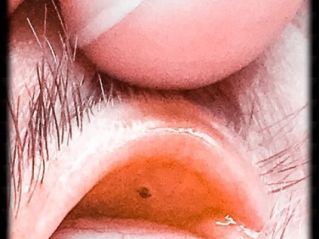
Tick Inside Eye

http://www.news-leader.com/story/news/local/ozarks/2017/07/15/pokin-around-he-knew-watching-naked-and-afraid-he-had-tick-inside-eyelid/472178001/ Steve Pokin, Spokin@NEWS-LEADER.COM  July 15, 2017

Pokin Around: He knew from watching ‘Naked and Afraid’ he had a tick on inside of eyelid636354599974837121-jcoyle-eye

Jim Coyle has been bitten by ticks hundreds of times in his 47 years. But never like this.

He thinks he was bit on the Fourth of July. He spent the holiday with girlfriend Cara Dee Stucke and others on his 9 acres in Northview, in Webster County.

He was in the yard that day.

“But I wasn’t rolling around in the grass or anything,” he says.

He also did some woodworking.

“There was some sawdust,” he explains.

He returned to work July 5 here at the News-Leader, where he is a senior computer analyst.

“My eye was irritated,” he says. “It was very annoying.”

He first thought it might be from the sawdust. But he could not spot anything on his eyeball. Then, he started thinking tick bite.

The only reason he even considered it might be a tick bite is because he is a fan of the reality TV show “Naked and Afraid,”  on the Discovery Channel. In the show, two people — a man and a woman — meet for the first time and must survive in the wilderness for 21 days. Naked.

“I had recently seen a woman on the show get a tick bite in the eye,” Coyle tells me. “I told the kids about that show on the Fourth and when I said the next day I thought I had a tick bite in my eye they thought I was kidding.”

His girl friend, Stucke, a professional photographer, stopped by to see him at work on July 5.

Coyle rolled back the top eyelid of his left eye and there it was — an embedded tick.

“Since she’s a photographer she said, ‘I have to have a picture,'” Coyle says.

He put that photo on his Facebook page, which is where I saw it and immediately went, “Eeewwww, gross.”

He quickly called Heffington Optical Company, which is near the News-Leader on West Chestnut Expressway, and snagged an appointment that afternoon.

First, the optometrist put anesthetic eye drops in Coyle’s left eye. It took Dr. Charles Hornby about 15 seconds to remove the tick, which did not let go easily.

“He then handed me a tissue,” Coyle says. “He told me my eye was bleeding.”

According to Coyle, Hornby said that over the years he has removed countless bugs from the eyes of motorcycle riders. But never before had he dislodged a tick from the inside of an eyelid.

Coyle says that as a hiker and a former Boy Scout leader — as well as a horse rider who has ridden through tall grass — he has been bitten many of times, several times a year.

I found that strange. I told him I don’t recall ever being bitten by a tick. He found that strange.

The mosquitoes love me, as do chiggers.

In fact, Coyle says, after a tick bit him in 2014 he contracted Rocky Mountain spotted fever.

According to the Mayo Clinic Rocky Mountain spotted fever is a bacterial infection. Without prompt treatment, it can cause serious damage to internal organs, such as the kidneys and heart.

Although it was first identified in the Rocky Mountains, the infection is commonly found in the southeastern part of the United States.

Early symptoms include severe headache and high fever. A rash usually appears on the wrists and ankles. The infection responds well to prompt treatment with antibiotics.

In 2014, Coyle says, his fever spiked at 105. He had intense joint pain for six weeks before full recovery.

I remember that. I had just started the News-Leader Running Club on Mondays after work.

In those early days, Coyle ran with us a couple of times.

“I stopped because of the joint pain,” he tells me. “And because I really don’t like running.”

These are the views of Steve Pokin, the News-Leader’s columnist. Pokin has been at the paper five years and over the course of his career has covered just about everything — from courts and cops to features and fitness. He can be reached at 836-1253, spokin@gannett.com, on Twitter @stevepokinNL or by mail at 651 N. Boonville, Springfield, MO 65806.

Standing Room Only For New Lyme Test

http://news10.com/2017/07/27/hundreds-attend-blood-clinic-for-new-lyme-disease-test/  News 10 abc  by Lindsay Nielsen, July 27, 2017  (Video here)  Approx. 3 min.

DELMAR, N.Y. (NEWS10) – It’s a brand new test for Lyme disease and other tick-borne illnesses we told you about last year.  (LymeSeq)

On Thursday, the first clinical study was held right in the Capital Region. Dozens were turned away and will have to attend future scheduled blood draw clinics because so many signed up to give blood.

More than 100 people got their blood drawn at the clinic. Some of them have never been tested for Lyme but maybe have symptoms, or some of them have been battling the disease for years.

Lyme disease is a complicated disease and many people experience an array of symptoms like Randy Fox, of Niskayuna, who’s been battling it for years.

“Besides the chronic fatigue, I have neuropathies which are either tingling, sharp pains, dull pains, numbness.”

Fox gave blood at the Stram Center in Delmar with 150 other people from the Capital Region area. It’s all part of a clinical study for a new test called LymeSeq. It’s expected to diagnose 20 different strains of Lyme disease and other co-infections that ticks can carry and giving hope to those suffering.

“To be able to diagnose and treat people earlier so that we don’t have long lasting effects.”

“I have been bitten by ticks so I thought it would be a good idea,” Adrie Fredenburg, of Canajoharie, said.

Fredenburg brought along her husband Steve too.

“As long as it’s going to help, the study is worth it,” Steve Fredenburg, of Canajoharie, said.

George Hagerty, of Lake George, signed up because he’s had multiple tick bites and has tested positive for Lyme disease.

“One of the ticks I pulled off my body was tested positive for BMD and if I pronounce it right it’s Borrelia miyamotoi,” Hagerty said.

It’s another tick-borne illness that has caused Hagerty a lot of pain and limited ability to function.

“I’ll do anything I can to help people not get this wretched disease.”

Vial after vial was collected because of one mother from Phoenix, Arizona who was angry when her daughter was diagnosed with Lyme at age 19 but was never treated.

“Even though she was CDC positive her doctors would not treat her so we decided that we needed a better diagnostic test,” Tammy Crawford, Founder of Focus on Lyme Foundation, said.

Crawford says she has great confidence in Dr. Paul Keim who developed the test. She explains why the Capital Region area was chosen for the clinical study.

“We decided that we were going to cast a wide net and try to bring as many people as we could with Lyme disease. We needed to come where it’s really the most prevalent,” Crawford said.

People can sign up and find info on two more additional clinics being held in the next few weeks by visiting focusonlyme.org.

For more on the test:  https://madisonarealymesupportgroup.com/2017/03/28/lymeseq-new-lymemsids-test-explained/  (Video news story in link)

http://news10.com/2017/07/10/clinical-trial-being-held-for-lyme-disease-test/  Approx. 2 min.


When the Campus Disability Office Needs Educating About Lyme Disease

https://www.lymedisease.org/campus-disability-lyme/https://www.lymedisease.org/campus-disability-lyme/

When the campus disability office needs educating about Lyme disease
by Aviva Peltin

Ableism is a term that was not even on my radar before 2010, when my health crashed. I guess that’s how it goes – you don’t realize the obstacles others experience until you’re facing them, too.

Before 2010, if I were to contemplate disability, I would think about someone in a wheelchair or people who are hard of hearing. If I were to think about accommodations disabled people might need, I would think of elevators, handicapped parking spots, and ramps.

Now that I’ve been healing from chronic Lyme disease and mold illness for over six years, I understand how disability can come in many different forms. On a daily basis, I experience chronic fatigue, weakness, and neurological issues. Do I look disabled? No. Am I disabled? Yes, although I have resisted the label. Why? One word: Ableism.

Resisting the disability label

First, a little backstory: Two years after finishing high school, I was finally properly diagnosed with my various health problems and decided to begin working part-time toward my undergraduate degree at the age of 20. I resisted registering with the disability office for 18 months, but finally caved. Still, I didn’t ask for the accommodations I needed right away.

Instead of asking for a parking spot next to my classes to conserve energy, I would park in my assigned lot and walk 15 minutes to class. I didn’t want a disability symbol on my parking permit, even though walking to class took significant energy. I didn’t want others to see the handicapped symbol on my car and judge me, or even worse, doubt my experience. When I finally asked for a parking accommodation, it helped me immensely. I wish I had asked for it sooner.

Despite maintaining a 3.8 GPA, because I am not a full-time student, I have been excluded from the dean’s list. This past year, my mom advocated on my behalf regarding this issue. After a month of emails and phone calls with the university administration, my school finally changed its policy.

Now students who are registered with the disability office are honored on the dean’s list each quarter if they maintain a 3.5 average while taking at least six credits. (However, this policy is still not fair because many disabled students do not feel well enough to take six credits. Nevertheless, it’s a step in the right direction.) Unfortunately, this dean’s list exclusion is common in universities nationwide, and many universities are not even aware how this policy suggests that able-bodied students are more important than disabled ones.

Enlisting the help you need

As my mom advocated on my behalf to change the dean’s list policy, some questioned why I didn’t advocate for the policy change myself. Shouldn’t I, the adult student who was affected, be composing emails and making calls? Shouldn’t I be protesting with signs and passing out flyers?

Those people don’t understand that many disabled people do not have the health to stand up for their rights, or even to speak up at all. When someone expects me to stand up for myself, they clearly do not understand my limited energy and how it can only go toward a few activities each day. With limited energy, going to my blood draws, taking my pills, and making dinner for myself must take priority over energy-draining activism.

Because I am immunocompromised, I cannot spend time in certain moldy, water-damaged buildings on my campus. I have been a part-time student for the past four years and have been able to tolerate most buildings. However, one of the oldest buildings on campus irritates my lungs immediately upon entering. Unfortunately, multiple classes I need to take to graduate are always held in this building.

I had my doctor send the disability office a thorough letter explaining why I needed that class to be relocated due to my body’s reactivity. I received a response saying that I “may or may not” be granted this relocation, and that the disability office would work with the health department of the school to test the building. I was shocked, hurt, and angry.

The disability office implied that my personal experience in the building did not matter. Apparently, my reactivity only counts if the school deems the building dangerous for all.

Society does not teach us that someone can be disabled in different ways, at different times. I am surprised that an office meant to assist disabled students and make their university experiences as accessible as possible, has attempted to make me feel powerless.

Additionally, mainstream society does not understand how someone who looks healthy can be cognitively and/or physically disabled. Someone with Crohn’s disease, diabetes, or lupus, might look healthy, but how he or she feels might not be visible. Many people in my life, time and time again, have discounted my experience. This past Thanksgiving, my great aunt was thrilled to inform me and my parents that I looked healthy. Clearly, she reasoned, if I looked healthy and energetic, I must feel that way, too.

Her comment seemed to suggest that her observations of me should take precedence over my personal experience. Doubting another’s experience is insensitive and harmful. I am re-learning after all these years to trust myself, because when enough people tell me that my own perception of reality is false, I, unfortunately, begin to question it. And, yet, I know my own perception is the truth.

After six years of struggling mightily with my health, I refuse to let ableism take away my power. I will continue to stand up for what I need, and if I don’t feel energetic enough to do so, I will enlist the assistance of others.

My number one piece of advice to students with chronic illness would be: Ask for what you need. Get a closer parking spot or ask for extra test time. Don’t take no for an answer. Ignore the critics and bureaucrats who try to undermine your experience and judge you without understanding. If you can, educate the misinformed. Remind people to check their privilege. Refuse to feel the ableist shame imparted upon you by society. You are strong. You are resilient. Asking for what you need is the most loving and compassionate thing you can do for yourself.

Aviva Peltin is pursuing an undergraduate degree in creative writing in Seattle, WA. This article originally appeared on The Mighty. You can follow her daily musings as she heals from Lyme disease on Instagram.

_________________

**Comment**

I am thankful articles like this are coming out.  It is true that most believe you have to have crutches or a walker to be disabled.  I recently saw a video of a woman with severe POTS who can pass out at any time.  She showed scars from where she fell and became injured just walking to her car. She has a disabled sticker and parks in handicapped parking so that she doesn’t have to walk as far and with less obstacles in her way in case she passes out.  Someone put a note on her windshield that said, “FAKER!”

While I disagree with the insinuation of the author’s catch-all phrase, “check your privilege “ which is being touted at all colleges and universities with abandon, as if somehow people with a larger inheritance or specific colored skin make them less compassionate, I do agree that people need to reevaluate the concept of disability.  

Instead of “checking your privilege,” how about we treat others as we wish to be treated?

Dr. Todd Lepine – Functional Medicine and Lyme Disease

  Published on Jul 20, 2017

Dr. Jay Davidson interviews functional medicine expert, Dr. Todd LePine.  They walk through Lyme disease, parasites, the importance of mitochondria, nutrition, infrared technology, parasites, and much more!

Show Details:

1:12 – Dr. Todd LePine’s Background
5:50 – Top Testing Dr. LePine Uses for his Functional Medicine Approach
8:25 – Dr. LePine’s Preferred Lyme Disease Specific Testing
11:00 – Genetic Testing
14:40 – Mitochondria and Your Health
17:15 – Courtagen- Genetic Testing Related to Mitochondria
18:10 – Exercise and Nutrition Impacting Your Mitochondria
20:00 – PQQ Supplement for Mitochondria
20:40 – Mitochondria as Bacteria
21:30 – Evolution of Nutrition and Cycling Your Diet
25:30 – Intermittent Fasting
25:30 – Circadian Rhythm
28:55 – Lyme Disease aka “Tick-Bourne Illness”
32:45 – The Role of Antibiotics in Lyme
36:25 – Probiotics
38:30 – Parasites
40:10 – Treatments and Protocols for Lyme
42:15 – Chronic Lyme and Lack of Fevers
43:30 – Infrared Therapy
44:15 – Book Recommendation by Dr. LePine: Plague Time: The New Germ Theory of Disease
45:00 – Chronic Conditions and the Immune System
45:50 – Last Thoughts from Dr. Lepine on Lyme Disease: “The Great Mimicker”
48:30 – Visit Dr. LePine’s Website: http://www.drlepine.com or additional educational resources at: Genova Diagnostics — https://www.gdx.net/